

There’s something magical about walking into a home filled with lush, green plants. They don’t just make your space look beautiful — they purify the air, reduce stress, and add a touch of life to even the gloomiest corners. But if you’ve ever struggled to keep your indoor plants alive (let alone thriving), you’re not alone. The good news? With the right mix of light, watering, and care, anyone can create an indoor jungle that flourishes all year long.
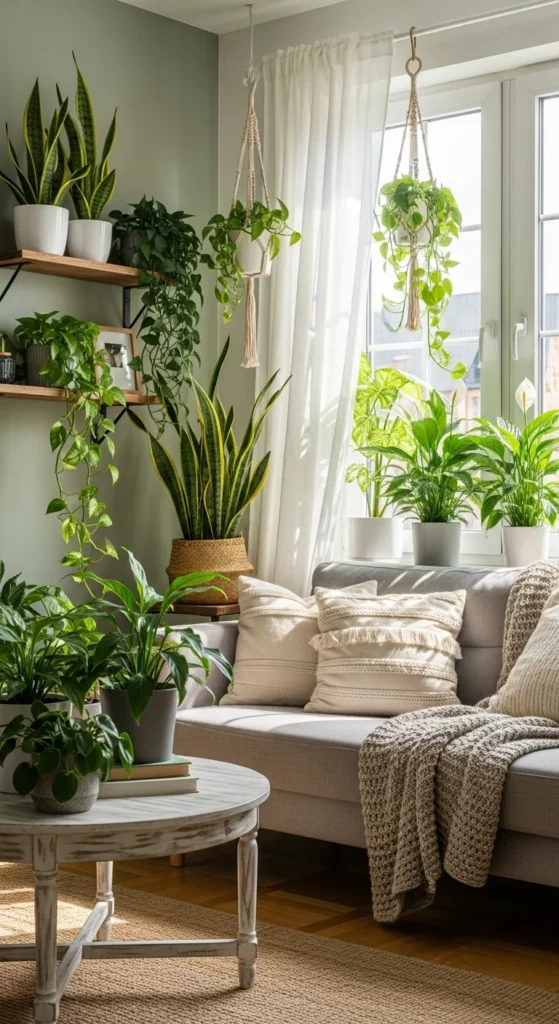
1. Choose Plants That Suit Your Space
The first step to year-round indoor success is picking the right plants for your home’s conditions. Every plant has its personality — some love the spotlight, while others prefer the shade.
Best low-light plants:
- Snake Plant
- ZZ Plant
- Pothos
- Peace Lily
For bright, sunny rooms:
- Fiddle Leaf Fig
- Rubber Plant
- Spider Plant
- Aloe Vera
Before buying, take a few minutes to observe how much natural light each room gets. A south-facing window might flood your plants with sunshine, while a corner room could stay in shade most of the day.
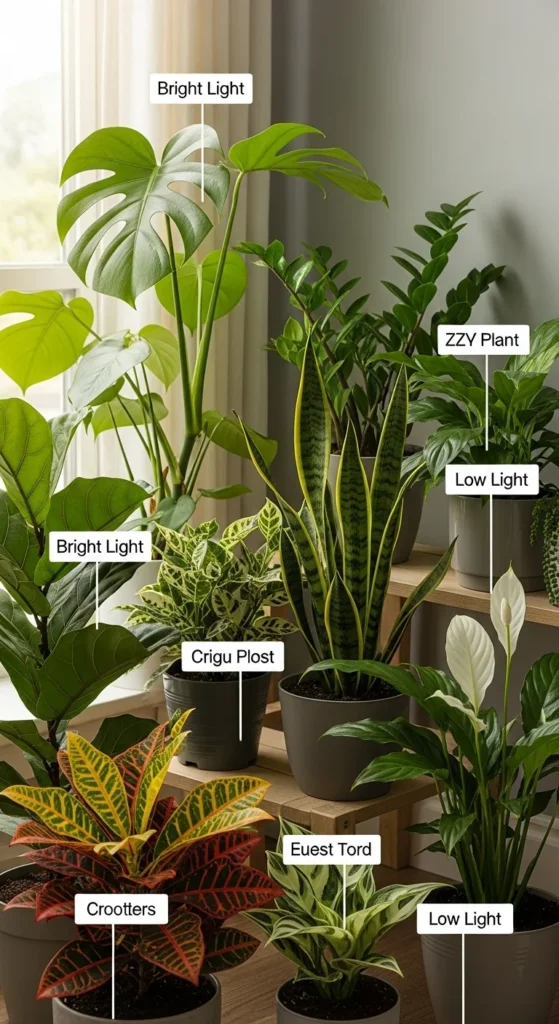
Pro tip: If your space is dark but your heart wants greenery, use grow lights! They mimic sunlight and keep plants happy even in windowless areas.
2. Get the Watering Routine Right
Overwatering is one of the biggest reasons indoor plants don’t make it. Most plants prefer a little neglect over too much love.
Here’s a simple trick:
- Stick your finger about an inch into the soil.
- If it feels dry, it’s time to water.
- If it’s still damp, wait a day or two.
Different plants have different needs — succulents like it dry, while ferns love humidity. Always check the soil before watering.
Extra tip: Use room-temperature water and let it soak evenly until it drains from the bottom. Empty saucers so roots don’t sit in water.
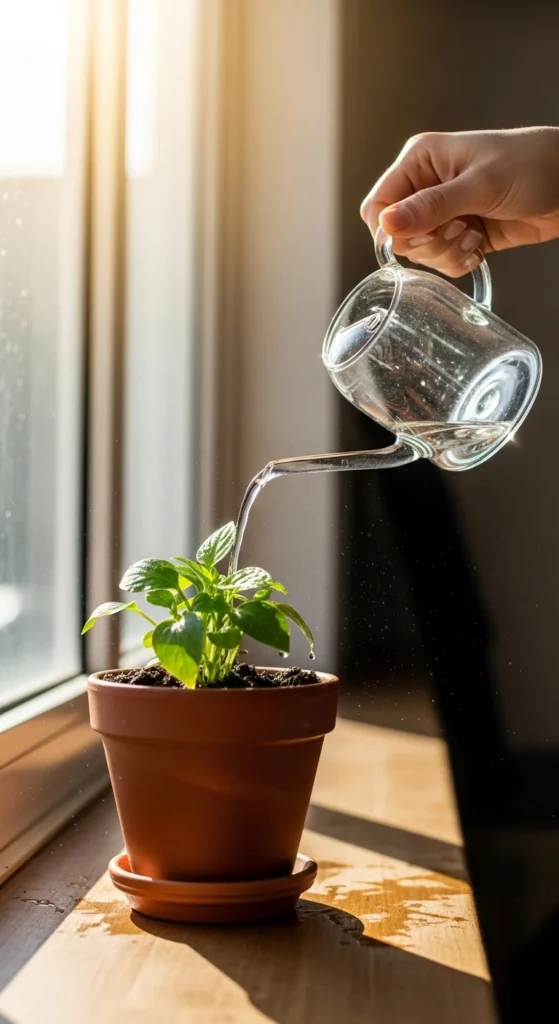
If your home has dry air (especially in winter), misting leaves or using a humidifier helps tropical plants stay lush and vibrant.
3. Give Them the Light They Deserve
Plants live and breathe light. Without enough of it, even the hardiest species start to droop.
Quick lighting guide:
- Bright direct light: Full sun for 4–6 hours a day (great for succulents).
- Bright indirect light: Filtered sunlight, perfect for most houseplants.
- Low light: Minimal natural light — ideal for snake plants and ZZ plants.
Rotate your plants every few weeks so all sides get light exposure. If leaves start leaning toward the window, it’s a sign they’re craving more light.
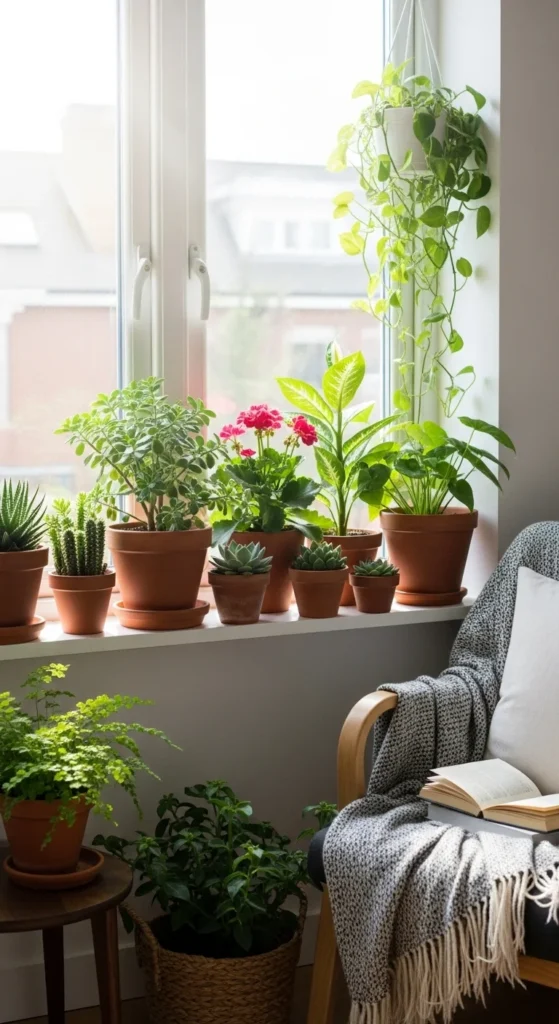
When natural light isn’t enough, small LED grow lights can make a huge difference — especially during winter months.
4. Feed and Repot When Needed
Just like people, plants need nutrients to stay strong. Most indoor plants benefit from feeding during their growing season (spring and summer).
Use:
- A balanced liquid fertilizer every 4–6 weeks.
- Half-strength dilution to avoid root burn.
When roots start peeking out from the bottom of the pot, it’s time to repot. Choose a pot that’s one size bigger and use fresh potting mix for a healthy start.
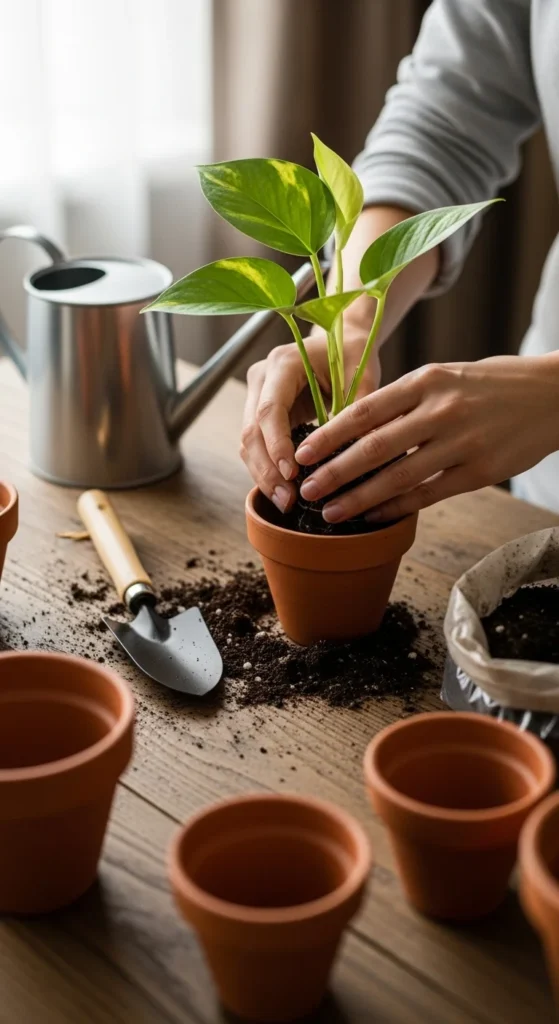
Bonus tip: Spring is the best season to repot since plants naturally go into growth mode.
5. Keep Pests and Dust Away
Tiny pests like spider mites or fungus gnats can sneak up on your plants. Regularly check leaves — especially under them — for signs of trouble.
Natural remedies:
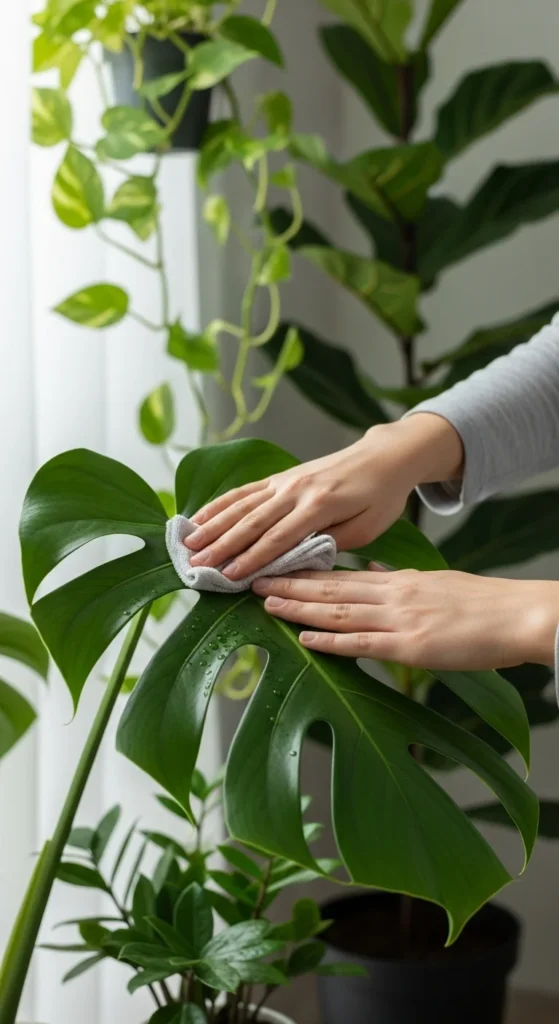
- Wipe leaves with a damp cloth to remove dust and pests.
- Mix water with a few drops of mild dish soap for a gentle cleaning spray.
- Introduce neem oil once a month to prevent infestations.
Also, clean leaves regularly! Dust buildup can block light absorption, slowing growth. A soft microfiber cloth works wonders.
6. Create a Routine That Works for You
Consistency is key to thriving indoor plants. Set reminders to water, rotate, and fertilize on schedule.
Simple maintenance checklist:
- Water when soil feels dry.
- Dust leaves weekly.
- Feed every month in growing seasons.
- Rotate plants every few weeks.
- Trim yellow or dying leaves to promote new growth.
Keep a small plant journal if you’re growing multiple varieties — it helps track each plant’s needs and patterns.
Final Takeaway
Growing indoor plants year-round isn’t just about gardening — it’s about creating a calming, living environment that improves your well-being. Once you understand what each plant needs, caring for them becomes second nature.
Start small, experiment with a few hardy species, and grow from there — literally!
Save this guide for later and start building your indoor jungle today — one thriving plant at a time.
Leave a Reply