

Turning kitchen scraps into nutrient-rich soil might sound like magic — but it’s actually composting! Composting is one of the easiest and most rewarding ways to reduce household waste while giving back to your garden. Whether you live in a house with a backyard or a small apartment with limited space, you can start composting today with just a few simple tools and steps.
Why Composting Matters
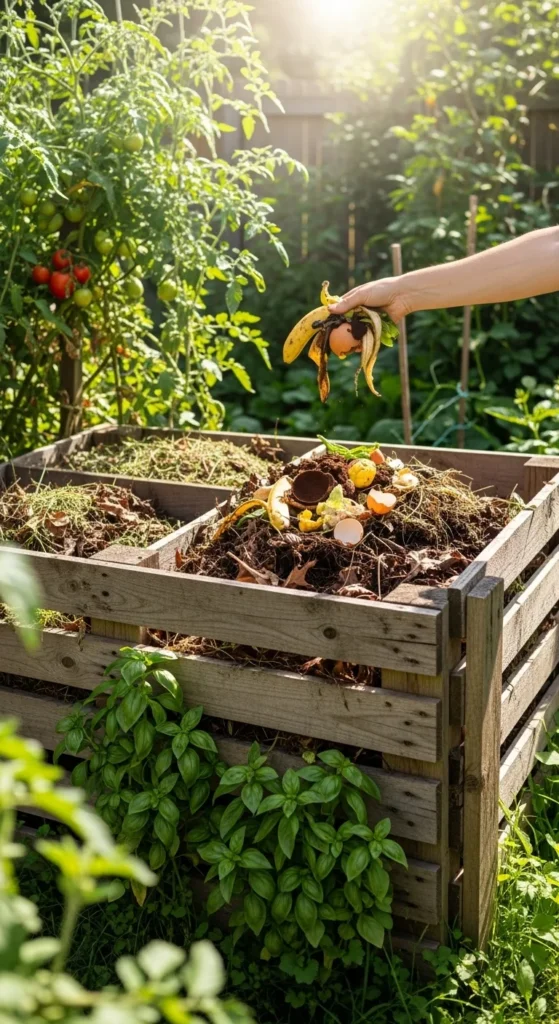
Composting isn’t just about reducing trash — it’s about creating life from leftovers. When food scraps end up in landfills, they decompose without oxygen, releasing methane gas — a potent contributor to climate change. But in a compost pile, those same scraps break down into nutrient-dense soil that feeds your plants naturally.
Here’s why composting is worth it:
- Reduces household waste by up to 30%.
- Enriches soil with natural nutrients.
- Cuts down on chemical fertilizer use.
- Helps retain soil moisture and improve plant health.
Step 1: Choose Your Composting Method
There’s no one-size-fits-all way to compost — it depends on your space and lifestyle.
If you have a yard:
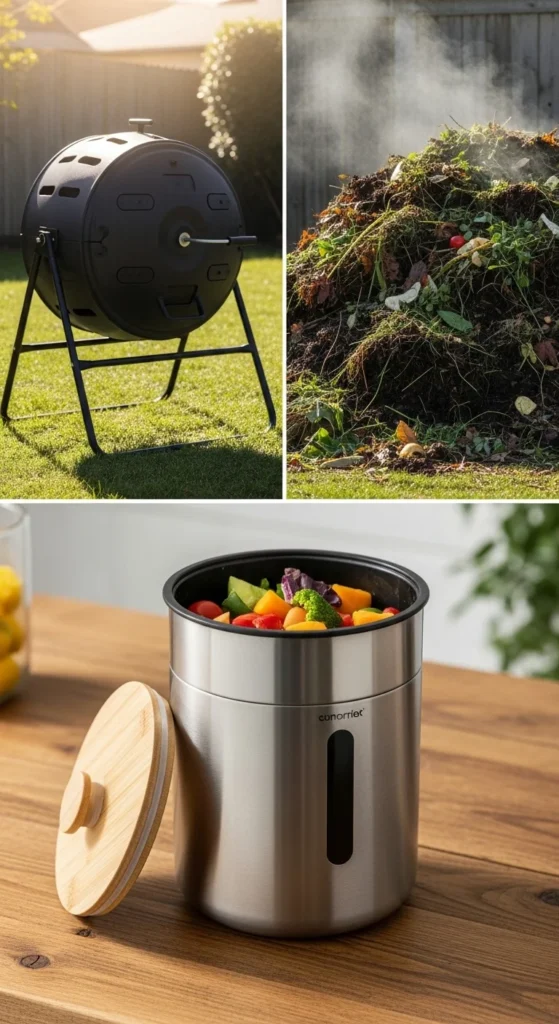
- Compost bin or pile: Ideal for outdoor composting. You can buy a bin or build one from pallets or wire mesh.
- Tumbler: Great for faster decomposition and easier mixing.
If you live in an apartment:
- Bokashi system: A sealed bucket that ferments food scraps indoors without odor.
- Worm composting (vermicomposting): Uses red wiggler worms in a small bin to break down food scraps.
- Electric countertop composters: These quickly turn scraps into dry compost material.
Step 2: Know What to Compost (and What to Avoid)
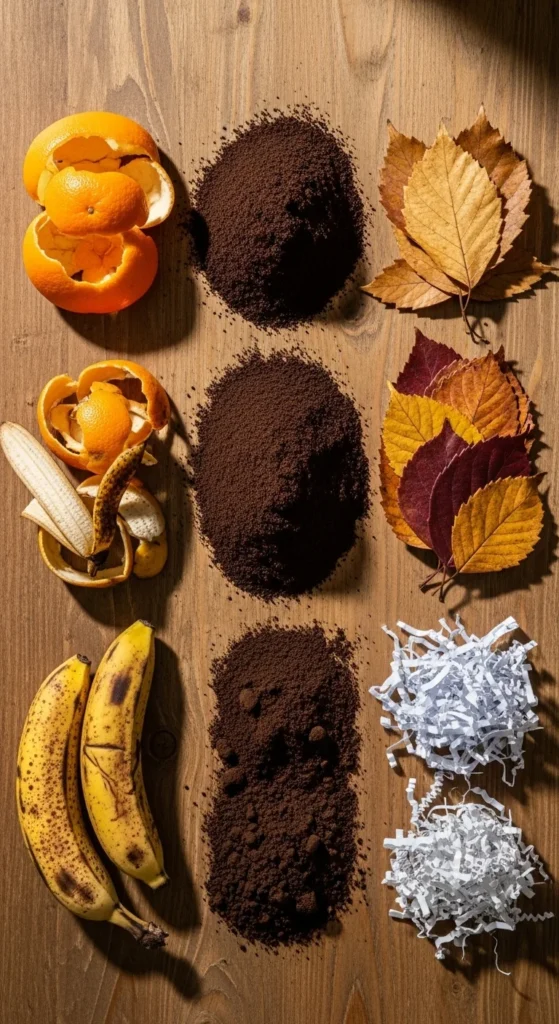
Getting your compost balance right is key to success. Composting works best when you combine “greens” (moist, nitrogen-rich materials) and “browns” (dry, carbon-rich materials).
✅ What to Compost:
- Greens: Fruit and veggie scraps, coffee grounds, tea leaves, fresh grass clippings.
- Browns: Dry leaves, shredded newspaper, cardboard, sawdust, twigs.
🚫 Avoid Composting:
- Dairy or meat products.
- Oily or greasy food.
- Pet waste.
- Diseased plants.
Try to keep a rough 1:3 ratio of greens to browns — that balance helps prevent odor and speeds up decomposition.
Step 3: Set Up Your Compost Bin
Once you’ve chosen your compost method, it’s time to set it up.
For outdoor composting:
- Pick a shaded spot that’s easy to reach.
- Start with a layer of browns — like twigs or cardboard — to help air circulate.
- Add alternating layers of greens and browns.
- Moisten lightly as you go; the compost should feel like a damp sponge.
For indoor composting:
- Keep your bin in a ventilated space.
- Add small amounts of browns (like paper) to absorb moisture.
- Stir or rotate your compost regularly to mix the materials.
Step 4: Maintain and Monitor Your Compost
Composting isn’t a “set it and forget it” task — it needs a little care to thrive.
Here’s how to keep your compost healthy:
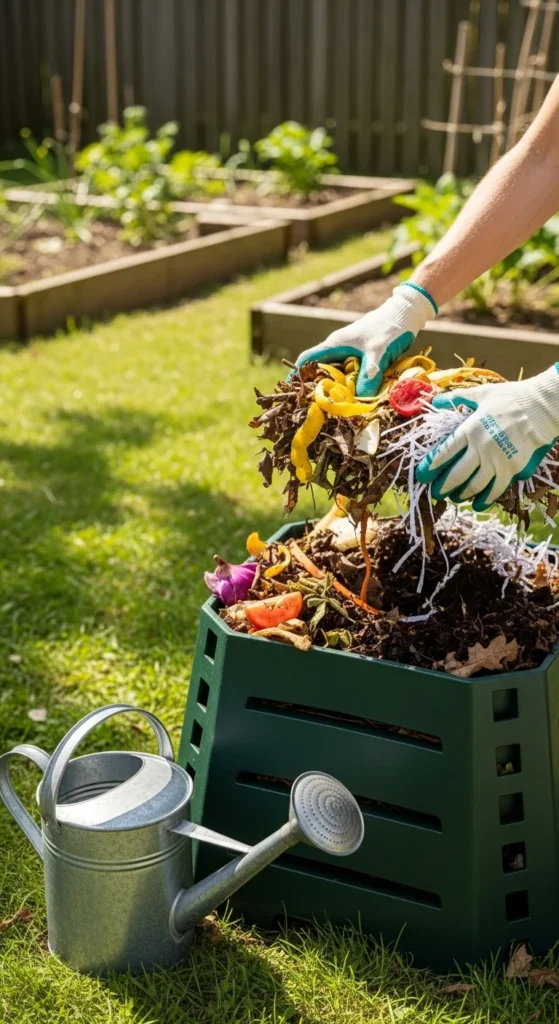
- Turn it every week or two to introduce oxygen and speed up decomposition.
- Check moisture: If it’s too dry, sprinkle some water; if too wet, add more browns.
- Watch the smell: A healthy compost smells earthy. If it smells rotten, it’s likely too wet or heavy on greens.
- Be patient: Composting usually takes 2–6 months, depending on the temperature and materials.
Tip: You can sprinkle garden soil or finished compost occasionally to introduce helpful microbes.
Step 5: Harvest and Use Your Compost
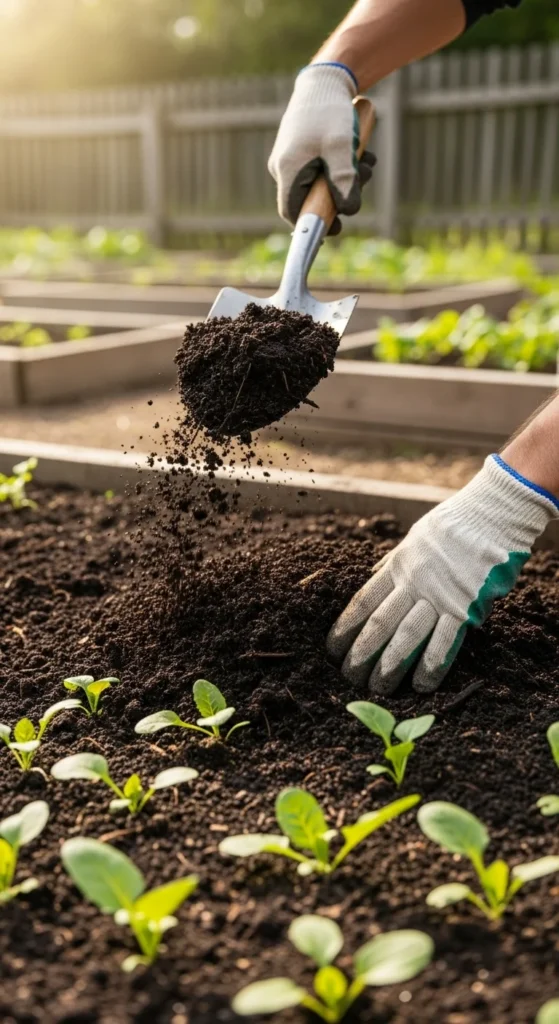
When your compost looks dark, crumbly, and smells like fresh earth — it’s ready! Sift out any large pieces and return them to the pile for further decomposition.
Use your compost:
- In garden beds to enrich the soil.
- As potting mix for houseplants.
- On lawns or flower beds as a natural fertilizer.
- Around trees or shrubs as mulch.
Troubleshooting Common Compost Problems
Even the best composters hit a few snags. Here’s how to fix them:
- Bad odor? Add more browns and mix well.
- Too dry? Sprinkle water and mix.
- Pests? Avoid meat or oily foods, and cover new scraps with a layer of browns.
- Slow decomposition? Chop scraps smaller and turn the pile more often.
Final Thoughts
Starting composting at home is one of the most eco-friendly and satisfying habits you can adopt. You’ll reduce waste, improve your soil, and play a small but important role in protecting the planet. Plus, there’s something magical about watching yesterday’s kitchen scraps turn into tomorrow’s garden gold.
So why wait? Start composting today — and give your plants (and the planet) a reason to thank you.
Save this guide for later and share it with a friend who loves gardening!

Leave a Reply