

Winter can be tough on plants, especially when freezing temperatures hit the soil and stress the roots. But the good news? You can create your own winter garden mulch that keeps roots warm, improves soil health, and boosts spring growth—all without spending a lot of money.
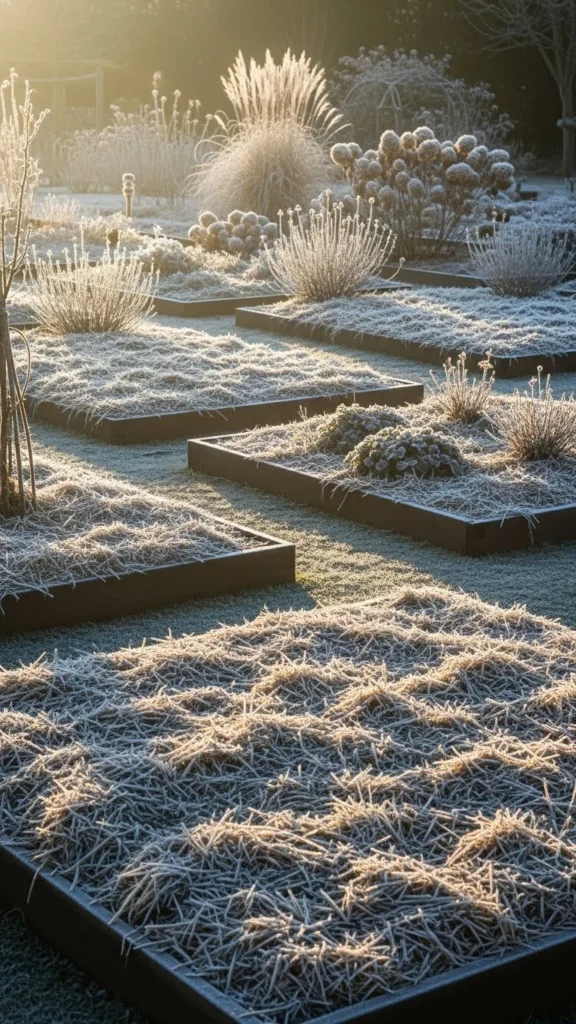
This guide walks you through everything you need to create mulch that actually works. It’s simple, beginner-friendly, and uses materials many gardeners already have on hand.
Why Winter Mulch Matters More Than You Think
Winter mulch acts like a warm blanket for your plants. It traps heat, reduces freeze–thaw cycles, keeps soil moist, and protects tender roots from harsh winds.
Here’s what good winter mulch does:
- Stops sudden temperature swings
- Keeps soil consistently moist
- Protects young or shallow roots
- Prevents soil erosion
- Encourages early spring growth
You don’t need fancy products. Everyday organic materials can work beautifully.
Step 1: Gather the Best Materials for Winter Mulching
Choosing the right materials is the key to building insulating mulch. Aim for lightweight, fluffy, natural textures that trap air.
Great winter mulch options include:
- Dry leaves (shredded is best)
- Pine needles
- Straw or hay (not seed-heavy)
- Wood chips
- Compost
- Shredded bark
Avoid anything that mats too tightly—roots need insulation, not suffocation.
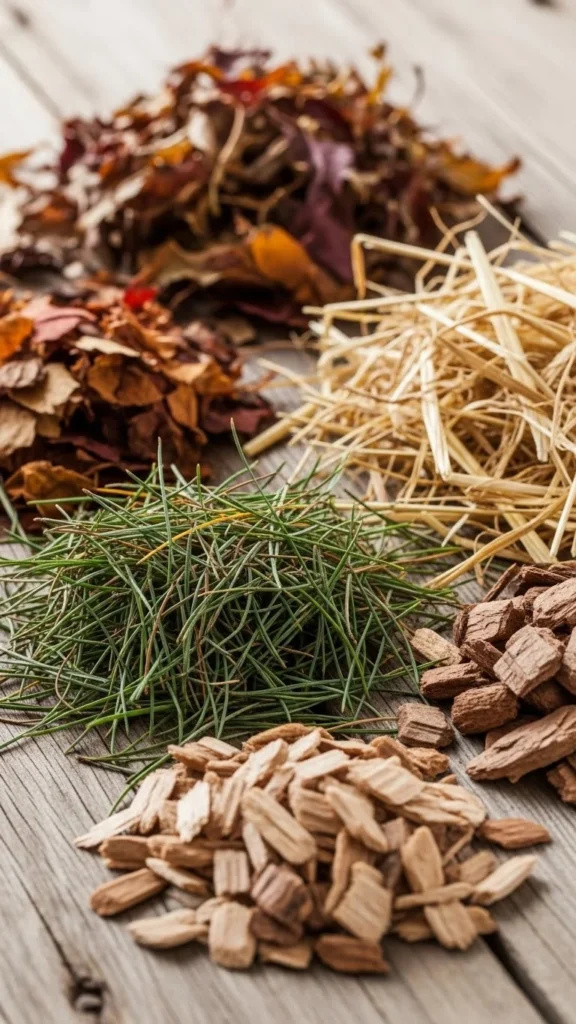
If you’re working on a large garden, mix materials to create layers that insulate better than a single type of mulch.
Step 2: Prepare the Soil Before Adding Mulch
Mulch works best when the soil underneath is in good shape. Quick prep ensures the roots stay healthy all winter long.
Do a simple cleanup
Remove:
- Dying leaves
- Fallen plant debris
- Damaged or diseased stems
This prevents pests and mold from settling in during colder months.
Light watering helps
Give your soil one thorough watering. Moist soil holds heat longer and hydrates plants through long freezes.
Add compost before mulching
A thin layer of compost feeds the soil slowly during winter. It also creates a soft cushion under your mulch.
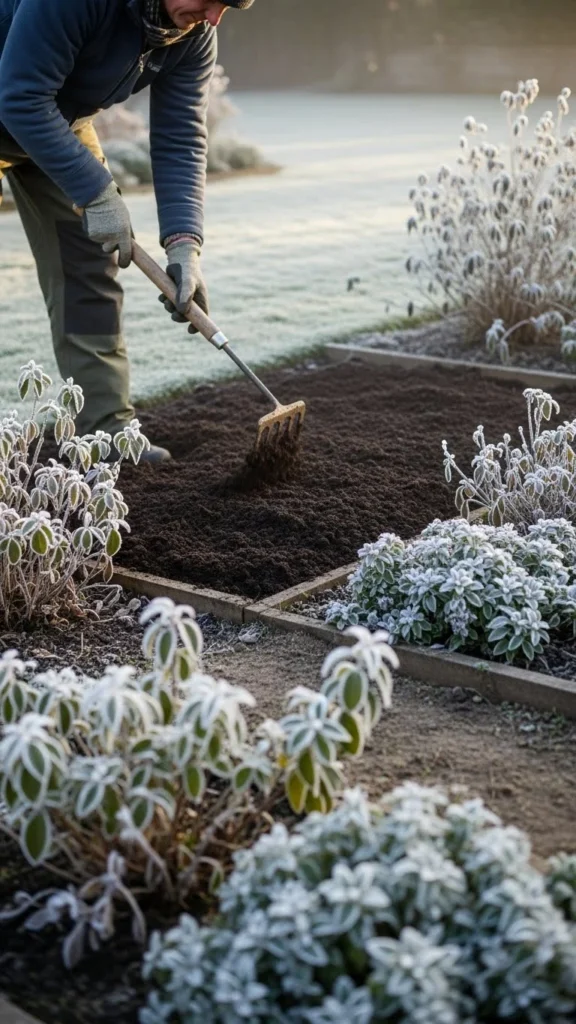
Step 3: Apply Mulch the Right Way
Putting mulch down correctly is just as important as choosing the right materials.
How much mulch should you use?
For winter protection, aim for:
- 3–6 inches around beds and shrubs
- 2–3 inches for potted plants
- 5–8 inches for tender perennials
Thicker layers offer better insulation, especially after heavy frost.
Keep mulch slightly loose
Fluffiness lets your mulch trap warm air. Avoid packing it down.
Leave space around stems
Always keep a 2–3 inch gap around:
- Stems
- Trunks
- Crowns
Touching mulch can cause rot.

Step 4: Use Special Mulch Techniques for Extra Protection
Some plants need a little more help. Here are clever tricks that gardeners swear by:
Create a “mulch dome”
This method works great for tender plants.
- Shape mulch into a soft dome over the soil.
- Keep airflow around the plant by raising the center slightly.
The dome pushes water away and traps warmth underneath.
Use evergreen branches as a topper
Lay small branches over your mulch to protect it from blowing away.
They also add another layer of insulation without smothering the plant.
Try mulch rings for trees
Form a wide ring of mulch around the base of young trees.
This prevents winter cracking and protects shallow roots.
Step 5: Maintain Mulch Throughout Winter
Mulch doesn’t need heavy maintenance, but quick checks can keep everything in good shape.
Do the following every few weeks:
- Fluff areas that look compacted
- Add small amounts of mulch if wind displaces it
- Check stems and trunks for hidden moisture
- Brush snow gently off plants (but leave snow on mulch—it insulates!)
If you see frost heaving (soil lifting from freezing), gently press the soil back and add an extra inch of mulch.
Step 6: Remove or Adjust Mulch in Early Spring
As days warm up, roots need more airflow.
Here’s what to do:
- Pull back mulch gradually
- Let soil warm naturally
- Add compost to refresh the bed
- Keep a lighter layer for moisture control
Your plants will wake up stronger and healthier if they’re not buried under a heavy winter layer.
Final Takeaway
Winter mulch is one of the easiest ways to protect your garden and help roots stay strong through freezing weather. With a few simple materials and the right layering, you can create a natural insulation system that boosts growth in spring.
Save this guide for later and keep your garden thriving all winter long!

Leave a Reply