

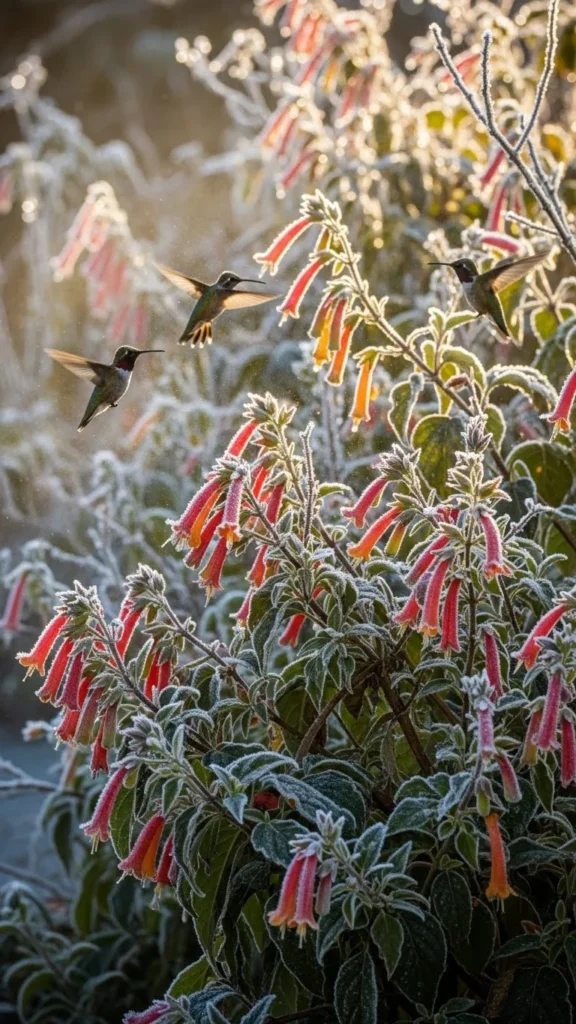
Winter can feel quiet outdoors, but hummingbirds stay active and hungry even in cold months. They’re drawn to bold colors, nectar-rich blooms, and plants that offer shelter when everything else fades. Below you’ll find simple, budget-friendly winter plants that help create a lively garden where hummingbirds show up again and again. Each idea keeps your yard colorful while giving the birds something reliable to return to during the coldest days.
1. Winter Blooming Camellia
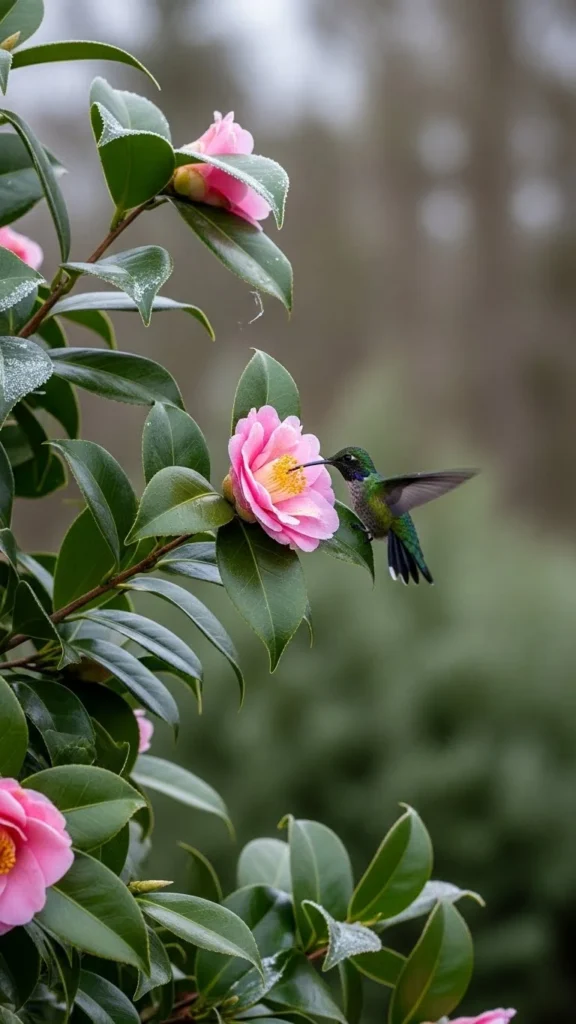
Camellias bring bright color when the garden feels quiet. Their soft blooms open even during cold spells, giving hummingbirds a steady nectar source. Plant one near a window so you can enjoy the visits up close. Choose a sheltered corner to help the plant stay warmer on icy nights. Water deeply once a week and add mulch around the base to hold moisture. If you’re on a budget, start with a small nursery pot. It grows slowly but steadily. You can also prune lightly to shape it into a clean, compact form. For simple DIY decor, scatter pine bark or river stones around the base for a neat, low-cost finish. Hummingbirds appreciate the bright petals and will come back again once they learn this spot has something sweet.
2. Firecracker Plant
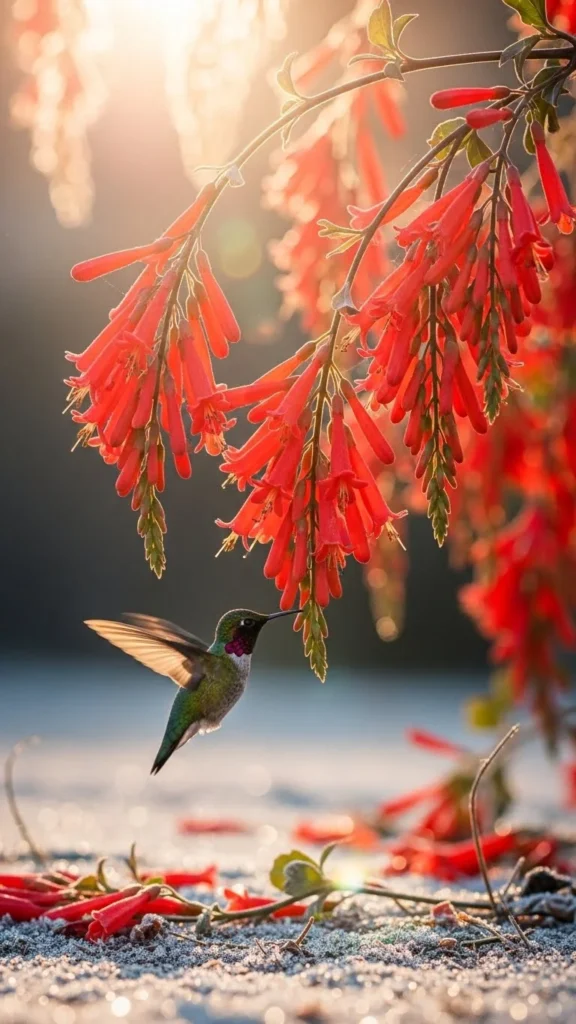
This plant produces slim, tube-shaped flowers that hummingbirds can’t resist. It stays colorful even when temperatures drop. Place it in a container if you want something mobile. Move it closer to the house wall to trap warmth. Keep the soil lightly moist and trim stray stems for cleaner growth. Smaller starter plants are often inexpensive, making it a smart pick for winter color. If you want a DIY touch, tuck several in a long rectangular planter for a soft cascade effect. The narrow blooms make feeding easy for hummingbirds, and their bright red shade stands out against dull winter landscapes.
3. Winter Jasmine
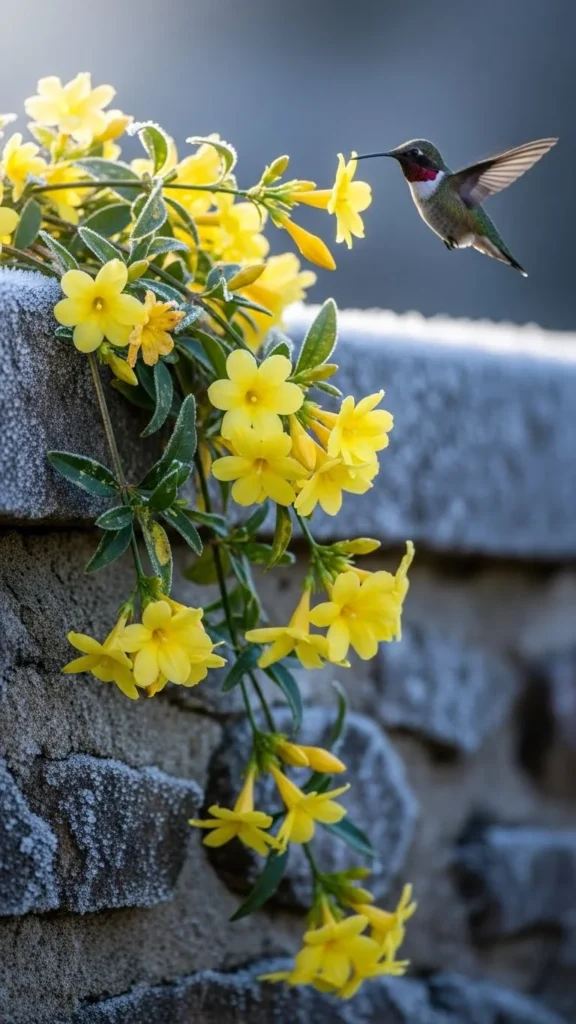
Winter jasmine wakes up the garden with cheerful yellow blooms. Although it doesn’t offer nectar, its color draws hummingbirds close as they scout for food. Plant it along a fence or trellis for a natural curtain of winter flowers. It grows fast, so consider using simple garden wire as a budget support. Trim tangled vines to keep it tidy. Add mulch for root warmth. If you love low-cost styling, weave fairy lights through the stems for a cozy glow. The sunny blooms brighten the cold days and help hummingbirds locate nearby nectar plants more easily.
4. Pineapple Sage (Overwintered Indoors or Mild Climates)
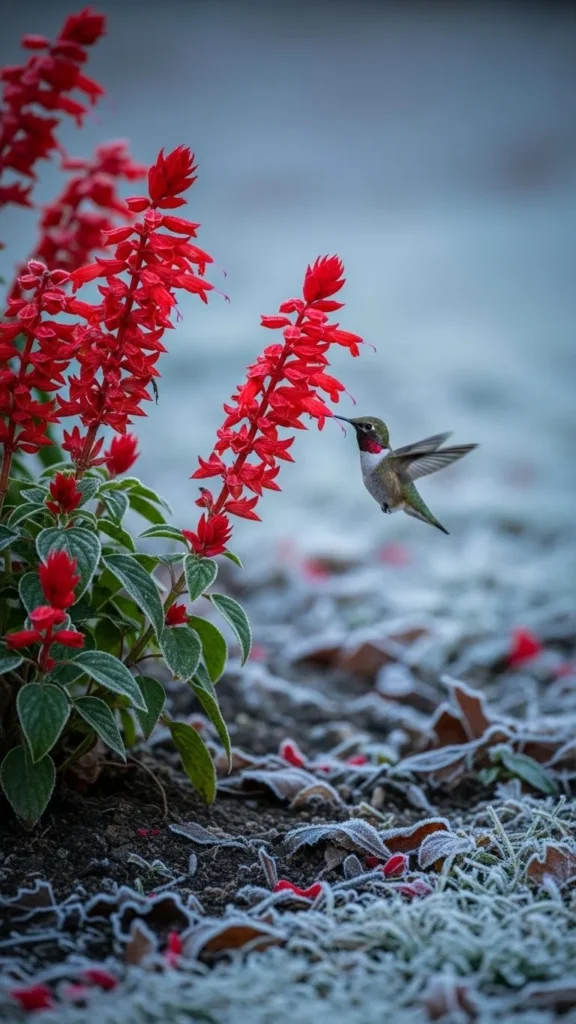
In mild climates, pineapple sage may keep blooming through winter. Indoors, it thrives in a sunny window. Either way, hummingbirds love the red spikes. Start with a small pot for a wallet-friendly option. Keep the soil lightly moist and pinch the tips during fall to shape fuller growth. If temperatures drop too low, bring the pot inside before frost arrives. A simple terra-cotta pot works well and adds warmth to your decor. Place it near your patio door so hummingbirds can spot the color quickly. Even if blooms slow down, the remaining bright foliage still draws their attention.
5. Mahonia (Oregon Grape)
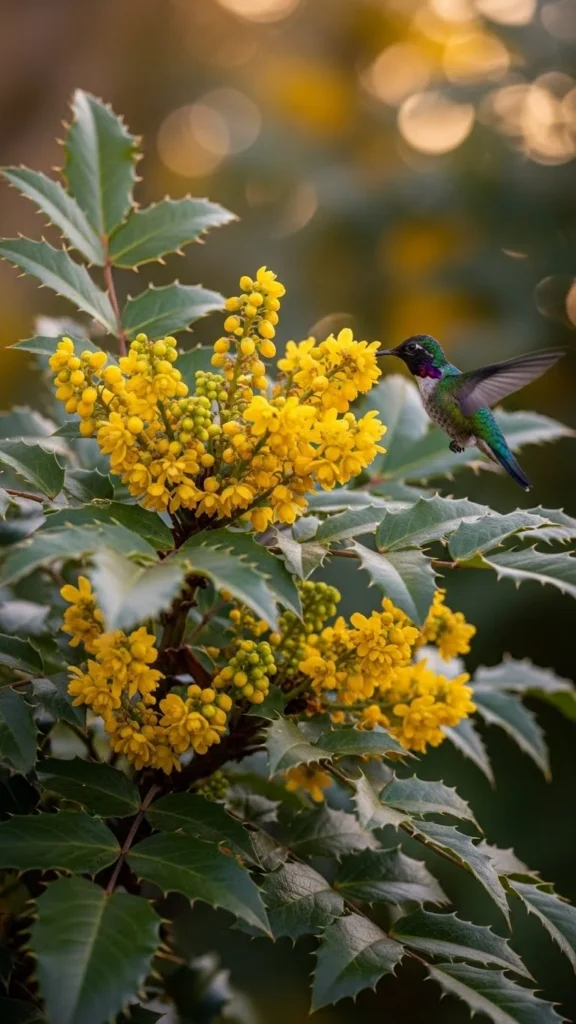
Mahonia sends up fragrant yellow flowers at the coldest time of year. These blooms provide nectar right when hummingbirds are searching hardest. It grows in shade, making it a great filler for dark corners of your yard. Add bark mulch for a tidy look and better moisture balance. Young plants are affordable and transplant well. Water weekly during dry spells. The plant’s bold shape also adds texture to winter beds. For a simple DIY upgrade, plant three in a triangular cluster for balance. Once flowering begins, hummingbirds spot the bright clusters from a distance.
6. Hellebores
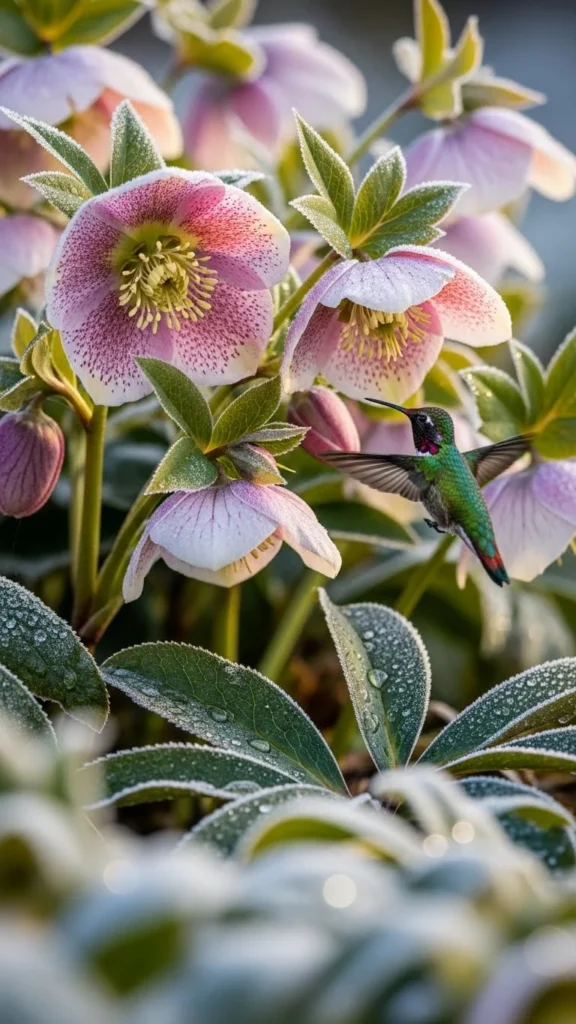
Hellebores open early and hold their blooms for weeks. While they offer limited nectar, their color helps hummingbirds locate richer sources nearby. Plant them near paths so you can enjoy the winter show up close. They’re easy to maintain and handle cold well. Small starter plants cost less, and they grow into long-lasting clumps. Add leaf mulch to protect crowns from cold winds. If you enjoy DIY touches, pair hellebores with stones or moss for a peaceful winter display. Their subtle shades brighten quiet spaces and invite hummingbirds closer to the rest of your garden.
7. Red Hot Poker (Winter-Blooming Varieties)
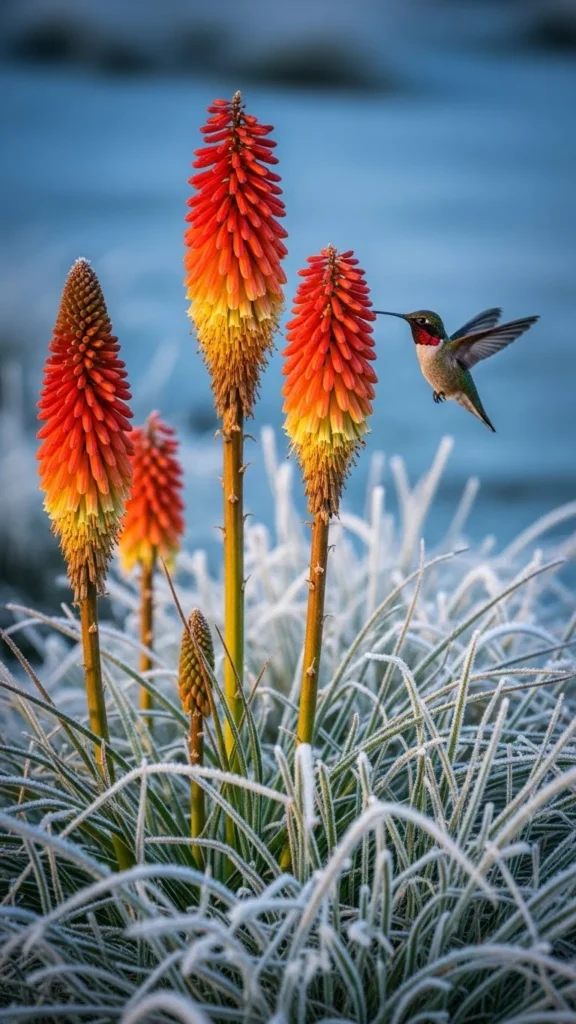
Some varieties send up blooms during winter, giving hummingbirds an easy nectar source. These bright spikes stand tall against winter landscapes. Plant in well-drained soil and add gravel for a clean look. Smaller pots are usually inexpensive and adapt well to garden beds once spring returns. Trim old flower stems to help new ones form. If your space is small, place them in large containers near your patio. This keeps the blooms within hummingbird reach while adding color to bare areas.
8. Winter Honeysuckle
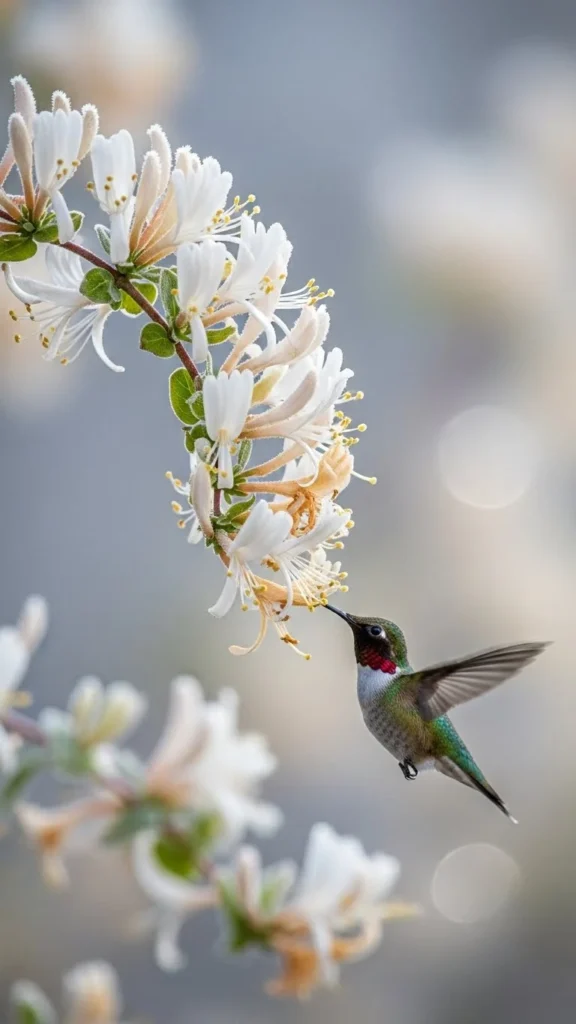
Winter honeysuckle fills the cold months with delicate fragrance and small white blooms. Hummingbirds enjoy the scent and stop to explore the petals. It grows into a wide shrub, so give it a bit of room. Use pruning shears to keep it shaped. Add compost once a year for better growth. If you’re limiting expenses, start with a single young plant and allow it to spread over time. You can also weave a few branches along simple wooden stakes for a casual cottage feel.
9. Witch Hazel
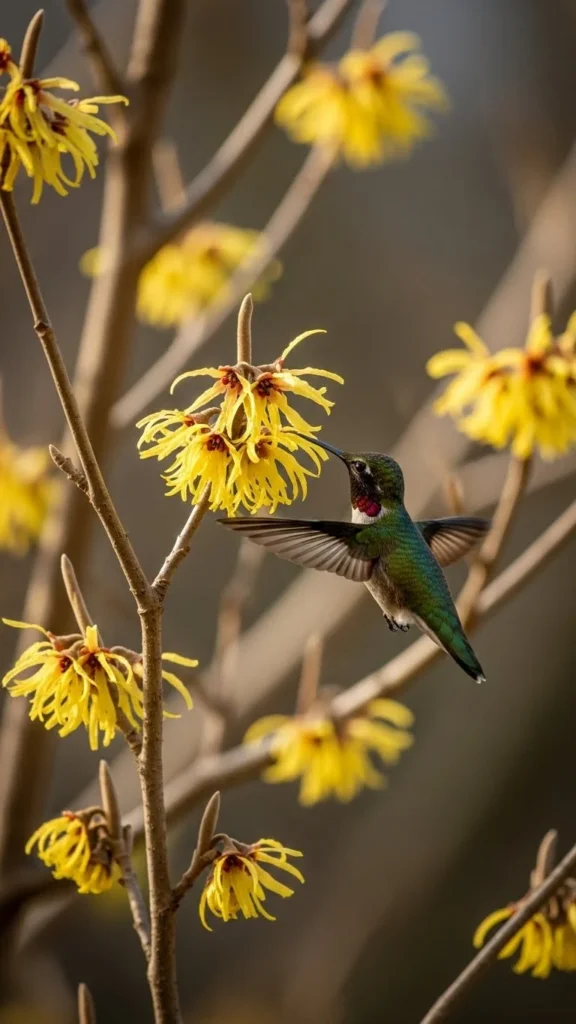
Witch hazel flowers during the chilliest weeks. Its ribbon-like petals stand out brightly, helping hummingbirds spot the plant from afar. Plant it near the edge of a walkway for easy viewing. Add mulch to help roots stay steady. Young shrubs are usually affordable and settle quickly into the landscape. Trim lightly after blooming to keep a nice shape. If you want a DIY accent, place smooth stones at the base for a clean winter look.
10. Manzanita
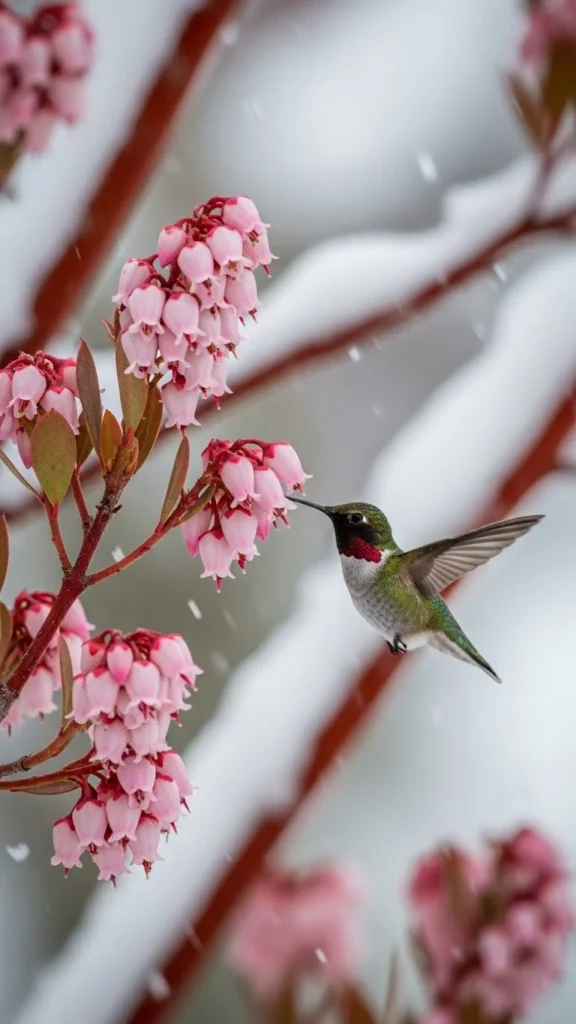
Manzanita offers nectar when little else does. Its tiny bell-shaped flowers appear in clusters and attract hummingbirds right away. It also has striking red bark that adds color in winter. Plant in a sunny, well-drained spot. Use gravel mulch for a tidy finish. Start with a small shrub if you want to save money. Water sparingly. If you enjoy DIY touches, position manzanita near a boulder or lantern for a natural winter display.
11. Mexican Sage (In Mild Winter Zones)
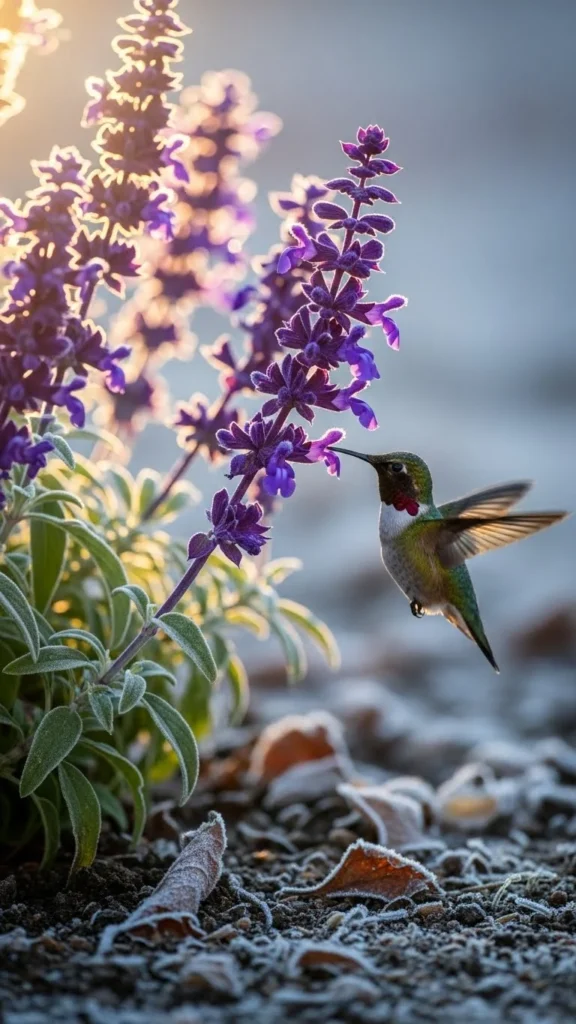
Mexican sage may continue blooming through winter in mild climates. The fuzzy purple stalks draw hummingbirds instantly. Grow it in a large pot if your area gets colder nights. Move it near a sunny wall for warmth. Trim older stems so new ones grow tougher. These plants are inexpensive, especially in small containers. Pair several in one pot for a fuller look. The vivid color helps hummingbirds find a reliable feeding spot without searching long.
12. Winter Heath
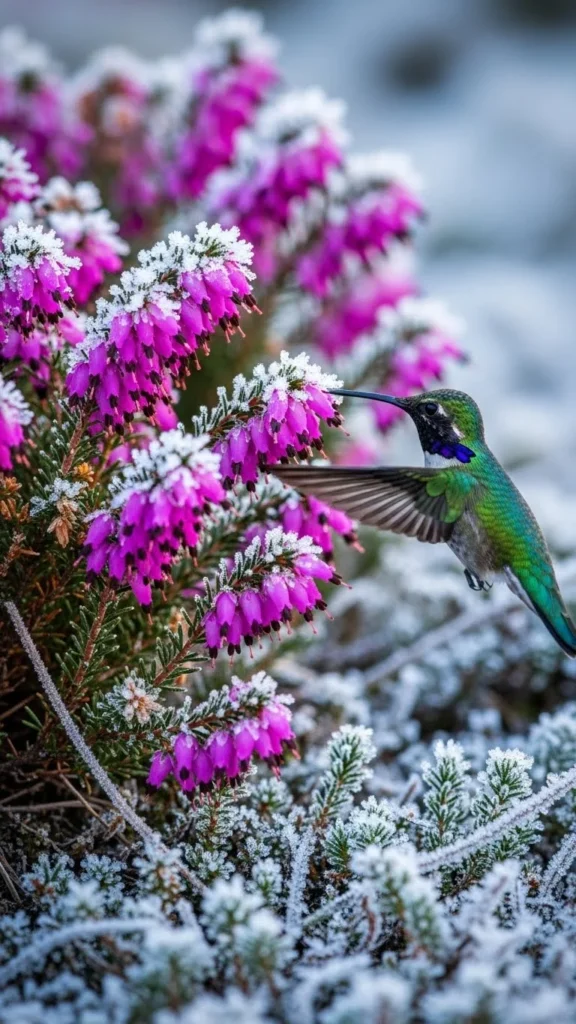
Winter heath spreads into a bright mat of flowers when the rest of the garden sleeps. Hummingbirds appreciate the color as they scout for food. It stays low, making it ideal for borders, rock gardens, or walkway edges. Buy a few small pots and space them out so they fill in naturally. Add sandy soil or gravel for clean drainage. Once planted, heath requires little care. You can also tuck pieces of moss or small stones between clumps for a charming winter scene.
13. Winter Pansies
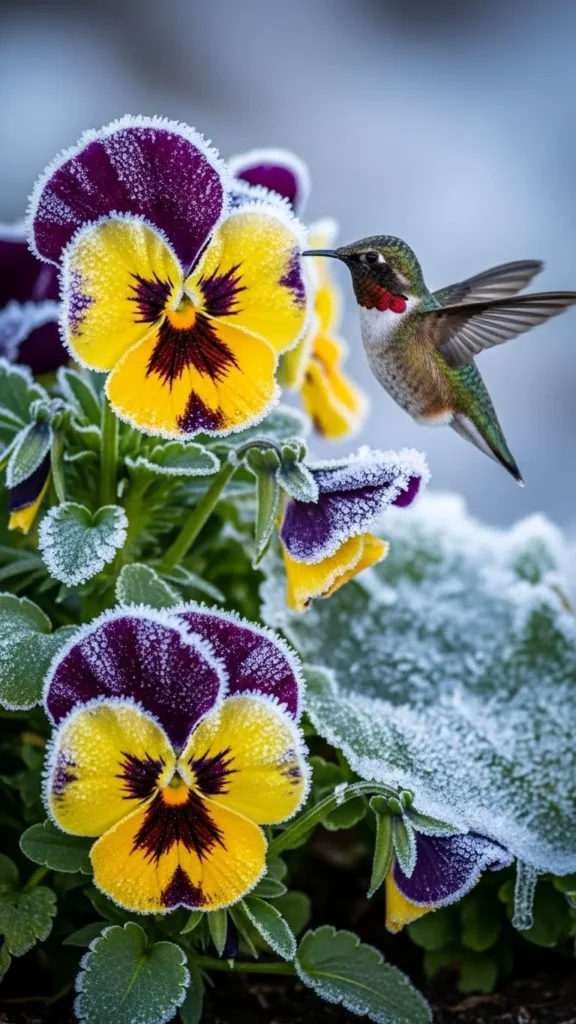
Pansies bloom through cold spells and offer splashes of color that hummingbirds notice quickly. They’re inexpensive and easy to plant anywhere—pots, beds, or hanging baskets. Choose a mix of bold colors for stronger visual cues. Keep the soil lightly moist and pinch spent blooms to encourage new ones. For a fun DIY project, arrange pansies in an old wooden crate for a rustic winter planter. Set it near a window so hummingbirds can find it fast.
14. Flowering Quince
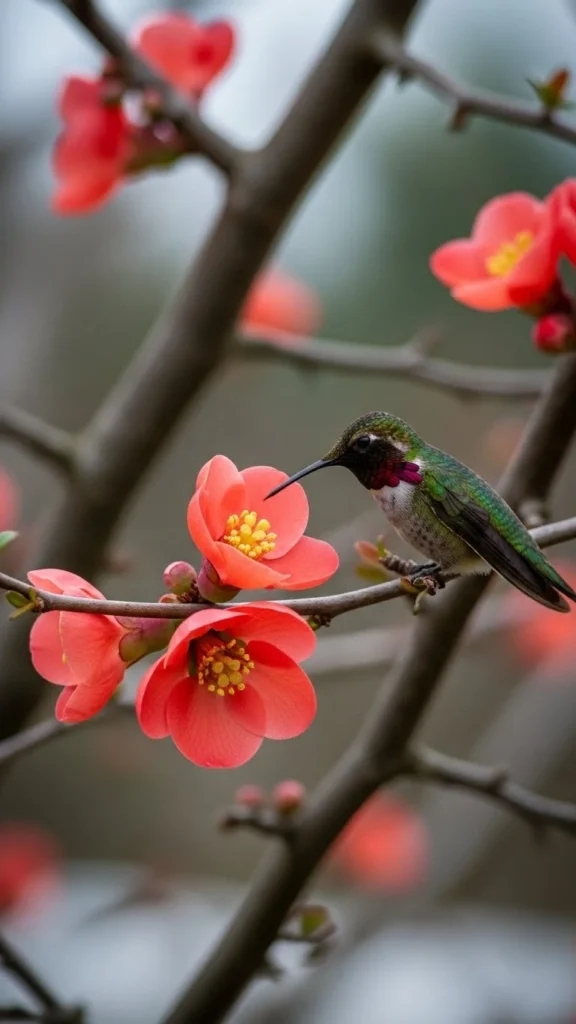
Flowering quince produces early color that signals hummingbirds to check your garden. Its bright petals and open growth habit make feeding easy. Plant it near fences or corners for structure. Young bare-root plants cost less and adapt quickly. Water during long dry periods. Trim lightly after blooms fade. If you enjoy DIY decor, surround the base with smooth river stones for a simple winter accent.
15. Rosemary (Winter Blooming)
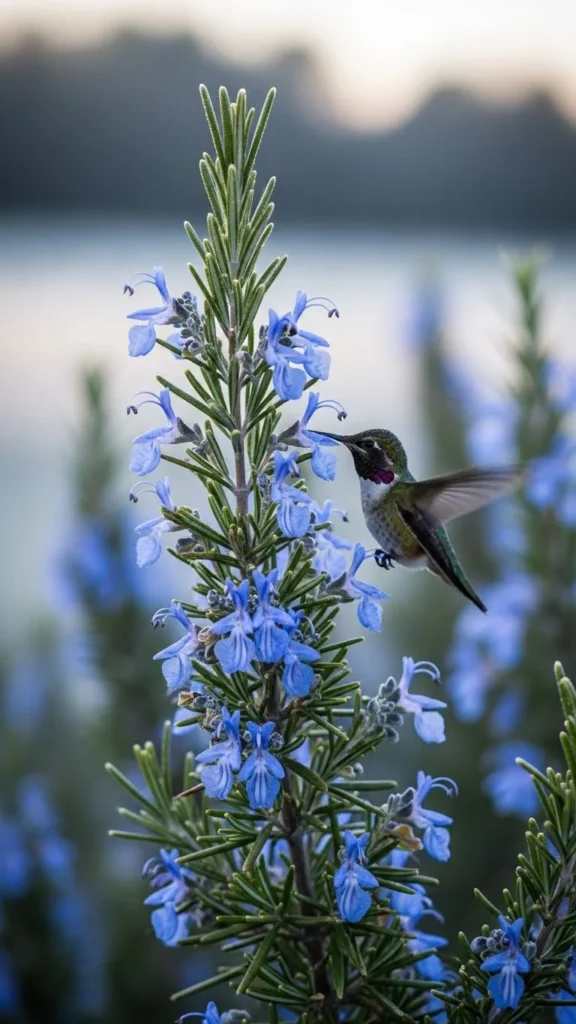
Some rosemary varieties bloom through winter. The soft blue flowers attract hummingbirds while the plant itself stays evergreen. Grow it in a pot if you want something portable. Place it near a doorway so flying visitors spot it easily. Water sparingly and trim as needed. Smaller pots cost less and still produce many blooms. For a creative touch, use a clay pot wrapped with a simple jute bow for an easy winter display.
16. Aloe (Winter Blooming Types)
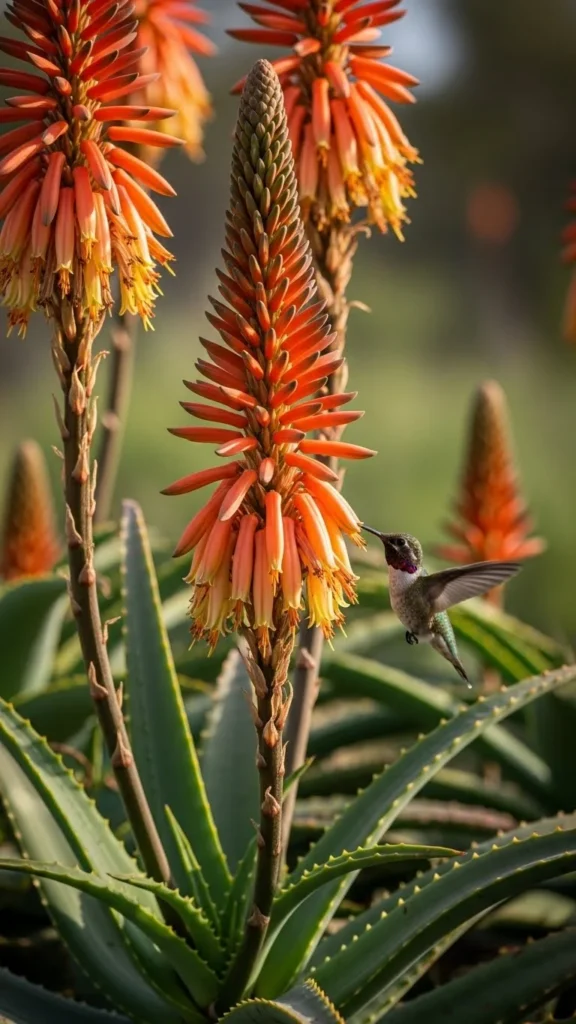
Winter-blooming aloe varieties send up bold spikes that hummingbirds adore. Their shape makes feeding simple. Place aloe in a bright spot with well-drained soil. Use gravel or sand for a clean look. Start with small offsets—they’re cheaper and grow fast. If frost threatens, move the pot under a porch roof. Aloe also adds sculptural winter interest. Arrange three pots in varying sizes for an easy DIY grouping that hummingbirds visit often.
17. Texas Betony
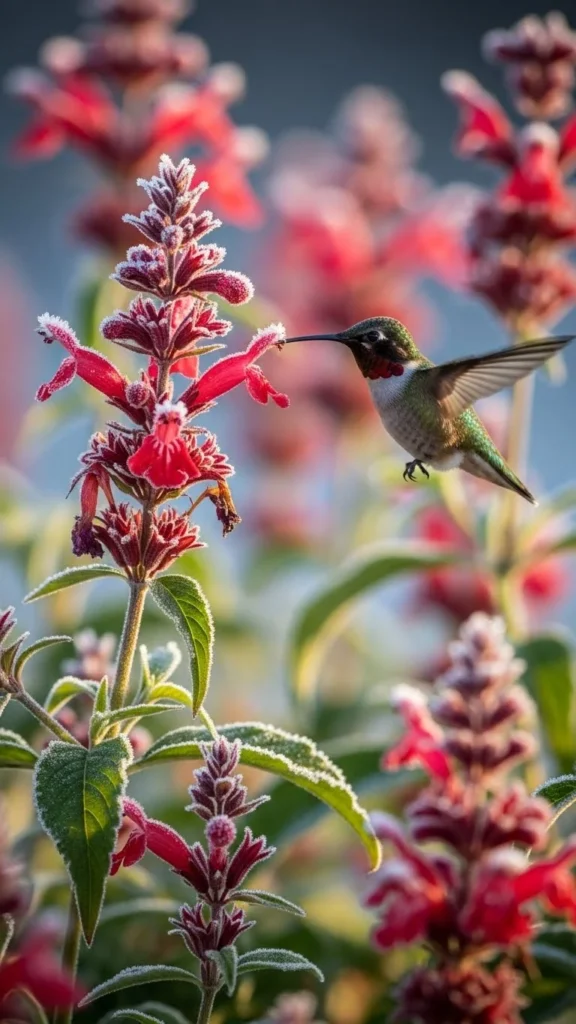
Texas betony flowers for long periods, including late into winter in mild climates. The blooms are slender and bright, making them a natural hummingbird magnet. Plant in a sunny area and add compost for steady growth. Smaller nursery pots are affordable and settle well. Trim lightly to encourage branching. For DIY charm, pair it with gravel paths or simple terracotta pots. Hummingbirds appreciate the open shape and return often.
18. Autumn Sage (Winter Blooming Variants)
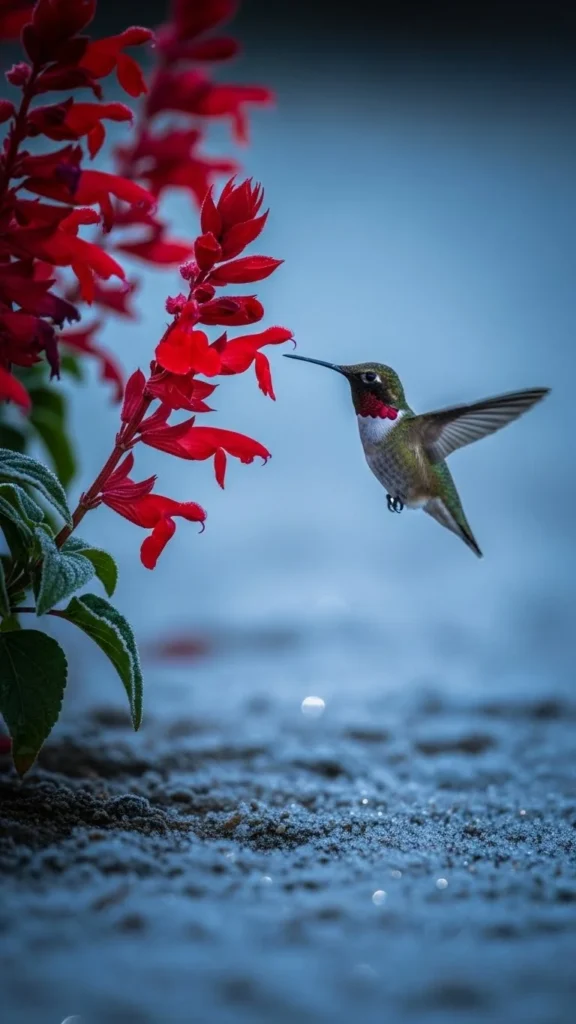
Some varieties keep blooming deep into winter. These red flowers stay upright and easy for hummingbirds to reach. Plant in well-drained soil and place near sunny spots. Add bark mulch for a tidy finish. Buy small plants to save money—they grow quickly. Trim stray stems to keep it clean. If you enjoy DIY displays, cluster three plants near a low stone border for a simple winter vignette.
19. Winterberry Holly
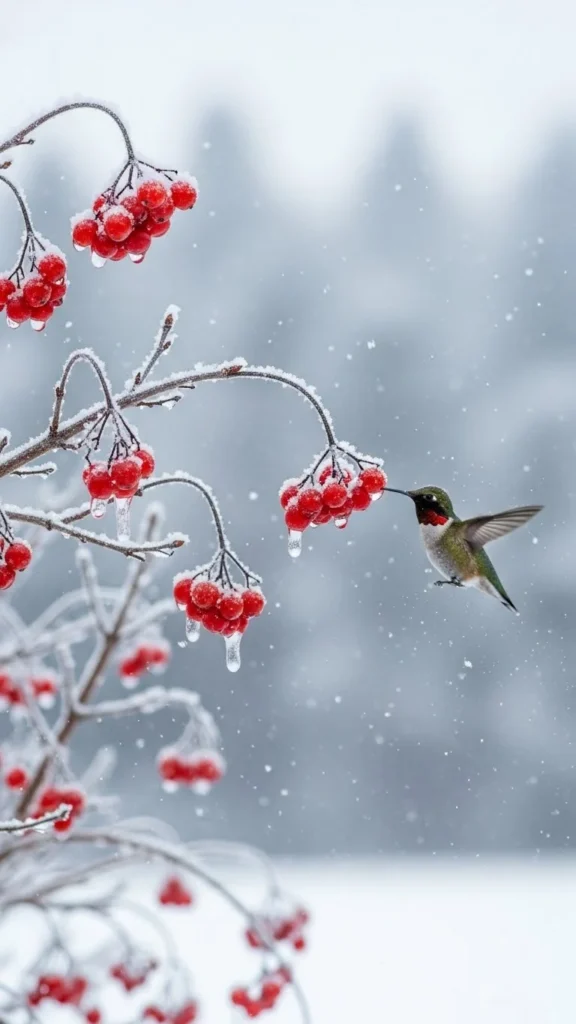
Winterberry holly doesn’t offer nectar, but its vivid red berries act like a beacon. Hummingbirds often explore the area and investigate nearby blooms. Plant it as a hedge or accent shrub. Choose smaller container sizes for a budget-friendly start. Add organic mulch for moisture control. It pairs well with evergreen backdrops. For DIY styling, place a lantern or wooden crate beside it to make the color pop even more.
20. Edgeworthia (Paperbush)
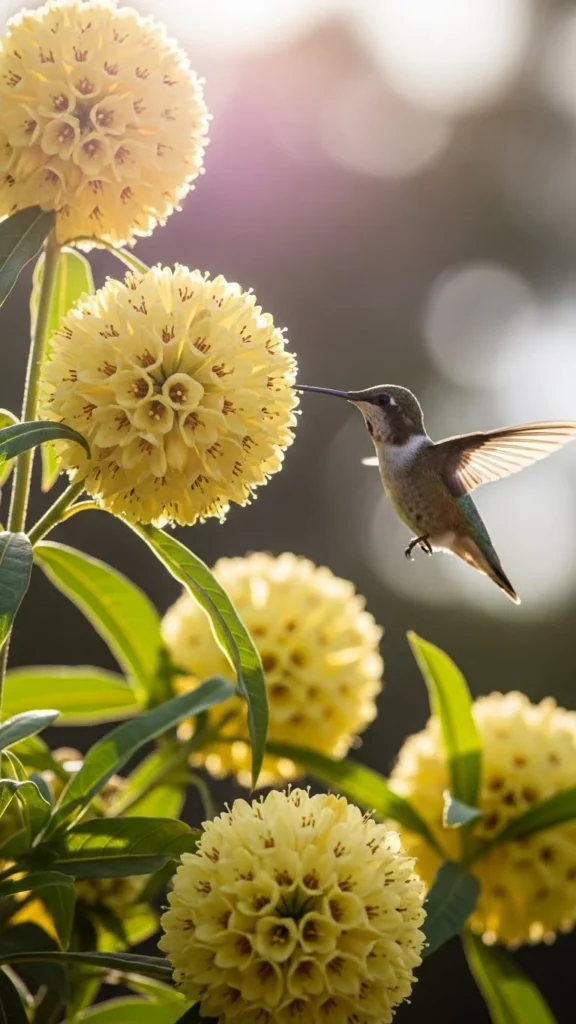
Edgeworthia blooms in late winter with fragrant, globe-shaped clusters. Hummingbirds enjoy exploring the open petals. Plant it where it gets morning sun. Use mulch to help with temperature swings. Small young plants cost less and settle quickly. Its arching branches also add structure to garden beds. If you like DIY touches, place a few white stones at the base for a calm, clean look that highlights the blooms.
21. Coral Bells (Winter-Color Varieties)
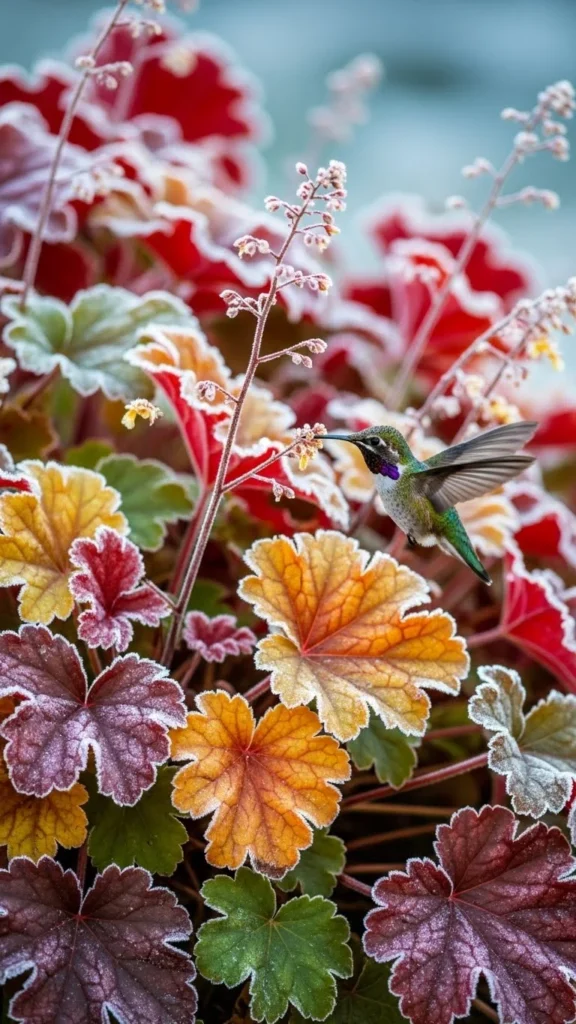
While coral bells don’t bloom heavily in winter, their bold leaves attract hummingbirds searching for color cues. Choose varieties with deep red or purple foliage. They grow well in pots or shady beds. Small pots are inexpensive, making it easy to mix multiple colors. Add pine mulch for a soft base. For a simple DIY arrangement, group three colors together in a wide container. The bright foliage guides hummingbirds toward the rest of your winter blooms.
22. Grevillea (Winter Blooming Types)
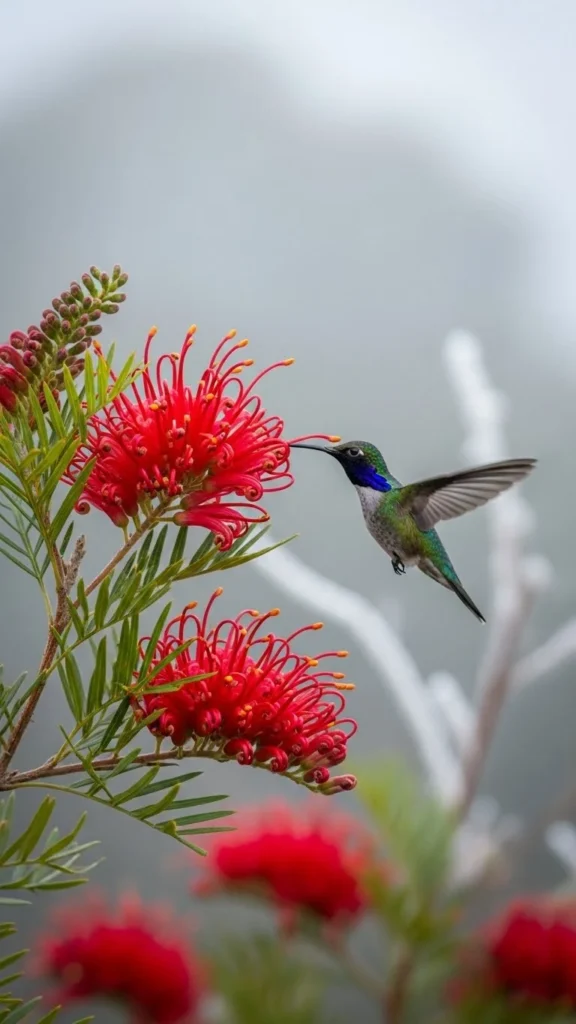
Grevillea is known for winter flowers that hummingbirds love. The curved petals hold nectar accessible to their long beaks. Choose a sunny location and use well-drained soil. Young shrubs are budget-friendly and settle quickly into the garden. Light pruning keeps them shaped. If you enjoy DIY touches, pair grevillea with gravel pathways or wooden planters for a clean winter display. Hummingbirds return often once they discover these bright blooms.
23. Yarrow (Winter Blooming in Warm Zones)
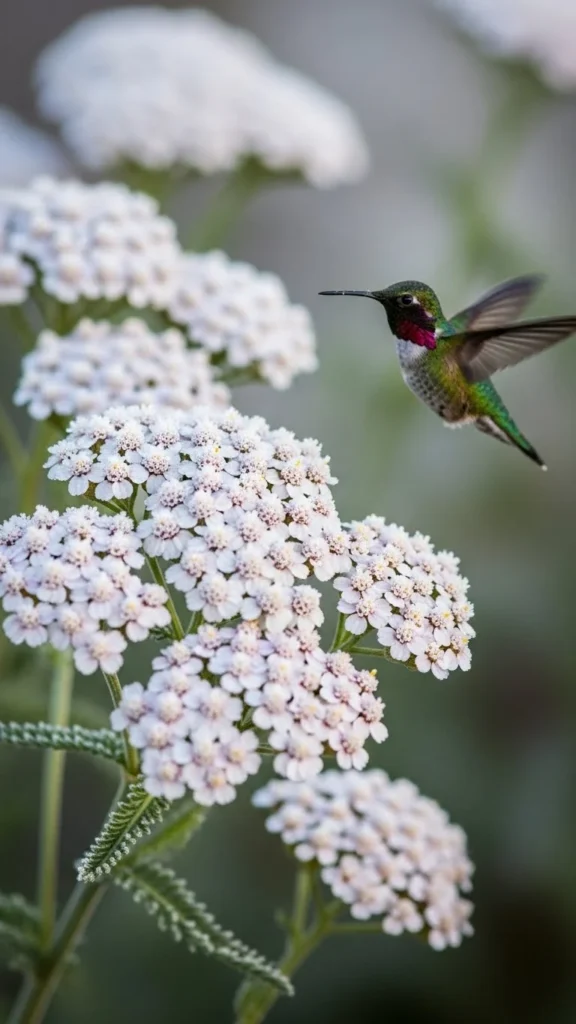
In warmer zones, yarrow may bloom into winter and attract hummingbirds with its flat clusters. It’s hardy and needs little care. Start with small pots to save money. Plant in sunny beds or containers. Add sandy soil for better drainage. If stems flop, use simple bamboo stakes. For DIY charm, line a walkway with two or three clusters for a soft winter edge. The flowers help hummingbirds find connected nectar plants nearby.
24. Fuchsia (Cold-Tolerant Varieties)
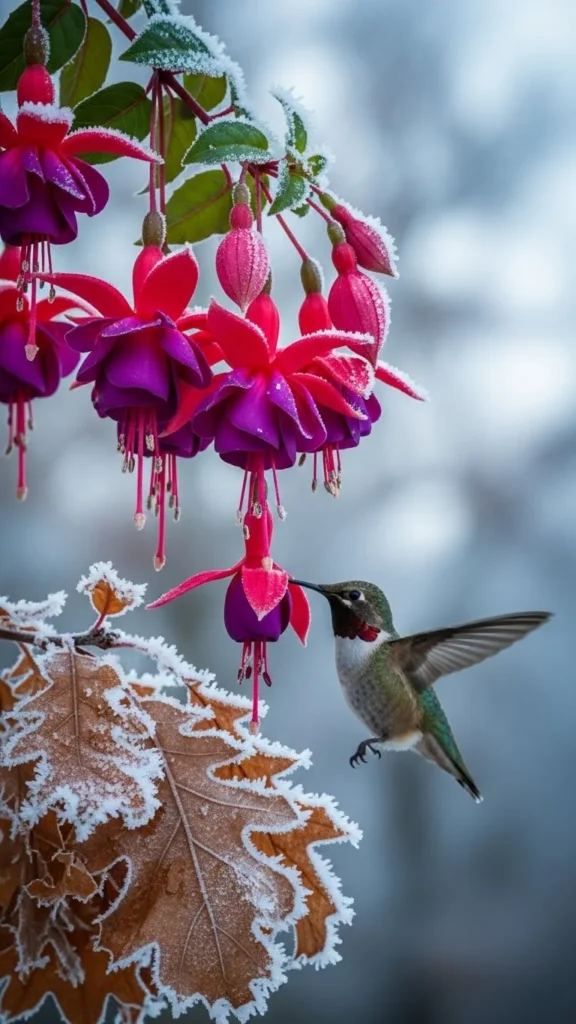
Some fuchsia types handle winter better than expected and may keep blooming in sheltered spots. The drooping flowers create natural feeding pockets for hummingbirds. Hang them near patios or covered porches. Start with inexpensive baskets and add fresh soil each season. Water lightly and protect from harsh wind. For DIY flair, wrap the basket hooks in jute string for a simple rustic finish. Their vivid colors help hummingbirds spot the blooms quickly.
25. Winter-Flowering Currant
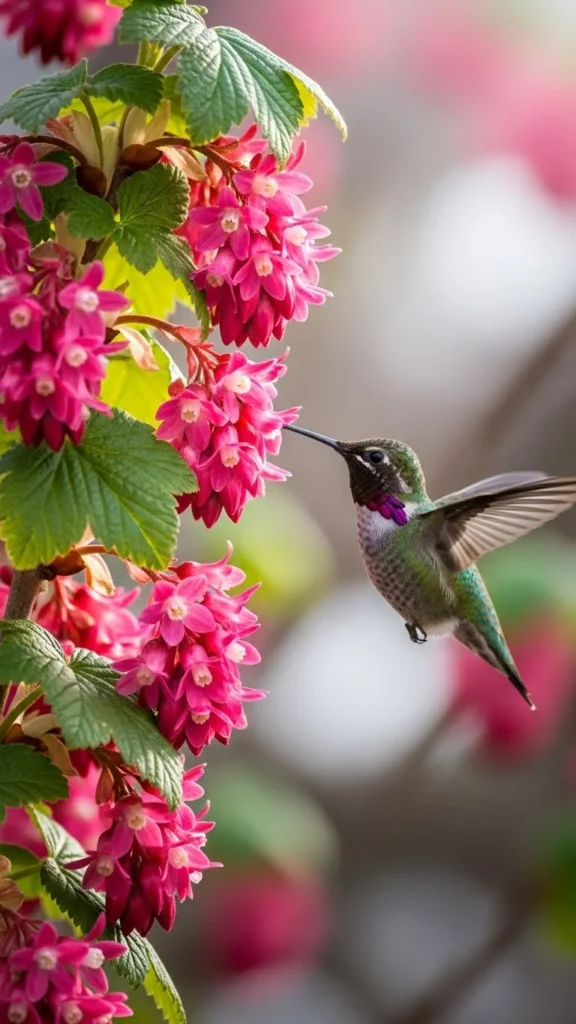
This shrub is one of the earliest winter bloomers. Its bright flower clusters offer both color and nectar, drawing hummingbirds right away. Plant it along fences or the back of a border. Young shrubs are affordable and adapt easily. Water during dry periods. Trim lightly for clean shape. For a DIY touch, place a stepping stone or small bench nearby so you can sit and enjoy the winter visitors. Hummingbirds quickly learn to return once the currant starts blooming.
Conclusion
Winter gardens don’t have to sit quiet. With the right mix of color, shape, and nectar-rich blooms, hummingbirds appear even on frosty mornings. These plants are simple to grow, easy on the wallet, and perfect for adding movement and life to cold days. Choose a few favorites, plant them close to your windows or paths, and enjoy steady visits all season long.

Leave a Reply