

Winter might feel quiet in the garden, but for hummingbirds, it can be one of the toughest seasons to find food. Creating a winter hummingbird garden is a rewarding way to support these tiny visitors while bringing life, color, and movement to your cold-season landscape. The best part? You don’t need a big yard or complicated setup. A few nectar-rich plants, smart placement, and reliable feeders can turn your outdoor space into a vibrant winter haven.

Let’s walk through how to build a cold-season garden filled with blooms, shelter, and dependable nectar sources.
Choose Hummingbird-Friendly Winter Plants
Even when temperatures drop, several plants continue blooming—or at least hold enough nectar-rich structures—to support hummingbirds. Choose varieties that perform well in your climate and pair them with evergreens for year-round structure.
Top winter nectar plants to consider:
- Mahonia (Oregon grape): Yellow blooms in late winter; extremely hardy.
- Flowering quince: Offers vibrant red or coral blossoms in early winter.
- Camellias: Large blooms that open slowly, giving hummingbirds steady nectar.
- Winter honeysuckle: Sweetly scented and highly attractive to hummingbirds.
- Heather: Low-growing, long-blooming, and perfect for filling gaps.
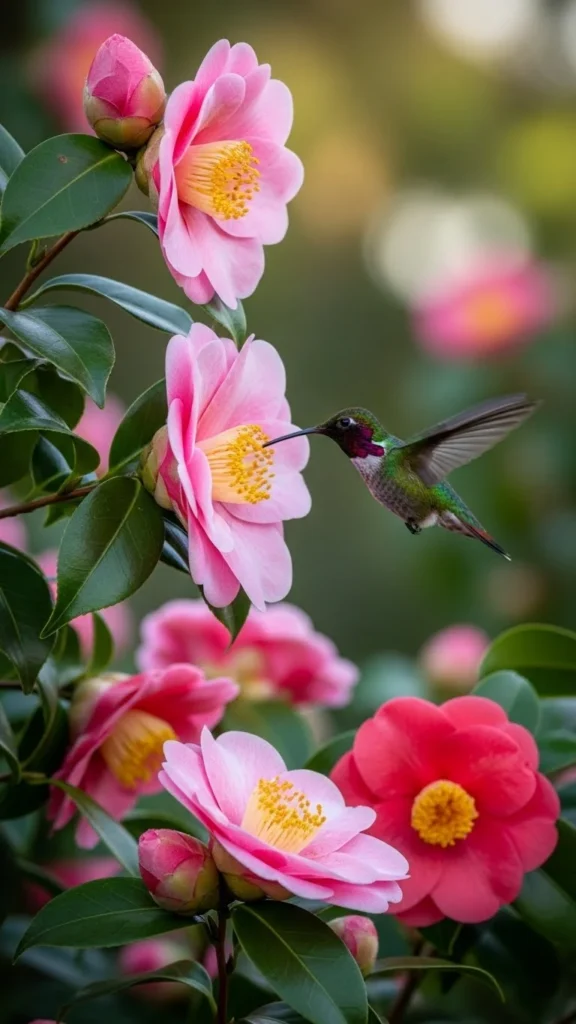
Pro Tip: Mix plants that bloom at slightly different times so hummingbirds always have something new to visit.
Add Evergreens for Warmth, Shelter, and Safety
Winter gardens need more than flowers. Dense evergreens help hummingbirds survive cold nights by offering:
- Protection from wind
- Hidden resting spots
- Places to perch between feedings
Good evergreen picks include pine, juniper, spruce, holly, and arborvitae.
Plant them behind or around your nectar-rich plants to create a sheltered corridor where hummingbirds feel safe to feed. This structure also encourages repeat visits, since the birds learn your garden is a dependable winter stopover.
Set Up Feeders That Work in Cold Weather
Natural nectar is key, but feeders give hummingbirds a steady supply, especially when frost sets in.
How to keep feeders winter-ready:
- Use a 4:1 water-to-sugar ratio (never honey or artificial sweeteners).
- Choose dish-style feeders—they freeze more slowly than tube varieties.
- Bring feeders inside at night if you expect a hard freeze.
- Rotate feeders daily so one is always thawed.
- Place feeders under eaves or near evergreen branches to block wind and ice.
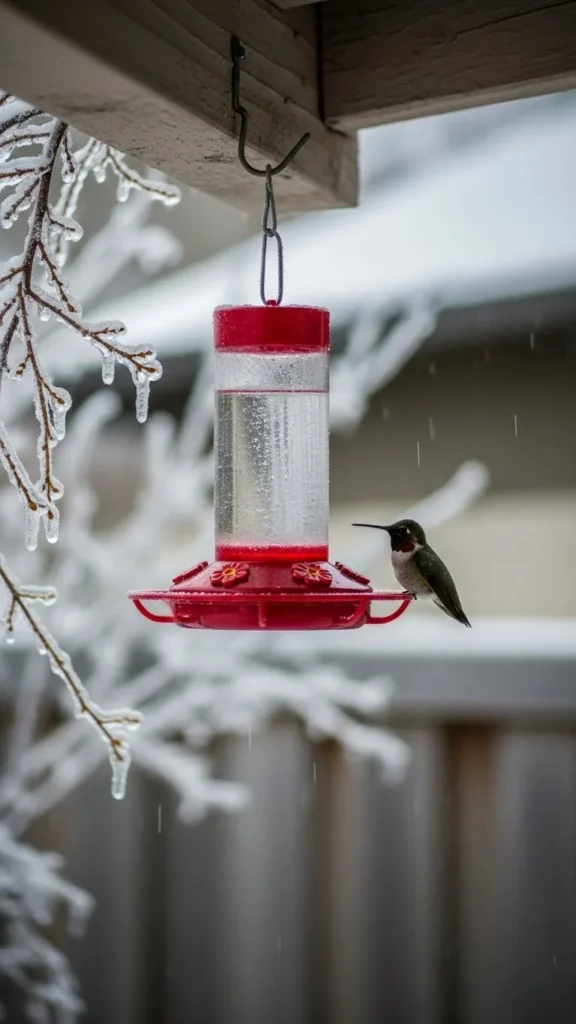
This simple routine ensures hummingbirds always have something to fuel their rapid energy needs.
Design a Layout That Encourages Easy, Natural Movement
Hummingbirds are constantly on the move, so your garden should support their natural feeding rhythm. Think of your layout as a “nectar trail.”
Try this simple structure:
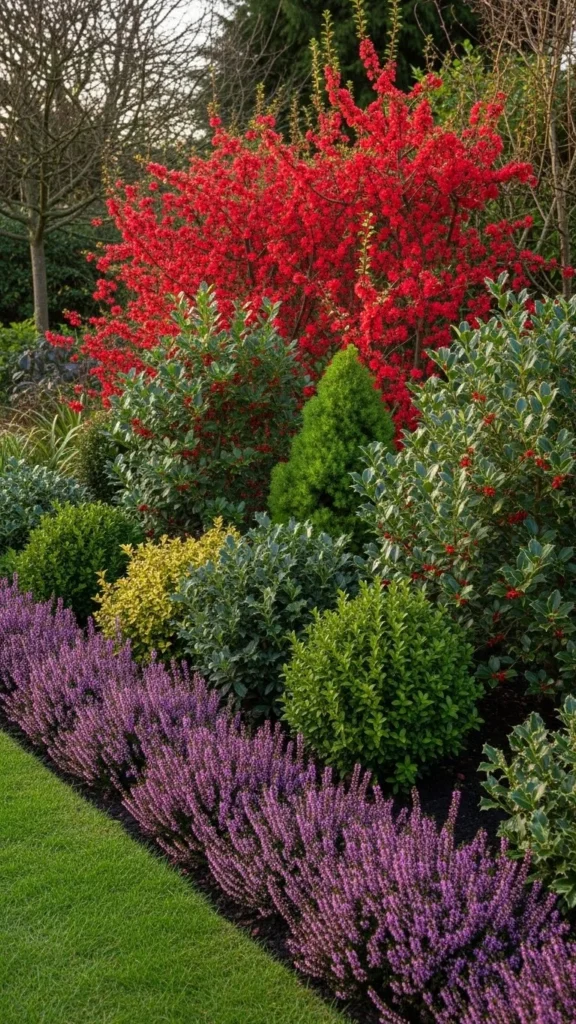
- Place tall nectar plants (like camellias or quince) toward the back.
- Add mid-height shrubs (like Mahonia or winter honeysuckle) in the center.
- Fill the front edge with low-growing bloomers such as winter heather.
- Hang feeders where hummingbirds can see the flowers nearby.
This layered layout lets hummingbirds move safely from plant to plant. It also makes your garden visually pleasing throughout winter.
Keep Your Garden Thriving With Easy Winter Care
Winter hummingbird gardens don’t require heavy maintenance—just small, consistent care.
Simple upkeep steps:
- Deadhead winter bloomers so plants keep pushing out fresh flowers.
- Water roots sparingly, but deeply, during dry spells.
- Check feeders daily for freezing, mold, or debris.
- Trim only when necessary, focusing on broken or snow-damaged stems.
- Avoid pesticides, which strip away natural insects hummingbirds rely on.
Healthy plants equal better nectar—and fewer interruptions in your hummingbird buffet.
Create Safe Zones and Cozy Microclimates
Even the toughest hummingbirds appreciate warmth. You can boost comfort by adding:
- Mulch to keep soil warm and retain moisture
- Windbreaks such as lattice panels, fencing, or evergreen hedges
- South-facing planters that capture extra heat
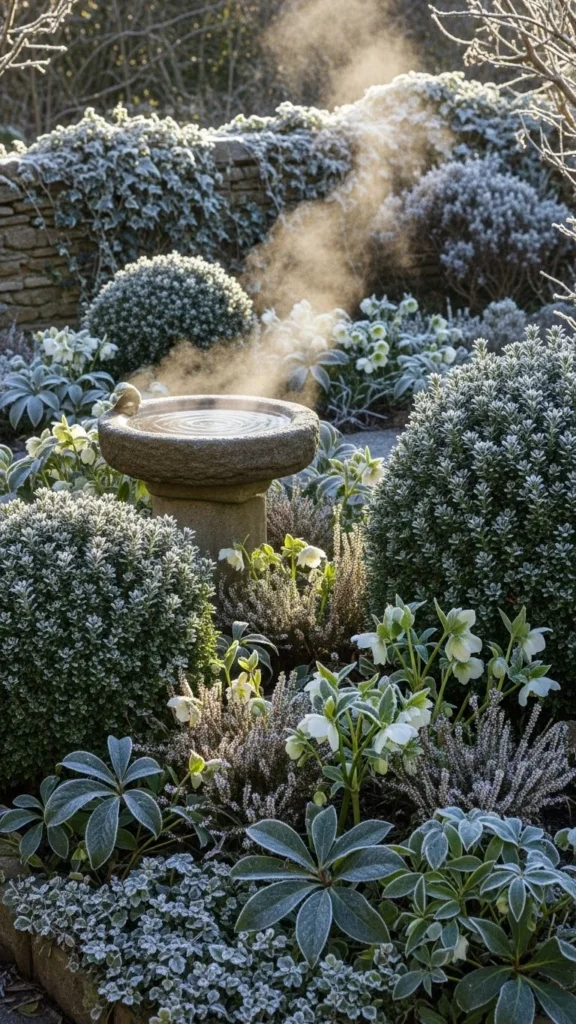
- Water elements like a shallow heated bird bath
These elements make your garden more inviting, especially during freezing nights.
Final Step: Keep Things Consistent
Once hummingbirds discover your garden, they’ll return—as long as your food sources stay reliable. That means:
- Keeping feeders clean and thawed
- Ensuring some type of bloom is available
- Maintaining sheltered spaces
Over time, your garden becomes a safe winter feeding station they can depend on yearly.
Conclusion: Start Your Winter Hummingbird Garden Today
Building a winter hummingbird garden is easier than it sounds—and incredibly rewarding. With nectar-rich plants, evergreen structure, and a few thoughtfully placed feeders, your outdoor space can stay lively even in the deepest cold.
Save this guide so you can start planning your hummingbird haven today!

Leave a Reply