

Winter doesn’t have to end your fresh-from-the-garden meals. With the right frost-tolerant greens, you can keep harvesting crisp, flavorful leaves even when temperatures dip and most plants slow down. The trick is choosing hardy varieties and giving them the cozy conditions they need to thrive.
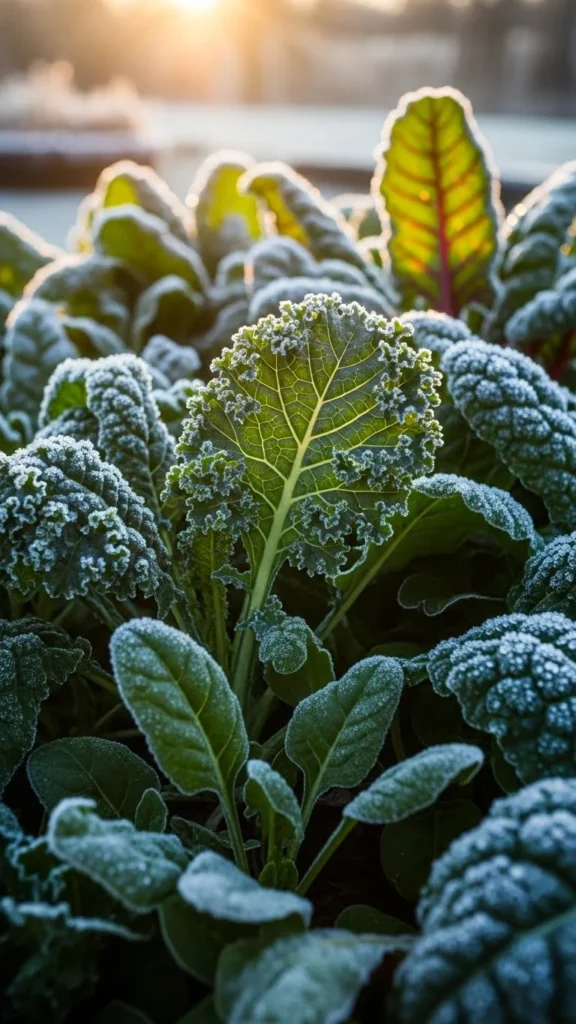
Below, you’ll learn simple steps to grow winter greens that stay strong all season long—without complicated setups or expensive tools.
Choose Frost-Tolerant Greens That Actually Thrive in Cold
Some greens not only survive the cold—they taste better after a light frost. Start with reliable varieties that can handle chilly nights.
Great frost-tolerant choices include:
- Kale (especially Siberian and Lacinato types)
- Spinach
- Mizuna
- Claytonia (Miner’s Lettuce)
- Arugula
- Swiss Chard
- Mâche (Corn Salad)
These greens have thick, sturdy leaves that naturally resist frost damage. Many become sweeter as temperatures drop.
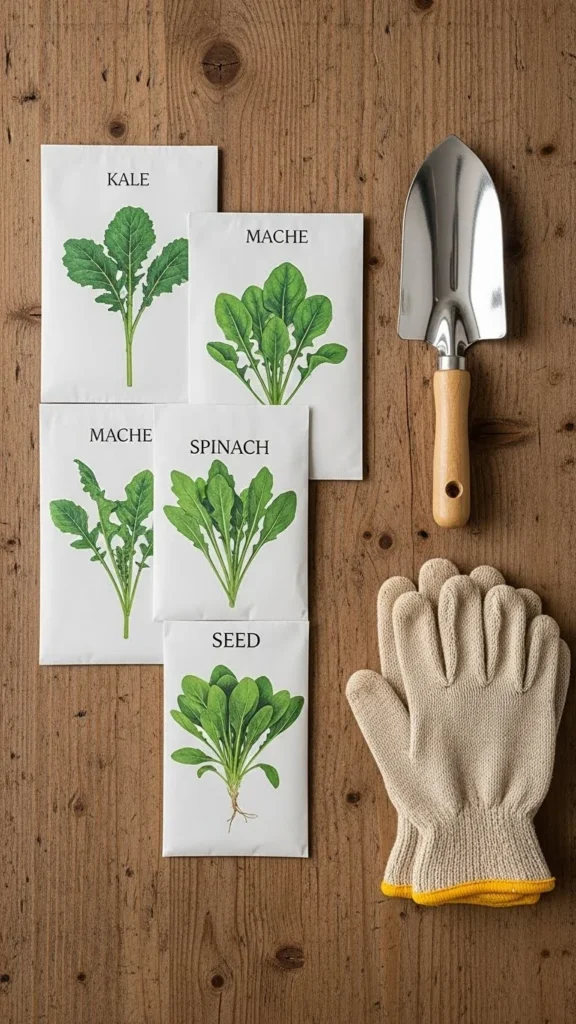
When planning your garden, mix fast growers (like arugula) with slow, hardy options (like kale). This gives you a steady harvest all winter.
Plant at the Right Time for Winter Success
Timing is everything when you’re aiming for winter harvesting. Greens need enough daylight and warmth to establish strong roots before the cold sets in.
Here’s an easy planting schedule:
- Late summer: Start spinach, kale, and chard.
- Early fall: Add arugula, mizuna, and mache.
- Mid-fall (for milder climates): Sow a second batch of fast growers to extend your season.
Plant seeds a little deeper than you would in summer—cooler soil holds moisture longer, which helps germination. Water lightly but often until seedlings are established.
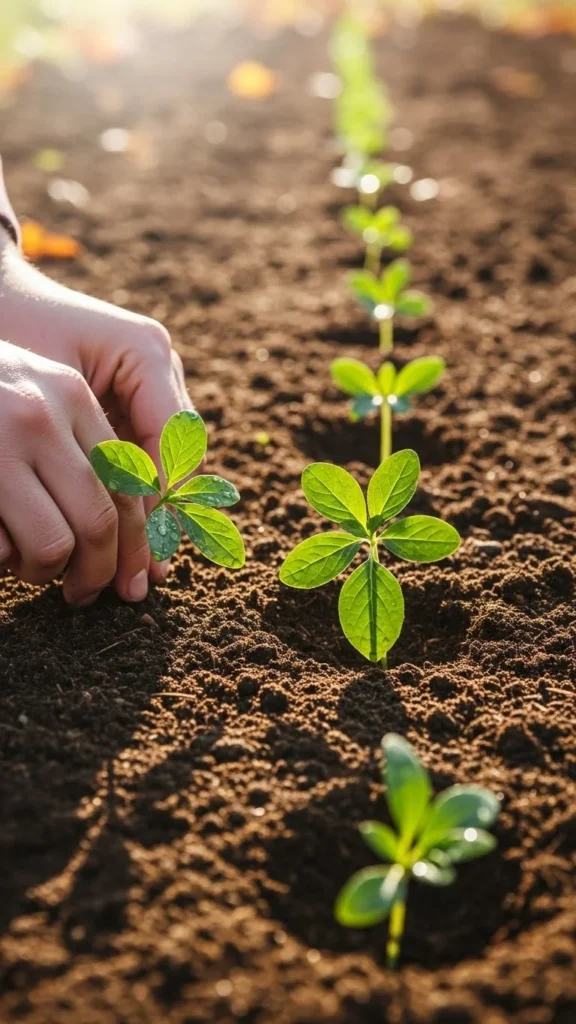
If your area gets early frosts, consider starting seeds indoors and transplanting once they harden off.
Create Warm Microclimates to Protect Your Greens
Winter might be cold, but you can give your plants pockets of warmth without much effort. Creating microclimates keeps frost-tolerant greens productive even in harsh conditions.
Try simple tricks like:
- Using raised beds: Soil warms faster and drains better.
- Setting up row covers: Lightweight fabric keeps soil slightly warmer and shields plants from wind.
- Placing pots near walls or fences: Hard surfaces radiate stored heat at night.
- Adding a layer of mulch: A few inches of straw or shredded leaves protect roots from freezing.
Even a basic row cover can mean the difference between limp, frostbitten greens and vibrant winter salads.
Water and Feed Your Greens the Winter-Friendly Way
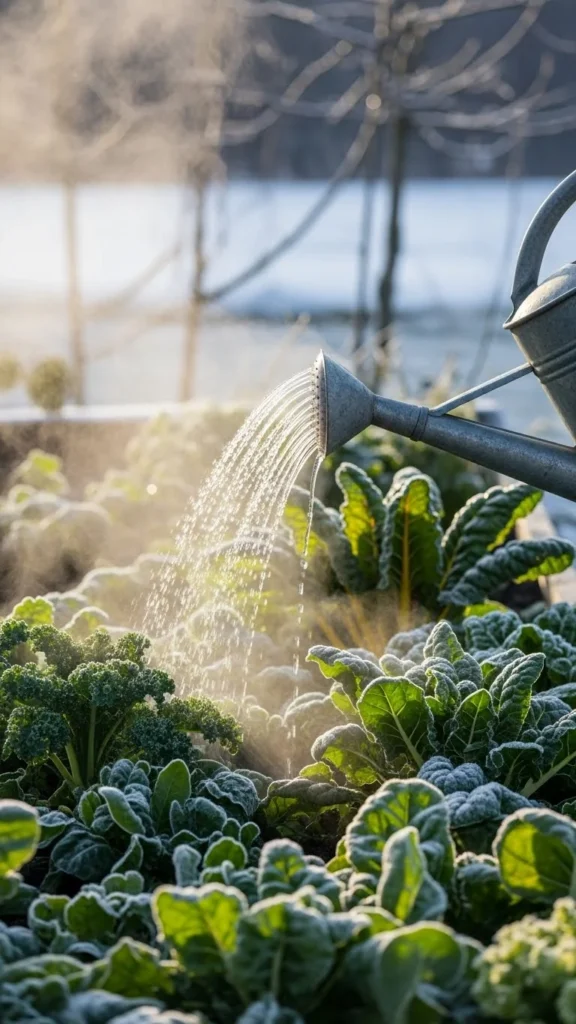
Winter watering looks different from summer watering. Cold soil holds moisture longer, so your job is to keep plants hydrated—but never soggy.
Follow these simple habits:
- Water in the morning so moisture can evaporate before temperatures drop.
- Check soil with your fingers—water only when it feels dry 1–2 inches below the surface.
- Avoid heavy fertilizing during peak cold; greens grow slower and need gentler feeding.
A light dose of compost or diluted liquid seaweed every few weeks keeps plants strong without overwhelming them.
Harvest Correctly to Encourage Continuous Growth
Winter greens grow slower, so the way you harvest them makes a big difference. Pick lightly and regularly to keep plants producing.
Use these simple techniques:
- Cut-and-come-again method: Snip outer leaves first and leave the center intact.
- Avoid harvesting after a freeze: Wait until leaves thaw naturally; frozen cuts can damage plants.
- Use clean, sharp scissors to prevent tearing leaves.
You’ll be surprised how long kale, chard, and spinach continue growing when you harvest them gently and consistently.
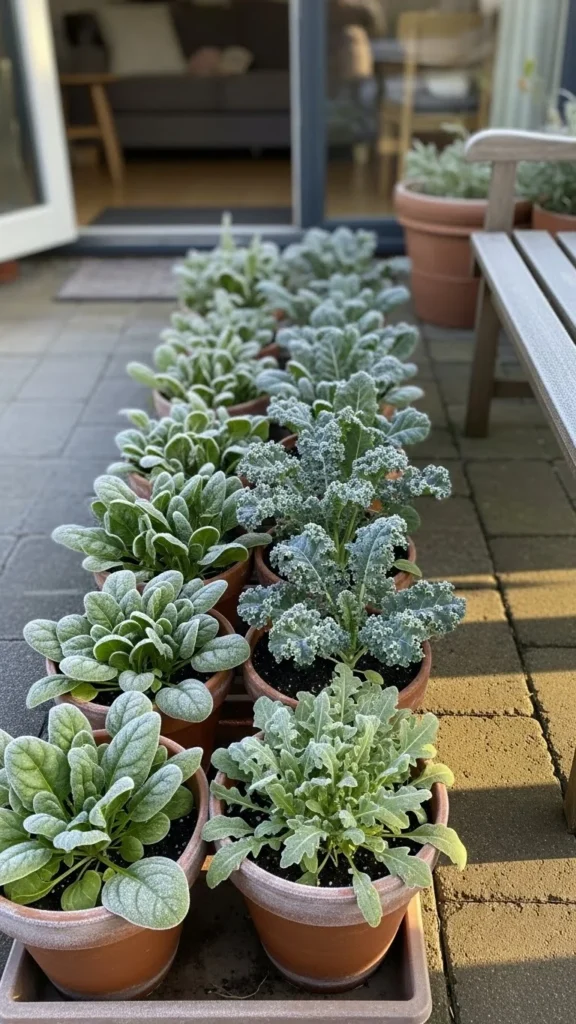
Bonus Tip: Grow Greens in Containers for Easy Protection
If your winters are especially cold, grow at least a few greens in containers. This allows you to:
- Move them into sunlight on bright days
- Slide them under a porch during icy nights
- Add small cloches or plastic domes for extra warmth
Container gardening also works beautifully for patios and balconies where ground space is limited.
Final Takeaway
With the right greens, smart timing, and a few protective tricks, winter harvesting becomes simple and incredibly rewarding. There’s nothing like stepping outside on a chilly morning and gathering fresh, crisp leaves for soups, salads, and warm dishes.
Save this guide for later so you can build your own winter-hardy greens garden!

Leave a Reply