

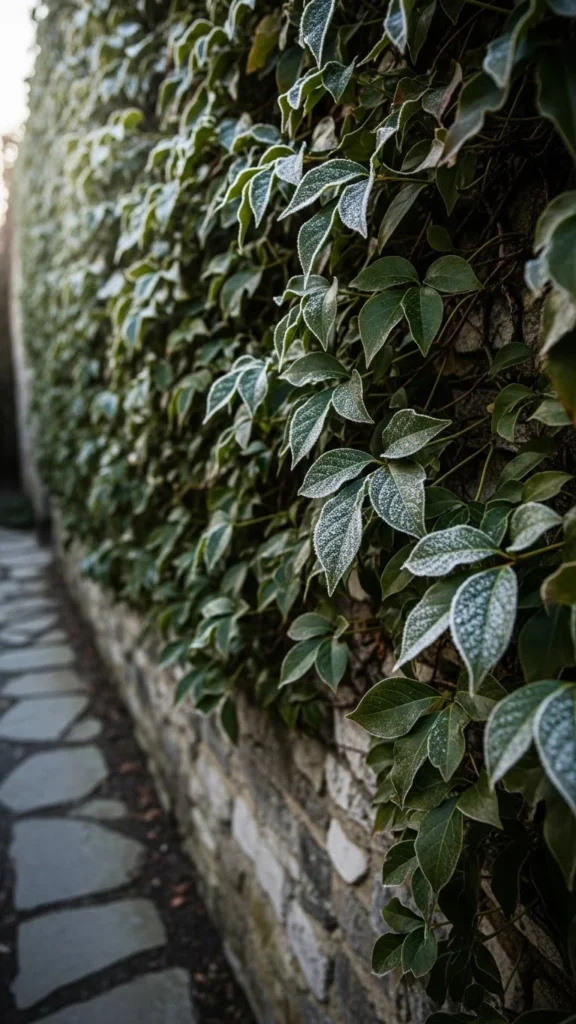
Cold months often leave fences, walls, and trellises looking bare. Evergreen vines solve that problem. They keep color, structure, and privacy even when everything else slows down. If you want outdoor spaces that still feel alive during winter, these vines offer reliable greenery with simple care. Many work well for beginners, rental homes, and budget-friendly garden upgrades. You can train them on basic supports, reuse materials, and let nature handle most of the work. Below are evergreen vines that stay full through winter and help outdoor spaces feel finished year-round.
1. English Ivy (Hedera helix)
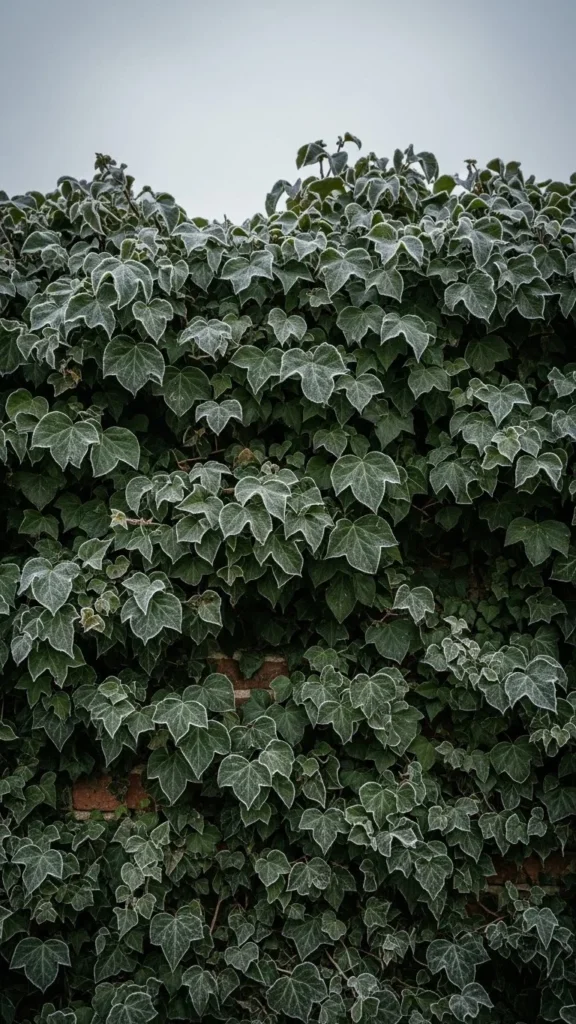
English ivy holds dense green coverage when temperatures drop. It clings easily to brick, wood, or stone without complex supports. A few simple hooks or wires guide early growth. After that, it spreads on its own.
This vine works well for privacy along fences or blank walls. Trim once or twice a year to control spread. Pruning also keeps it tidy and encourages fuller coverage. Use basic hand pruners. No fancy tools required.
Budget tip: Start with one or two small plants. Ivy fills space fast, so buying more rarely helps. Propagate cuttings in water to expand coverage for free.
For containers, grow ivy in large pots with trellises. Place pots near entryways or patios to add winter color. Keep soil slightly moist, not soaked. Ivy stays green and steady with minimal attention, making it a solid choice for low-effort winter greenery.
2. Wintercreeper (Euonymus fortunei)
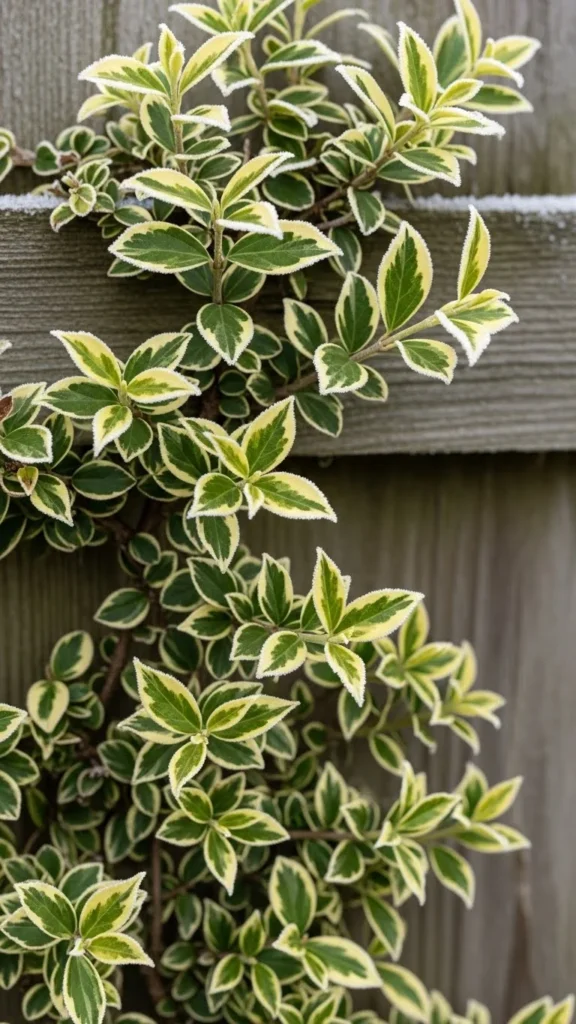
Wintercreeper offers thick foliage with subtle color variation. Many varieties show green leaves edged with lighter tones, which stand out during dull seasons. It climbs slowly at first but fills in nicely over time.
Train it along fences, railings, or low walls. Use garden twine or zip ties during the first year. Once established, it grips on its own.
This vine tolerates cold well and keeps its leaves through winter. Occasional trimming helps keep shape neat. Skip heavy feeding. Too much fertilizer leads to loose growth.
Budget tip: Buy young plants in spring or fall. They cost less and adapt quickly. Space them farther apart and allow time to fill in naturally.
Wintercreeper works well for slopes, too. Let it trail downward for ground cover with year-round color. It handles winter weather calmly and adds structure where other plants fade.
3. Evergreen Honeysuckle (Lonicera henryi)
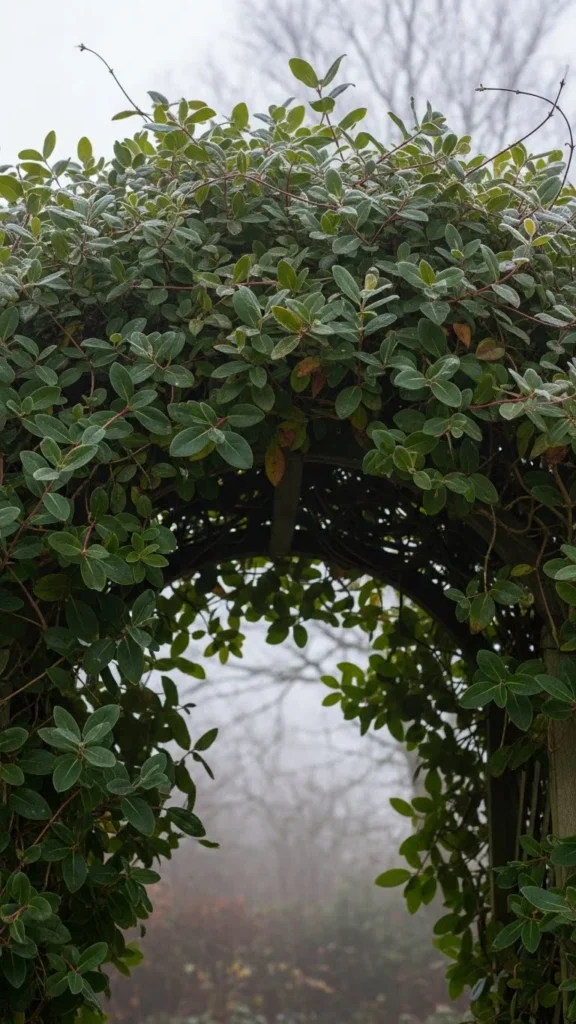
Evergreen honeysuckle keeps long, narrow leaves even in cold conditions. It grows with a gentle twist that looks natural on arches or trellises. Growth feels controlled rather than wild.
Support it early with wire or lattice. Once trained, it follows the shape easily. Prune lightly to guide direction rather than cutting heavily.
Budget tip: Simple cattle panels or repurposed bed frames work well as supports. Paint them neutral colors for a clean look.
This vine handles shade better than many others. It suits north-facing walls or fences that lack sun. Water during dry winter spells if soil dries out.
Evergreen honeysuckle adds quiet greenery without overpowering nearby plants. It works well in mixed gardens and small yards where balance matters.
4. Star Jasmine (Trachelospermum jasminoides)
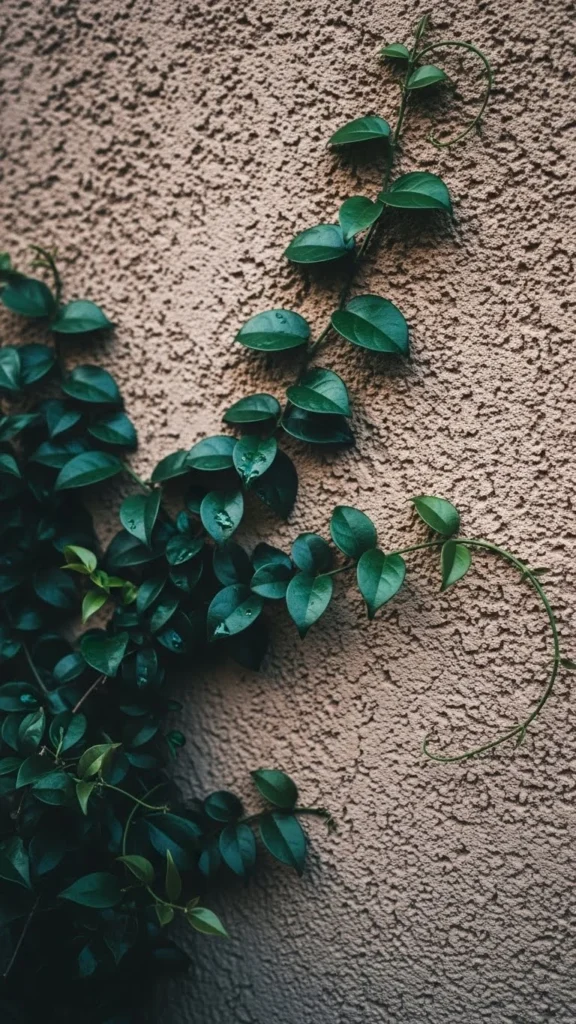
Star jasmine keeps shiny leaves throughout winter in mild to moderate climates. The foliage alone adds polish, even when flowers rest.
Train it flat against walls using wire guides. It also works well on trellises near seating areas. Growth stays dense with regular trimming.
Budget tip: Use basic masonry hooks instead of custom systems. They hold vines securely and cost little.
This vine prefers well-drained soil. Avoid soggy spots. Mulch lightly to protect roots during cold spells.
Star jasmine brings structure and color without clutter. It suits patios, entryways, and narrow side yards where year-round greenery matters most.
5. Climbing Fig (Ficus pumila)
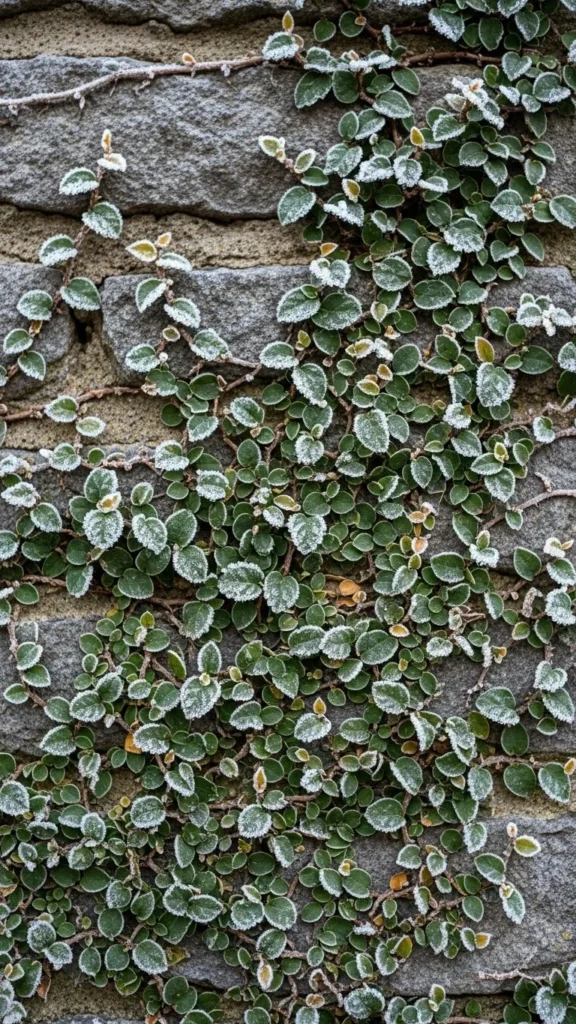
Climbing fig creates a tight green surface that hugs walls closely. Its small leaves form a living texture that stays intact during winter.
It attaches directly to surfaces, so no trellis is required. This makes it ideal for plain concrete or stucco walls.
Budget tip: Cover large areas with just a few plants. It spreads steadily without extra feeding.
Trim edges occasionally to keep lines clean around windows or doors. Use sharp shears for neat results.
Climbing fig works best where you want a clean, modern look. It adds softness to hard surfaces without taking up space.
6. Carolina Jessamine (Gelsemium sempervirens)
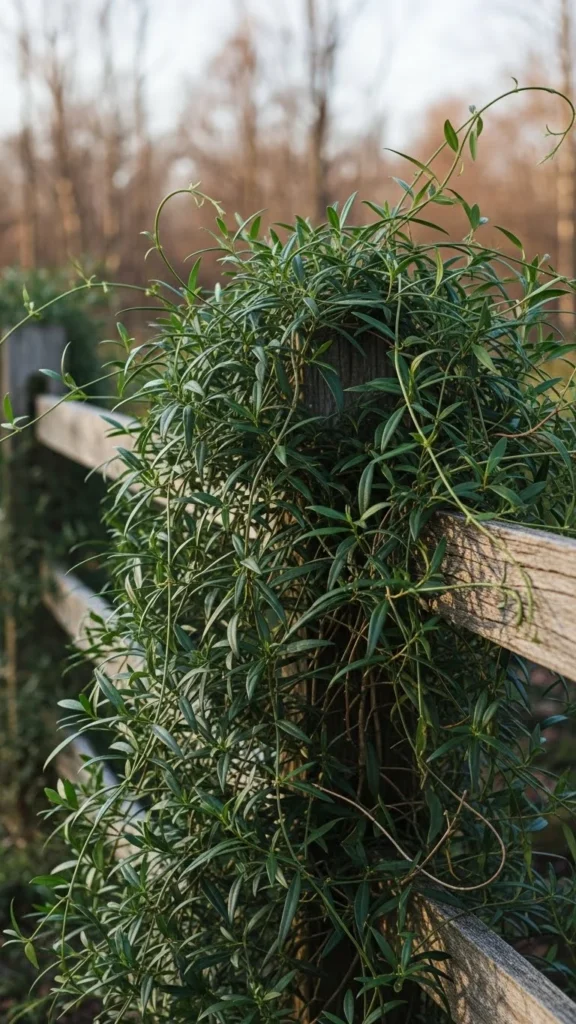
Carolina jessamine keeps its foliage in winter and grows with a relaxed form. Leaves stay green and smooth, creating light coverage.
Guide it along fences or pergolas using simple ties. Growth stays manageable with light pruning after flowering seasons.
Budget tip: Grow from nursery starts rather than mature vines. They establish quickly and cost less.
This vine handles mild winter cold well. Mulch at the base for extra root protection.
Carolina jessamine fits cottage-style and casual gardens. It offers steady greenery without demanding constant work.
7. Evergreen Clematis (Clematis armandii)
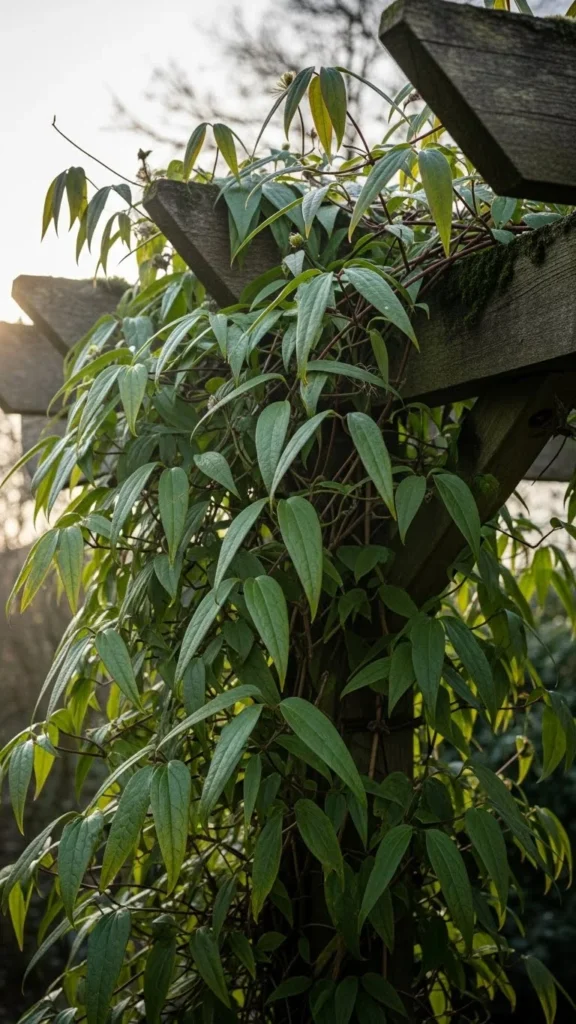
Evergreen clematis features long, narrow leaves that stay green through winter. The foliage looks bold compared to typical climbers.
Provide sturdy support. Wooden pergolas or metal trellises work well. Secure early growth gently.
Budget tip: Build a basic trellis from lumber scraps. Paint or stain for longer life.
This vine prefers sheltered spots away from harsh winds. Water during dry periods.
Evergreen clematis adds visual weight and structure. It suits larger spaces where you want strong green presence year-round.
8. Creeping Fig (Ficus repens)
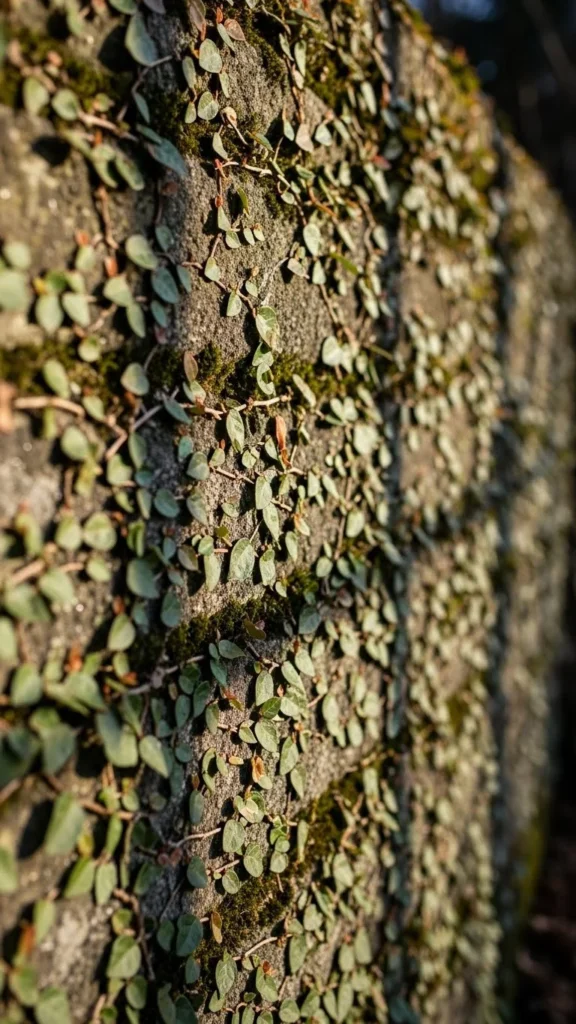
Creeping fig spreads evenly and keeps foliage in winter in protected areas. It forms a tidy surface with regular trimming.
Use it on low walls, planters, or vertical garden sections. It clings naturally once established.
Budget tip: Trim and propagate cuttings to expand coverage at no cost.
Keep an eye on edges near windows. Simple pruning avoids unwanted spread.
Creeping fig works well in urban gardens where space is limited but greenery matters.
9. Japanese Honeysuckle (Lonicera japonica)
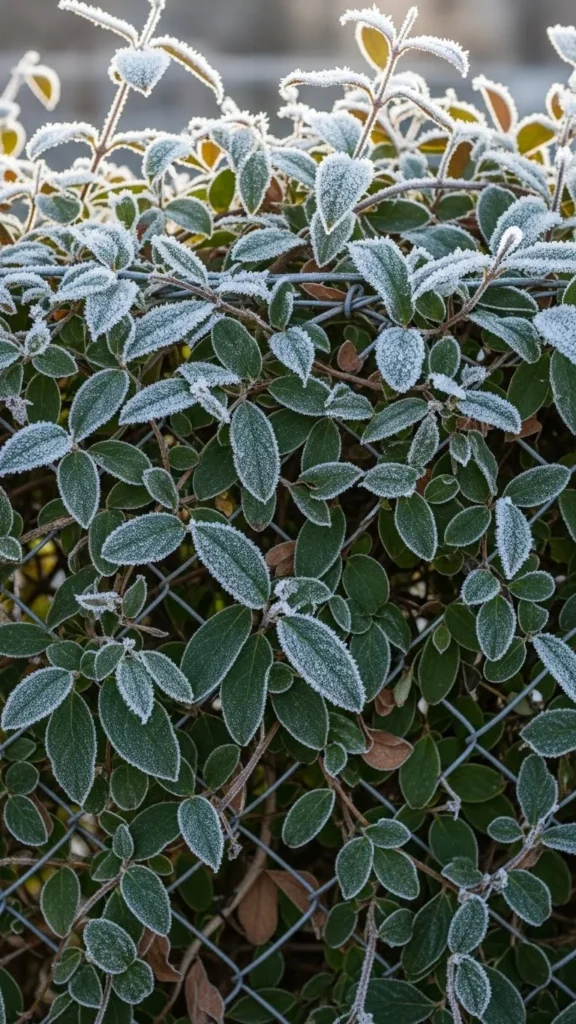
Japanese honeysuckle keeps much of its foliage in winter, especially in sheltered spots. Leaves stay flexible and green.
Train it along wire fencing for quick coverage. Prune lightly to control spread.
Budget tip: Reuse chain-link fences or old livestock panels as supports.
This vine grows quickly, so regular trimming helps maintain shape.
It suits backyards and boundary lines where fast coverage adds privacy.
10. Algerian Ivy (Hedera canariensis)
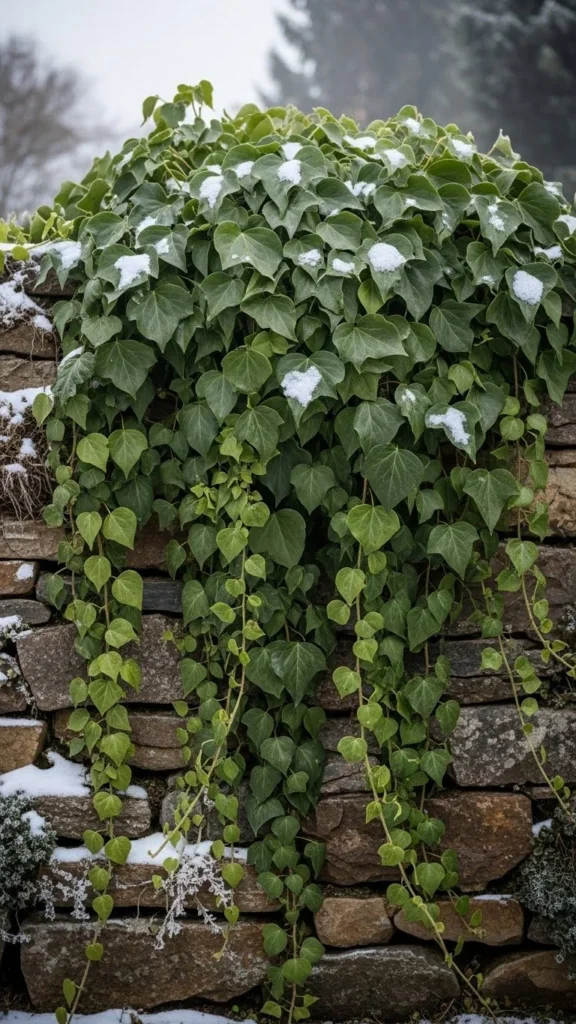
Algerian ivy features larger leaves than English ivy, giving a bold look. It stays green through winter in many regions.
Let it trail or climb depending on placement. Minimal support is needed.
Budget tip: Space plants farther apart. Leaves grow large and fill gaps.
Prune occasionally to guide growth.
This ivy works well for slopes, walls, and shaded corners needing strong color.
11. Passionflower Vine (Passiflora caerulea)
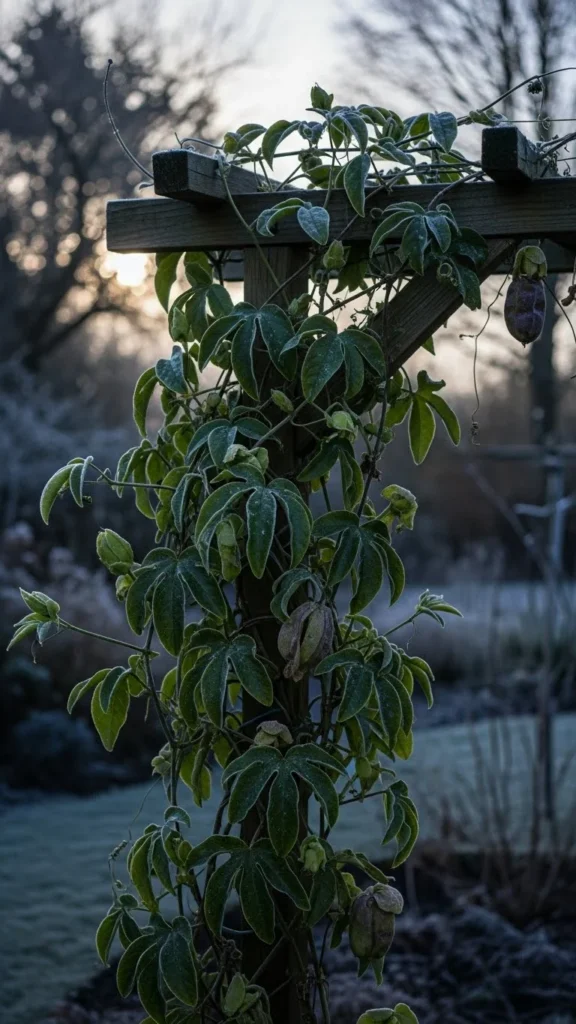
Some passionflower varieties keep foliage through winter in mild areas. Leaves stay structured and clean.
Use sturdy trellises. Growth feels energetic during warm seasons.
Budget tip: Use simple wooden frames rather than decorative metal.
Protect roots with mulch during cold spells.
This vine adds texture even when flowers pause.
12. Evergreen Trumpet Vine (Campsis radicans ‘Judy’)
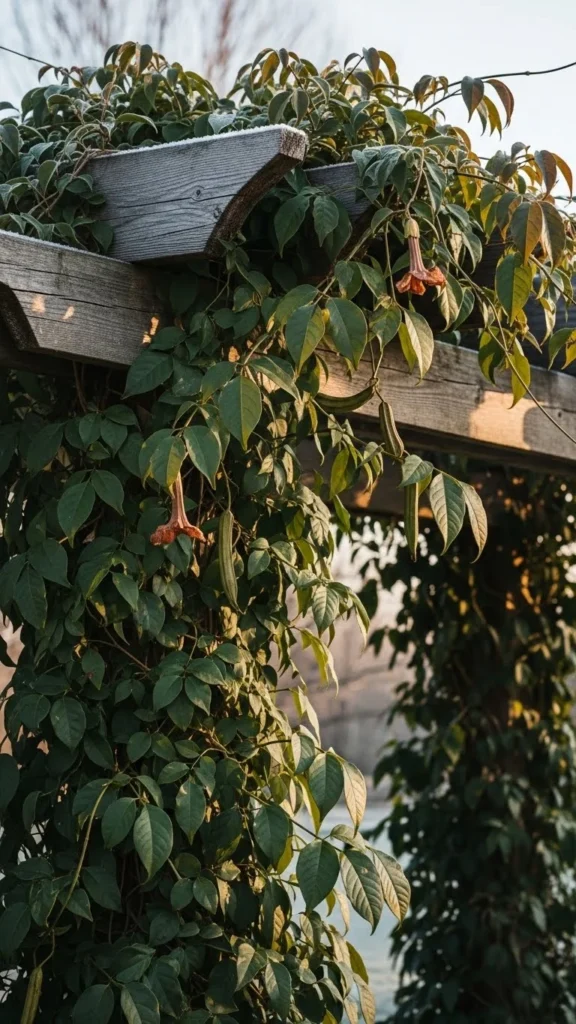
Certain trumpet vine types keep foliage longer into winter. Leaves stay thick and layered.
Strong supports work best. Secure early growth well.
Budget tip: Reinforce existing structures rather than building new ones.
Trim after growth slows.
This vine fits large spaces needing bold coverage.
13. Silver Lace Vine (Fallopia baldschuanica)
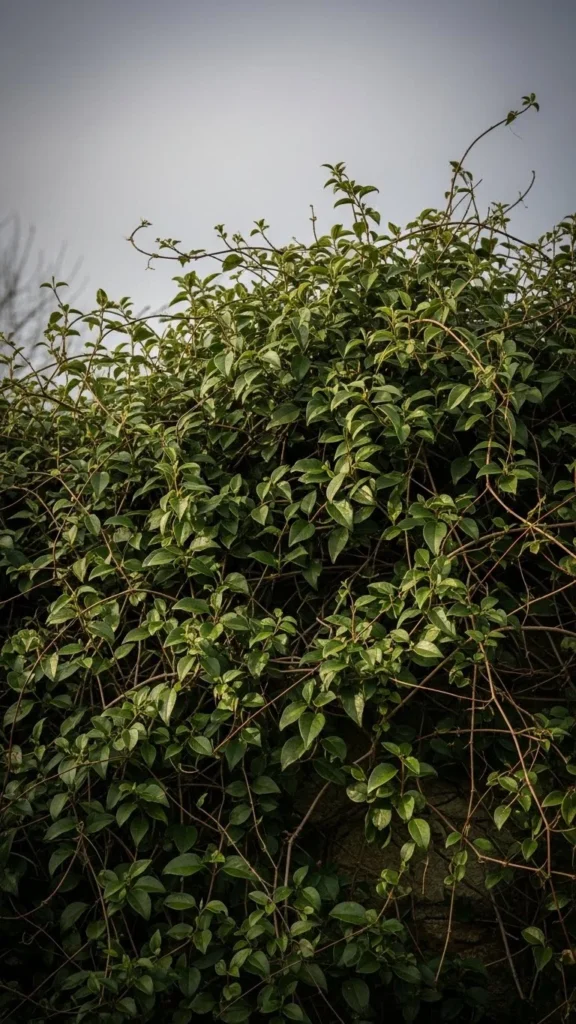
Silver lace vine keeps greenery in protected winters. Growth feels fast and filling.
Guide it carefully to avoid overgrowth.
Budget tip: One plant covers wide areas.
Prune regularly to shape.
It suits fences and large walls.
14. Evergreen Wisteria (Millettia reticulata)
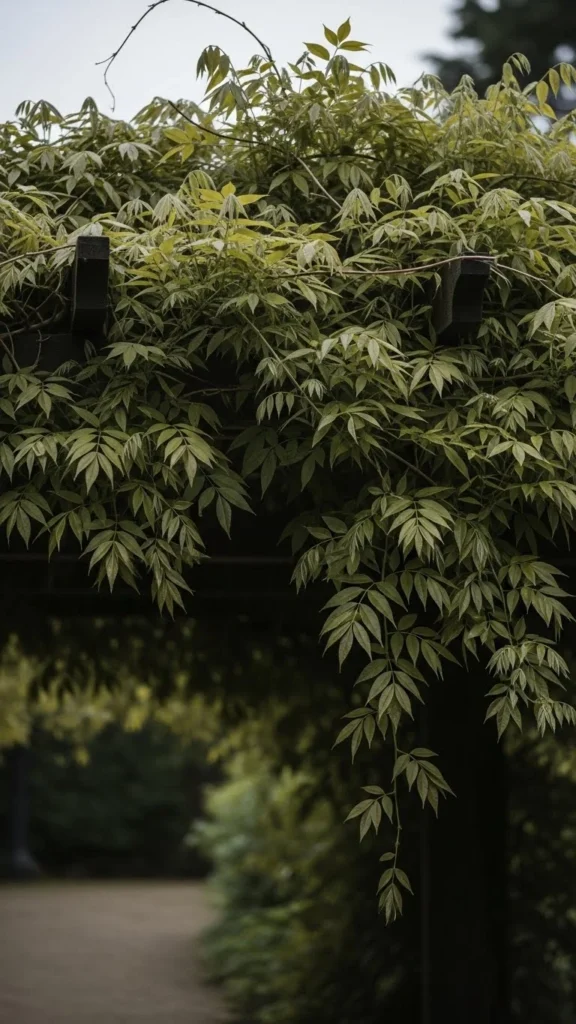
Evergreen wisteria keeps leaves longer than common types. Foliage stays neat and glossy.
Provide strong beams or pergolas.
Budget tip: Build supports from treated lumber.
Prune lightly to guide shape.
It brings structure and calm greenery.
15. Himalayan Ivy (Hedera nepalensis)
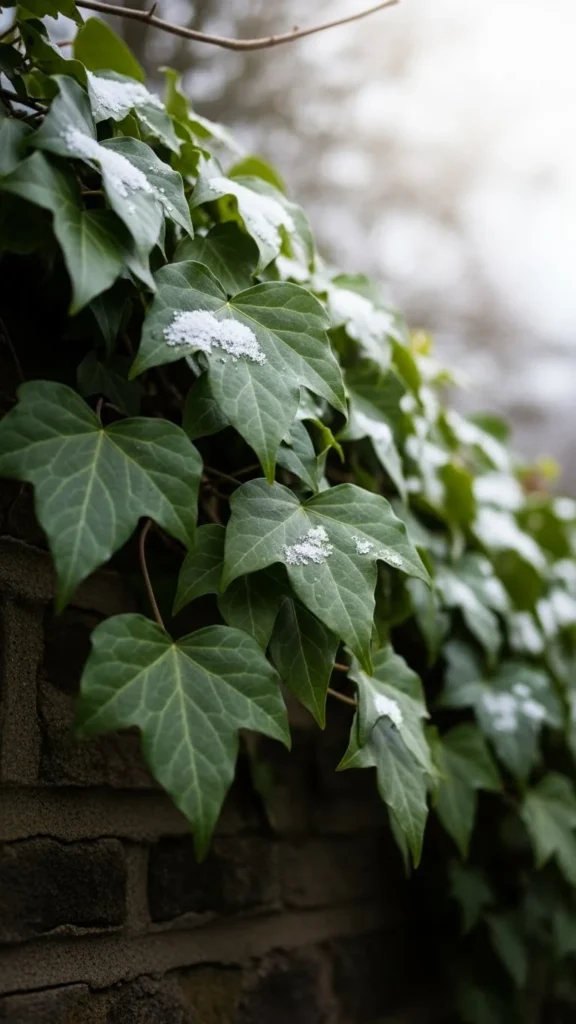
Himalayan ivy handles cold and shade well. Leaves stay rich green.
Minimal care required.
Budget tip: Use cuttings for expansion.
Trim edges occasionally.
Ideal for shaded spaces.
16. Evergreen Smilax (Smilax smallii)
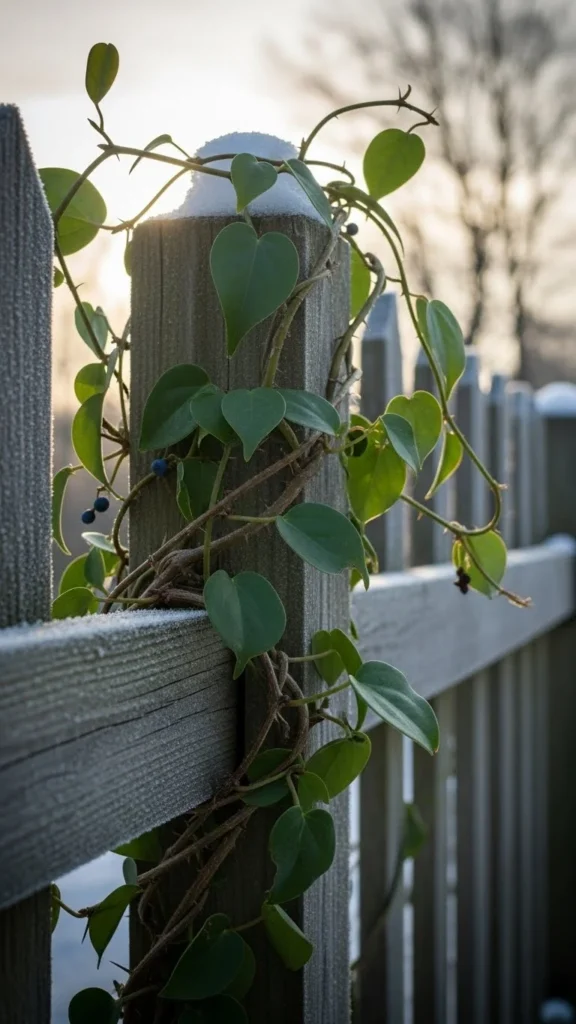
Smilax keeps tough leaves through winter. Growth looks wild yet controlled.
Guide along fences.
Budget tip: Let it grow naturally with minimal pruning.
Good for natural garden styles.
17. Asiatic Jasmine (Trachelospermum asiaticum)
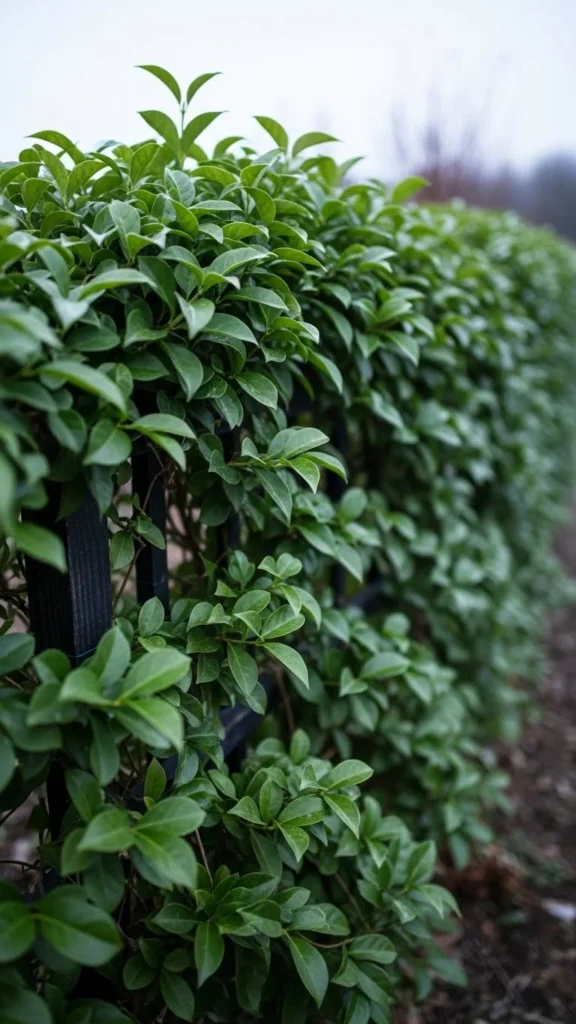
Asiatic jasmine stays low and thick. Leaves remain green.
Train along short supports.
Budget tip: Works well as groundcover, too.
Trim lightly.
Great for borders.
18. Evergreen Akebia (Akebia quinata)
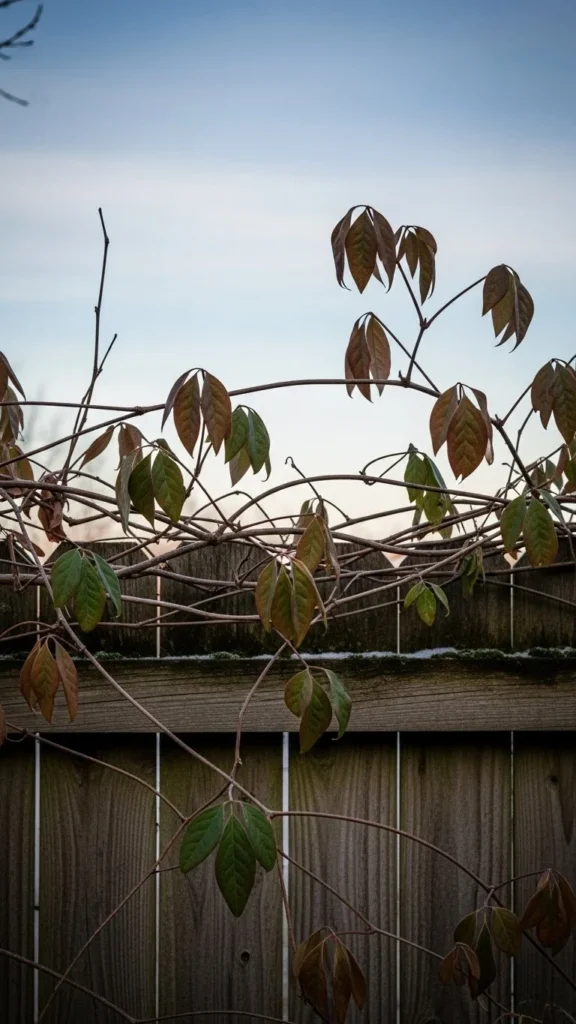
Akebia keeps foliage in mild winters. Leaves feel soft and layered.
Guide early growth.
Budget tip: Simple fencing works.
Prune to shape.
Adds gentle texture.
19. Canary Creeper (Tropaeolum peregrinum)
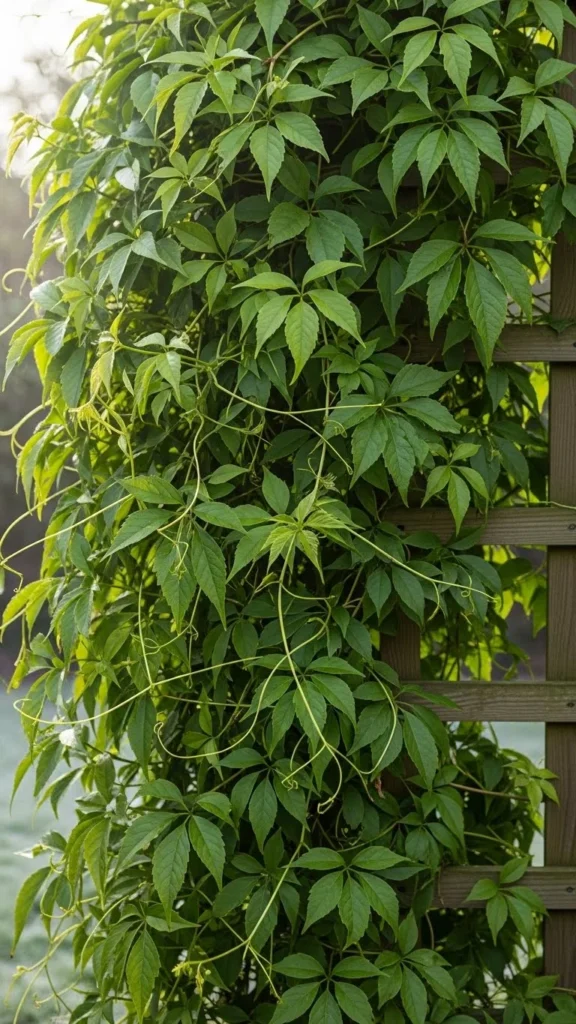
In protected areas, foliage lasts into winter. Growth feels light.
Support with netting.
Budget tip: Use garden twine grids.
Trim spent growth.
Good for small spaces.
20. Evergreen Pipe Vine (Aristolochia sempervirens)
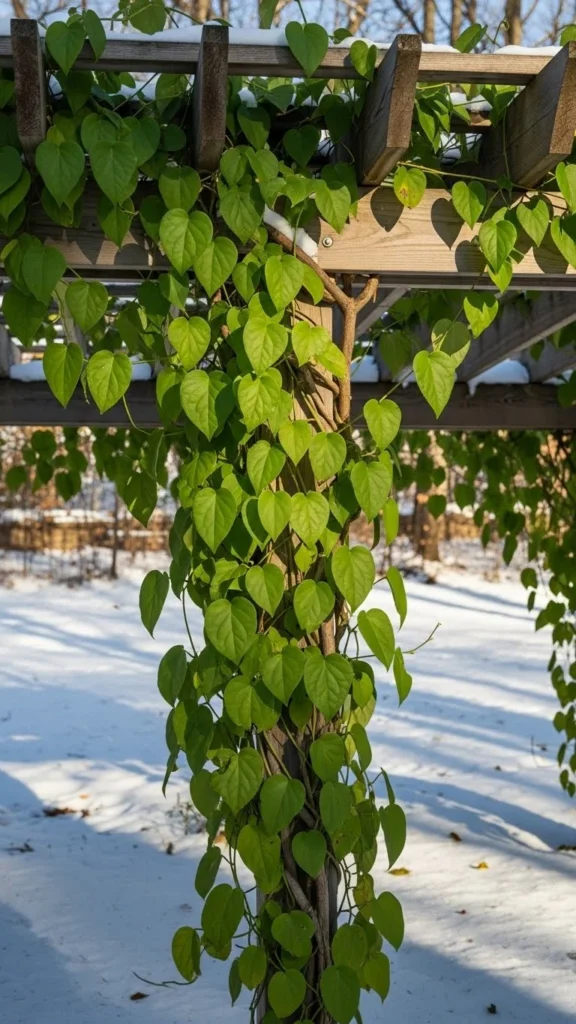
Pipe vine keeps heart-shaped leaves. Coverage looks full.
Strong supports help.
Budget tip: Repurpose pergolas.
Trim lightly.
Adds charm to structures.
21. Evergreen Dutchman’s Pipe (Aristolochia macrophylla)
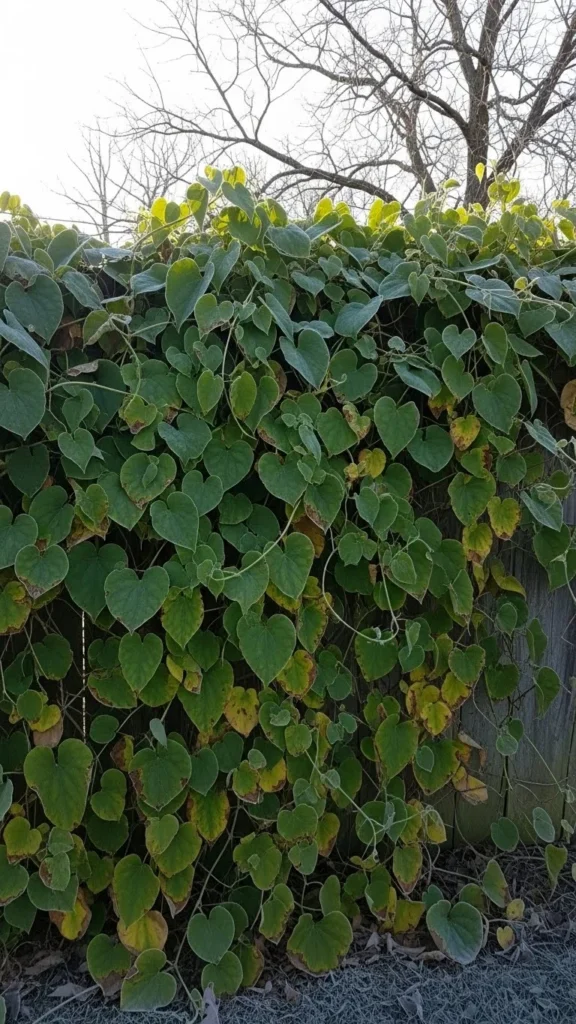
This vine holds large leaves longer into winter in mild climates. Foliage creates shade and coverage.
Use sturdy supports.
Budget tip: One plant fills wide areas.
Prune to guide.
Great for privacy screens.
Conclusion
Evergreen vines bring steady color, privacy, and structure through winter months when many gardens feel empty. With simple supports, basic pruning, and smart plant choices, you can keep outdoor spaces looking complete year-round without high costs. Start small, reuse materials, and let time do the work. These vines reward patience with lasting greenery that holds up through cold seasons and beyond.

Leave a Reply