

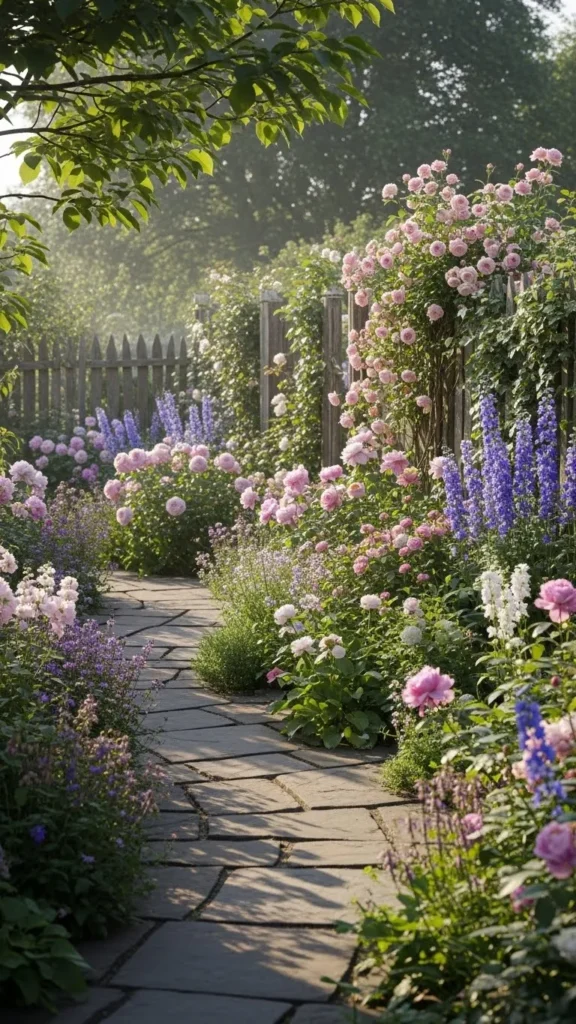
Cottage gardens carry a quiet sense of comfort. They feel lived-in, welcoming, and relaxed rather than styled. This look comes from layers, soft shapes, and personal details that grow better with time. You do not need a large yard or costly materials. Small choices, repeated with care, create gardens that feel warm and familiar. The ideas below focus on simple actions, thrifted finds, and plants that age well. Each one is easy to adapt, even in compact spaces.
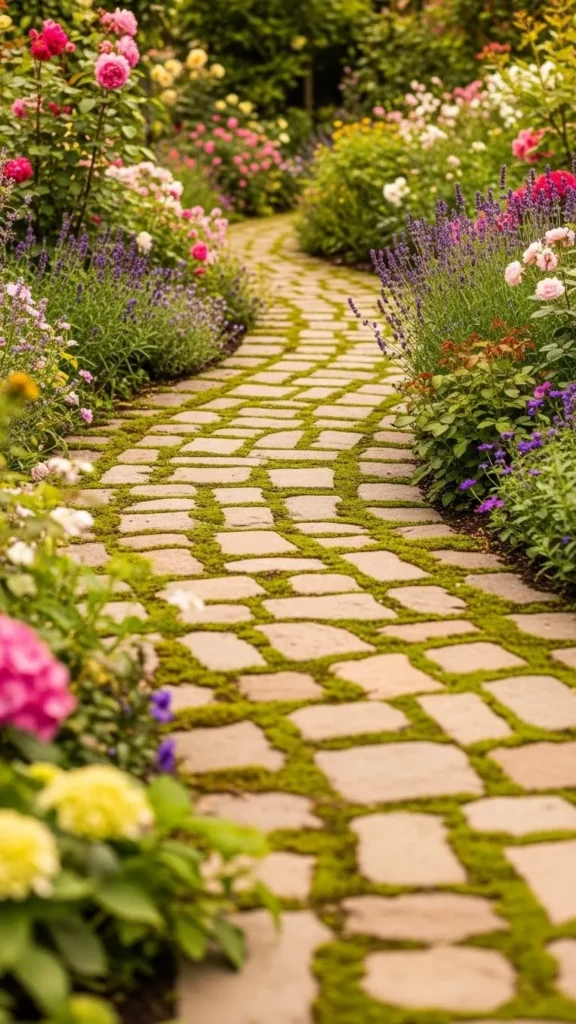
Curved Stone Pathways
A gentle path changes how a garden feels. Straight lines feel planned. Curves feel calm and human. You can create this look with reclaimed pavers, broken concrete, or flat stones collected over time. Lay them loosely rather than tightly packed. Let grass or moss grow between gaps. That spacing adds softness without extra work.
Keep the path narrow. Two feet wide is plenty. This keeps materials low-cost and allows plants to lean in. Place stones directly on soil or sand. Skip heavy base layers. Cottage gardens welcome slight unevenness.
Border the path with low plants. Think ground covers, herbs, or small flowering plants. They soften edges and blur lines. If weeds appear, trim rather than pulling everything clean. A little wild growth fits the style.
Over time, stones weather and settle. That natural aging is part of the charm. You do not need perfection. You need movement, texture, and patience.
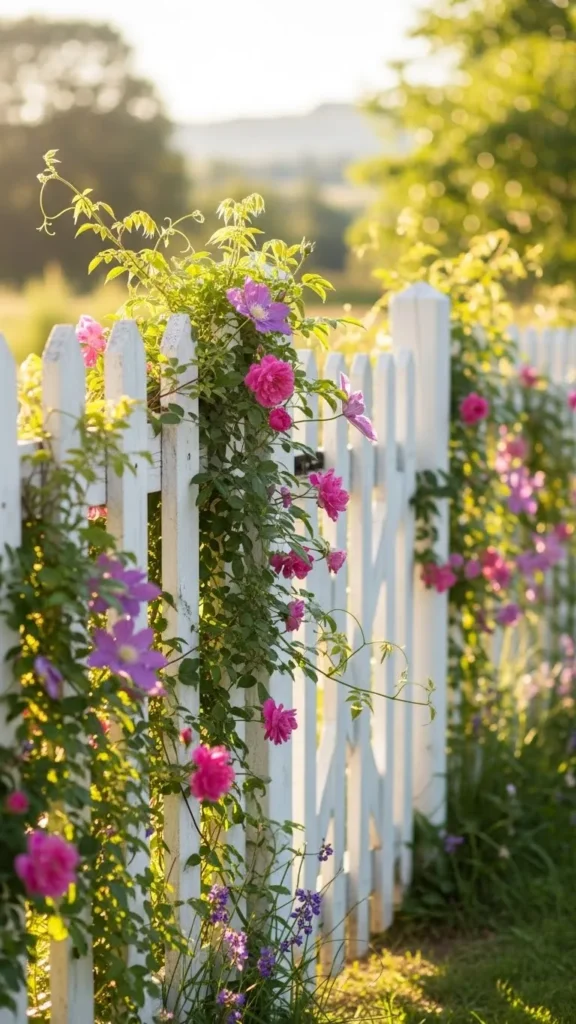
Painted Picket Fencing
A picket fence frames a cottage garden like a storybook page. You do not need new fencing. Old panels from salvage yards work well. Even uneven slats add character.
Paint in soft shades. White, cream, or pale gray work best. Use leftover exterior paint to save money. Brush marks are fine. They add texture.
Let plants grow through and around the fence. Vines, flowering shrubs, or tall blooms soften the structure. Avoid trimming too neatly. Allow bends and overlaps.
If space is limited, use short fence sections as accents. Place them behind flower beds or along one edge. The fence becomes a backdrop rather than a barrier.
Over time, paint chips and wood weathers. That worn look fits the style. Touch up only when boards weaken. A cottage fence feels welcoming because it looks lived with, not managed.
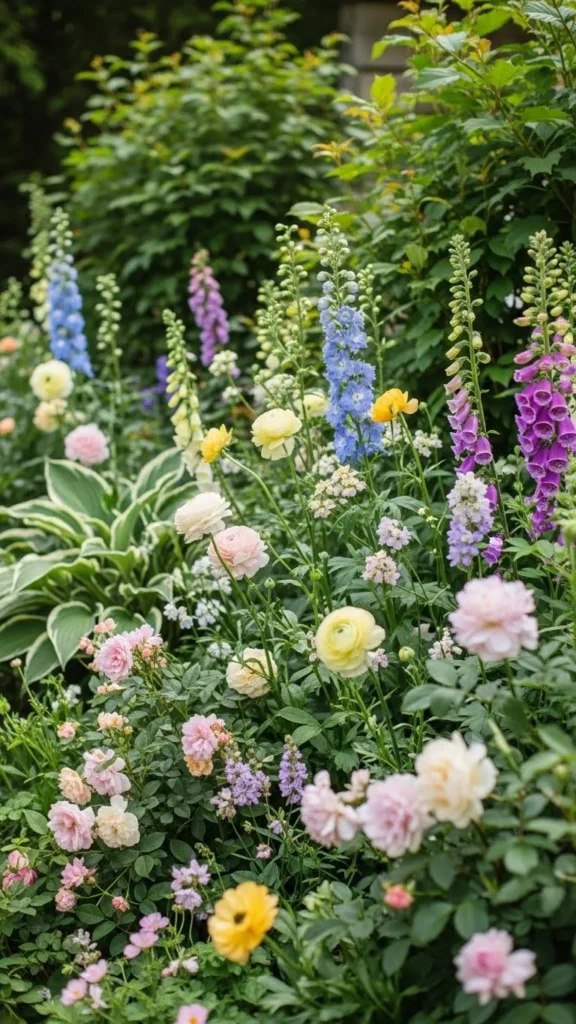
Layered Flower Beds
Cottage gardens thrive on layers. Tall plants in back. Medium in the middle. Low growers along edges. This structure gives fullness without symmetry.
Start with plants you already have. Divide perennials each year and replant sections. This costs nothing and fills space fast. Mix flowering plants with leafy ones to keep beds full even when blooms fade.
Avoid straight edges. Let plants spill outward. Curves and overlaps feel natural. If gaps appear, tuck in small seedlings or cuttings.
Group plants loosely by color rather than type. Soft combinations feel calm and familiar. Avoid tight spacing rules. Slight crowding creates that lush look people love.
Mulch lightly. Leaves or bark chips work fine. Over time, plants knit together and reduce bare soil. The bed begins to feel settled, not staged.
Climbing Plants on Arbors
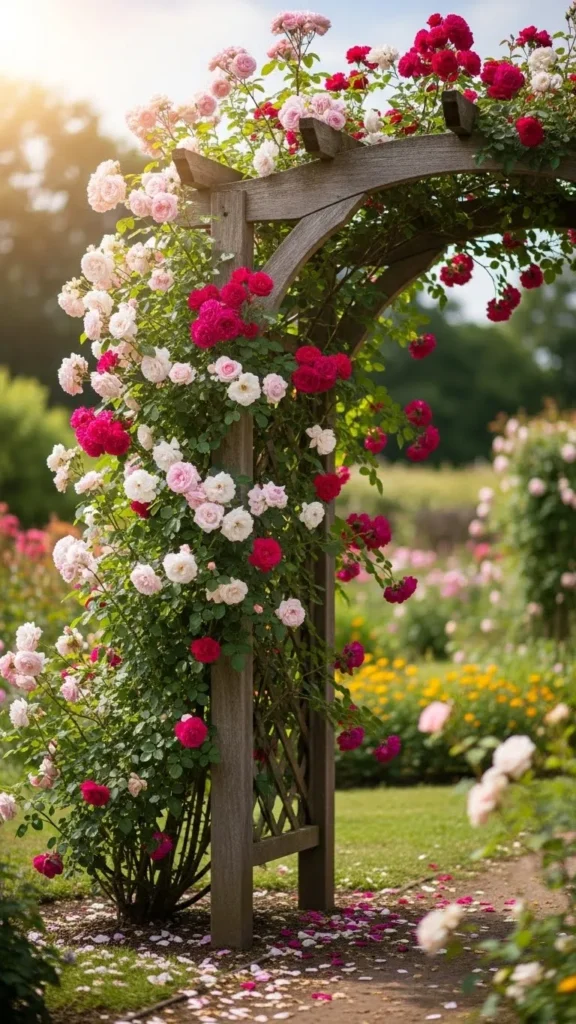
Vertical growth adds height without taking ground space. An arbor, arch, or trellis gives plants something to reach for. You can build one from scrap wood or metal rods.
Train climbing plants gently. Use soft ties or twine. Let stems curve instead of forcing straight lines. That relaxed shape feels right in a cottage setting.
Place arbors over paths or at garden entrances. They create a sense of arrival. Even small yards benefit from one focal point.
Do not worry about full coverage right away. Gaps add interest. Over time, growth fills in naturally. Prune lightly to guide shape, not control it.
A simple structure with growing plants quickly becomes a favorite spot. Shade, scent, and texture combine without much effort.
Mixed Clay Pot Displays
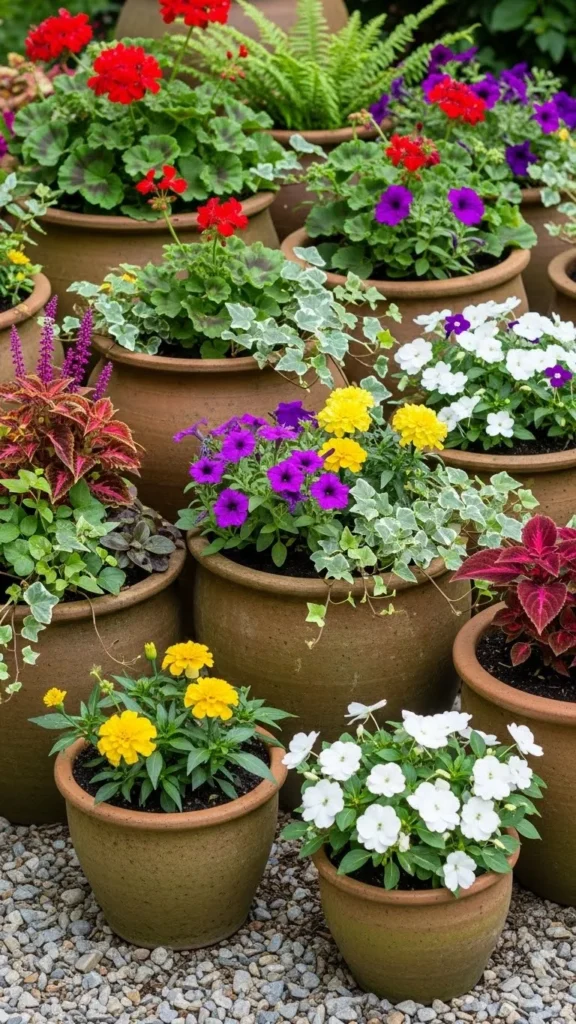
Clay pots bring warmth and texture. They also age well. Chips and color changes add character. Collect them slowly from thrift shops or yard sales.
Group pots rather than spacing them evenly. Vary sizes and heights. Place some directly on soil or gravel. This keeps the look grounded.
Plant simple choices. Herbs, small flowers, or leafy plants work well. Use cuttings to save money. Swap plants seasonally without replacing containers.
Let water stains show. Do not scrub them away. That patina fits the cottage style.
If pots crack, reuse pieces as drainage layers or edging. Nothing goes to waste. A cluster of pots can anchor patios, paths, or corners with ease.
Herbs Blended Into Flowers
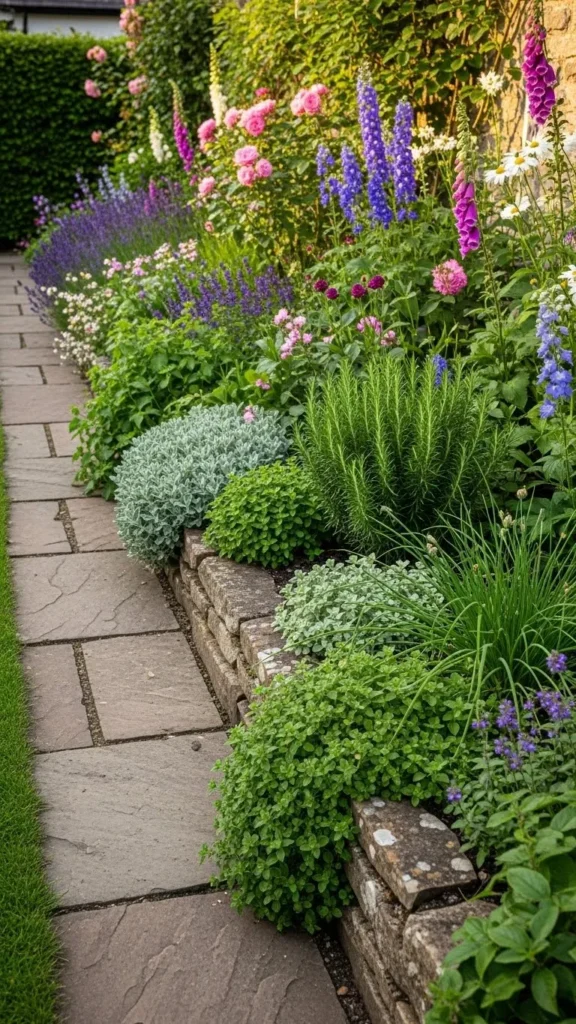
Herbs belong in cottage gardens, not hidden away. Mix them into flower beds. Their shapes and scents add depth.
Use herbs as fillers. They grow quickly and fill gaps. If one outgrows its space, trim and dry it. That keeps beds balanced.
Place herbs near paths. Brushing past releases scent. This adds a sensory layer without extra cost.
Choose simple varieties that return each year. Divide them when they spread too far. Share extras with neighbors or replant elsewhere.
This mix of useful and ornamental plants keeps the garden practical and relaxed.
Quiet Seating Corners
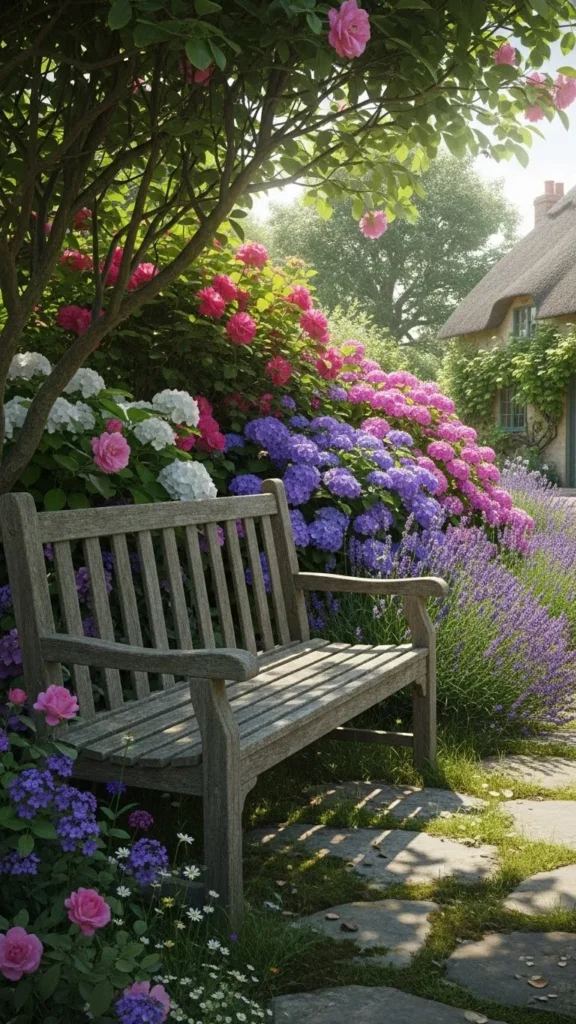
A garden feels complete when it invites rest. A simple bench does the job. It does not need cushions or paint.
Place seating where plants surround it. Partial shade works well. Let branches lean overhead.
Use reclaimed wood or metal furniture. Scratches and wear add charm. If the bench wobbles slightly, that is fine.
Avoid clearing space too much. A tucked-away seat feels personal. It becomes a place to pause, not a display.
One small seat can change how the whole garden feels.
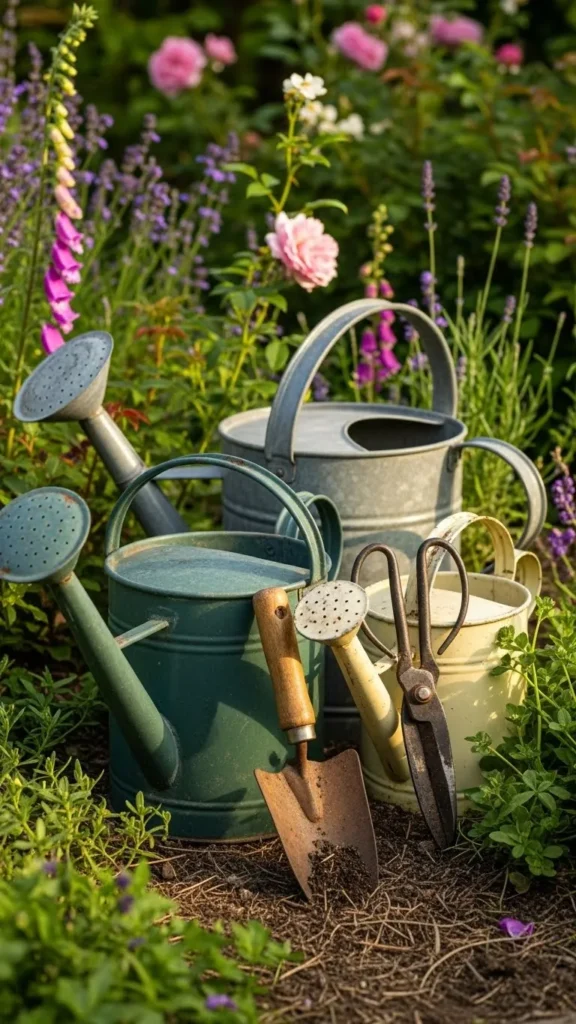
Practical Tools as Decor
Cottage gardens show signs of work. Let tools stay visible. Hang them on hooks or lean them near beds.
Old watering cans make great planters. Fill them with trailing plants or flowers.
Rust and wear are welcome. Clean only enough to keep tools usable. Their look adds honesty to the space.
This approach saves storage space and adds personality. The garden tells its story through use.
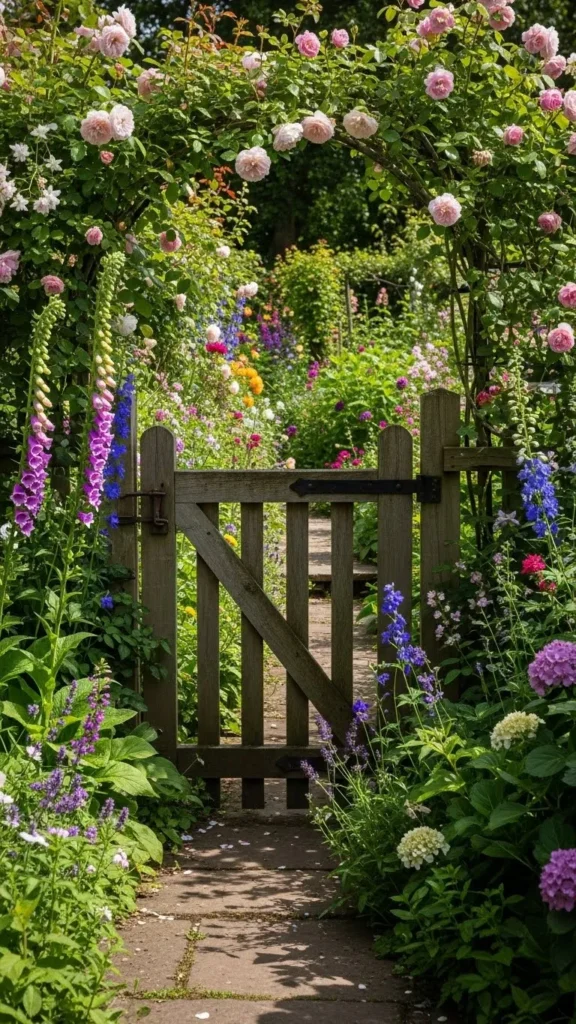
Simple Garden Gates
A gate creates a sense of entry. It does not need to close fully. It marks a pause.
Use old doors, metal panels, or wooden frames. Attach with basic hinges.
Let plants grow around it. The gate becomes part of the garden rather than a barrier.
Even small gardens benefit from one defined entry. It adds structure without stiffness.
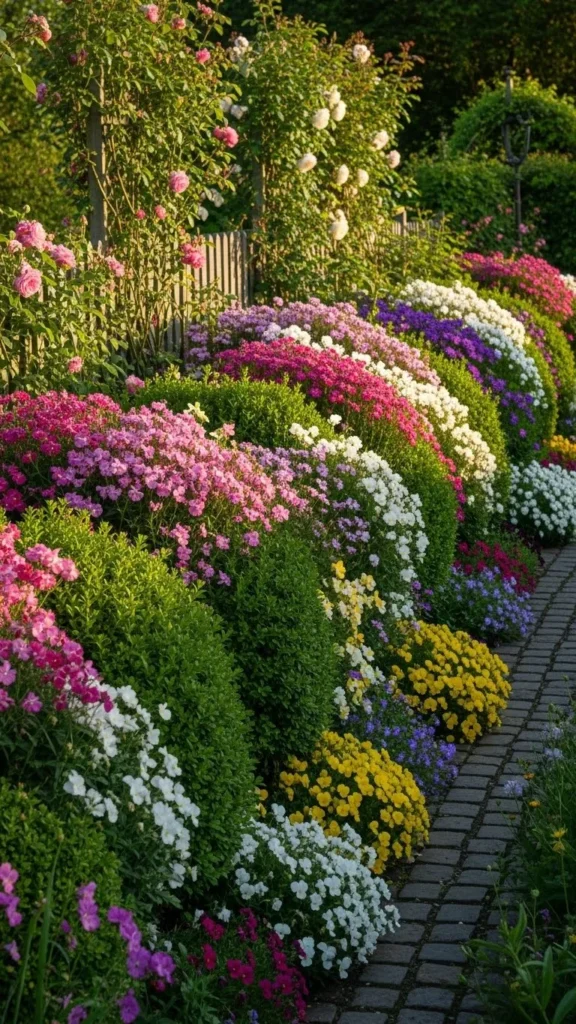
Soft Shrub Borders
Shrubs anchor a garden. Choose ones with loose shapes. Avoid sharp trimming.
Plant in groups rather than lines. Let them overlap slightly.
Use shrubs to define edges instead of fences. This feels gentle and welcoming.
Prune lightly once a year. The goal is shape, not control.
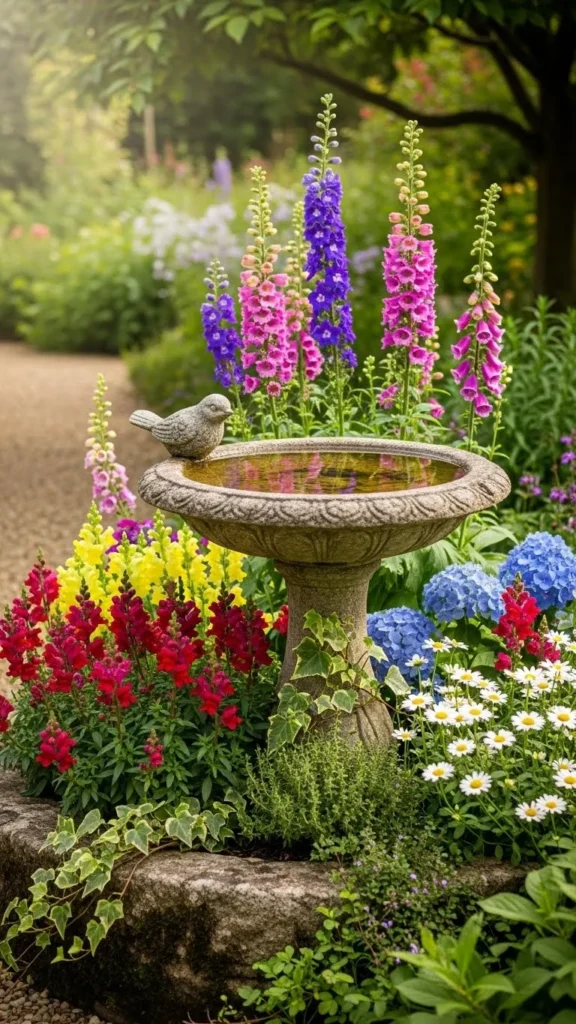
Simple Garden Focal Points
A single feature draws the eye. A birdbath, stone, or planter works well.
Place it where paths meet or beds turn. This guides movement.
Do not crowd it with decor. Let plants frame it naturally.
One focal point is enough. More can feel forced.
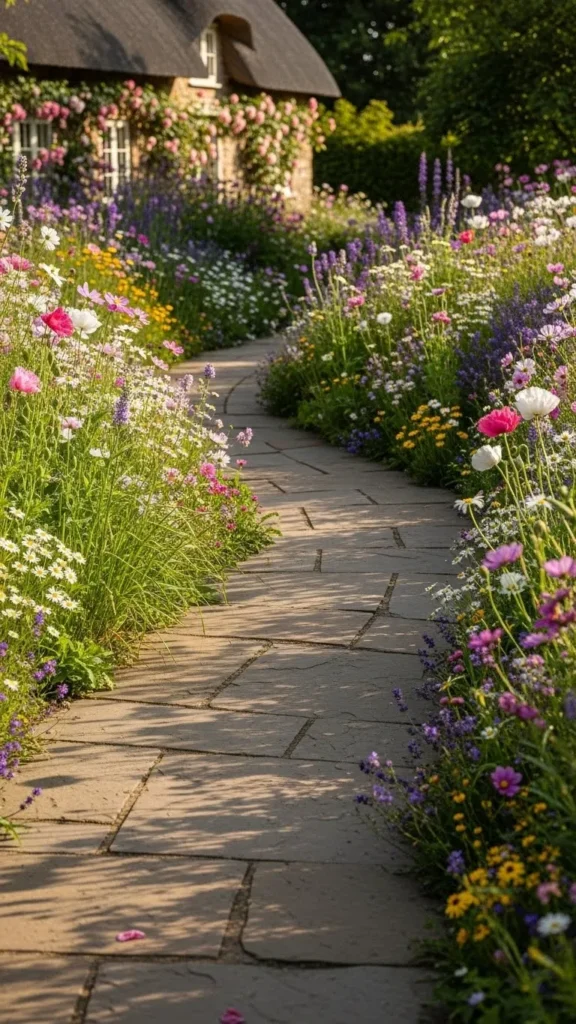
Loose Wildflower Edges
Wildflowers soften boundaries. Scatter seeds along edges or empty spots.
Let them grow without strict spacing. Thin only if paths disappear.
They attract life and add movement. That motion brings energy.
Reseed each year using saved seeds to keep costs low.
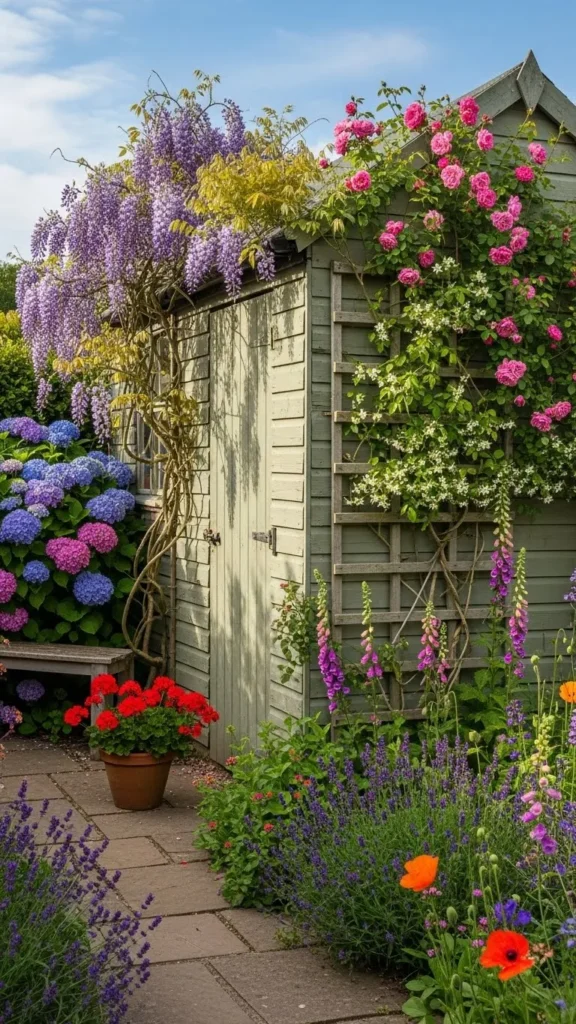
Vertical Green Screens
Use trellises to hide walls or sheds. Simple lattice works well.
Attach with basic hardware. Let plants climb freely.
This adds height without bulk. It also softens hard surfaces.
Over time, the structure fades into greenery.
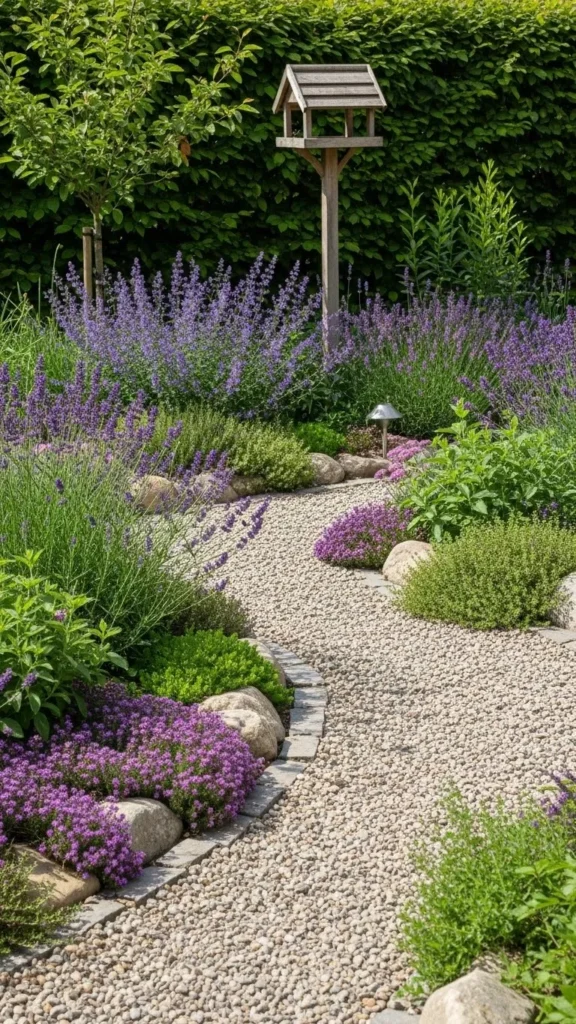
Gravel with Growing Gaps
Gravel paths and patios fit cottage gardens when plants break through.
Leave gaps for self-seeding plants. Pull only what blocks movement.
Gravel drains well and costs little. It also highlights plant shapes.
The mix of hard and soft feels balanced.
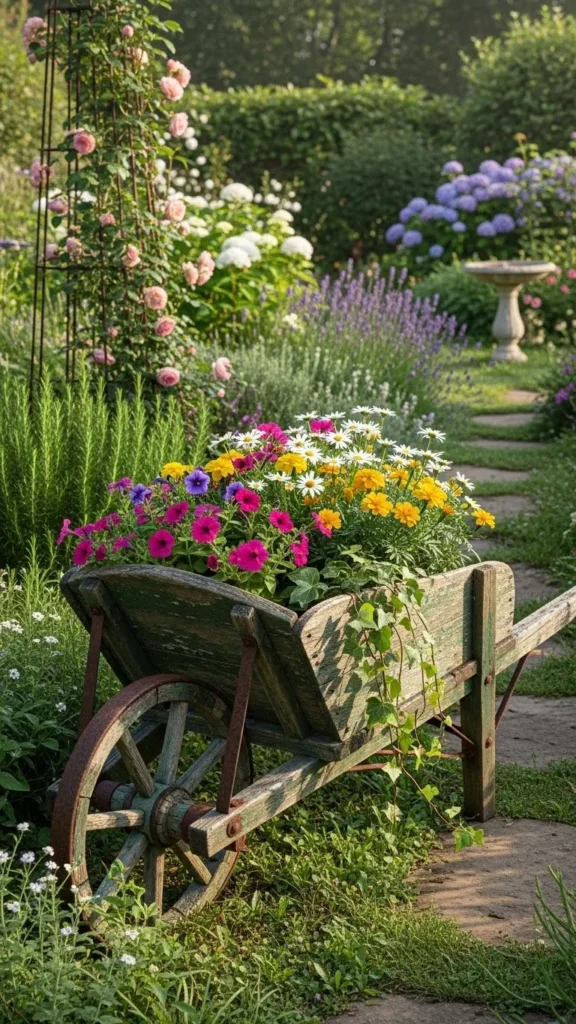
Repurposed Garden Finds
Old items make great planters. Wheelbarrows, buckets, and crates all work.
Drill drainage holes if needed. Fill with soil and plants.
Place them where the garden feels empty. They add story.
Nothing needs to match. Variety adds warmth.
Using Small Spaces Well
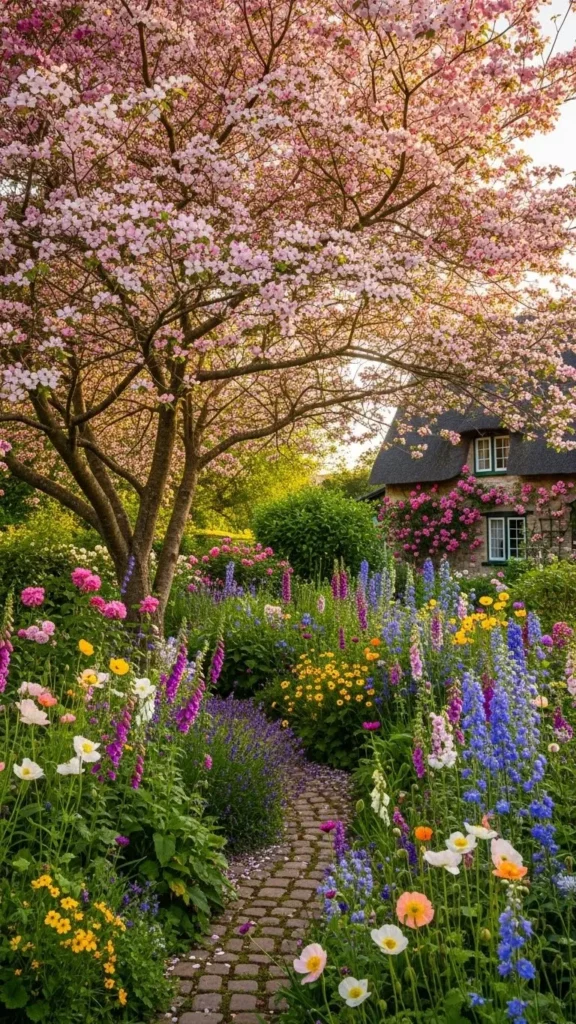
Cottage style suits tight areas. Fill vertical and horizontal space.
Use narrow beds and tall plants. Let paths stay slim.
This creates fullness without clutter.
Small spaces feel larger when layered.
Light Tree Canopies
Small trees add structure. Choose ones with gentle branching.
Plant flowers beneath that enjoy partial shade.
Leaves falling each year enrich soil naturally.
The tree becomes a long-term feature.
Hidden Compost Corners
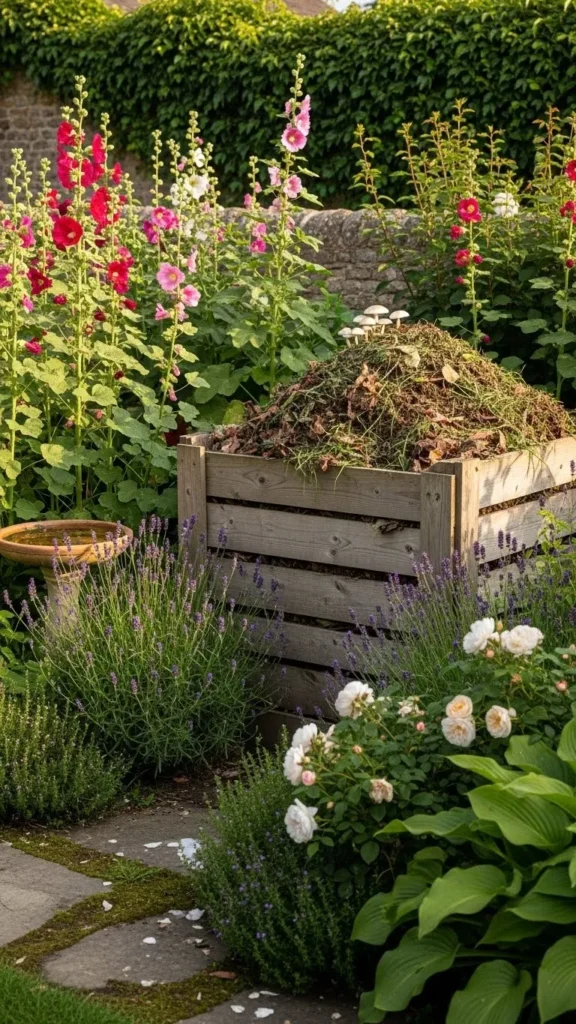
Compost belongs in cottage gardens. Tuck it behind shrubs.
Use simple bins or open piles.
Kitchen scraps return to soil without fuss.
This keeps the garden cycle visible.
Brick and Stone Edging
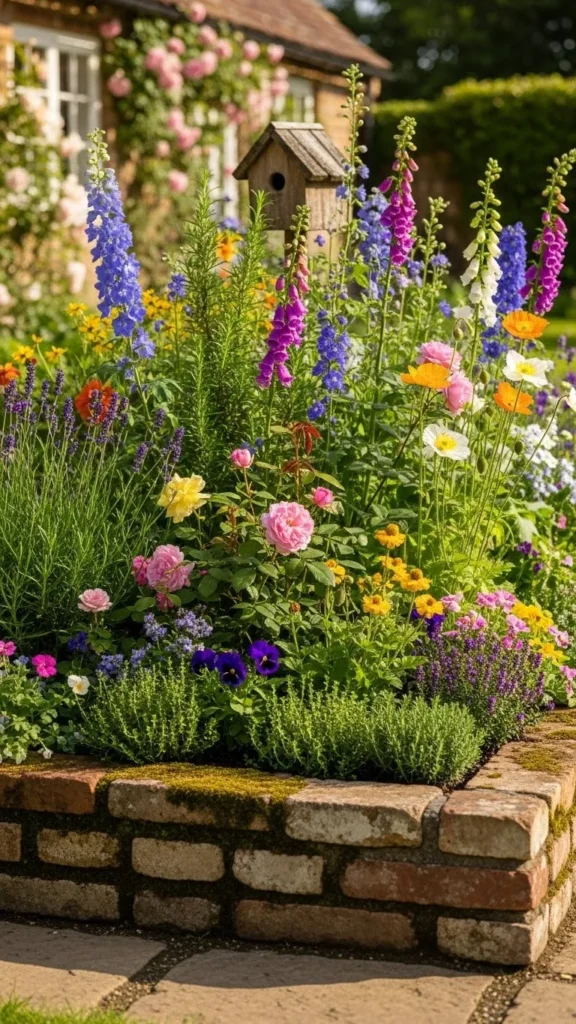
Reclaimed bricks create soft borders. Lay them unevenly.
Let plants grow over edges.
This defines beds without sharp lines.
Materials age well and cost little.

Close Plant Spacing
Cottage gardens accept crowding. Plants support each other.
Shade keeps soil cool.
Thin only when growth blocks paths.
Full beds feel welcoming.
Simple Water Elements
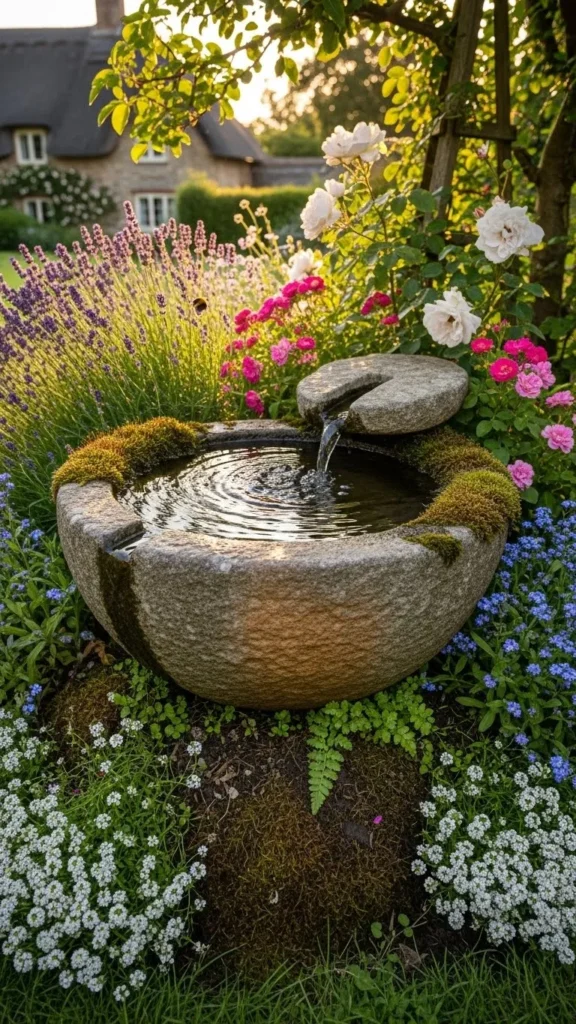
A bowl with water adds life. Birds visit often.
Place it where you can see it.
Clean occasionally, not daily.
Movement adds calm.
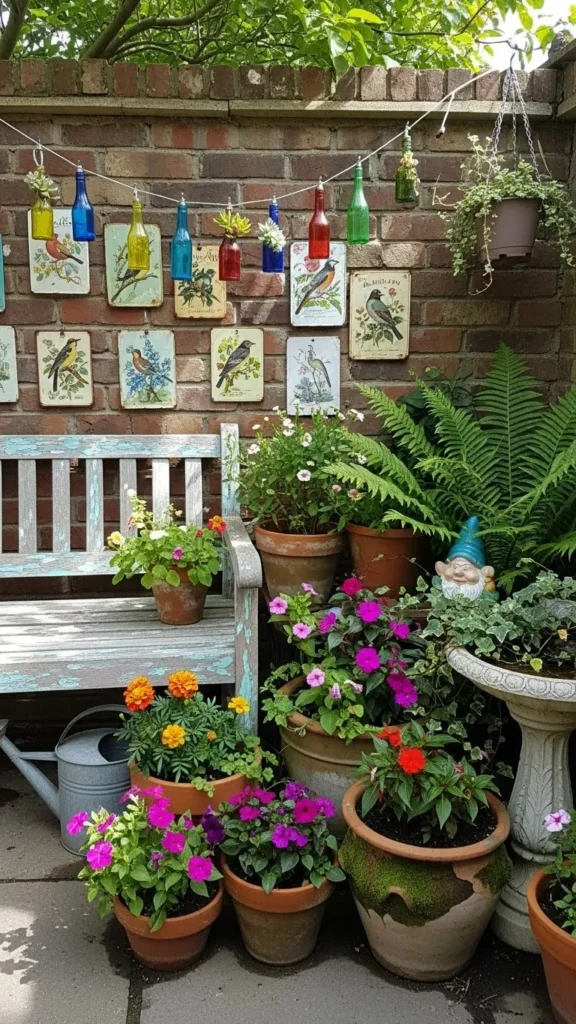
Personal Touch Corners
Add items with meaning. Old signs, tools, or gifts.
Place them where they surprise.
These details make the garden yours.
No two cottage gardens should match.

Letting the Garden Age Naturally
Time is the final ingredient. Let plants grow into place.
Resist constant changes.
Small adjustments each season are enough.
The garden settles and feels familiar.
Conclusion
A cottage garden grows through patience and simple choices. Curves, layers, and personal details create spaces that feel welcoming year after year. You do not need rare plants or costly materials. Reuse what you have. Let plants lean, wander, and overlap. With time, these small decisions shape a garden that feels calm, lived-in, and full of quiet beauty.

Leave a Reply