

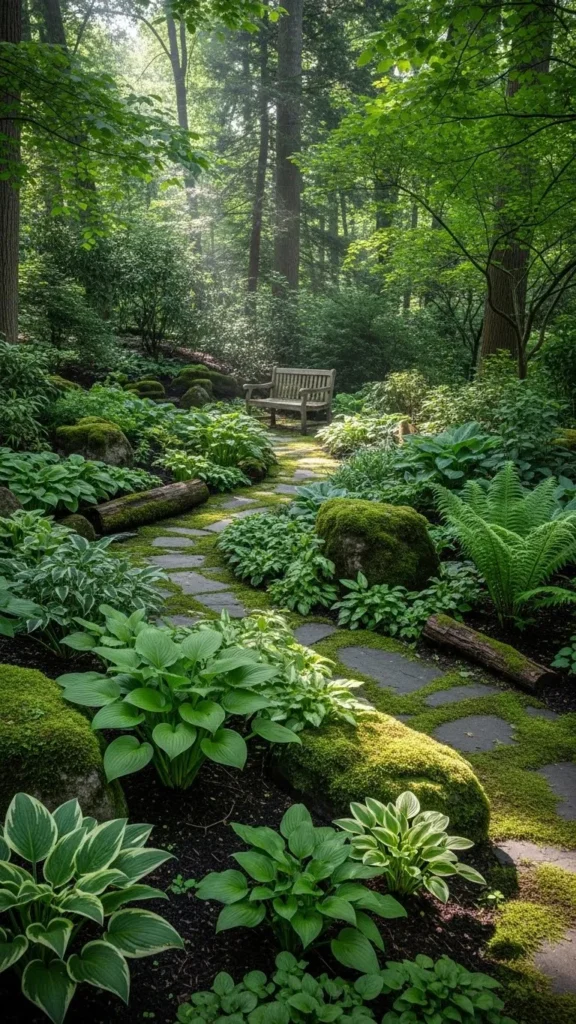
A shady yard does not limit what you can grow. It opens the door to calm, leafy spaces that feel grounded and welcoming. Shade gardens work well beside homes, under trees, and along fences where direct light never reaches. With the right layout and plant choices, these spaces stay full and inviting through the year. This guide shares practical ideas that fit small budgets and simple schedules. Each idea focuses on easy care, common materials, and steady results. You can start with one corner or redo an entire yard at your own pace.
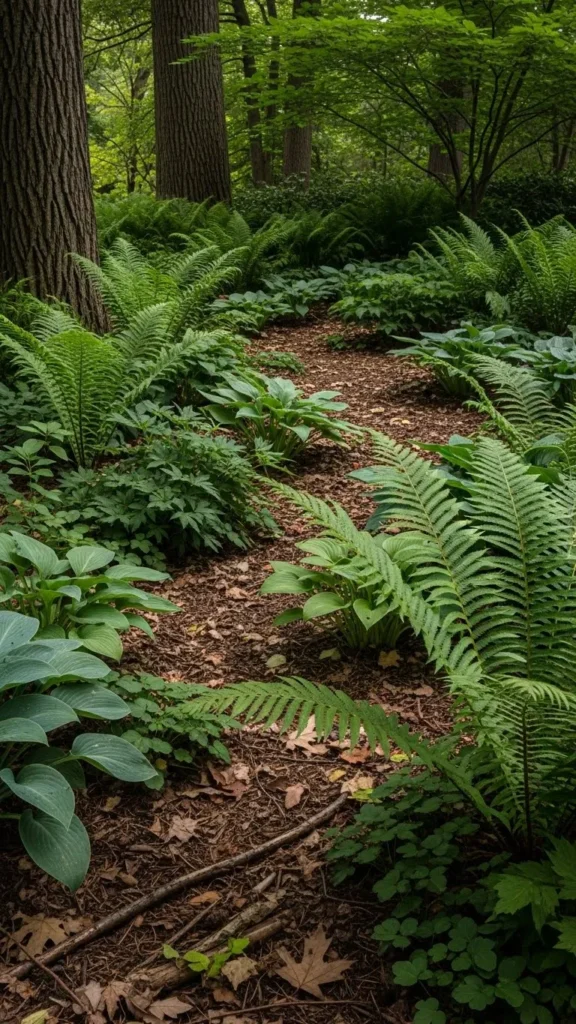
Woodland Floor Garden
A woodland floor garden copies how plants grow under trees in nature. Start with shade-loving plants like ferns and hostas. Group them in loose clusters instead of straight lines. This keeps the space relaxed and easy to maintain. Use fallen leaves as mulch. They help hold moisture and slowly break down into soil food.
You do not need rare plants. Garden centers often sell small ferns at low cost. These spread over time. Add a few stepping stones so you can walk through without compacting soil. Old bricks work just as well.
Water deeply once or twice a week instead of daily sprinkles. This helps roots grow stronger. If tree roots make digging hard, use shallow planting holes and add compost on top. Over time, plants adjust. This setup works well in backyards, side yards, and rental homes where changes must stay simple.
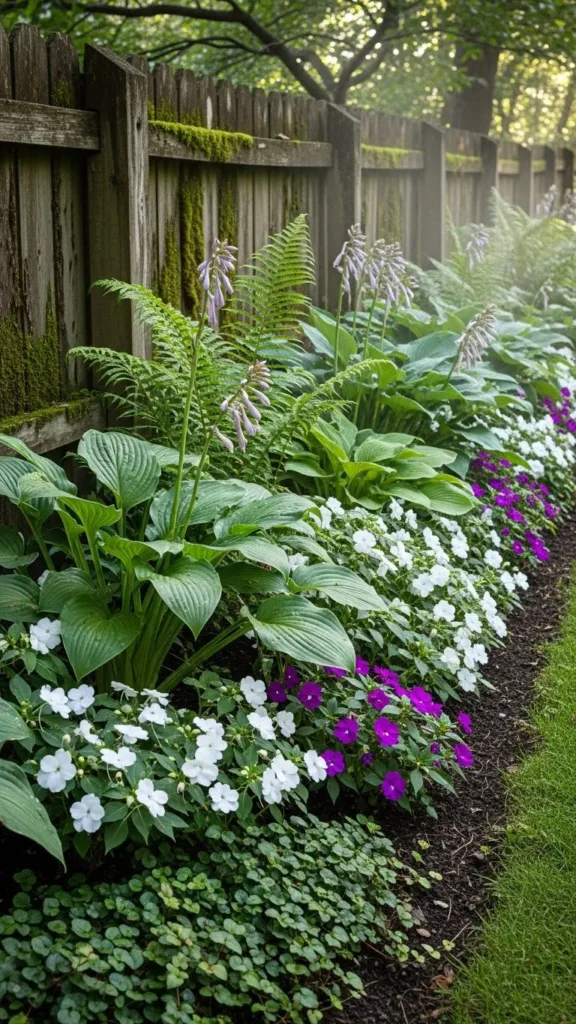
Fence-Line Shade Border
A fence often blocks light, but it can frame a strong shade border. Use taller plants at the back and shorter ones near the edge. This keeps the view open and tidy. Climbing plants trained along the fence add height without using ground space.
You can reuse materials here. Old trellis panels or wire grids attach easily to wood fences. Plant low-cost ground covers at the base to limit weeds. Mulch helps soil stay cool and damp.
This idea works well for narrow yards or side paths. Focus on repetition rather than variety. Using fewer plant types saves money and looks calm. Over time, plants fill gaps and reduce upkeep. Trim once or twice a year to keep edges clear.
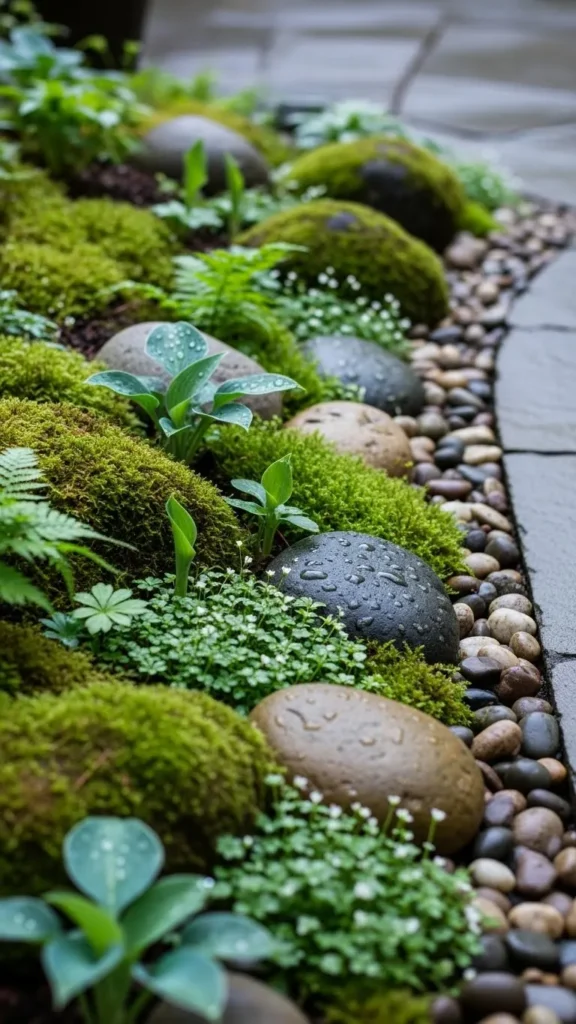
Moss and Stone Corner
Moss thrives where grass fails. In deep shade, moss creates a soft green surface with almost no care. Clear the area of debris and let the soil stay damp. Moss spreads on its own when conditions suit it.
Add flat stones or stepping slabs to define the space. You can collect stones locally or reuse broken concrete pieces. Place them gently on the surface without digging deep.
This setup suits quiet corners near patios or walkways. It pairs well with ferns and small shade plants. Avoid heavy foot traffic. Once moss settles, it stays put. This idea works well for low-effort gardens and shaded entry areas.
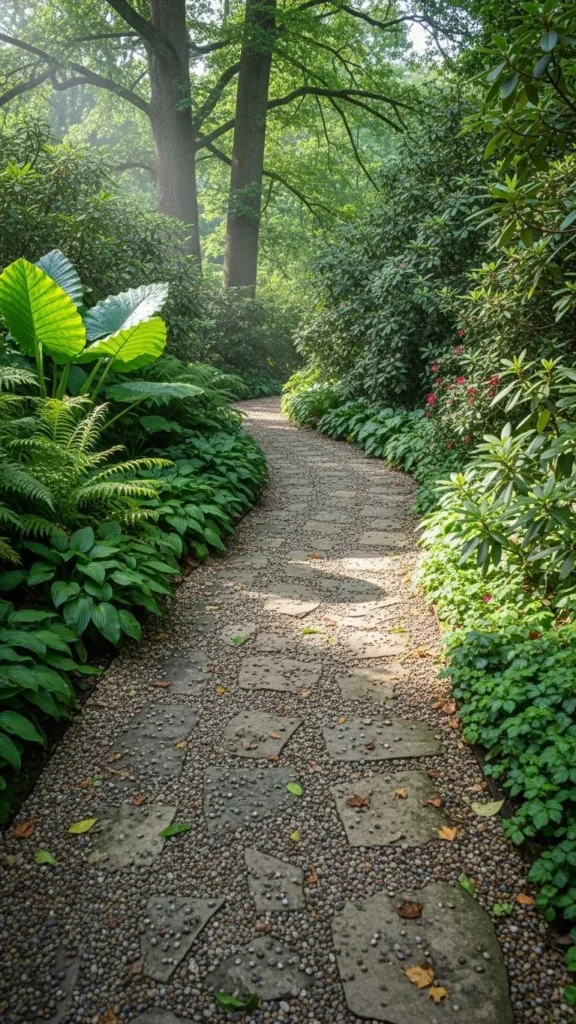
Shaded Garden Path
A path gives purpose to a shady yard. Gravel or bark chips work well and cost little. Lay landscape fabric first to block weeds. Then spread material evenly.
Line the path with plants that arch slightly over the edge. This softens the look and hides borders. You can use divided plants from friends or neighbors to save money.
Paths help with drainage and reduce muddy spots. They also guide visitors through the space. Even a short path can change how the garden feels. Keep it narrow to avoid extra work.
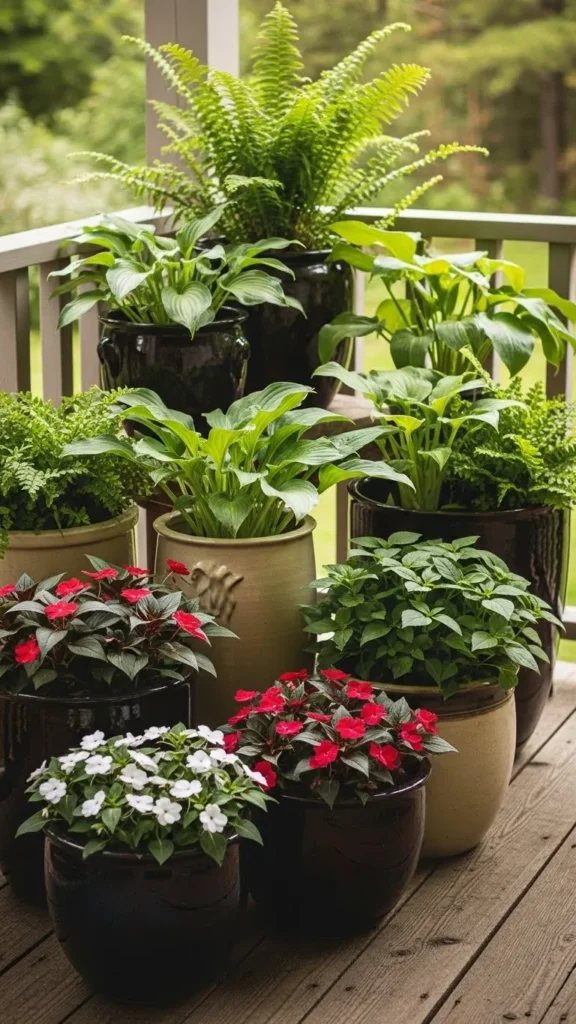
Container Shade Garden
Containers solve problems where soil is poor or roots compete. Use pots in groups of three or five for balance. Choose different heights but similar colors.
Plastic pots work fine and cost less than ceramic. Drill drainage holes if needed. Use a basic potting mix mixed with compost.
This idea suits renters or patios under roofs. You can move plants as seasons change. Water when the top inch of soil feels dry. Containers let you control growth without digging.
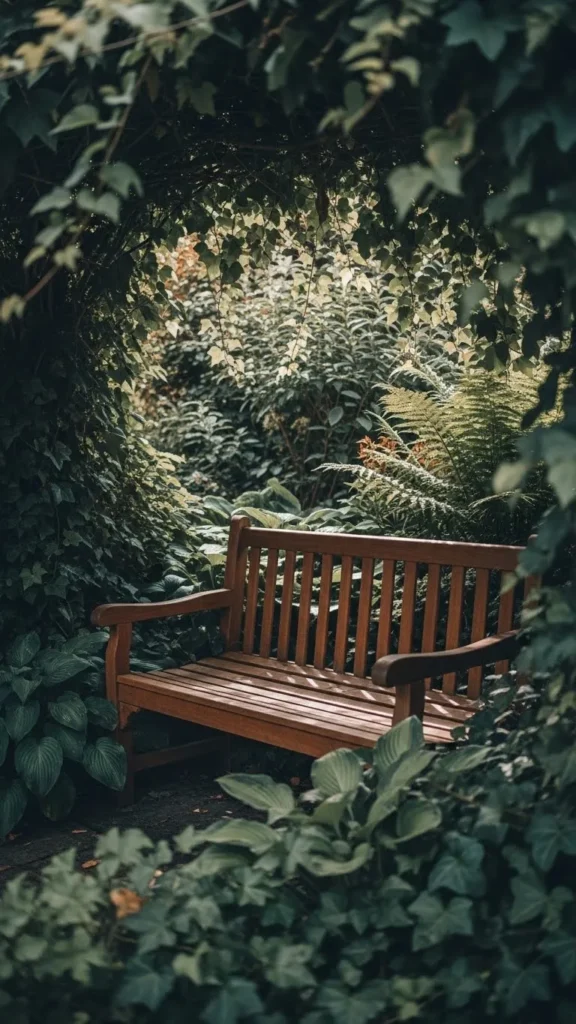
Shady Sitting Nook
Shade invites rest. Place a simple bench or chair where light stays soft. Surround it with plants that stay low and tidy.
You can build a bench from leftover wood or buy a basic one. Keep it raised slightly to avoid damp ground. Mulch around the base to reduce mud.
This space does not need many plants. Focus on comfort and airflow. It works well under trees or beside walls. Add a small side table if space allows.
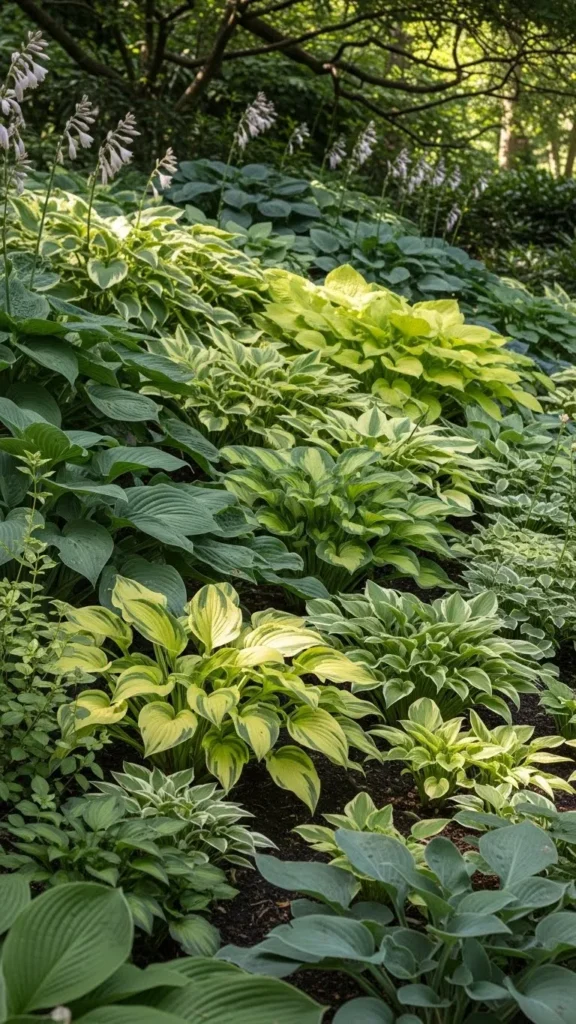
Hosta-Focused Bed
Hostas handle shade with ease. They come in many leaf shapes and tones. Plant them close together for a full look.
Buy small starts instead of large plants. They grow fast. Divide them every few years to fill new spots.
Use mulch to protect roots and limit weeds. Hostas work well near walkways and foundations. Keep snails away by clearing debris and watering early in the day.
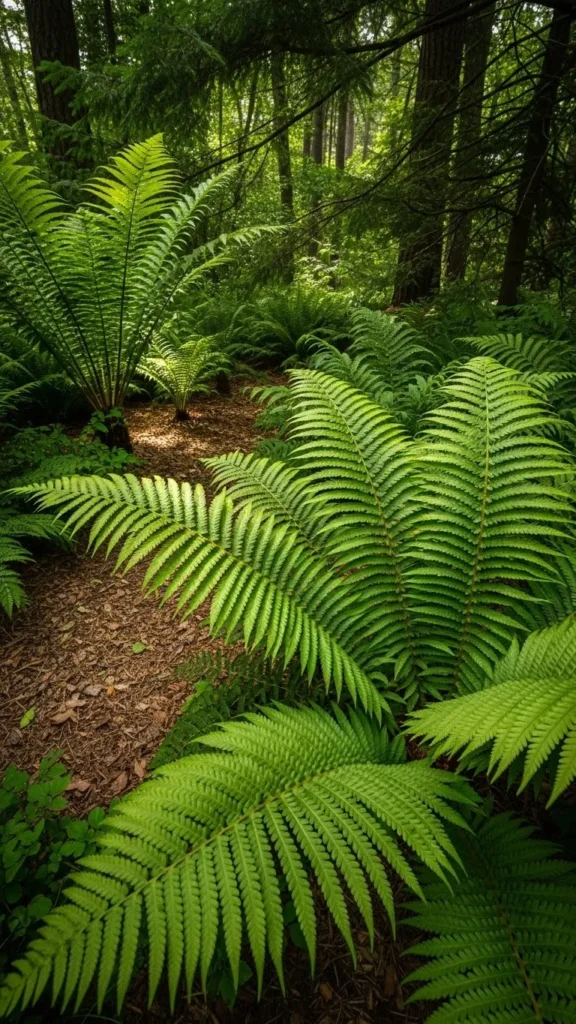
Fern Garden Patch
Ferns bring movement to shade. Their fronds sway with light wind and fill gaps quickly. Choose types that suit your climate.
Plant in groups for impact. Use leaf mulch to keep soil damp. Ferns spread slowly and need little care.
This idea fits woodland yards and shaded slopes. Once settled, ferns return each year without extra work.
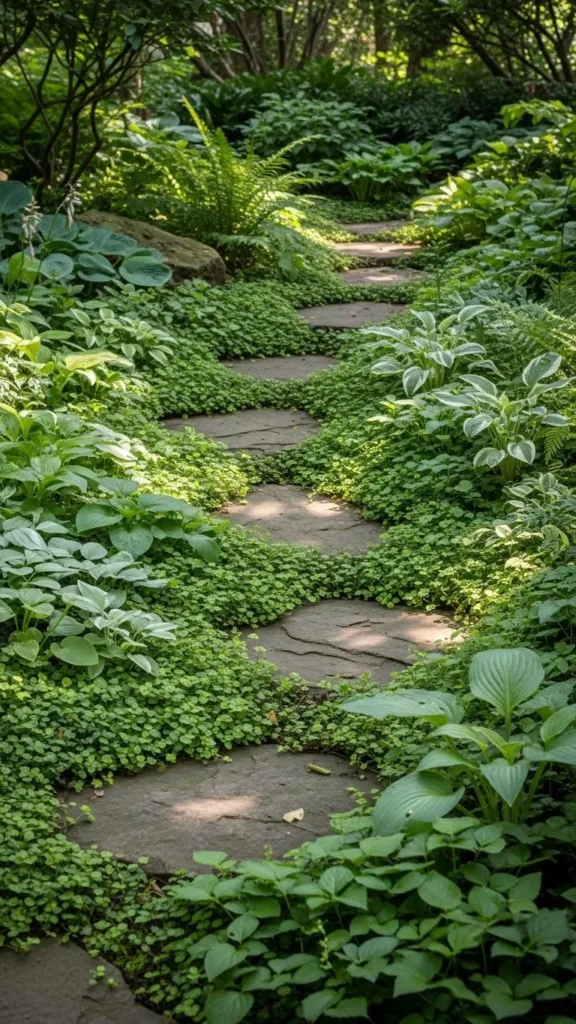
Ground Cover Solution
Ground covers solve bare soil problems. They spread low and block weeds. Many types handle deep shade well.
Start with small plugs to save money. Space them evenly and let them fill in. Water during the first few weeks.
Ground covers reduce mowing and trimming. They suit areas under trees or along paths. Over time, they form a solid green layer.
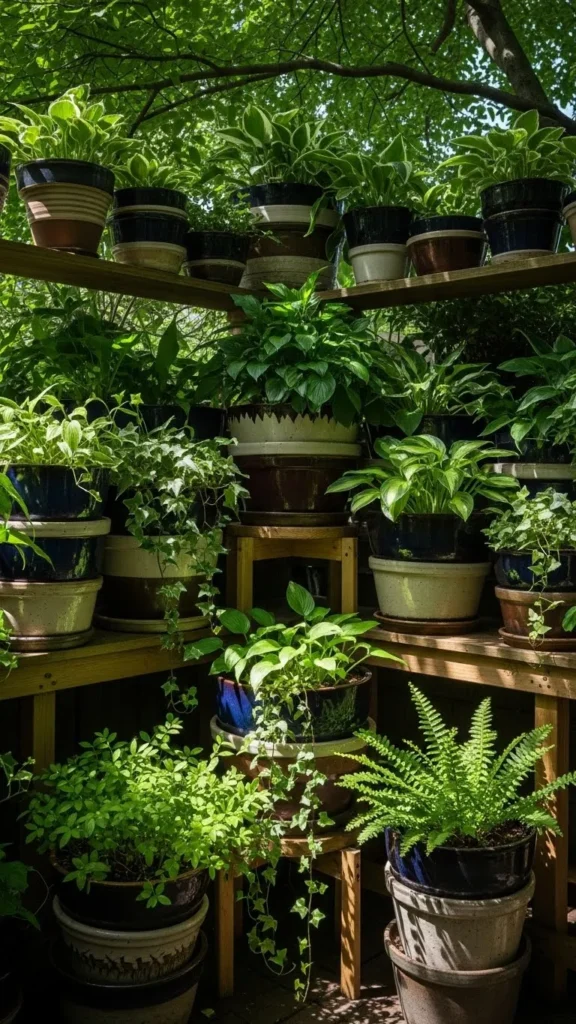
Raised Shade Displays
Raised planters help where soil stays wet or compacted. Build simple boxes from untreated wood or use stacked crates.
Fill with loose soil and compost. Plant shade plants that stay compact. This makes care easier and keeps plants visible.
Raised setups work well near patios and walls. They also reduce bending and improve drainage.
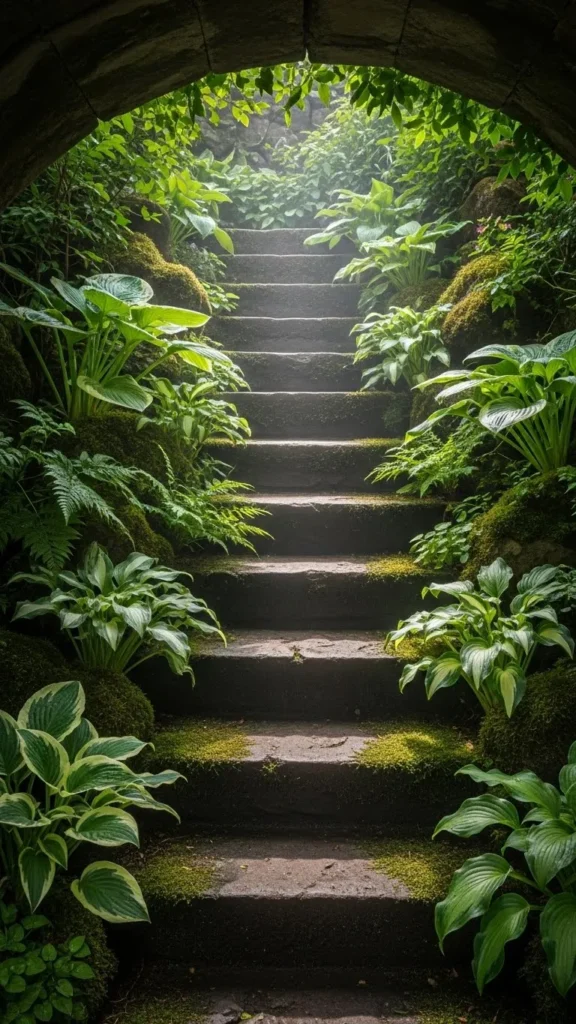
Under-Stair Garden
The area under stairs often stays unused. Add shallow planters or ground plants that handle low light.
Use stone or brick edging to keep soil in place. Choose plants that stay neat and slow growing.
This idea turns dead space into a feature. It works indoors or outdoors where light stays limited.
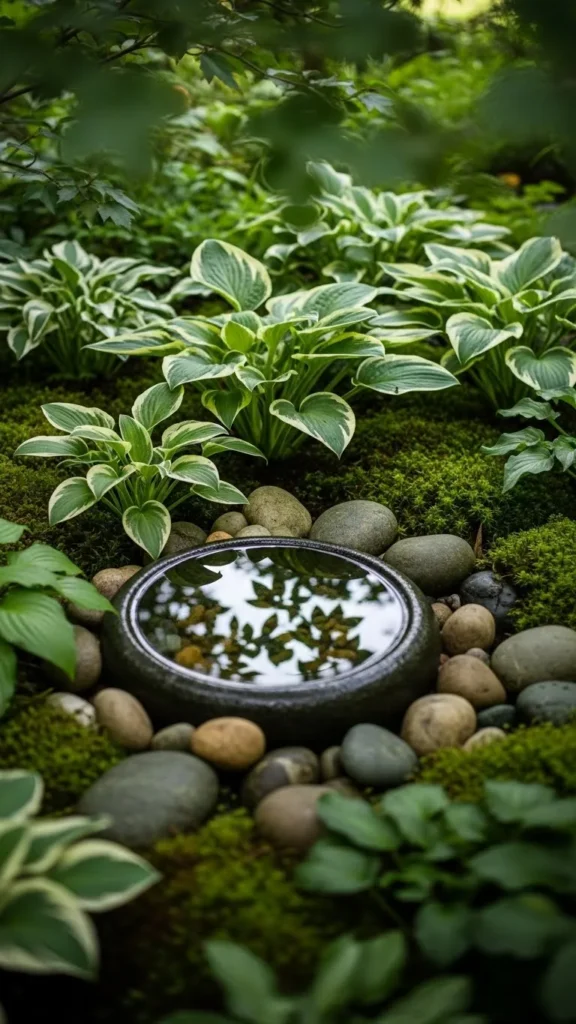
Simple Water Feature
A small water bowl adds sound and movement. Use a sturdy ceramic or stone dish.
Place it level on packed soil. Clean weekly to keep it clear. Surround it with shade plants to frame the area.
This setup attracts birds and cools the space. It works even in small yards.
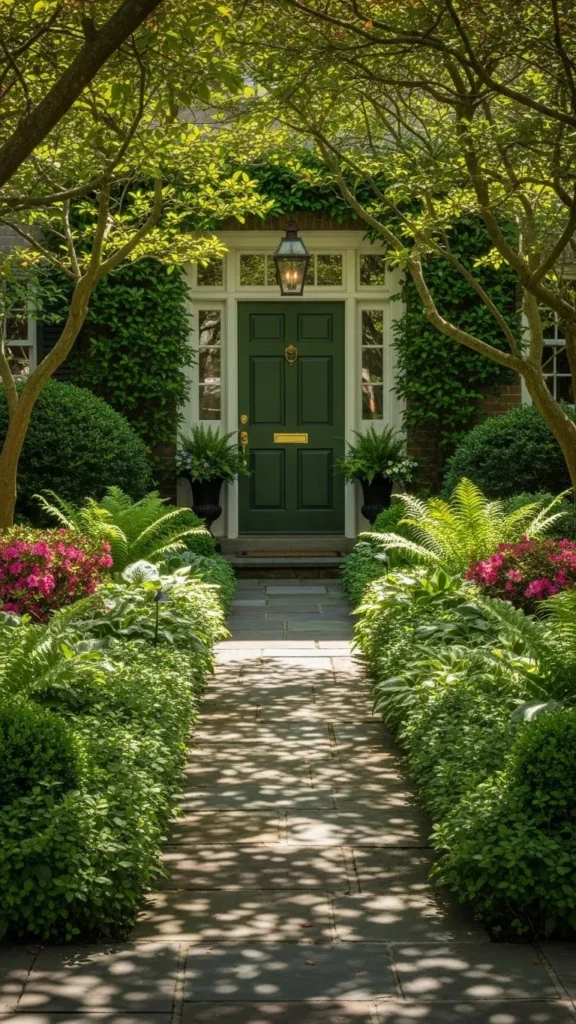
Shaded Entry Garden
Front entries often sit in shade. Use clean lines and low plants to keep it welcoming.
Stick to two or three plant types. This keeps the look calm. Use mulch for a neat finish.
This idea improves curb appeal without heavy work. Trim edges once a season.
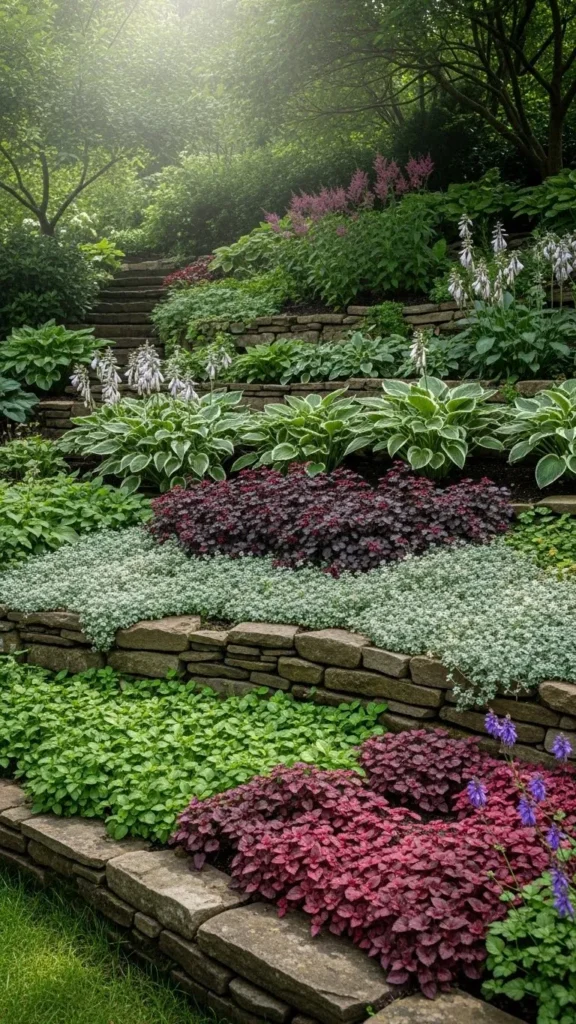
Shaded Slope Fix
Slopes in shade erode easily. Use terracing with stones or logs.
Plant ground covers between steps. Their roots hold soil in place.
This method reduces runoff and looks natural. Use found materials to keep costs low.
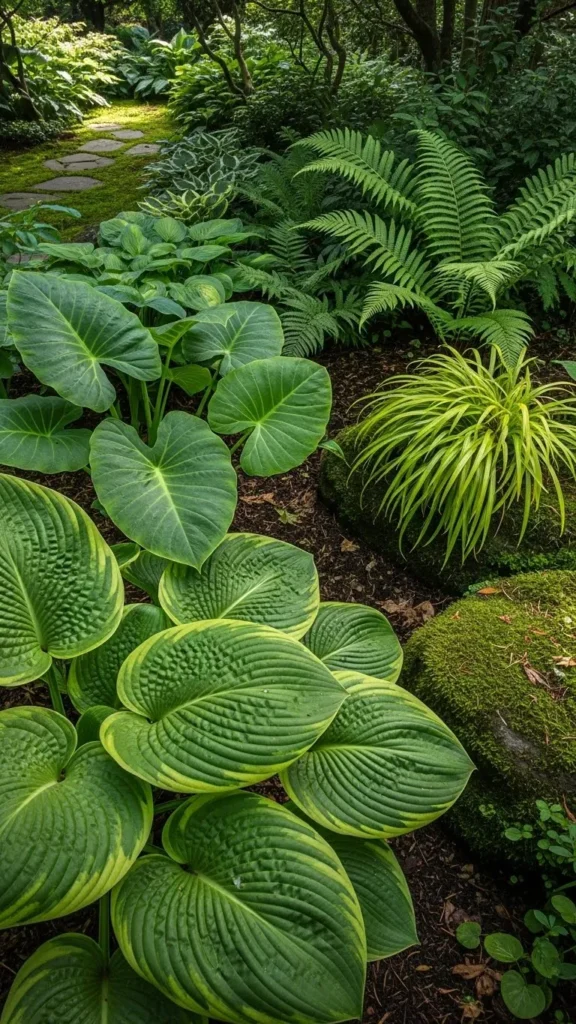
Large-Leaf Texture Garden
Big leaves stand out in low light. Use them as focal points.
Balance them with smaller plants. This keeps the space from feeling heavy.
Large leaves also hide bare spots. Water deeply and mulch well.
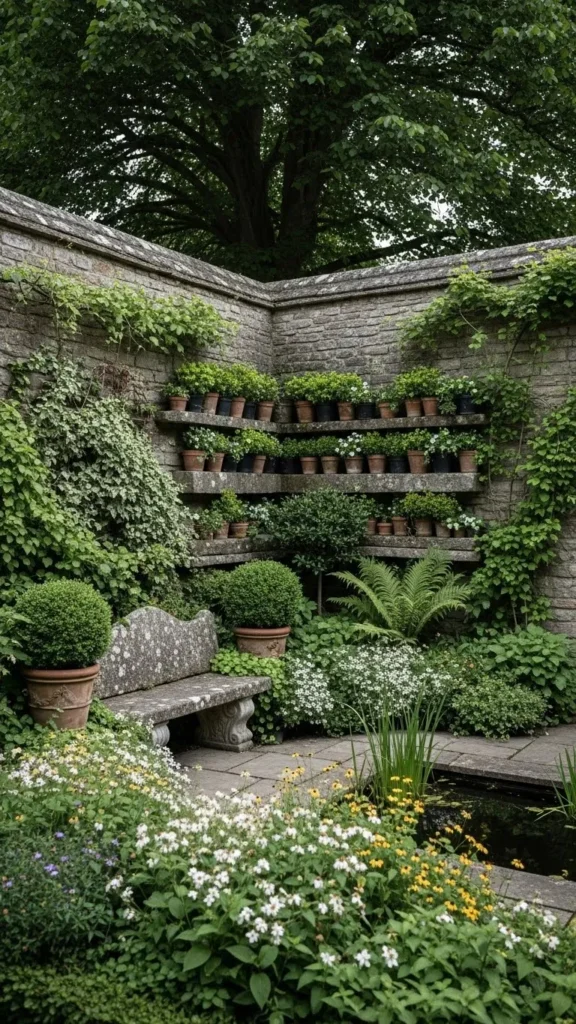
Courtyard Shade Garden
Courtyards trap shade but hold warmth. Use pots and raised beds to control layout.
Choose plants that stay tidy. Group containers to reduce watering time.
This works well in urban homes and apartments.
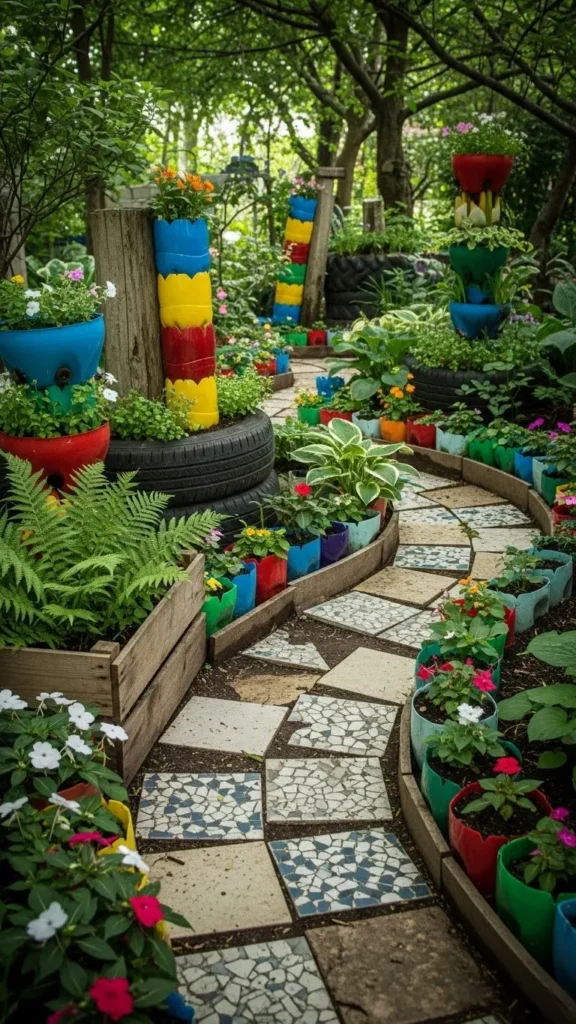
Recycled Material Garden
Reuse items like tubs, crates, and bricks. They work well in shade.
Drill drainage holes and paint if needed. This saves money and reduces waste.
Mix plants with similar care needs. This keeps upkeep simple.
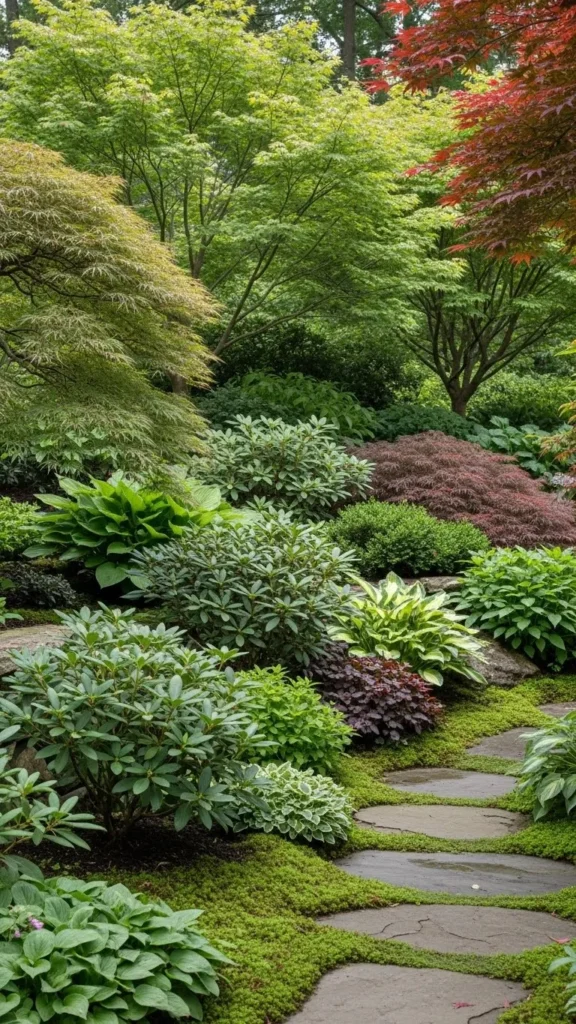
Layered Shade Design
Use height to add depth. Small trees at the back, shrubs in the middle, low plants in front.
This layout copies natural growth patterns. It feels balanced and calm.
Plant slowly as budget allows. Add one layer at a time.
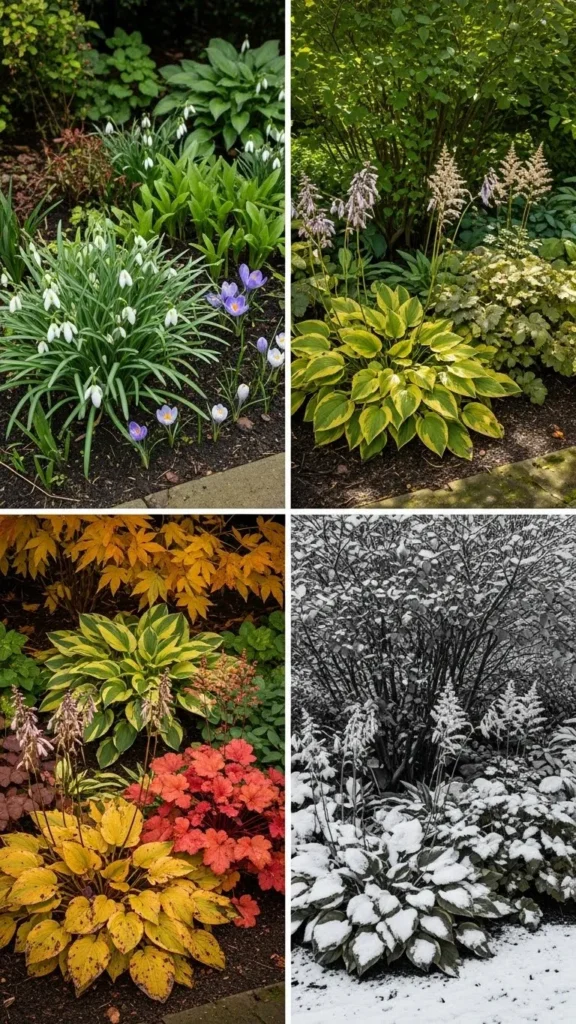
Seasonal Shade Swap
Rotate plants through the year. Use pots for easy changes.
Store unused plants in sheltered spots. This keeps the garden active without replanting beds.
It suits gardeners who enjoy variety without heavy work.
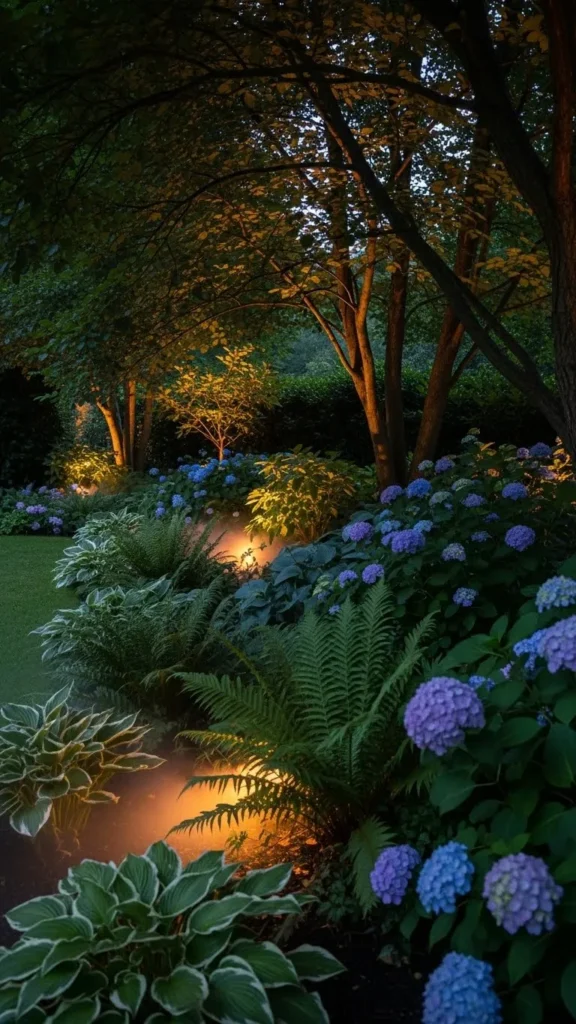
Low-Light Garden Lighting
Use solar lights rated for shade. Place them along paths or near plants.
Soft light adds safety and mood. Avoid bright fixtures.
This extends garden use into evening hours.
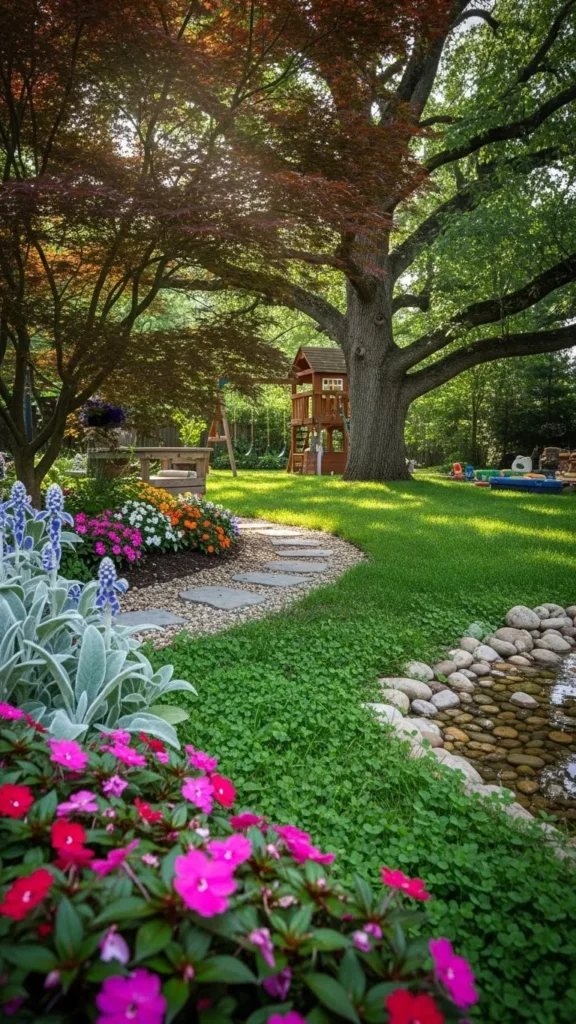
Family-Friendly Shade Space
Shade keeps yards cooler. Choose plants without sharp edges.
Leave open areas for play. Use mulch instead of hard surfaces.
This creates a safe and calm outdoor area.
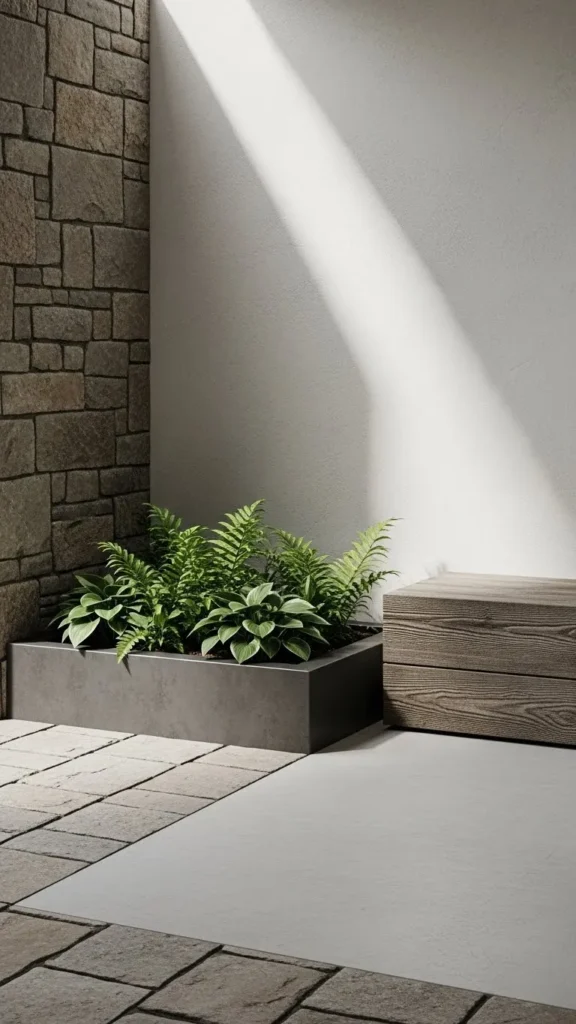
Minimal Shade Garden
Less can work well in shade. Use a few plant types and open space.
Focus on shape and placement. This reduces upkeep.
This style suits modern homes and small yards.
Conclusion
Shade gardens offer calm, low-effort spaces that work with what your yard already provides. With simple layouts, common plants, and reused materials, you can build a garden that stays full and welcoming without direct light. Start small, adjust as plants grow, and let the space guide your choices. A shaded yard can become one of the most inviting parts of your home.

Leave a Reply