

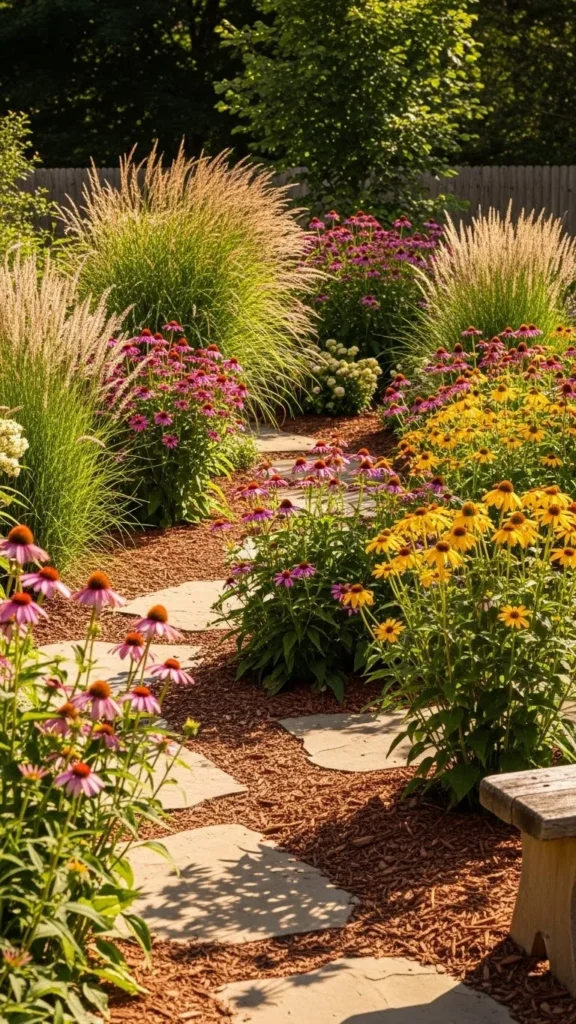
Full-sun gardens can feel challenging when the heat is strong and shade is scarce. The good news is that many garden styles and plants actually thrive in long hours of sunlight. With the right ideas, you can create an outdoor space that stays attractive, manageable, and budget-aware even during hot months. This guide focuses on simple layouts, resilient plants, and hands-on DIY choices that work well in sunny conditions. Each idea below is designed to help you work with the sun instead of fighting it, using practical steps that fit real homes and real budgets.
Gravel and Drought-Friendly Beds
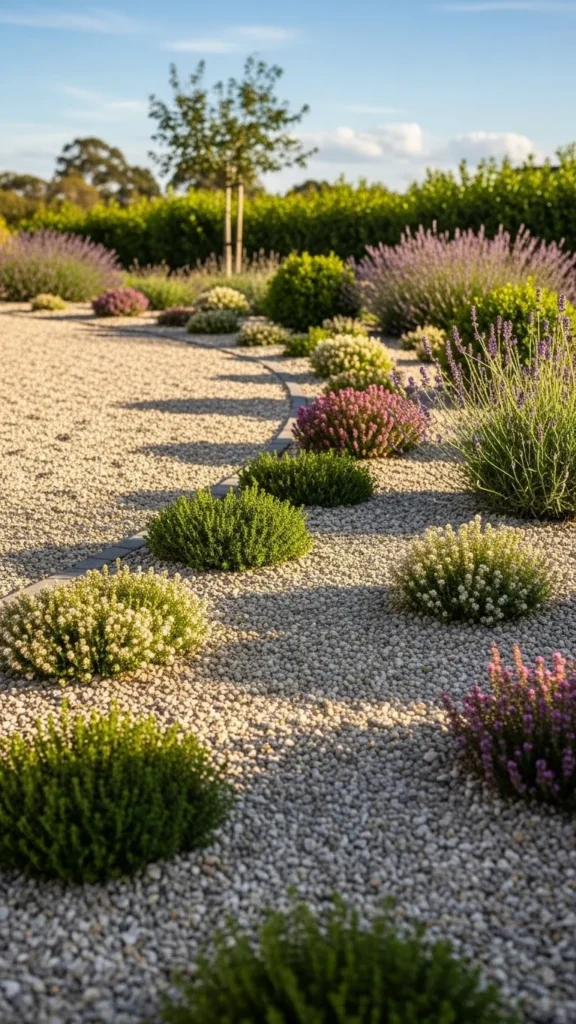
Gravel beds handle heat better than bare soil. They warm quickly and reduce surface moisture loss. Start by removing grass or weeds from a sunny patch. Lay cardboard or landscape fabric. Pour a thin layer of gravel on top. Choose plants that handle dry soil well, like lavender-style shrubs or compact grasses.
This setup cuts watering time. It also keeps weeds down. For budget control, reuse gravel from old paths or buy in bulk. Mix stone sizes for a relaxed look. Space plants wider than usual so roots do not compete.
Gravel beds suit front yards and side strips. They also work around mailboxes or driveways where heat builds fast. If you want color, add one bold flowering plant per section instead of many small ones. That keeps costs low and care simple.
Heat-Loving Perennial Borders
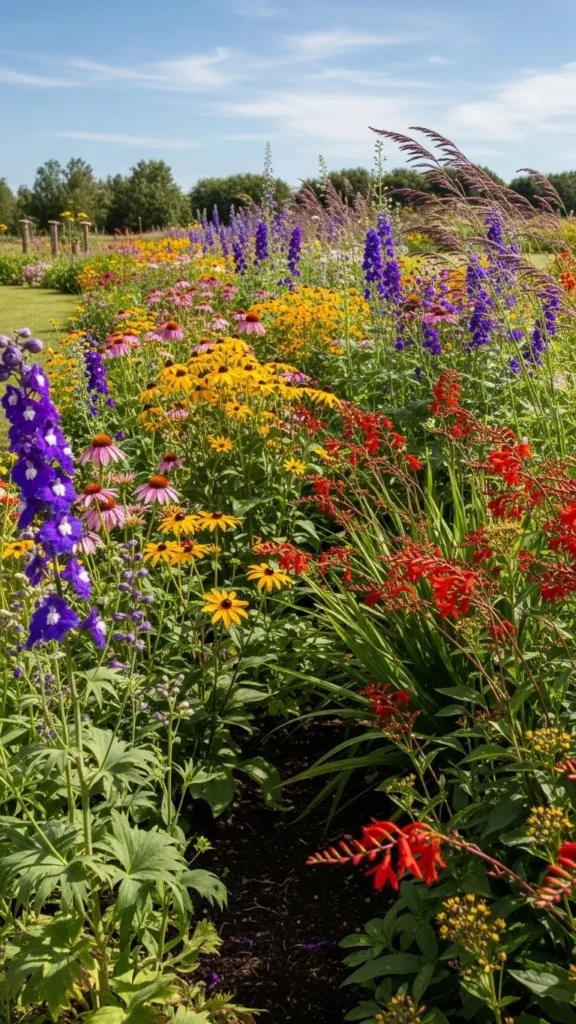
Perennial borders save money year after year. Choose types known for sun tolerance. Plant in groups of three or five for balance. Leave space between clumps so air moves freely.
Prepare soil with compost before planting. That helps roots settle faster. Mulch lightly to slow moisture loss. Avoid crowding. Crowded plants dry out quicker.
For DIY edging, use bricks or stones from reclaimed projects. This keeps soil from washing out during watering. A simple border along a fence or walkway can change how the whole yard feels without major expense.
Raised Beds Built for Sun
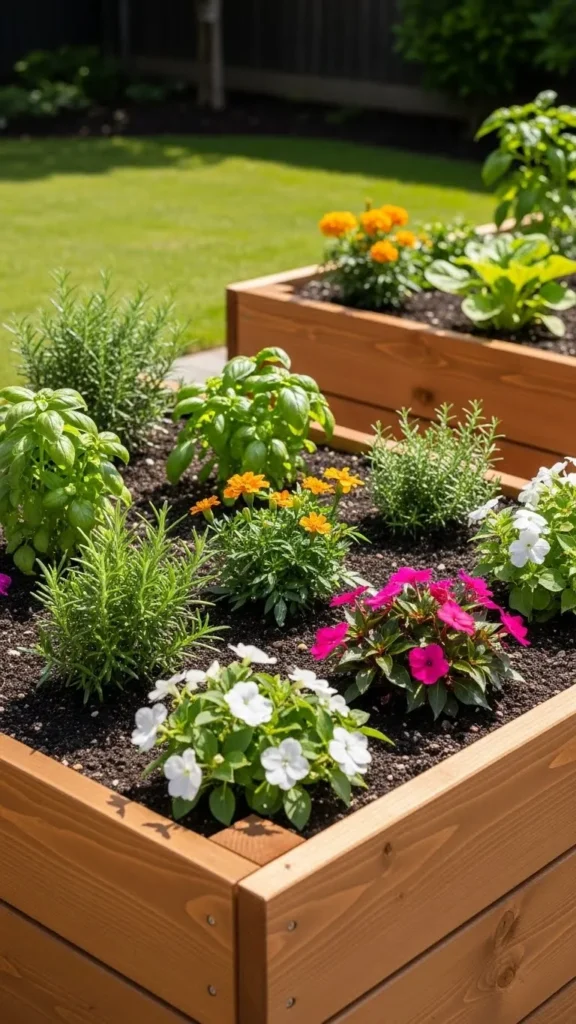
Raised beds warm faster than ground soil. That helps many sun plants grow strong. Build beds from untreated wood or recycled boards. Keep height around 10 to 12 inches to reduce material cost.
Place beds where they get steady light all day. Fill with a simple mix of soil and compost. Avoid fancy blends. Water deeply but less often so roots grow downward.
Raised beds also make plant spacing clear. This prevents overcrowding. If wood costs too much, stack concrete blocks instead. They last longer and store heat, which sun plants enjoy.
Mediterranean-Inspired Planting
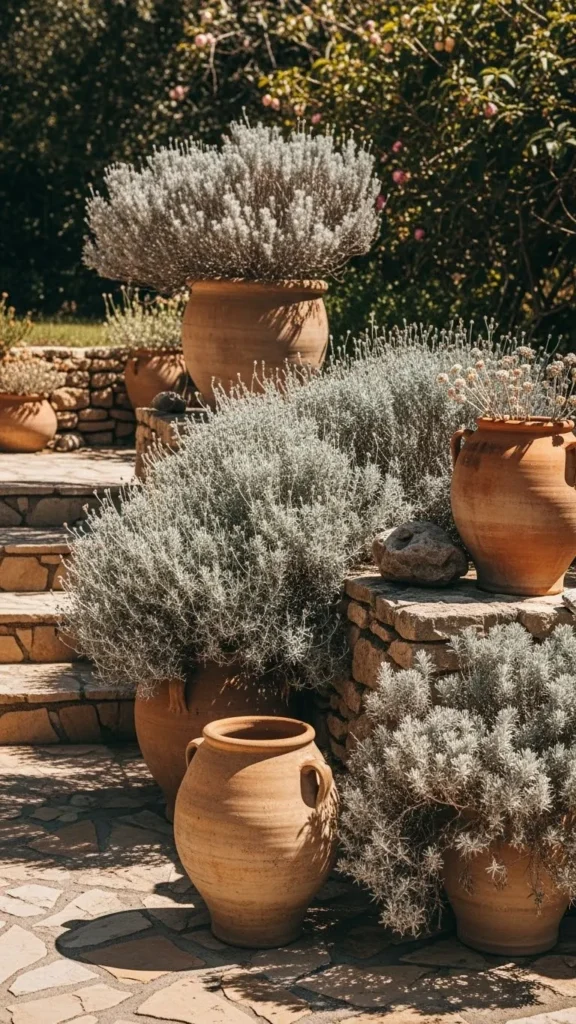
Mediterranean-style gardens suit hot, bright spaces. Use plants with gray or narrow leaves. These handle sunlight well. Combine them with stone, clay pots, or gravel paths.
This style does not rely on lush lawns. That cuts water use. Use simple shapes and repeat the same plant types for calm structure. Clay pots can be thrifted or bought secondhand.
Group containers together so watering feels quicker. Let soil dry slightly between waterings. This approach suits patios, slopes, and front yards with no shade.
Sun-Friendly Ornamental Grasses

Ornamental grasses love open sun. They add motion without much care. Plant them as anchors in beds or along fences. Most handle heat and dry soil well once established.
Buy small starter plants to save money. They fill out in one or two seasons. Space them well so air flows through. Cut back once a year with hand shears.
Grasses also work in large containers. Use basic pots and drill drainage holes if needed. This gives height without constant watering.
Mulched Flower Zones
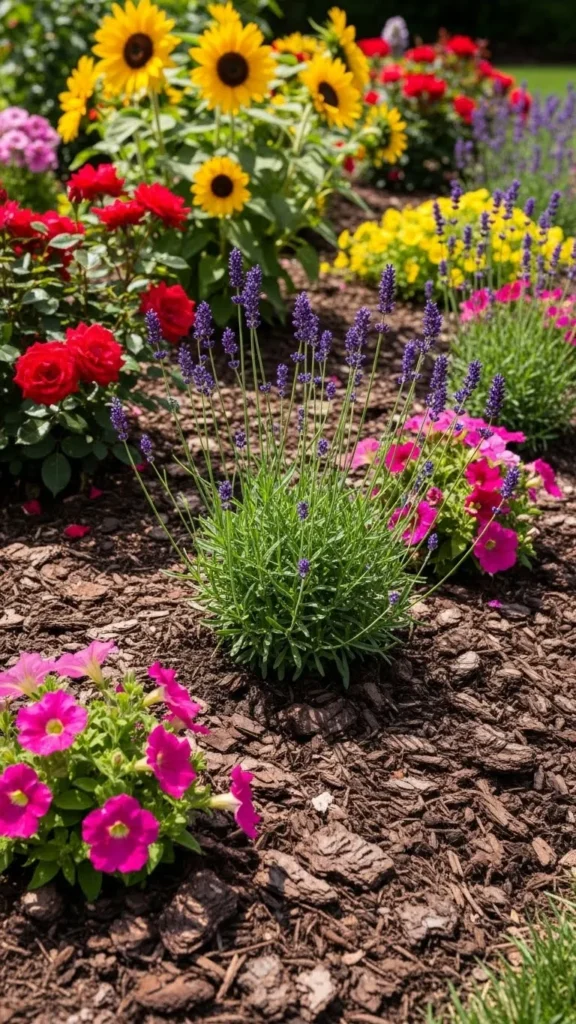
Mulch protects soil from direct sun. It slows moisture loss and keeps roots cooler. Use bark, shredded leaves, or straw. Avoid thin layers. Aim for two to three inches.
Create small zones rather than one big bed. This makes watering easier. It also helps you replace plants gradually instead of all at once.
For budget savings, ask local tree services for free wood chips. Spread evenly and keep mulch away from stems. This simple step helps plants last through hot spells.
Full-Sun Container Groupings
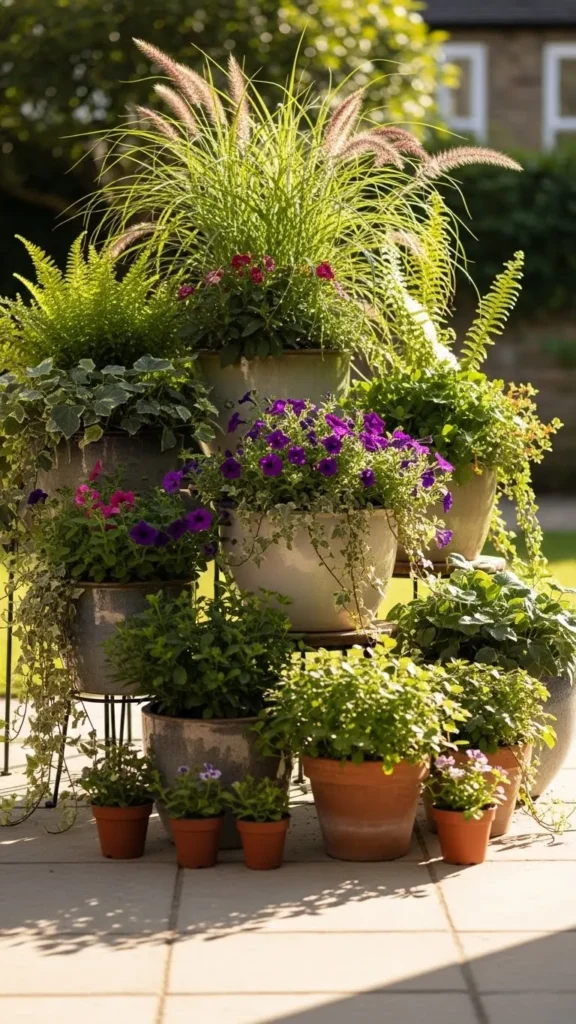
Containers work well in full sun if chosen wisely. Use larger pots that hold moisture longer. Group them so sides shade each other slightly.
Choose tough plants instead of delicate ones. Water early in the day so roots absorb moisture before heat builds. Use basic potting soil mixed with garden soil to slow drying.
Old buckets, bins, or storage tubs can become planters. Just add drainage holes. This keeps costs low while adding flexibility.
Stone Pathways That Handle Heat
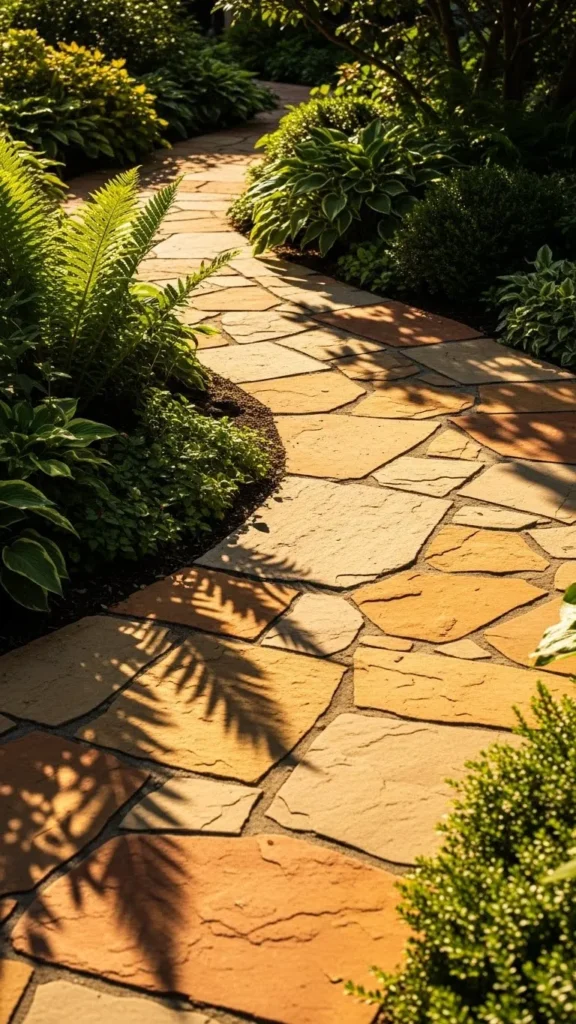
Stone paths absorb sunlight and stay sturdy. Use stepping stones or broken concrete pieces. Lay them on compacted soil or sand.
Paths reduce dust and mud. They also guide foot traffic so plants stay intact. Keep gaps between stones wide enough for groundcover or gravel.
This idea works well through sunny lawns or between beds. It adds structure without ongoing care.
Sun-Resistant Ground Covers
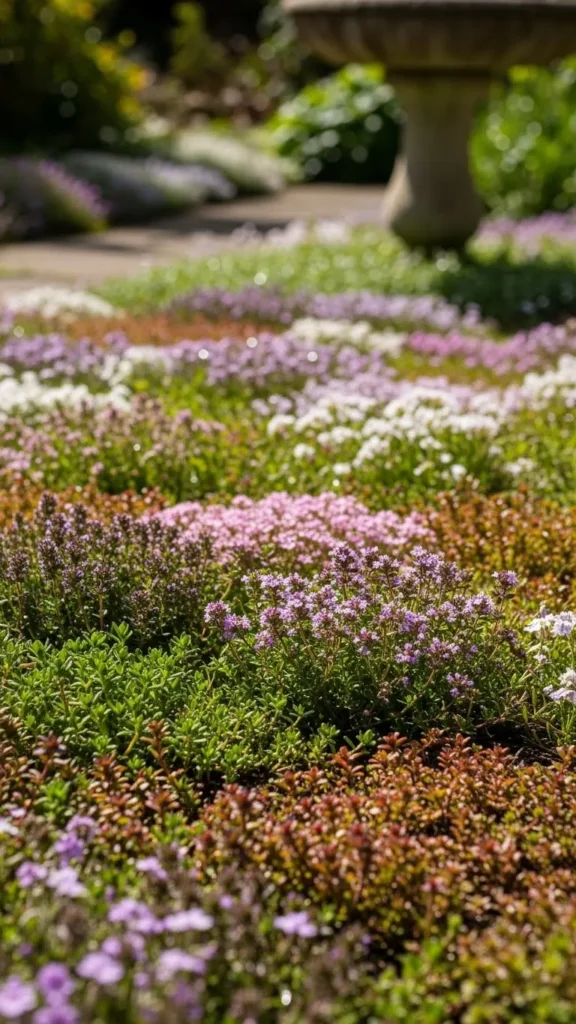
Ground covers protect soil from direct sun. They reduce weeds and watering. Choose types known for open exposure.
Plant small plugs instead of full trays to save money. Space them wider and let them fill in over time. Water well at first, then reduce.
These plants work on slopes or around trees where mowing is hard. Once settled, they form a living carpet that holds up in heat.
Bright Annual Color Pockets
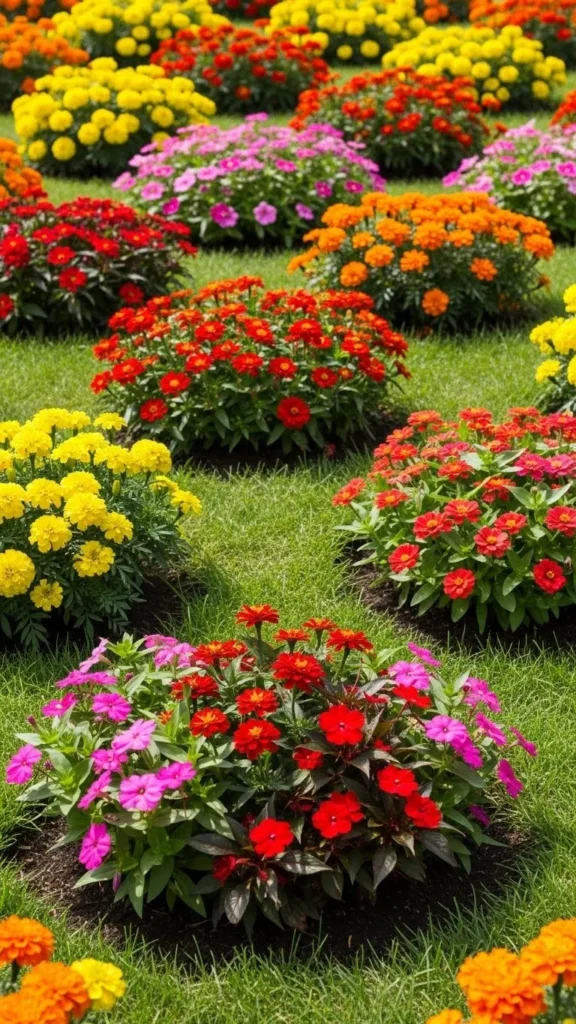
Annuals bring quick color to sunny spaces. Use them sparingly to control cost. Place them near entrances or seating areas where they get noticed.
Mix seeds with soil and scatter in small sections. This costs less than buying trays. Water gently until sprouts appear.
Replace annuals gradually rather than all at once. This keeps the garden looking active without overspending.
Sloped Sun Gardens
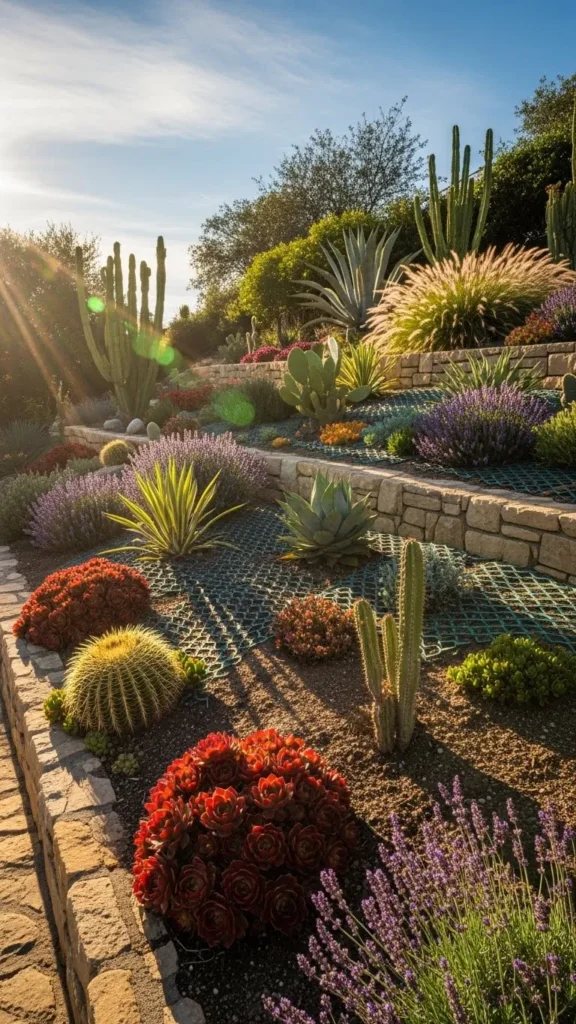
Slopes get intense sun. Use plants with strong roots. Arrange in staggered rows to slow water runoff.
Add small stones or logs across the slope to hold soil. This is an easy DIY fix. Mulch well between plants.
Once planted, slopes need little care. They also add visual interest that flat lawns lack.
Sun-Loving Shrub Anchors
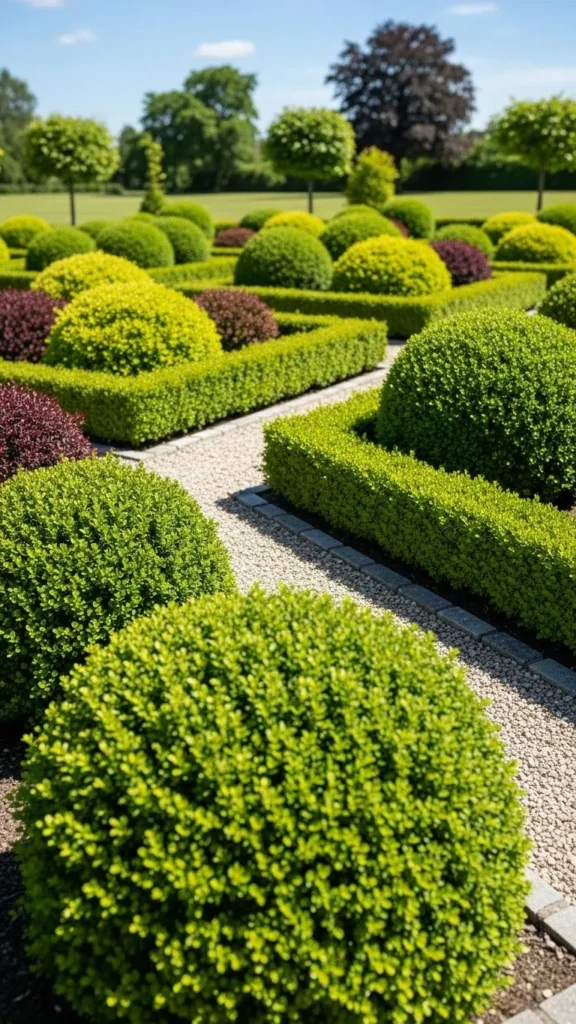
Shrubs provide structure. Choose types that tolerate heat and open exposure. Plant them first, then fill around with smaller plants.
Buying young shrubs saves money. They grow steadily. Space them so they do not crowd later.
Shrubs also reduce wind stress on nearby plants. They act as anchors that define the garden shape.
Minimal Lawn with Sun Beds
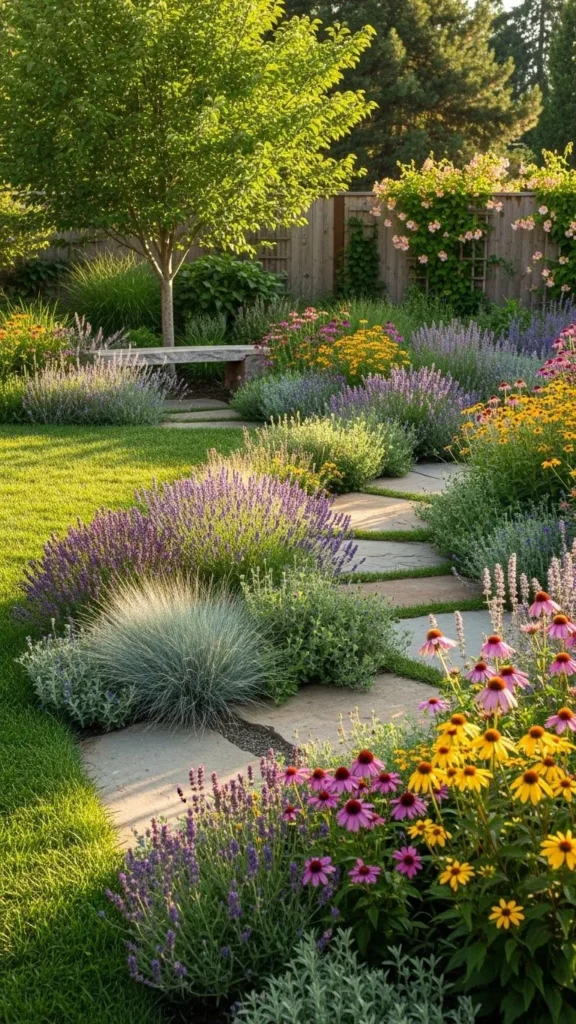
Lawns struggle in heat. Reduce lawn size and replace sections with planting beds. This cuts watering and mowing.
Outline new beds with rope before cutting grass. Remove sod and amend soil. Plant in stages.
This change saves time and water while keeping the yard usable.
Sun-Friendly Vegetable Patches
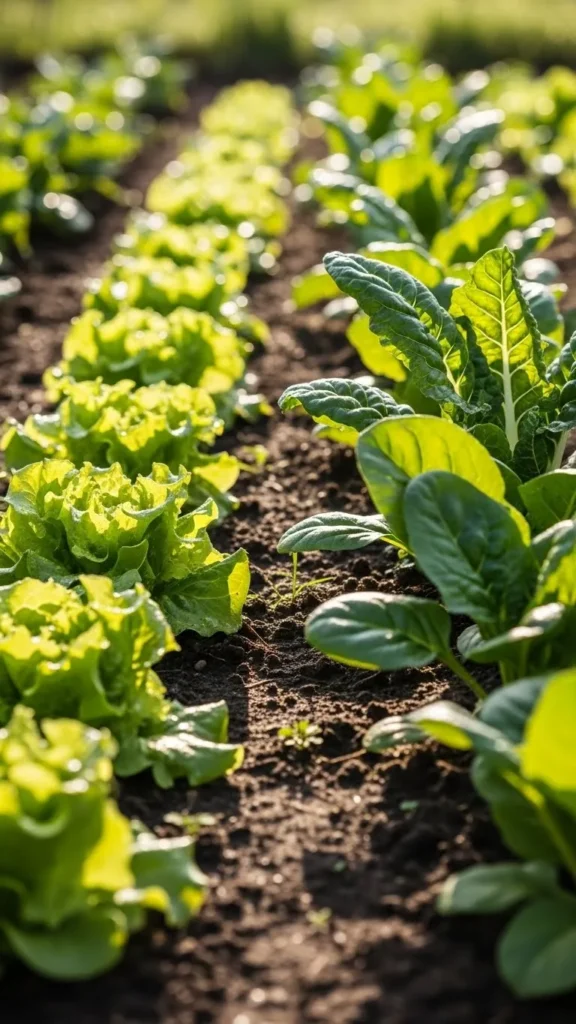
Many vegetables enjoy sun. Group them in one area for easy care. Use simple rows or blocks.
Mulch heavily to protect soil. Water deeply in the morning. Avoid shallow watering.
Start with a few reliable crops. Expand slowly as you learn how sun affects your space.
Reflective Light Walls
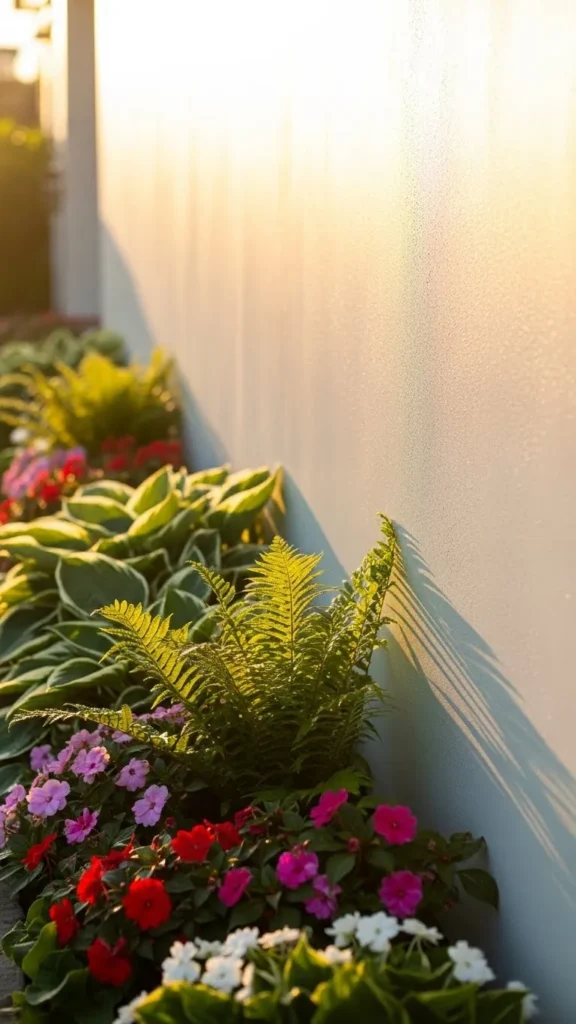
Light-colored walls bounce sunlight. This helps sun plants grow evenly. Use paint or lime wash on fences or walls.
This is a low-cost way to improve growth in tight areas. Clean the surface first so paint lasts longer.
Walls also store warmth at night, which benefits certain plants.
Dry Creek Bed Designs
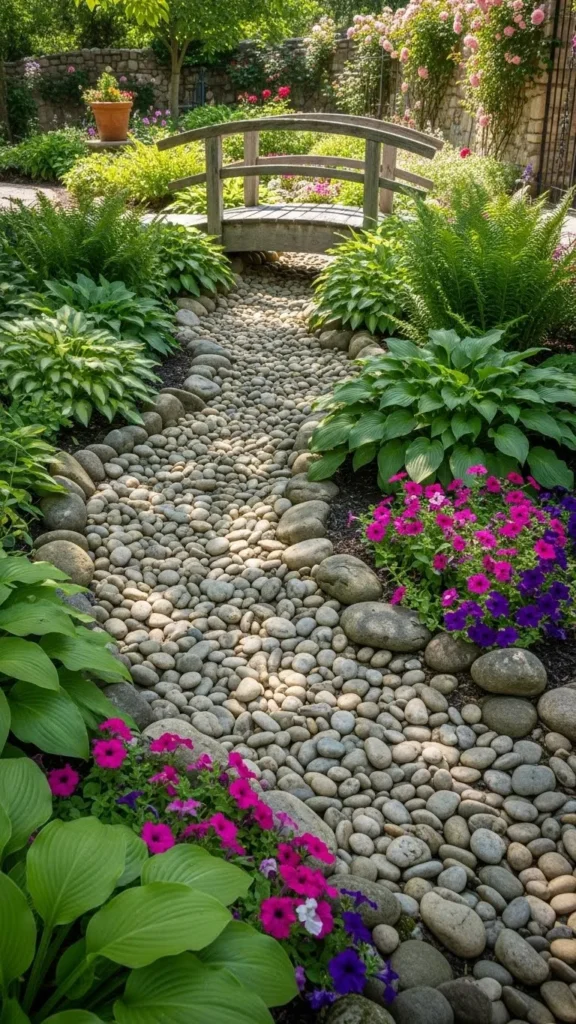
Dry creek beds manage water runoff. They also add texture. Use stones of mixed sizes.
Dig a shallow channel. Line with fabric. Fill with stones. Plant along edges.
This works well in hot climates where sudden rain follows dry spells.
Heat-Tolerant Climbing Plants
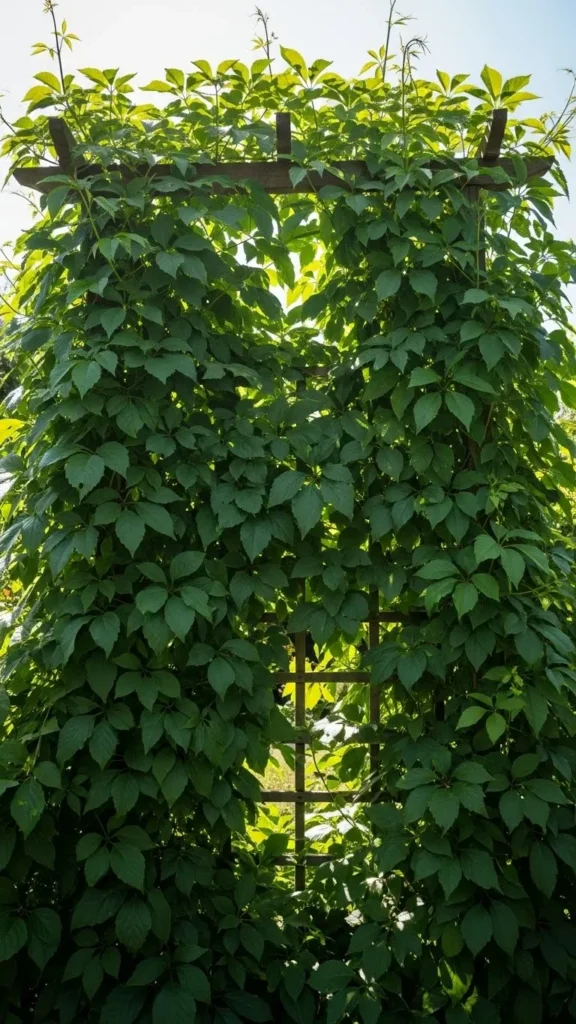
Climbers add height without taking ground space. Use simple trellises or wire grids.
Place them where roots stay shaded by mulch. Water deeply at the base.
This idea suits fences, walls, and pergolas exposed to sun all day.
Open Sun Courtyard Layouts
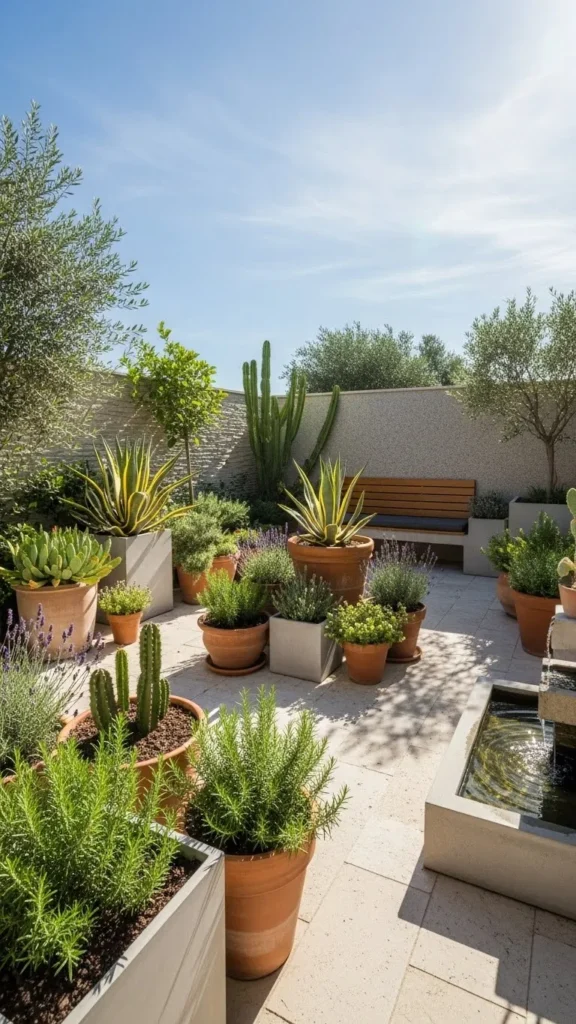
Courtyards trap heat. Choose plants that handle it well. Use pots and beds instead of lawns.
Group seating in shaded corners. Keep planting simple and repeat shapes.
This layout feels calm and manageable.
Native Plant Groupings
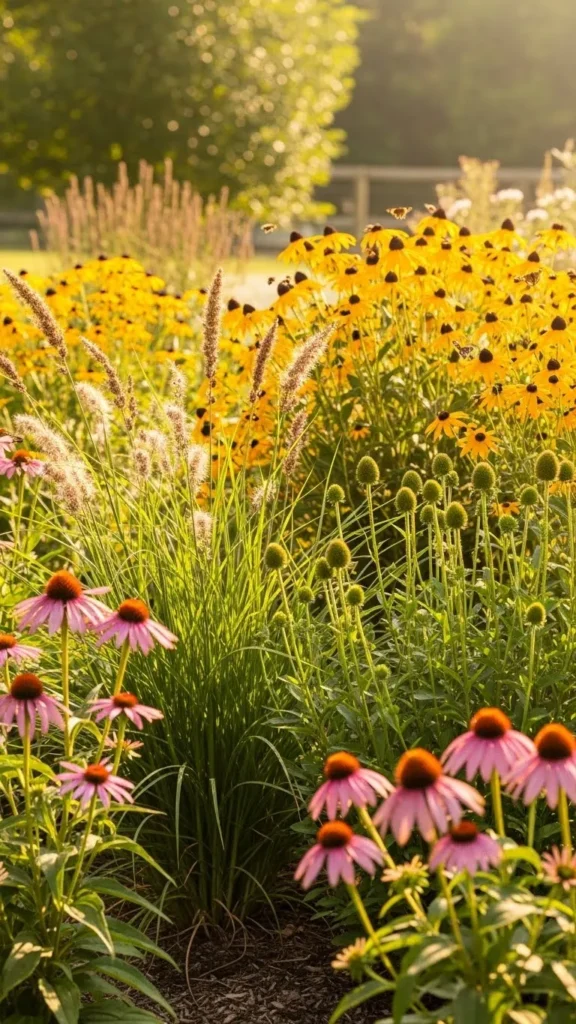
Native plants suit local sun and soil. They cost less over time and need less care.
Buy small sizes. Plant in clusters. Let them adjust naturally.
These gardens support local wildlife and stay stable through heat.
Sun-Ready Rock Gardens
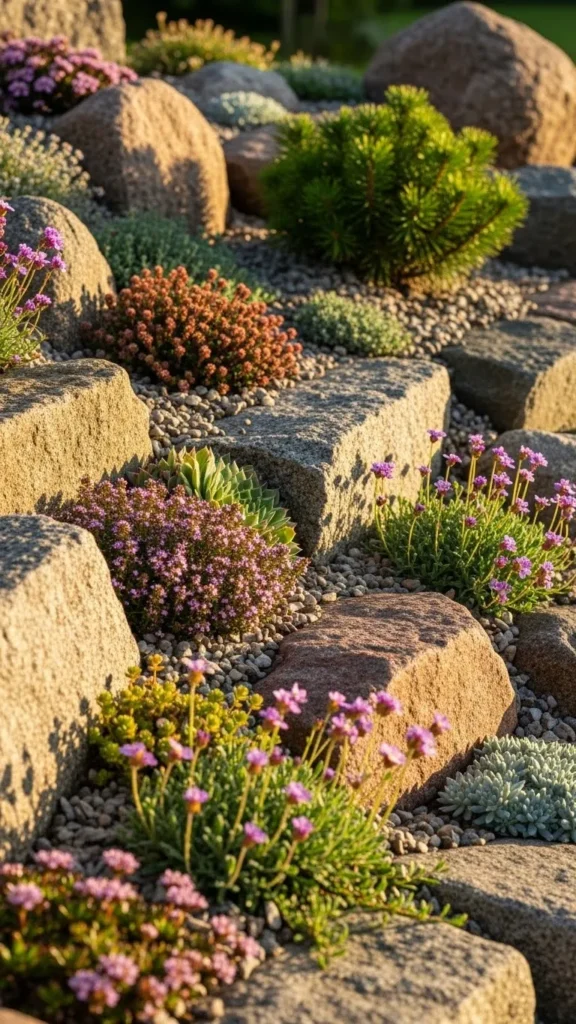
Rock gardens store warmth and drain well. Use stones you already have.
Place larger rocks first. Fill gaps with soil. Add plants last.
This style works well in hot, dry areas.
Simple Shade Cast by Plants
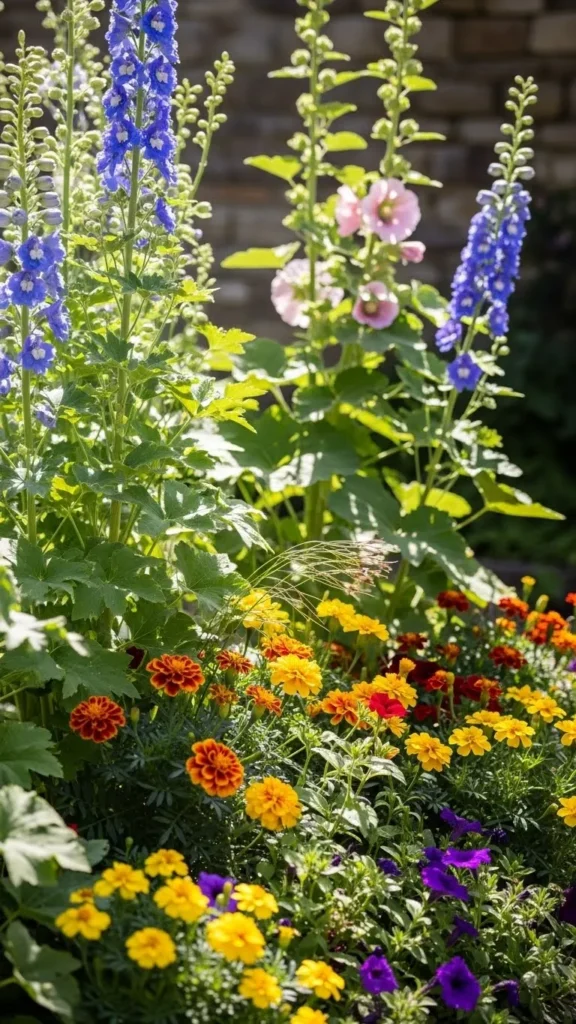
Some sun plants create shade for others. Use taller plants on the west side.
This reduces heat stress. It also adds layers.
This natural shade costs nothing and adjusts as plants grow.
Sun-Friendly Edible Flowers
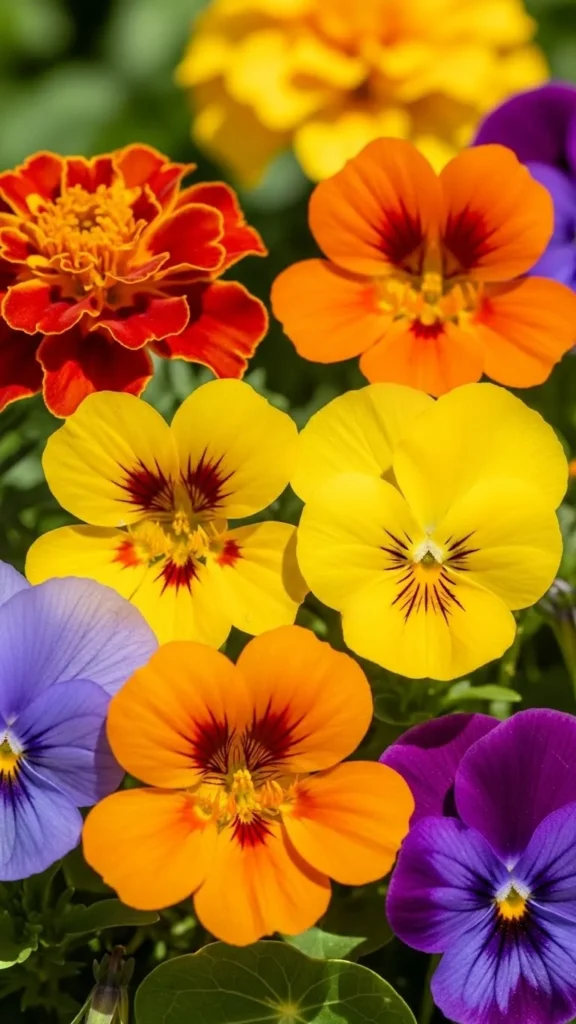
Edible flowers handle sun and add interest. Plant them near paths.
They grow fast and fill gaps. Use seeds to save money.
They also attract helpful insects.
Heat-Resistant Border Edging
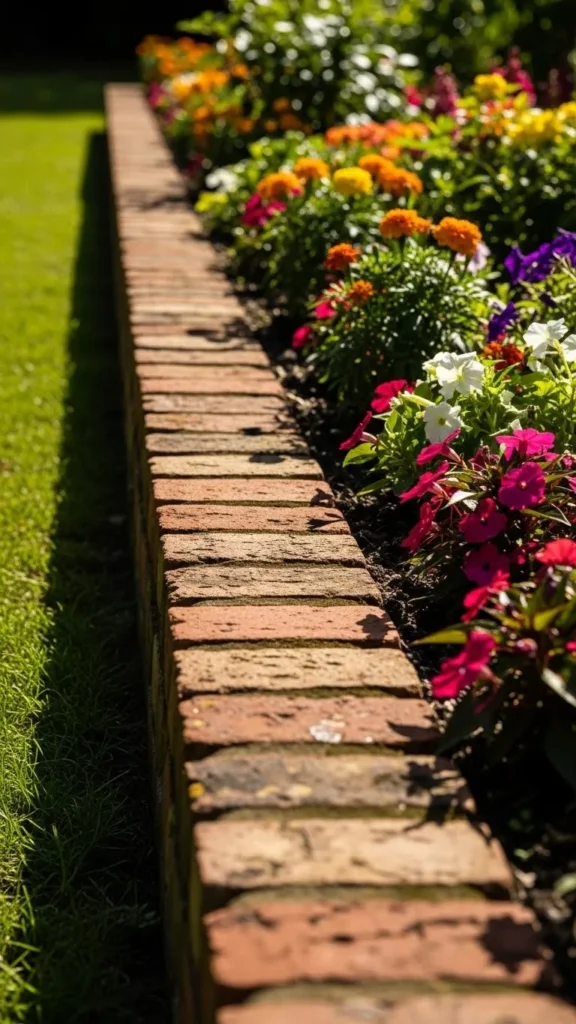
Edging keeps beds tidy. Bricks and stones handle heat well.
Lay them level with soil. This prevents tripping.
Edging defines space without extra care.
Sun Garden Seating Corners
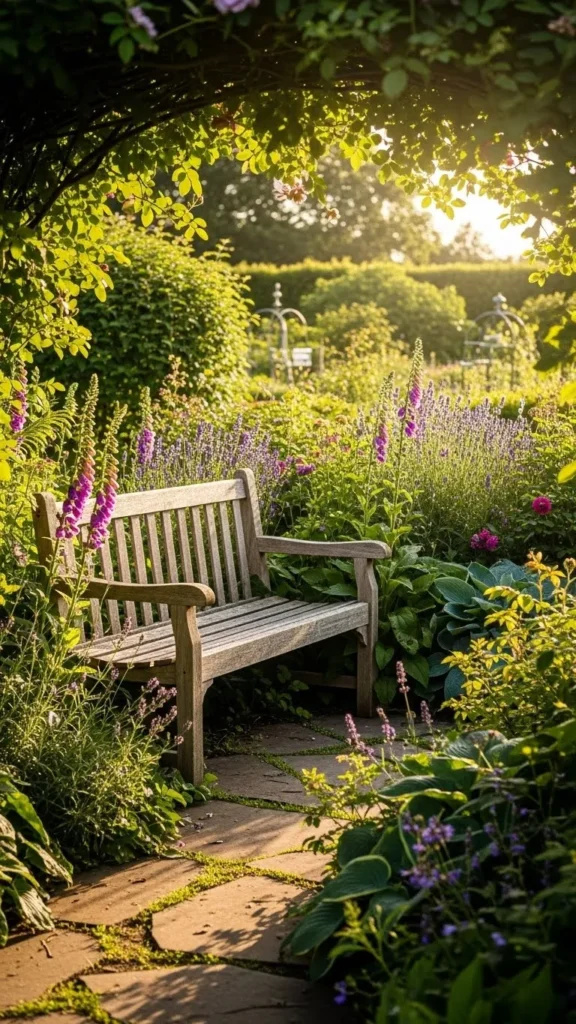
Add seating where sun plants thrive. Choose materials that do not overheat.
Place near taller plants for partial shade.
This turns the garden into a usable space.
Repeated Plant Patterns
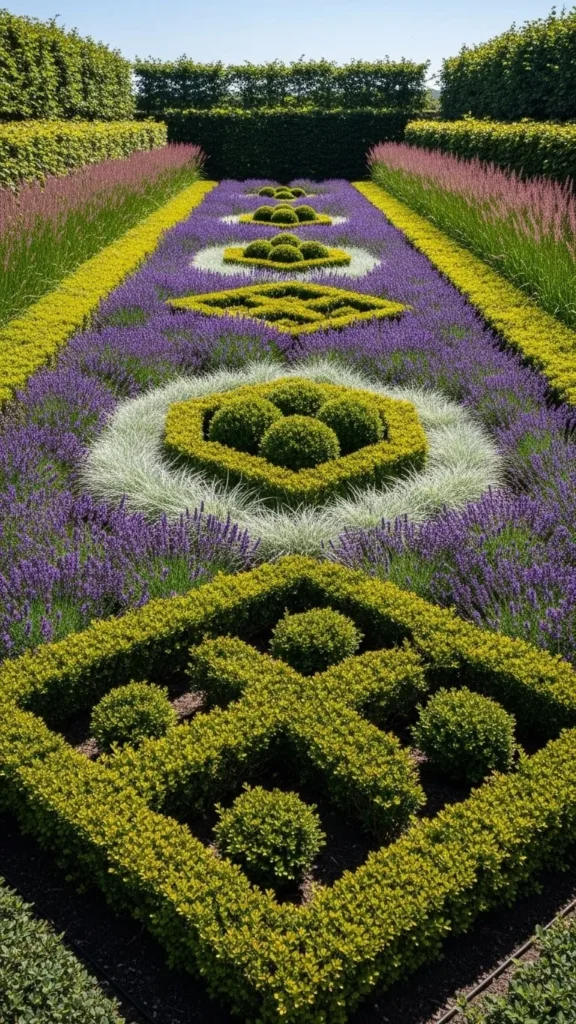
Repeating plants create calm order. Buy fewer types in larger numbers.
This saves money and simplifies care.
Patterns help the garden feel planned.
Heat-Tough Hanging Baskets
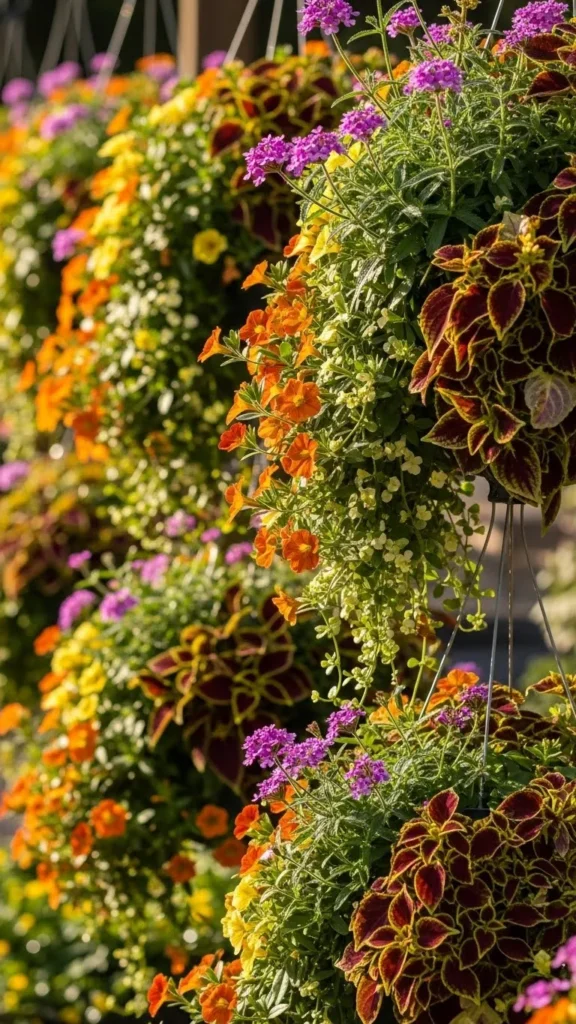
Hanging baskets get more sun and wind. Choose sturdy plants.
Line baskets with thick material to hold moisture.
Water daily in hot spells.
Sun-Friendly Fence Lines
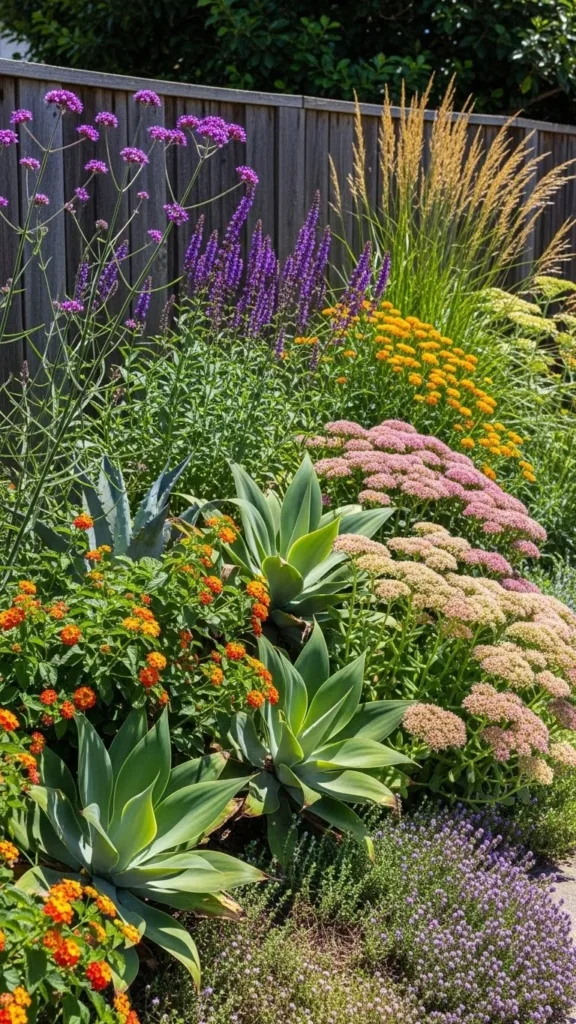
Fence lines trap heat. Use tough plants there.
Add mulch and water deeply.
This turns unused space into planting space.
Seasonal Sun Plant Swaps
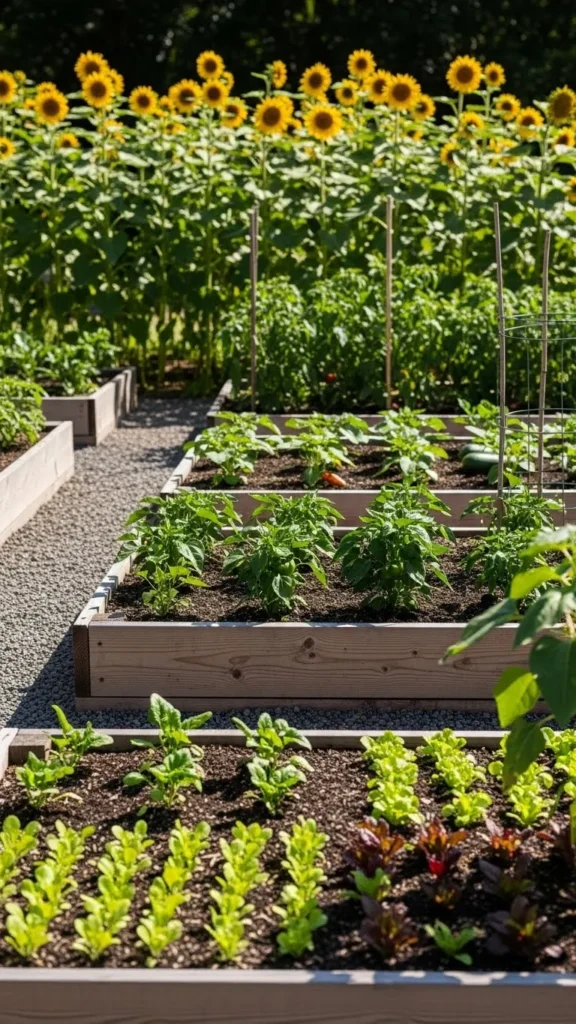
Swap plants by season. Replace tired plants with new ones gradually.
This spreads cost over time.
It keeps the garden active year-round.
Conclusion
A full-sun garden does not have to feel stressful or expensive. With thoughtful plant choices, simple layouts, and hands-on DIY approaches, sunny spaces can become some of the most reliable and rewarding parts of your yard. Use these ideas as building blocks. Start small, observe how your garden reacts to heat, and adjust as you go. Save the ideas that fit your space and budget, then put them into action one step at a time.

Leave a Reply