

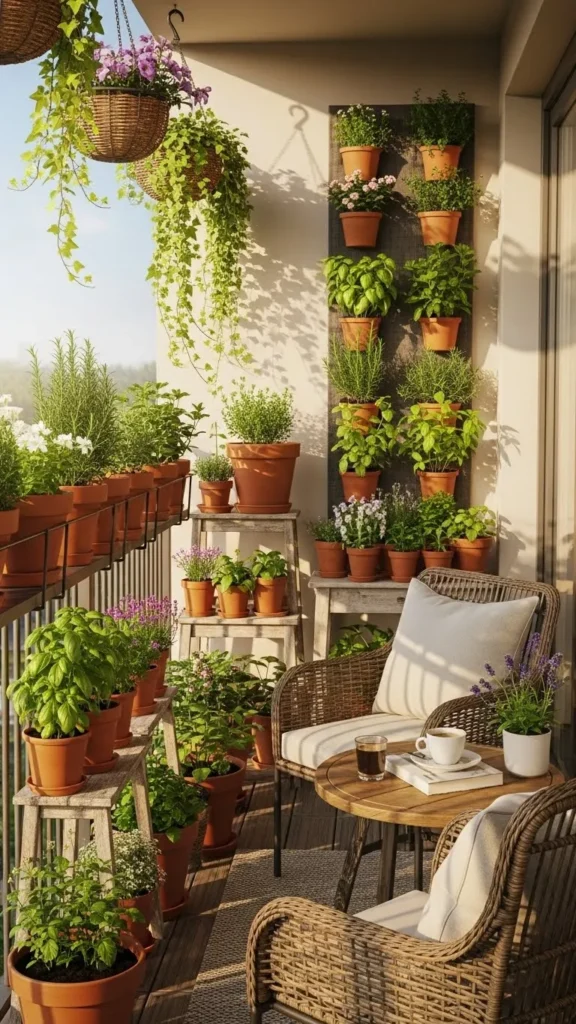
Balcony gardening works best when every inch has a purpose. Small outdoor spaces can still support plants that grow well, look inviting, and fit daily routines. With the right setup, a balcony can hold herbs, flowers, and even food crops without crowding. The ideas below focus on simple layouts, affordable materials, and plant choices that suit limited square footage. Each one helps you grow more while keeping maintenance realistic and costs low.
1. Vertical Wall Planters
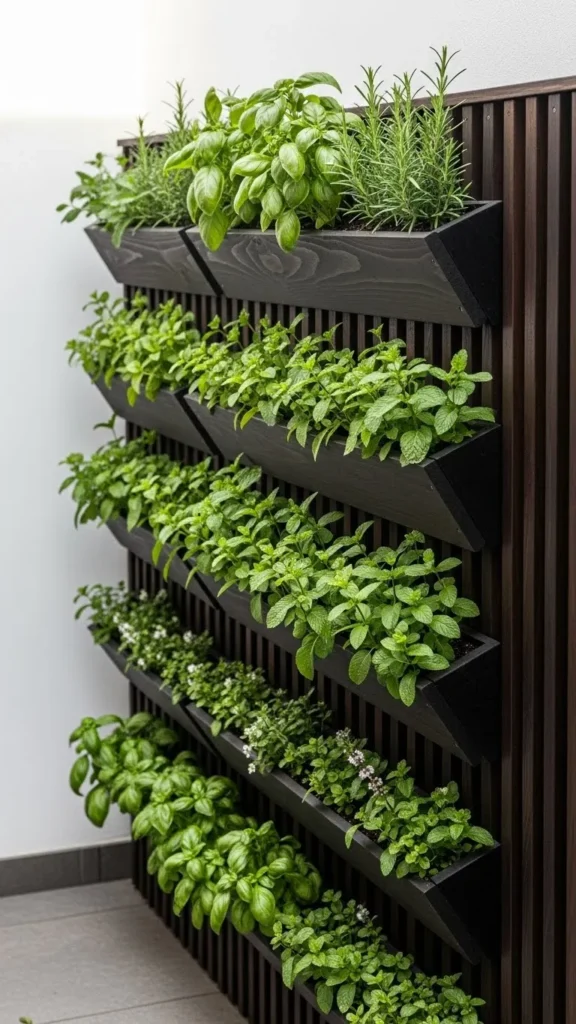
Vertical wall planters turn empty walls into growing zones. They work well for balconies where floor space feels tight. You can use stackable plastic pockets, wooden crates, or recycled bottles. Herbs and shallow-root plants grow well here. Basil, mint, and lettuce stay manageable and easy to trim.
Start small. Install one panel instead of covering the whole wall. This keeps costs low and watering simple. Use lightweight potting mix so brackets hold safely. A drip tray at the base prevents water mess. If drilling is not allowed, lean ladder-style frames against the wall.
Spacing matters. Leave room between rows so leaves get light and air. Rotate plants every few weeks if one side gets more sun. Vertical setups also keep plants off the ground, which helps with pests. This idea suits renters and long-term balcony gardeners alike.
2. Railing Herb Boxes
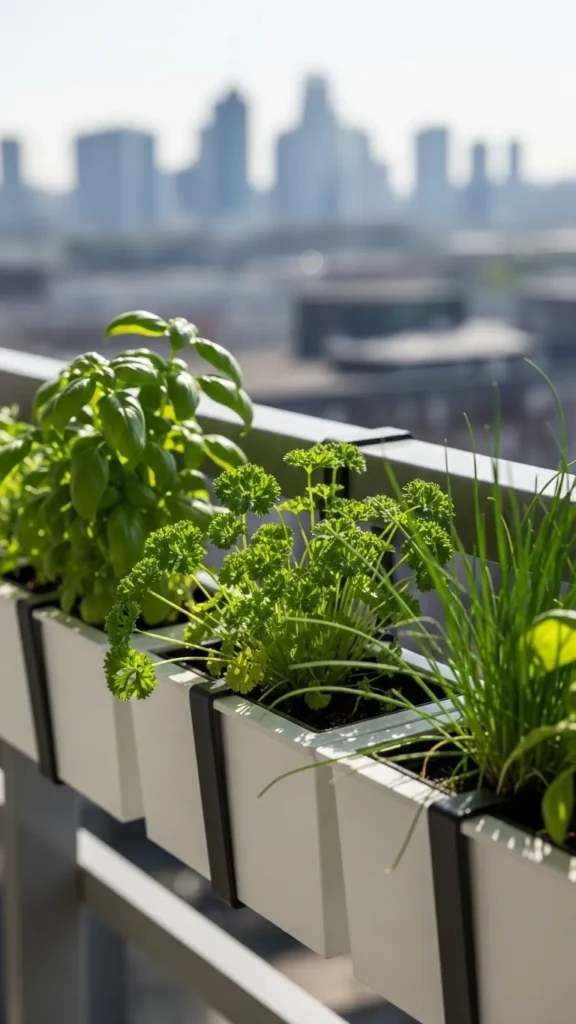
Railing boxes use space that often goes unused. They hang outside or inside the railing, freeing up floor area. Many stores sell clip-on versions, or you can repurpose window boxes with metal hooks.
Herbs suit this setup well. They stay within reach and grow upright without spreading. Use lightweight soil and avoid overfilling to reduce strain on the railing. Drainage holes are a must to prevent root rot.
Watering becomes easy when plants line the edge. You can check soil moisture in seconds. Group herbs with similar water habits together. This keeps care simple and avoids waste.
Railing boxes also add privacy. Dense foliage creates a soft screen without blocking air flow. If wind is strong, secure boxes with zip ties for extra support. This is a low-cost way to grow food right where you cook.
3. Stackable Planter Towers
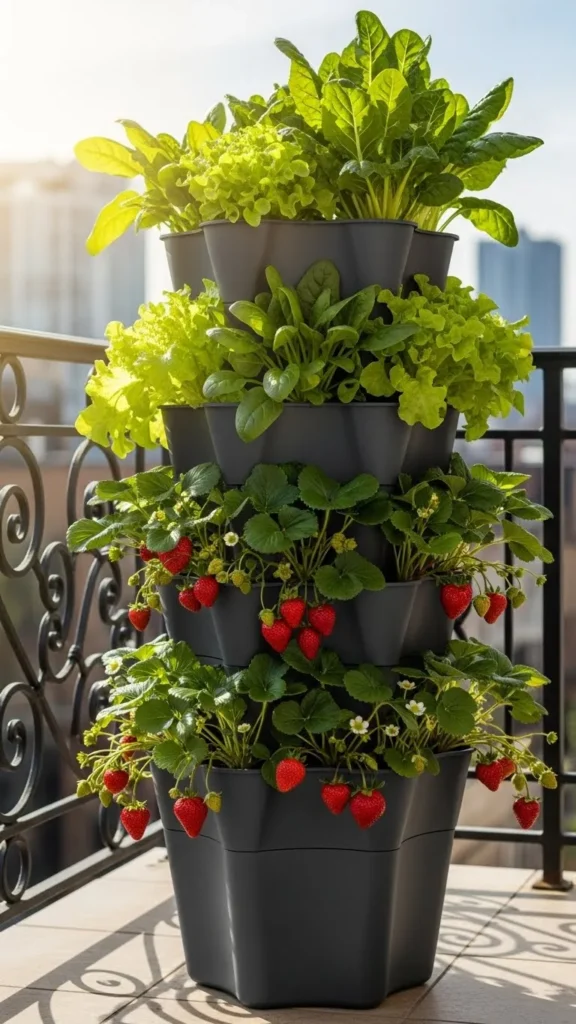
Stackable planter towers grow upward instead of outward. Each layer holds soil and plants, making them ideal for corners. Strawberries, spinach, and small flowers do well here.
You can buy ready-made towers or stack pots with offset openings. DIY versions save money and allow custom spacing. Place the tower where it gets even light from all sides.
Water slowly from the top. Let moisture trickle down to lower levels. This reduces runoff and keeps soil evenly damp. Use a tray underneath to catch excess water.
Rotate the tower every few days if one side gets more sun. This keeps growth balanced. Towers also look tidy and organized, which helps small balconies feel calm rather than crowded.
4. Hanging Basket Corners
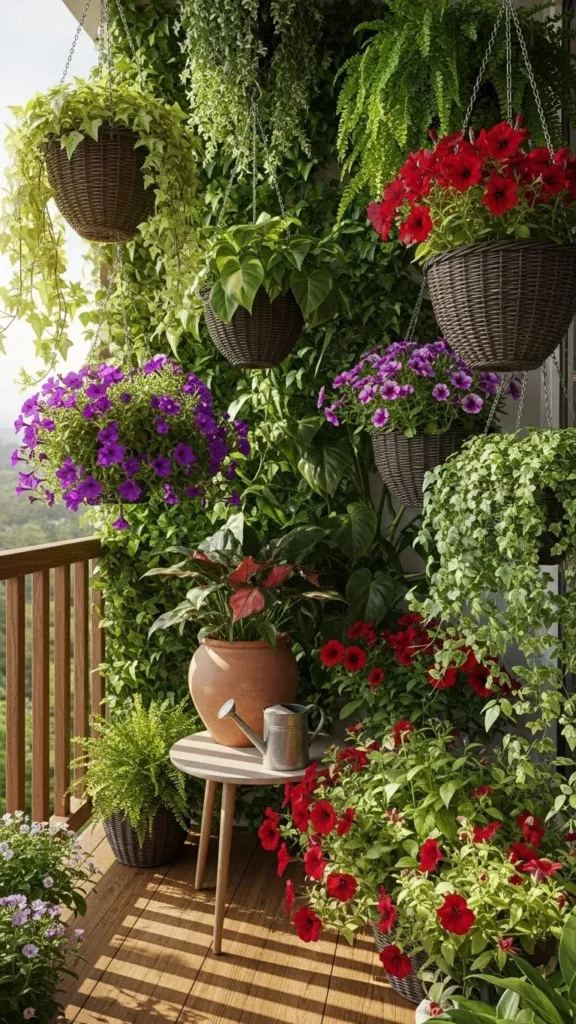
Hanging baskets turn air space into planting space. Corners work best since they stay out of walking paths. Trailing plants like ivy, pothos, or cherry tomatoes fit well.
Use strong hooks rated for outdoor use. Lightweight baskets reduce strain. Coconut coir liners hold moisture without getting soggy. Space baskets so leaves do not overlap too much.
Watering can drip, so place trays below or water over a bucket. Group baskets with similar sun habits together. This saves time during care.
Hanging plants also add height and movement. They soften hard balcony lines and make the area feel layered. This idea works well even on very narrow balconies.
5. Foldable Plant Stands
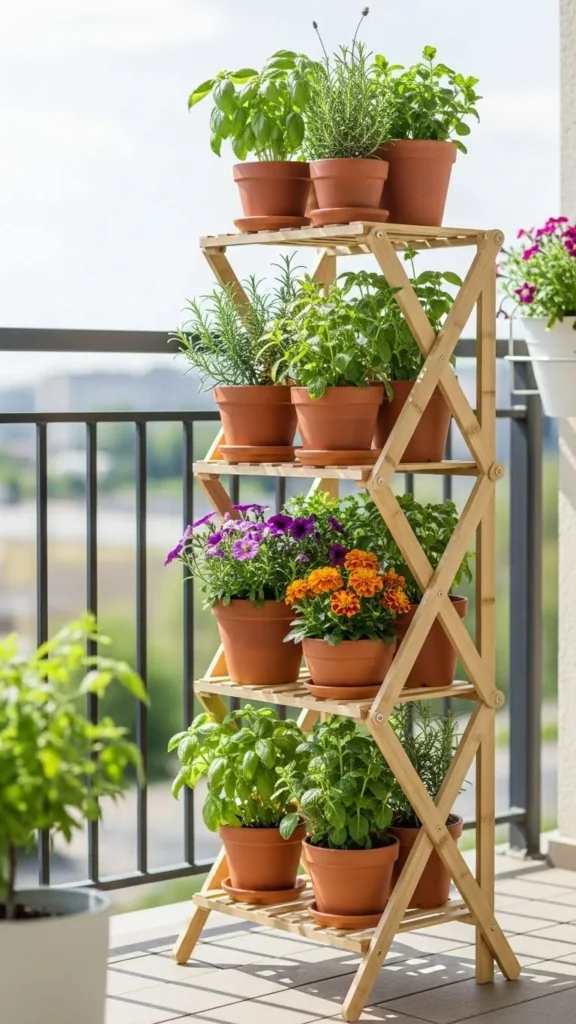
Foldable plant stands add levels without taking much room. They can be opened during the growing season and stored later. This suits renters and seasonal gardeners.
Choose metal or treated wood for outdoor use. Place taller plants on lower shelves so they do not shade others. Mix pots of different sizes to avoid a rigid look.
DIY stands using old ladders cost very little. A coat of weather-safe paint extends life. Secure stands against walls to prevent tipping.
This setup keeps plants organized and easy to move. You can shift the whole stand if sun patterns change. It also helps keep the floor clear for seating.
6. Grow Bags for Root Crops
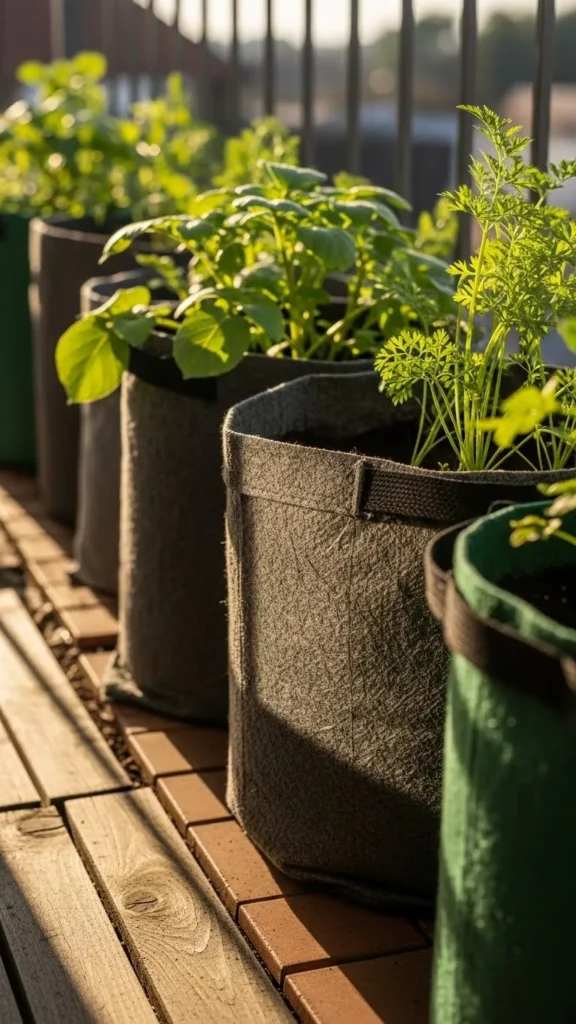
Grow bags suit balconies where weight matters. They are lighter than ceramic pots and allow air flow around roots. Potatoes, carrots, and radishes grow well this way.
Choose bags with handles for easy moving. Fill with loose soil and compost. Place saucers underneath to protect flooring.
Harvesting becomes simple. You can tip the bag or open side flaps. After harvest, fold and store bags flat.
Grow bags also warm quickly in sun, which helps root growth. This is a budget-friendly way to grow food without bulky containers.
7. Window-Height Shelving
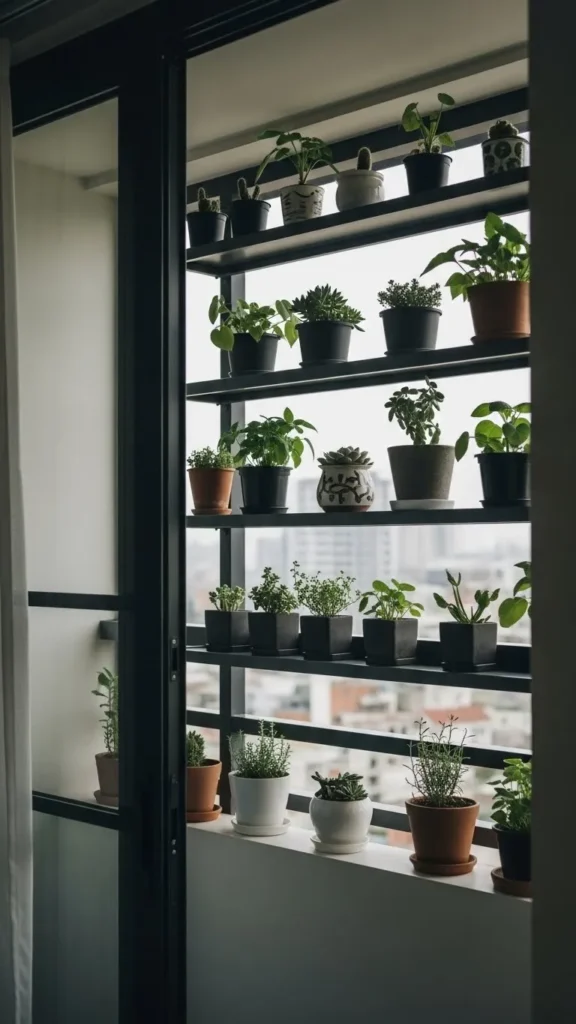
Shelving at window height uses light efficiently. Plants sit right where sun hits strongest. Shelves can be wall-mounted or freestanding.
Use narrow boards to avoid blocking air flow. Secure brackets properly. Herbs and seedlings do well here.
This layout keeps plants visible from indoors. You remember to water and trim more often. It also makes the balcony feel connected to the living space.
Simple shelves cost little and can be adjusted as plants grow. This keeps care flexible and practical.
8. Recycled Container Gardens
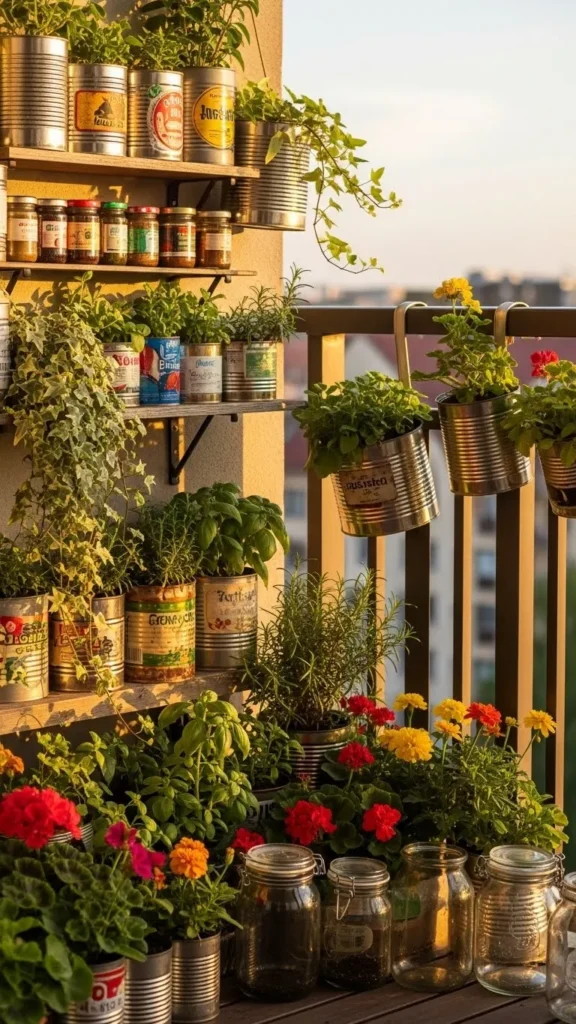
Recycled containers save money and add character. Tins, jars, and plastic bottles can hold small plants. Drill drainage holes before planting.
Group containers by size for a tidy look. Paint them with weather-safe paint if desired. Herbs and succulents fit best due to shallow roots.
This approach lets you test layouts without buying new pots. If a container cracks, replacement costs nothing.
Recycling also keeps the balcony light and easy to rearrange. It suits creative gardeners who enjoy hands-on projects.
9. Compact Trellis Panels
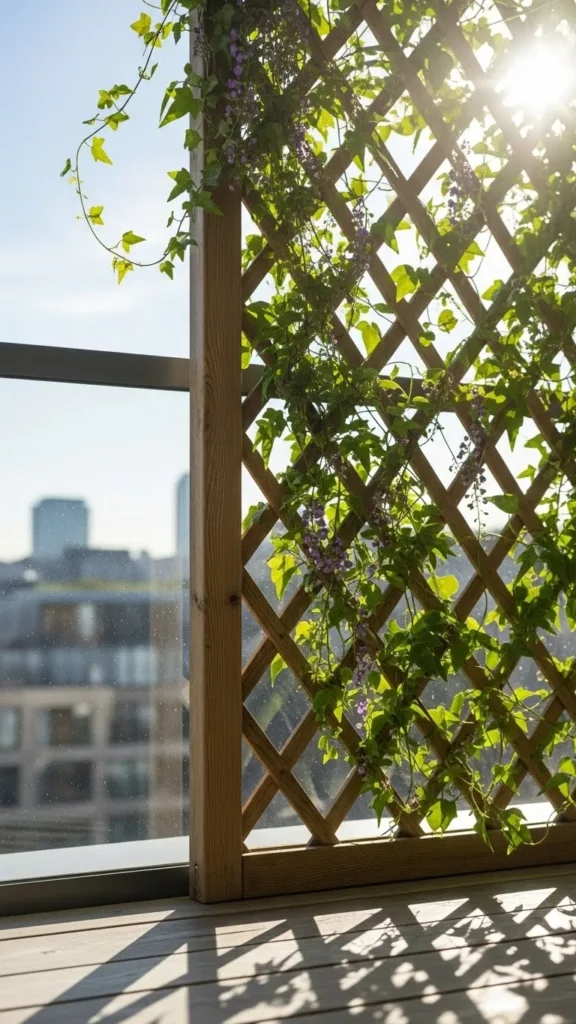
Trellis panels guide climbing plants upward. They attach to walls or sit in pots. Peas, beans, and flowering vines stay controlled this way.
Choose narrow trellises to save room. Secure them firmly to avoid wind movement. Lightweight bamboo works well.
Vertical growth leaves floor space open. It also improves air flow around leaves. This helps plants stay healthy.
Trellises can be removed at season’s end. This keeps the balcony flexible year-round.
10. Rolling Plant Carts
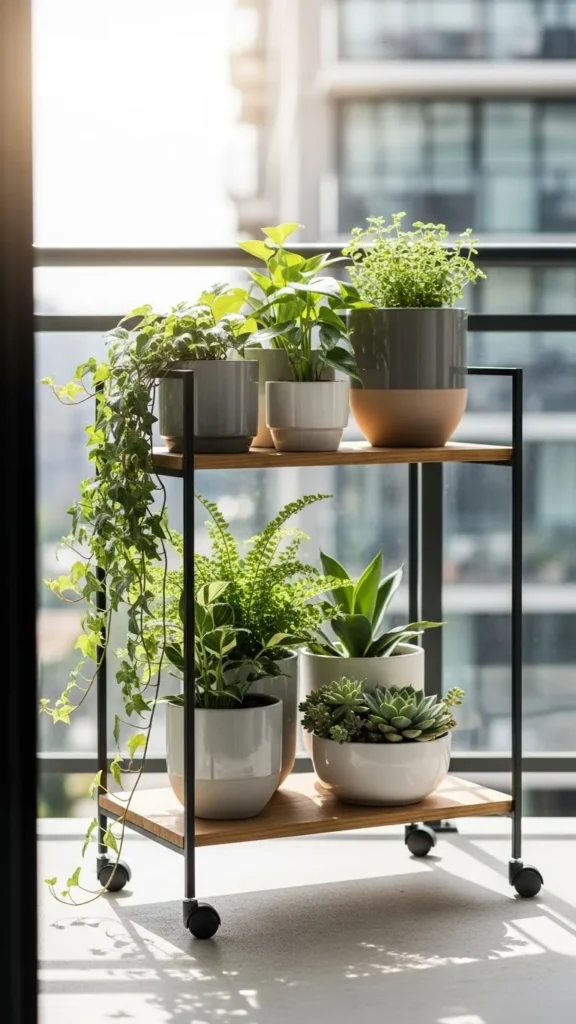
Rolling carts allow easy movement. You can shift plants to chase sun or shelter from harsh weather. This works well for balconies with uneven light.
Choose carts with locking wheels. This prevents drifting on windy days. Metal carts handle moisture better than wood.
Carts also help with cleaning. Roll them aside to sweep or wash floors. This keeps the space tidy.
This setup suits gardeners who like changing layouts. It adds flexibility without extra cost.
11. Tiered Corner Pots
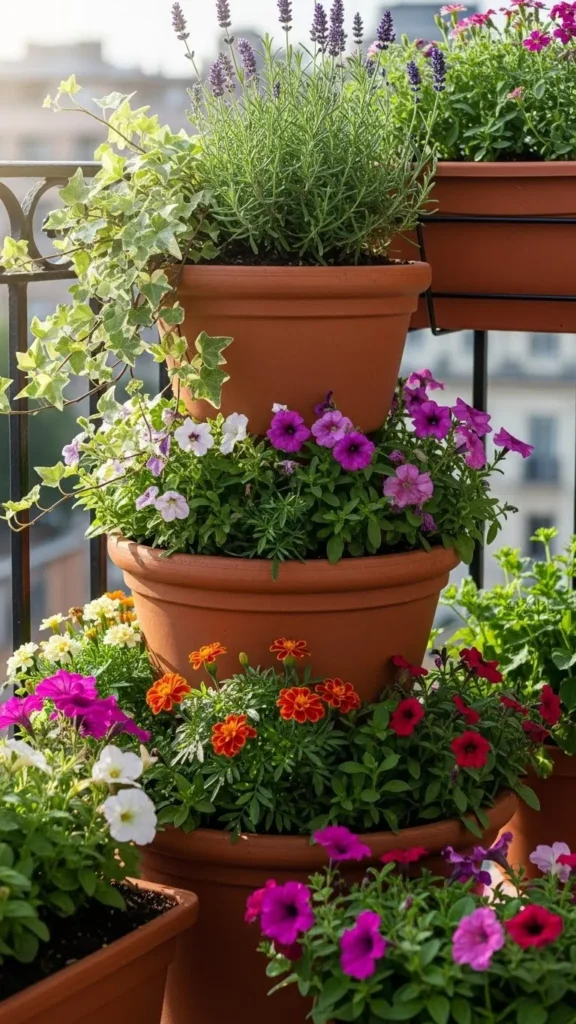
Tiered pots stack plants in one footprint. They fit snugly into corners. Flowers, herbs, and greens can share space.
Water from the top so moisture flows downward. Use a tray below. Rotate tiers for even light.
This layout looks full without spreading outward. It keeps walkways clear.
Tiered pots often come in lightweight plastic, keeping costs and weight down.
12. Shade-Friendly Plant Zones
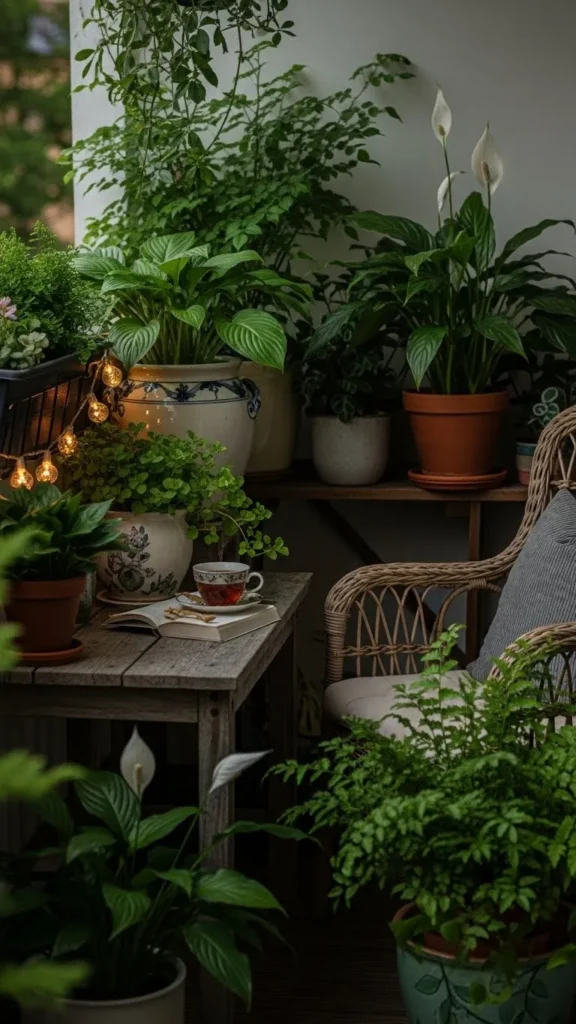
Not all balconies get full sun. Shade-friendly plants like ferns and leafy greens grow well with limited light. Place them where sun is filtered.
Use lighter-colored pots to reflect available light. Keep soil moist but not soggy.
Grouping shade plants together simplifies care. You water them on the same schedule.
This approach avoids forcing sun-loving plants into poor spots. Growth stays steady and stress stays low.
13. Balcony Green Screen
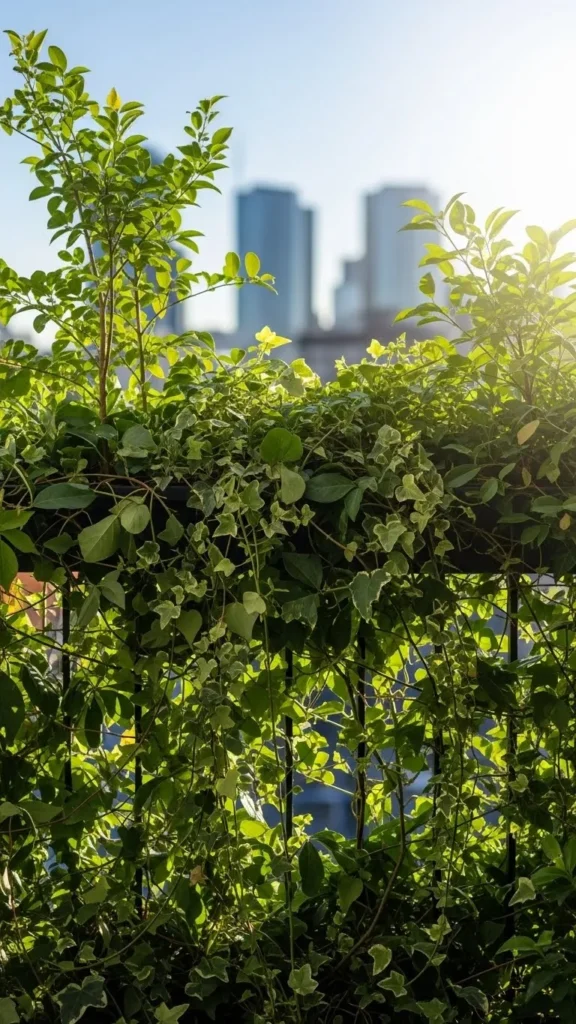
A green screen adds privacy and plant space. Use mesh panels or wire grids along railings. Train vines or tall herbs upward.
This setup blocks views without heavy materials. It also reduces wind slightly.
Choose fast growers that stay light. Trim often to keep shape.
A green screen makes the balcony feel enclosed and calm while serving a clear purpose.
14. Narrow Floor Planters
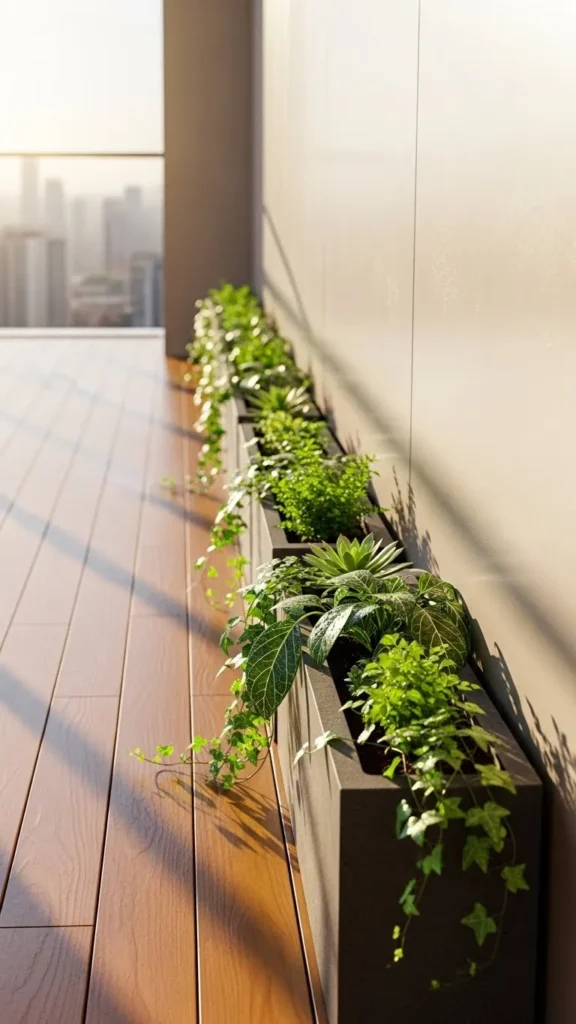
Narrow planters hug walls and railings. They hold multiple plants in one container. Leafy greens and flowers fit well.
Line them along edges to keep the center open. Use pot feet for drainage.
These planters often cost less than multiple small pots. They also look organized.
This idea suits balconies with limited width.
15. DIY Drip Water Bottles
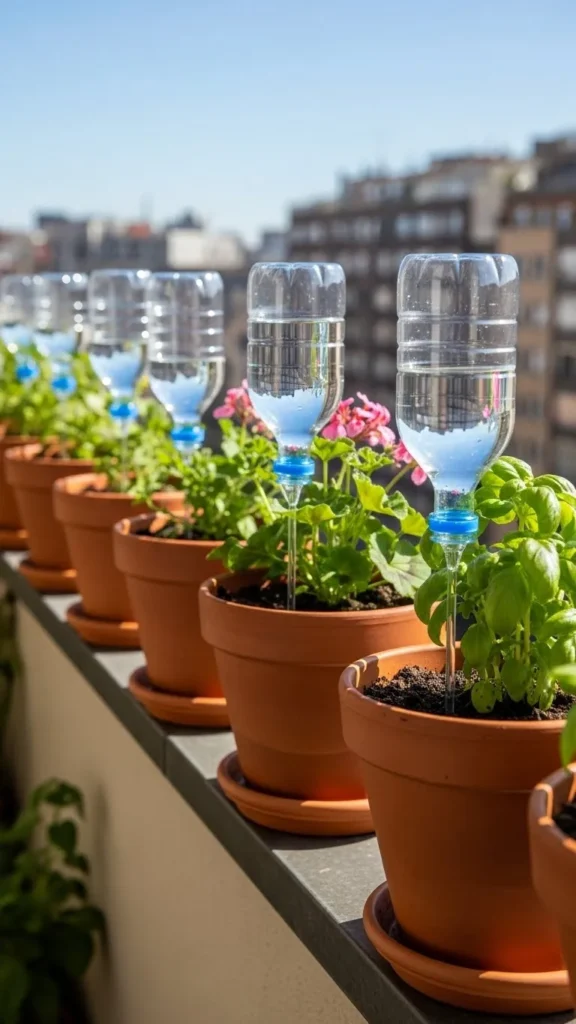
DIY drip bottles reduce daily watering. Invert a pierced bottle into soil. Water releases slowly.
This saves time and reduces waste. It also helps during short trips away.
Use recycled bottles to keep costs low. Test flow rate before leaving plants unattended.
This simple system supports steady growth with minimal effort.
16. Portable Mini Greenhouse
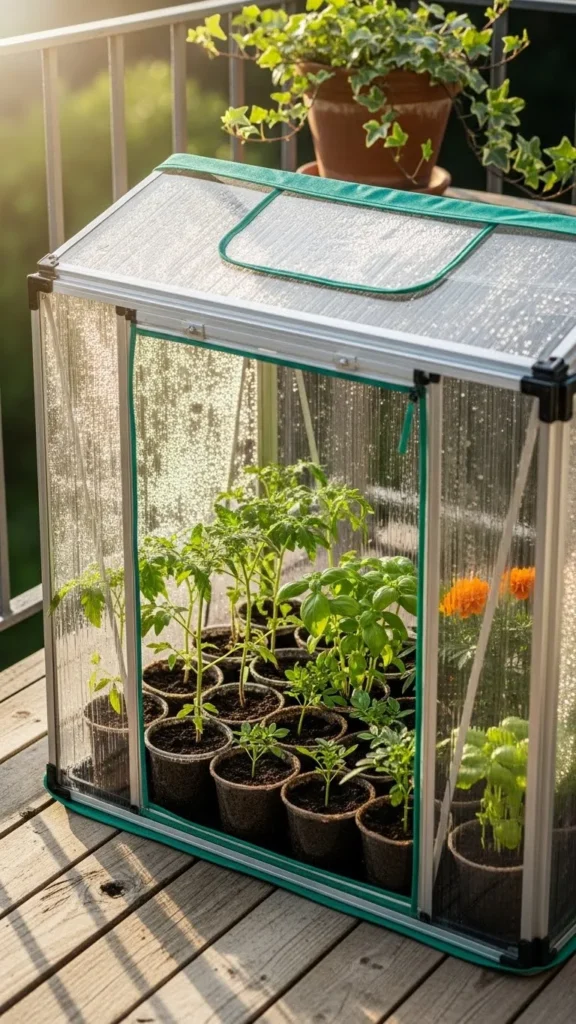
Mini greenhouses extend the growing season. They protect young plants from cold and wind.
Choose zip-up covers with shelves. Place against a wall for stability.
You can start seeds earlier without indoor mess. Remove cover on warm days.
Portable designs store easily when not in use.
17. Herb Spiral Pots
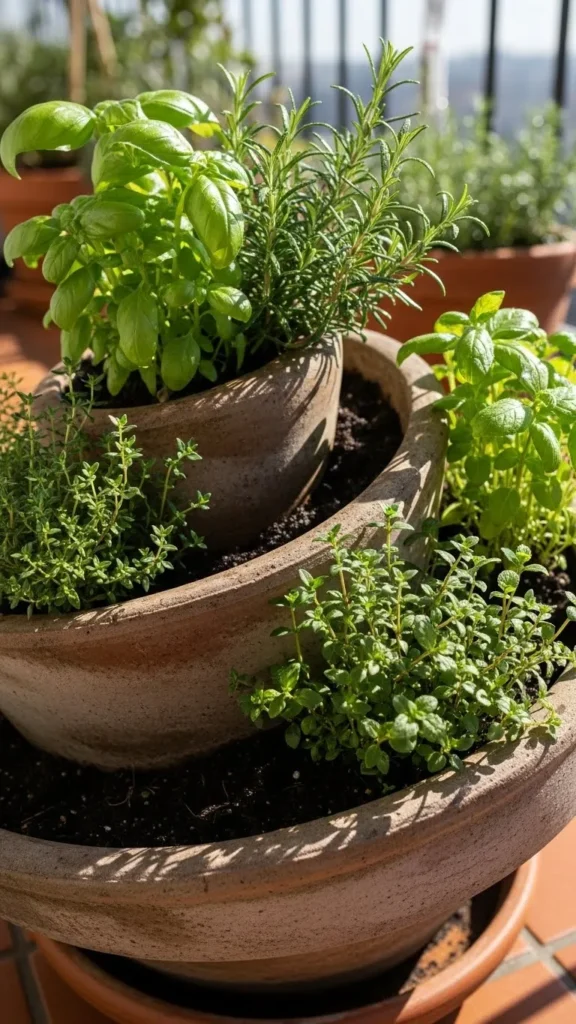
Herb spiral pots hold many plants in one container. Each level drains differently, suiting varied herbs.
Place in a sunny spot. Water from the top.
This saves space and looks decorative without clutter.
DIY versions using stacked bricks reduce cost further.
18. Balcony Compost Bin
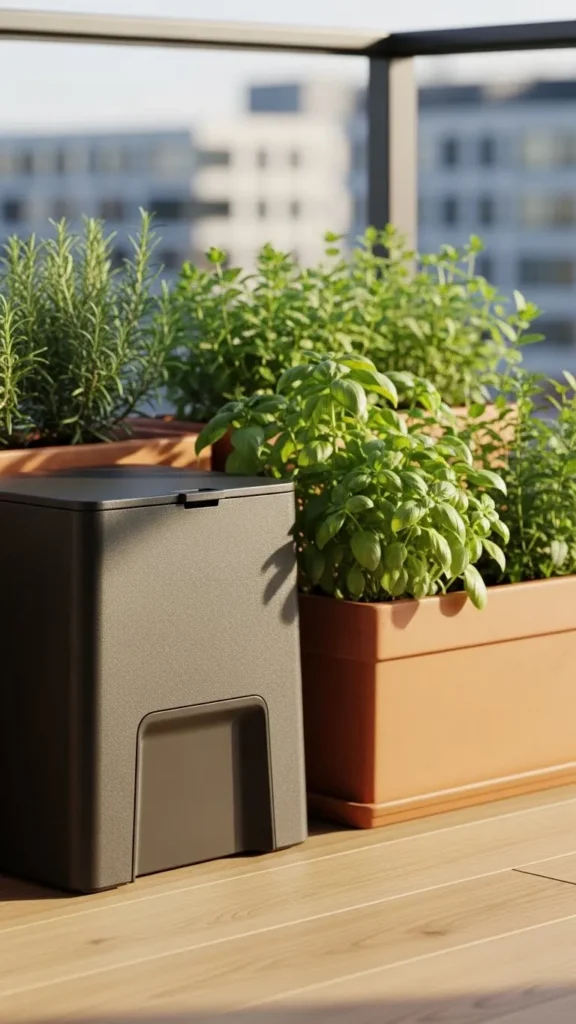
Small compost bins turn kitchen scraps into soil. Choose sealed designs to control odor.
Use finished compost in pots. This reduces soil purchases.
Keep bin shaded to manage moisture. Stir weekly.
This supports ongoing planting without extra expense.
19. Seasonal Plant Rotation
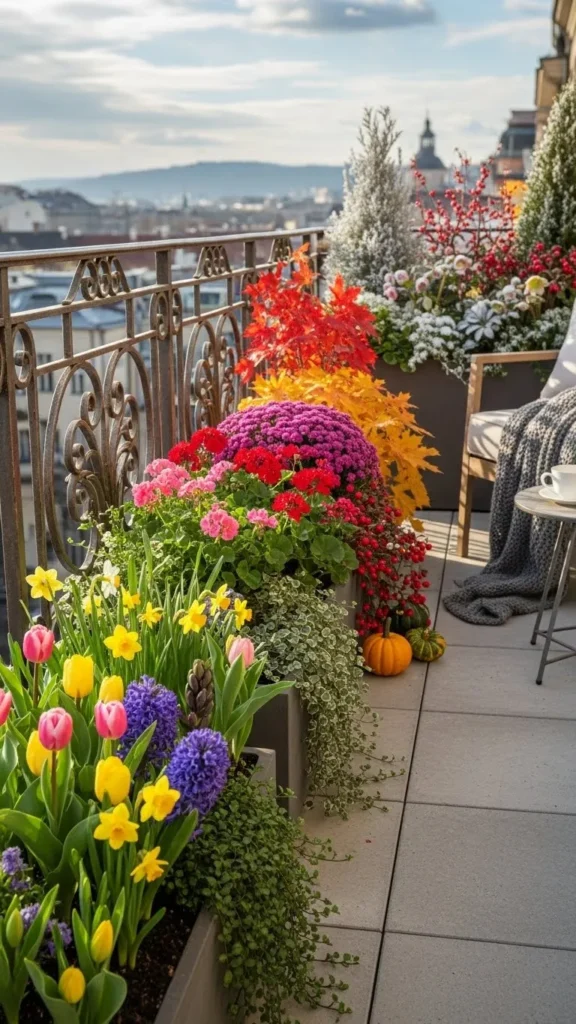
Rotate plants by season to match light and temperature. Cool-weather greens swap with warm-season crops.
This keeps containers productive year-round. It also spreads costs across seasons.
Reuse the same pots to save money.
Rotation keeps the balcony active without expansion.
20. Compact Seating With Planters
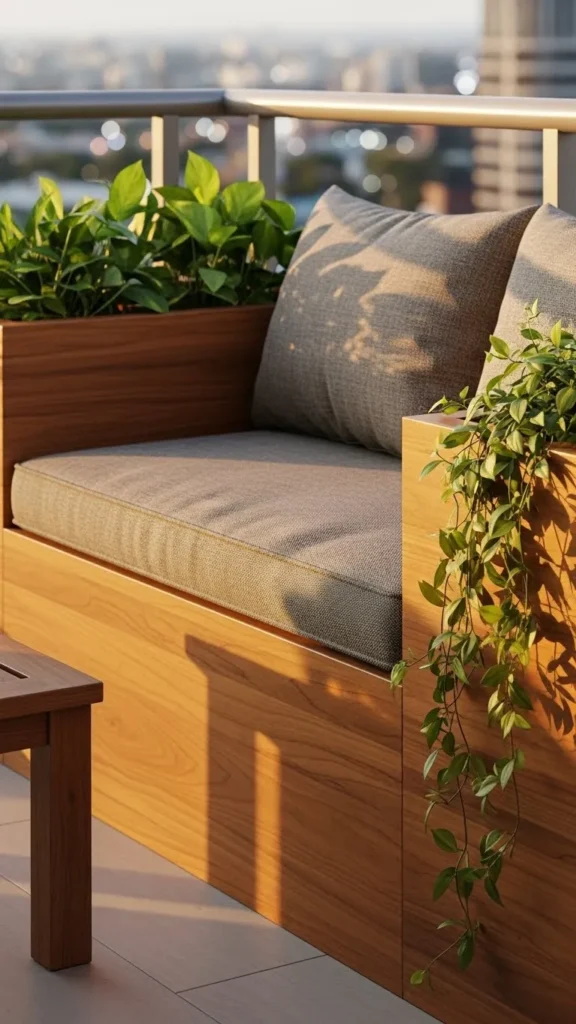
Benches with planters combine seating and growing space. Built-in boxes hold herbs or flowers.
DIY benches from pallets cost little. Seal wood for outdoor use.
This setup avoids extra furniture. Space stays functional.
It encourages time spent near plants, making care easier.
21. Hanging Rail Hooks
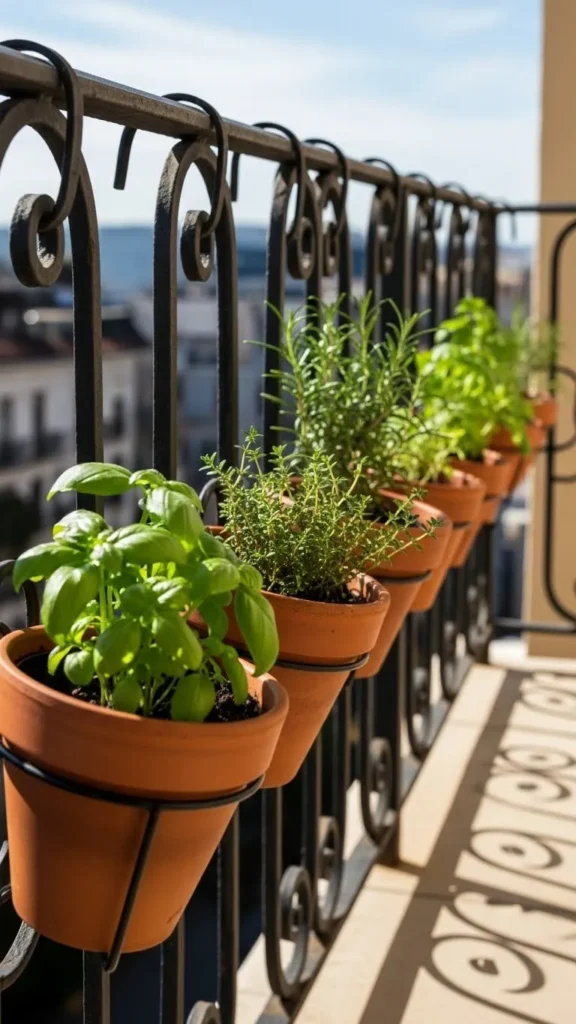
Rail hooks hold small pots along the edge. They clip on without tools.
Use them for lightweight plants. Space evenly.
This adds capacity without permanent changes.
Hooks can be moved anytime.
22. Self-Watering Pots
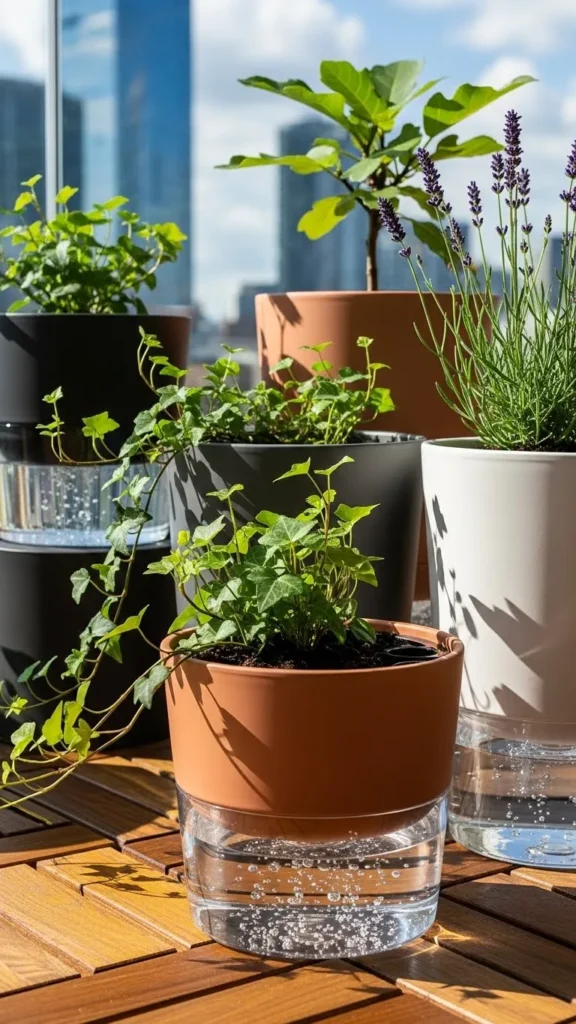
Self-watering pots store water below soil. Roots draw moisture as needed.
They reduce daily checks. This suits busy schedules.
DIY versions using double containers save money.
Plants stay consistent even in warm weather.
23. Balcony Tree in a Pot
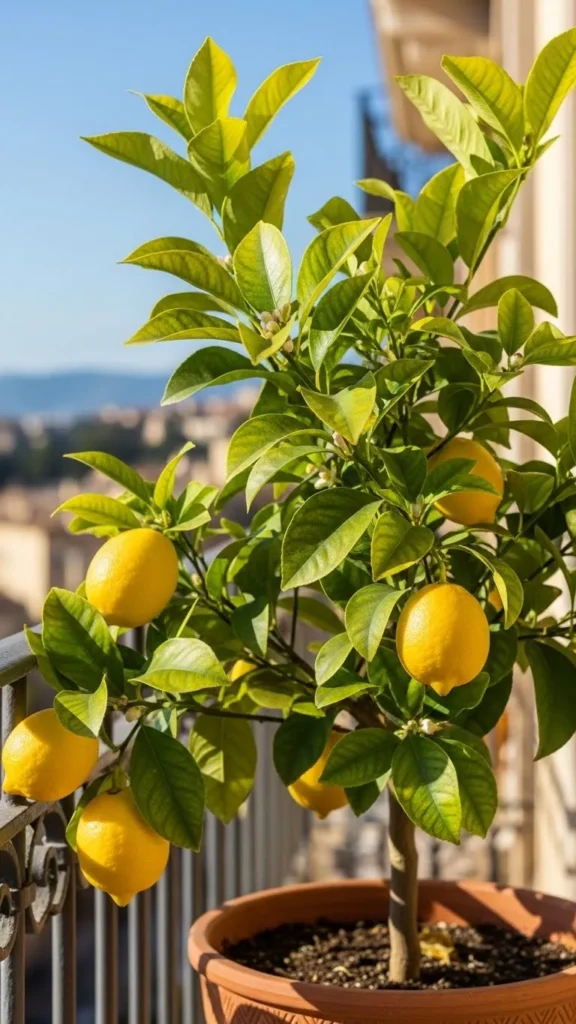
Small trees grow well in large pots. Citrus or olive stay compact.
Choose dwarf varieties. Use sturdy containers.
Trees add height and structure. They anchor the space visually.
Prune yearly to control size.
24. Night-Safe Solar Plant Lights
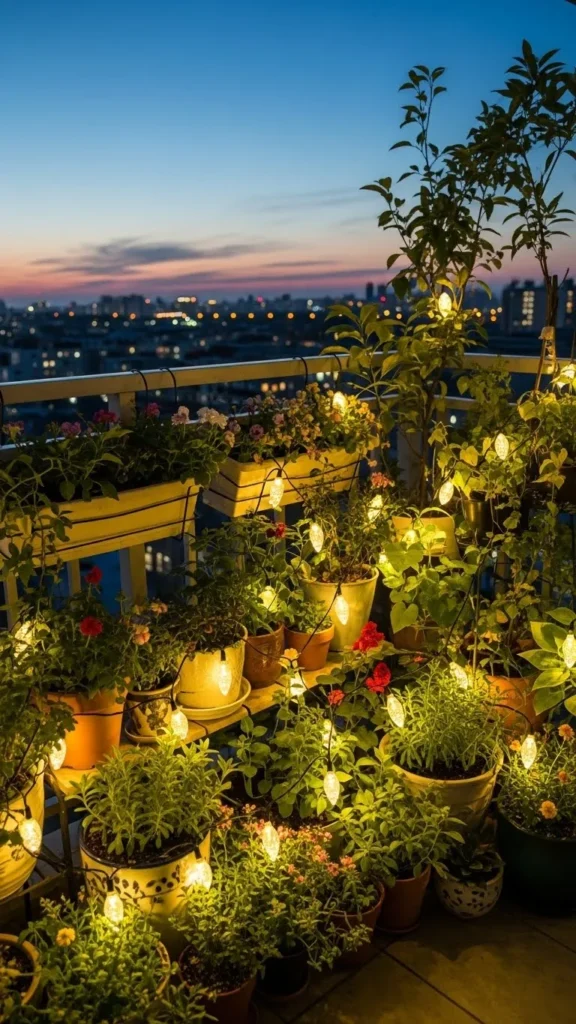
Solar lights make evening care easier. They highlight plants without wiring.
Choose low-glow styles. Place near paths.
Lighting also deters accidental damage at night.
This adds function without extra power cost.
Conclusion
Balcony gardening works best when space, plant choice, and daily habits align. The ideas above show how small areas can support real growth without clutter or high expense. Start with one setup, learn how it fits your routine, and expand slowly. With thoughtful placement and simple materials, a balcony can stay productive, inviting, and easy to manage all year.
Leave a Reply