

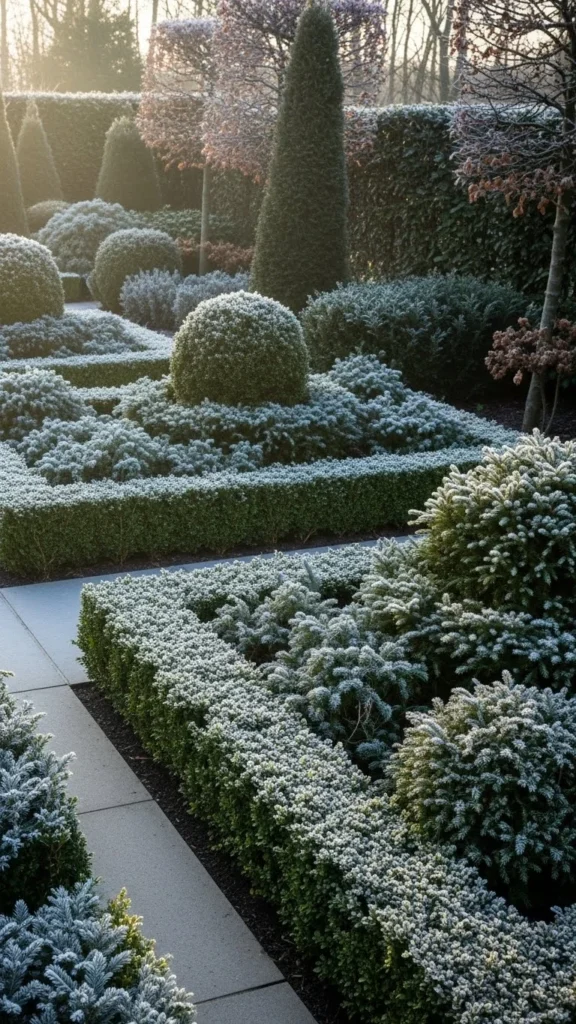
Winter gardens can feel dull, but evergreen borders bring structure, color, and life even on the coldest days. These hardy plants keep their shape all year, making your yard look intentional and welcoming. Whether you’re working with a small walkway, a long driveway, or a backyard path, evergreens help you build simple borders that stay attractive through frost, snow, and low light. This list gives you easy, practical ideas that fit any budget and yard size.
1. Mini Boxwood Ribbon Border
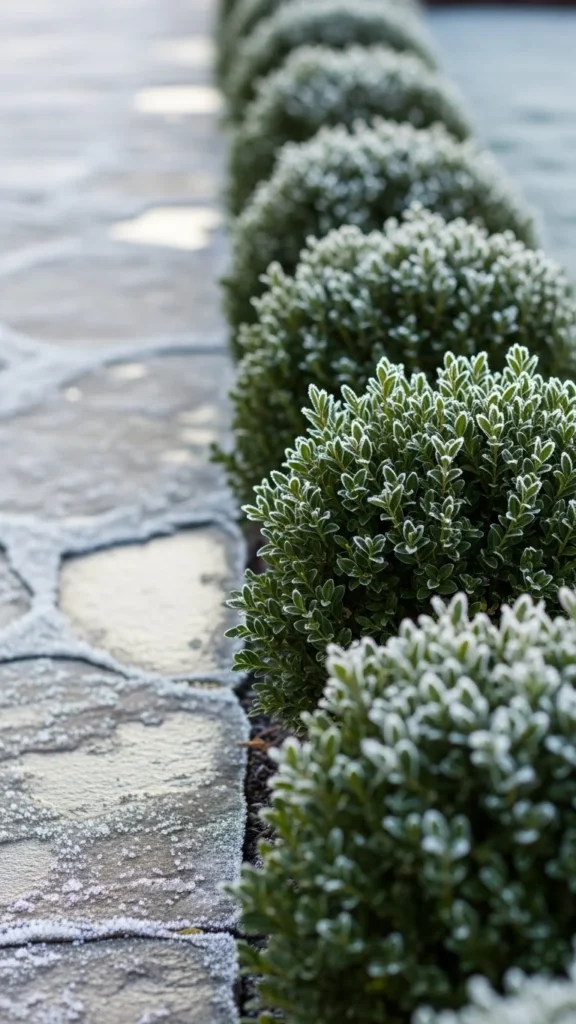
Mini boxwoods are perfect when you want a tidy, classic line that stays green through every season. They work well along short walkways, garden beds, and patios. The plants grow slowly, so you won’t need to trim often. Just keep each shrub evenly spaced to build a smooth ribbon-like appearance. A quick trim in late winter keeps the border neat.
If you’re working with a tight budget, start with smaller nursery pots. They fill in over time and still look neat when young. Try pairing them with mulch or small stones to create contrast. For a simple DIY project, use string as a guide while planting to keep the border straight. This small step gives the whole area a cleaner look without extra cost.
2. Low-Growing Juniper Path Edge
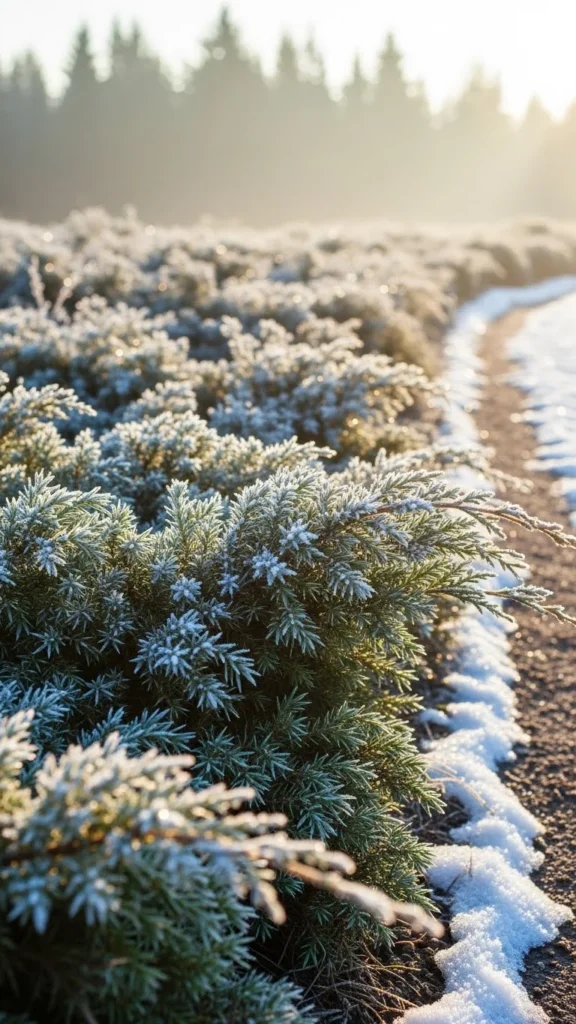
Low junipers bring soft texture and a natural, easy look. They sit close to the ground, making them great for long borders that shouldn’t block sightlines. Their needles range from blue to green, giving nice color variation even in winter. They handle cold, snow, and tough soil with minimal care.
To keep costs down, buy smaller starter plants and allow them to spread over time. Junipers do well with rock borders, making them ideal for simple DIY landscaping. Lay down landscape fabric before planting to reduce weeds. Add pea gravel or wood chips around them for an easy-maintenance finish. This combo gives you a clean border that still feels relaxed.
3. Compact Holly Hedge Line
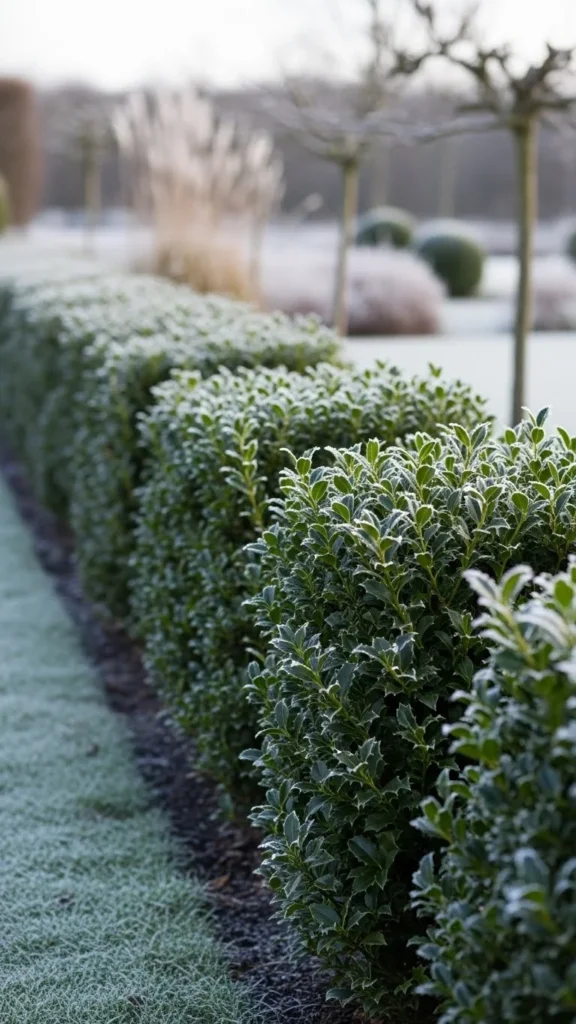
Compact holly brings rich color and a bold texture to winter borders. Its glossy leaves stay attractive even in freezing weather, and birds love the shelter it provides. Plant them close for a small hedge that works along fences, walkways, or the front of a garden bed.
Keep your planting line straight by marking spacing with small stakes. If you prefer a softer shape, allow the shrubs to grow naturally rather than clipping them tight. For a low-cost approach, buy a mix of sizes and stagger them. This adds depth without requiring a big budget. Use dark mulch underneath to make the leaves stand out through winter.
4. Emerald Arborvitae Strip
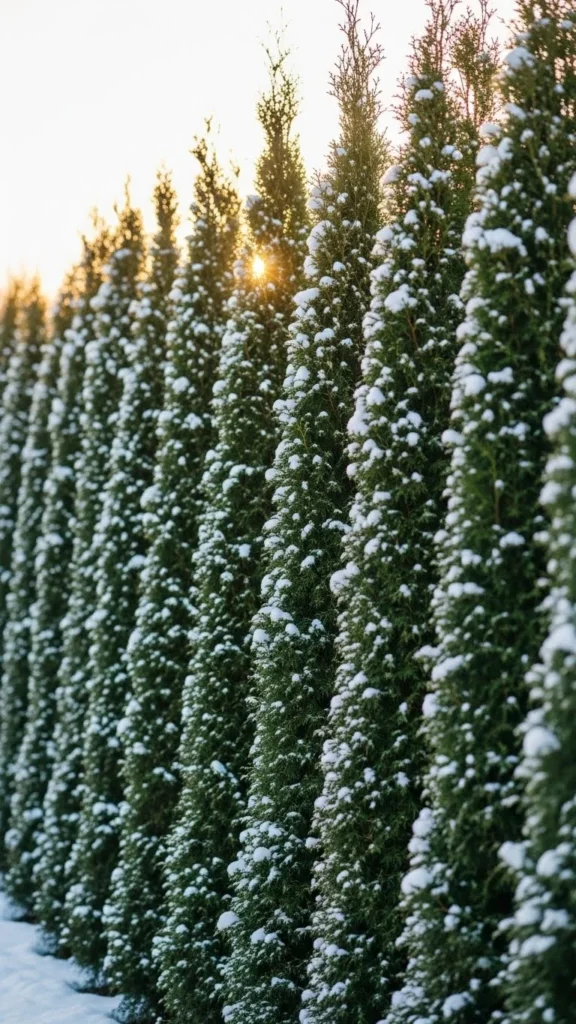
Emerald arborvitae give you height without taking up much space. They’re perfect for long borders where you want structure but not a full privacy wall. Their narrow shape works well along driveways or behind shorter shrubs to add depth.
Plant them in a straight row or gentle curve. Small arborvitae can be budget-friendly if you choose younger plants. Add compost at planting time to help them establish before deep winter cold arrives. To create a polished look, edge the border with simple pavers or trimmed turf. This makes the tall green line look even sharper during winter.
5. Dwarf Spruce Accent Border
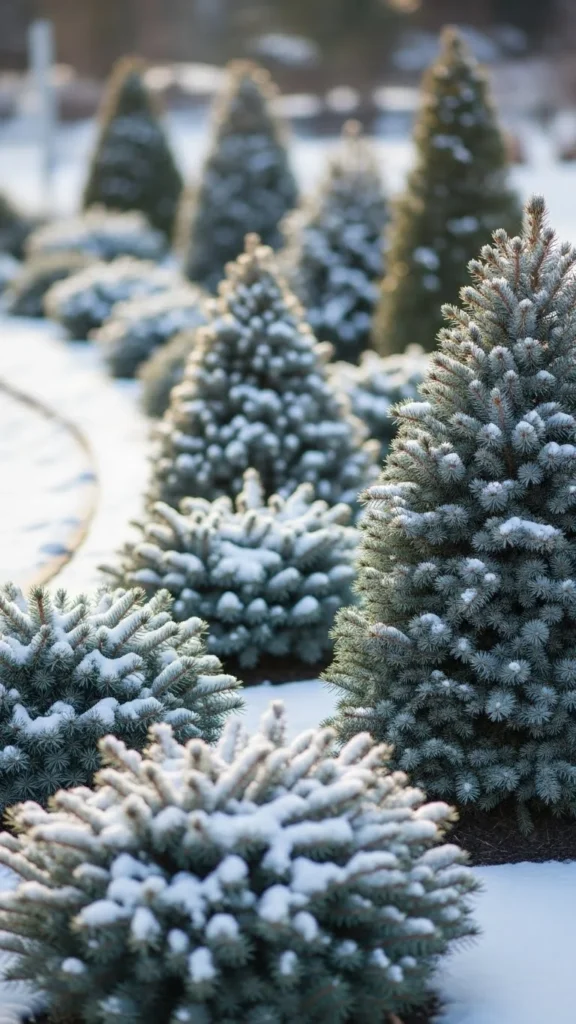
Dwarf spruce plants offer a bold, structured look without overwhelming small spaces. Their needles hold color well through winter, adding visual weight when other plants fade. They look especially nice in mixed borders where you want both texture and height changes.
Space them with enough room for their round shape. Try placing small rocks or wood chips around the base to highlight their color. If you’re saving money, buy one or two at a time and slowly build the line. They grow slowly, so your border stays neat without constant trimming. Mixing a few blue spruce varieties can bring subtle color shifts through the season.
6. Winter Fern Border Layer
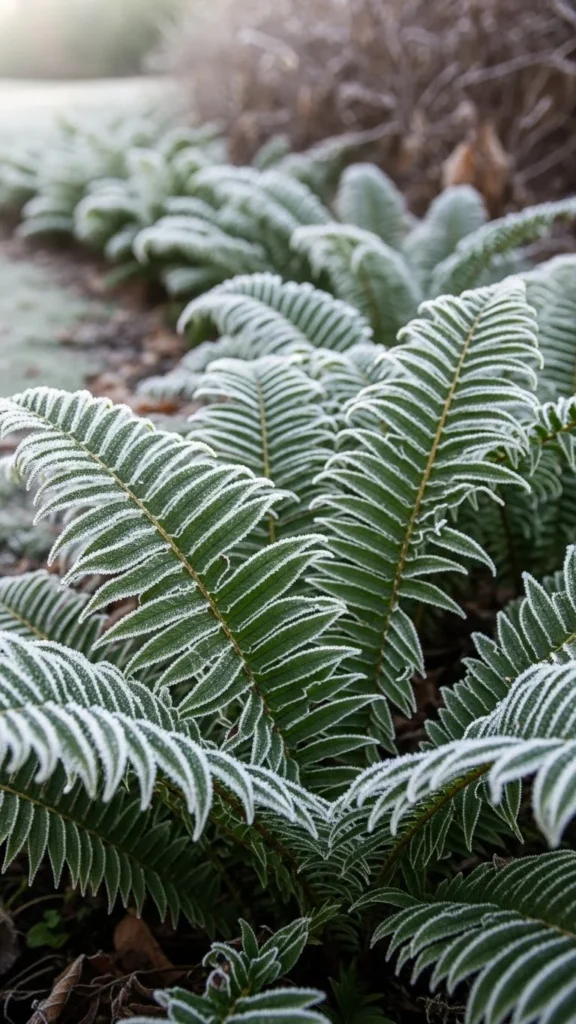
Evergreen ferns bring softness to winter borders. Their arching fronds add movement even in the cold months. They thrive in shade, making them helpful along house foundations or woodland edges.
Plant ferns in a staggered row rather than a strict line to make the border feel natural. Add compost and mulch to help them stay moist through winter. For a low-cost approach, divide larger fern clumps from other parts of your yard. This is an easy DIY way to expand a border without spending anything. Pair them with dark mulch or stones to show off their delicate shapes.
7. Mugo Pine Edge Row
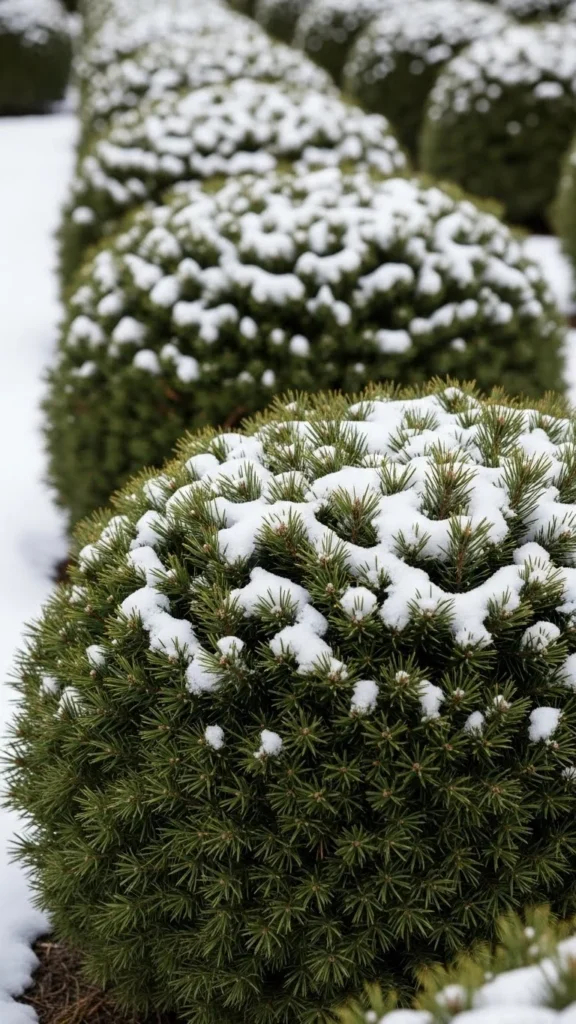
Mugo pines are dense, sturdy, and great for low-growing winter borders. Their rounded shape adds structure without feeling too formal. They work well along driveways, patio edges, and sloped areas.
Plant them with enough space to keep each mound visible. For a DIY trick, use a simple shovel or hoe to create a clean soil edge before placing them. Add a mulch ring around each shrub to keep maintenance low. You can prune lightly to shape them, but they often look their best when left natural. Buying small sizes keeps costs low, since they grow into good shape over time.
8. Evergreen Lavender Border
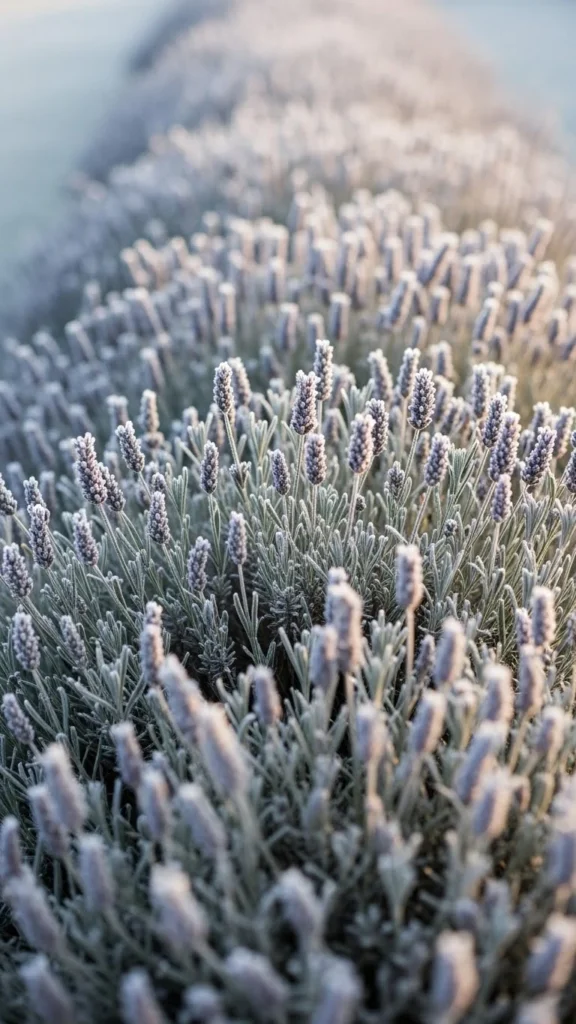
Evergreen lavender keeps its shape through winter and brings soft gray-green color. Even when not blooming, it adds texture and a clean, compact look along pathways and garden beds.
Plant lavender in full sun and well-drained soil. Use gravel or sand to improve drainage so the plants stay healthy through winter moisture. For a budget-friendly start, pick up smaller nursery pots and space them evenly. A quick trim in late summer helps them stay round and tidy. Add a gravel mulch to give your border a Mediterranean feel without spending much.
9. Dwarf Cypress Border Line
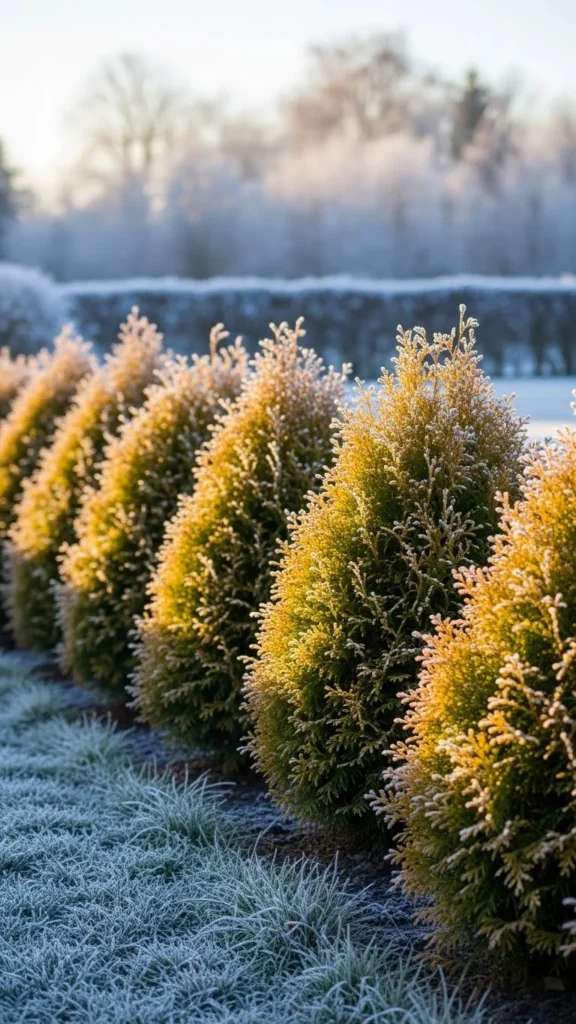
Dwarf cypress varieties stay small and colorful through winter. Their bright foliage stands out against snow and bare beds. They’re great for driveways, walkways, or the edge of a patio.
Plant them in rows or clusters depending on your space. They do well with simple soil amendments like compost or light mulch. If you want an easy DIY upgrade, place a few decorative stones along the border to highlight their color. Buying mixed sizes adds natural variation while saving money. These shrubs thrive with very little trimming, making them low-work but visually bold.
10. Creeping Yew Ground Border
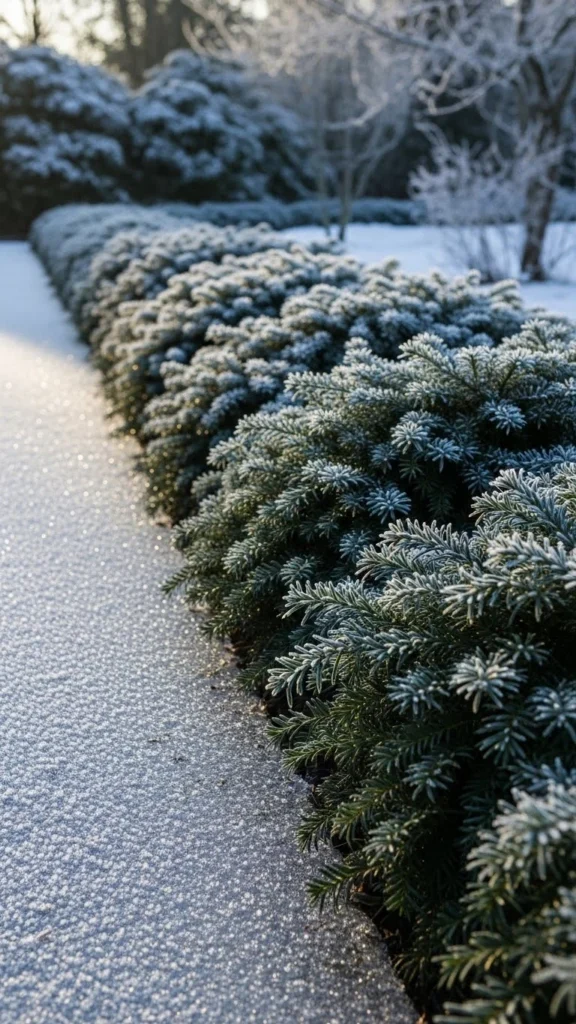
Creeping yew offers a low, rich-green border that stays attractive all winter. Its flat needles and spreading habit make it ideal for edging large beds or walkways.
Plant them closer together for a carpet-like look. They handle shade well, so they’re great next to buildings or under trees. For a simple DIY method, lay landscape fabric first to reduce weeds, then cut slits to plant the yews. Add a thin layer of mulch to tie the border together. Smaller starter plants keep costs down and still look clean.
11. Dwarf Bamboo Strip
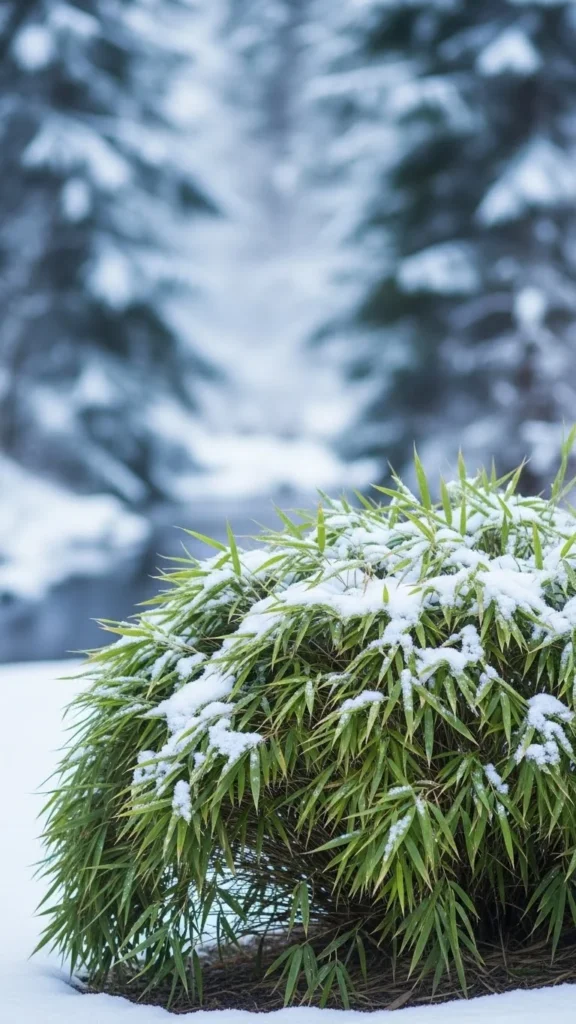
Dwarf bamboo adds movement and gentle rustling even in winter. It stays green all year and works well along fences, patio edges, or large beds.
Choose clumping bamboo to avoid spreading too far. Use a simple root barrier if you want extra control. For a budget-friendly project, start with a few small pots and let them fill in naturally. Add gravel mulch to keep the look clean. Regular trimming of older canes keeps the border tidy without much effort.
12. Japanese Pieris Border
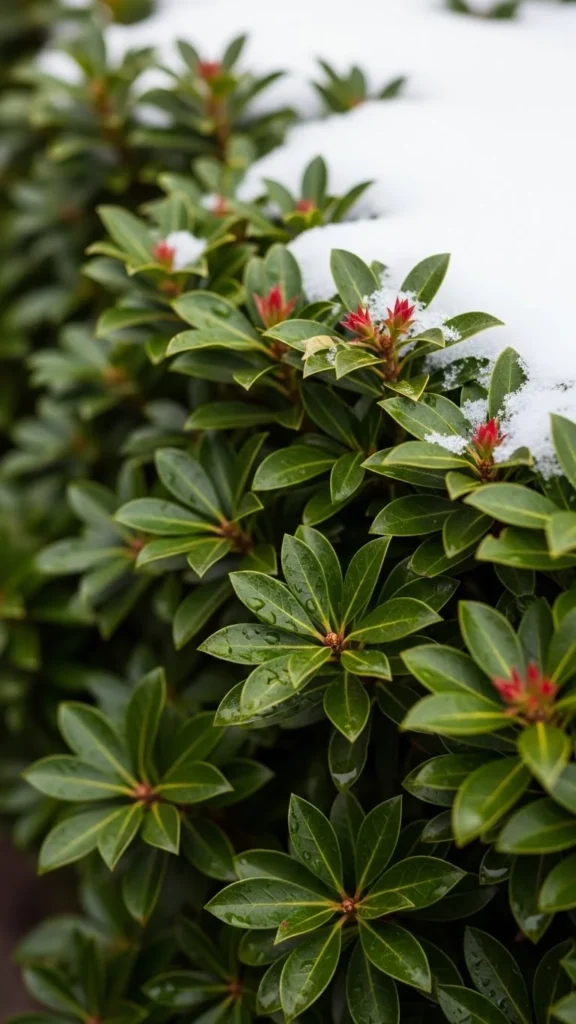
Japanese Pieris offers layered leaves that stay handsome through winter. Its shape makes it perfect for borders that need both height and fullness.
Plant in partial shade with rich soil. Add compost during planting to help them root before cold sets in. For a DIY touch, place stepping stones or dark mulch below to show off the glossy leaves. Smaller varieties make affordable choices for long borders. You can trim lightly in spring to shape the plants if needed.
13. Rosemary Hedge Border
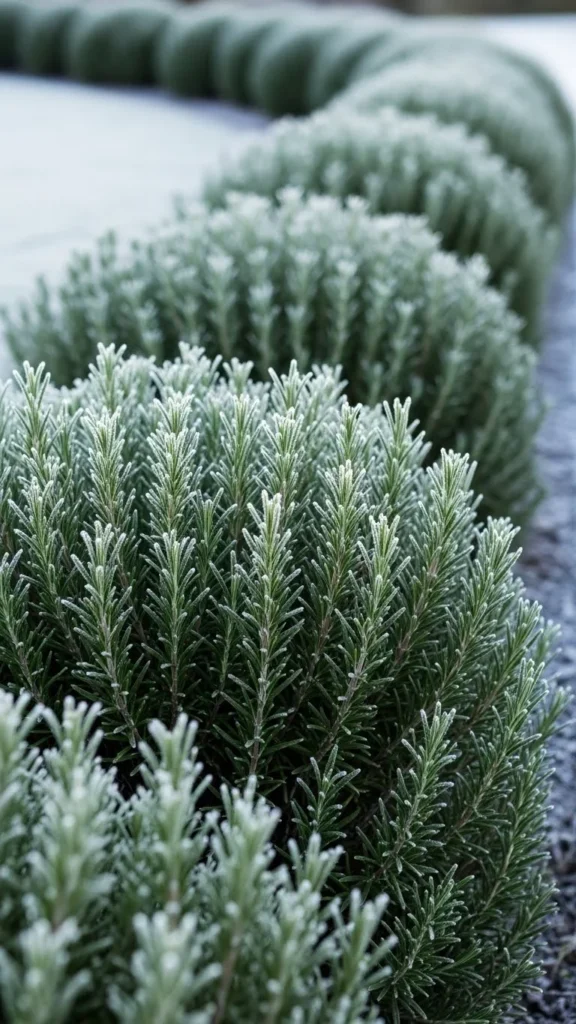
Evergreen rosemary adds color, shape, and fragrance to winter borders. Its upright habit works well for edging patios, garden beds, and pathways.
Plant rosemary in sunny, well-drained areas. Add gravel around the base to protect roots from winter moisture. For a low-cost start, buy smaller pots and let them fill out. A light trim helps keep the shape tidy. If you want a uniform border, use string to guide spacing so each plant grows evenly. Rosemary pairs well with gravel, stones, or dry mulch.
14. Heather Winter Edge
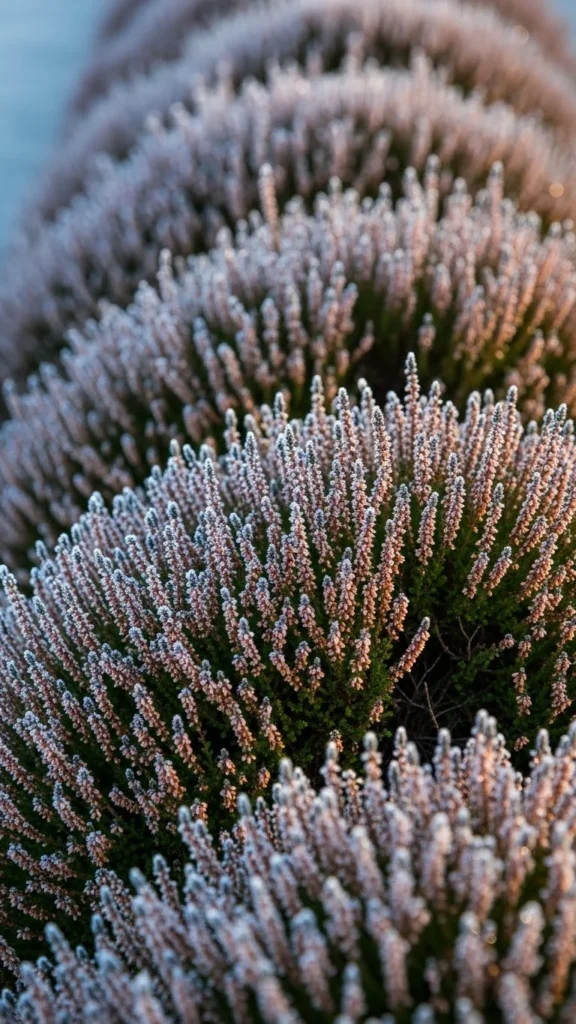
Heather adds both color and texture to winter yards. Its evergreen leaves hold up well in freezing temperatures, and some varieties have winter blooms that brighten borders.
Plant heather in full sun with acidic soil if possible. Mix peat or compost during planting to help them settle in. For a budget-friendly idea, plant them in groups of three for a fuller look. Mulch with pine needles or bark to match their natural environment. This simple border stays attractive through cold months with little effort.
15. Blue Star Juniper Border
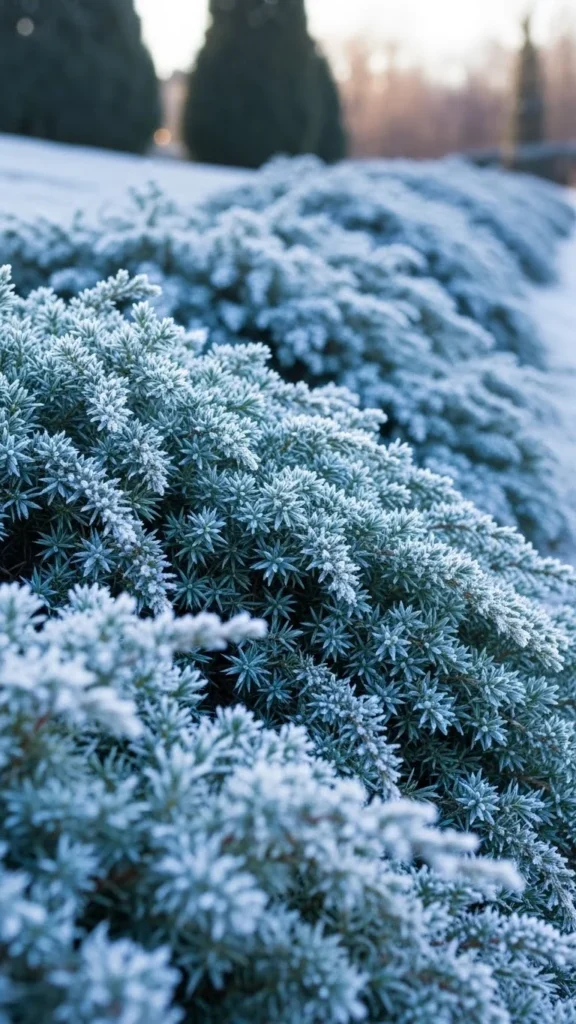
Blue star junipers bring cool-toned needles that shine in winter. Their compact, star-shaped growth creates crisp, modern borders for small yards or patios.
Plant them with enough space to maintain their round form. Use a gravel mulch to highlight their color. If working with a tight budget, start with smaller plants and let them spread naturally. A simple DIY trick is placing a stone edging to frame the border and make the blue tones stand out even more.
16. Evergreen Euonymus Line
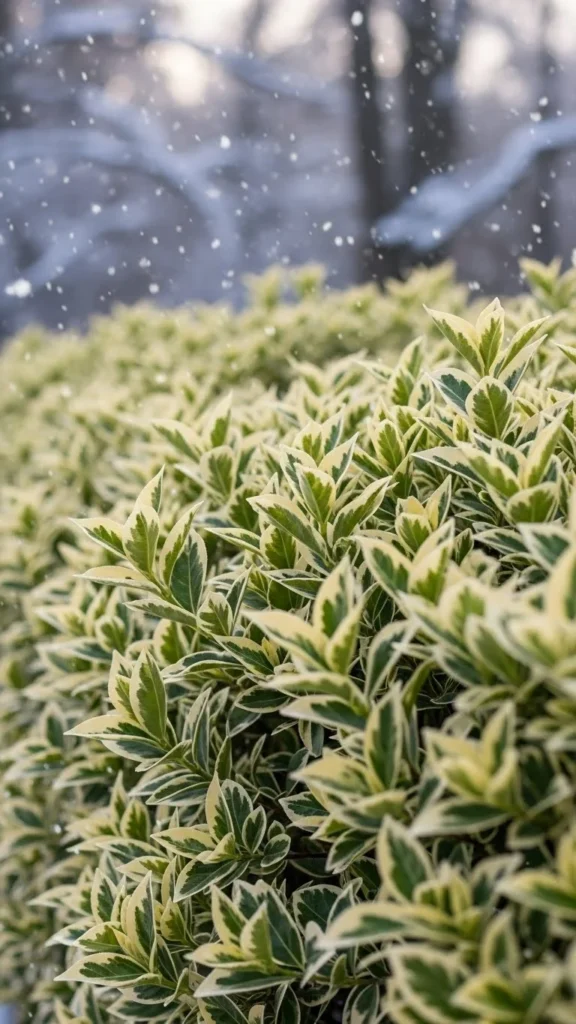
Evergreen euonymus offers bright variegated leaves that lift dull winter beds. It works well along walkways or as a low hedge.
Plant them in sun or partial shade. Keep spacing consistent for a uniform look. Add compost at planting time for healthier roots. Use simple edging stones or bricks as a DIY border enhancement that makes the bright leaves pop. Buying younger plants can save you money while still giving a polished result.
17. Candle Cypress Border
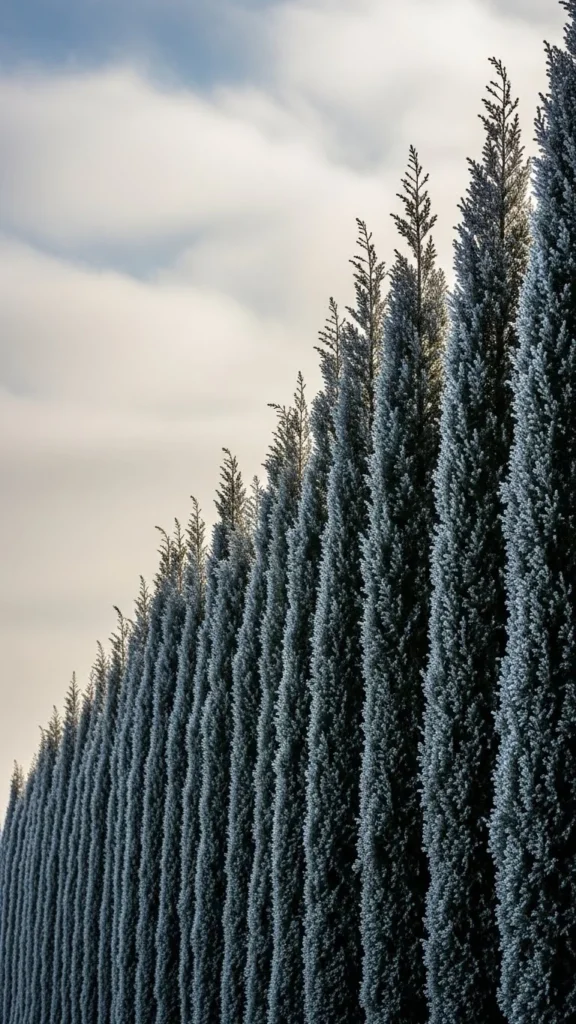
Candle cypress brings tall, narrow columns that work well in tight spaces. Their shape adds strong lines to winter yards without blocking too much light.
Plant them in well-drained soil with plenty of sun. They look great in symmetrical borders along driveways or entryways. To save money, choose smaller pots and let them mature. Add mulch or gravel to keep the base looking neat. Light pruning helps maintain their slim shape in spring.
18. Mountain Laurel Border
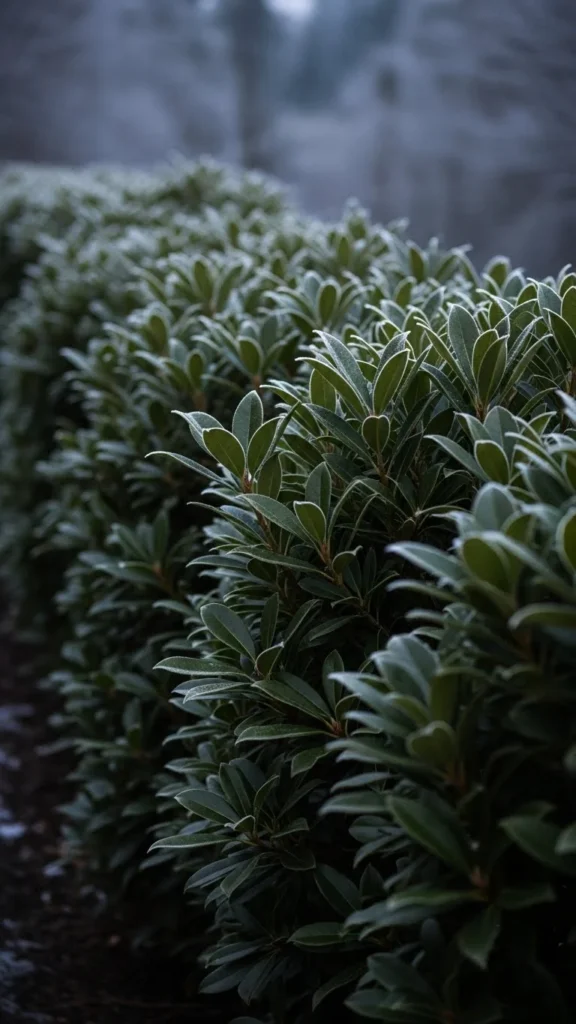
Mountain laurel keeps thick, evergreen leaves that stay handsome all winter. Its rounded shape works well along fences, slopes, or long garden beds.
Plant in partial shade with rich, slightly acidic soil. Add mulch to protect roots from winter cold. For a budget-friendly project, stagger the plants to create a fuller look with fewer shrubs. A light spring trim helps maintain shape. Use dark bark mulch to bring out the leaf color.
19. Compact Fir Border
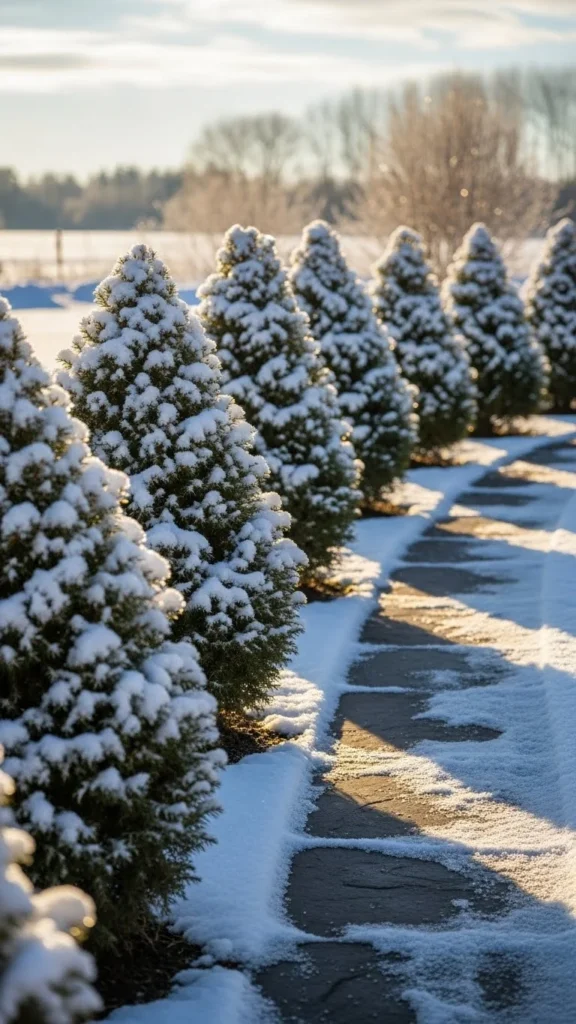
Compact firs add soft needles and a classic evergreen feel. They work well in both formal and relaxed borders. Their color stays consistent through snow and frost.
Plant firs in full sun with good drainage. Use rocks or mulch at the base to keep the area tidy. You can create simple edging with a shovel to form a clean trench line. Buying smaller sizes keeps costs down, and they’ll still provide strong winter color.
20. Creeping Pine Border
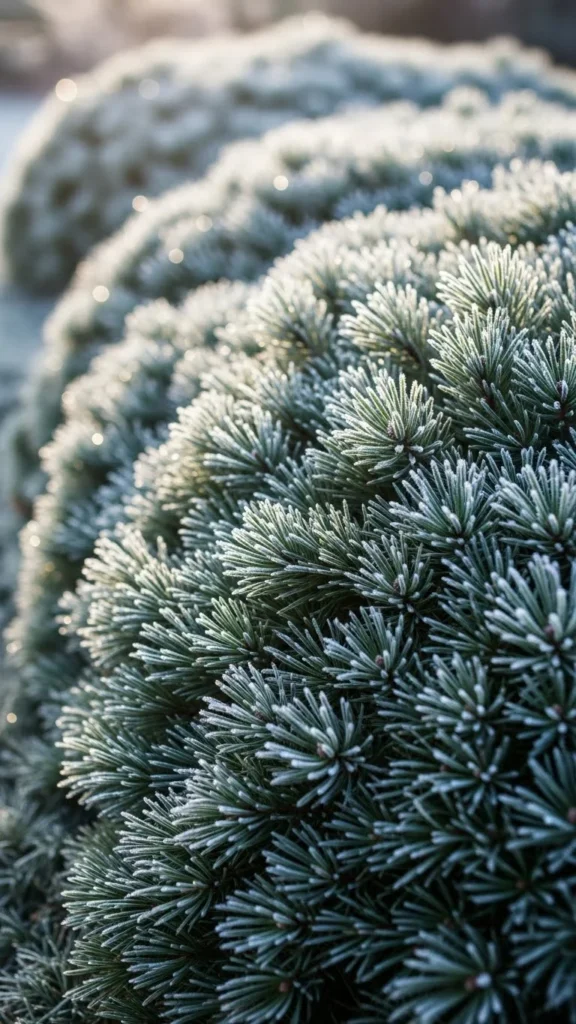
Creeping pine spreads softly and creates a natural border. It’s great for uneven ground, slopes, or long stretches that need color but not height.
Plant in full sun with well-drained soil. Use landscape fabric beneath for low maintenance. For a DIY approach, mix different creeping pine varieties to add subtle texture differences. Start with small plants to stay within budget. A light mulch layer ties everything together and keeps weeds minimal.
21. Evergreen Sedum Carpet
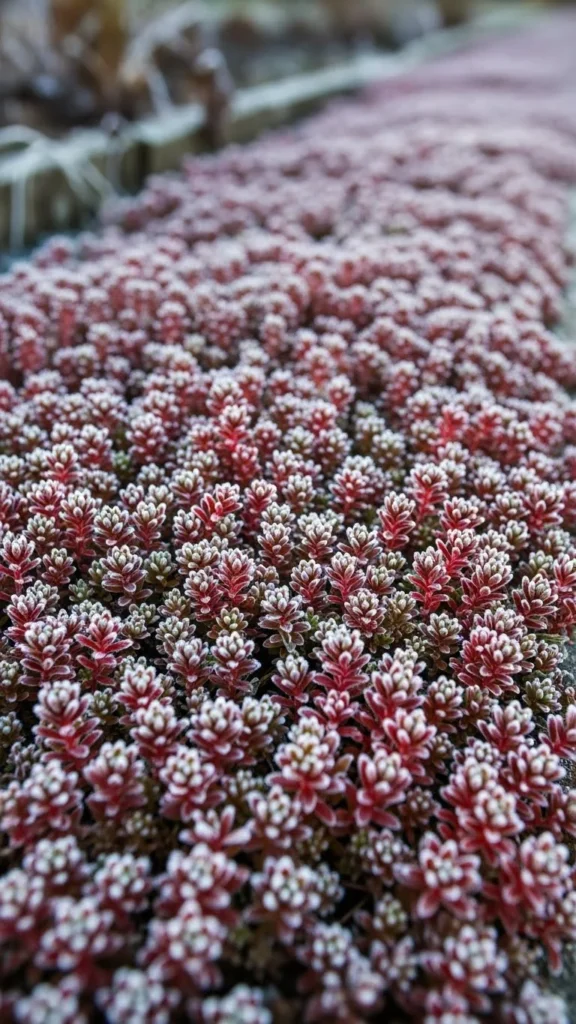
Evergreen sedum stays low and colorful even in cold months. It’s great for borders that require almost no upkeep.
Plant sedum in well-drained soil and sunny spots. Use gravel or sand to improve drainage. For a low-cost project, buy a few plants and let them spread. Sedum also divides easily, so you can expand the border for free over time. A simple rock border pairs nicely with its small, compact leaves.
22. Dwarf Nandina Border
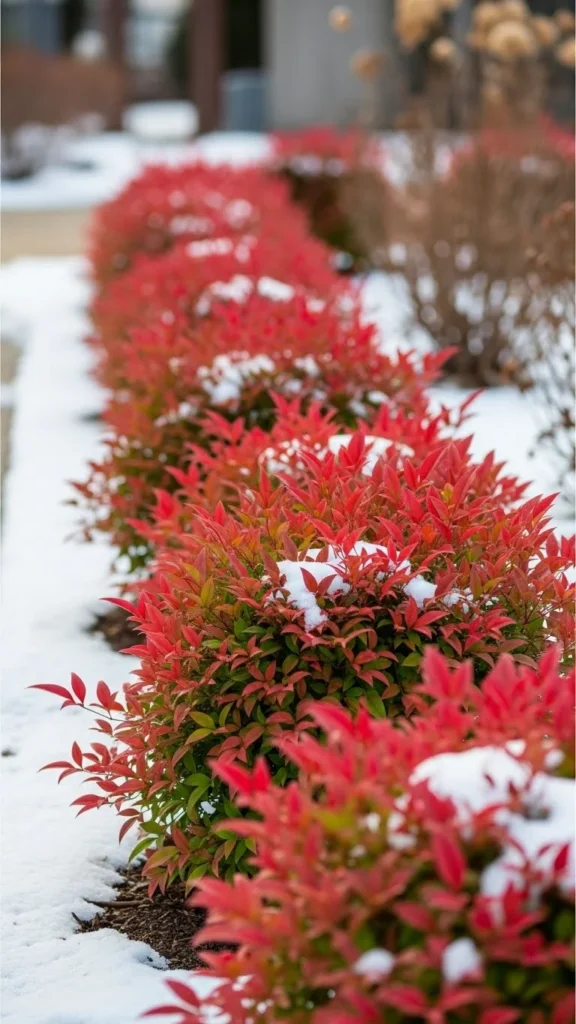
Dwarf nandina offers year-round foliage with winter color highlights. Its small size makes it great for pathways and small beds.
Plant in full sun or light shade. Mulch around the base to protect roots. For an affordable start, use smaller nursery pots and space them to allow room for growth. A few river stones or bricks along the edge provide an easy DIY finish that makes their color stand out.
23. Wintergreen Box Honeysuckle
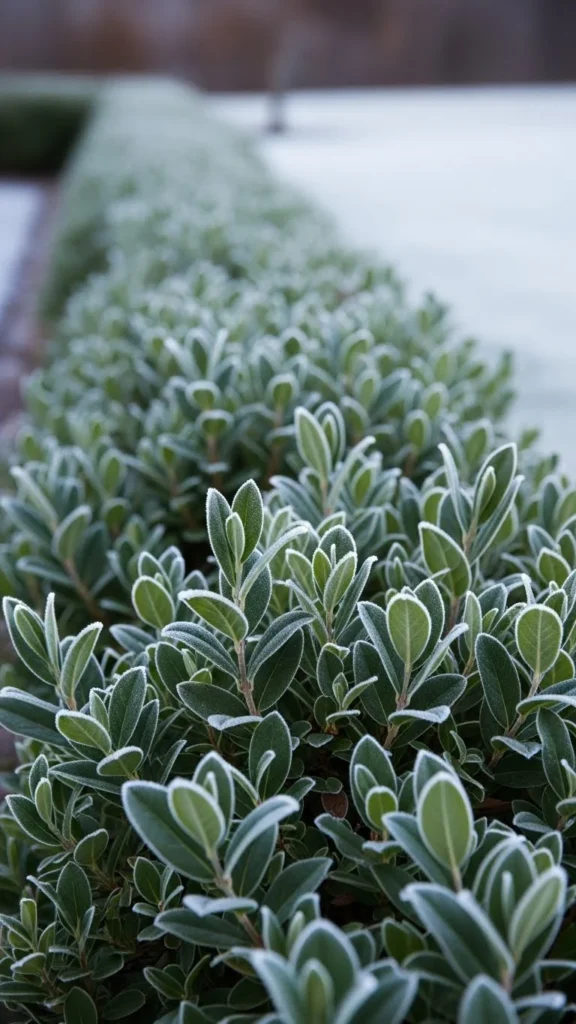
Wintergreen box honeysuckle forms a neat, compact border that works well in formal and casual yards. Its glossy leaves hold their color well.
Plant in well-drained soil and keep spacing even for a professional look. Add mulch to keep weeds down. For a budget-friendly option, start with young plants and trim lightly as they grow into shape. They pair nicely with stone edging for a clean finish.
24. Dwarf Alberta Spruce
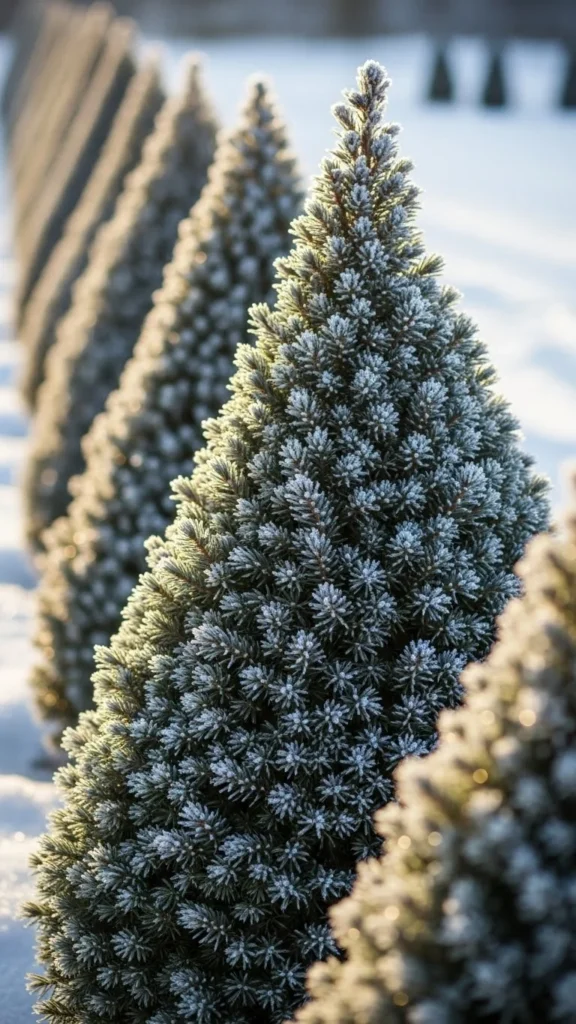
Dwarf Alberta spruce brings a tidy, pyramid shape that stays sharp through winter. It fits nicely along pathways, porch edges, or mixed borders.
Plant in full sun and give each plant enough room to maintain its cone shape. Use mulch or stones to keep moisture levels steady. A simple DIY tip is shaping them lightly in early summer so they hold good form through winter. Smaller starter sizes are affordable and grow slowly.
25. Soft Juniper Cloud Border
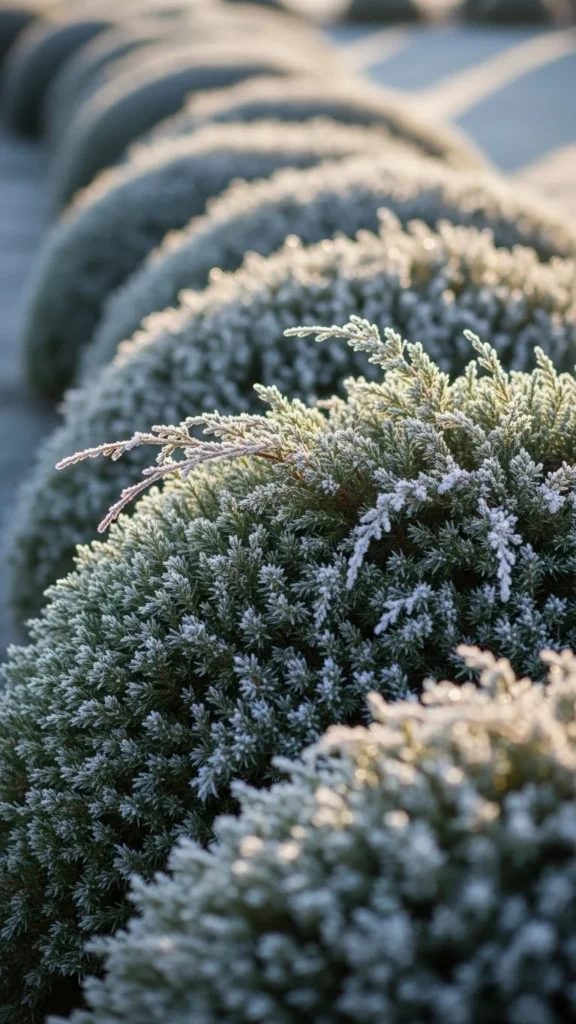
Soft juniper varieties create flowing, low borders that look attractive throughout winter. Their needles vary in color from silver to deep green, giving subtle variety.
Plant them in full sun and space them widely for smooth curves. Add gravel mulch to make the border stand out. For a cost-saving idea, choose small pots and let them mature naturally. A bit of light shaping keeps the mounds neat, but they look good even without heavy trimming.
Conclusion
Evergreen borders keep your yard looking alive, structured, and welcoming all winter long. With simple planting techniques, budget-friendly plant choices, and easy DIY touches, you can build borders that stay attractive through frost and snow. Choose a style that fits your yard, start small if needed, and enjoy a landscape that brings color and calm during the coldest months of the year.

Leave a Reply