

There’s nothing quite like snipping a few sprigs of fresh basil, mint, or rosemary straight from your own container garden to add a burst of flavor to your meals. Growing herbs in containers isn’t just practical—it’s beautiful, space-saving, and surprisingly easy! Whether you live in an apartment, have a small patio, or just want to keep your kitchen stocked with aromatic greens, this guide will help you create your own mini herb oasis.
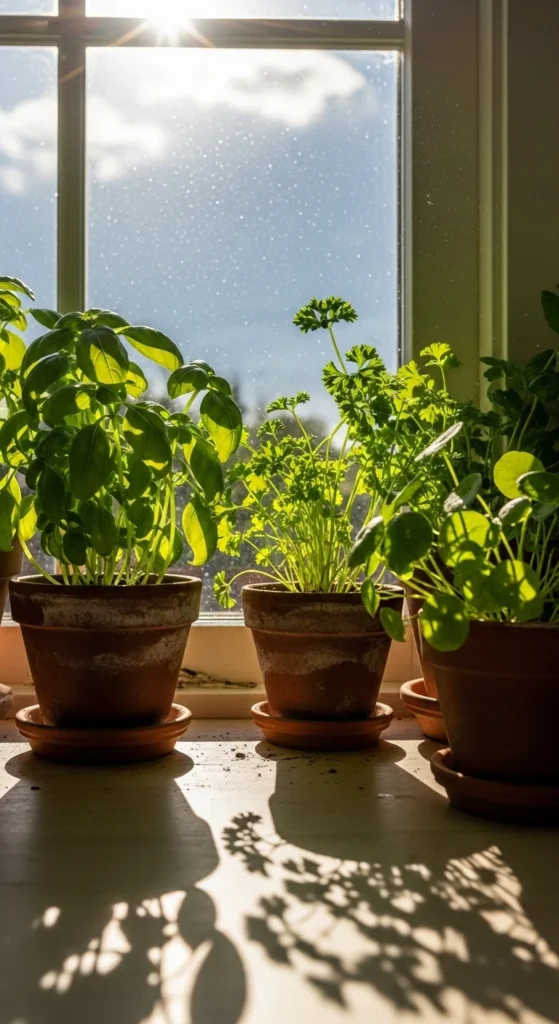
Choose the Right Containers
The container you select can make all the difference in your herb garden’s success. Herbs need room for their roots to grow, but they don’t like to sit in soggy soil.
- Size matters: Choose pots that are at least 8–10 inches deep for most herbs.
- Drainage is key: Make sure every pot has drainage holes to prevent root rot.
- Material options: Terracotta looks rustic and breathes well, but dries faster; plastic retains moisture better—great for hot climates.
- Aesthetic tip: Mix and match different containers for a charming look—think recycled tins, wooden boxes, or colorful ceramic pots.
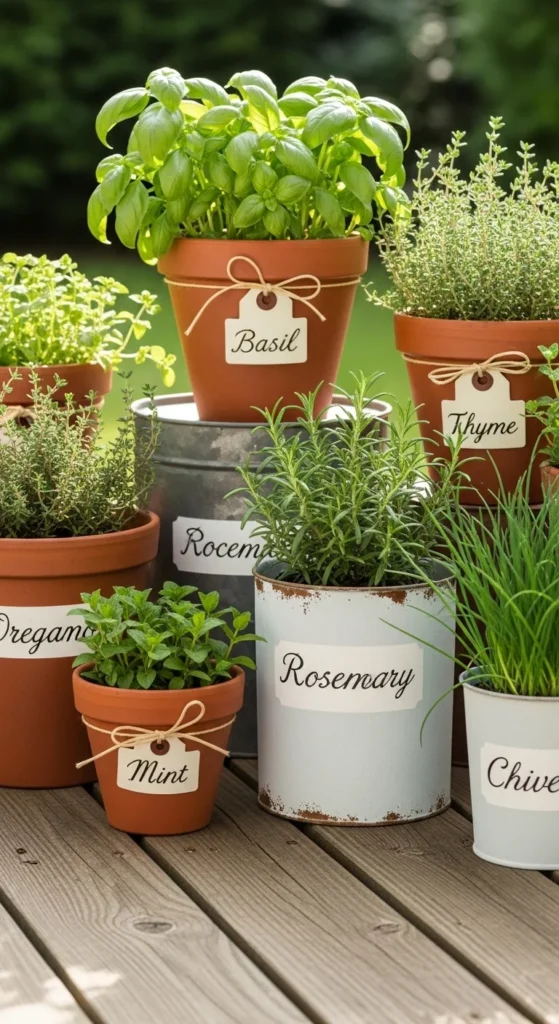
Pick the Best Herbs for Container Growing
Not all herbs thrive in confined spaces, but many do wonderfully in pots—especially those you use most often in your kitchen.
Here are some easy-to-grow favorites:
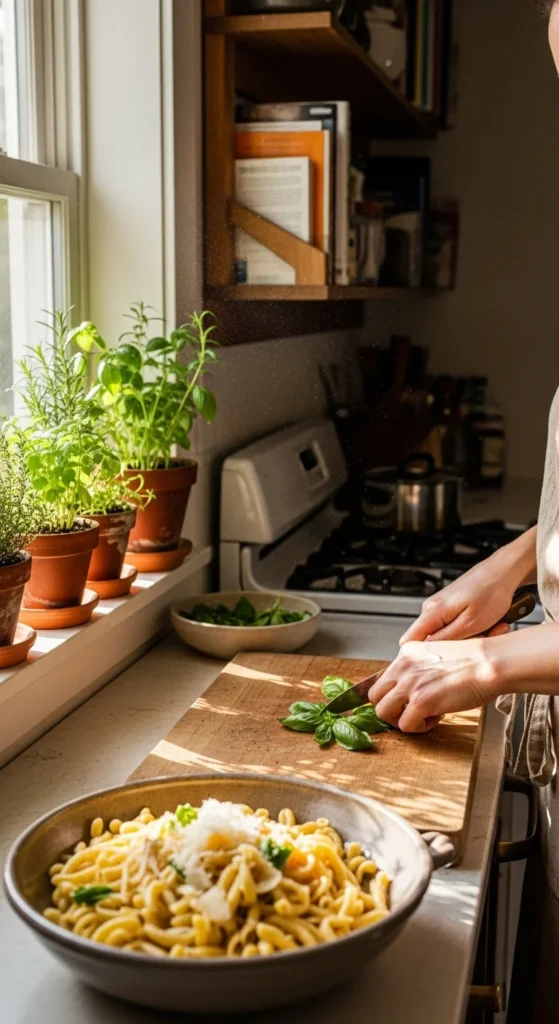
- Basil – Loves warmth and sun; great for salads and pasta.
- Mint – Grows vigorously; best in its own pot to prevent spreading.
- Rosemary – Needs full sun and slightly dry soil.
- Thyme – Compact and hardy; perfect for edges of containers.
- Parsley – Likes partial sun and consistent moisture.
- Chives – Perfect for small pots and windowsills.
For beginners, start with 3–5 herbs you cook with regularly. You’ll find they flourish when you harvest often!
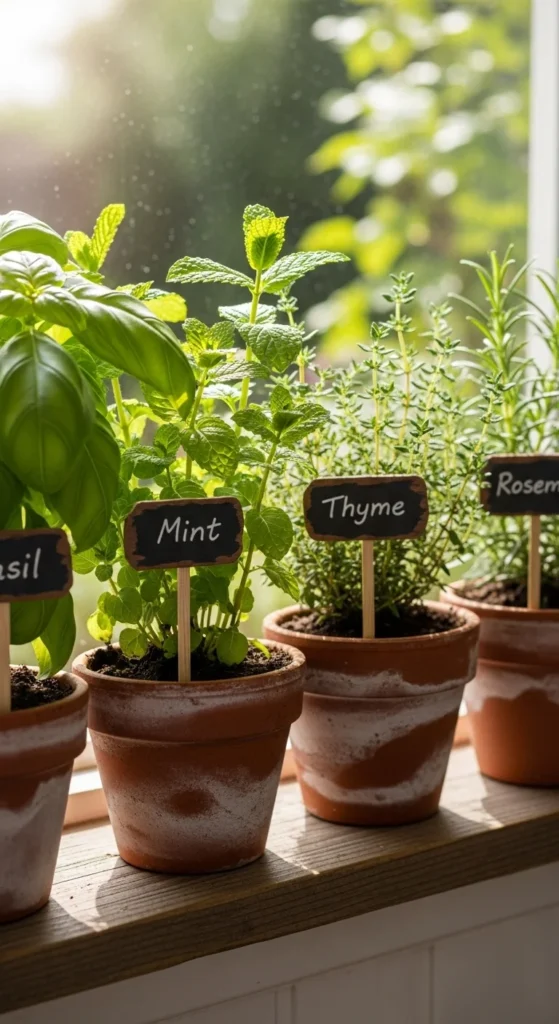
Use Quality Soil and Proper Planting Techniques
Herbs are not picky, but they do appreciate a good foundation.
- Soil mix: Use a light, well-draining potting mix—avoid heavy garden soil.
- Add compost: A handful of organic compost boosts nutrients naturally.
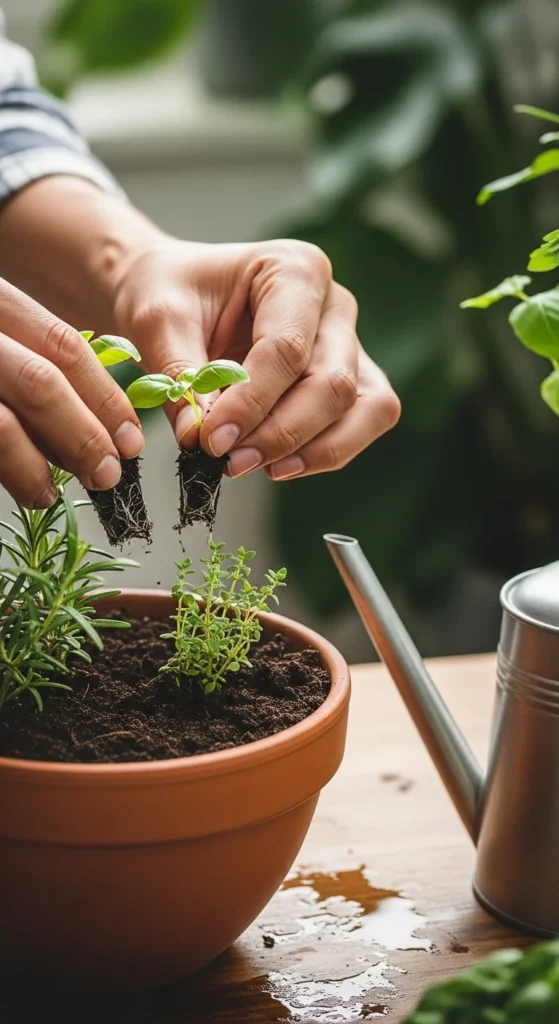
- Don’t overcrowd: Give each plant enough space to breathe—one large herb per container, or a few small ones grouped in a wide pot.
When planting seeds or small seedlings, water them lightly after planting and place them where they’ll get at least 6 hours of sunlight daily.
Watering and Sunlight Tips
Herbs love sunlight, but watering is where most people go wrong. Too much or too little can both cause trouble.
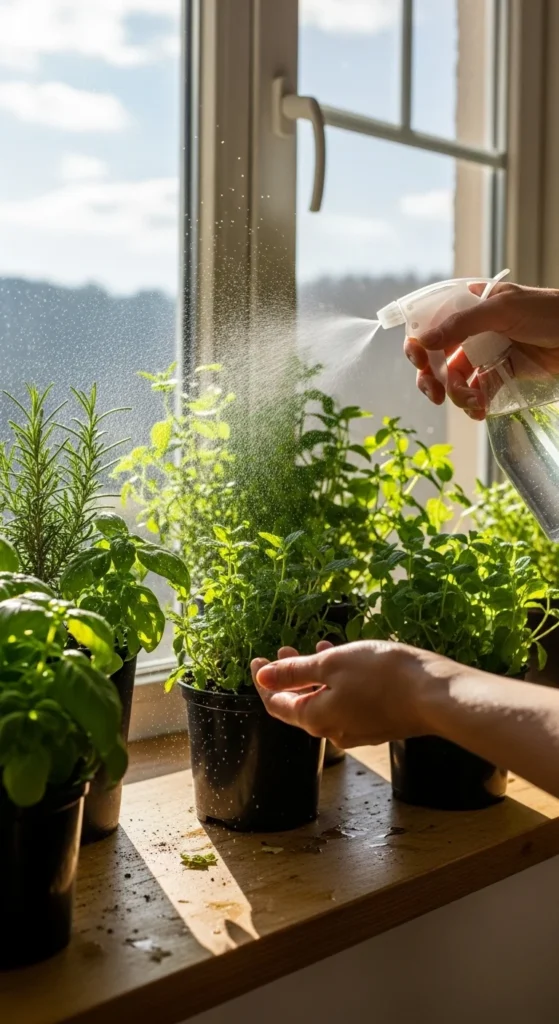
- Watering routine: Check soil moisture by touching the top inch—if it’s dry, it’s time to water.
- Morning is best: Water early so plants absorb moisture before the sun gets too hot.
- Rotate your pots: If indoors, turn them occasionally so all sides get sunlight.
- Humidity bonus: Mist the leaves occasionally to mimic outdoor conditions.
If your herbs look leggy or pale, it’s a sign they need more sunlight. Move them closer to a bright window or out to a balcony if possible.
Harvesting Your Herbs for Continuous Growth
The best part of container gardening? Easy, convenient harvesting! Picking herbs regularly keeps them bushy and productive.
Here’s how to harvest the smart way:
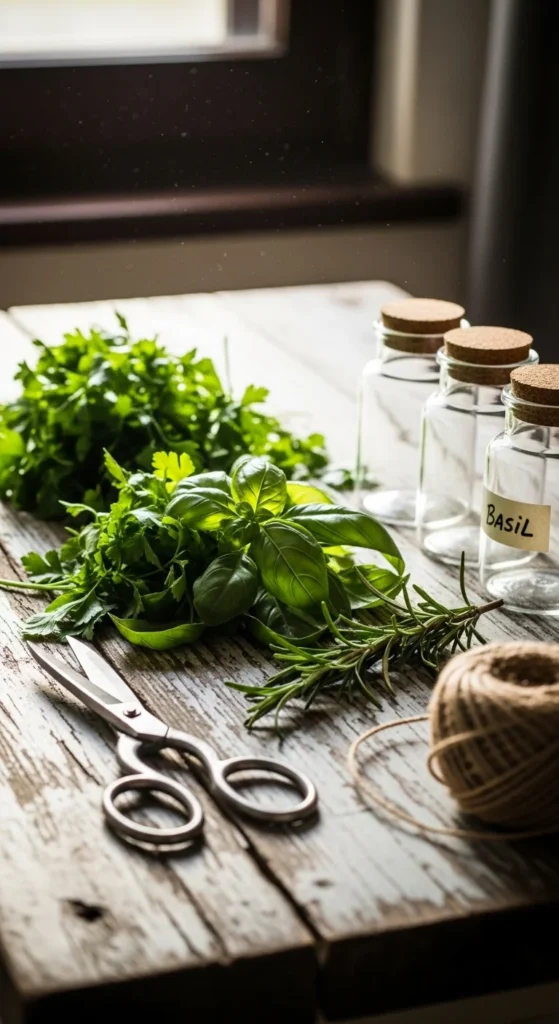
- Use clean scissors or shears to trim leaves just above a leaf node (where two leaves sprout).
- Never cut more than one-third of the plant at once—it needs some leaves to keep growing.
- Frequent snipping encourages more growth, especially for basil, mint, and parsley.
- Dry or freeze extras for later use—nothing goes to waste!
Keep Your Herb Garden Healthy
Even potted plants can face small challenges, so keep an eye on your herbs.
- Watch for yellowing leaves: Usually a sign of overwatering.
- Pests: Use natural remedies like neem oil or insecticidal soap if needed.
- Fertilize lightly: Once a month with organic liquid fertilizer is plenty.
- Prune regularly: Keeps plants neat and prevents them from becoming woody.
You’ll soon notice your herbs responding to your care with lush, aromatic leaves that make cooking more enjoyable.
Enjoy the Rewards of Fresh Herbs Anytime
There’s something incredibly satisfying about growing your own herbs. With a little care, even the smallest balcony or kitchen counter can yield a beautiful and productive mini garden. Fresh herbs elevate your dishes, brighten your space, and give you the joy of connecting with nature every day.
So grab some pots, seeds, and soil—and get growing!
Save this guide for later so you can start your own container herb garden whenever inspiration strikes.
Leave a Reply