

Frost can sneak in overnight and undo months of garden work in a single icy morning. The good news? You don’t need expensive equipment to keep your plants safe. With simple materials and easy DIY setups, you can create sturdy frost-blocking shelters that protect your garden all winter long.
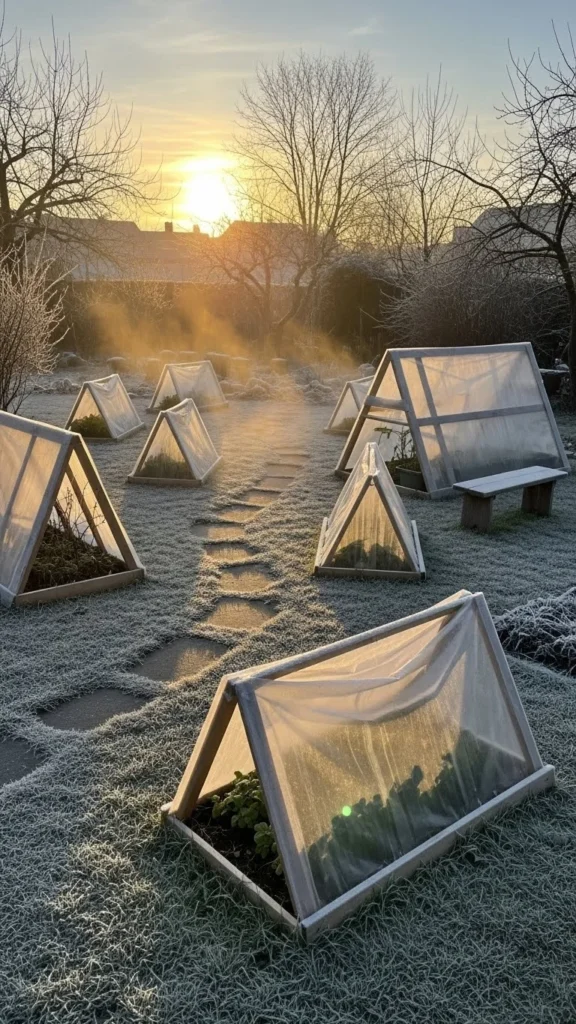
Let’s walk through practical, budget-friendly ways to build shelters that actually work—no fancy tools or complicated instructions required.
Why Frost Protection Matters
Even hardy plants can struggle when temperatures drop below freezing. A quick frost causes:
- Drooping leaves
- Darkened or mushy foliage
- Stunted growth
- Permanent damage to roots or stems
DIY shelters create a buffer between your plants and the cold. They trap warmer air, block icy winds, and keep the soil from freezing too quickly.
Choose the Right Materials for Your Shelter
You don’t need much to make an effective frost barrier. Most materials are already in your home or can be bought cheaply.
Great options include:
- Clear plastic sheeting
- Old bed sheets or cotton fabric
- PVC pipes or thin wooden stakes
- Zip ties or garden wire
- Clothespins or clips
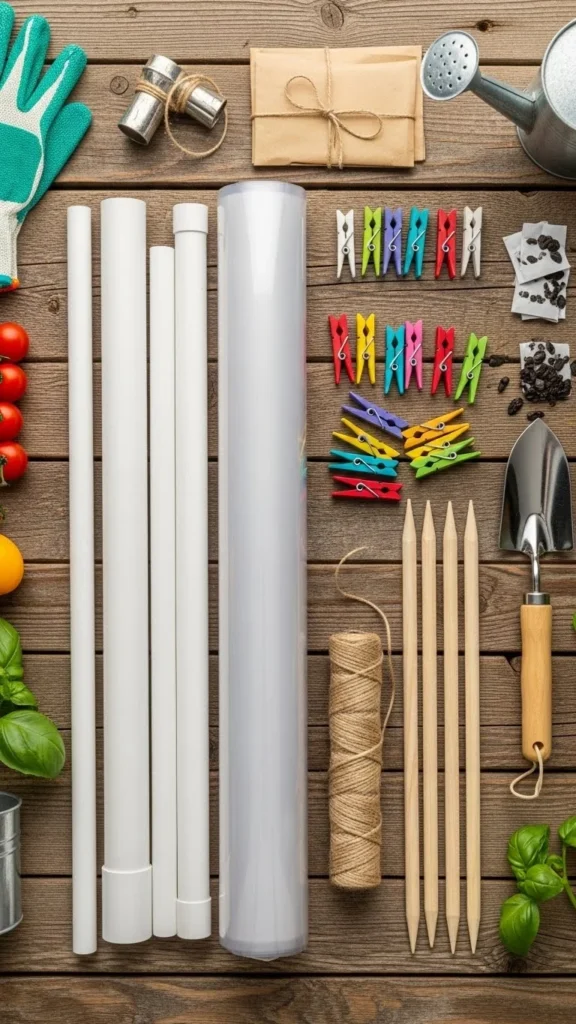
When choosing materials, focus on items that are waterproof, flexible, and lightweight. This makes building quicker and allows you to remove the covers easily during sunny days.
Build a Simple Hoop Shelter
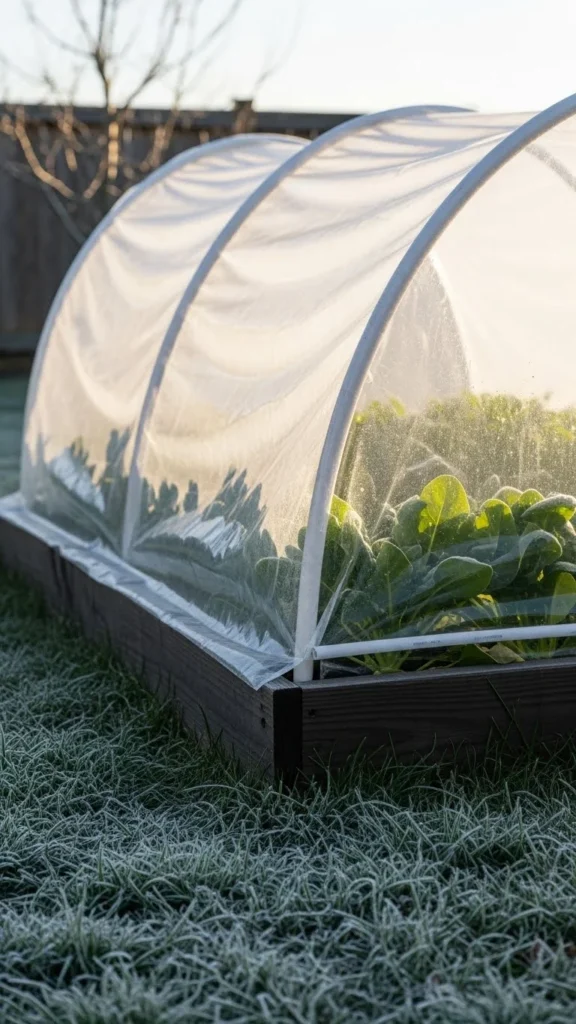
Hoop shelters (also called low tunnels) are perfect for raised beds and vegetable gardens. They’re lightweight, easy to assemble, and great for covering multiple plants at once.
How to Build It:
- Push flexible PVC pipes or wire hoops into the soil across a garden bed.
- Space each hoop about 2–3 feet apart for stability.
- Lay clear plastic sheeting over the top, allowing extra length on each side.
- Secure the edges with soil, rocks, or small sandbags.
- Add clips to keep the plastic tight during windy nights.
This simple structure can raise temperatures underneath by several degrees—often enough to prevent frost damage.
Create a Mini Greenhouse With Recycled Items
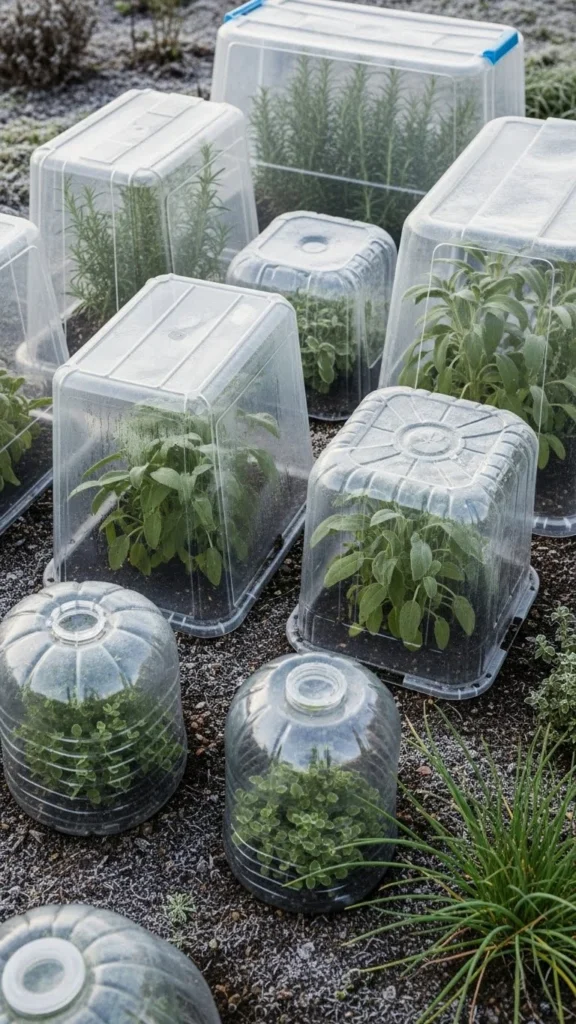
If you love reusing materials, this method is perfect. You can turn everyday household items into frost-blocking shelters.
Great recycled options:
- Clear storage bins
- Large jars or glass bowls
- Plastic milk jugs with the bottoms cut off
How to Use Them:
- Place the container upside down over vulnerable plants.
- Push the edges slightly into the soil to seal in warmth.
- Lift the cover during mild afternoons to prevent overheating.
This trick works best for small herbs, young seedlings, or delicate flowers that need extra care.
Build a Wooden Frame Shelter for Larger Plants
Some shrubs and potted plants need more room than a jar or hoop shelter can offer. A wooden frame shelter provides structure and durability.
How to Build It:
- Use four wooden stakes to form a box around the plant.
- Wrap the sides with plastic sheeting or frost cloth.
- Clip the material securely at the top.
- Leave a small gap for airflow to prevent mold.
To maximize heat retention, place mulch or straw around the base of the plant before adding the frame.
This type of shelter is sturdy enough to leave up all winter if needed.
Use Insulating Layers for Extra Cold Nights
When temperatures drop sharply, one layer of protection might not be enough. Add more insulation on nights when frost is expected.
Try layering with:
- Old cotton sheets
- Burlap
- Bubble wrap (on the outside of plastic—not directly touching leaves)
Layering traps pockets of warm air, giving plants a much better chance of surviving sudden cold snaps.
Common Mistakes to Avoid
Even simple shelters can fail if they’re not set up correctly. Here are a few things to watch out for:
- Don’t let plastic touch the leaves. It can freeze onto them.
- Don’t leave shelters on during warm days. Plants need airflow and sunlight.
- Don’t seal everything too tightly. A little ventilation prevents moisture buildup.
Following these tips keeps your shelter both safe and effective.
When to Remove Frost Shelters
Take off or open your shelters when:
- Temperatures rise above freezing for most of the day
- Plants look wilted due to warmth
- Condensation builds up inside the cover
A quick morning check helps you prevent overheating and ensures your shelter lasts longer.
Final Takeaway
DIY plant shelters don’t have to be complicated or expensive. With a few simple materials and a little creativity, you can protect your garden from frost damage all season long. Try experimenting with different styles—hoops, frames, recycled covers—and see what works best for your space.
Save this guide for later so you’re ready for the next cold snap!

Leave a Reply