

Winter doesn’t have to feel dull or washed out—your garden can still shine with color, contrast, and personality. The secret is choosing the right palette and using thoughtful combinations that stand out against the muted tones of the season. Whether your space is small or sprawling, you can easily build a bright, welcoming winter garden that turns heads.
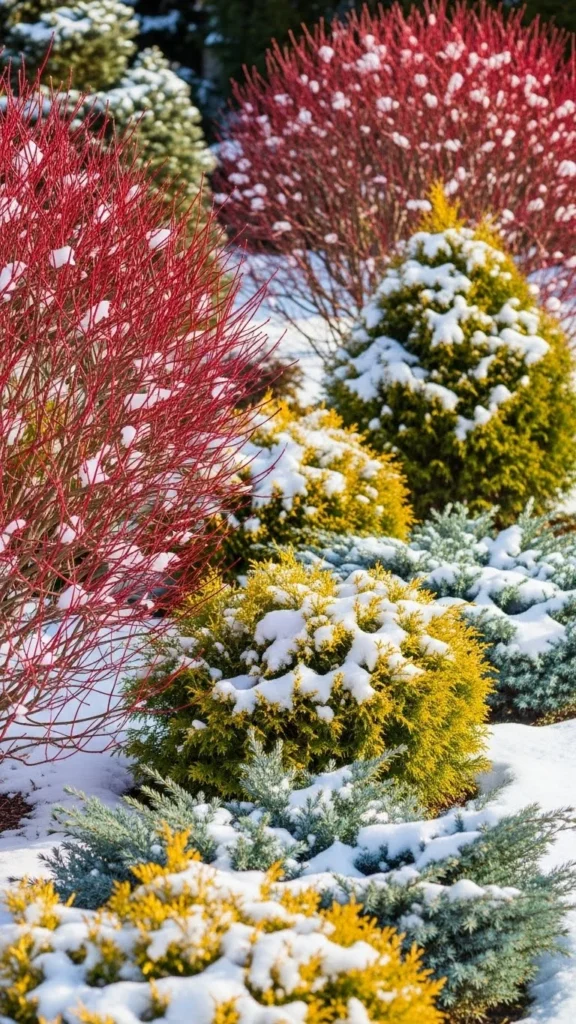
Let’s explore simple, realistic ways to design a winter garden palette that truly pops.
Choose a Strong Color Foundation
A great winter palette starts with two or three main colors. These act as your anchor and guide everything else you add.
Focus on shades that naturally stand out in snowy or gray weather:
- Deep reds
- Frosty blues
- Soft golds
- Snowy whites
- Rich greens
If you’re unsure where to begin, pick one bold color and pair it with a softer tone. For example, red branches mixed with deep green evergreens instantly feel festive and balanced.
Use Evergreen Structure as Your Color Backbone
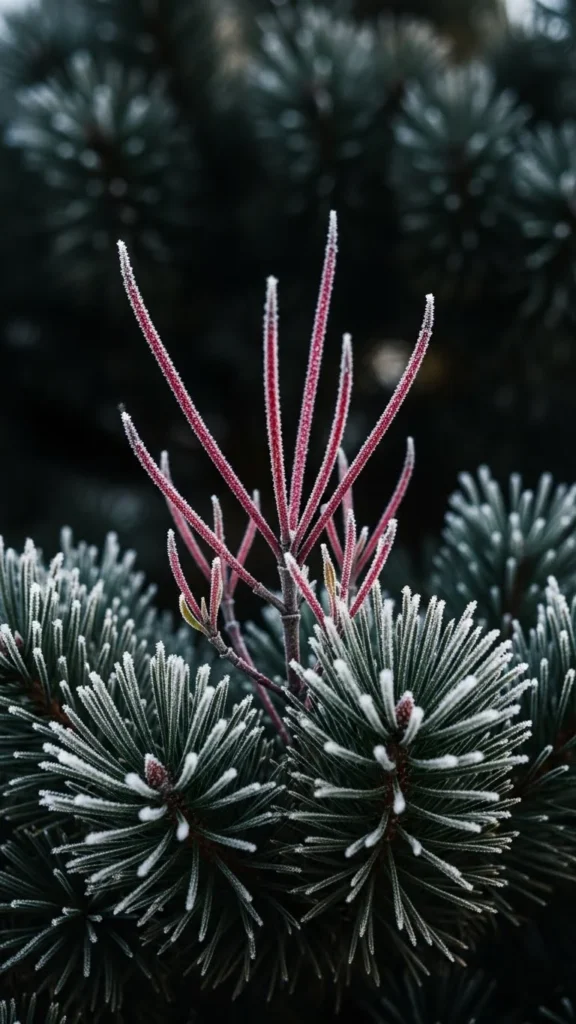
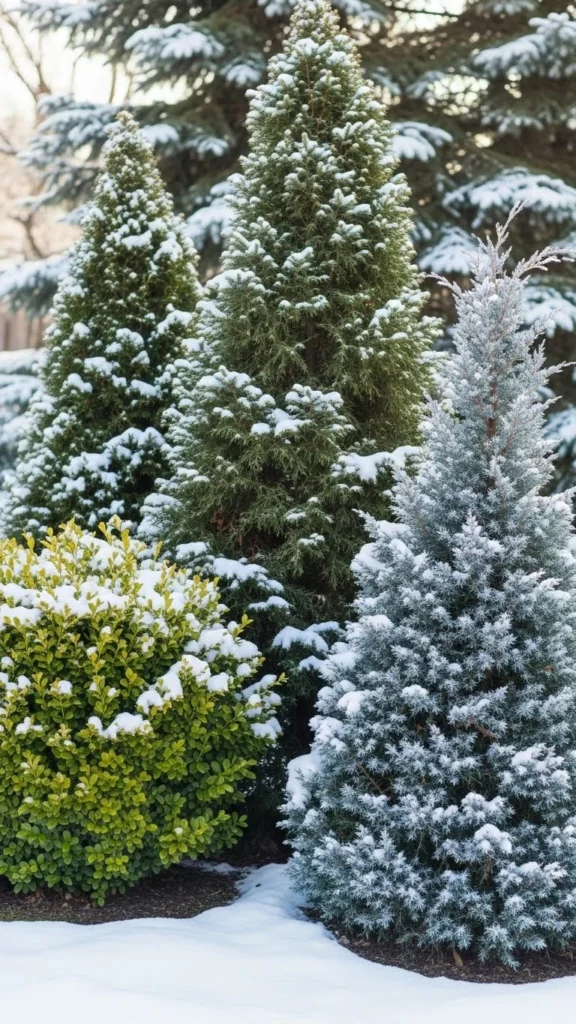
Evergreens are the key to a winter garden that looks alive. They keep their color and shape when everything else fades.
Try mixing:
- Tall spruces for height
- Compact boxwoods for neat shapes
- Blue-tinged junipers for cool contrast
Think of evergreens as your canvas—the steady backdrop that makes your brighter plants pop even more.
Add Bright Winter Berries for Instant Color
Berries are the easiest way to add bold color without much effort. They’re long-lasting, eye-catching, and often stay vibrant deep into winter.
Great options include:
- Red winterberry
- Purple beautyberry
- Orange pyracantha
- Blue viburnum berries
Scatter them across your garden rather than planting all in one spot. This evenly distributes color and avoids one “heavy” area.

Play With Texture to Make Color Stand Out
Color pops more when paired with interesting textures. Winter gardens offer many ways to mix soft, spiky, glossy, and matte elements.
Ideas to try:
- Pair smooth evergreen needles with rough bark
- Combine fluffy ornamental grasses with glossy holly leaves
- Mix bare branches with dense shrubs
Texture adds depth, especially when plants aren’t blooming. Even neutral tones look richer when the surface feels dynamic.
Use Colored Bark and Stems as Natural Highlights
Some plants put on their best show in winter with striking branches and stems.
Top choices include:
- Red or yellow twig dogwood
- Silver birch with white peeling bark
- Coral bark maple with bright pinkish-red branches
Place these plants where they catch morning or afternoon light. The glow makes their colors appear even more vivid.
Mix Warm and Cool Tones for Balanced Contrast
Too many warm colors—reds, oranges, or golds—can feel heavy. Too many cool tones—blues, whites, and greens—can feel icy.
A blend creates harmony.
Example combinations:
- Red stems + blue evergreens
- Golden grasses + silver foliage
- White branches + dark green shrubs
This balance helps your garden feel intentional instead of random.
Use Planters to Add Color Without Commitment
If your garden bed is full or you want more flexibility, use planters.
Choose pots in bold, seasonal colors like:
- Midnight blue
- Brick red
- Slate gray
- Pine green
Fill them with:
- Dwarf evergreens
- Winter heathers
- Ornamental cabbages
- Cool-season pansies
Place planters near doors, pathways, or patios to highlight everyday views.
Highlight Your Palette With Simple Winter Lighting
Even the best colors fade too early in winter evenings. Soft lighting helps your palette shine well past sunset.
Use:
- Warm white string lights
- Soft spotlights angled upward
- Pathway lights to outline shapes
The goal is subtle glow—not overwhelming brightness—to help your colors stand out naturally.
Add Natural Accents for Extra Contrast
Sometimes the smallest additions make the biggest impact.
Try:
- Pinecones
- Driftwood
- Decorative rocks in slate, cream, or charcoal
- Mulch in deep brown tones
These accents give your garden a grounded, rustic feel that complements both soft and bold winter colors.
Refresh Color Every Few Weeks
Winter weather can be unpredictable. Snowfall, ice, and wind may hide or dull some colors.
Do a quick check every few weeks:
- Brush snow off evergreens
- Trim damaged branches
- Add fresh planters if something fades
- Rearrange accents to keep things balanced
Small adjustments help your winter palette stay vibrant all season long.
Final Takeaway
Creating a winter garden color palette that pops isn’t complicated. With a few smart choices—bold berries, colorful stems, evergreen structure, and thoughtful accents—you can transform your outdoor space into a bright, cheerful landscape that thrives through the cold months.
If you want your garden to stay lively all season, save this guide for later!

Leave a Reply