

Winter gardens don’t have to fade into the background. With the right plants, they can feel bold, sculptural, and full of quiet drama. That’s where winter alliums come in. Their architectural stems, globe-shaped blooms, and strong silhouettes bring instant structure to beds that might otherwise look flat during colder months.
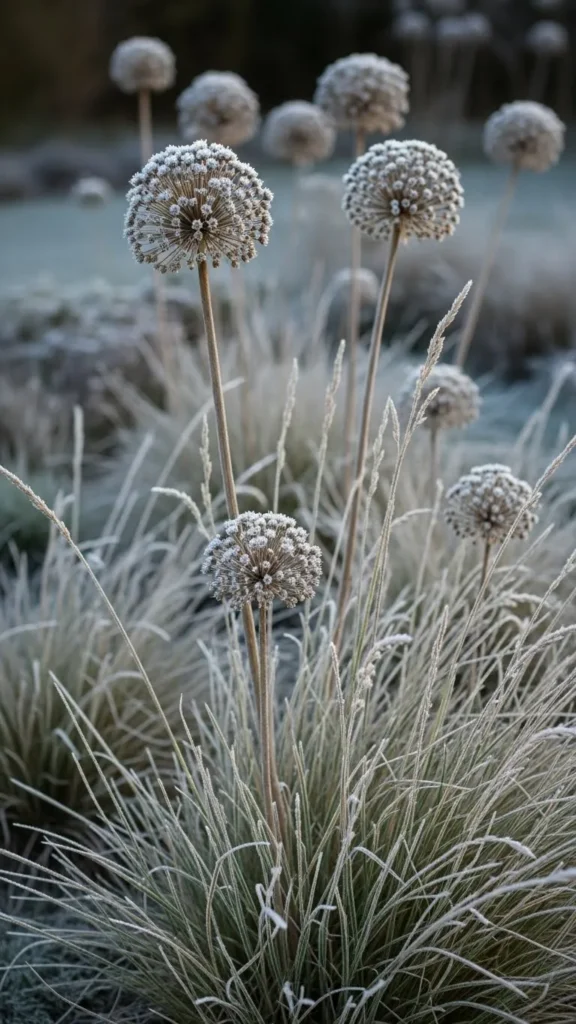
If you’ve ever admired those striking spheres rising above snow-dusted borders, this guide will show you exactly how to grow winter allium plants for lasting impact.
What Makes Winter Alliums So Special?
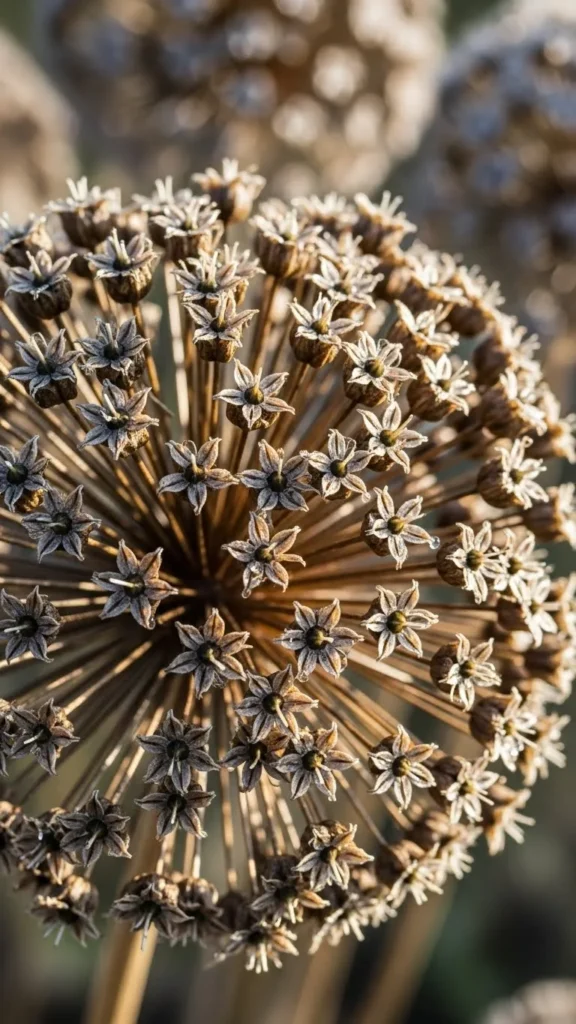
Alliums are known for their bold, globe-like flowers, but their beauty doesn’t stop when the blooms fade. In winter, their dried seed heads and sturdy stems create visual interest when most plants disappear.
Why gardeners love winter alliums:
- Strong vertical lines that add height
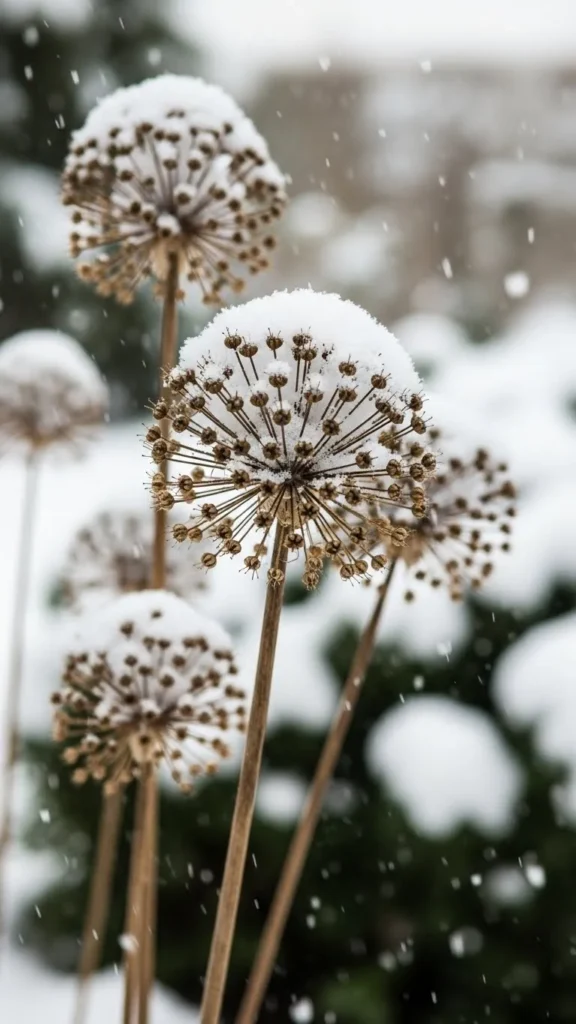
- Sculptural shapes that catch frost and snow
- Low-maintenance once established
- Excellent companions for grasses and evergreens
They’re especially effective in minimalist or modern gardens where structure matters just as much as color.
Choosing the Right Allium Varieties for Winter Impact
Not all alliums perform the same in winter. Some varieties are better at holding their shape well into the colder months.
Look for types known for sturdy stems and long-lasting seed heads, such as:
- Large globe-forming alliums with thick stalks
- Varieties bred for ornamental seed heads
- Types that naturally dry upright instead of collapsing
When shopping, check plant descriptions for notes like “strong winter interest” or “persistent seed heads.”
When and Where to Plant Winter Alliums
Timing and placement make all the difference.
When to plant
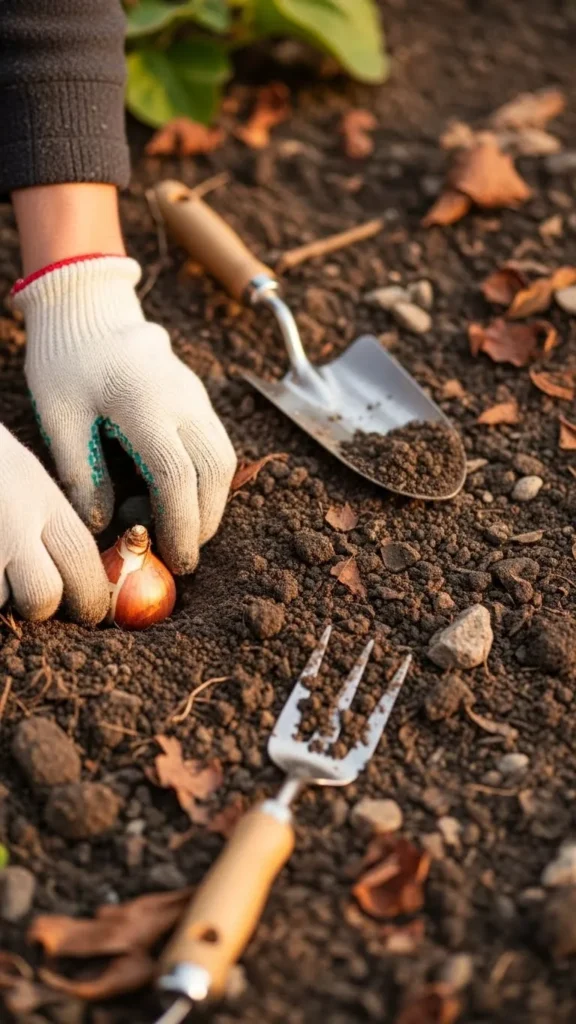
- Plant bulbs in early to mid-autumn
- Soil should be cool but not frozen
- This allows roots to establish before winter
Where to plant
- Choose a sunny to lightly shaded spot
- Well-draining soil is essential
- Avoid low areas where water collects
Spacing matters too. Give bulbs room so each plant can develop strong stems that won’t flop later.
How to Prepare the Soil for Strong Winter Structure
Healthy soil leads to stronger plants and better winter performance.
Before planting:
- Loosen soil to improve drainage
- Mix in compost for nutrients
- Avoid heavy, compacted areas
If your soil stays wet in winter, consider raised beds or slightly mounded planting areas. This helps protect bulbs from rot and encourages upright growth.
Caring for Alliums Through Fall and Winter
Once planted, alliums are refreshingly low-effort.
Fall care
- Water lightly after planting
- Mulch with a thin layer of leaves or straw
- Avoid overwatering
Winter care
- Leave stems and seed heads intact
- Do not cut back until late winter or early spring
- Let nature do the decorating
Those dried heads catch frost, snow, and morning light beautifully.
Designing with Winter Alliums for Maximum Drama
Alliums truly shine when paired with the right companions.
Try combining them with:
- Ornamental grasses for movement
- Evergreen shrubs for contrast
- Low winter ground covers for balance
Plant them in clusters or repeating patterns to guide the eye through your garden. Their height makes them perfect for the middle or back of borders, where they act like natural exclamation points.
Common Mistakes to Avoid
Even tough plants like alliums can struggle if a few basics are ignored.
Avoid these common issues:
- Planting in soggy soil
- Cutting stems too early
- Overcrowding bulbs
- Expecting fresh blooms in deep winter
Remember, winter alliums are about structure, texture, and form—not flowers at that stage.
When to Cut Back and What to Do in Spring
As winter fades, you’ll notice new growth beginning at the base.
In late winter or early spring:
- Trim old stems close to the ground
- Clear away remaining mulch
- Let new leaves emerge naturally
This simple cleanup makes room for fresh growth while keeping your garden tidy.
Final Takeaway
Growing winter allium plants is one of the easiest ways to add dramatic structure to your garden when it needs it most. With the right varieties, thoughtful placement, and minimal care, they become living sculptures that stand tall through frost and snow.
Save this guide for later and start planning your winter garden with confidence.

Leave a Reply