

There’s something magical about seeing rich green leaves peeking through fresh snow. While most gardens fade into browns and greys, winter-friendly ivy keeps everything looking alive, calm, and quietly beautiful. The good news? You don’t need a green thumb or fancy tools to make it happen.
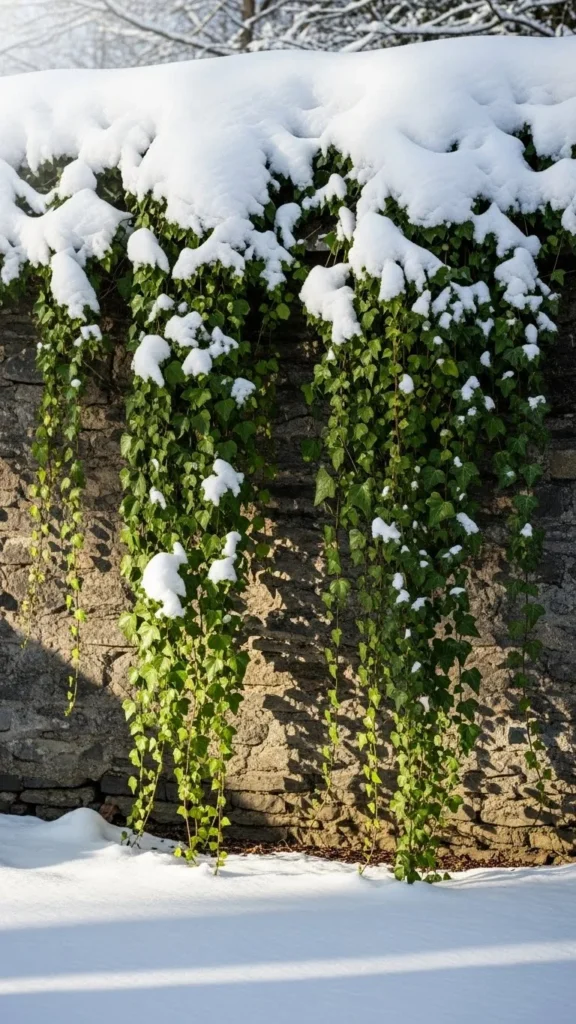
In this guide, I’ll walk you through how to grow ivy that stays green even in snowy conditions—step by step, in a simple, Pinterest-friendly way you can actually follow.
Why Ivy Is a Winter Garden Hero
Ivy is one of the most reliable evergreen plants you can grow. Once established, it’s tough, flexible, and surprisingly low-maintenance.
Here’s why ivy works so well in winter:
- Evergreen leaves stay green year-round
- Thick foliage protects itself from cold winds
- Flexible stems bend under snow instead of snapping
- It grows well in ground, containers, and vertical spaces
Many varieties are naturally cold-tolerant, making them perfect for winter gardens, fences, and walls that look bare without greenery.
Choose the Right Ivy for Cold Weather
Not all ivy handles snow the same way. Picking a winter-friendly variety is the most important first step.
Look for ivy that is known for cold tolerance, such as:
- English ivy (classic and very hardy)
- Baltic ivy (handles freezing temperatures well)
- Irish ivy (strong growth and thick leaves)
When shopping, check plant labels for cold-hardiness zones and avoid tropical or indoor-only types.
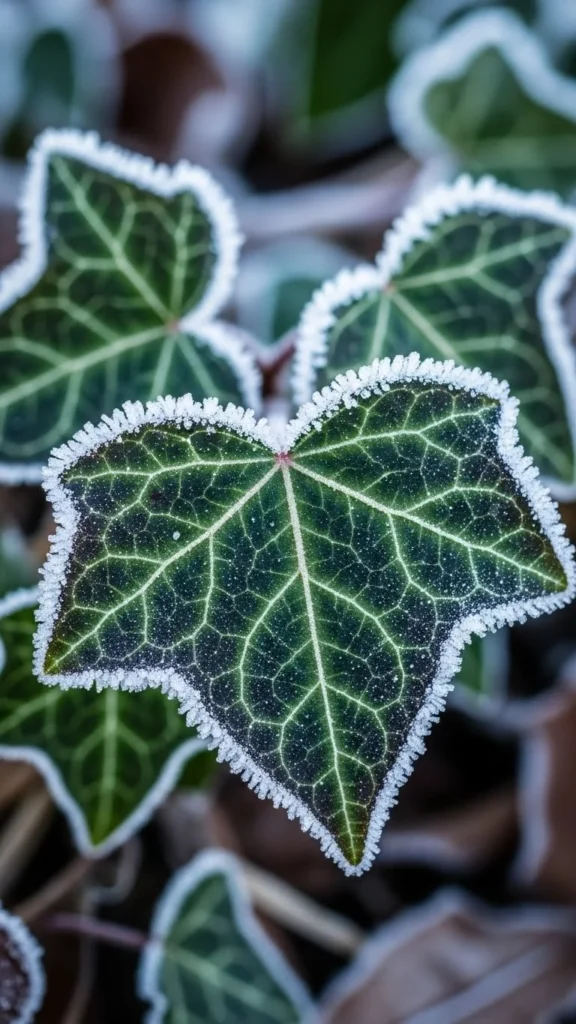
Tip: Smaller, thicker leaves usually cope better with snow than thin or delicate ones.
Pick the Best Planting Spot
Ivy is adaptable, but where you plant it makes a big difference in winter success.
Ideal winter-friendly locations:
- Against walls or fences (they block wind)
- Under trees with light shade
- Areas that avoid constant standing water
Ivy doesn’t love harsh, open exposure in winter. Snow is fine—but icy wind is not.
If planting in containers, place them near a wall or sheltered corner to keep roots warmer.
Prepare the Soil for Cold Protection
Healthy roots mean better winter survival. Before planting, take a little time to prep the soil properly.
Simple soil prep steps:
- Loosen the soil so roots spread easily
- Mix in compost for nutrients and insulation
- Make sure drainage is good (no soggy soil)
Waterlogged soil in winter can damage roots more than cold temperatures.
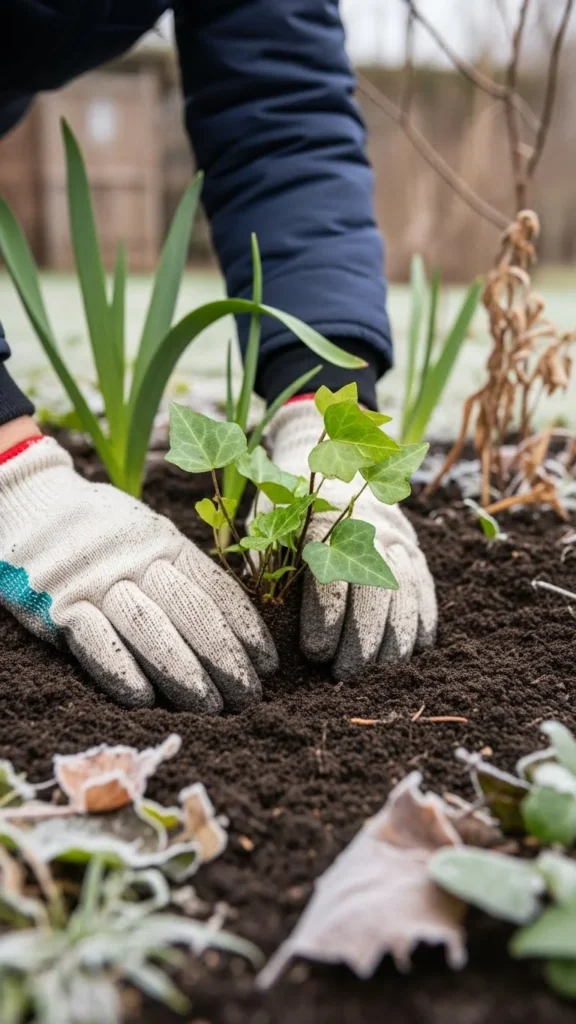
Quick win: Adding mulch around the base helps regulate soil temperature and protects roots during freezes.
Planting Ivy the Right Way
Planting ivy is refreshingly simple.
- Dig a hole slightly wider than the root ball
- Place the ivy so the crown sits level with the soil
- Backfill gently and press down lightly
- Water well to settle the roots
Spacing matters. Give each plant room to grow so air can circulate, which reduces winter stress.
If planting on a wall or trellis, gently guide stems early so they attach where you want them.
Winter Care Tips That Actually Work
Once planted, ivy doesn’t ask for much—but a little care goes a long way.
Easy winter ivy care:
- Water only during dry spells
- Avoid heavy pruning in winter
- Brush off heavy snow gently if needed
- Leave fallen leaves around the base for insulation
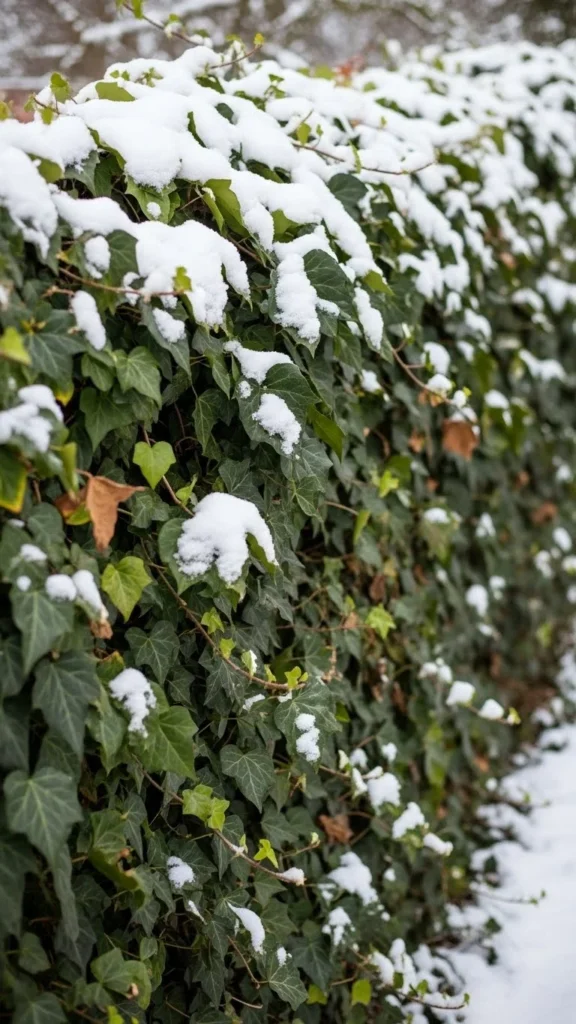
Resist the urge to “tidy up” too much. Ivy likes being left alone during cold months.
Growing Ivy in Pots During Winter
No garden? No problem. Ivy does beautifully in containers.
Container tips for winter success:
- Use frost-resistant pots
- Elevate pots slightly to improve drainage
- Group containers together for warmth
- Wrap pots with fabric or burlap if temperatures drop sharply
Potted ivy is perfect for balconies, patios, and entryways where you want winter greenery without digging.
Common Mistakes to Avoid
Even hardy ivy can struggle if a few key mistakes happen.
Avoid these common issues:
- Overwatering in winter
- Planting in fully exposed windy areas
- Cutting back too late in the season
- Using poor-draining soil
When in doubt, less intervention is better. Ivy thrives on simple care.
The Payoff: A Green Garden All Winter Long
Once established, winter-friendly ivy rewards you year after year. It softens hard edges, adds color when everything else fades, and creates that cozy, lived-in garden look—even under snow.
Whether you grow it along a fence, trail it from pots, or let it climb a wall, ivy brings calm and structure to winter spaces with very little effort.
Save this guide for later and pin it for your winter garden plans—you’ll thank yourself when the snow falls and your garden stays green.

Leave a Reply