

Winter doesn’t have to mean a dull, lifeless garden. With the right materials and a bit of creativity, you can add beautiful garden art that actually survives frost, snow, and icy nights. Think sculptural, weather-tough pieces that look even better when dusted with frost.
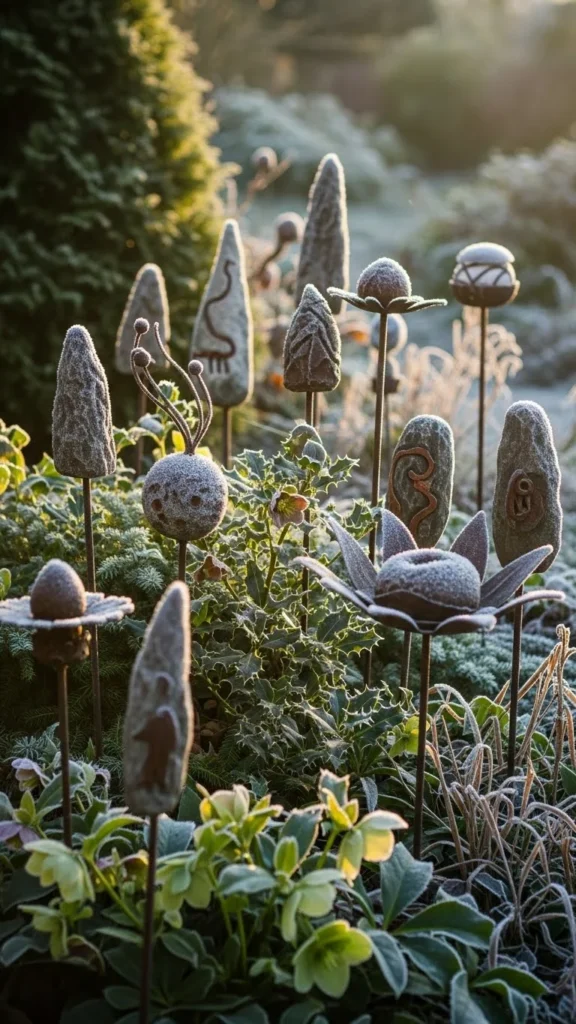
This guide walks you through practical, beginner-friendly ways to create winter garden art that lasts all season. No fancy tools required—just smart choices and a winter-ready mindset.
Choose Frost-Proof Materials First
The secret to long-lasting winter garden art isn’t talent—it’s materials. Some items handle freeze-thaw cycles beautifully, while others crack, peel, or fall apart.
Best materials for winter garden art:
- Stone and concrete – dense and stable in cold weather
- Metal – especially steel, iron, or aluminum
- Sealed ceramic – only if fully weather-rated
- Hardwood – cedar or oak with proper sealing
- Outdoor glass – thick, tempered pieces only
Avoid these in freezing conditions:
- Thin terracotta
- Untreated wood
- Craft glue not rated for outdoor use
- Porous clay
When shopping or repurposing, ask yourself one question: Can this handle getting wet, freezing, and thawing over and over? If the answer is no, save it for indoor decor.
Create Simple Concrete Art That Lasts for Years
Concrete is one of the easiest and most reliable materials for winter garden art. It loves cold weather and gains character as it ages.
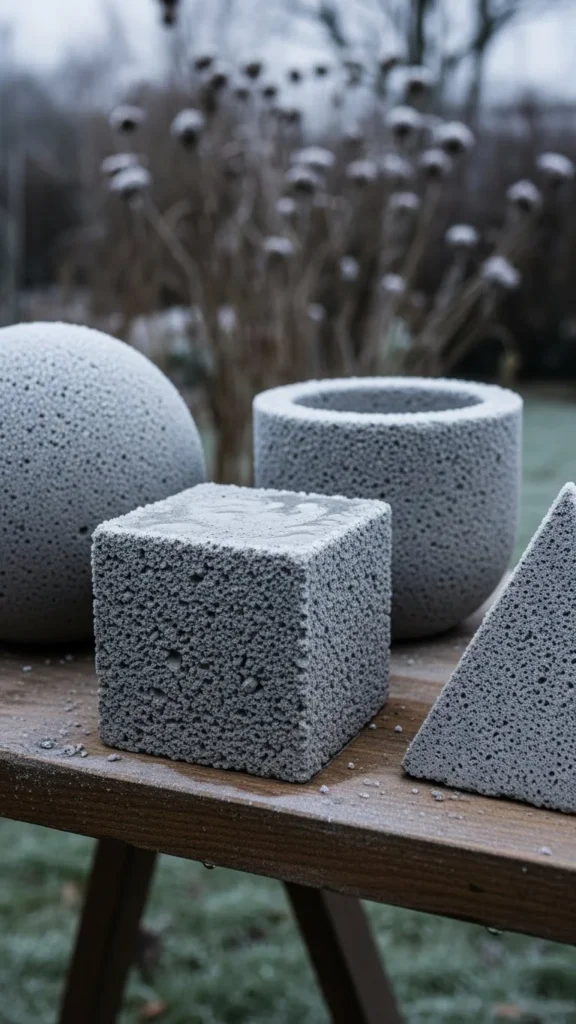
Easy concrete art ideas:
- Leaf-imprint stepping stones
- Small abstract sculptures
- Minimalist garden markers
- Textured bowls or spheres
Quick tips for success:
- Use fast-setting outdoor concrete mix
- Let pieces cure fully before placing outside
- Seal with a breathable masonry sealer
- Keep designs thick to avoid cracking
Concrete art looks especially striking in winter because frost highlights every texture and edge.
Use Metal for Bold Winter Statements
Metal garden art doesn’t just survive winter—it thrives in it. Frost, snow, and low light make metal pieces stand out beautifully.
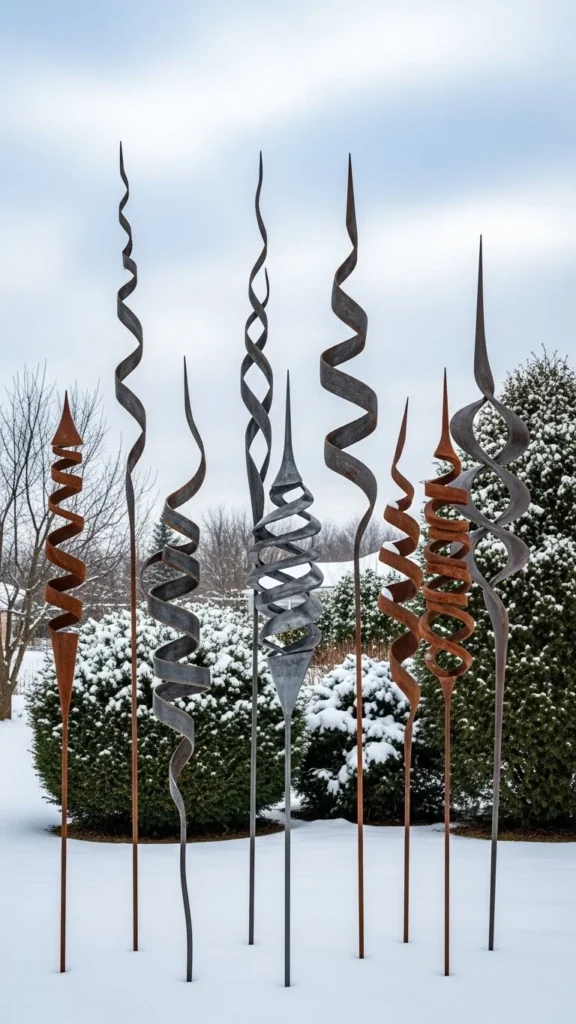
Great metal art options:
- Garden stakes with cut-out shapes
- Recycled metal flowers
- Wire sculptures
- Hanging metal chimes
Let metal age naturally. Rust and patina add warmth and contrast against winter greenery. If you prefer a cleaner look, use outdoor-grade metal spray sealant.
Placement tip:
Anchor metal pieces deeply into the ground so frost heave doesn’t knock them over.
Seal Everything Like a Pro
Even frost-resistant materials need protection. Sealing is what turns “looks good for a week” into “lasts all winter.”
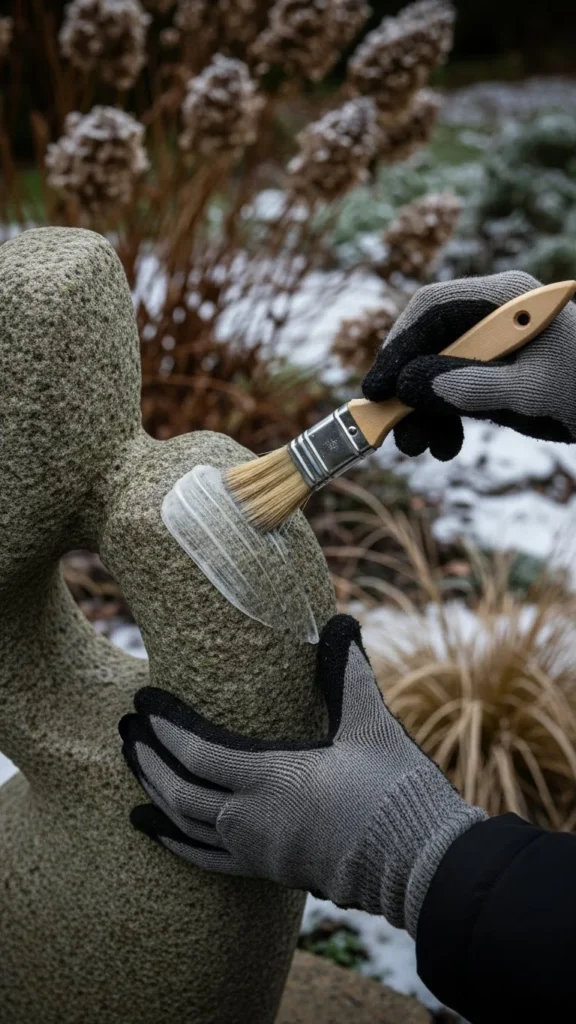
What to seal and how:
- Concrete: breathable masonry sealer
- Wood: outdoor oil or marine-grade sealant
- Metal: clear rust-resistant coating (optional)
- Ceramic: weather-rated waterproof sealant
Seal on a dry day above freezing. Two thin coats are better than one thick layer. Re-seal once a year for best results.
Design Art That Looks Better With Frost
The best winter garden art doesn’t fight frost—it embraces it.
Design ideas that shine in winter:
- Raised textures that catch ice crystals
- Dark colors that contrast with snow
- Simple shapes visible from a distance
- Vertical pieces that rise above snow level
Think about how your art looks at dawn when frost sparkles, or at dusk when shadows stretch across the garden. Winter light is softer, so bold forms work best.
Smart Placement for Winter Survival
Where you place garden art matters just as much as how you make it.
Winter-friendly placement tips:
- Avoid low spots where water collects
- Keep art away from roof runoff
- Elevate pieces slightly off soil
- Secure lightweight items against wind
If snow piles up in certain areas, move art just outside those zones so it stays visible and safe.
Final Thoughts: Let Winter Be Your Canvas
Winter garden art isn’t about fighting the season—it’s about working with it. When you choose tough materials, seal them properly, and design with frost in mind, your garden stays interesting even on the coldest days.
Start small. One concrete piece or metal sculpture can completely change how your garden feels in winter.
Save this guide for later and turn your winter garden into a space that feels intentional, creative, and beautifully alive—even in frost.

Leave a Reply