

Winter doesn’t have to mean a dull, empty yard. With the right plants and layout, you can turn shady corners into lush, textured spaces that stay beautiful even on the coldest days. A winter shade garden thrives on contrast, shape, and hardy evergreen structure—perfect for small spaces, pathways, and tucked-away sections of your yard.
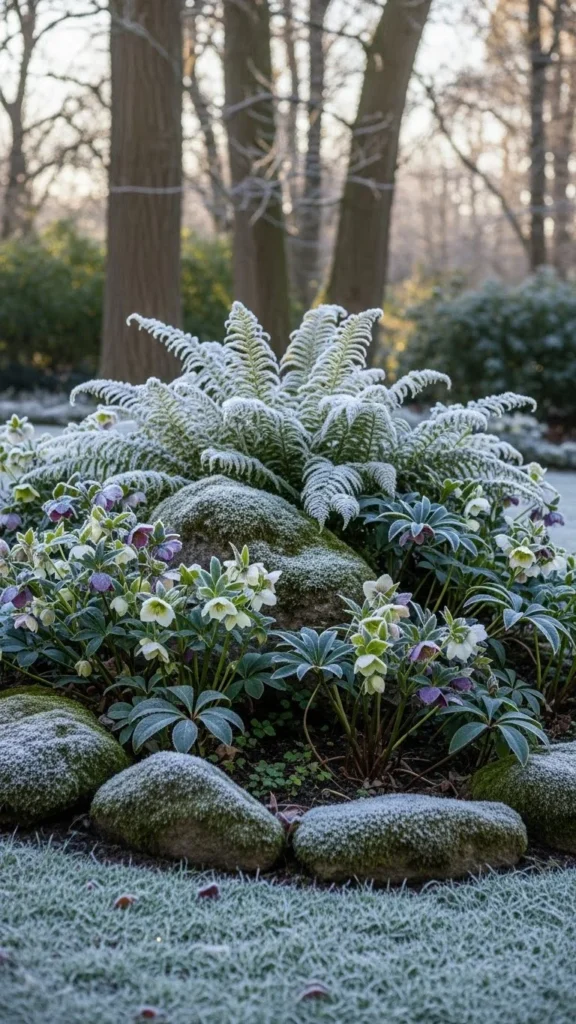
Let’s break it down into simple steps so you can create a shade-loving winter garden that feels cozy, intentional, and low-maintenance.
Choose Shade-Loving Plants That Stay Attractive in Winter
Not every plant wants winter shade, so choosing the right mix is the secret to a thriving garden.
Great options include:
- Hellebores (Lenten roses) for late-winter blooms
- Heuchera for colorful foliage
- Ferns like Christmas fern for evergreen texture
- Hostas with winter-tolerant varieties
- Evergreen shrubs such as boxwood or sarcococca
These plants hold their structure, add color, and brighten dark spaces.
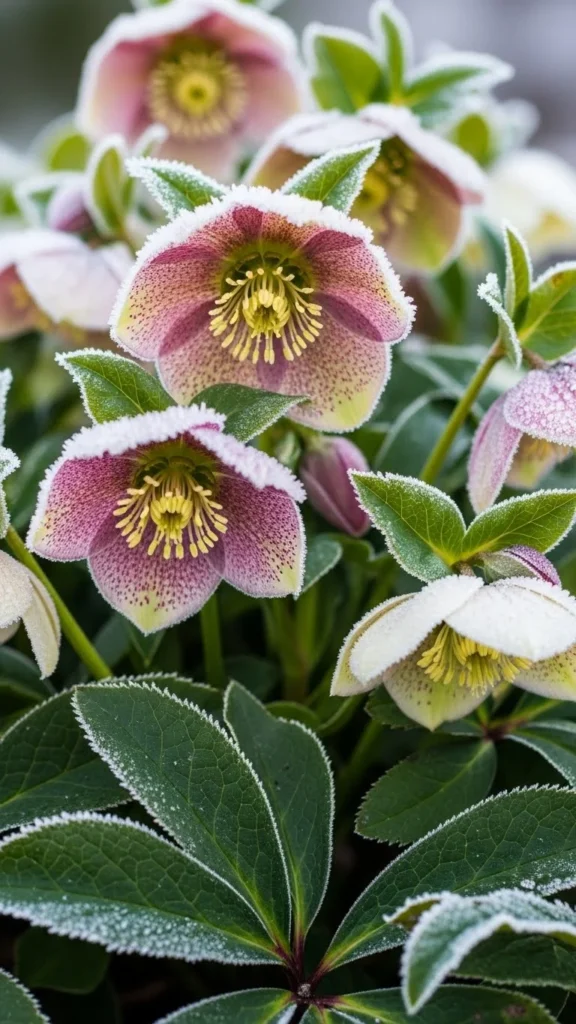
Tip: Mix evergreen plants with dormant perennials so your garden doesn’t look empty.
Prepare the Soil for Low-Light Success
Shade soil tends to stay damp, compacted, or low in nutrients—so prepping it well gives your plants the best start.
Try this simple approach:
- Loosen the top 6–8 inches of soil.
- Add compost for nutrients.
- Mix in bark mulch to improve drainage.
- Remove large roots competing for moisture.
Think of this step as setting the foundation for a long-lasting winter display.
Budget Tip: You can make your own compost using fall leaves, grass clippings, and kitchen scraps.
Layer Heights to Build a Lush Winter Look
A winter shade garden shines when plants are arranged by height. This creates depth even when colors fade.
Here’s a beginner-friendly layout:
- Tall background: evergreen shrubs, tall ferns
- Mid-layer: heuchera, hellebores, ornamental grasses
- Groundcover: moss, creeping jenny, ajuga
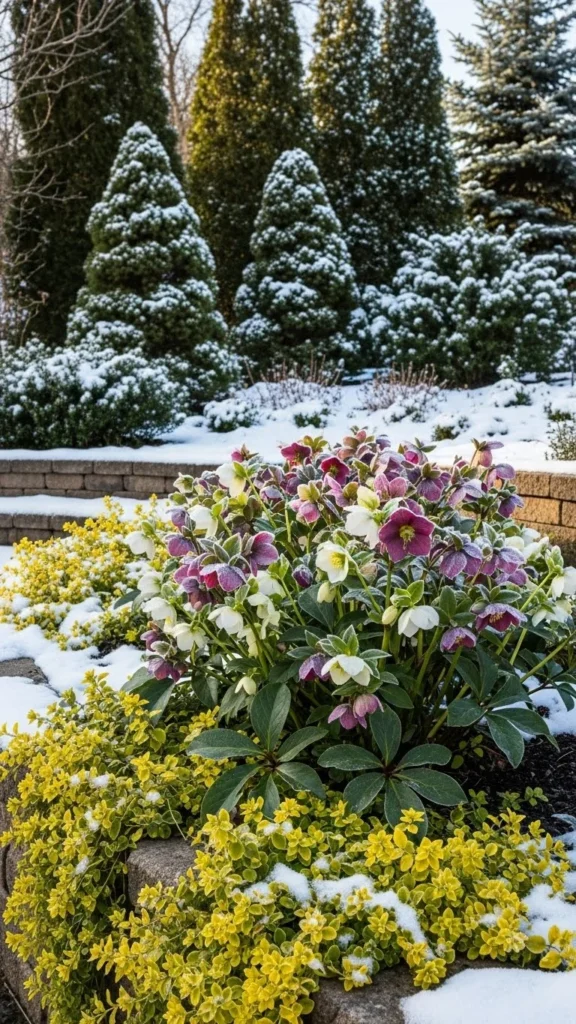
This layered approach also makes small spaces feel fuller and visually warmer.
Use Hardscape Elements to Brighten Dark Corners
In shade gardening—especially winter shade gardening—your non-plant elements matter just as much as your plants.
Try adding:
- Light-colored gravel
- Stone pathways
- Frost-safe pots
- Wooden benches
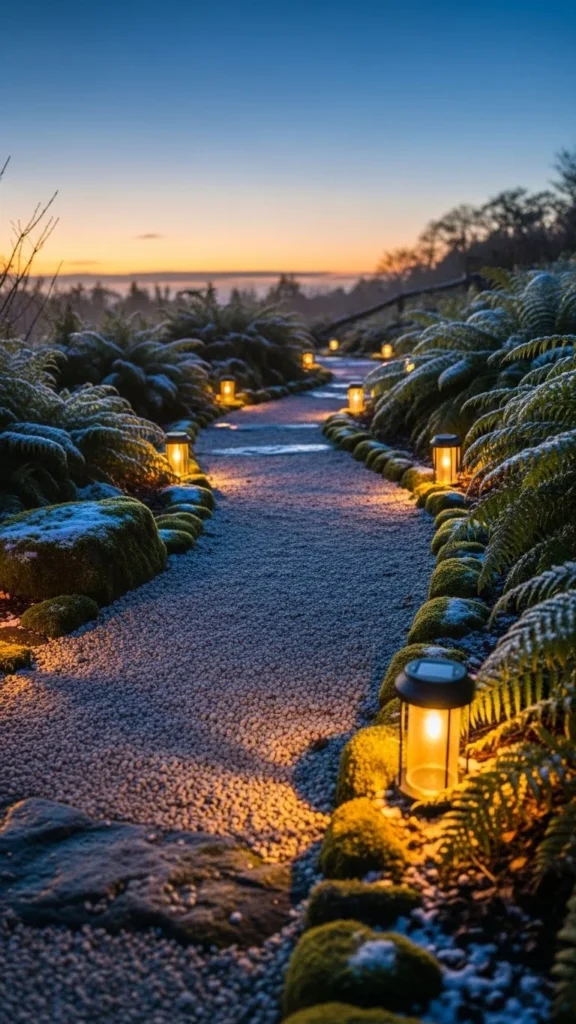
- Mini lanterns (battery or solar)
- White or pale decorative rocks for reflectiveness
These features bounce light around and keep your garden looking styled, even when plants rest.
Water and Maintain Wisely in Cold Weather
Shade doesn’t mean your garden doesn’t need water. Plants still rely on moisture—even in cold months.
Keep these tips in mind:
- Water early in the day to prevent nighttime freezing.
- Keep soil slightly moist but not soggy.
- Add winter mulch to protect roots.
- Remove soggy foliage to prevent rot.
- Gently brush off heavy snow so stems don’t snap.
Winter care is simple once you get into the routine.
Add Pops of Color for Instant Cheer
Even in low light, small amounts of color make a big difference.
Try using:
- Red twig dogwood for bright stems
- Heuchera with burgundy or lime foliage
- Variegated ivy for pattern
- Winter berries (safe, non-toxic options only)
- Frost-resistant garden décor like ceramic birds or stone spheres
Color gives your winter shade garden personality and keeps it from feeling gloomy.
Create Cozy Seating or Viewing Spots
Your winter shade garden shouldn’t only be something you walk past—it should be something you enjoy.
Simple ways to make it inviting:
- Place a bench where morning sun reaches.
- Add a small bistro table under a sheltered corner.
- Position planters where you can see them from indoors.
- Use outdoor-safe textiles when weather allows.
A winter shade garden becomes magical when you treat it like part of your living space, not just a planting area.
Final Takeaway
A winter shade garden doesn’t have to be complicated or expensive. With the right mix of evergreen structure, shade-loving plants, layered heights, and simple lighting or hardscaping, your low-light spaces can look beautiful all season long.
Save this guide for later—and start dreaming up your cozy winter shade garden today!

Leave a Reply