

There’s something magical about a garden that feels alive even in winter. Bare branches, soft moss, evergreen layers, and quiet textures can turn your outdoor space into a woodland escape that feels calm, storybook-like, and deeply cozy. A winter woodland garden isn’t about bright blooms—it’s about atmosphere, layers, and subtle beauty that shines in colder months.
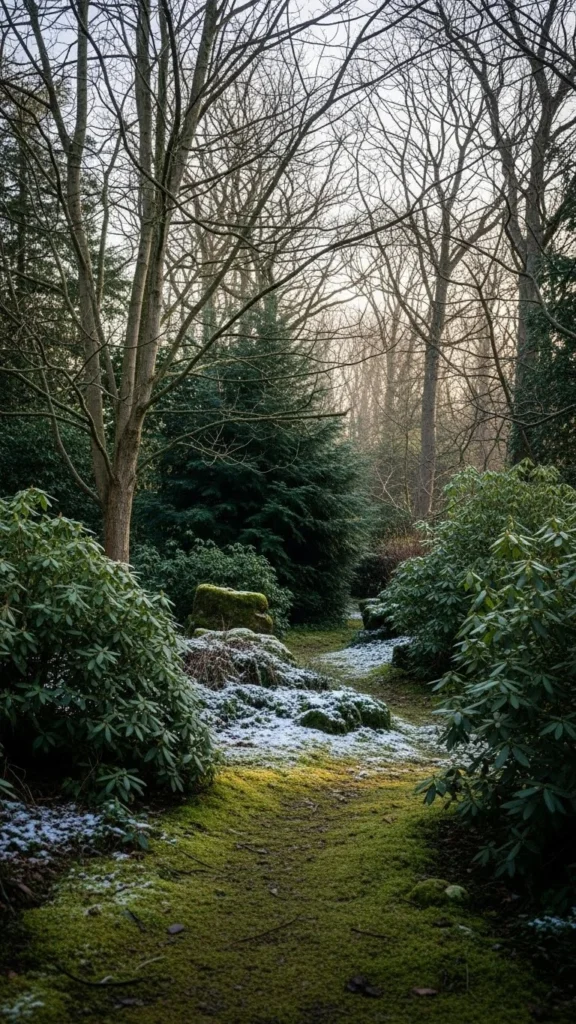
The best part? You don’t need acres of forest or expert skills. With a thoughtful approach, you can create a winter woodland garden that feels enchanted right outside your door.
Start With the Natural Shape of Your Space
Woodland gardens work best when they feel organic, not overdesigned. Before adding anything, take a slow walk around your garden and notice what’s already there.
Look for:
- Existing trees or large shrubs
- Shady corners and dappled light
- Natural dips, slopes, or uneven ground
Instead of forcing symmetry, embrace curves and irregular edges. Let paths gently wind. Allow planting areas to blur into one another.
Helpful tips:
- Avoid straight lines where possible
- Use natural boundaries like stones or logs
- Think “forest floor,” not flower bed
A winter woodland garden should feel like it evolved naturally over time.
Choose Plants That Shine in Winter
Winter interest comes from texture, shape, and evergreen structure rather than flowers. Focus on plants that hold their beauty when temperatures drop.
Great winter woodland plant choices:
- Evergreen shrubs (boxwood, yew, holly varieties)
- Ferns that keep structure into winter
- Ornamental grasses for movement
- Moss and groundcovers for softness
- Small trees with interesting bark
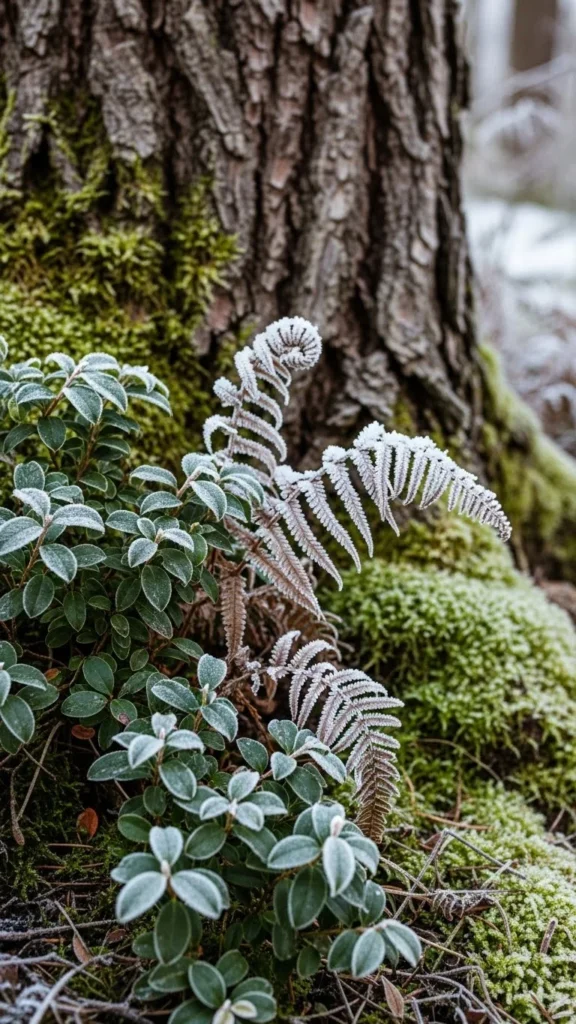
When planting, layer thoughtfully:
- Taller trees and shrubs in the back
- Medium plants in the middle
- Low groundcovers near paths and edges
This layered look creates depth, even when the garden is quiet.
Build a Magical Woodland Floor
The ground layer is what truly makes a woodland garden feel enchanted. Bare soil can look flat and lifeless in winter, so focus on covering it naturally.
Try using:
- Bark mulch or leaf mold
- Fallen leaves left in place
- Moss patches between stones
- Wood chips for paths
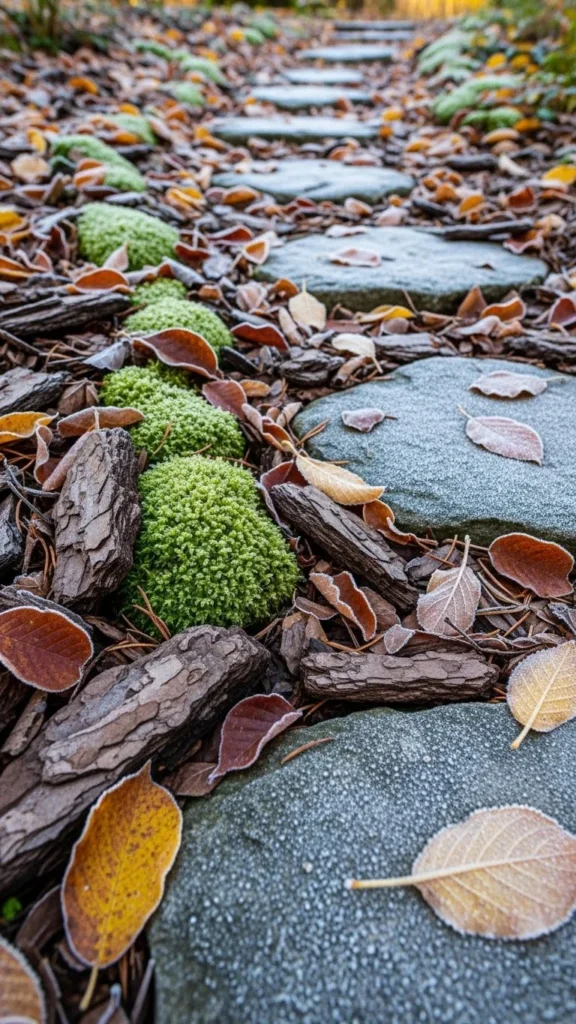
Let leaves stay where they fall whenever possible. They add texture, protect soil, and create that cozy forest feeling. Over time, this approach improves soil health and reduces maintenance.
Add Natural Structures and Garden Details
Subtle garden features help create a storybook mood without overpowering the space. Think rustic, weathered, and nature-inspired.
Ideas that work beautifully in winter:
- Stone or gravel paths
- Wooden benches or stools
- Tree stumps used as accents
- Bird feeders or simple water bowls
- Arching branches or woven willow features
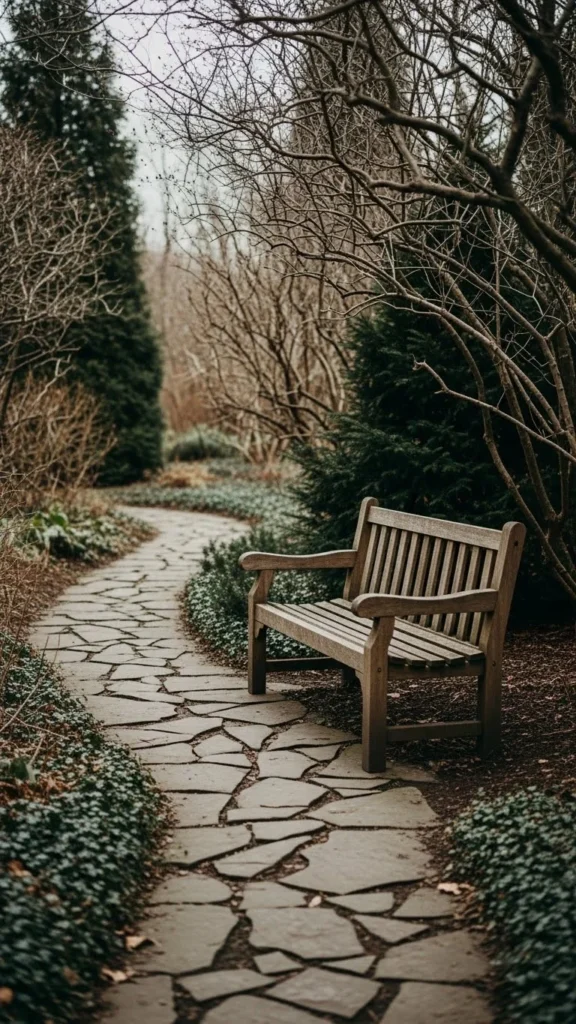
Keep decorations minimal. One or two well-placed elements feel more magical than many scattered pieces. Let the plants and textures remain the stars.
Use Light to Create Winter Magic
Light is essential in a winter woodland garden, especially when days feel short. Soft lighting can transform the space at dusk and early evening.
Try:
- Low solar lights tucked along paths
- Warm fairy lights wrapped around tree trunks
- Lanterns placed near seating areas
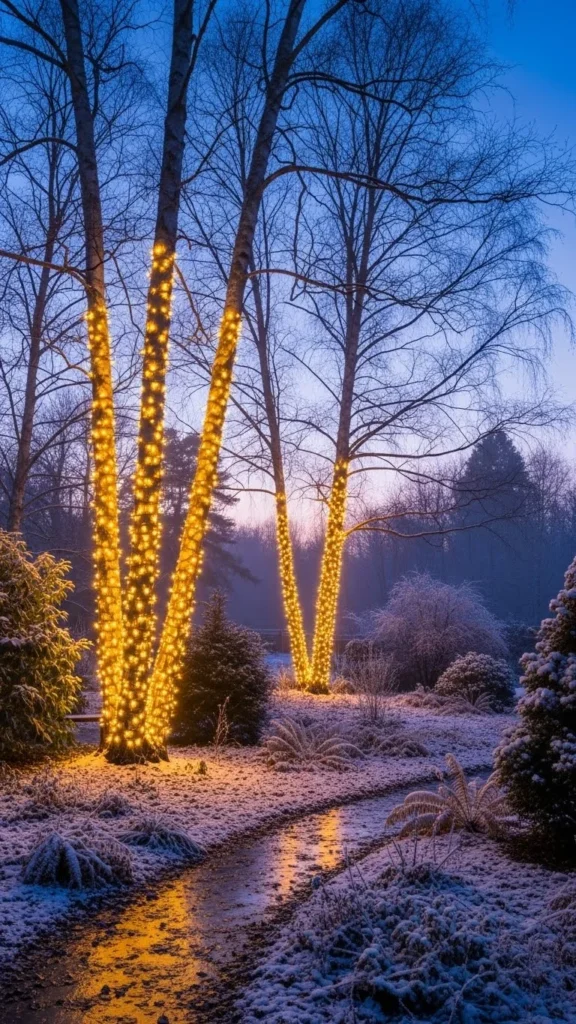
Stick to warm, gentle light rather than harsh brightness. The goal is a quiet glow that highlights shapes and textures, not a spotlight effect.
Keep Maintenance Simple and Gentle
One of the joys of a winter woodland garden is how little it asks of you. This style thrives with a hands-off approach.
Easy winter care tips:
- Avoid heavy pruning until spring
- Leave seed heads for visual interest
- Clear paths only where needed
- Let nature guide small changes
Resist the urge to tidy everything. A little wildness adds to the charm and keeps the garden feeling authentic.
Create a Space You Want to Visit
Finally, design your winter woodland garden for how you want to feel. Maybe it’s a place for quiet morning walks, evening reflection, or watching birds in the snow.
Ask yourself:
- Where would I like to pause and sit?
- What view feels calming from my window?
- Which areas feel most peaceful?
Even a small corner can become a winter retreat when designed with intention.
Final Takeaway
A winter woodland garden isn’t about perfection—it’s about mood, layers, and letting nature lead. Start small, work with what you have, and focus on texture, structure, and gentle light. Over time, your garden will grow into a space that feels enchanted even on the coldest days.
Save this guide for later and start building your own winter woodland escape!

Leave a Reply