

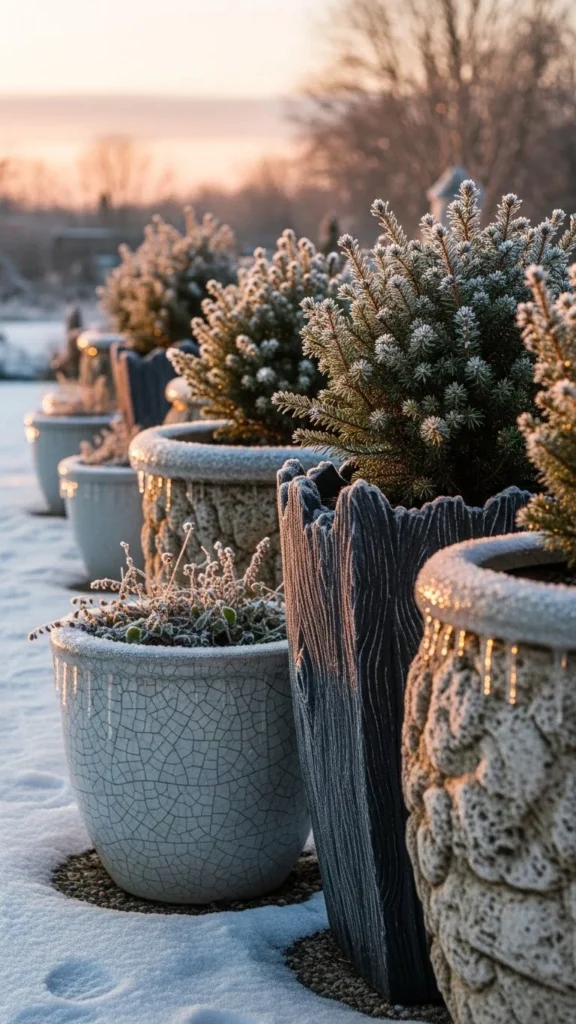
Winter can be rough on containers, especially when freeze–thaw cycles cause cracks, chips, and crumbling edges. Choosing ice-friendly planters makes a huge difference for anyone hoping to keep plants alive through harsh weather. Whether you pick stone, resin, metal, or reinforced ceramic, the right planter helps roots stay insulated while holding up to snow and freezing temperatures. Below you’ll find simple, practical ideas that help you style your garden and protect your plants at the same time—without spending a fortune.
1. Double-Walled Resin Pots for Extreme Cold
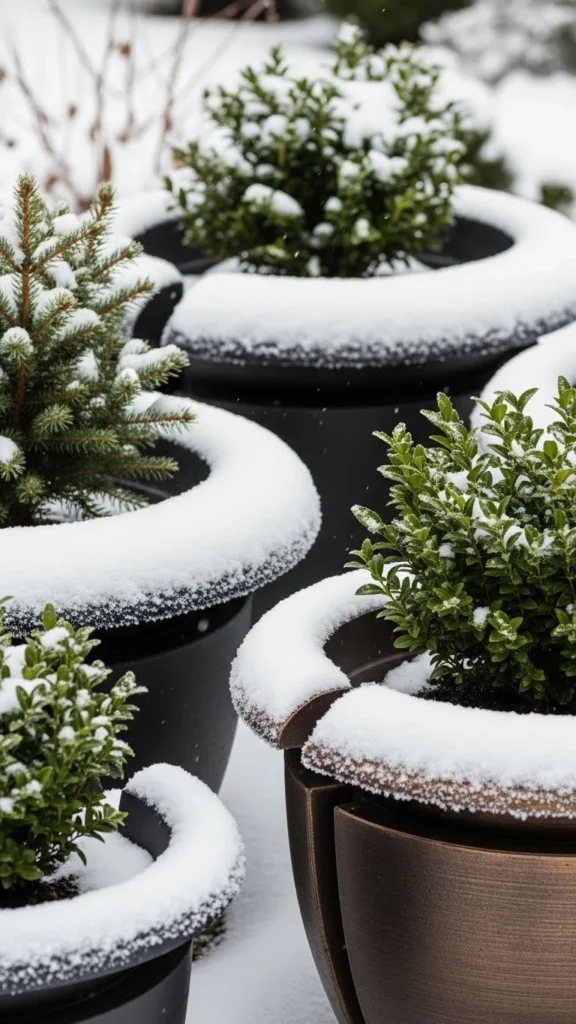
Double-walled resin pots handle winter beautifully because the inner and outer walls trap air. This air works as a natural insulator and keeps roots safer during cold snaps. The material is also lightweight, which helps if you want to shift pots around to warmer spots. Many homeowners love using them for entrances or patios because they hold up even when temperatures stay below freezing. If your budget is tight, look for resin pots at off-season sales. You can often grab large sizes at a discount. To add extra warmth, place a small layer of bark inside before planting. It gives a soft cushion for roots and helps soil avoid compacting during icy nights. These pots also come in many shapes, so you can style them in groups for a fuller winter display.
2. Thick Concrete Planters That Resist Freezing
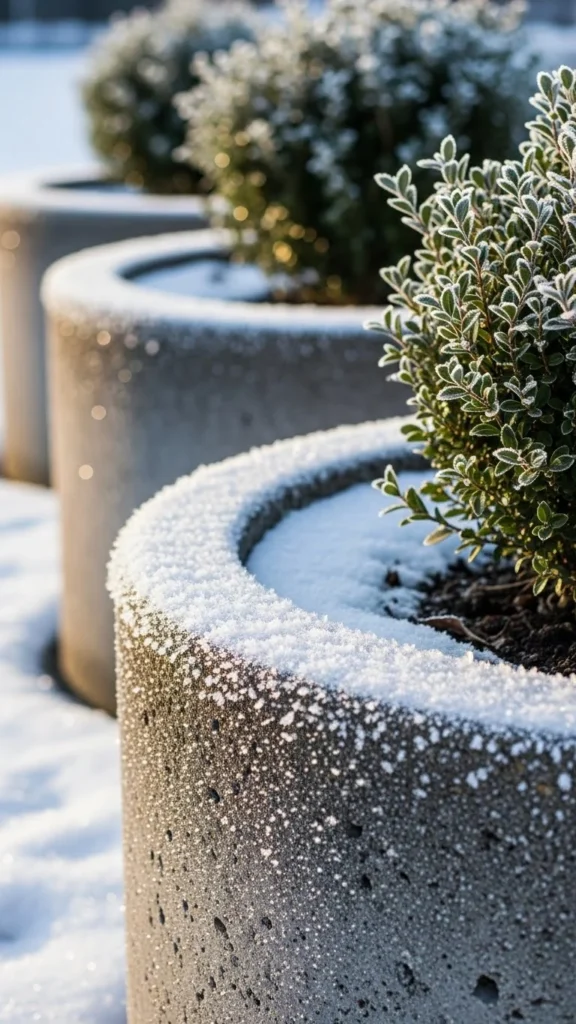
Concrete stays steady through winter because of its weight and density. Thick walls help soil maintain a stable temperature even when the top layer freezes. These planters rarely tip over in strong winds, which makes them perfect for exposed porches or rooftops. You can often find them in neutral colors that match any outdoor space. If the planter feels too heavy to move, set it on a rolling base before filling it. This small trick helps you adjust placement without lifting. Concrete pots may cost more upfront, but they last for years and rarely crack. To stretch your budget, you can also coat the inner surface with a thin layer of sealant. This helps reduce moisture absorption and further protects the material during icy weeks. Pair them with evergreen plants for a steady winter display.
3. High-Fired Ceramic Pots with Reinforced Walls
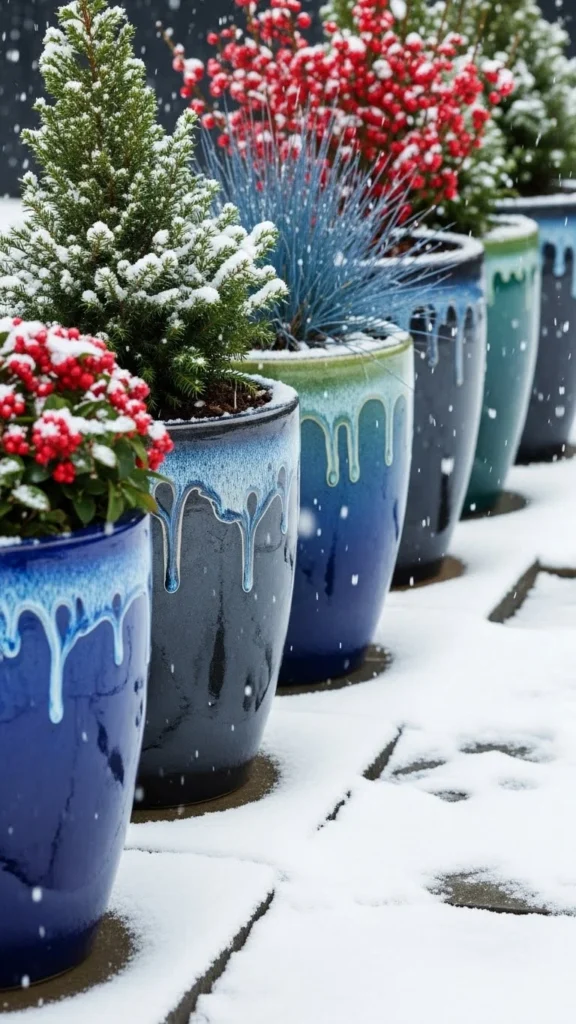
High-fired ceramic is tougher than regular clay because it goes through higher kiln temperatures. This creates denser walls that handle winter far better. Many gardeners love these pots because they add color at a time when most outdoor items look dull. The reinforced walls help reduce cracking from freeze–thaw cycles, especially when paired with well-draining soil. If you want to save money, choose medium sizes and place them in clusters rather than buying several large ones. Another simple tip is lifting the pot slightly off the ground using risers. This allows meltwater to drain freely during sunny afternoons. If you enjoy switching styles each season, ceramic pots offer plenty of choices in texture and shape. They look great on steps or as statement pieces beside pathways.
4. Fiberglass Planters That Stay Strong in Ice
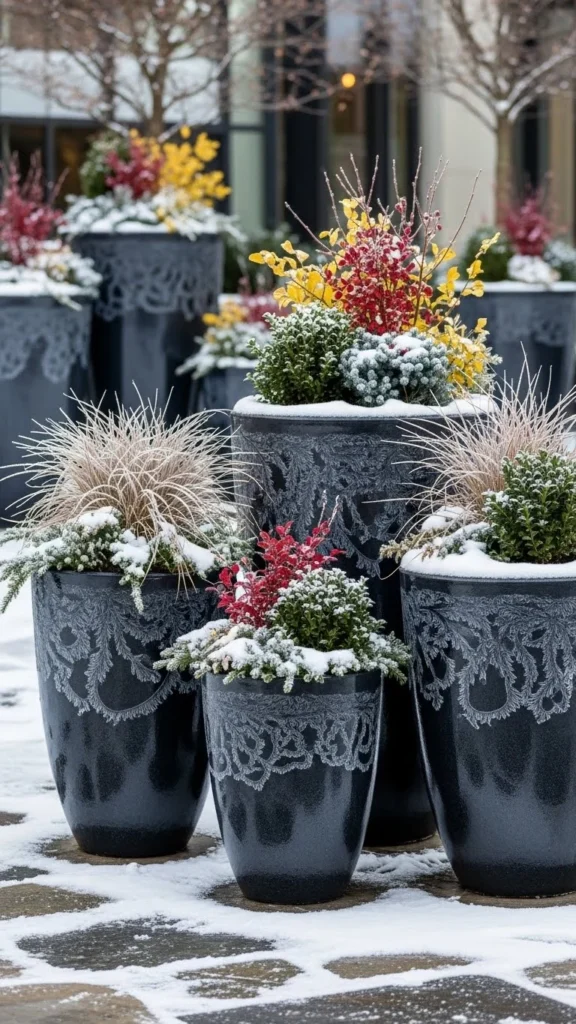
Fiberglass is a favorite for winter conditions because it handles extreme temperatures without cracking. The material is light, durable, and great for larger displays. Even when snow piles up, fiberglass pots stay intact and won’t absorb moisture like porous materials. If you enjoy changing layouts, these planters make rearranging easy. A simple DIY trick is adding small gravel at the bottom before planting. This improves drainage and keeps roots from sitting in cold, wet soil. Fiberglass pots also come in tall shapes that give winter gardens more height. The clean lines work well in modern spaces, but they blend into classic gardens too. If you want a long-lasting option that you can reuse year after year, fiberglass is a smart pick.
5. Heavy Stone Containers for Harsh Winter Conditions
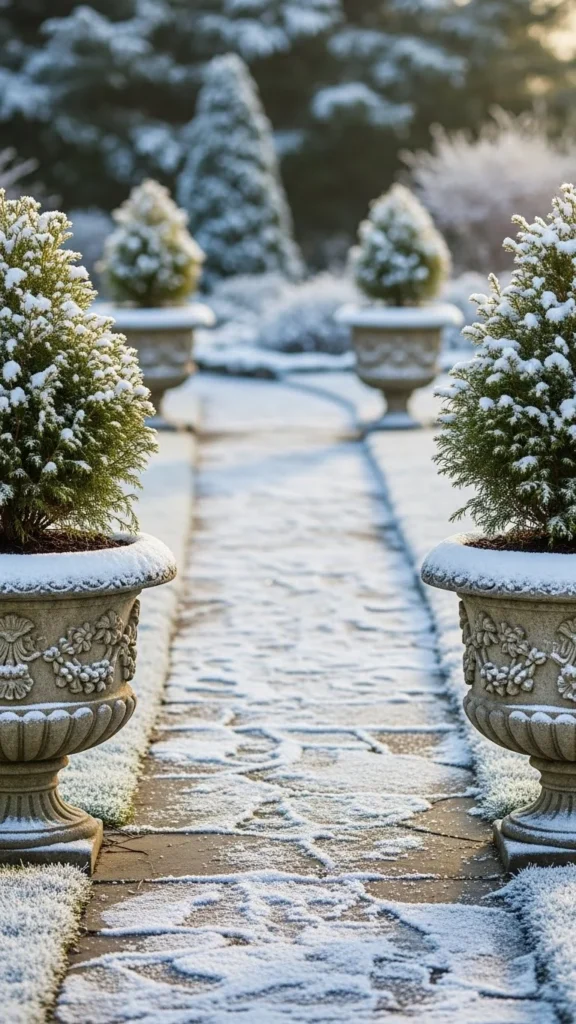
Stone containers stay steady through winter storms because of their weight and natural density. They hold warmth longer than many materials, which helps protect root systems during sudden freezes. Their rugged texture also looks beautiful in snowy settings. If you want to save a bit of money, choose composite stone instead of solid carved pieces. It gives the same winter strength but weighs less and often costs less. When planting, add a layer of coarse gravel under the soil to keep drainage strong. Stone planters work well for entrances, garden corners, or patios where you want a long-lasting decorative element. Their sturdy build makes them reliable even in areas with frequent ice buildup.
6. Metal Trough Planters for Urban Winter Gardens
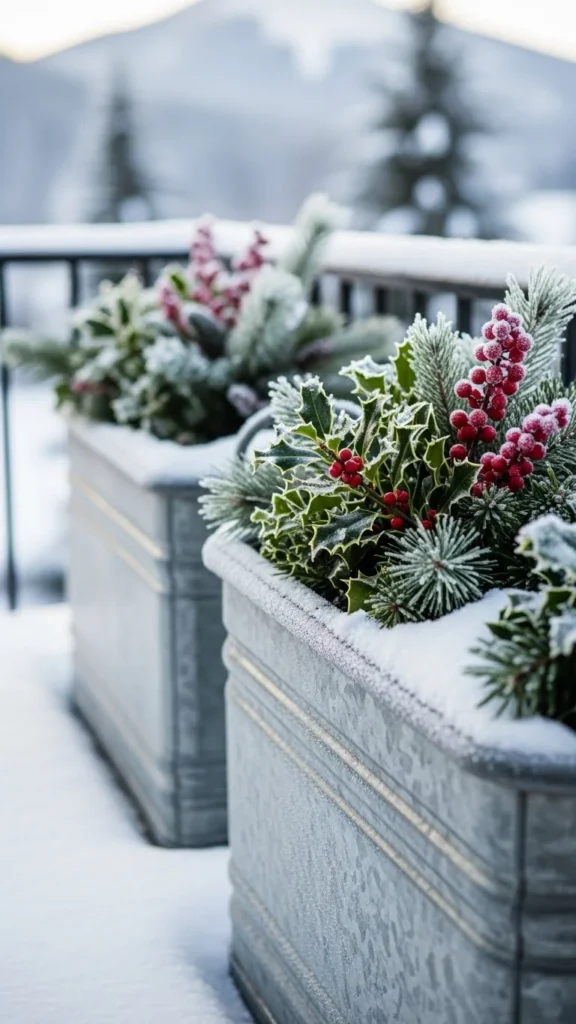
Metal trough planters fit urban spaces nicely and handle winter conditions when properly drained. Galvanized styles resist rust and stay strong even when covered in snow. They hold a lot of soil, which helps create insulation for roots. If you’re watching your spending, pick smaller troughs and place them side by side for a fuller look. To avoid overly cold soil, line the inner walls with bubble wrap before filling. This simple trick adds warmth without being visible. Metal planters shine when paired with grasses, herbs, or dwarf evergreens. Their long shape also works well for narrow pathways or small patios.
7. Composite Resin Barrels That Resist Ice Damage
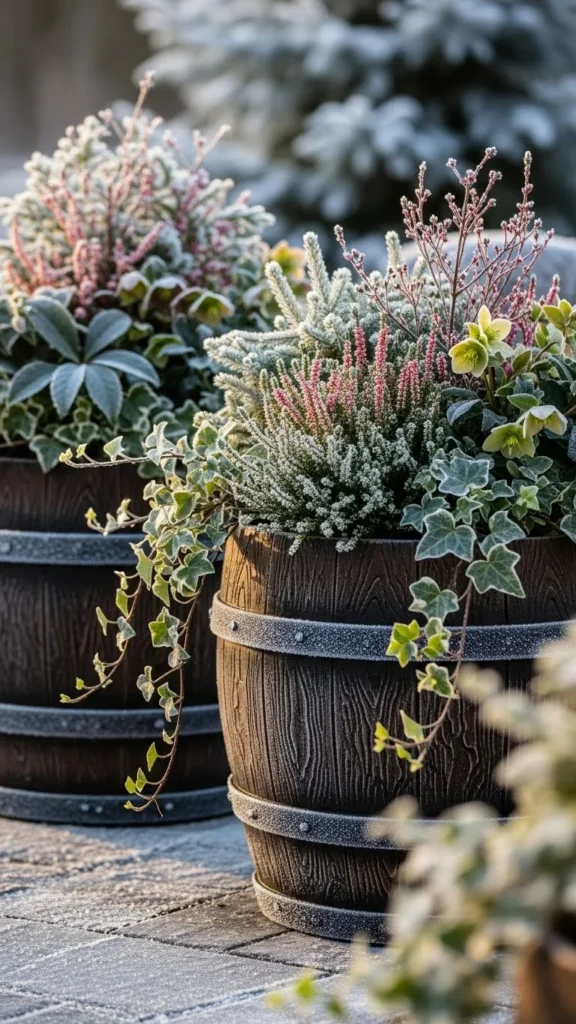
Composite resin barrels look like wood but offer far better winter durability. They don’t crack or warp, even when ice forms around the edges. Many homeowners enjoy their classic look, especially on porches or beside entryways. Because they’re light, you can move them anytime you want a fresh layout. A cost-saving idea is filling the bottom third with lightweight filler before adding soil. This cuts down on the amount of mix needed and improves drainage. Resin barrels match cottage-style gardens perfectly, and they pair nicely with ivy, shrubs, or trailing plants that stay green into winter.
8. Reinforced Plastic Pots for Cold-Prone Regions
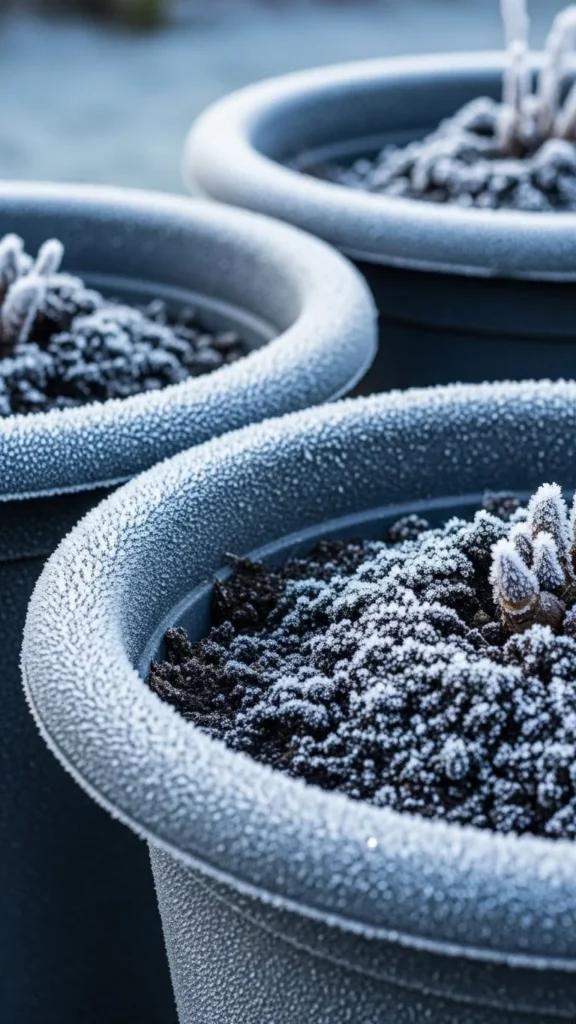
Modern reinforced plastic pots are far better than older thin models. They can handle freezing temperatures without cracking, and they’re extremely light. This makes them ideal for decks or places where heavy weight is a concern. You can often find them in large sizes at very reasonable prices. To help roots stay comfortable, mix in a bit of bark or perlite to keep the soil airy during cold spells. These pots also stack easily when not in use, making storage simple. If you want a budget-friendly option that still survives icy nights, reinforced plastic is a dependable choice.
9. Terra-Cotta Lookalikes Made for Winter
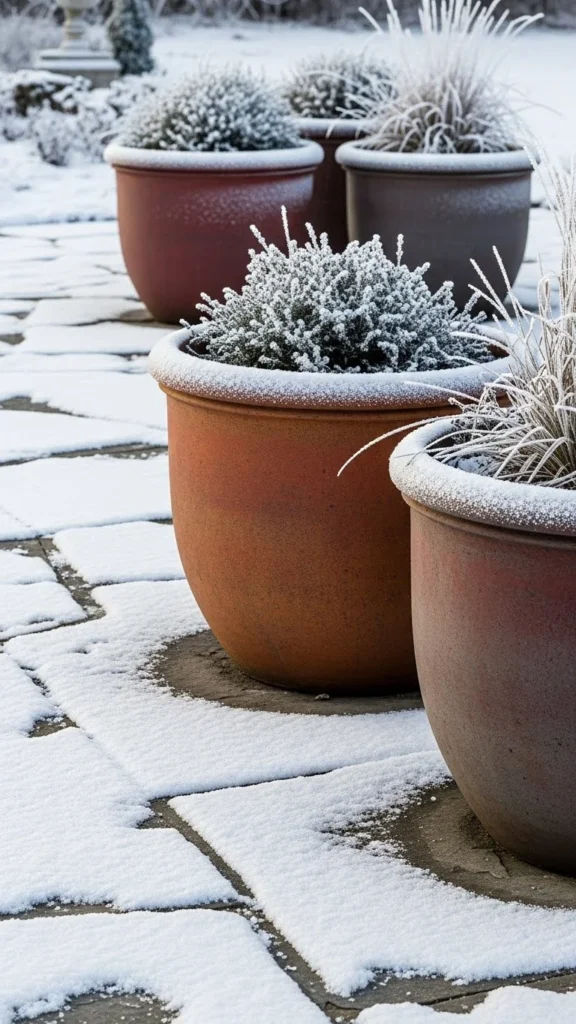
Regular terra-cotta often cracks in winter, but winter-safe versions offer the same look with better durability. They’re usually made from cold-tolerant clay blends or resin mixes that resist freezing. Homeowners love these because they give a warm, earthy texture without the worry of breakage. If you want to stretch your budget, buy a few medium sizes and group them in clusters. Add pot feet to help meltwater drain away quickly. These pots work beautifully with herbs, dwarf junipers, or winter pansies.
10. Rubber Planters That Stay Flexible in Ice
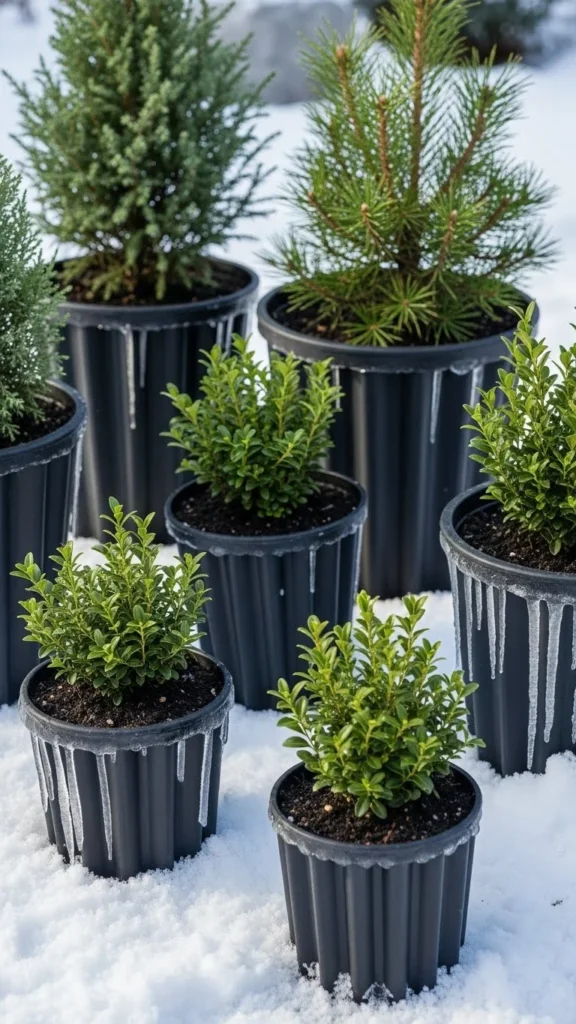
Rubber planters bend slightly instead of cracking, which makes them great for extreme cold. They’re made from recycled materials, so they’re often affordable and long-lasting. Because they flex, they can handle soil expansion during freeze-thaw cycles. A smart DIY idea is placing them inside decorative outer pots during warm months, then pulling them out for winter use. This lets you protect your decorative pieces while still growing plants. Rubber planters are perfect for gardeners who want stress-free winter options.
11. Wooden Planters with Protective Liners
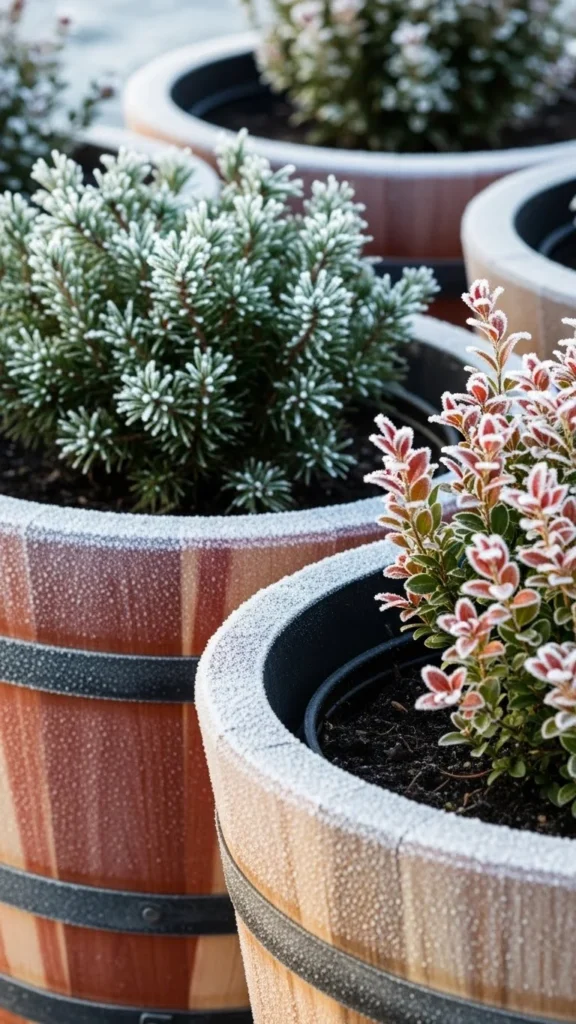
Wood holds warmth naturally, which makes wooden planters great for winter setups. Cedar and pine are common choices because they resist moisture and rot better than other woods. Adding a protective liner inside helps extend their lifespan. If you’re working with a tight budget, build your own planter from scrap lumber. Just make sure to line it with heavy plastic before adding soil. Wood planters look charming in snowy spaces, especially when paired with evergreens and berries.
12. Stoneware Pots Fired for Cold Climates
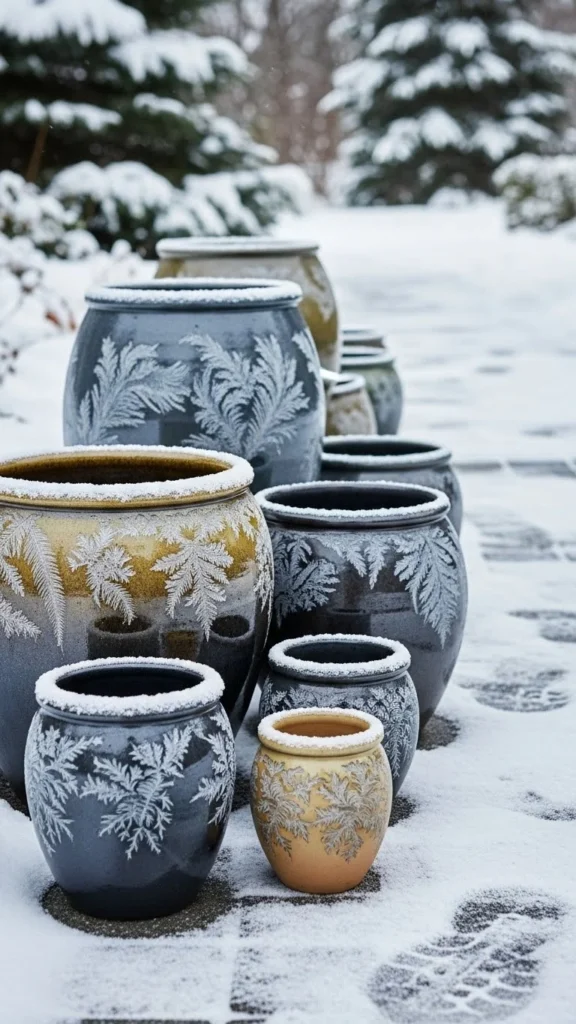
Stoneware is stronger than many types of clay because of how it’s fired. These pots keep their shape through icy weeks and resist cracking well. Many designs come in deep colors that brighten winter gardens. If cost is a concern, choose two or three statement pieces rather than many small ones. Set them on risers so they drain properly. Stoneware pairs well with winter flowering plants or simple green shrubs.
13. Self-Watering Planters with Insulated Walls
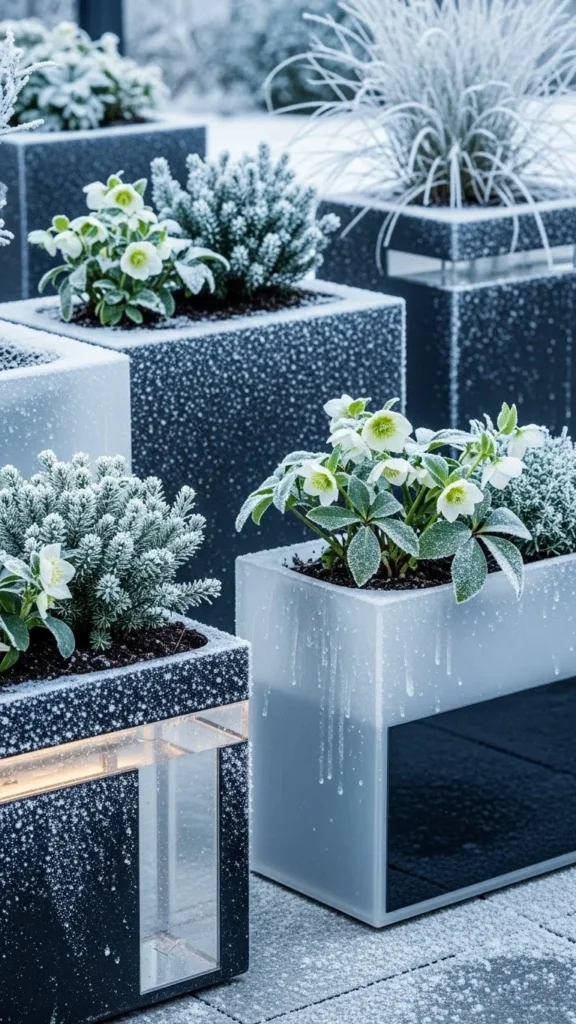
Self-watering planters help maintain steady moisture even when air is dry from winter winds. Many newer designs feature insulated walls, which helps roots stay comfortable during cold snaps. If you want to stretch your budget, pick smaller versions and place them near walls where a bit of radiant heat helps. When filling, use a mix that drains quickly so water doesn’t sit inside the reservoir for too long. These planters are excellent for people who forget to water during cold months.
14. Tall Resin Towers That Resist Freezing
]
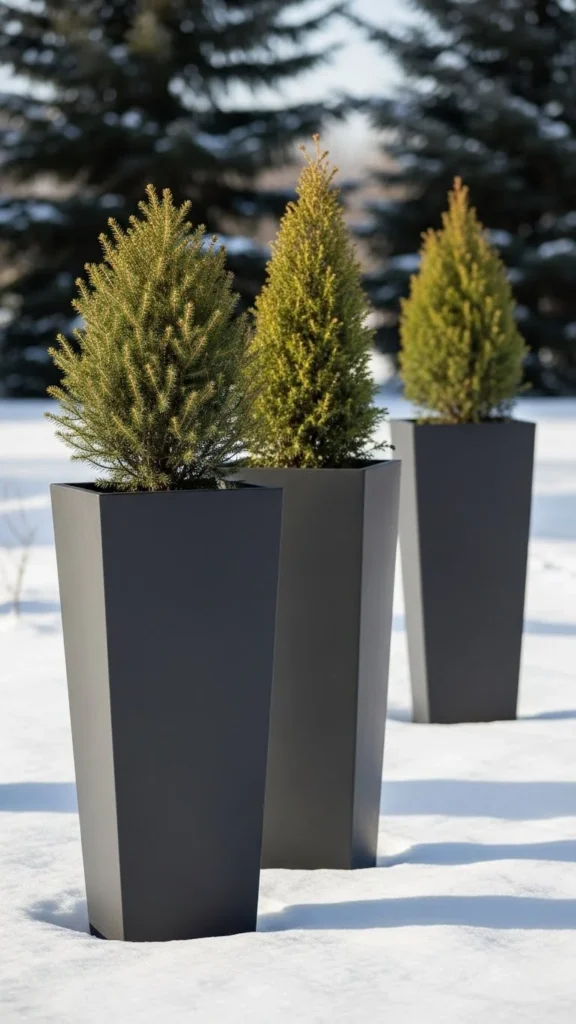
Tall resin towers add height to winter patios while holding up to freezing temperatures. The material resists cracking and stays light enough to move around. These planters look especially beautiful beside entryways or along pathways. A simple DIY idea is adding gravel halfway up the tower to steady it on windy days. The extra weight helps it stay upright through winter storms. Resin towers are great for statement plants or small shrubs.
15. Cast Iron Planters for Snowy Spaces
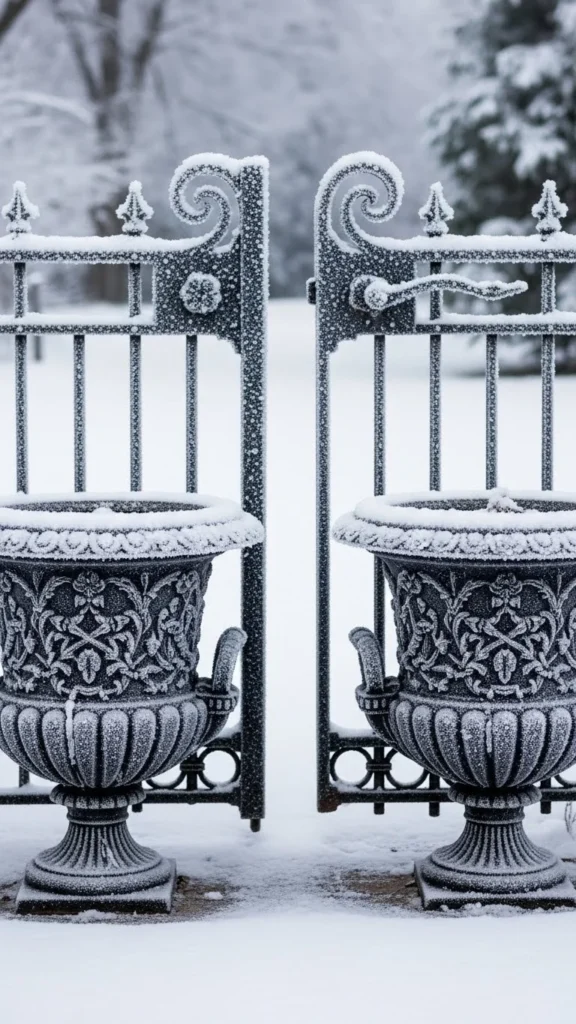
Cast iron handles snow and ice well because of its heavy structure. These planters warm slowly and cool slowly, which helps roots handle winter swings. They also last many years. The weight can be a challenge, so place them where you want them long-term. If you’re watching your spending, find secondhand pieces—they often clean up nicely with a quick scrub. Cast iron looks beautiful with evergreens, hollies, or simple winter arrangements.
16. Polyethylene Planters Built for Cold
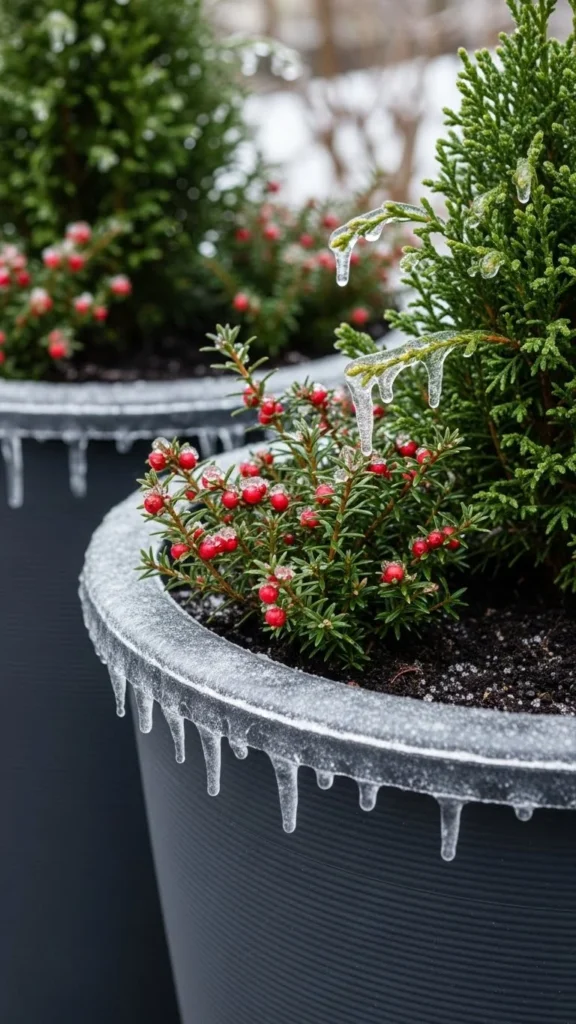
Polyethylene performs well in freezing conditions because it doesn’t absorb water. It stays flexible during winter, which prevents cracking. Many large planters in garden centers use this material for that reason. If you want to create tall displays without spending too much, choose lightweight polyethylene and fill the bottom with recycled plastic bottles. This keeps the pot light but still stable. These containers are simple, practical, and winter ready.
17. Concrete-Look Lightweight Planters
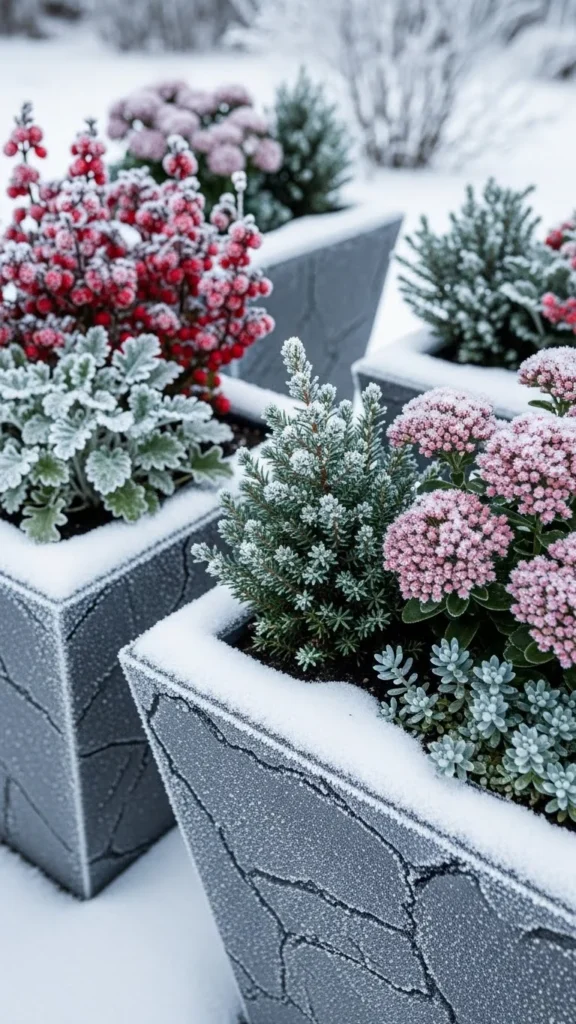
Concrete-look planters give you the stone appearance without the weight. They’re often made from resin blends that resist winter damage. They fit nicely into modern yards and patios. A simple tip is adding a thin layer of mulch on top of the soil to help insulate roots. These pots are easy to move, which helps if you like rearranging your layout through the season. They work well with grasses and winter shrubs.
18. Hybrid Planting Troughs with Multiple Materials
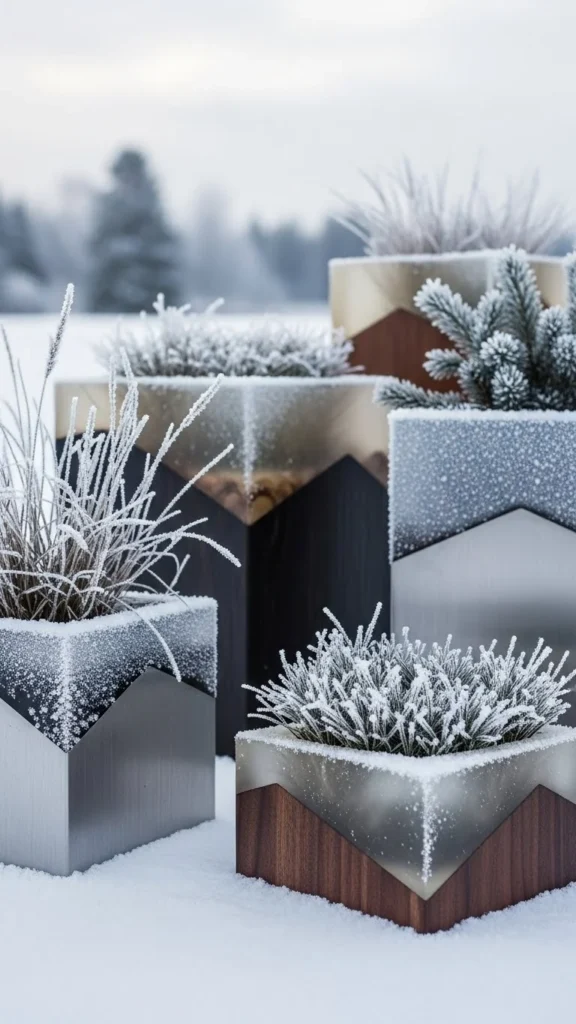
Hybrid troughs use more than one material to balance strength and style. The reinforced inner section helps resist ice damage, while the outer layer gives a decorative look. These are great for decks, patios, and long pathways. If money is tight, choose one large trough and fill it with mixed plants for a full winter arrangement. Add gravel beneath the soil to help with drainage during freeze-thaw cycles.
19. Plastic-Coated Wire Baskets with Liners
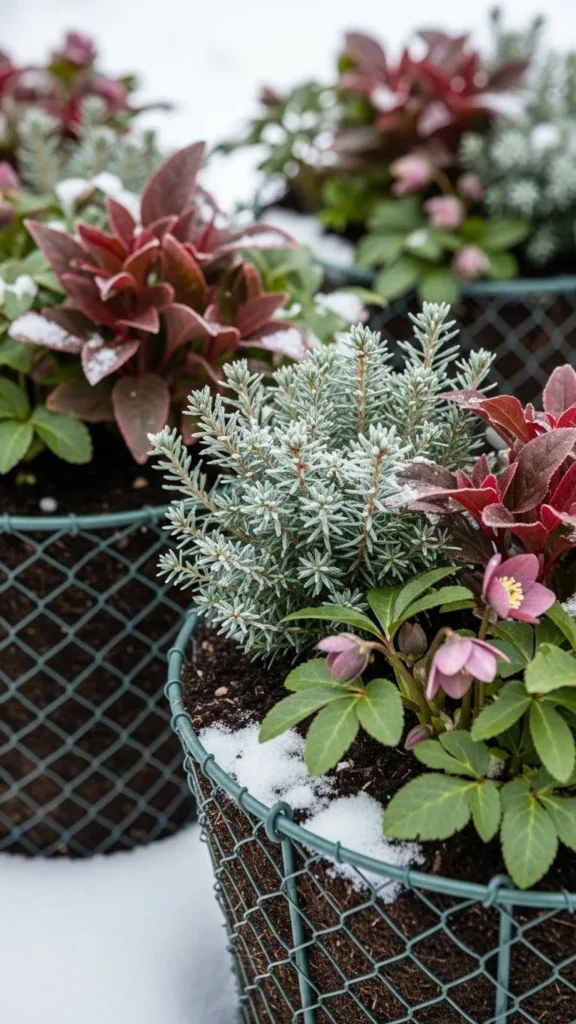
Plastic-coated wire baskets last longer than plain metal because the coating protects them from moisture and cold air. When paired with a thick liner, they handle winter surprisingly well. You can use coco coir, felt, or heavy-duty plastic inside. If you want to keep costs low, repurpose old baskets and add new liners. These planters look lovely when hung from porches or set on steps with trailing greens.
20. Large Resin Bowls for Winter Arrangements
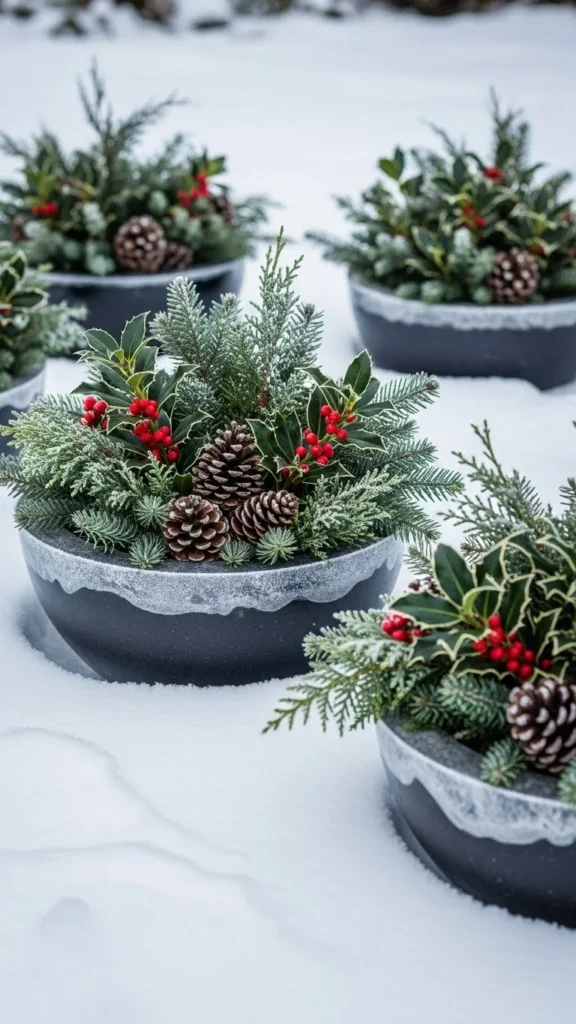
Large resin bowls are perfect for wide, low arrangements that shine during winter. The material resists cracking and stays light even in bigger sizes. Many gardeners use these bowls to create layered winter displays with moss, twigs, and evergreens. If you want to save money, fill the bottom with lightweight filler. Resin bowls also look great on outdoor tables or beside walkway lanterns.
21. Recycled Milk Crate Planters with Inserts
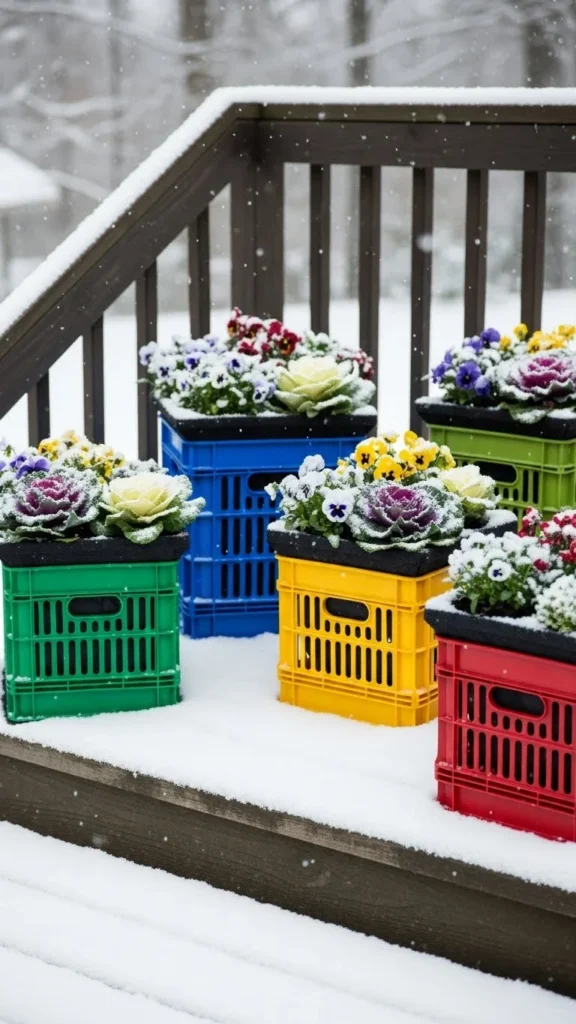
Milk crate planters offer a clever solution for winter when paired with sturdy inserts. The outer crate provides strength, while the inner pot keeps soil insulated. This setup is extremely affordable if you use recycled materials. Add a thick liner to help trap warmth. Crate planters give a fun, modern look and are easy to carry inside if temperatures drop too low. They work well for herbs or small shrubs.
22. Insulated Grow Bags on Raised Shelves
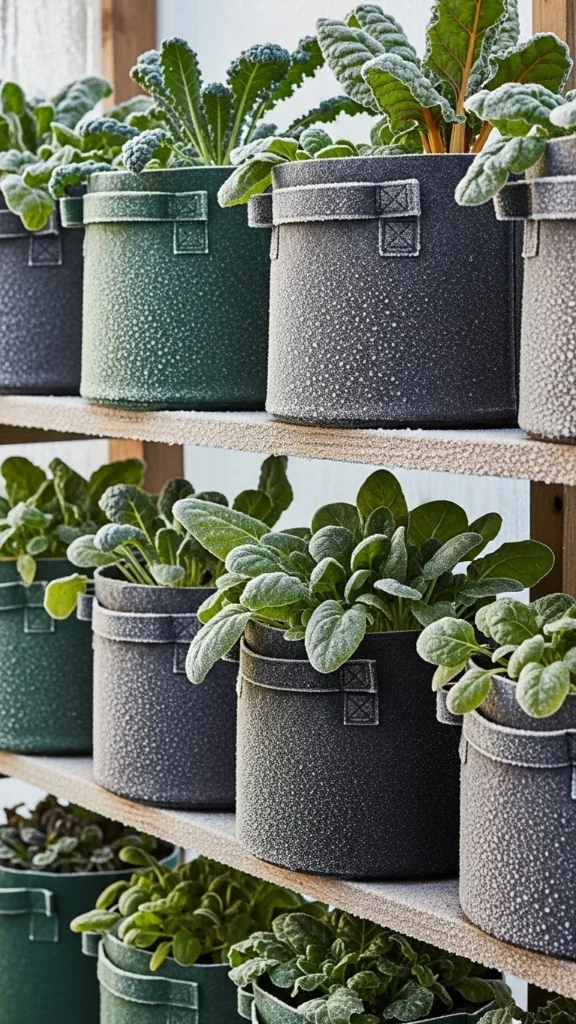
Insulated grow bags are flexible, breathable, and surprisingly strong during cold months. Many models have thick sides that help roots stay warm. When placed on raised shelves, drainage improves and soil dries faster between freezes. These bags are budget-friendly and easy to fold away during warmer months. Use a mix with added bark to keep the soil loose. Grow bags look charming with compact evergreens or winter kale.
23. Reinforced Clay Pots Treated for Winter
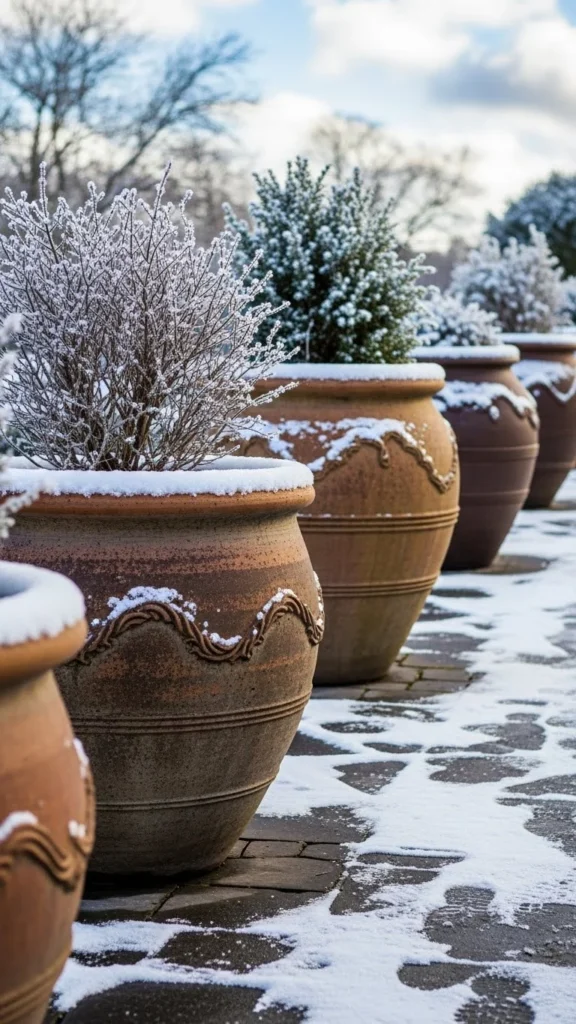
Reinforced clay pots are treated to handle moisture and freezing temperatures better than standard clay. They maintain a natural, earthy look while offering extra durability. Place pot feet underneath to prevent the base from sitting in icy water. If you’re watching your spending, look for seasonal clearance sales. These pots match any garden style and hold up through many winters.
24. Vintage Metal Buckets with Drain Holes
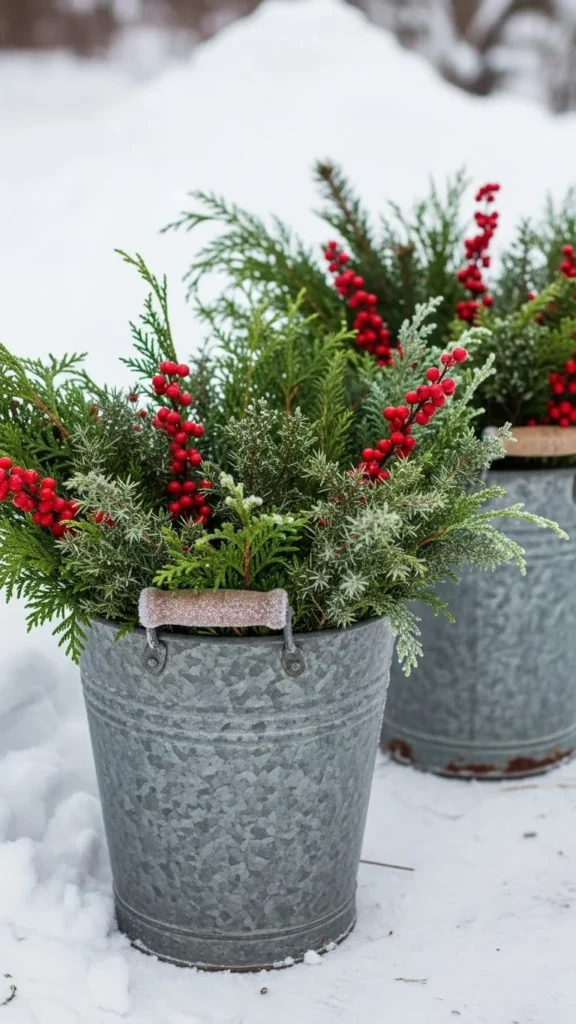
Vintage metal buckets offer charm and winter strength when you add proper drainage. Galvanized metal resists rust well. Drill small holes in the bottom, then add gravel before the soil. This helps reduce moisture buildup during freezing nights. These buckets often cost very little at thrift shops. They make lovely porch displays filled with pine branches, dried seed pods, or small shrubs.
25. Oversized Planter Troughs for Multi-Plant Displays
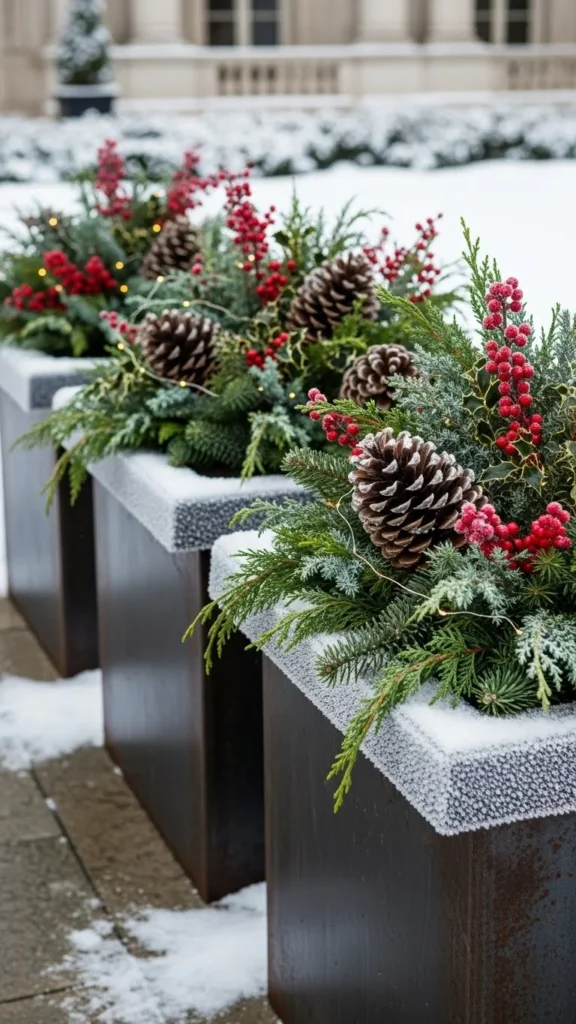
Oversized troughs offer plenty of soil volume, which keeps roots warm for longer periods. They also make it easy to design large winter displays without needing many small pots. Look for resin, fiberglass, or metal versions for the best winter performance. If you’re keeping costs low, create height by placing bricks inside before adding soil. This reduces the amount of mix needed while keeping the container stable. Troughs look stunning beside fences, patios, and long walkways.
Conclusion
Choosing the right winter-hardy planter helps you protect plants, reduce replacement costs, and keep your outdoor spaces lively even in freezing weather. Whether you prefer resin, stone, metal, or hybrid containers, each option above gives you a simple way to create displays that last. Pick a few styles you love, add your favorite cold-tolerant plants, and enjoy a garden that stays beautiful long after the temperatures drop.
Leave a Reply