

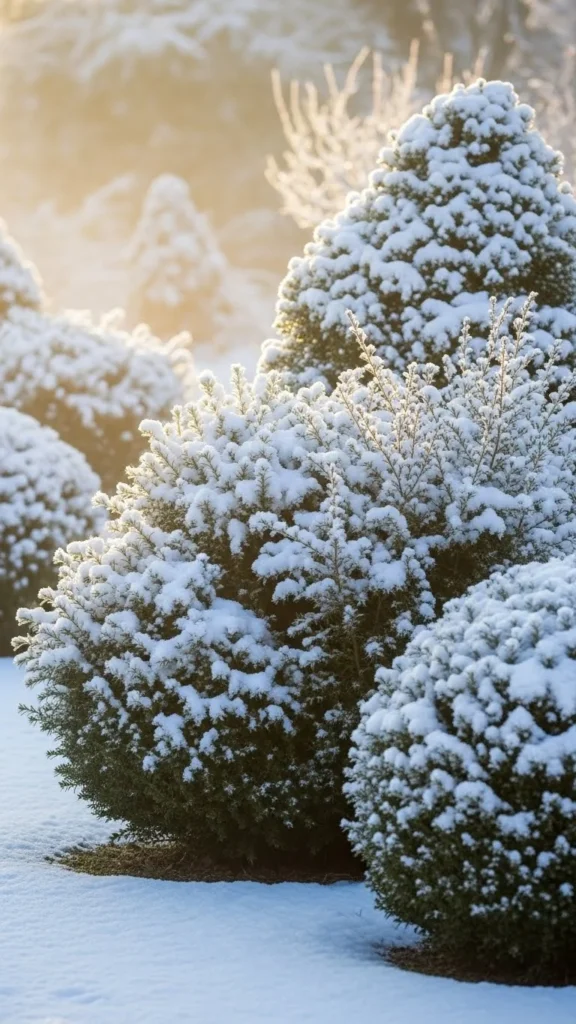
Winter gardens often look empty, but snow-resistant shrubs bring structure, greenery, and reliability even in the coldest months. These plants hold their form through heavy snow, icy winds, and long freezes. Many also offer berries, glossy leaves, or seasonal color that keeps the landscape lively. If you want a yard that still looks cared for in winter, these shrubs offer dependable shape, texture, and character without complicated upkeep.
1. Boxwood
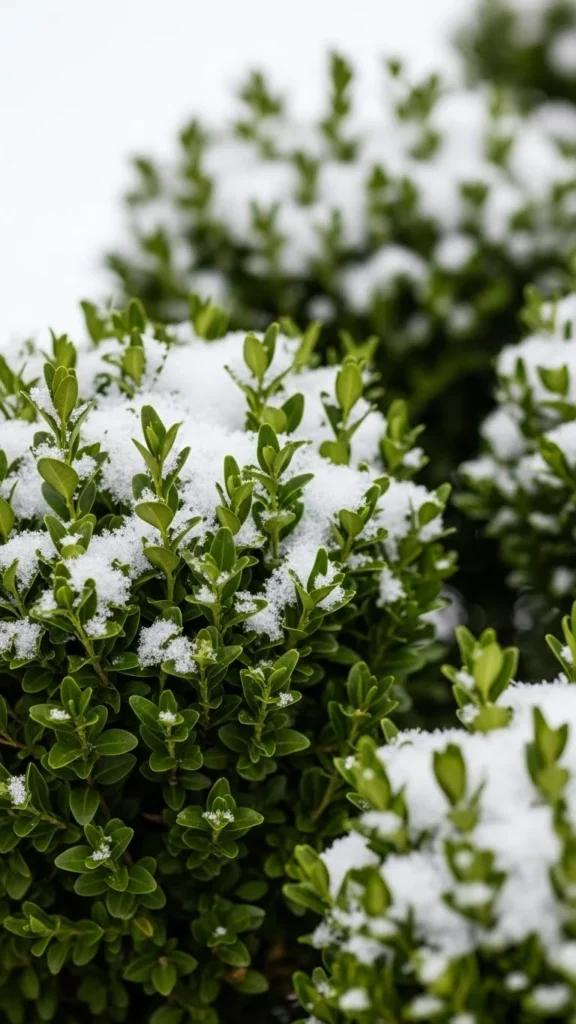
Boxwood stays firm through winter and forms neat mounds that hold their shape under snow. It works well in formal gardens, but it also fits simple entryways because it looks tidy all year. Keep the soil slightly moist before winter so the roots stay strong during long freezes. If your shrubs sit near a walkway, add a thin bark mulch ring to protect the base from repeated shoveling. Home gardeners often use boxwood in pairs by the front door for symmetry. You also can line a short path with small, affordable container-grown plants. Boxwood handles trimming well, so shaping is easy even for beginners. Just use light cuts to keep the plant open enough for air flow. Its evergreen leaves stay rich and bright, making it one of the most reliable winter shrubs to add steady structure when the rest of the yard turns bare.
2. Inkberry Holly
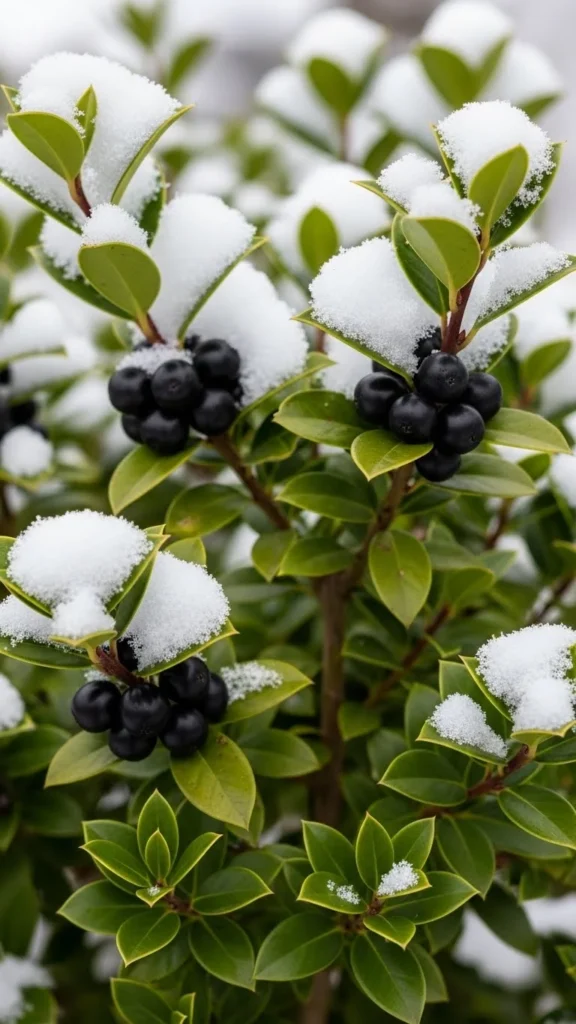
Inkberry holly stays upright even under heavy snow thanks to its sturdy branches. Its dark leaves offer contrast against white winter landscapes. This shrub prefers moist soil, so water it deeply in late fall. If you want low-cost options, buy smaller sizes and let them grow naturally because inkberry fills in nicely over time. It works well as a hedge or as a single accent near a porch. Add compost once a year to support slow, steady growth. Home gardeners appreciate how low-maintenance inkberry is because it rarely needs trimming. If you prefer a more polished look, trim lightly in early summer. Birds also enjoy the berries, giving your winter garden more movement. The plant stays uniform, making it a dependable choice for anyone wanting durable greenery through long, snowy months.
3. Wintergreen
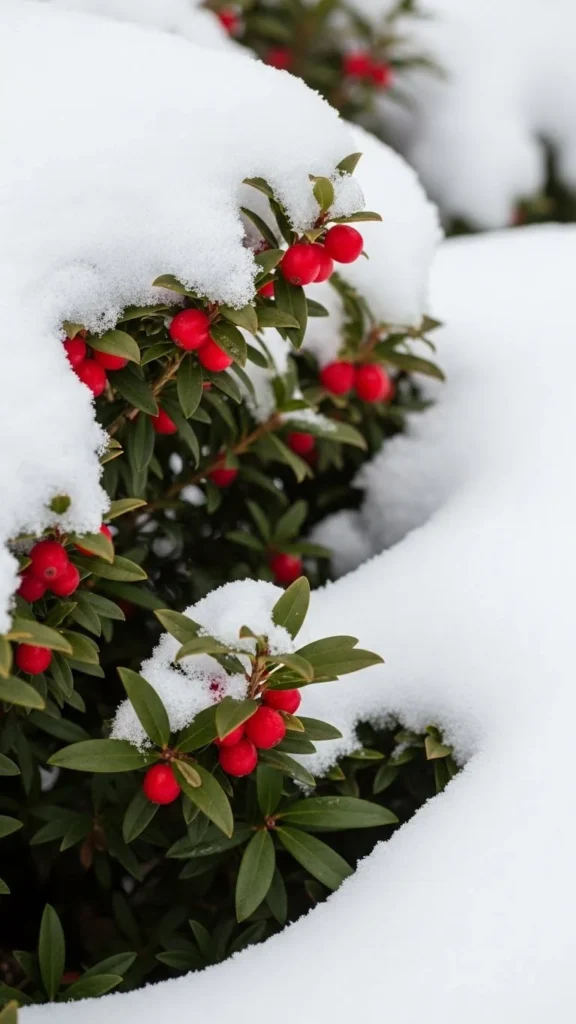
Wintergreen brings color with bright berries and strong evergreen foliage. The plant stays low, so snow doesn’t weigh it down. It spreads gradually, making it a great budget-friendly ground cover for bare winter spots. The berries last through the season, adding charm along pathways or around trees. Wintergreen prefers partial shade, so try planting it near taller shrubs to create layers. Add pine needles around the base for simple insulation during extreme cold. The leaves stay glossy even after weeks of freezing wind. Many gardeners pair wintergreen with stone borders for a tidy look. It’s also a smart option for small spaces because it doesn’t grow tall. The shrub remains steady and attractive through the season, giving your landscape a pop of color when most plants turn dull.
4. Juniper
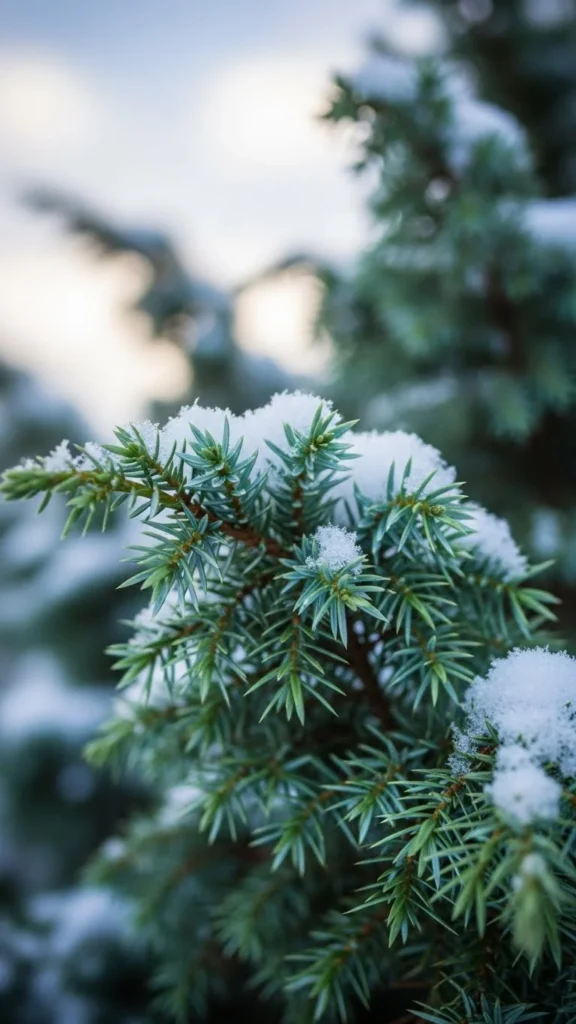
Juniper stays strong through shifting winter weather. It comes in many shapes—upright, spreading, or low. The blue-green tones look striking under snow and add depth to open gardens. Juniper thrives in poor soil, so it’s a smart pick for rocky areas where other shrubs struggle. Once established, it barely asks for care. Add gravel mulch for clean edges and better drainage. DIY gardeners often use juniper on slopes because the roots grab the soil firmly. Snow sheds off most varieties easily, keeping the plant’s shape through storms. If you’re decorating for winter, add a few lanterns nearby to highlight the colors. Juniper also pairs well with taller evergreens to form layers. It stays attractive even when temperatures drop for weeks, making it one of the toughest choices for year-round structure.
5. Mountain Laurel
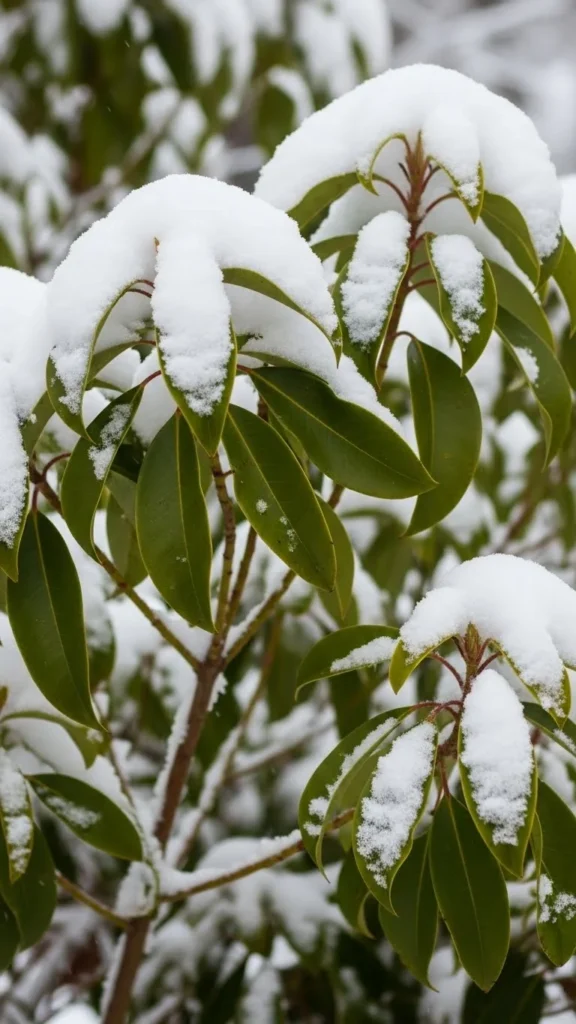
Mountain laurel offers thick leaves and a strong framework that stays upright through winter. It loves partial shade and acidic soil, making it perfect for woodland-style yards. Before winter sets in, water deeply and apply mulch to keep roots comfortable. Mountain laurel grows slowly, so choosing smaller plants can save money without losing quality. The shrub stays full in winter thanks to its dense leaf structure. Use it near entry paths or under tall trees to build layers. Many homeowners add it to sloped areas because the roots cling well. While it blooms beautifully in spring, the winter shape alone adds charm. Keep pruning light—just remove damaged branches when you see them. Its reliable evergreen presence makes it a strong choice for snow-heavy climates.
6. Yew
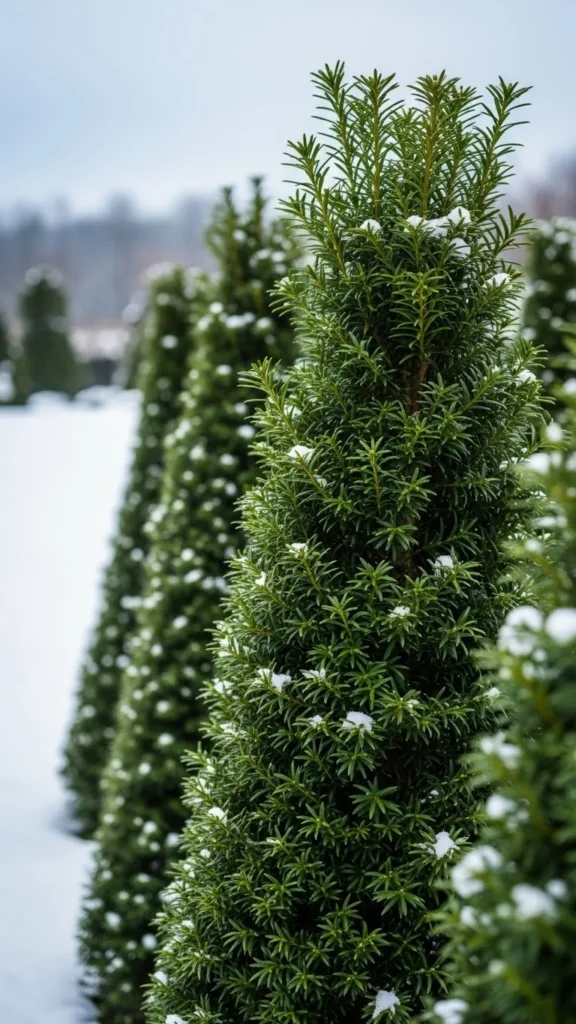
Yew shrubs handle heavy snow better than many evergreens due to their flexible yet firm branches. They bounce back quickly after storms. Gardeners often use yew for hedges because the plant shapes neatly with simple trimming. For winter prep, add a mulch ring and avoid trimming late in the year. Yew works well along foundations or as a tall privacy line. It grows slowly but lives for decades, making it a good long-term investment. If you want a budget option, start with young plants and let them grow into place. The rich green color stays steady all season, giving your yard a clean, structured look. With just a bit of attention, yew can stay strong through every winter storm.
7. Dwarf Alberta Spruce
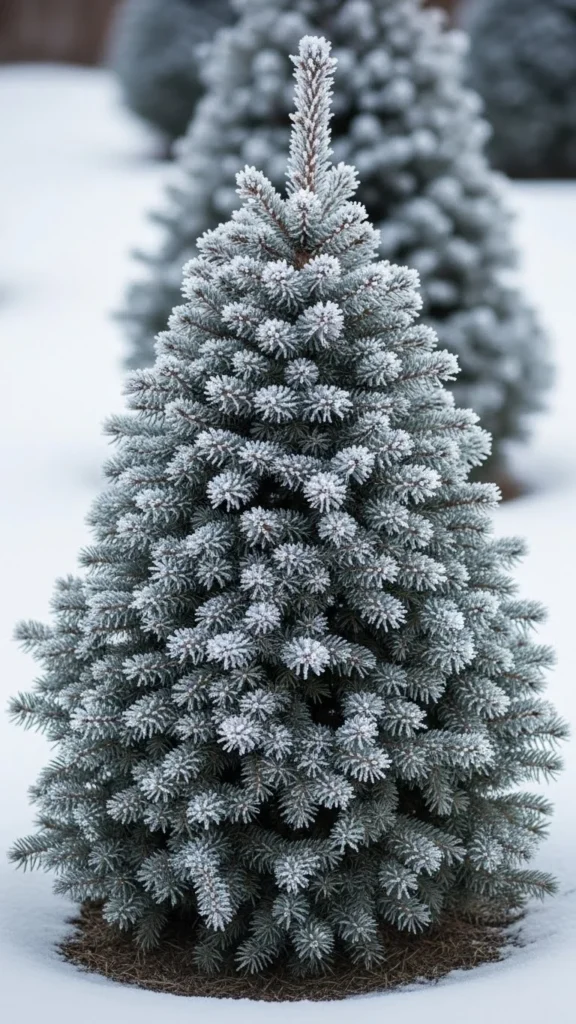
This small spruce holds its shape beautifully. Its tight needles prevent snow from weighing it down, making it ideal for front entrances or garden focal points. Dwarf Alberta spruce grows slowly, so you can start with small, affordable containers. Keep the soil slightly moist before winter to avoid stress. The shrub pairs well with stone pots, which stay stable during freezes. Many homeowners decorate this plant during the holidays because its shape resembles a miniature tree. After storms, simply shake off heavy snow if it piles up. The plant remains neat and bright all season, adding simple evergreen charm. Its predictable form makes it one of the easiest shrubs to manage through long, snowy periods.
8. Rhododendron
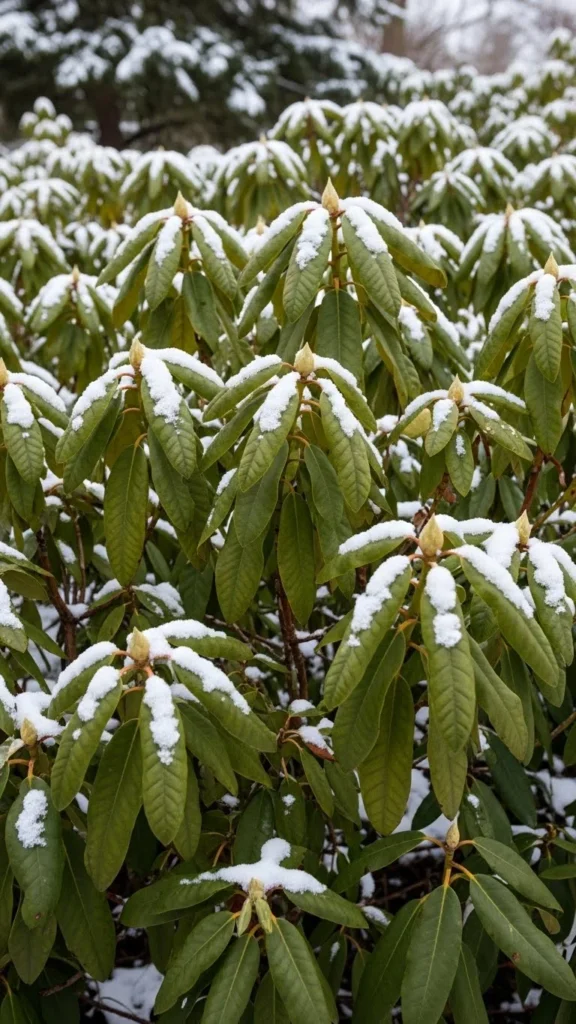
Rhododendrons keep their bold, broad leaves through winter, giving the garden a strong visual anchor. The leaves may curl in very cold weather, but the plant remains healthy. Choose hardy varieties suited for your region for best winter performance. Add acidic mulch like pine bark to support the soil. These shrubs can grow large, so pick a spot with room for them to spread naturally. For a low-cost start, buy a younger plant and let it mature. Rhododendrons look great near porches or woodland edges. They cast soft shadows in snow, giving your winter garden gentle contrast. Their evergreen presence and steady structure make them a strong winter option.
9. Japanese Andromeda
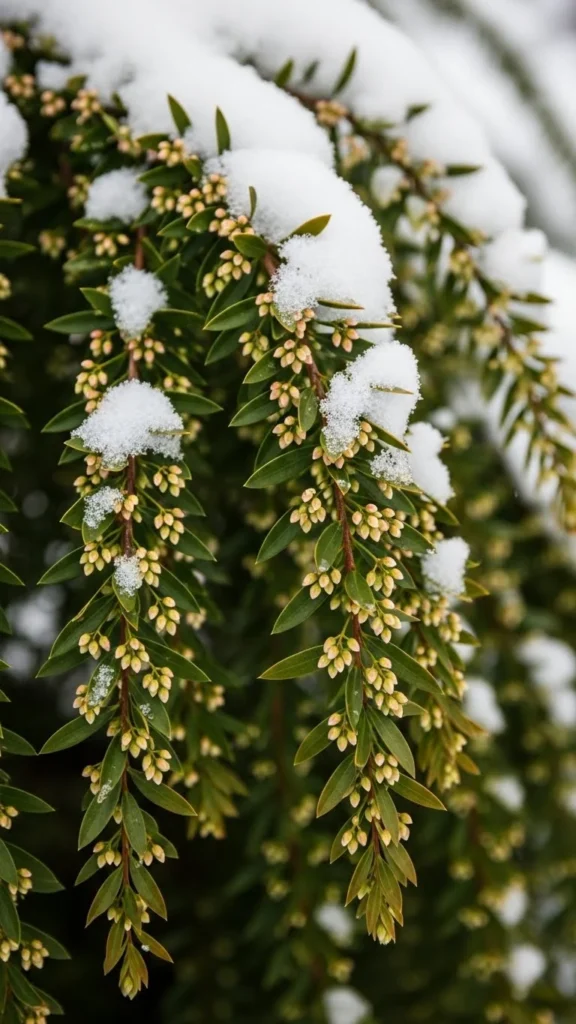
Japanese Andromeda handles winter well thanks to its strong, arching branches. It often sets buds before winter, adding texture against snow. The plant grows slowly, so small starts work fine for budget gardeners. Add acidic mulch and keep the soil moist going into winter. This shrub fits beautifully along foundations or near walkways, where its layered shape stands out. Many homeowners use it to soften the edges of patios. Snow usually slides off the long leaves, protecting the branch tips. The evergreen foliage stays glossy even in cold wind. With minimal handling, Japanese Andromeda adds year-round shape and seasonal interest.
10. Viburnum
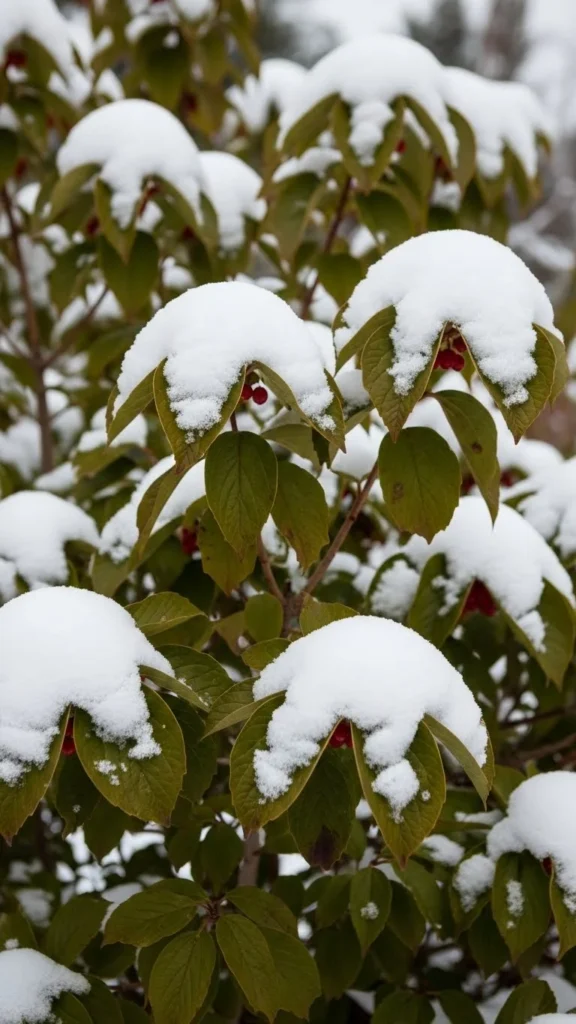
Evergreen viburnum handles winter with strong leaves and sturdy branches. Some types offer berries that stand out against snow. These shrubs work well along fences or in mixed borders because they keep a full, rounded shape. Water deeply before the ground freezes to help the roots. Mulching is an easy DIY step that improves winter comfort for the plant. Viburnum is a good pick for homeowners who want a reliable evergreen without constant trimming. If you enjoy simple projects, trim lightly in early summer to maintain shape. Viburnum brings winter color and structure without demanding much space or care.
11. Red Twig Dogwood
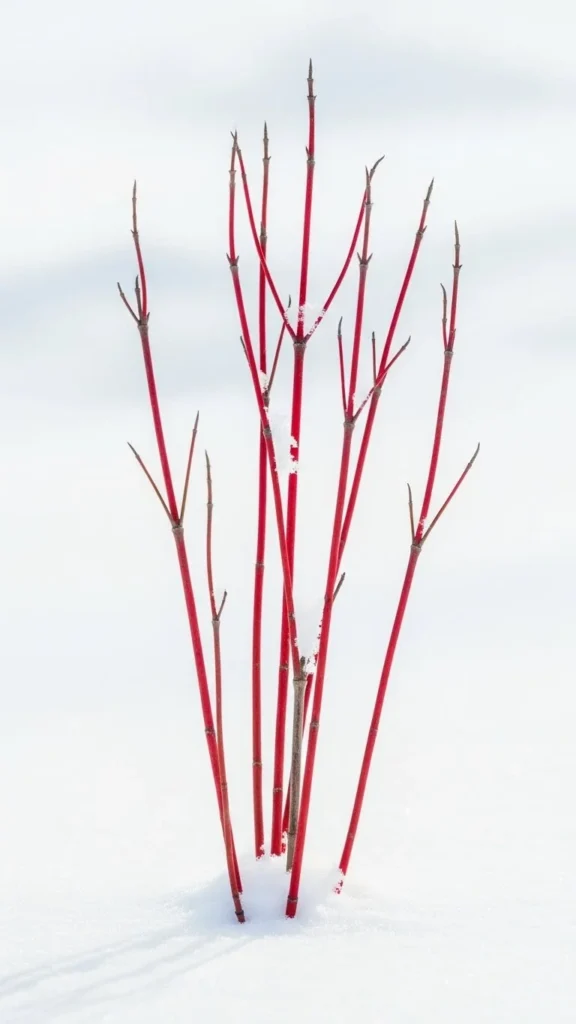
Red twig dogwood adds bright color all season. Its bare red stems stand out sharply in snow, creating visual interest even without leaves. It thrives in moist soil, but also handles tough weather well. Plant it where the stems can be viewed from windows or pathways. Budget gardeners often purchase smaller plants because they grow fast. To keep color strong, trim older stems in early spring, leaving new growth to shine. Snow rarely damages the branches because they’re flexible. Add this shrub to larger beds for color or plant it in a group for a dramatic winter look.
12. Oregon Grape Holly
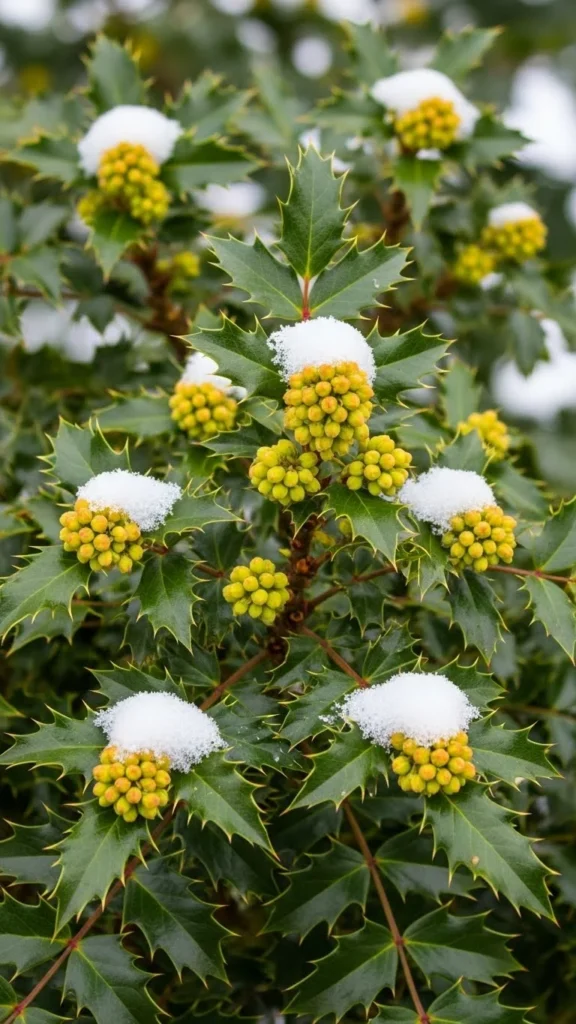
Oregon grape holly stands firm in winter due to its leathery leaves and dense structure. The foliage turns deep purple in cold weather, adding seasonal character. This shrub handles shade well, making it a smart pick for darker corners of the yard. It asks for very little care. Add mulch to keep the soil comfortable, and water lightly before winter. If you want a multi-purpose plant, this one offers year-round interest plus spring clusters. It also works as a simple privacy buffer due to its height. Snow settles nicely on the leaves without causing damage. Oregon grape holly makes winter gardens look structured and colorful.
13. Heather
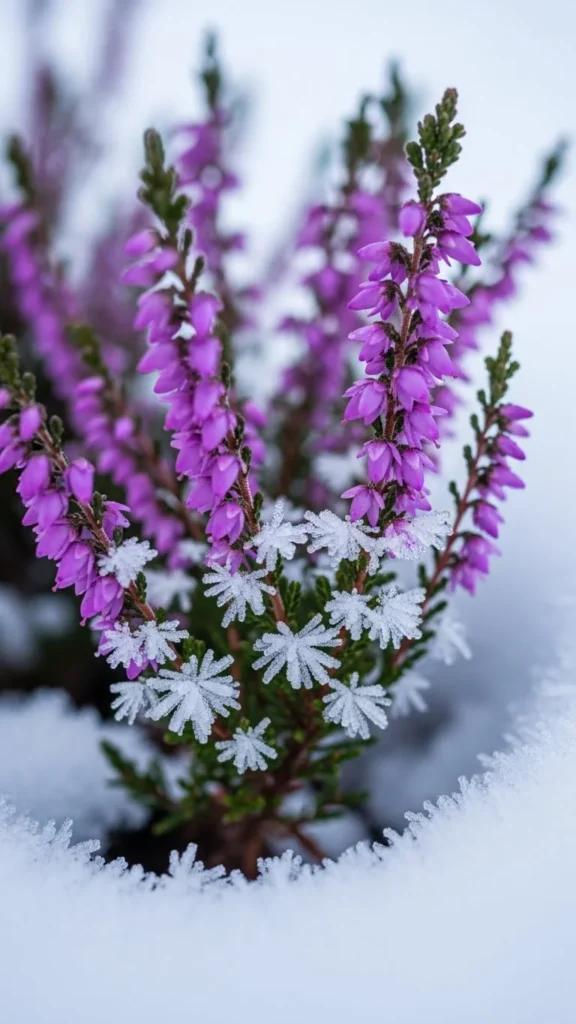
Winter-blooming heather brings soft color during the coldest months. Its low growth makes it resistant to snow pressure. The plant forms tidy mounds that spread slowly, making it a budget-friendly filler for bare winter areas. Use sandy soil for best results, or improve drainage with gravel mulch. Heather looks lovely near stone paths or in raised beds. The small flowers often bloom when the rest of the garden sleeps. Many gardeners plant heather in clusters for a bright patch of winter color. Once established, it needs very little care. It stays cheerful even during long, snowy spells.
14. Arborvitae
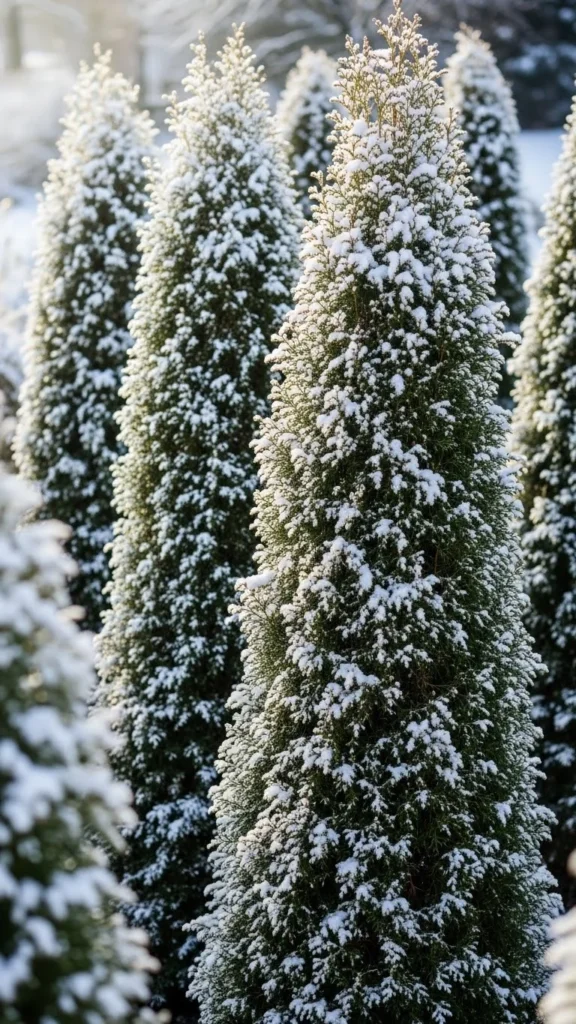
Arborvitae stays upright with dense foliage that holds its shape through winter. It’s often used for privacy lines because it forms tall green walls. Snow can collect on the branches, but the plant usually holds firm unless the snow is extremely heavy. If storms are common in your area, choose a hardy variety and plant in a sheltered spot. Add mulch to help with winter moisture control. Arborvitae is simple to maintain—just occasional trimming for height. It works well for homeowners who want reliable evergreen structure without constant checking. This shrub remains bright and full all season.
15. Firethorn
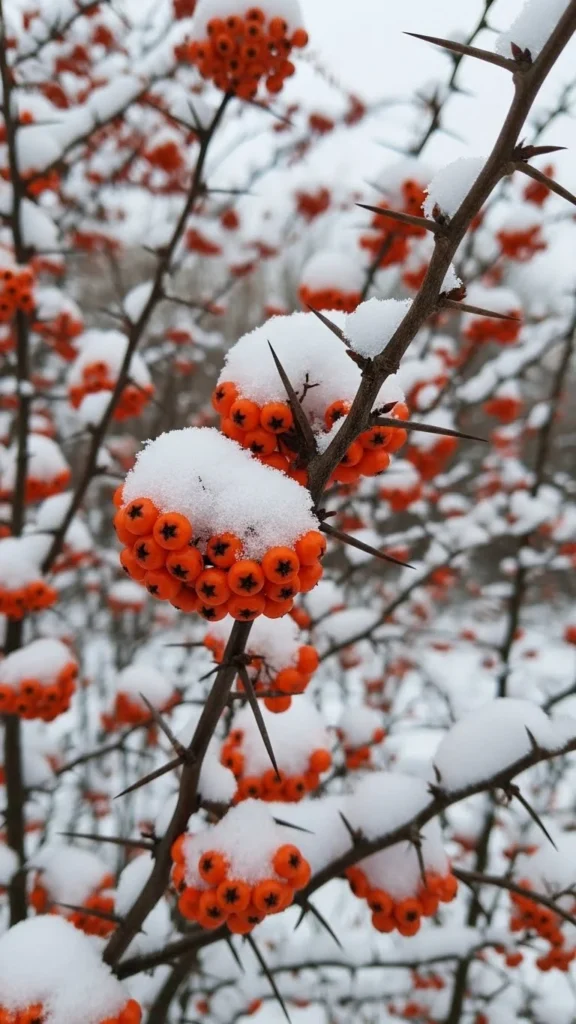
Firethorn adds strong berry color that lasts deep into winter. The bright clusters stand out across snowy landscapes. The shrub holds up well under snow thanks to its tough branching. Plant it along fences or walls for support. It grows quickly, making small shrubs a good budget option. Firethorn brings life to winter gardens because birds often visit for the berries. Add a mulch ring before winter to protect the roots. Trim lightly after spring growth if you want a tidy shape. Its bright berries and evergreen leaves give your yard warmth during long stretches of cold weather.
16. Euonymus
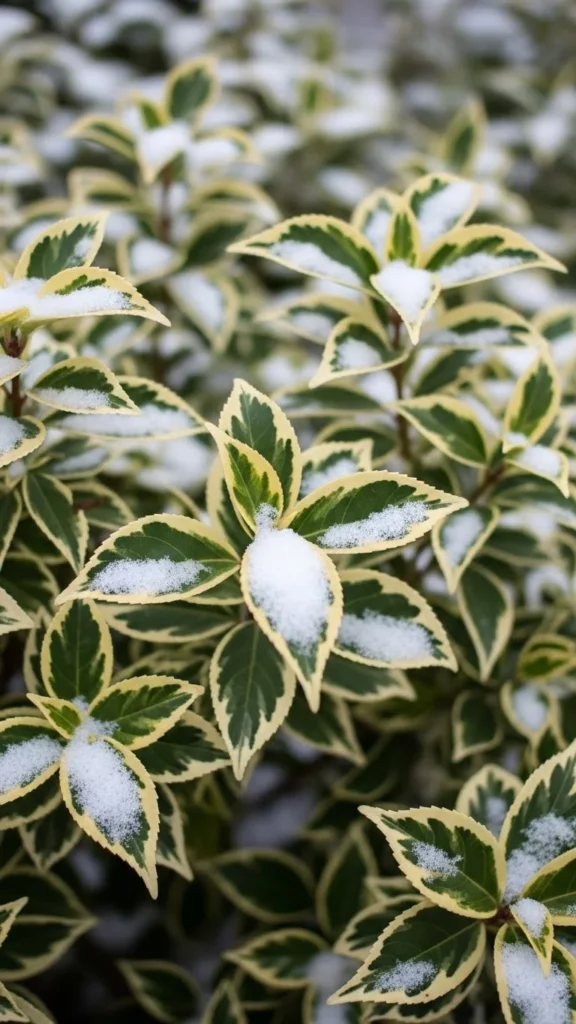
Euonymus offers colorful evergreen foliage that shows well against snow. Many varieties feature gold or white patterns that brighten winter beds. It handles cold weather without losing structure. Plant it near walkways or patios to highlight its patterns. Euonymus grows well in containers too, making it helpful for renters or small-space gardens. Add regular mulch to stabilize temperature swings. If you enjoy simple projects, trim lightly to keep the shape clean. The plant stays tidy through snowstorms and remains colorful when many shrubs fade into background tones.
17. Cotoneaster
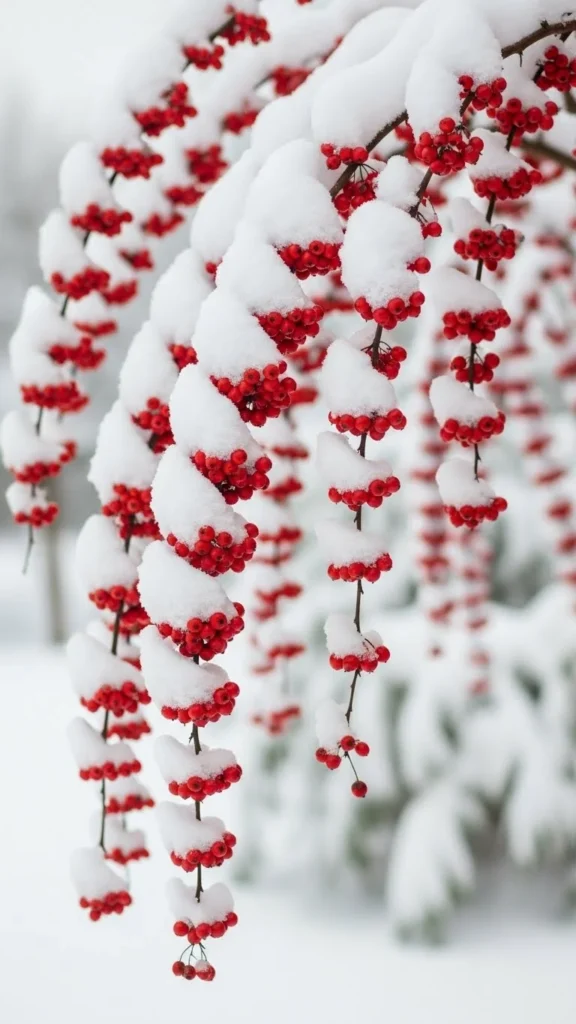
Cotoneaster stays strong all winter with arching branches and red berries that hold into the season. Snow adds gentle curves to the shape, making it charming to view from windows. This shrub is easy to grow, and many varieties spread wide, so you can fill space without buying many plants. Add gravel mulch for drainage and clean edges. Cotoneaster works well on slopes or along driveways. The berries draw winter birds, adding motion to quiet days. With simple care—mainly light trimming—it remains attractive through winter and beyond.
18. Bayberry
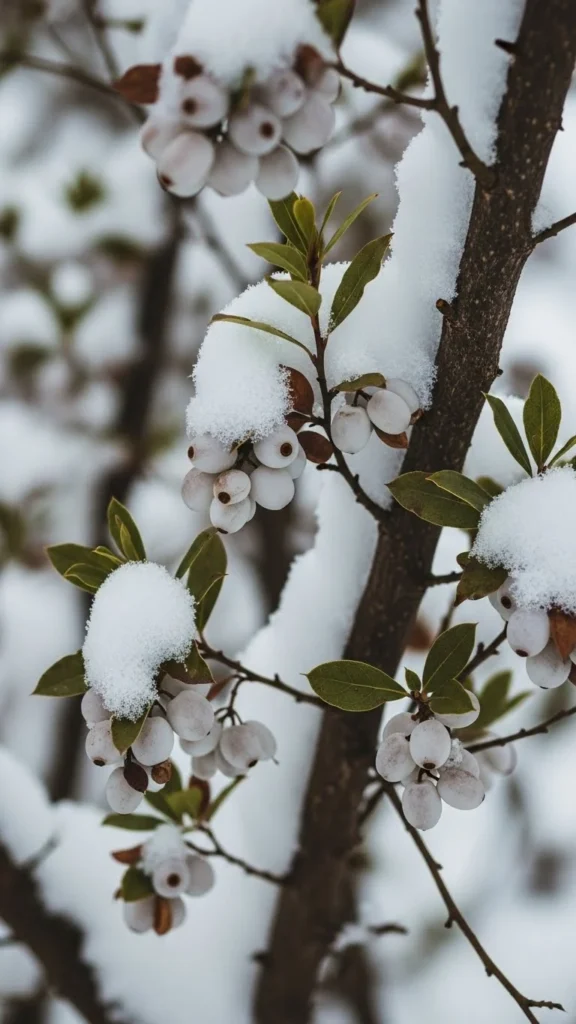
Bayberry handles cold winds and snow without losing shape. Its gray-green leaves look natural in wild-style gardens. The shrub thrives in poor soil, so it’s a good choice for low-maintenance areas. Add sand or gravel if drainage is slow. Bayberry works well for informal borders or larger natural plantings. It produces waxy berries that last through winter, giving extra character. If you want cost-saving options, purchase young plants and allow them to mature slowly. This shrub stays steady through long freezes and high winds.
19. Summersweet
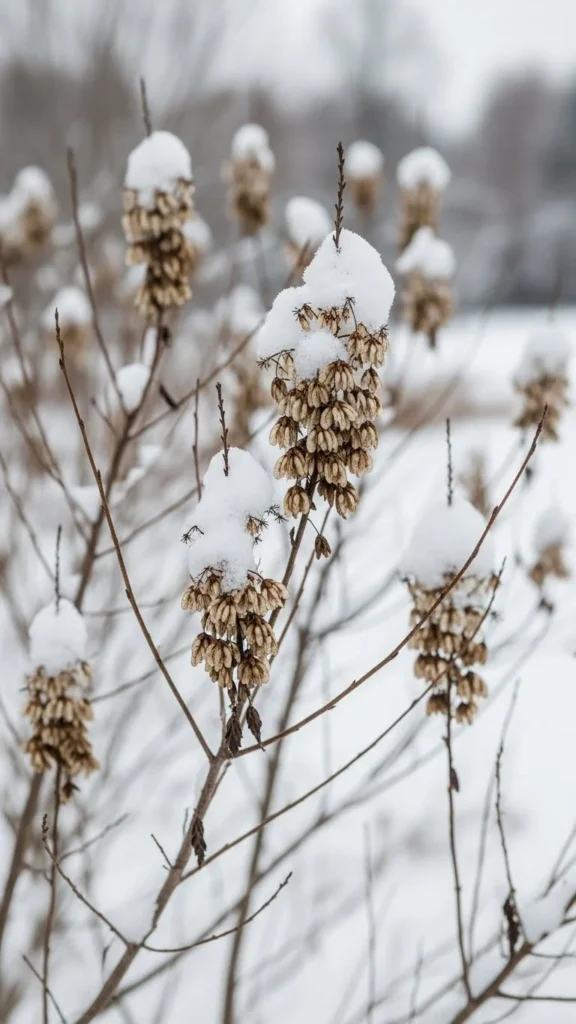
Summersweet may lose its leaves, but its upright stems stay sturdy in snow. The seed heads offer detail that makes the plant interesting even when dormant. This shrub thrives in moist soil and can handle shade. Use it near ponds, patios, or walkways. Smaller, younger plants adapt well and cost less. Leave the seed heads on for winter charm, then trim in early spring. Summersweet stays strong in snow and provides a clean winter outline that complements evergreens.
20. Witch Hazel
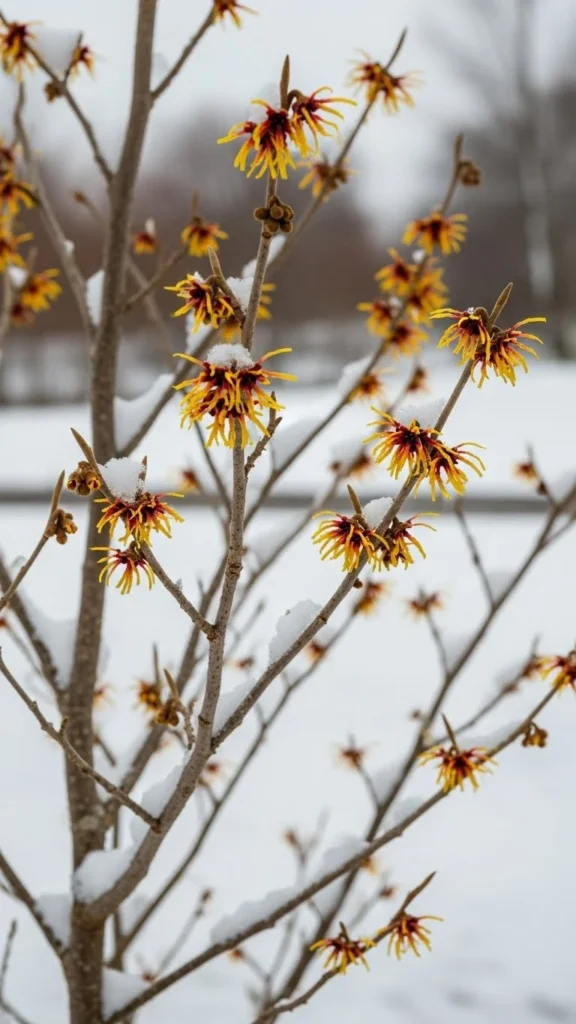
Witch hazel blooms in winter or early spring, creating unexpected color in the cold months. The branches hold snow well thanks to their open structure. Plant witch hazel near windows so you can enjoy the blooms during cold days. It prefers partial sun and steady moisture. For budget-friendly planting, select small nursery pots—they adapt well. Add mulch to protect the roots during freezes. Leave the natural shape intact; witch hazel looks best without heavy trimming. Its winter flowers bring beauty when the garden feels quiet.
21. Holly (Evergreen Varieties)
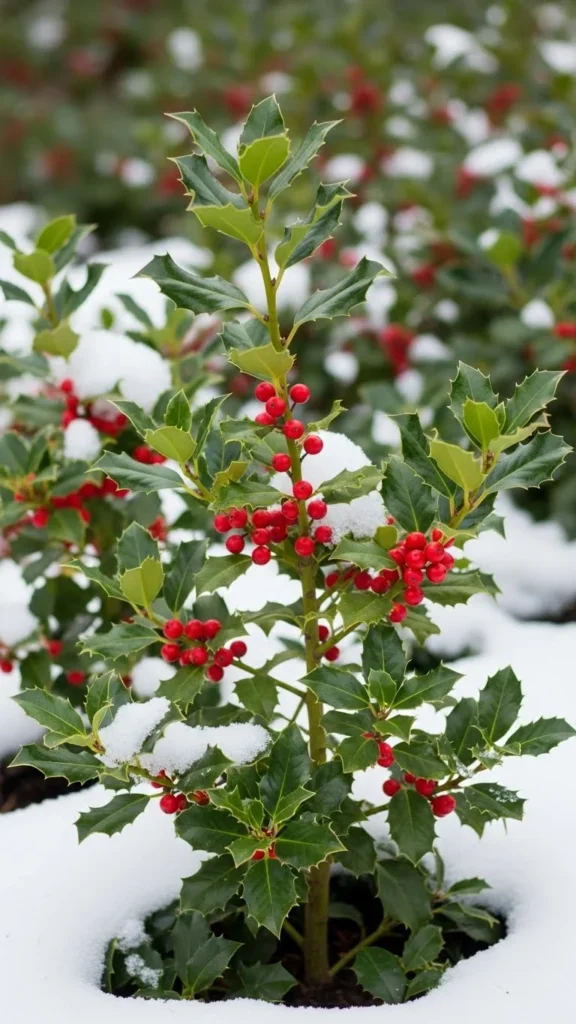
Holly shrubs stay tough through winter thanks to their thick evergreen leaves. The berries stand out beautifully against snow. Place holly near doors or patios for seasonal color. Planting smaller shrubs can save money, and they grow well once established. Add mulch to keep roots protected from deep freezes. Holly holds snow without bending much, making it reliable in stormy regions. Light trimming in early summer keeps the shape clean. Birds love the berries, adding interest to your winter landscape.
22. Spirea (Hardy Varieties)
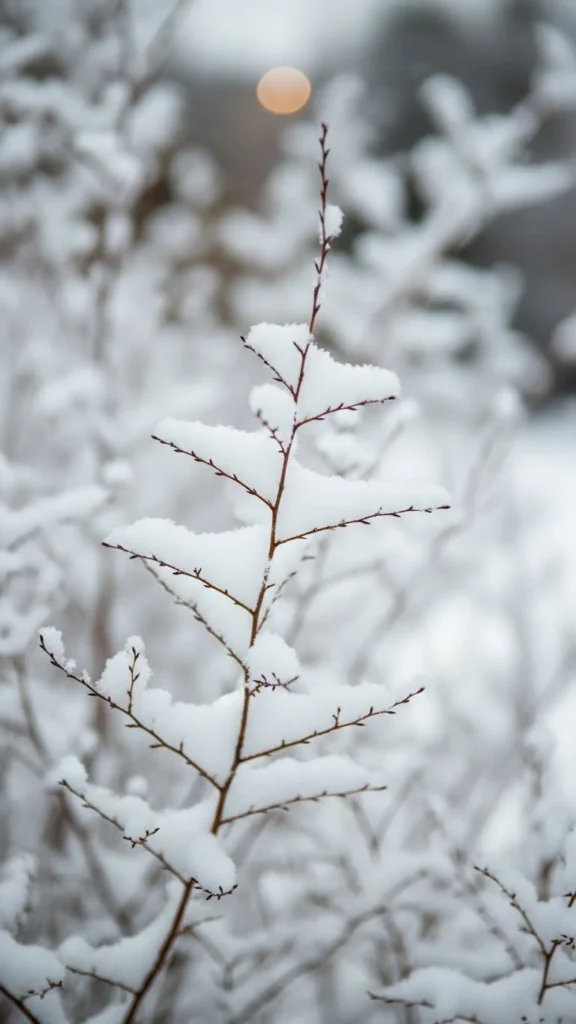
Hardy spirea varieties keep their structure even after leaves drop. Their stems stay upright through winter, creating a soft, airy look when snow collects. Use spirea in mixed beds or along pathways. It grows fast, so buying smaller plants is an easy way to save money. Leave seed heads in place until spring—they look beautiful in snow. Spirea handles cold well and rarely needs attention. Trim in early spring to refresh the shape for the growing season.
23. Barberry (Hardy Types)
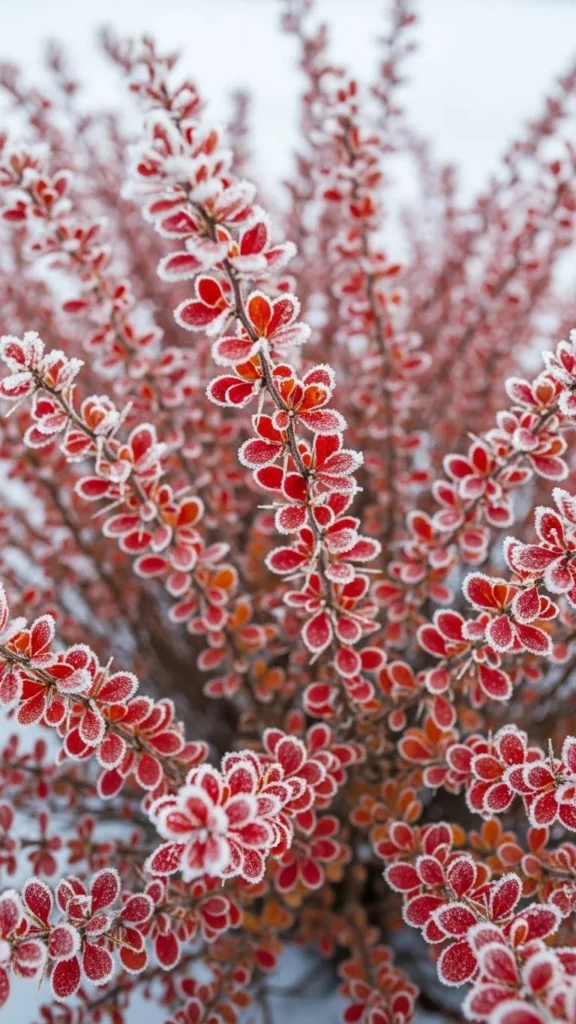
Barberry stays strong through winter thanks to flexible branches and dense structure. Many varieties keep bright leaf colors late into the season, giving the garden warmth. Plant barberry along borders or slopes for simple structure. It handles poor soil well, so it works in tough spots. Add mulch before winter to help with soil temperature swings. Barberry grows steadily, making small plants a smart budget choice. With little care, it keeps bold color and shape even during storms.
Conclusion
Snow-resistant shrubs bring natural structure, winter color, and steady form to any yard. With the right mix, your landscape stays appealing through long freezes, deep snow, and cold winds. Choose a few shrubs that match your light and soil, plant them in simple groupings, and enjoy a winter garden that stays strong all season.

Leave a Reply