

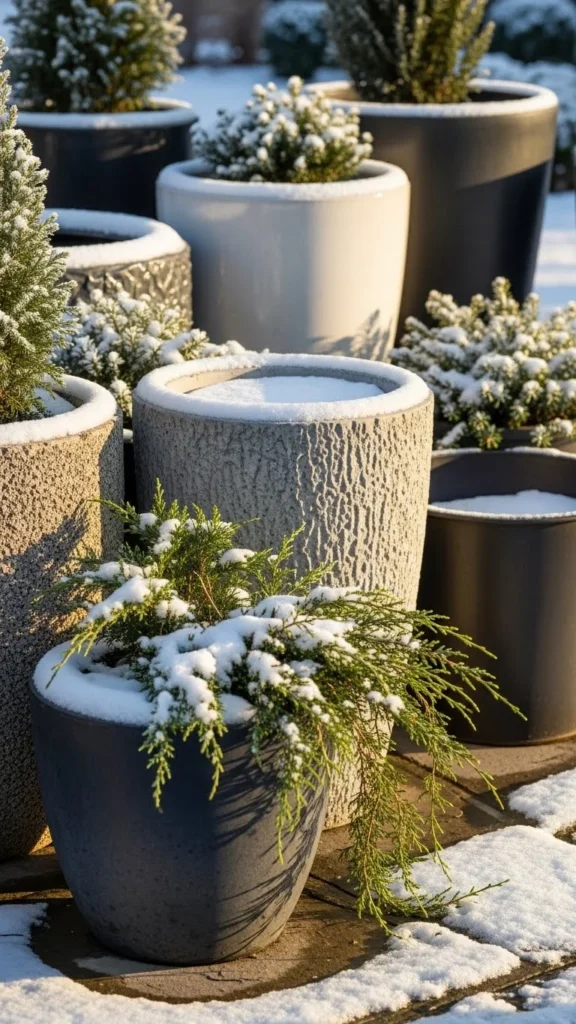
Snowy winters can destroy the wrong outdoor pots fast. Cracks, chips, and breakage happen when materials can’t handle freeze-thaw cycles. The good news is that many pots are built to handle snow year after year without constant replacement. This guide focuses on snow-safe outdoor pots that hold up through cold weather, ice, and moisture while staying practical and budget-friendly. You’ll also find simple tips to stretch the life of what you already own.
1. Thick Concrete Cylinder Pots
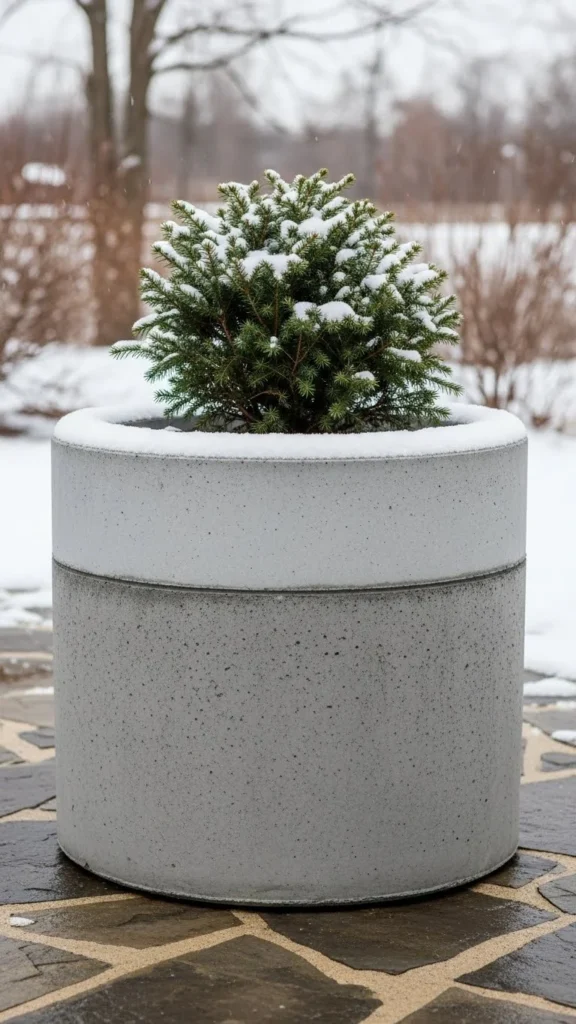
Concrete cylinder pots handle snow better than thin planters. Their weight keeps them steady during winter storms. Thick walls slow down cracking from temperature swings.
Look for poured concrete rather than pressed versions. Those tend to hold together longer.
To save money, buy plain gray styles. Paint them in warmer months if you want color.
Drainage matters. Add a gravel layer at the bottom. This helps water escape before freezing.
If you already own concrete pots, raise them slightly using bricks or pot feet. That keeps melting snow from pooling underneath.
Concrete may feel basic, but solid concrete pots often last a decade or more outdoors.
2. Frost-Resistant Glazed Ceramic Pots
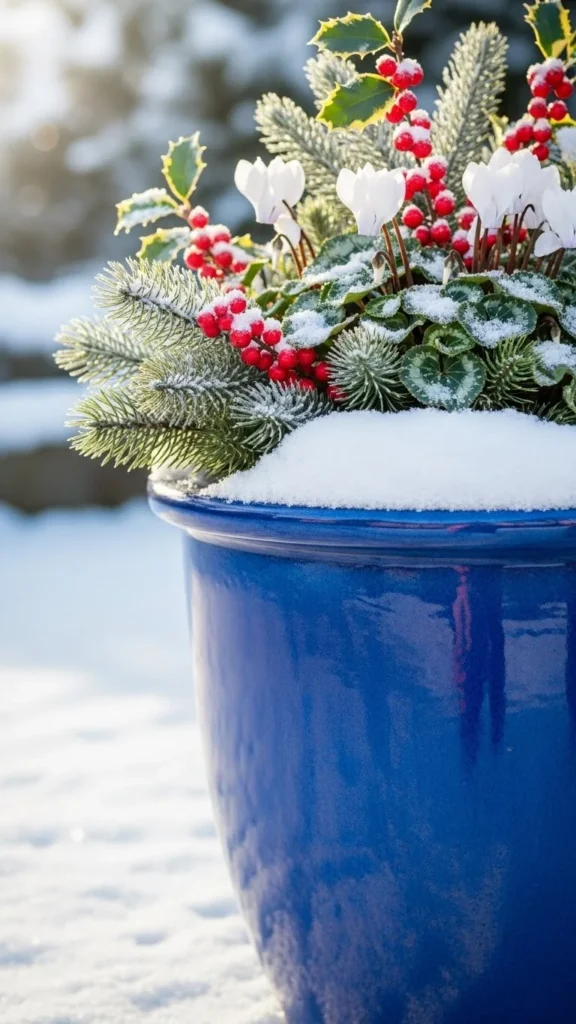
Not all ceramic pots survive winter. Frost-rated glazed ceramic is different. These are fired at higher temperatures, making them less porous.
Less moisture absorption means fewer cracks.
Choose pots labeled frost-resistant or outdoor-safe. Avoid thin walls.
Neutral glazes hide minor wear better than bright finishes.
Budget tip: buy these during end-of-season sales. Many stores discount them before winter.
For extra protection, keep them away from roof drip lines where ice buildup happens.
Add gravel and avoid overwatering late in fall. Frost-safe ceramic pots stay strong when moisture control is handled well.
3. Heavy-Duty Resin Planters
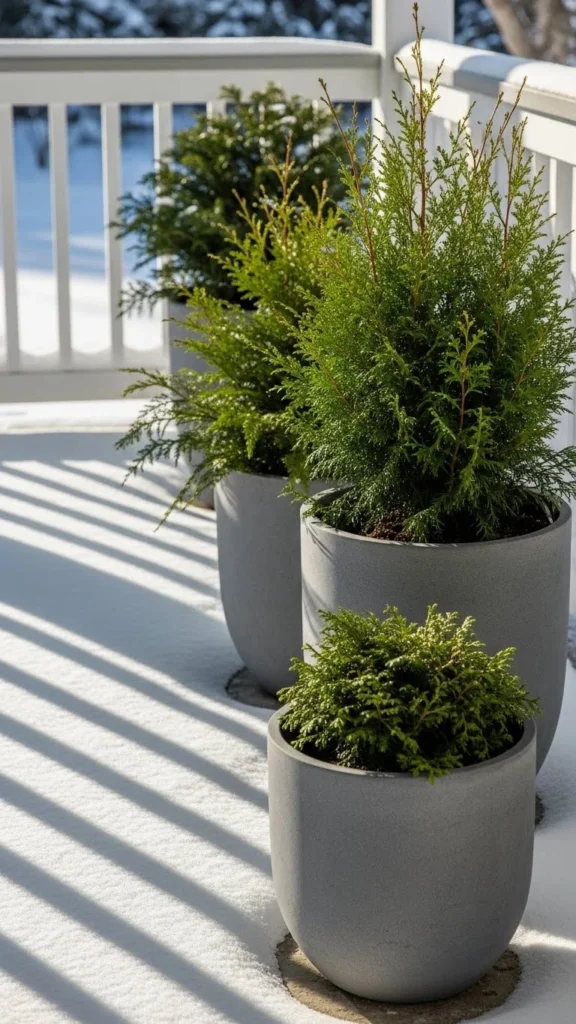
Quality resin planters are light but tough. They flex slightly instead of cracking.
Look for UV-stable, outdoor-rated resin. Cheap plastic becomes brittle in cold weather.
These are great for balconies or decks where weight matters.
Dark colors warm slightly in sunlight, reducing freeze stress.
DIY trick: add sand to the bottom for weight. This keeps pots from tipping in snowstorms.
Resin won’t absorb water, which helps during freeze cycles.
Snow-safe resin planters work well when you want durability without heavy lifting.
4. Cast Stone Urn Pots
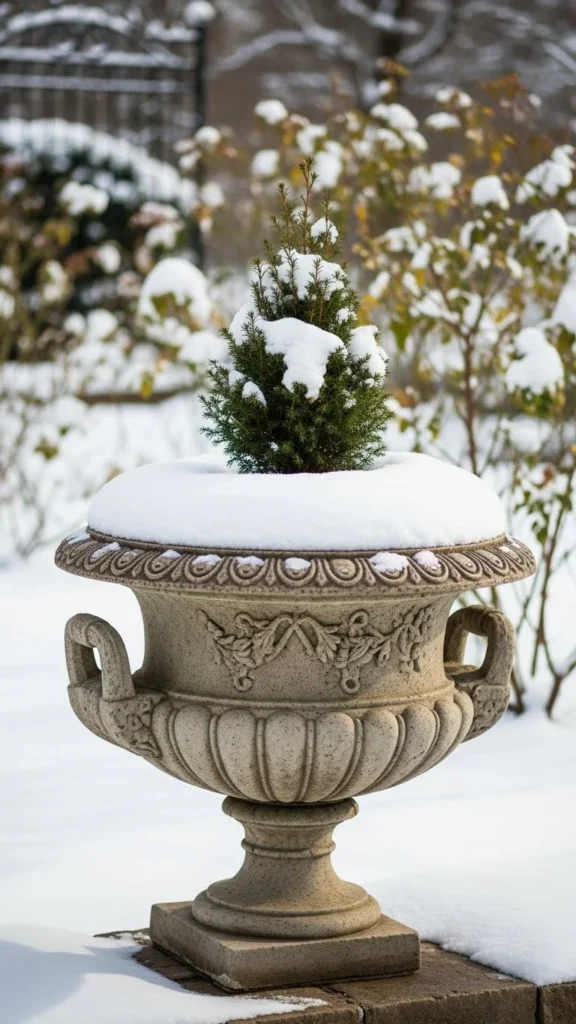
Cast stone urns combine strength and style. They’re thicker than standard concrete and handle cold well.
The weight keeps them stable through wind and snow.
These often cost more upfront. The payoff is long life.
Choose simple shapes. Deep carvings collect ice.
If drainage holes are small, widen them slightly. This helps meltwater escape faster.
Place urns on pot feet to keep bases dry.
Cast stone pots are a smart long-term choice for entryways and patios.
5. Galvanized Steel Planters
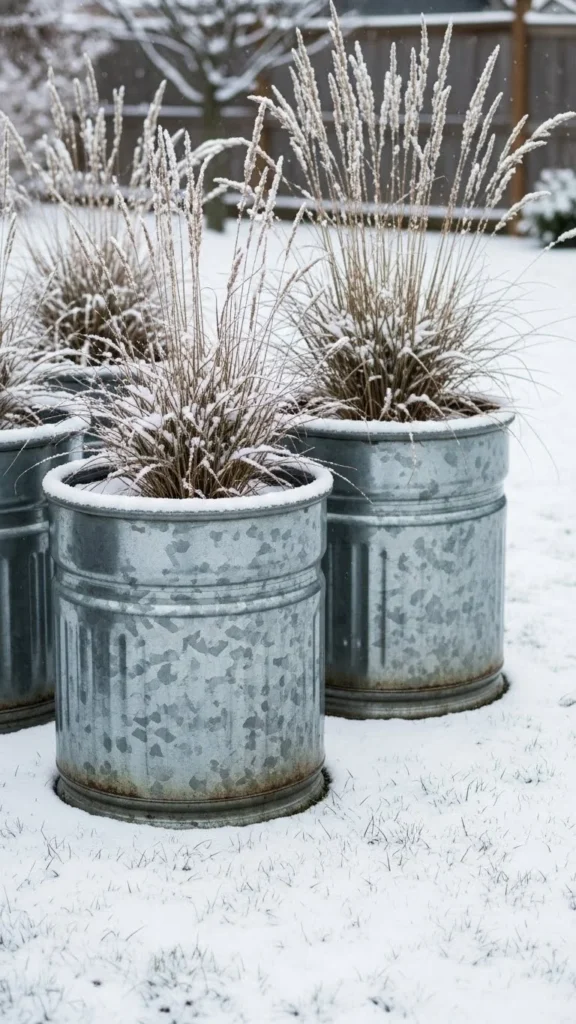
Galvanized steel resists rust and cracking. Snow doesn’t harm it.
Metal expands and contracts evenly, reducing stress damage.
These planters work best with liners. Liners protect roots from cold metal.
Choose thicker steel. Thin versions dent easily.
Budget tip: farm supply stores often sell durable galvanized tubs at lower prices.
Drill drainage holes if missing.
Steel outdoor pots last through snow with little upkeep.
6. Fiberglass Reinforced Planters

Fiberglass planters look modern but perform well in snow.
They’re lightweight yet strong and don’t absorb water.
Check that the planter is rated for outdoor winter use.
Cheap fiberglass can split at seams.
Add insulation inside using foam sheets if winters are harsh.
Fiberglass stays intact when many materials fail.
Snow-ready fiberglass pots suit modern spaces needing durability.
7. Solid Wood Barrel Planters
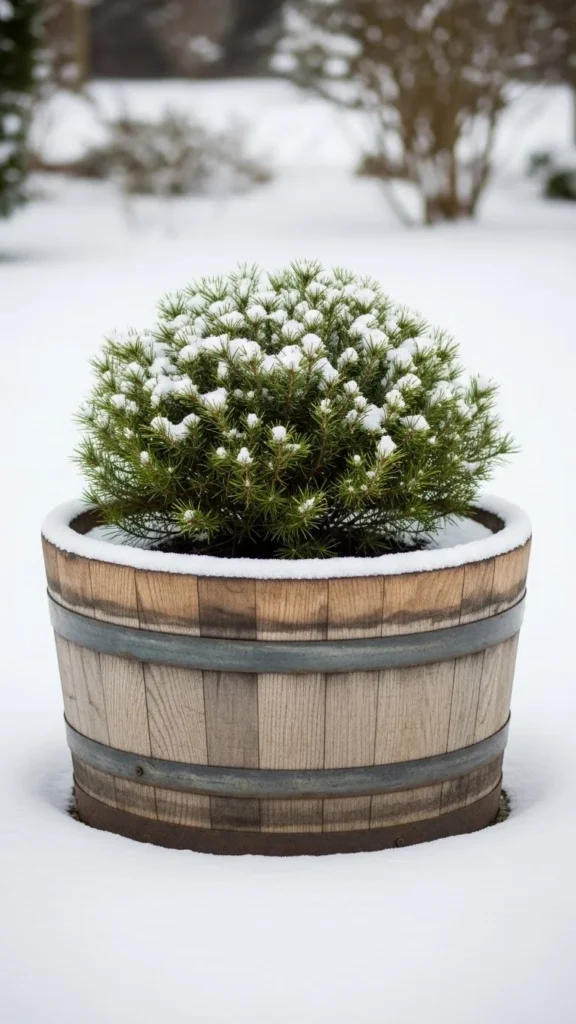
Real wood barrels handle cold better than thin wood planters.
Thick staves allow gradual movement during temperature changes.
Line the inside with plastic to reduce moisture contact.
Choose cedar or oak for longer life.
DIY tip: repurpose half barrels from garden centers.
Keep them slightly raised to avoid sitting water.
Wood barrel pots age well with basic care.
8. Rubber Composite Planters
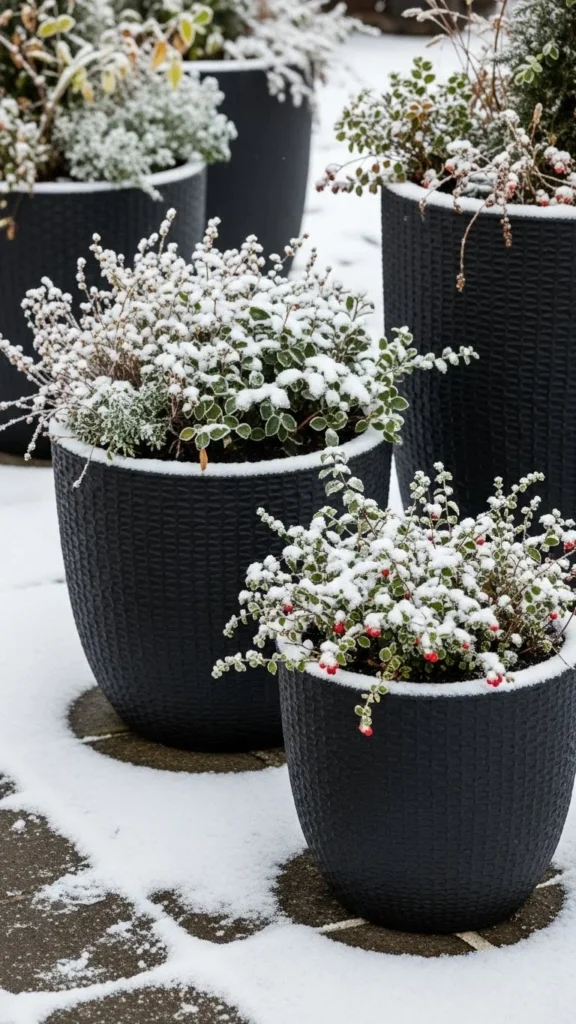
Rubber composite planters flex instead of cracking.
They perform well in freeze-thaw cycles.
These often look like stone but weigh less.
Check for drainage holes before use.
They’re often affordable and sold year-round.
Rubber doesn’t chip like ceramic.
Flexible composite pots are reliable for long winters.
9. Thick Terracotta with Sealant
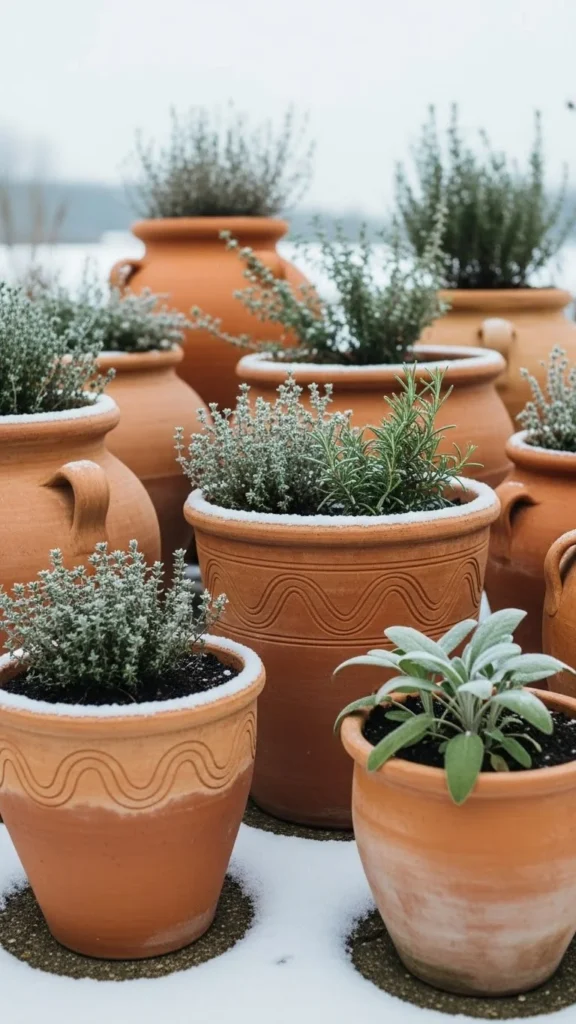
Standard terracotta breaks easily. Thick terracotta with sealant lasts longer.
Sealant limits moisture absorption.
Apply sealant inside and out in dry weather.
Use pot feet to keep bases dry.
This option works best in milder snowy climates.
It’s a budget-friendly way to reuse existing pots.
Sealed terracotta pots can survive snow with prep.
10. Double-Walled Plastic Pots
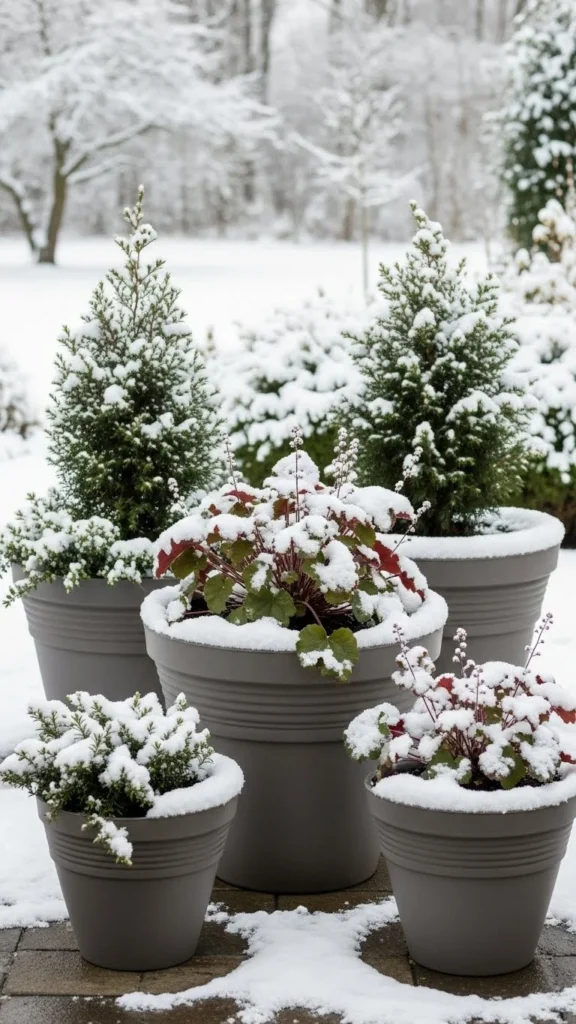
Double walls add insulation.
Roots stay protected from sharp temperature drops.
Choose outdoor-rated plastic.
Avoid thin single-wall designs.
These pots are affordable and easy to move.
Drainage still matters.
Insulated plastic planters handle snow better than basic plastic.
11. Concrete Bowl Planters
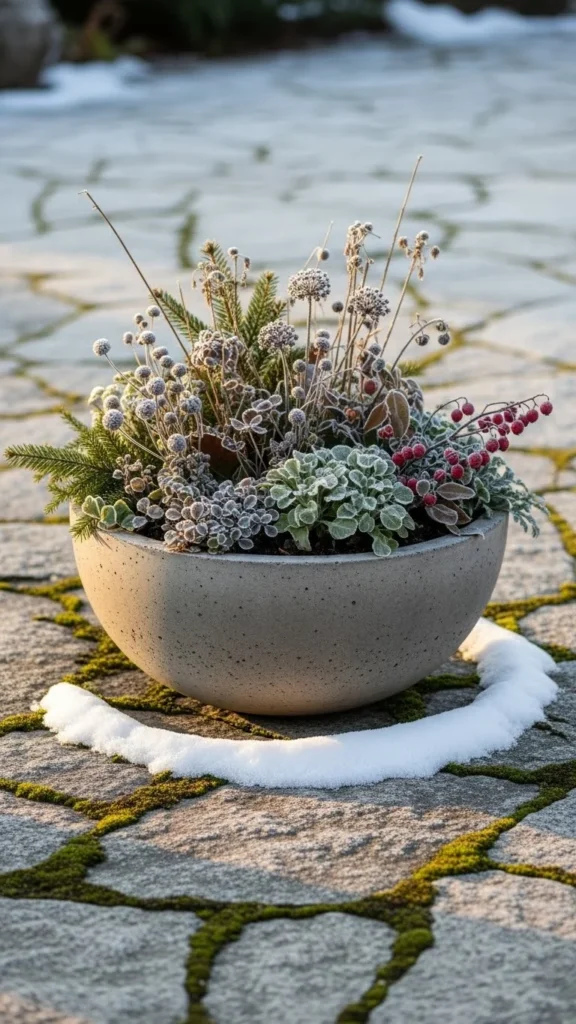
Bowl shapes shed snow easily.
Less buildup means less pressure.
Look for thick rims and solid bases.
Avoid shallow drainage holes.
Concrete bowls work well near walkways.
They stay stable during storms.
Concrete bowl pots are simple and durable.
12. Recycled Plastic Outdoor Pots
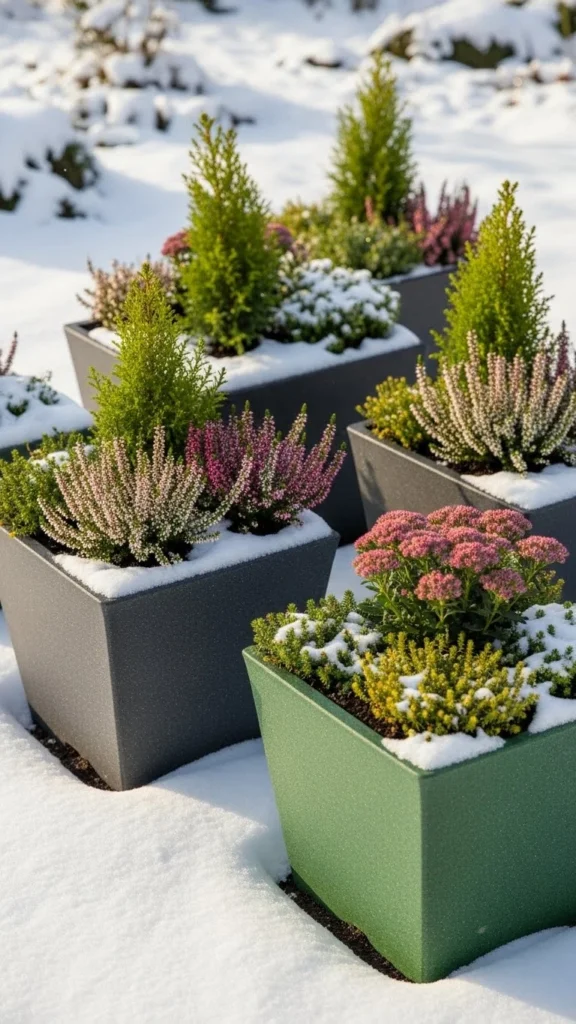
Recycled plastic resists cracking and moisture.
It’s often thicker than standard plastic.
These pots are affordable and low-maintenance.
Neutral colors hide wear.
Add weight inside to prevent tipping.
They last multiple winters.
Recycled plastic pots offer value and durability.
13. Stone Aggregate Planters
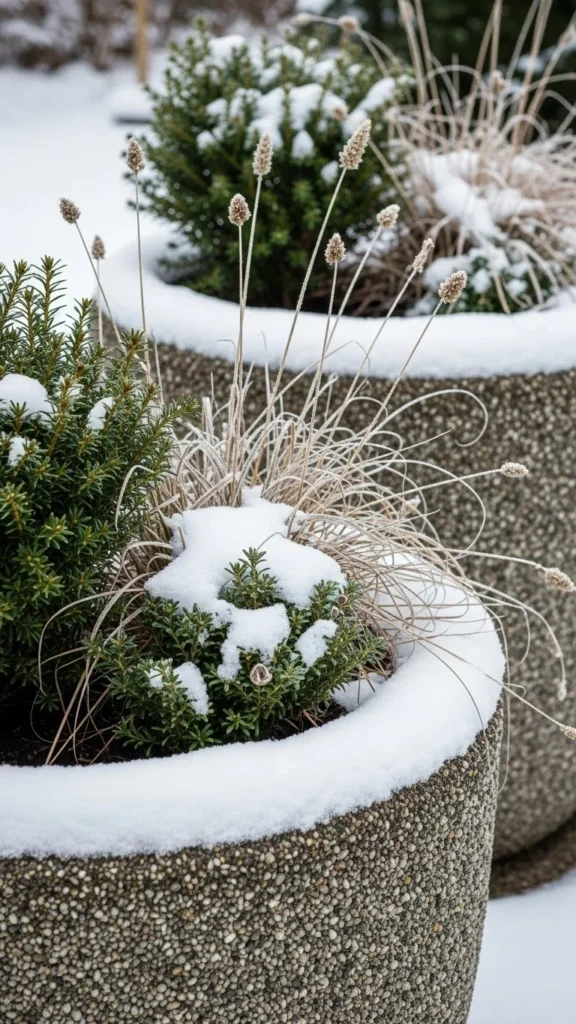
Stone aggregate mixes stone with resin.
This combination handles cold well.
They look like stone but weigh less.
Drainage is usually built-in.
Often mid-priced with long lifespan.
Place on pot feet for best results.
Aggregate planters balance style and strength.
14. Square Concrete Block Planters
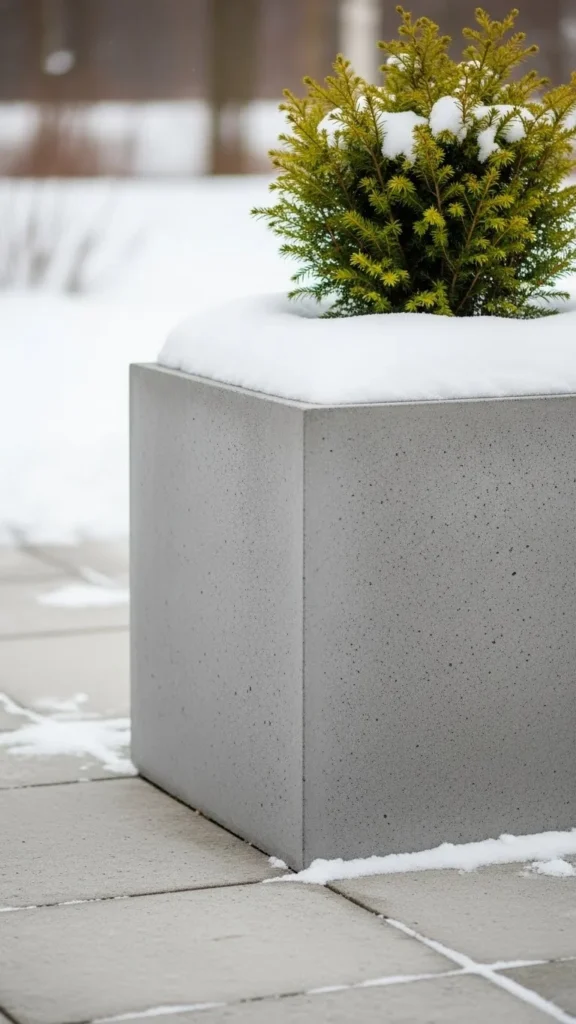
Square shapes stack strength evenly.
Concrete blocks resist cracking better than thin designs.
DIY option: use masonry blocks lined inside.
Affordable and customizable.
Seal interior joints to reduce moisture.
These planters stay solid for years.
Block-style pots are tough and budget-friendly.
15. Outdoor Cement Fiber Pots
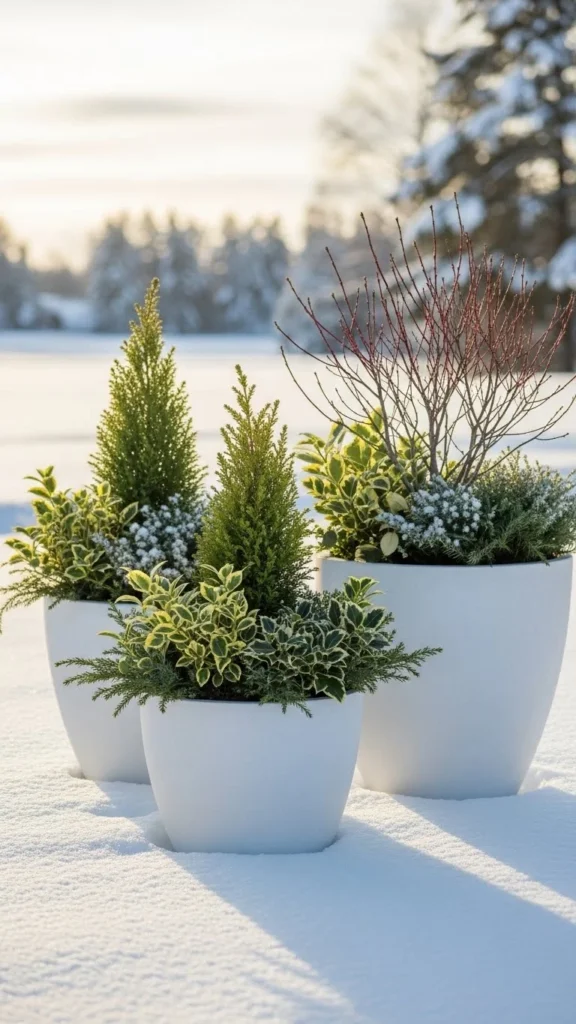
Cement fiber blends cement with fibers.
It resists cracking better than plain concrete.
These pots weigh less but stay strong.
Check thickness before buying.
Often priced lower than stone.
Use drainage layers to extend life.
Cement fiber planters perform well in snow.
16. Raised Footed Planters
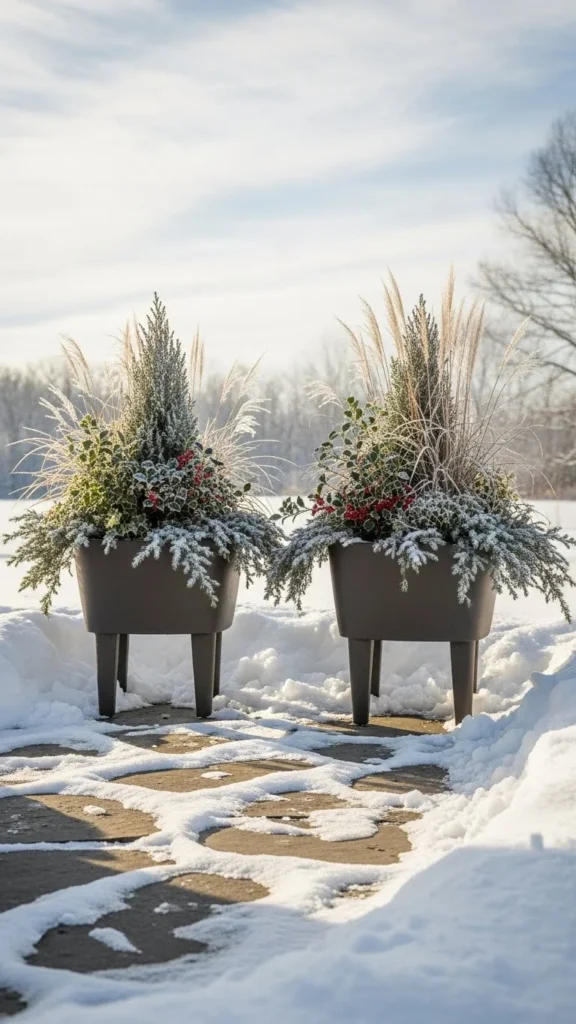
Feet improve airflow and drainage.
Water escapes before freezing.
Choose durable materials like concrete or resin.
Avoid decorative fragile feet.
You can add feet to existing pots.
This simple step reduces damage.
Footed pots last longer in snowy areas.
17. Heavy Resin Stone-Look Pots
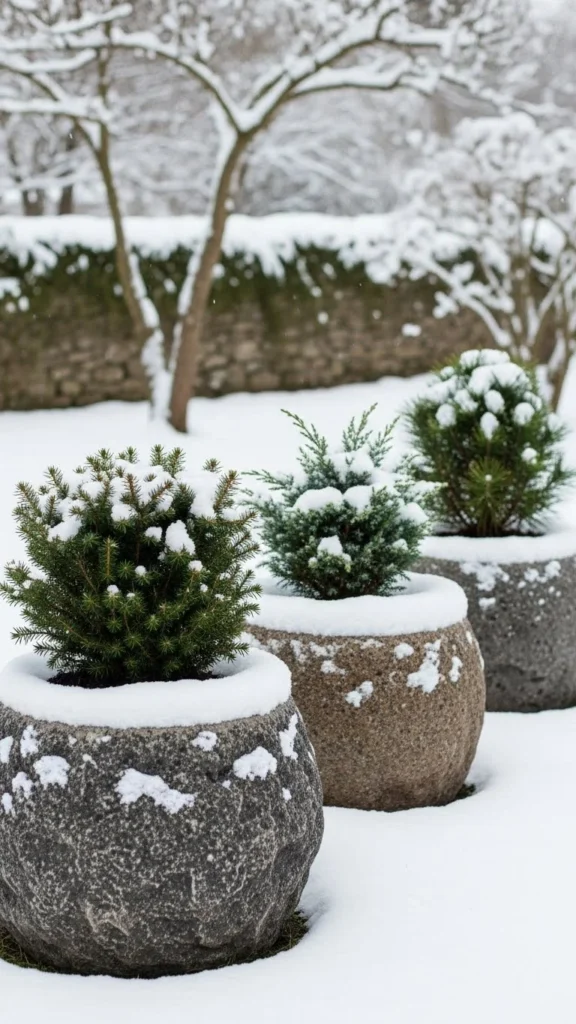
Stone-look resin combines style and flexibility.
It resists chips and cracks.
Often cheaper than real stone.
Light enough to move when needed.
Add weight for wind protection.
These work well near doors.
Stone-look resin pots hold up through winter.
18. Trough-Style Concrete Planters
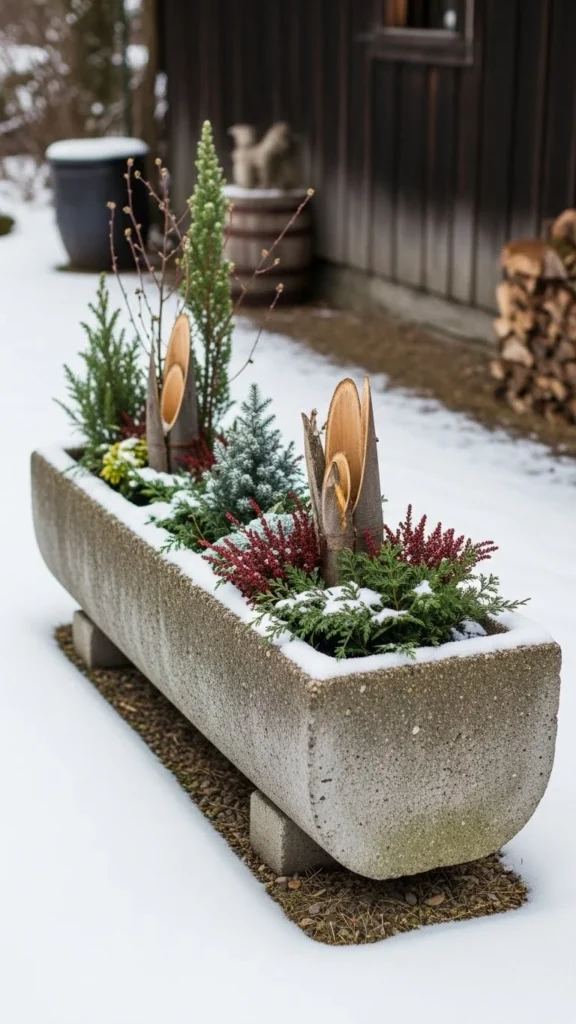
Troughs spread pressure evenly.
Snow slides off more easily.
They suit herbs or small shrubs.
Choose thick walls.
DIY option: cast your own using molds.
Seal inside for longer life.
Concrete troughs handle cold well.
19. Powder-Coated Metal Pots
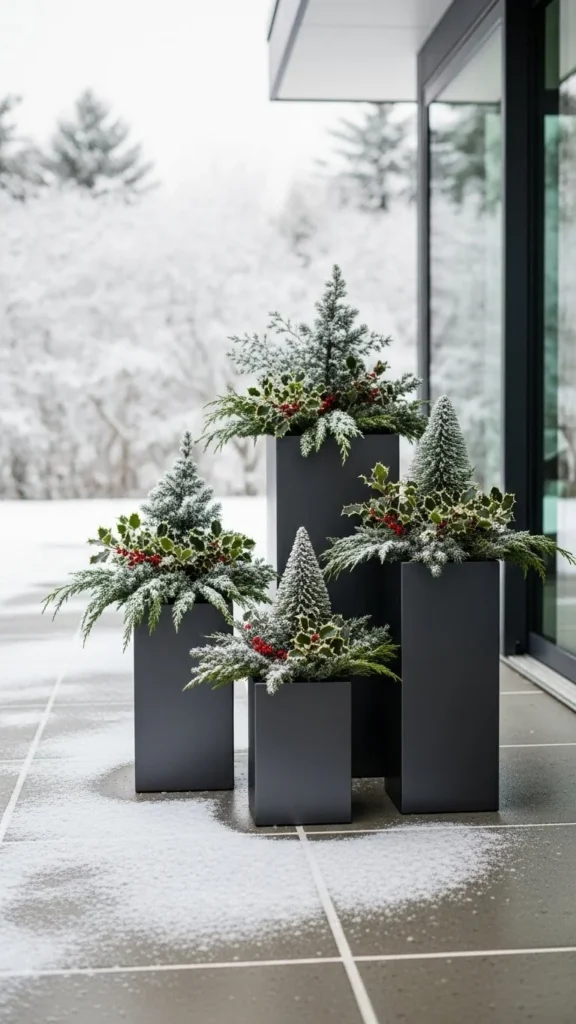
Powder coating protects metal from rust.
Cold doesn’t damage it.
Use liners to protect roots.
Check for drainage holes.
These pots last with minimal upkeep.
Often mid-priced.
Coated metal planters stay strong in snow.
20. Stoneware Outdoor Pots
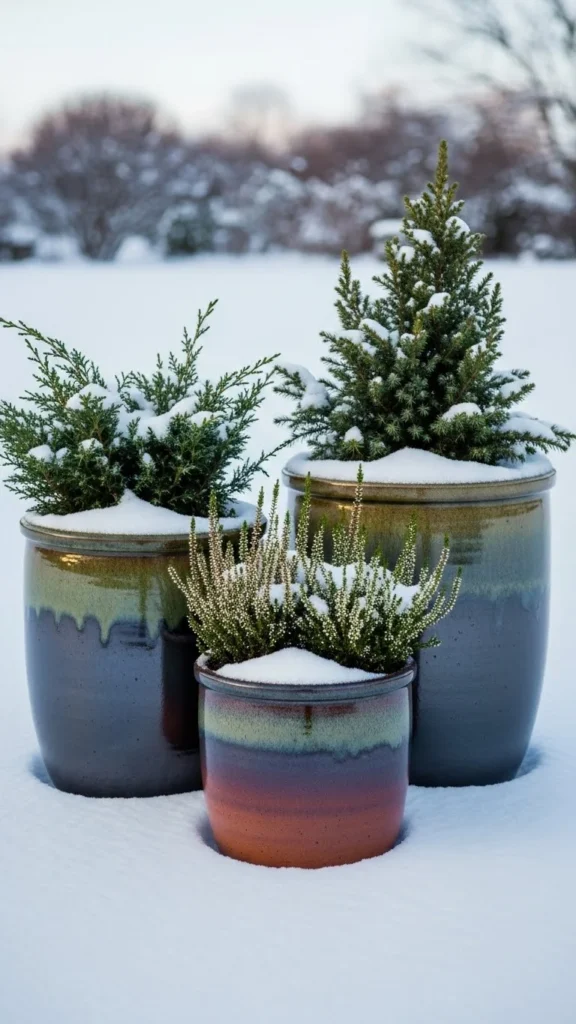
Stoneware is fired at high heat.
It absorbs less water than ceramic.
Choose frost-rated versions only.
Avoid thin designs.
Often found at garden centers.
They age well outdoors.
Stoneware pots suit cold climates.
21. Faux Lead Composite Planters
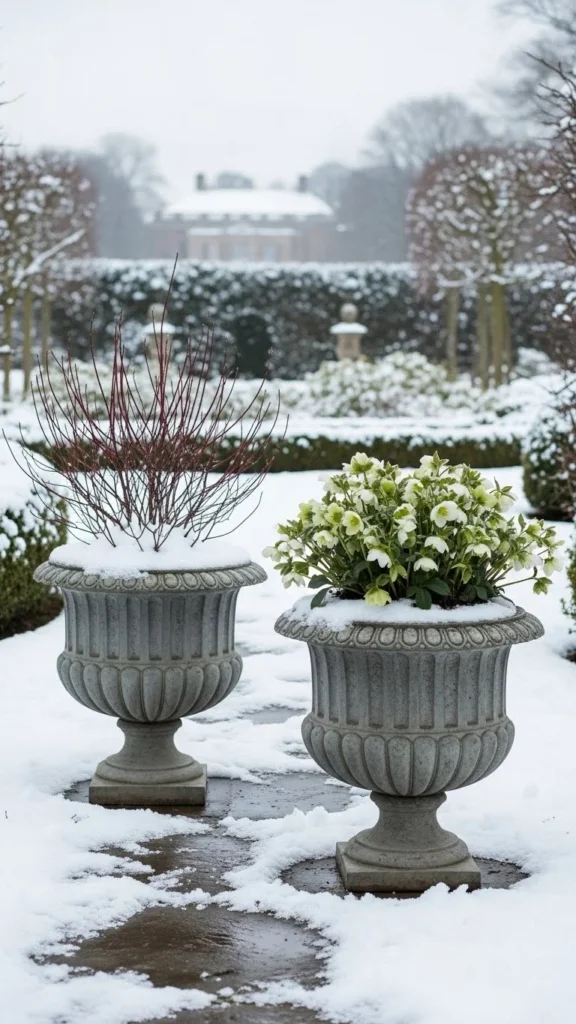
Faux lead uses composite materials.
No cracking or corrosion.
They look traditional without weight issues.
Often lighter than stone.
Drainage is usually solid.
Long lifespan outdoors.
Composite lead-look pots handle winter well.
22. Thick Resin Window Boxes
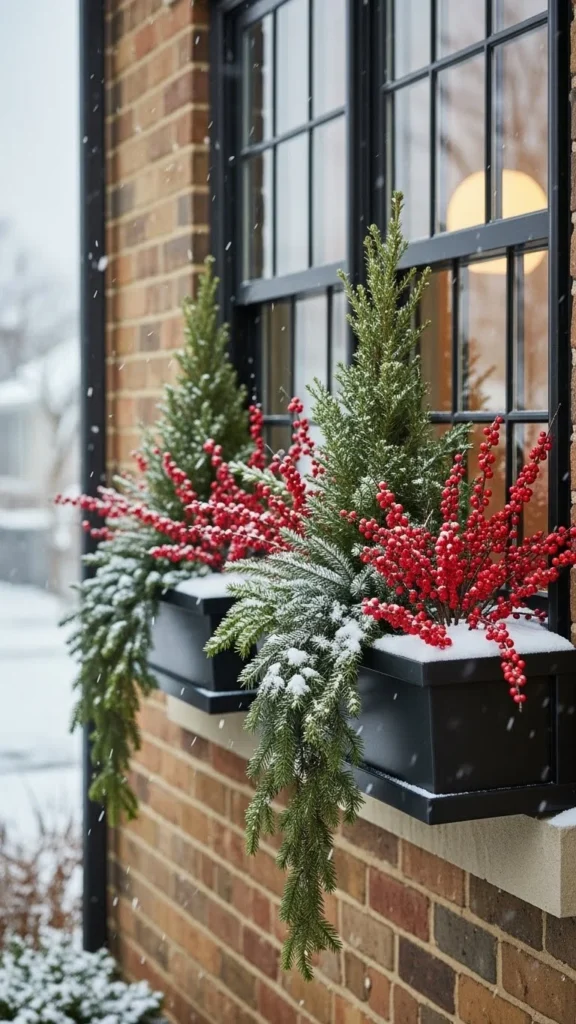
Resin window boxes resist moisture.
They don’t split in cold.
Choose thick designs.
Secure brackets firmly.
Affordable and practical.
Great for winter greenery.
Snow-safe window boxes last longer.
23. Large Format Concrete Planters
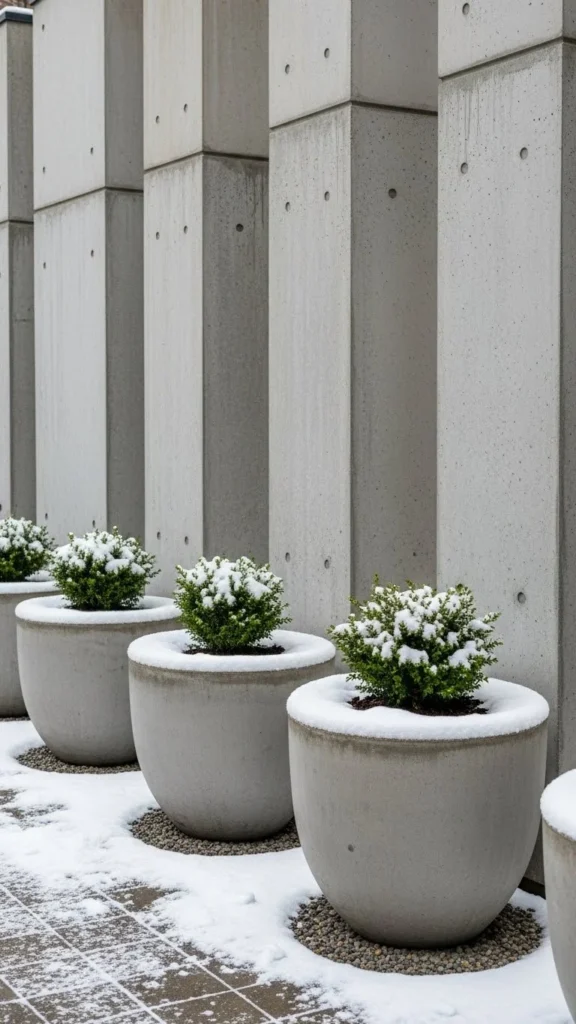
Larger pots resist cracking better.
More mass slows freezing.
Use gravel layers for drainage.
Place on pot feet.
These suit shrubs and small trees.
They last many seasons.
Large concrete pots thrive in snow.
24. Insulated Foam-Core Planters
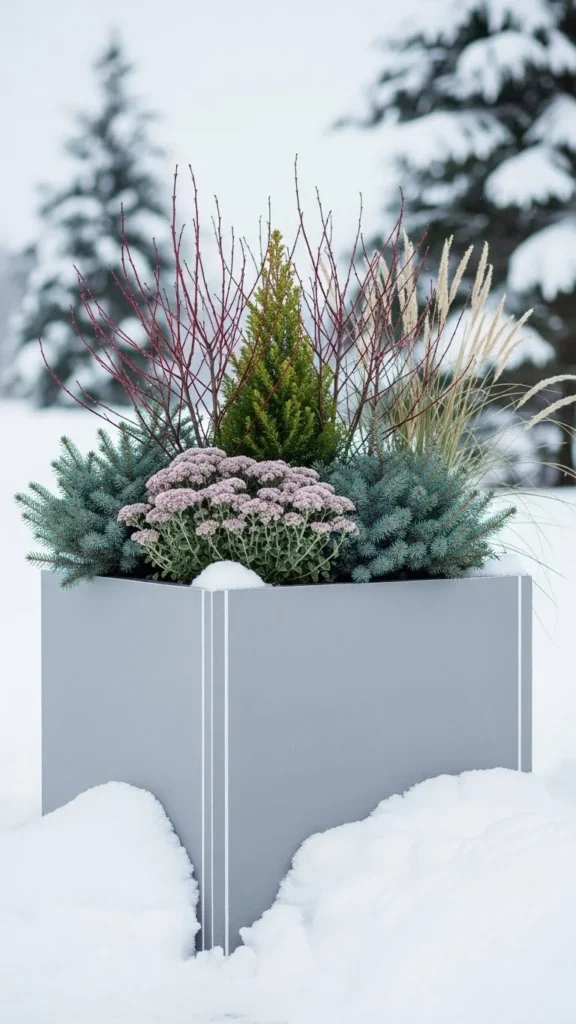
Foam cores add insulation.
Roots stay protected.
Often wrapped in resin or plastic.
Lightweight and durable.
Budget-friendly for cold regions.
Drainage still matters.
Insulated planters handle harsh winters.
25. Natural Stone Planters
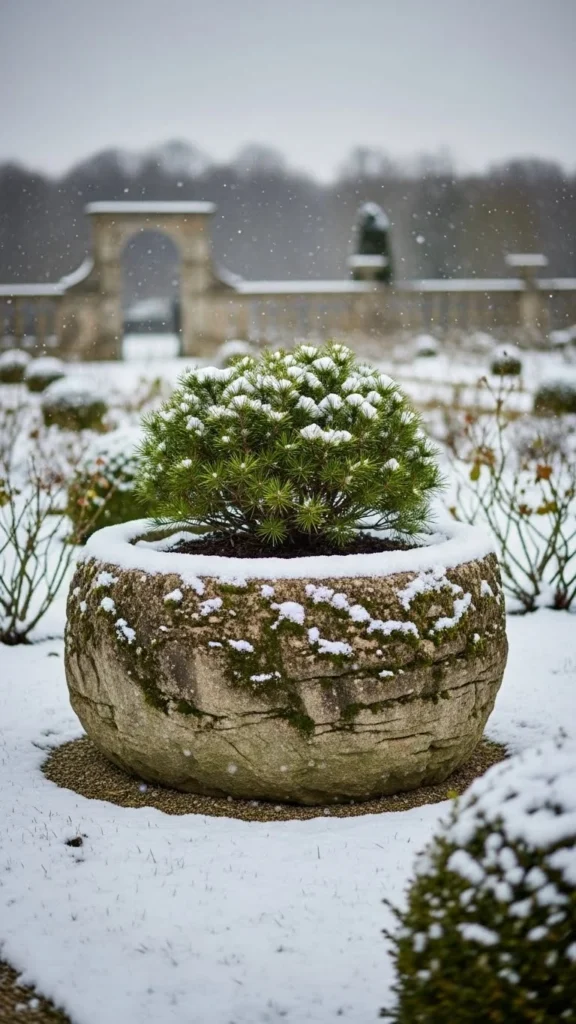
Natural stone withstands snow easily.
No cracking from cold.
Heavier and pricier.
Long lifespan.
Use feet for drainage.
Minimal upkeep required.
Stone outdoor pots last for decades.
Conclusion
Snow doesn’t have to shorten the life of your outdoor pots. Choosing snow-safe materials, managing drainage, and making small adjustments can keep planters strong year after year. Whether you invest in concrete, resin, metal, or composite options, smart choices save money and effort over time. Pick designs that match your space, protect them from standing water, and enjoy outdoor containers that stay intact through every winter season.
Leave a Reply