

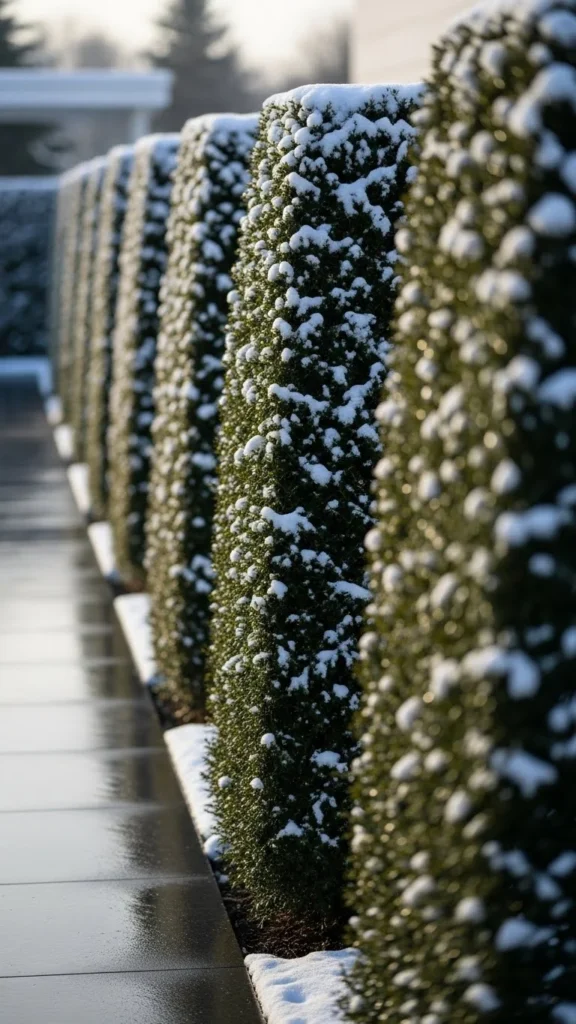
Winter doesn’t have to flatten your yard. Dense, snow-tolerant hedges hold their shape even during heavy storms, giving your landscape a polished, high-end look all season. They add privacy, color, and structure when everything else fades. The best part? Many of these shrubs are hardy, low-maintenance, and budget-friendly. Below are 25 beautiful hedge options that stay lush through winter and help your outdoor space look intentional and well-designed.
1. Green Mountain Boxwood
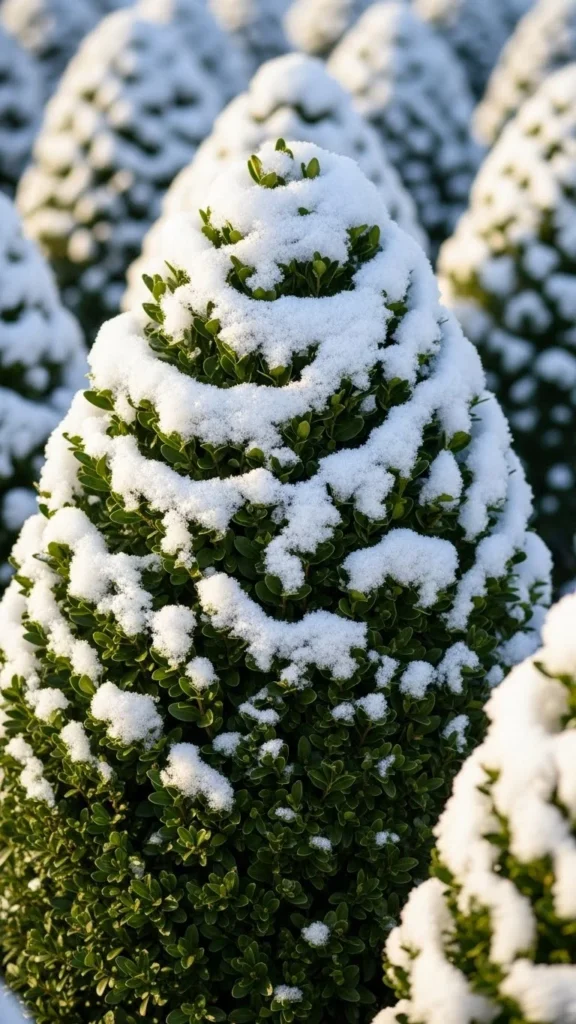
Green Mountain Boxwood keeps a tight shape through cold months. It grows slowly, which means less trimming and a controlled look even if you’re new to hedge care. This plant works well along walkways or around patios where you want clean lines. For a budget-friendly start, choose smaller nursery pots and plant them closer together. Mulch heavily around the base to protect the roots. This also keeps moisture steady so the shrubs stay compact. If you enjoy quick yard tasks, give each plant a light trim in late summer. This sets the shape before winter arrives and helps the hedge look polished even under snow.
2. Winter Gem Boxwood
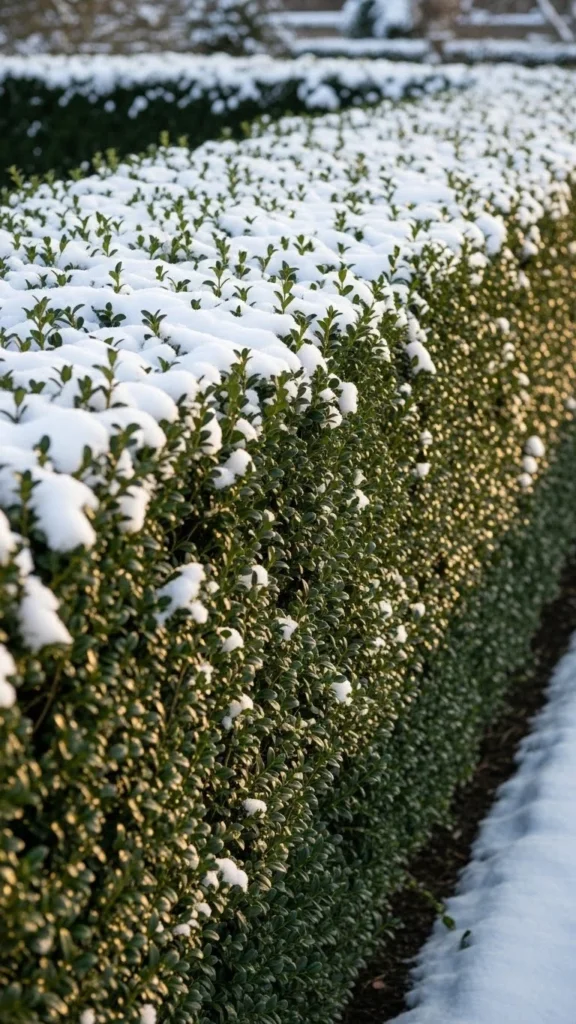
Winter Gem keeps its color even in freezing weather. It’s sturdy, dense, and perfect for a neat, upscale border. If you’re aiming for a high-end look on a smaller budget, alternate young plants with mature ones to fill space faster without overspending. Water deeply before the ground freezes so the roots stay healthy through cold spells. Add burlap windbreaks in exposed spots; they’re inexpensive and easy to reuse every year. The hedge will look just as good in summer as it does in winter, giving your yard year-round structure.
3. Japanese Holly (Ilex crenata)
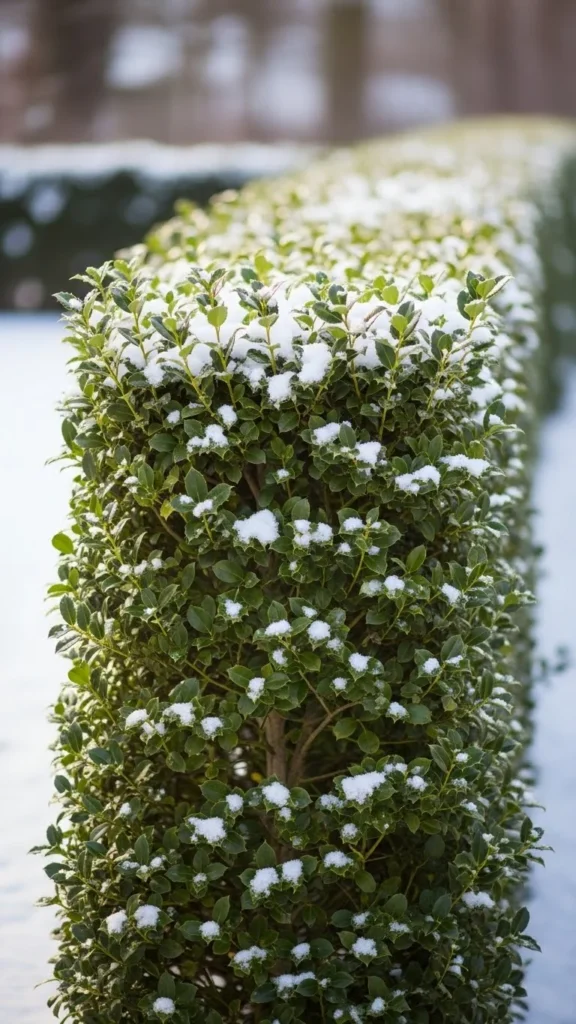
Japanese Holly mimics boxwood but adds a darker, richer tone. The small leaves stay tidy under snow, creating a structured look that feels expensive without much effort. Plant several in a staggered row for a fuller effect. If you want fast coverage, mix in a few taller starter plants. They fill vertical gaps and help the hedge feel complete sooner. Keep the soil slightly acidic by adding pine needles or peat moss—both are affordable and long-lasting. This hedge handles cold snaps well and keeps its clean silhouette throughout winter.
4. Inkberry Holly
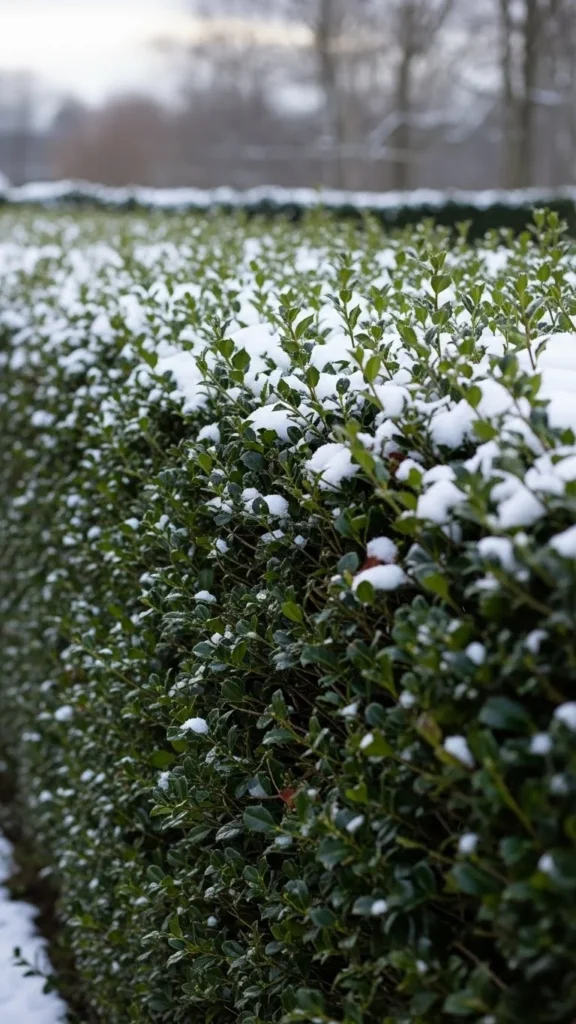
Inkberry Holly forms a full, leafy hedge that stays thick from base to top. It handles snow far better than some other hollies. Choose varieties known for tight growth to get that designer look without constant upkeep. If you’re refreshing an older bed, tuck young inkberry plants between gaps to thicken the hedge affordably. Add compost once a year to keep the soil rich. Prune lightly in late winter to remove straggly stems and help the plant push new, dense growth.
5. Yew (Taxus)
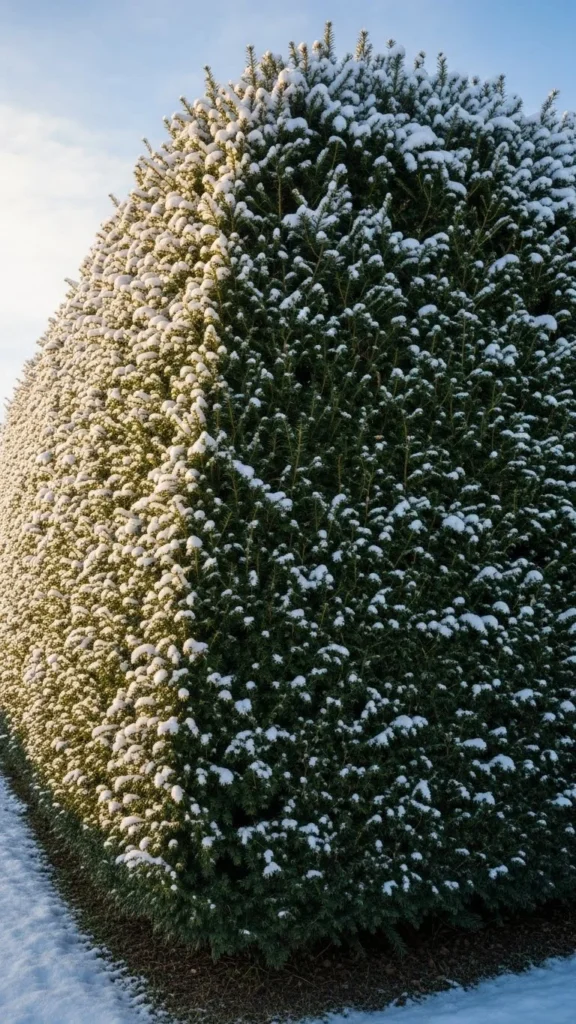
Yew hedges stay lush even in heavy snow. Their flexible branches handle weight without breaking, which keeps the hedge looking uniform. For small yards, choose dwarf varieties so the hedge stays manageable. Create a premium look by trimming the sides into slightly tapered shapes—wider at the base and narrower at the top. This helps light reach all branches. If you’re planting on a budget, pick bare-root yews; they’re cheaper and establish well. Water deeply the first season to help them settle before winter.
6. Arborvitae (American or Emerald Green)
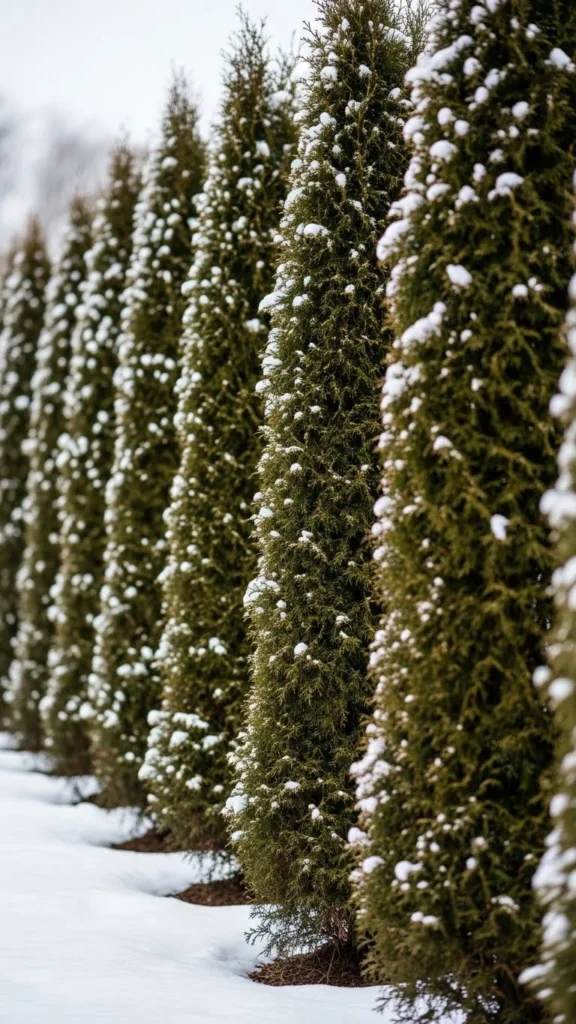
Arborvitae offers instant elegance. Their tall, column-like shape creates natural privacy and a luxurious frame around patios or driveways. They’re known for holding snow beautifully without collapsing. Space them tightly if you want a solid wall. To save money, buy smaller trees and let them grow into place. Add a layer of bark mulch to keep moisture consistent. If heavy snow falls, gently lift it off with a broom; this keeps the branches from bending.
7. Korean Boxwood
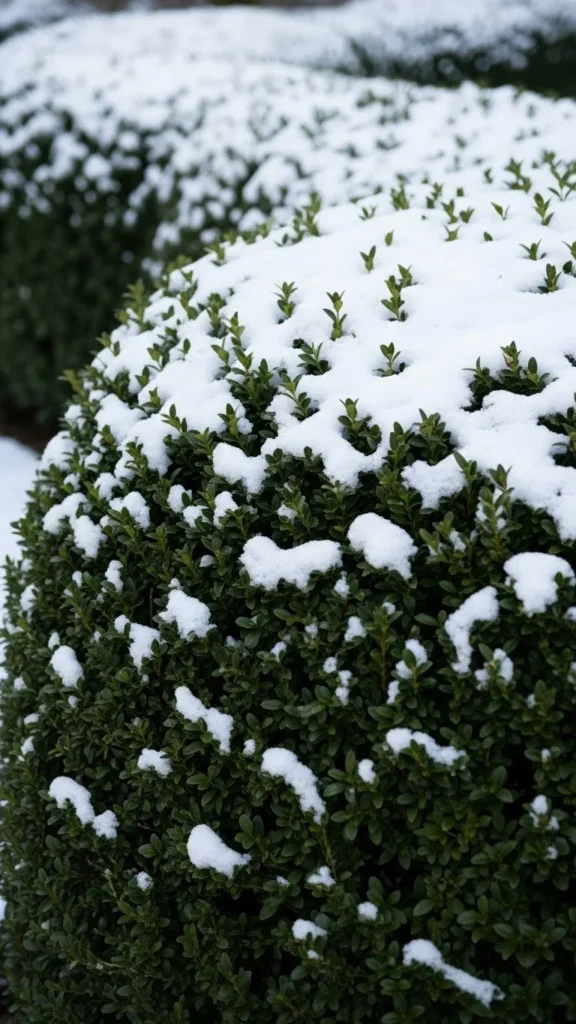
Korean Boxwood tolerates cold climates better than many boxwood types. Its leaves stay firm and thick, creating a lush line even on freezing days. Plant it near entryways or paths where structure matters. For a more affordable installation, create staggered double rows. This makes the hedge appear thicker from day one. Add compost annually to support slow, steady growth. A quick hand trim once or twice a year keeps the hedge looking high-end without much work.
8. Siberian Peashrub
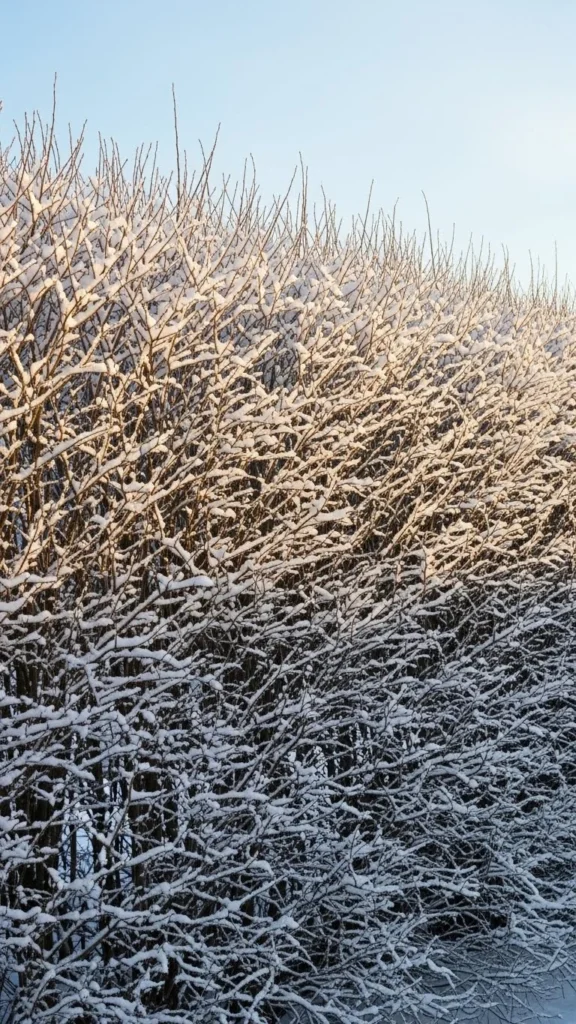
This hardy shrub thrives in very cold climates and forms a dense, upright screen. It’s a great low-cost option for large boundaries where you need height and privacy. The thin branches hold snow well without snapping. If you’re working with a tight budget, plant whips (young, slender plants). They grow quickly and fill in fast. Prune lightly in spring to encourage branching. Add a generous mulch layer before winter to help young plants settle.
9. Privet (Northern Hardy Varieties)
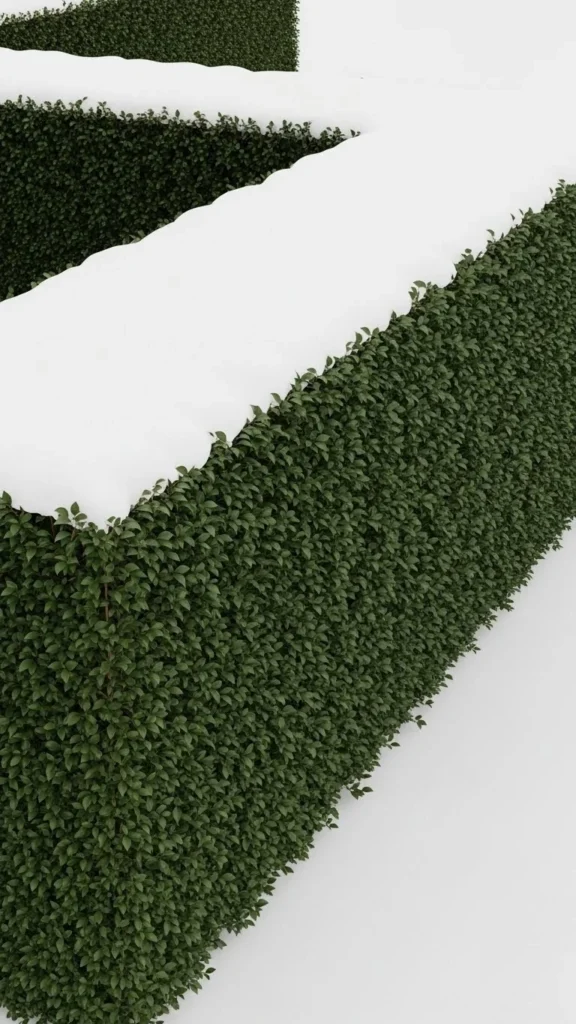
Privet creates a classic, clean-looking hedge that handles winter quite well. Northern varieties stay thicker and more consistent in cold regions. You can shape privet into curves, straight lines, or tall privacy screens. For quick fullness, clip the growing tips early in the season. This encourages branching and a packed look. If you’re covering a long border, buy multi-packs to keep the cost down. Add leaf mulch to help the existing soil stay productive.
10. Eastern Redcedar
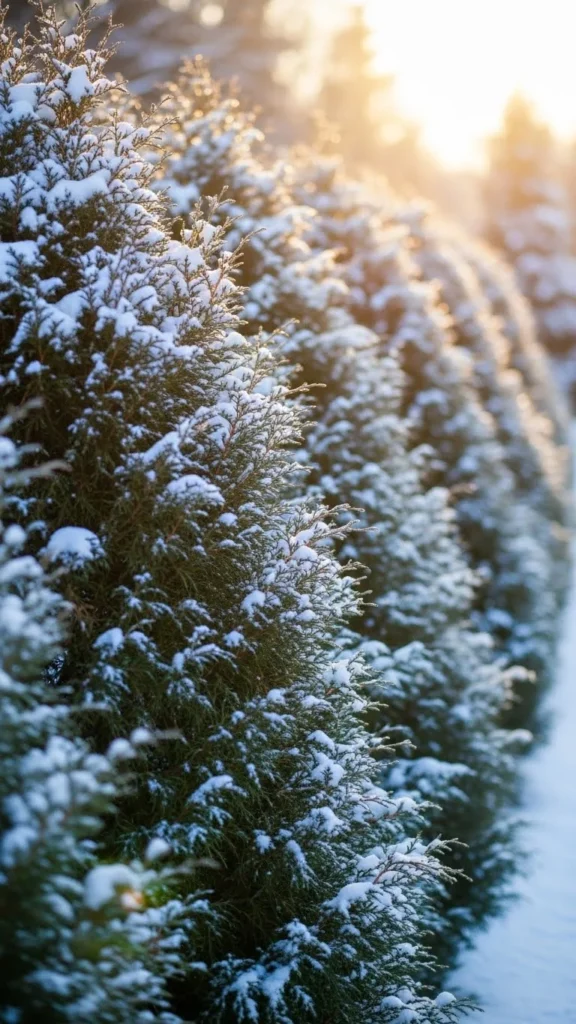
Eastern Redcedar provides color contrast with its blue-green tones. It stands tall, resists breakage, and grows well even in poor soil. If you want year-round privacy on a budget, plant young saplings spaced closely. This gives you a wall-like hedge within a few seasons. Add gravel at the base for better drainage. Trim only when needed to shape. The natural structure already looks refined.
11. Thuja Nigra
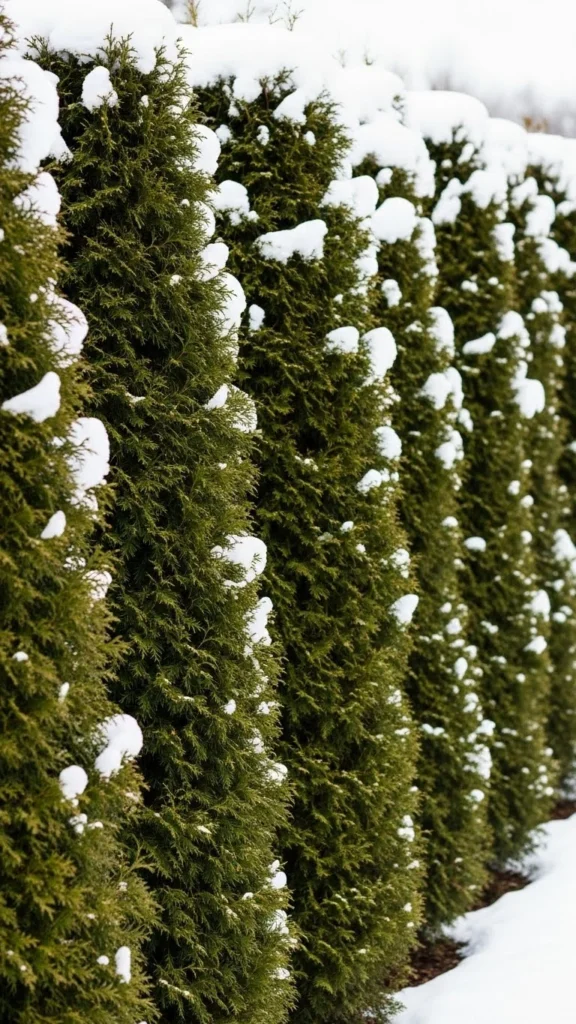
Thuja Nigra stays darker and denser than many arborvitae varieties. It’s perfect for modern yard designs where deep tones stand out. Plant these along fences or patios for a bold winter backdrop. To stretch your budget, combine young and mid-size plants so the hedge fills evenly. Water well through fall to support root strength. Light pruning in early summer keeps the form balanced.
12. Mountain Laurel
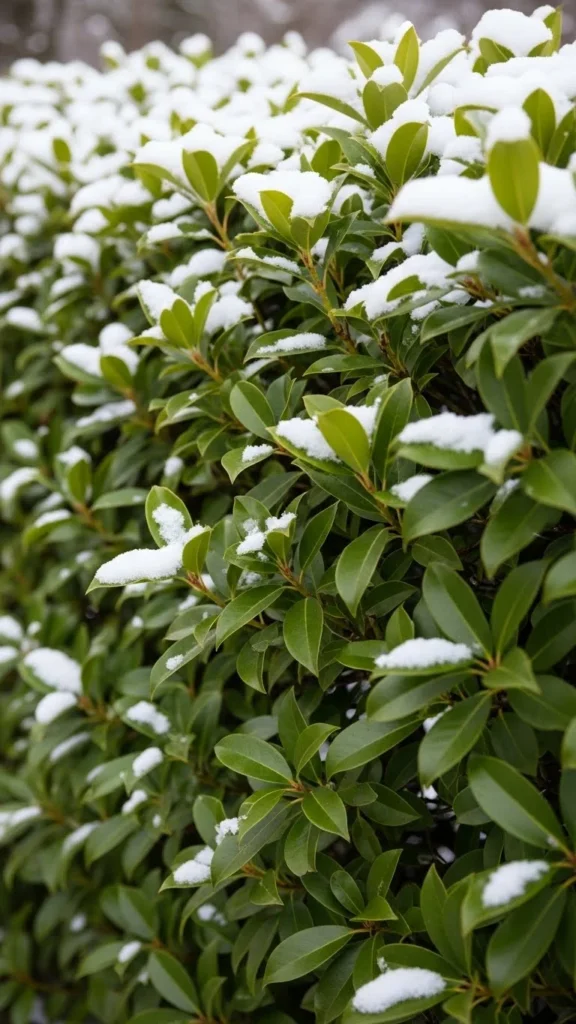
Mountain Laurel forms a thick, glossy hedge that looks stylish even in winter. It thrives in partial shade, so it’s great for north-facing areas. For best results, add peat moss to the soil to keep it slightly acidic. If you want to save money, plant smaller shrubs and fill gaps with shade-tolerant perennials until the hedge matures. Keep the soil evenly moist. This helps the shrub produce tight, uniform growth that stands out in snowy months.
13. Spirea (Dense Forms)
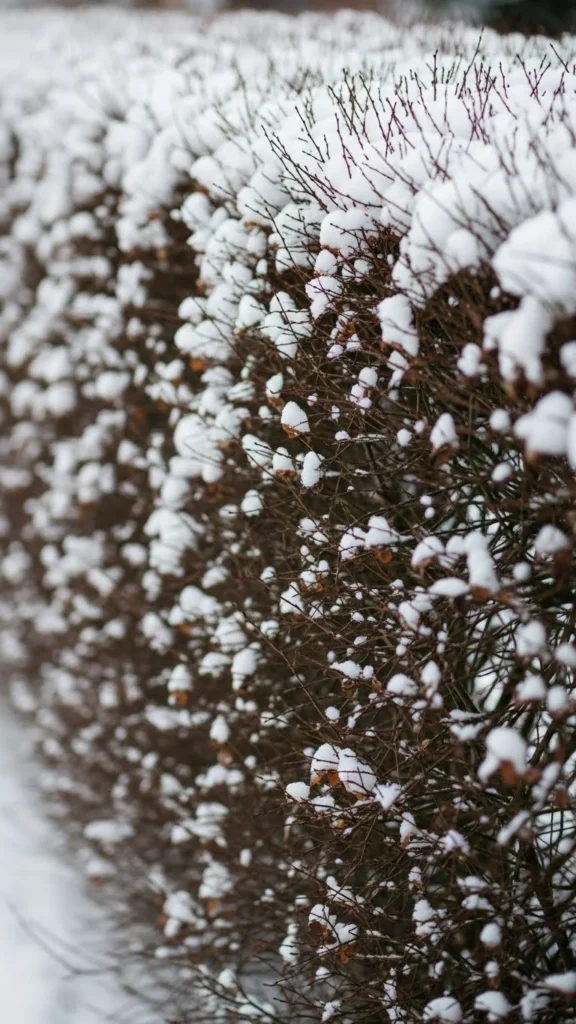
Spirea isn’t evergreen, but dense varieties keep a sculptural structure that holds snow beautifully. This gives your winter landscape a curated look. Plant several in long rows for a wave-like hedge. For quicker growth, add compost at planting time. Trim the plants in late winter to shape the form. Even when bare, the hedge offers strong texture and shadow that makes your yard feel intentional.
14. Burning Bush (Compact Types)
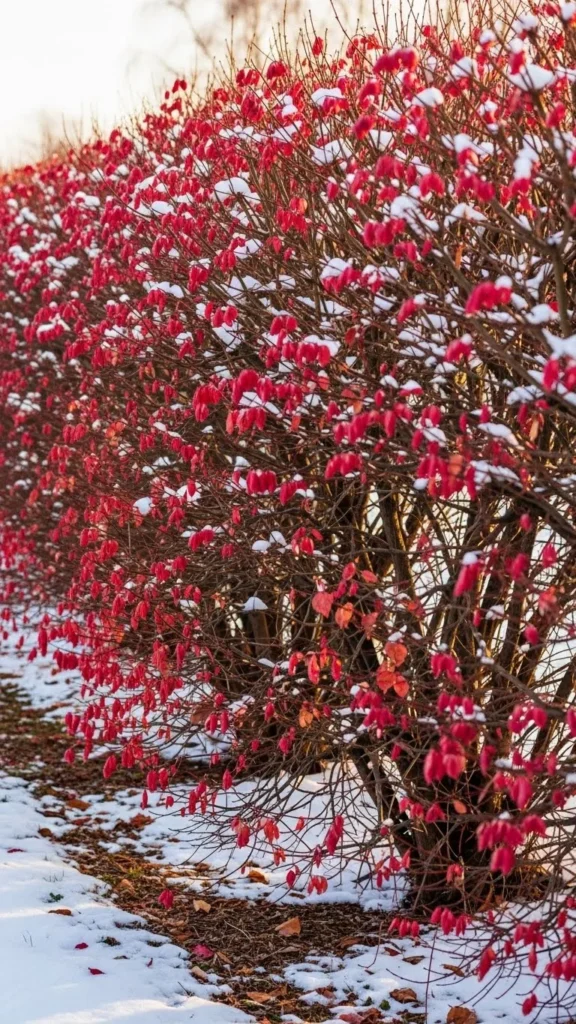
Compact Burning Bush makes a vivid hedge in fall and a crisp, structural one in winter. The smooth branches catch snow in delicate layers. Plant this hedge where you want clean lines and a tidy presence year-round. To stay within budget, buy bare-root plants. They adapt well and grow quickly. Keep the soil slightly moist during the first year. Prune lightly to maintain a boxy or rounded shape.
15. Cotoneaster
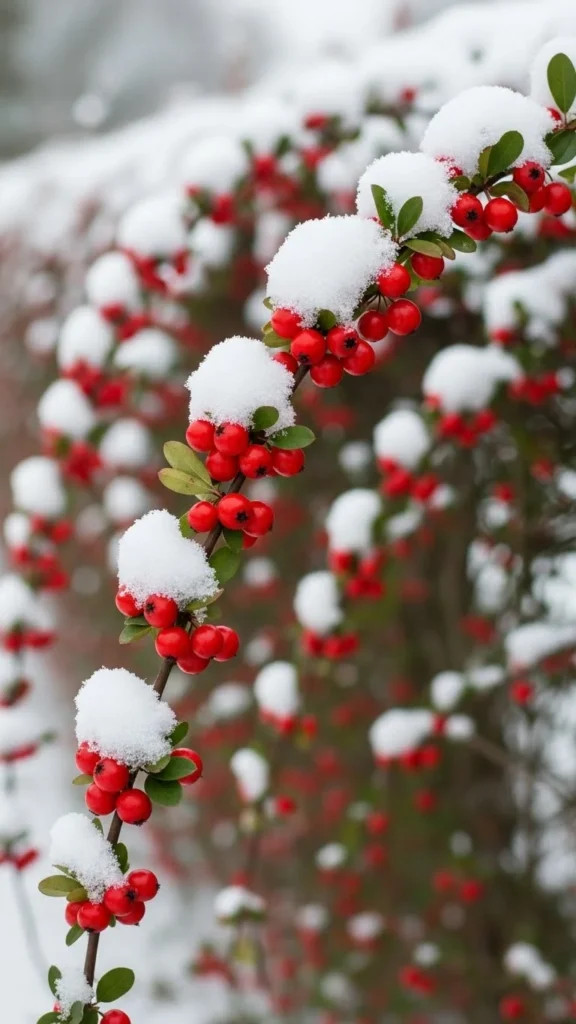
Cotoneaster adds color and texture during winter thanks to its berries and branching. The dense structure makes it great for low hedges or borders. Plant several close together to create a flowing, layered look. If you’re spending carefully, pick groundcover types for a shorter but cohesive hedge. Add mulch to protect the roots. Light pruning keeps the plant compact and shapely.
16. Canadian Hemlock
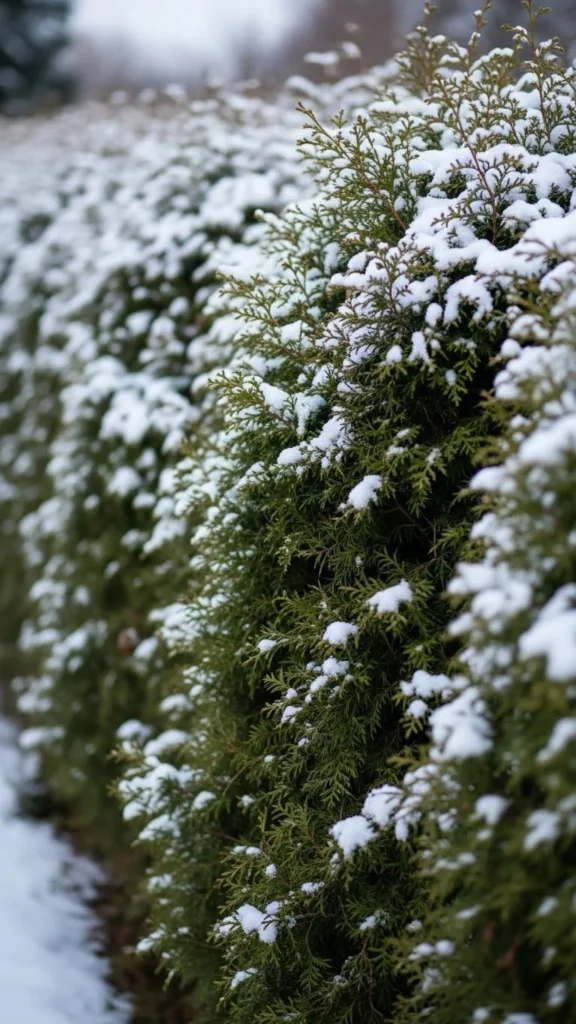
Hemlock hedges feel soft and graceful, even under heavy snow. Their branches bend slightly but rarely break. For shady or partially shaded gardens, this hedge performs beautifully. You can plant them closer than recommended to get a denser wall. To keep costs down, choose 2–3 gallon pots instead of larger ones. Add organic mulch yearly to keep moisture steady. Trim gently to encourage thicker growth.
17. Euonymus Japonicus
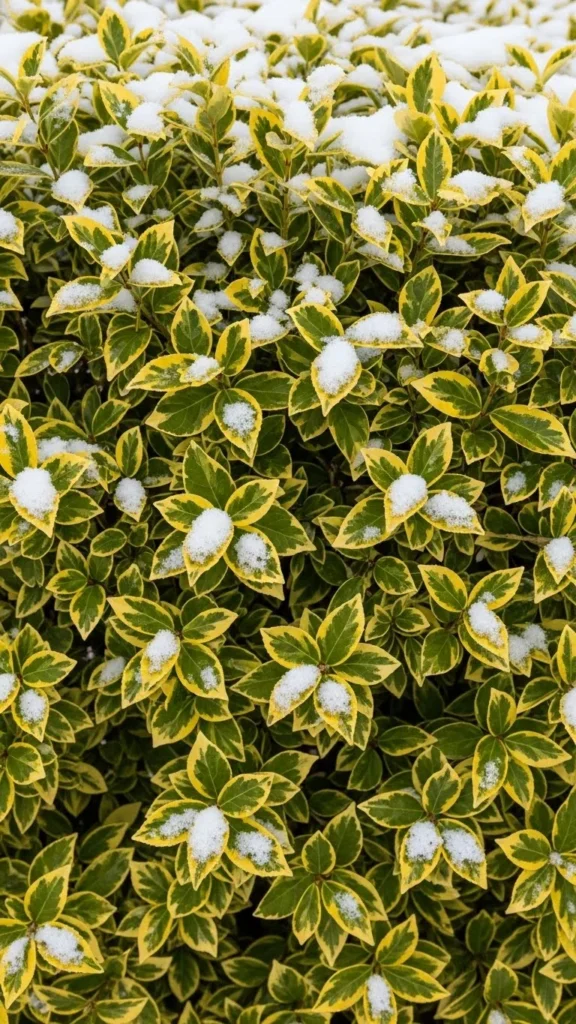
Euonymus creates a bright hedge even on dark winter days, especially variegated varieties. The sturdy leaves hold their color and shape well. Plant them near driveways or balconies where they’re easy to admire. If you’re working within a small budget, buy a mix of large and smaller shrubs. This helps fill the row without overspending. Keep soil slightly moist during the first year. Trim lightly for a polished shape.
18. Holly ‘Blue Princess’
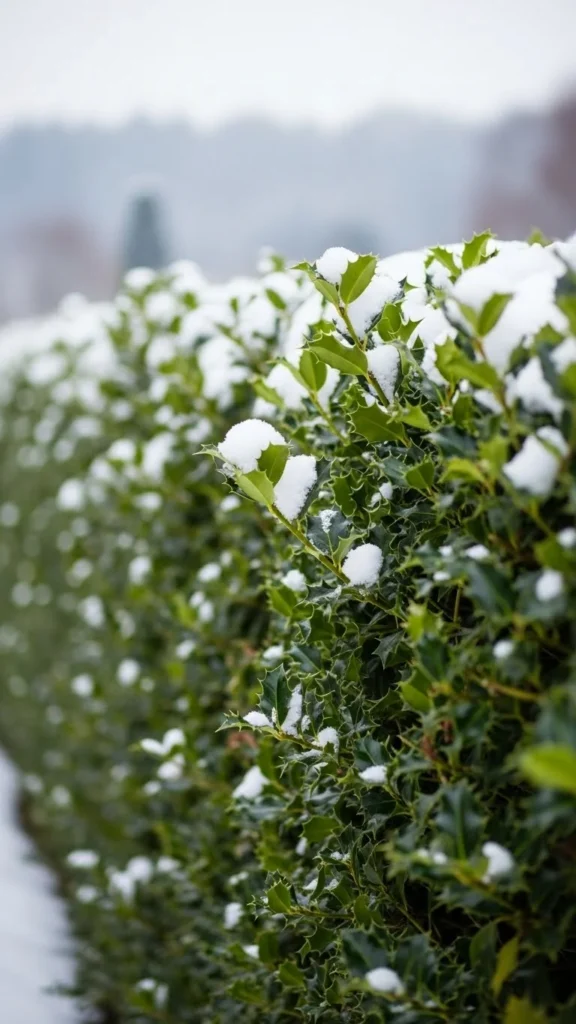
This holly forms a beautiful, formal hedge that looks strong and structured under snow. The deep green leaves create a high-end feel. Plant male pollinators nearby so the shrubs produce berries—an added winter bonus. If you want quick volume, plant them in a zigzag pattern. Add mulch in fall to support roots. A quick spring trim helps maintain a refined silhouette.
19. Dwarf Alberta Spruce
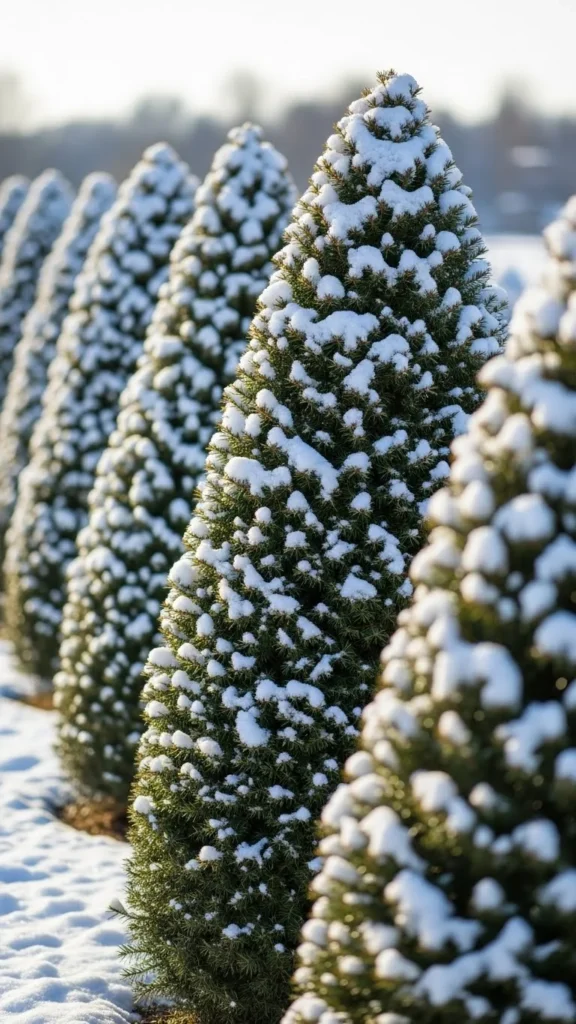
Dwarf Alberta Spruce makes a sculptural, premium-looking hedge. The dense needles hold snow like frosting, giving the hedge a pretty winter texture. Plant these along steps or porches for symmetry. They grow slowly, so choose sizes that fit your patience and budget. Add gravel or sand to improve drainage. Water deeply before winter for strong cold tolerance. Their natural structure needs only light shaping.
20. Ligustrum ‘Straight Talk’
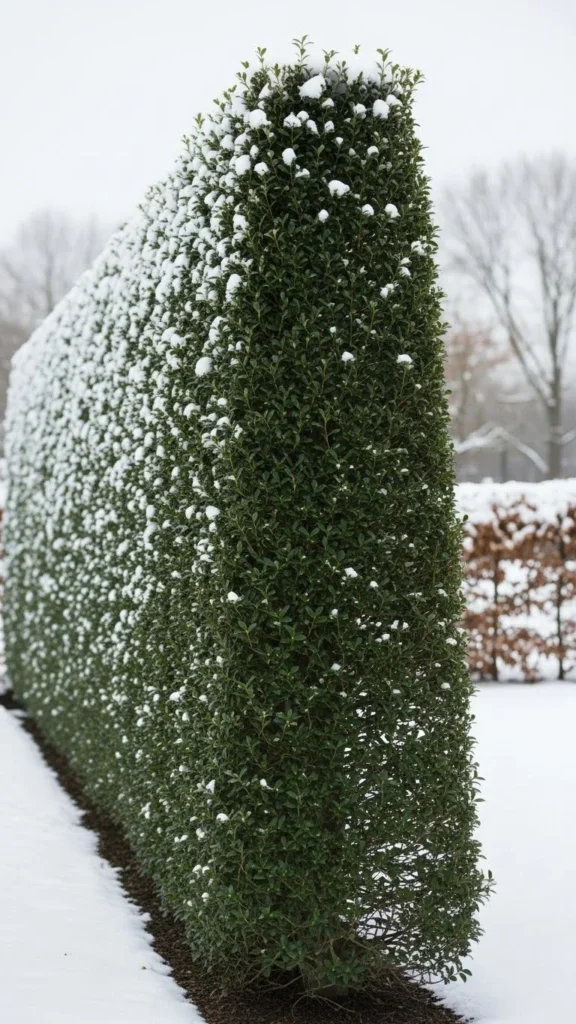
This upright shrub forms a slim, dense column that works well in tight spaces. It keeps its form under snow and creates a pointed, modern look. Plant them in rows for a sculptural effect. To save money, choose younger plants and space them slightly closer. Keep the area mulched to help with moisture balance. A quick trim once a year keeps the hedge crisp.
21. Box Honeysuckle
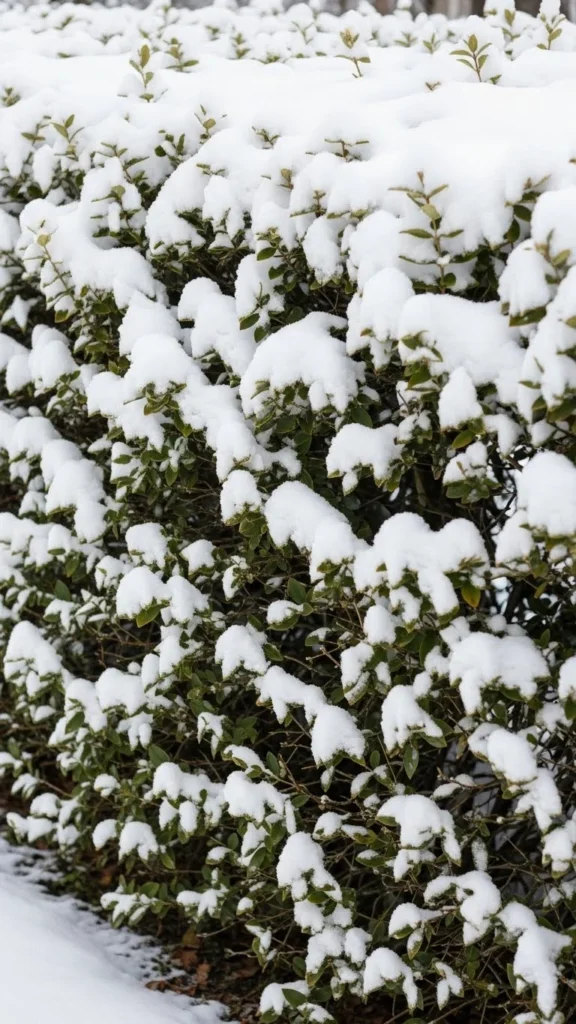
Box Honeysuckle grows quickly and creates a low, compact hedge. It holds snow gently, giving your yard quiet winter charm. Plant several along borders or around patios. If you’re on a tight budget, buy small starter pots—they fill in fast. Prune lightly during the growing season to keep the form neat. Add mulch for softness and root protection.
22. Firethorn (Pyracantha)
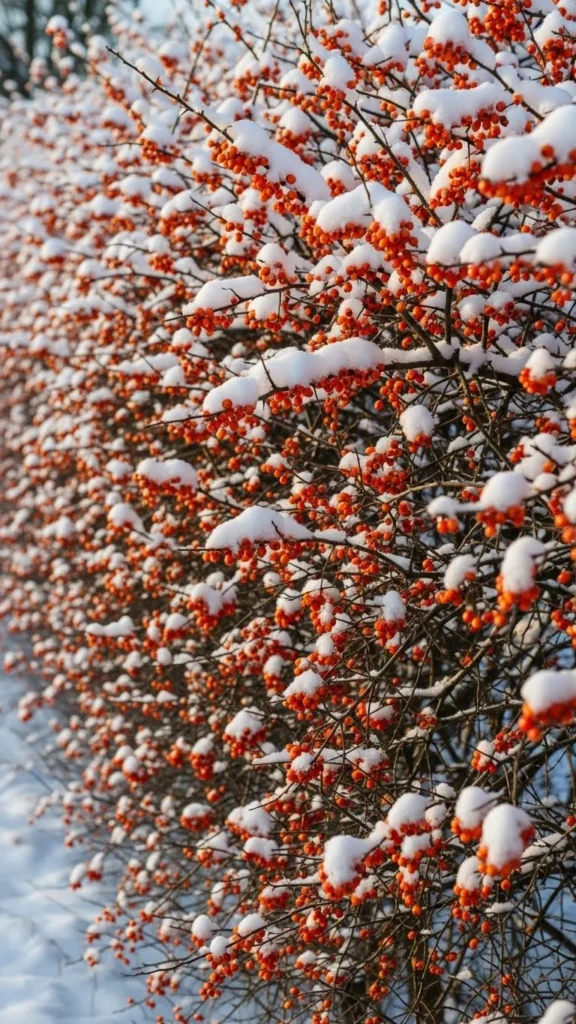
Firethorn adds flair thanks to its winter berries and dense growth. It’s tough, adaptable, and holds snow well. Plant it near walls or fences for extra support. For a wallet-friendly approach, buy untrained plants and shape them yourself. Wear gloves when pruning—branches can be sharp. Add well-draining soil and mulch yearly for steady growth.
23. Barberry (Compact Types)
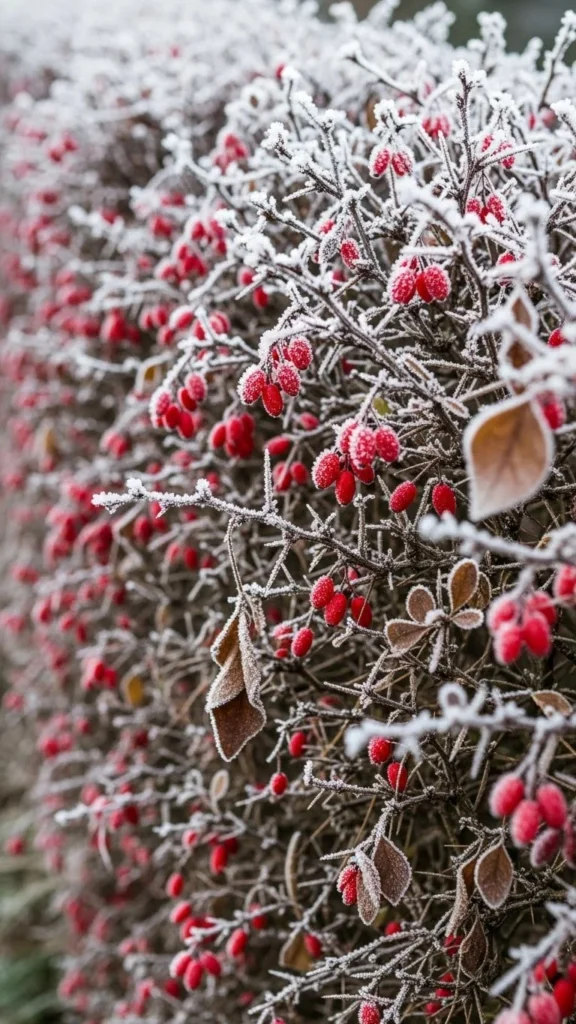
Compact Barberry makes a tight, colorful hedge. Its branches hold snow in a delicate pattern that looks intentional and stylish. Use it for borders, driveways, or curved beds. Mix colors for extra contrast. If you want to stay under budget, buy smaller pots—they grow quickly. Trim lightly to maintain shape. Add stone mulch for contrast and clean lines.
24. Skip Laurel
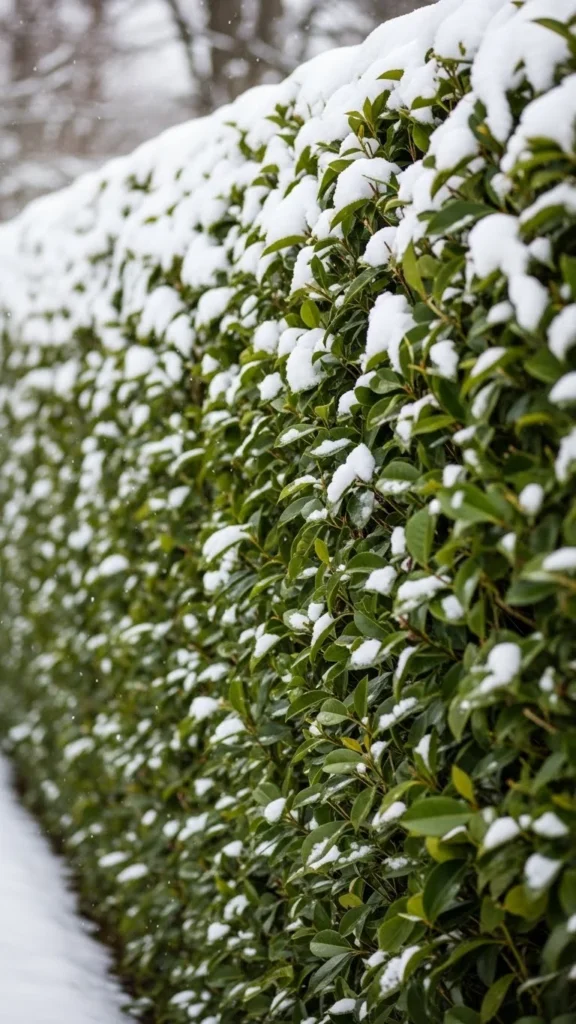
Skip Laurel creates a rich, glossy hedge that stays thick year-round. It handles snow weight well and adds privacy instantly. Plant them tightly to build a solid green wall. For budget-friendly planting, choose mid-size shrubs and let them mature into place. Add organic matter to the soil to give them a strong start. A simple spring pruning keeps everything uniform.
25. Boxleaf Euonymus
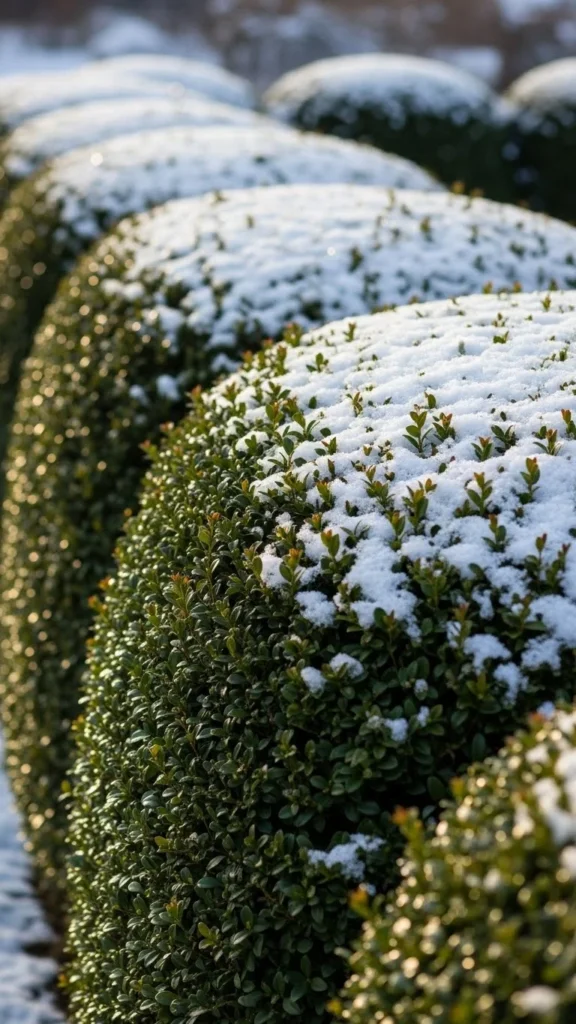
This plant looks similar to boxwood but grows with a slightly softer texture. It forms a low, elegant hedge that stays attractive in winter. If you enjoy easy upkeep, this shrub is a great pick. Plant starters close together to create fullness right away. Add a bit of compost each year. Trim gently to keep the shape refined.
Conclusion
Snow-tolerant hedges bring color, privacy, and structure when the rest of the yard feels flat. They handle winter stress gracefully and keep your outdoor space looking polished for months. Pick a few varieties that suit your layout, mix sizes to stay within budget, and plant in tight, intentional rows. With a little planning, you can create a landscape that looks expensive even on the coldest days.

Leave a Reply