

Even if you live in a city apartment or have limited outdoor space, your balcony can become a lush, green retreat filled with herbs, flowers, and even vegetables. Container gardening is the perfect solution for bringing nature into compact living spaces—and it’s easier than you might think!
Choose the Right Containers
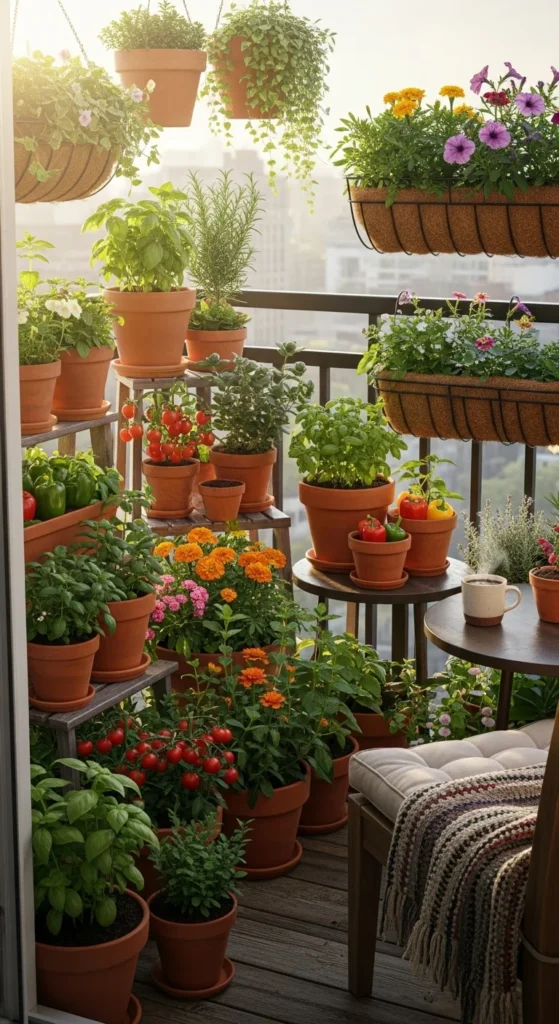
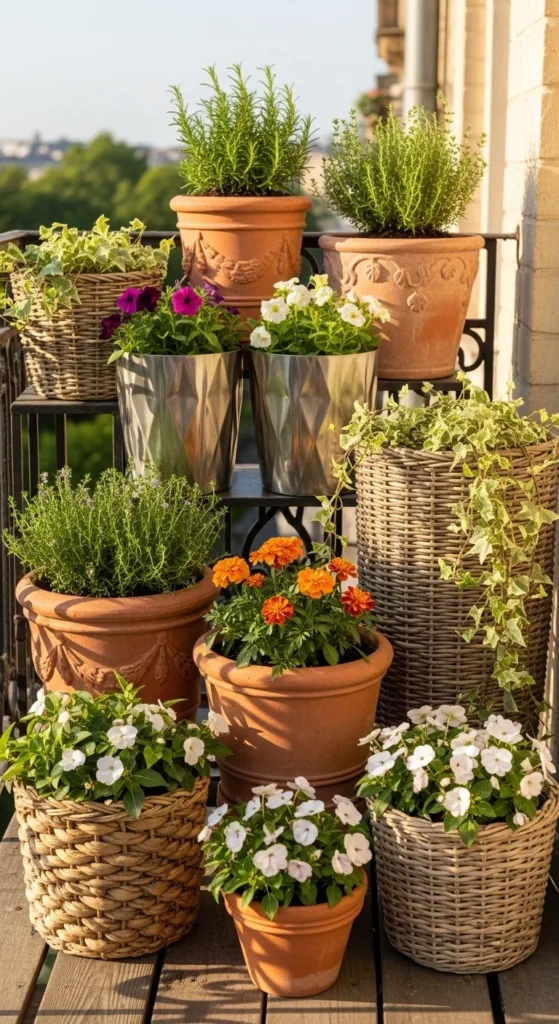
Before you start planting, think about your containers. They come in all shapes and sizes, and each one affects how your plants grow.
- Size matters: Larger pots hold more soil, which helps maintain consistent moisture and gives roots room to grow.
- Material choices:
- Clay or terracotta pots look beautiful but dry out quickly.
- Plastic or resin pots retain moisture better and are lightweight—perfect for balconies.
- Hanging baskets and vertical planters can help you make the most of your limited space.
- Drainage is key: Make sure every container has holes at the bottom to prevent soggy roots.
Pick the Perfect Plants for Your Space
Your balcony’s sunlight and climate determine which plants will thrive. Observe how much direct sunlight your space gets during the day before choosing what to grow.
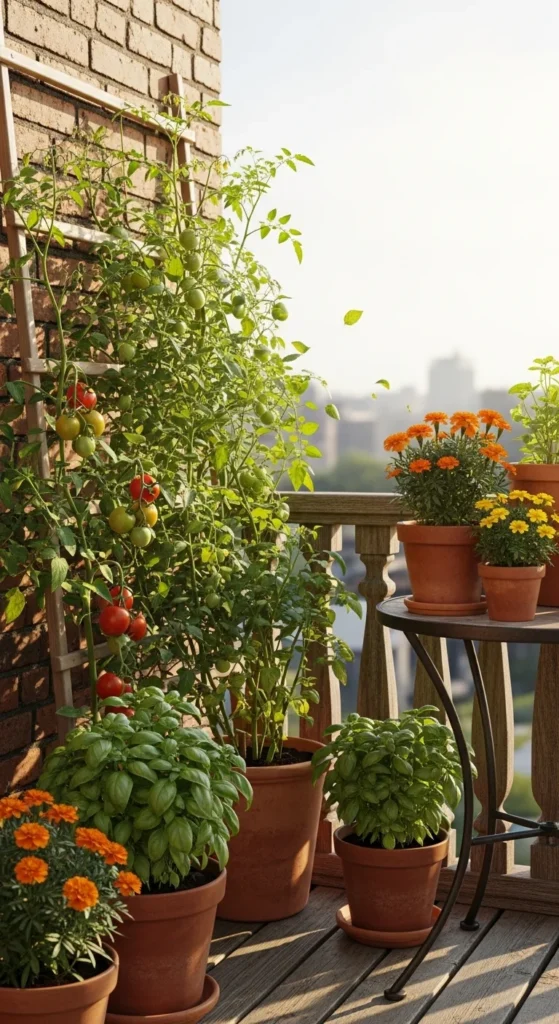
For Sunny Balconies (6+ hours of sunlight)
- Tomatoes
- Basil
- Lavender
- Peppers
- Marigolds
For Shady or Partly Sunny Balconies
- Lettuce
- Mint
- Spinach
- Ferns
- Begonias
Mix flowers with herbs and vegetables for a visually stunning and practical garden. The flowers attract pollinators, while herbs add fragrance and flavor to your meals.
Use Quality Soil and Fertilizer
Balcony plants depend entirely on you for their nutrients, so skip the regular garden soil—it’s too heavy and dense for containers.
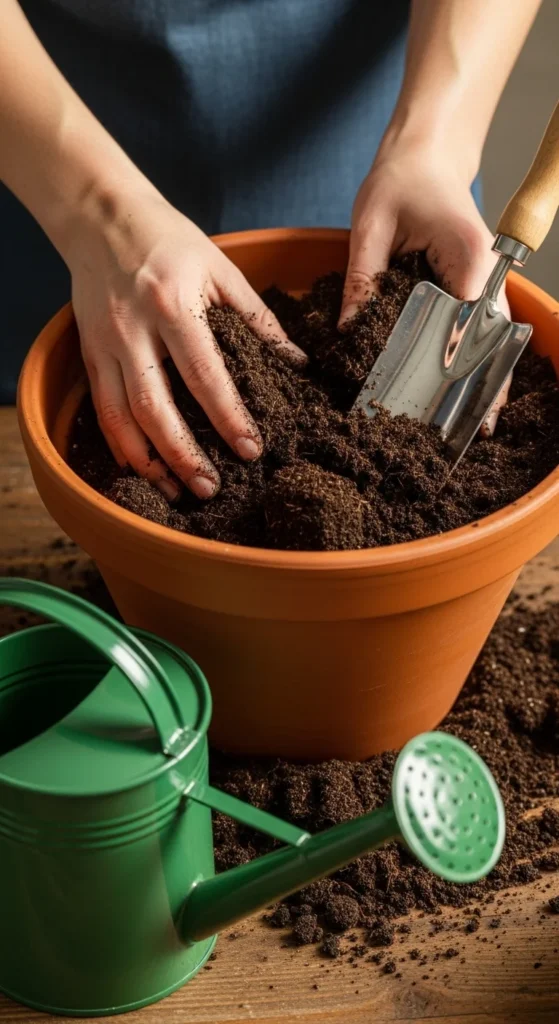
- Opt for potting mix specifically designed for containers. It’s lightweight and drains well.
- Add compost or organic fertilizer to enrich the soil naturally.
- Feed regularly: Use a slow-release fertilizer or a liquid plant food every few weeks to keep your plants healthy.
Pro tip: Refresh the top few inches of soil each season to keep nutrients flowing and prevent compaction.
Water Smartly and Consistently
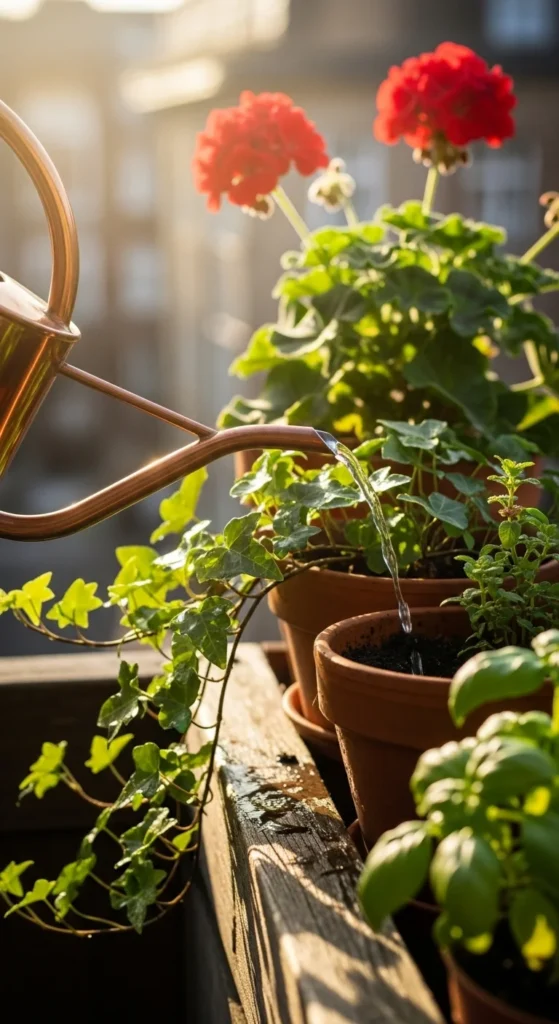
Balcony plants can dry out quickly because containers are exposed to sun and wind. Watering is crucial—but balance is key.
- Check daily: Stick your finger into the soil. If it feels dry about an inch deep, it’s time to water.
- Water early in the morning so your plants can absorb moisture before the heat of the day.
- Avoid overwatering: Make sure water drains freely from the bottom.
- Use self-watering containers or add mulch on top of the soil to reduce evaporation.
A small watering schedule goes a long way in keeping your balcony oasis green and happy.
Arrange for Beauty and Function
Design your balcony garden with both style and practicality in mind.
- Group plants by sunlight needs: Place sun-lovers near the edge and shade plants in corners.
- Layer heights: Use shelves or plant stands to add depth and visual interest.
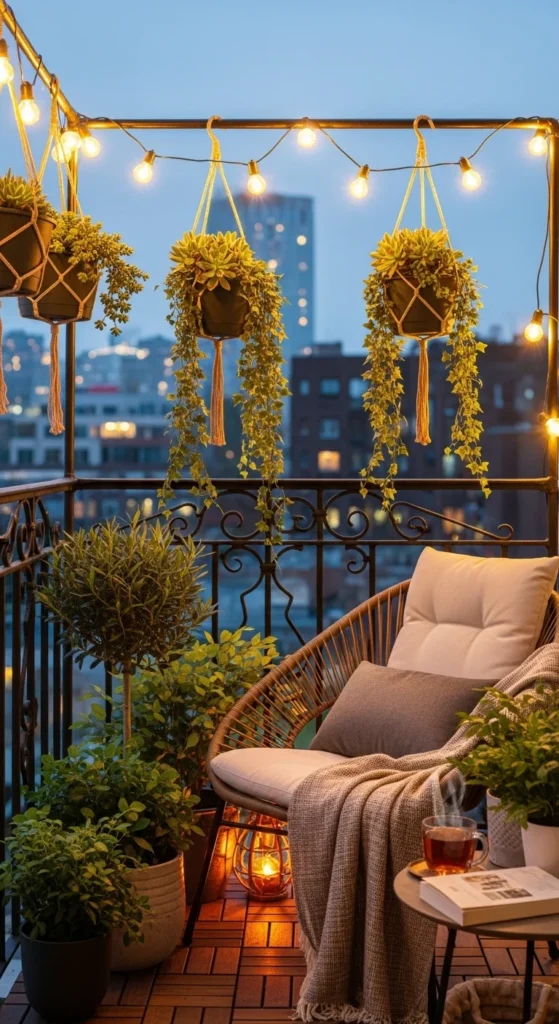
- Think vertical: Hanging pots or wall-mounted planters save space and look stunning.
- Add décor touches: String lights, a small chair, or decorative pebbles can turn your balcony into a personal retreat.
Keep It Thriving Year-Round
Even a small balcony garden can flourish all year long with a little care and planning.
- Rotate seasonal plants: Grow leafy greens in cooler months and switch to herbs and flowers in warmer ones.
- Prune regularly: Remove dead leaves and faded blooms to encourage new growth.
- Watch for pests: Use natural deterrents like neem oil or companion planting (e.g., marigolds to repel aphids).
- Protect from wind and frost: Use screens, bubble wrap, or move pots closer to walls when temperatures drop.
Your balcony can stay alive and colorful no matter the season.
Final Takeaway
Container gardening turns even the tiniest balcony into a vibrant green haven. With the right containers, plants, and care, you’ll enjoy fresh herbs, blooms, and produce just steps from your door.
Start small, experiment with different plants, and watch your space transform into your favorite spot to relax.
Save this guide for later and start planning your balcony garden today!
Leave a Reply