

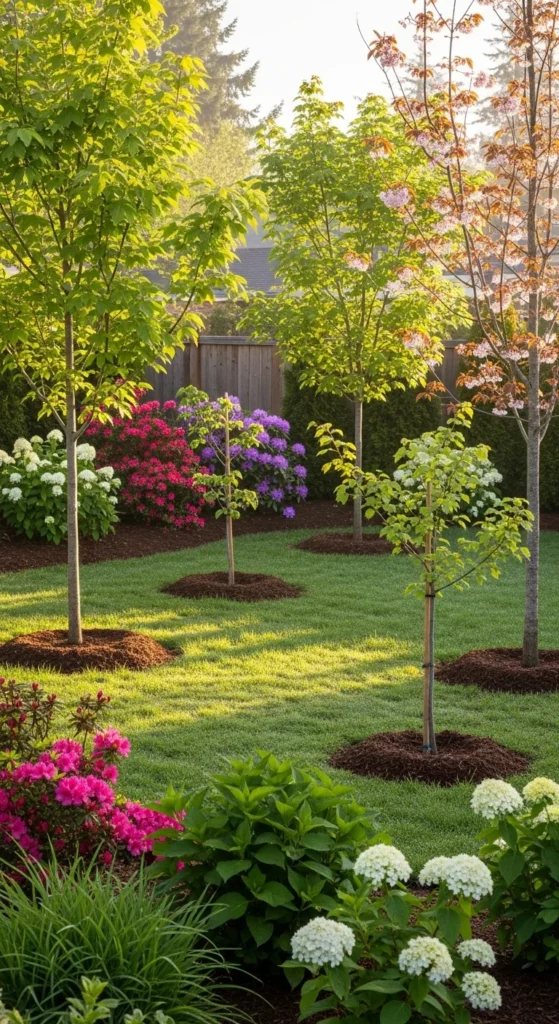
Planting trees is one of the most rewarding ways to transform your outdoor space. Trees add structure, shade, and beauty while improving air quality and soil health. Whether you’re creating a backyard haven or reimagining your front yard, a few simple planting techniques can make a huge difference in how well your trees thrive. Here are 20 practical tree planting tips to help you create a vibrant, lasting landscape that grows healthier with every season.
1. Choose the Right Tree for the Right Spot
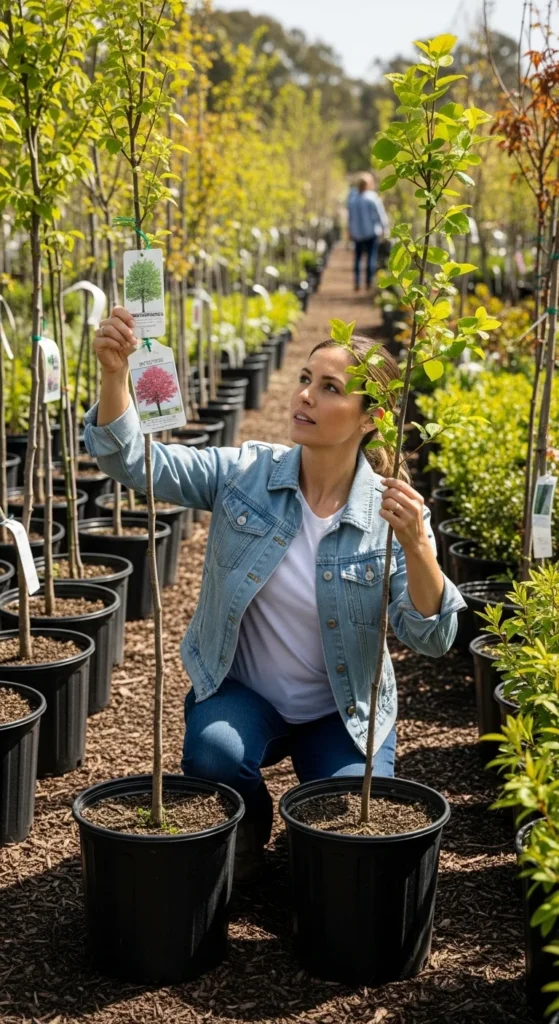
Every tree has its own preferences for sunlight, soil type, and space. Before buying, research how large it will grow and whether it prefers full sun, part shade, or moist soil. Planting a shade tree too close to your home can cause root and foundation issues later. For a small yard, opt for slower-growing or dwarf varieties like dogwoods or redbuds. Take time to match the species to your yard’s unique environment for healthier growth and less maintenance.
2. Test and Prepare the Soil
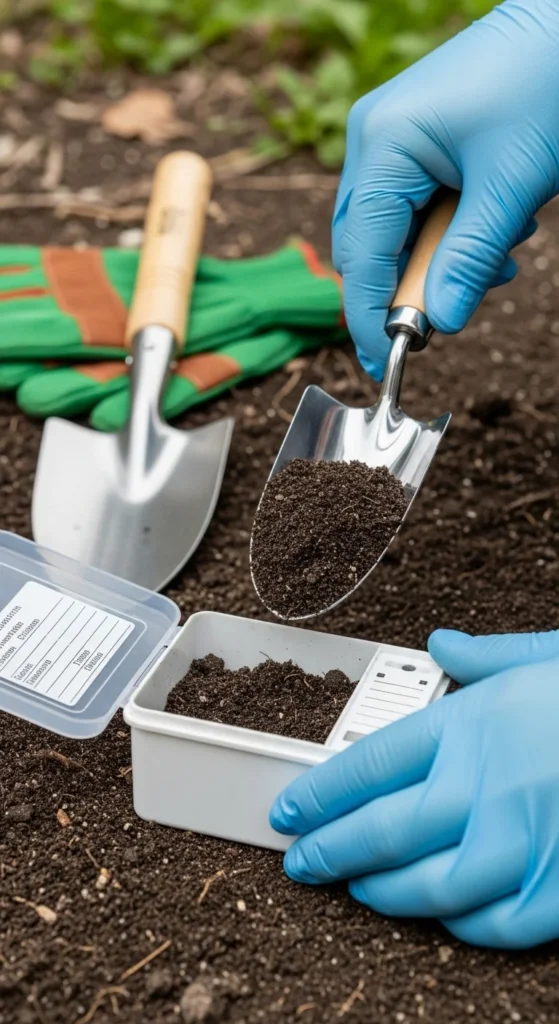
Healthy trees start with healthy soil. Purchase a simple soil test kit to check for pH balance and nutrient levels. Most trees prefer slightly acidic to neutral soil. Loosen compacted earth by tilling or adding compost before planting. This allows roots to spread easily and absorb water better. For clay-heavy yards, mix in organic matter to improve drainage. The extra effort upfront pays off in faster establishment and stronger growth.
3. Plant at the Correct Depth
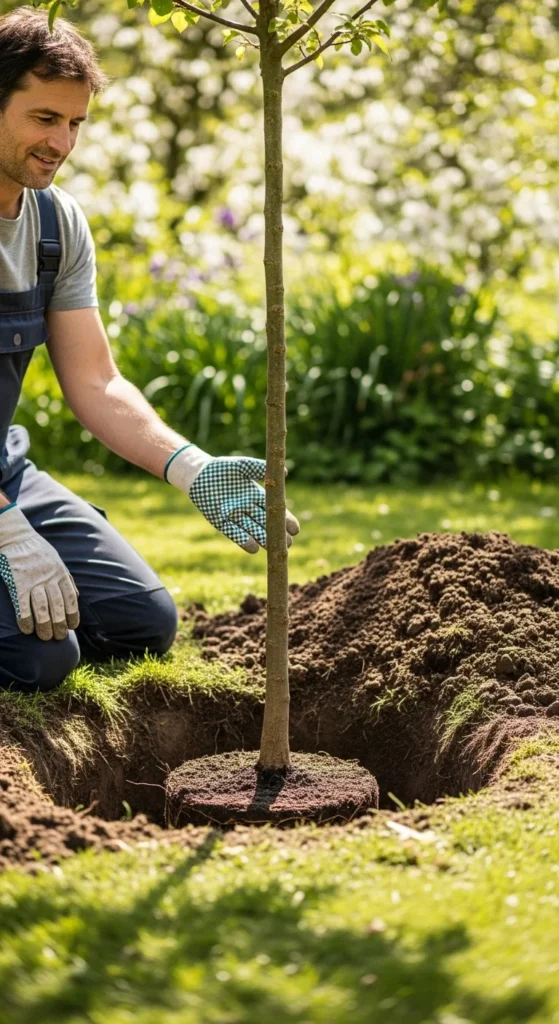
A common mistake is planting too deep. The root flare—where the trunk widens at the base—should sit just above the soil line. Dig a hole twice as wide as the root ball but only as deep. Backfill gently, pressing the soil lightly around the roots to eliminate air pockets. Proper depth encourages strong anchoring and prevents waterlogging, which can suffocate roots.
4. Loosen the Root Ball
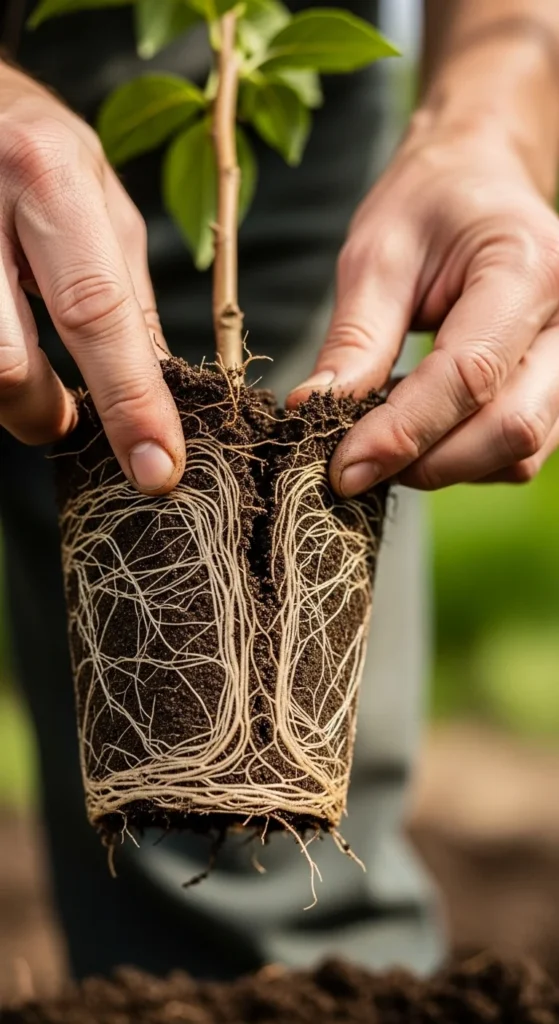
Container-grown trees often have roots that circle tightly inside the pot. If you plant them as-is, those roots can strangle the trunk as they grow. Use your hands or a small knife to loosen the root ball before planting. Spread the roots outward in the hole to guide them in the right direction. This helps your tree establish faster and prevents long-term damage.
5. Add Organic Mulch Around the Base
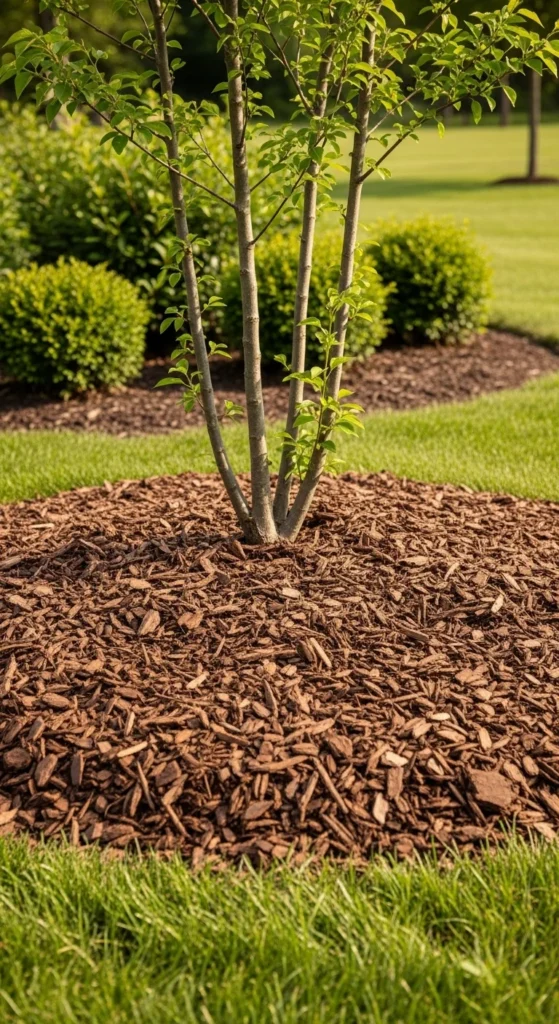
Mulch keeps soil moist, regulates temperature, and discourages weeds. Spread a 2–3 inch layer of organic mulch—like wood chips or shredded bark—around the base, but keep it a few inches away from the trunk. Too much mulch or “volcano mulching” traps moisture against the bark, causing rot. Mulch acts as a natural blanket, protecting roots year-round.
6. Water Deeply and Consistently
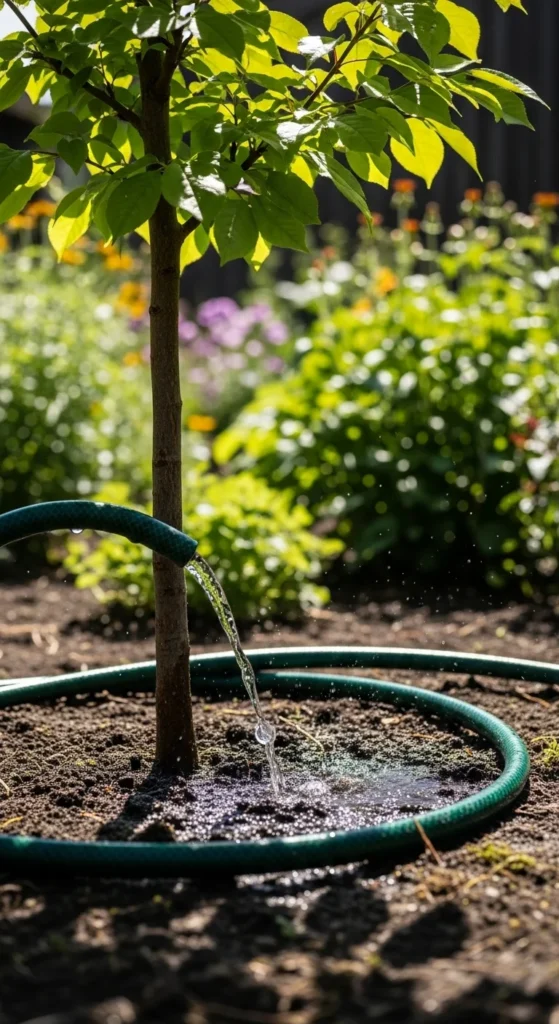
Newly planted trees need consistent moisture to establish roots. Water slowly and deeply so it reaches 6–8 inches below the surface. Avoid frequent shallow watering—it encourages weak, surface-level roots. During dry weeks, aim for about 10–15 gallons of water per tree. Installing a drip line or soaker hose makes this easier and saves water.
7. Support with Stakes Only if Necessary
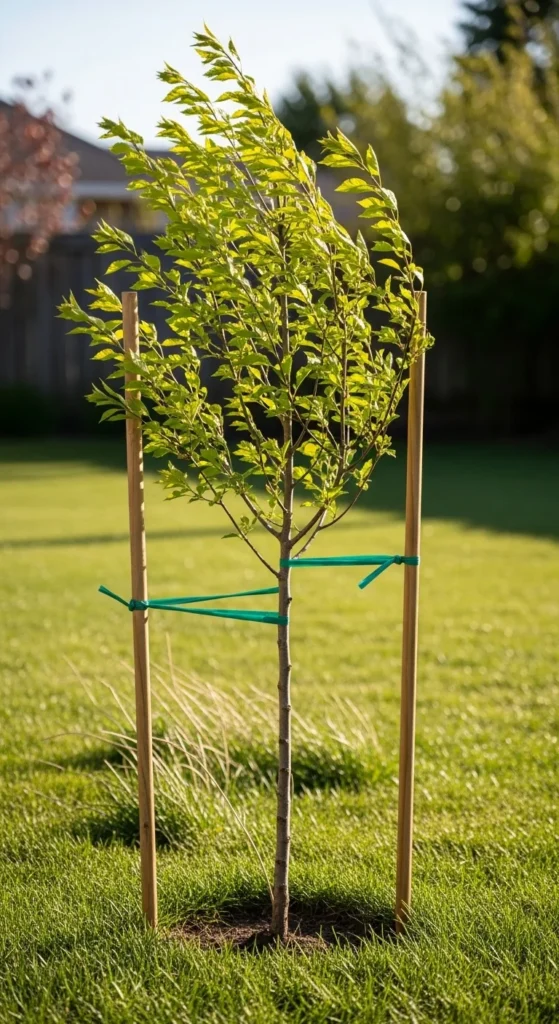
Not all trees need staking. If your tree has a sturdy trunk and isn’t top-heavy, skip it. Over-staking can prevent natural trunk strengthening. For windy areas, use soft ties and flexible stakes, positioned on opposite sides of the trunk. Allow slight movement—it helps the tree grow stronger. Remove supports after one growing season.
8. Prune Wisely After Planting
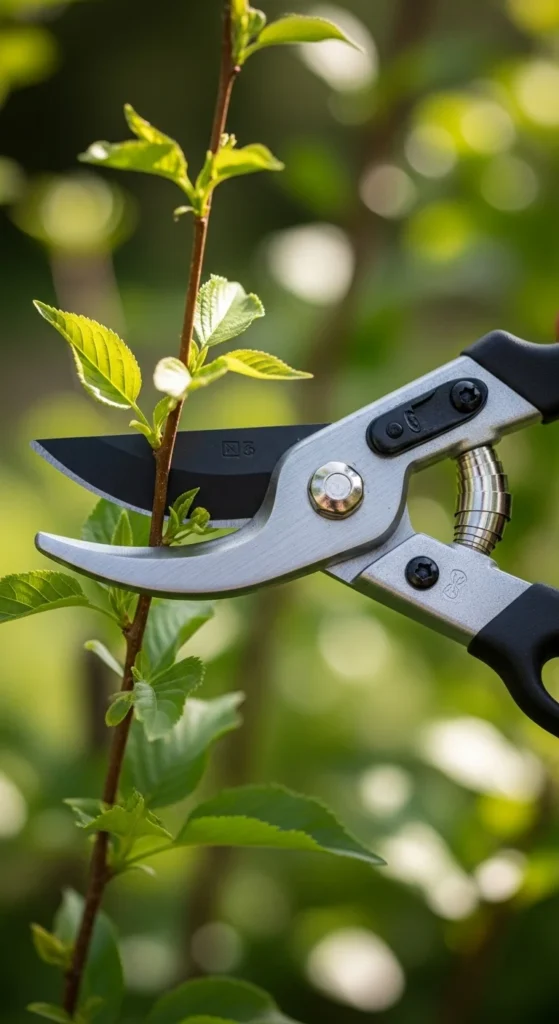
Avoid heavy pruning during planting. Only trim damaged or crossing branches. Let the tree establish itself before shaping it. The first few years are about root growth, not appearance. Once stable, prune lightly each winter to guide structure. Always use clean, sharp tools and cut just outside the branch collar for healthy healing.
9. Protect Young Trees from Pests
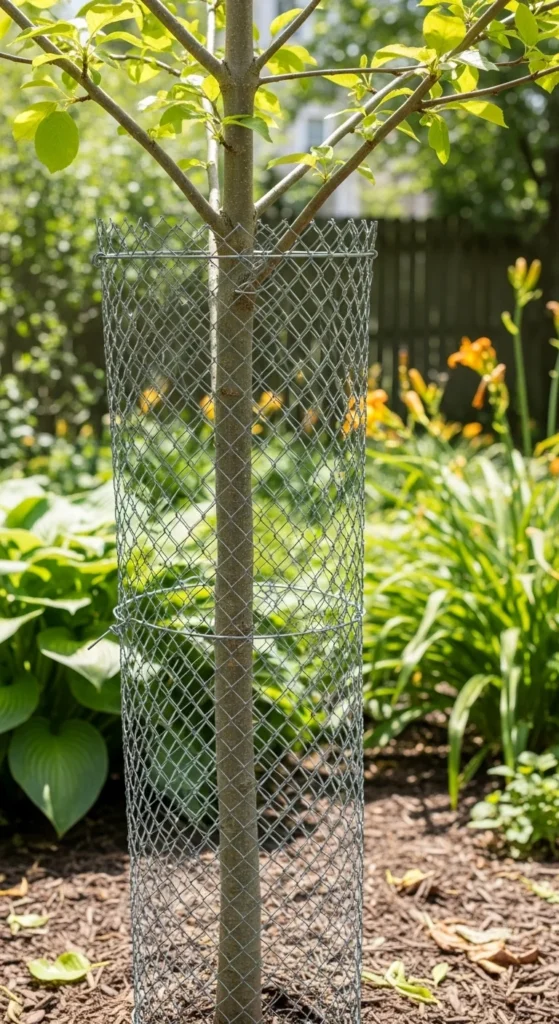
Rabbits, deer, and insects can damage young bark and leaves. Wrap the lower trunk in tree guards or wire mesh to keep critters away. Check regularly for insects like borers or aphids. For organic pest control, spray neem oil or introduce beneficial insects like ladybugs. A little vigilance now prevents big problems later.
10. Avoid Fertilizing Too Early
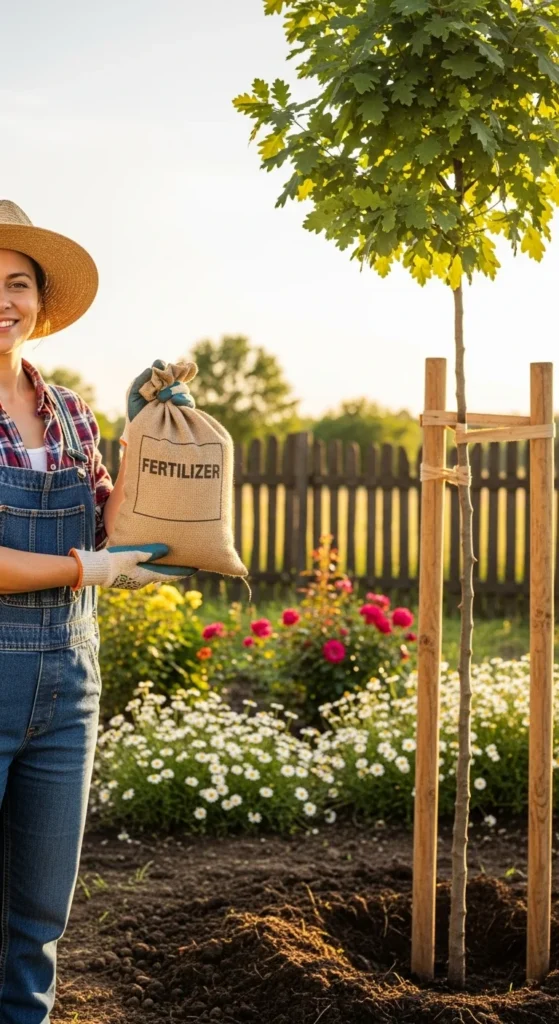
Fertilizing right after planting can burn delicate roots. Wait until the tree shows new leaf growth, usually after its first full season. If needed, apply a slow-release organic fertilizer in early spring. Focus on improving soil quality rather than quick growth. Compost or worm castings are gentle, natural options that feed the soil over time.
11. Maintain a Clear Weed-Free Zone
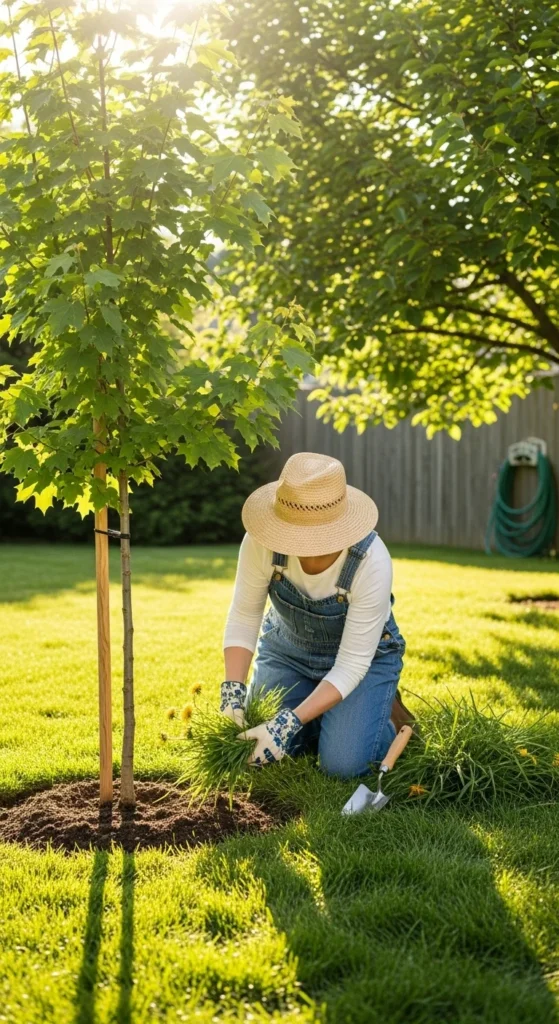
Weeds and grass compete for nutrients and water. Keep a 3-foot diameter zone around the tree free of competing plants. Hand-pull weeds or use a natural vinegar spray instead of harsh chemicals. A clean base not only looks neat but also protects roots from mower damage.
12. Group Trees for Mutual Support
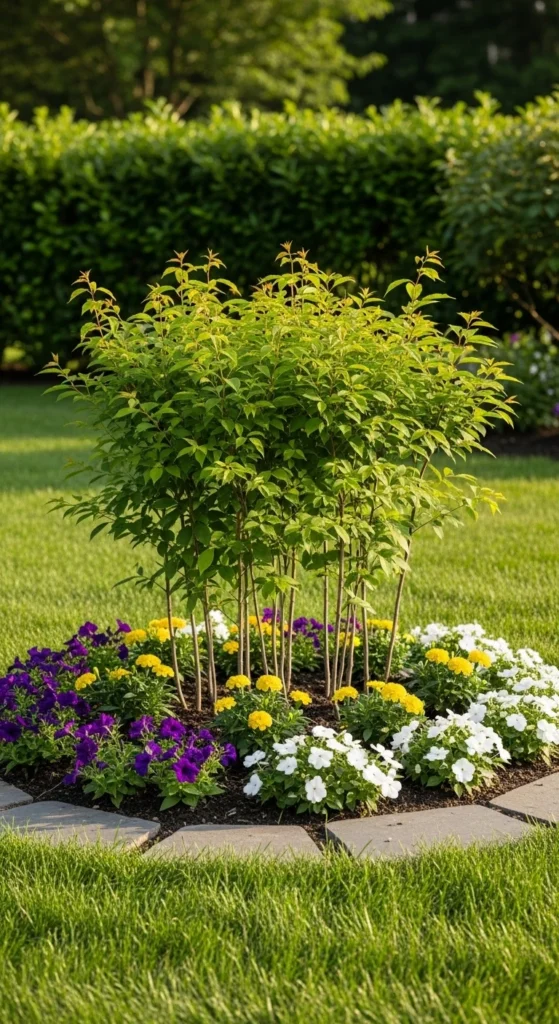
Planting trees in small groups creates a mini-ecosystem. Trees share shade, protect each other from wind, and retain soil moisture better. Try grouping native species together to encourage pollinators and wildlife. A thoughtful layout also enhances visual harmony in your landscape design.
13. Watch for Signs of Stress
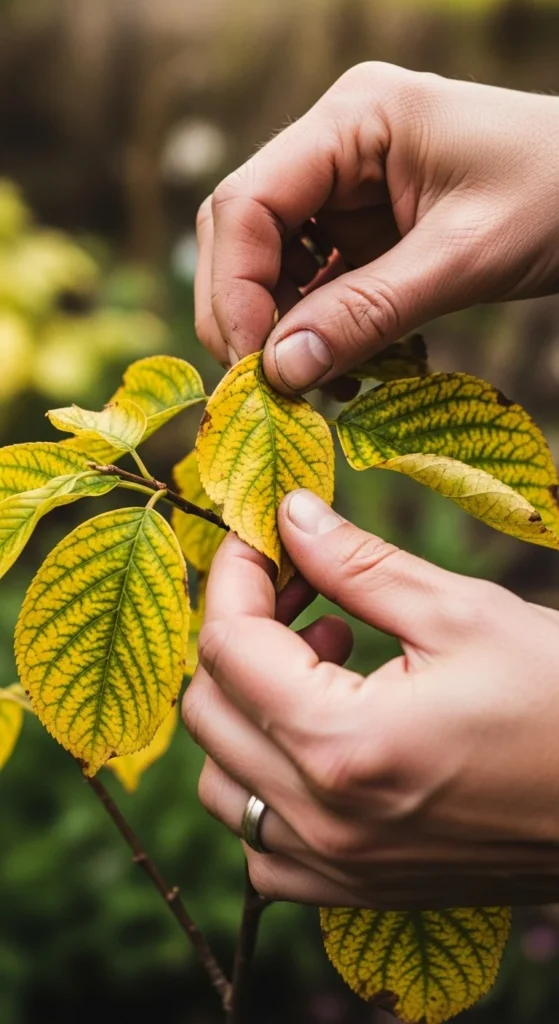
Wilting, yellow leaves, or stunted growth often signal stress from poor watering, pests, or soil issues. Don’t panic—observe first. Check for dry soil, compacted roots, or sunburned leaves. Adjust your care routine accordingly. Early detection keeps small issues from turning into permanent damage.
14. Time Your Planting Season
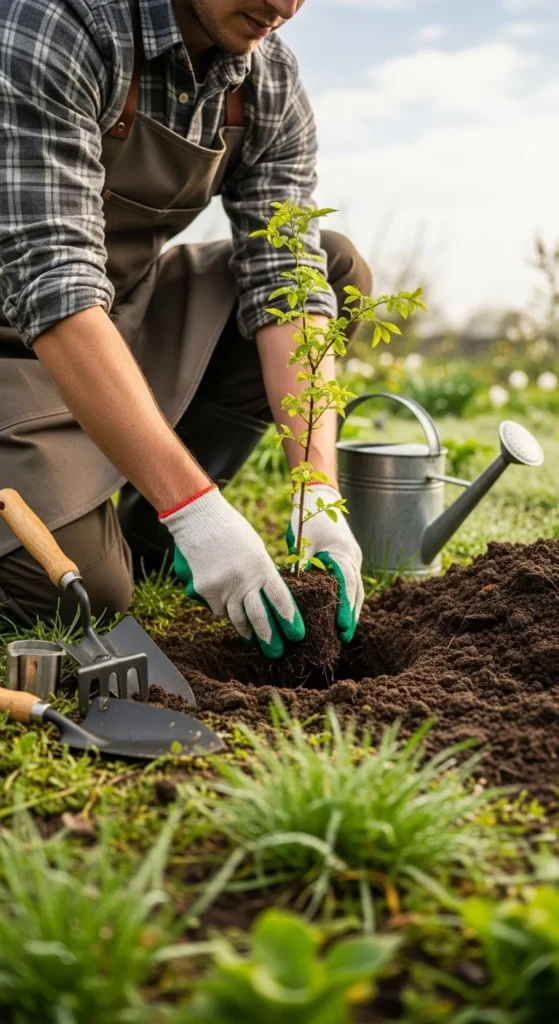
The best times to plant are early spring or fall, when temperatures are mild and moisture levels are stable. Avoid hot midsummer days or frozen winter ground. These cooler months give roots time to settle before facing extreme weather. Planning around your region’s climate ensures stronger growth and survival.
15. Add a Water Basin Around the Base
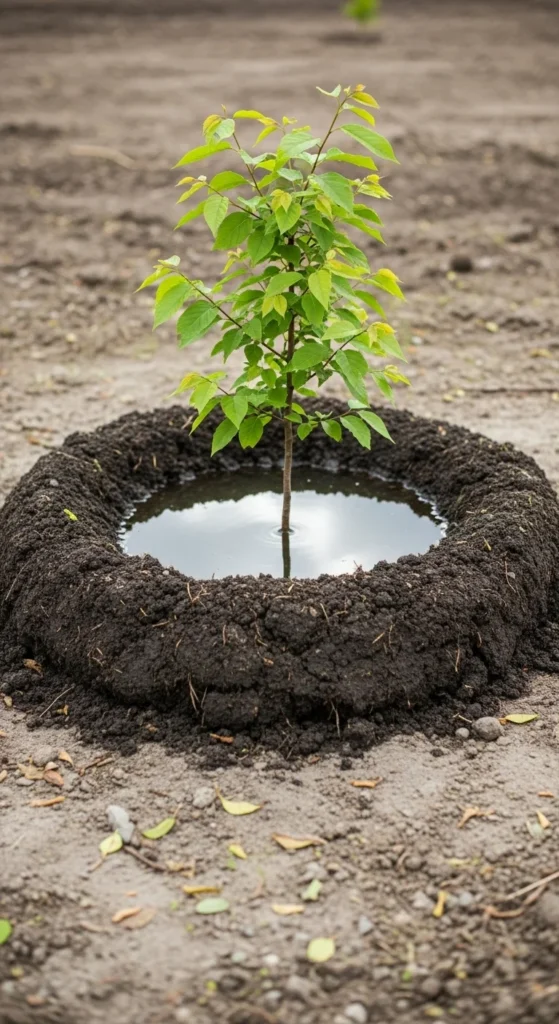
Create a shallow basin around the root zone to hold water in place during irrigation. This helps moisture seep down slowly rather than running off. After watering, refill the basin as needed. In dry climates, this simple trick reduces water waste and keeps roots consistently hydrated.
16. Use Native Trees for Low Maintenance
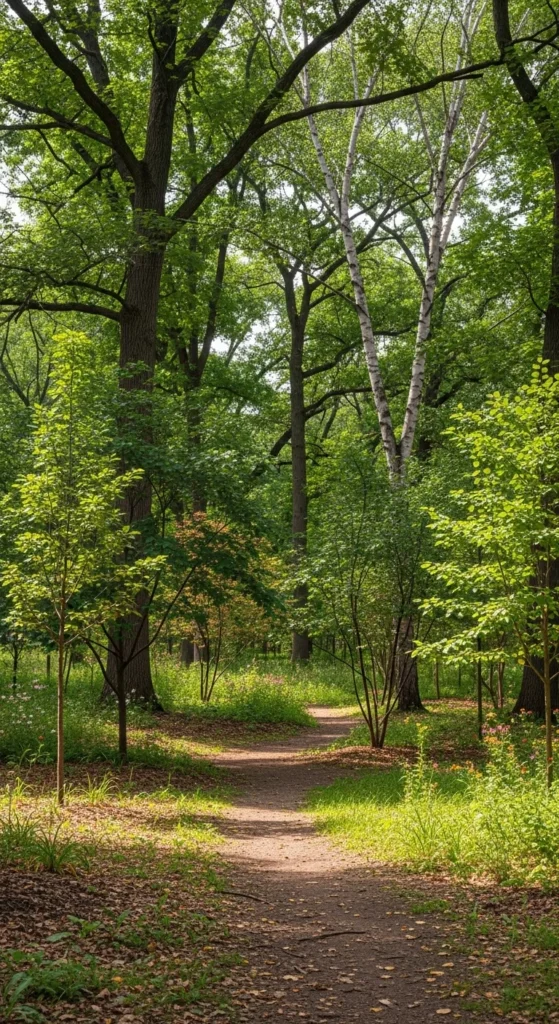
Native trees adapt best to your local soil, rainfall, and temperature. They’re more resilient to pests and drought, and they support local wildlife. Visit a nearby nursery for native options like oaks, maples, or serviceberries. They require less care once established and fit naturally into your landscape.
17. Rotate Planting Locations for Variety
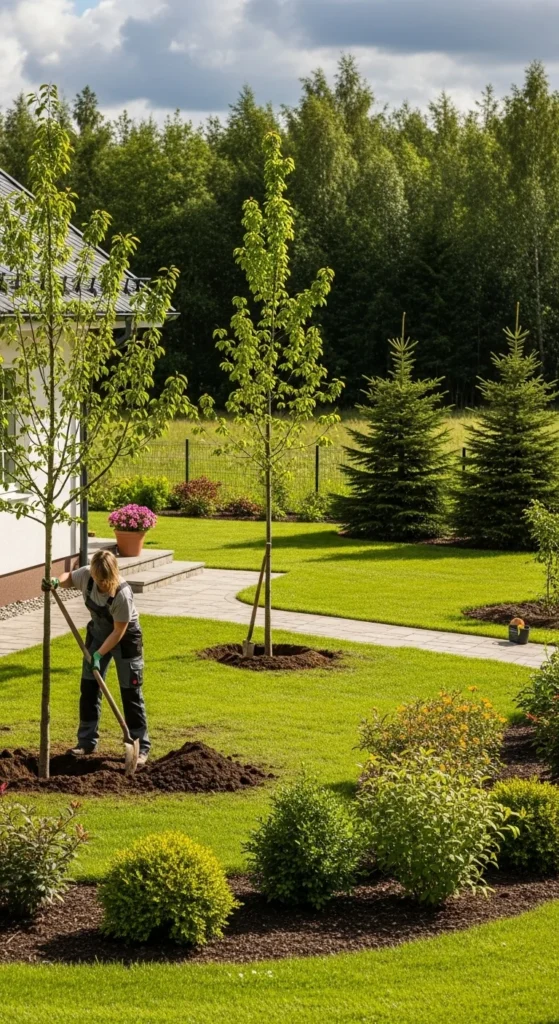
Don’t cluster all trees in one section. Mix tall and short species throughout your yard for better shade distribution and airflow. Rotating where you plant prevents soil depletion and creates layers of visual interest. A diverse layout also helps manage disease spread between species.
18. Aerate Around Mature Trees
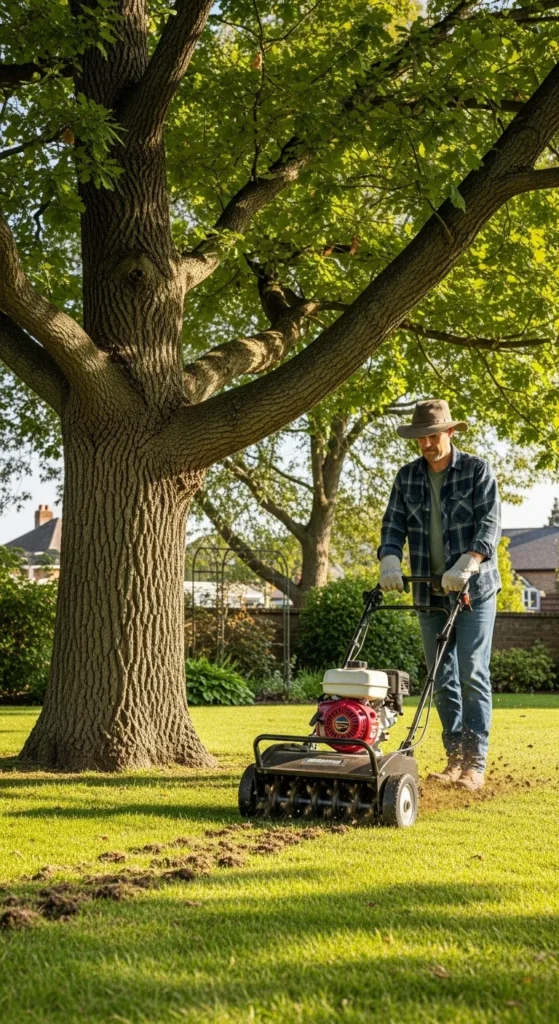
As trees age, the soil can compact, limiting oxygen to the roots. Once a year, gently aerate the soil around the drip line with a garden fork or aerator. Avoid piercing large roots. This small maintenance step improves drainage and allows nutrients to reach deeper layers.
19. Monitor Tree Growth Yearly
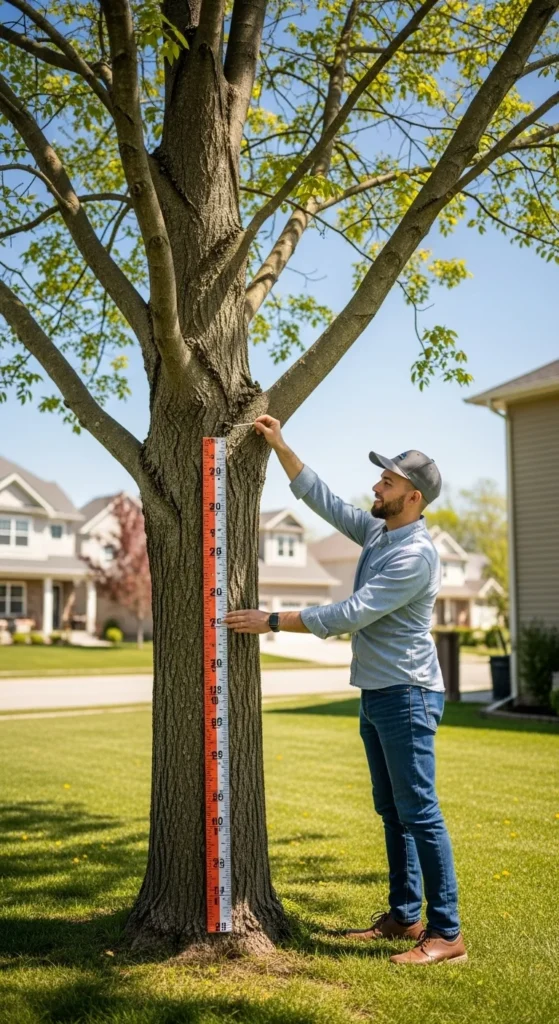
Keep track of how fast your trees grow each year. Healthy growth shows your care is working. Sudden changes in leaf color, branch dieback, or slow progress may point to underlying issues. Keeping a simple notebook or app log helps you spot trends early and make timely adjustments.
20. Keep Up with Seasonal Care
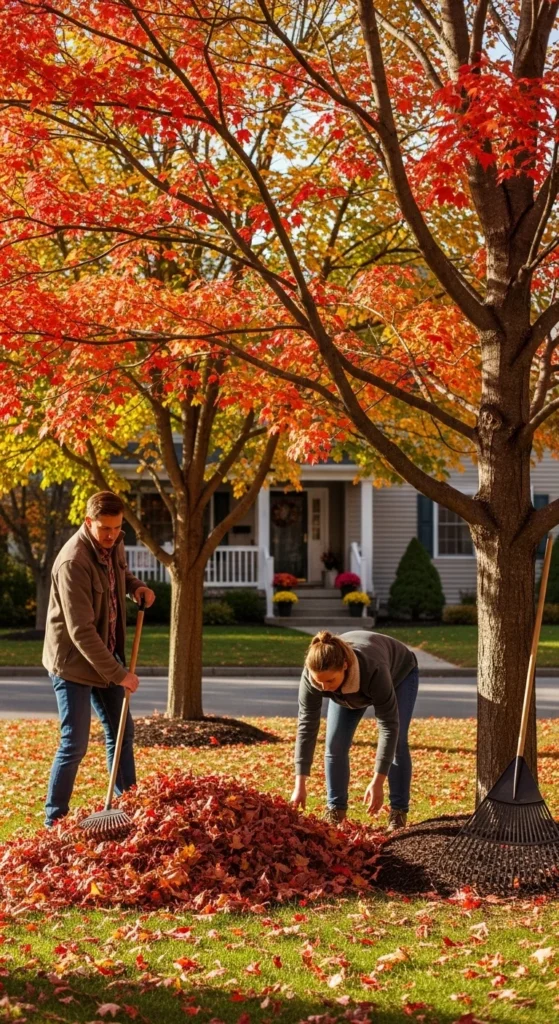
Each season calls for different attention. Water deeply in summer, add mulch before winter, and prune lightly in late winter or spring. Regular observation keeps trees thriving. Set reminders for these small seasonal tasks—they make long-term maintenance easy and enjoyable.
Conclusion
Planting trees isn’t just landscaping—it’s creating a living legacy. With these 20 practical tree planting tips, you can nurture a greener, healthier yard that provides shade, beauty, and life for years to come. Take it one tree at a time, care consistently, and enjoy watching your landscape grow into something truly special.

Leave a Reply