

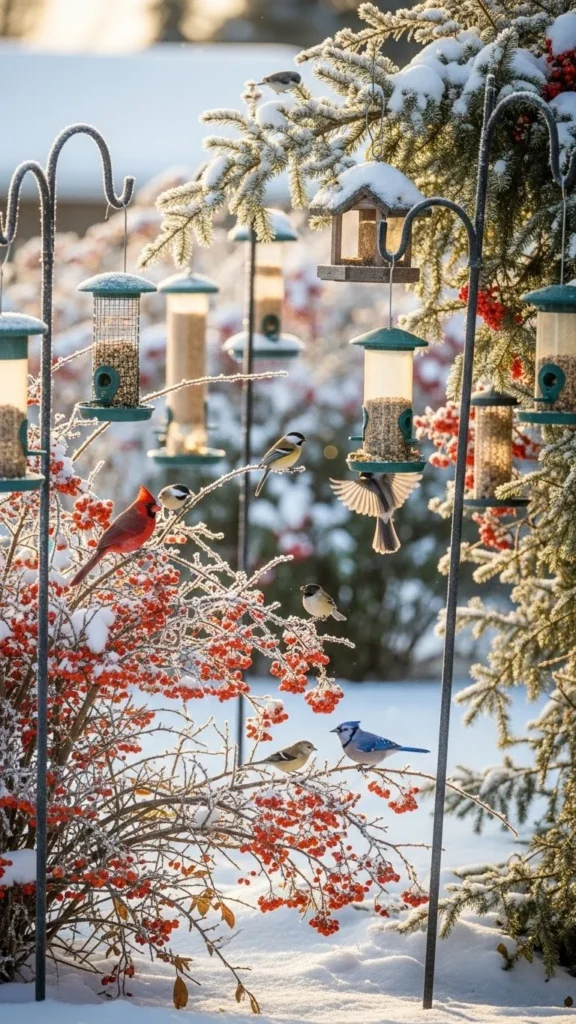
Winter doesn’t have to feel empty or flat. With the right plants, textures, and simple DIY touches, you can create a bird-friendly winter garden that stays alive with movement and color even on cold days. These ideas help you offer food, shelter, and safe spaces using affordable materials and easy steps. Whether your yard is wide or compact, each option brings charm and invites more feathered visitors all season long.
1. Evergreen Clusters for Safe Cover
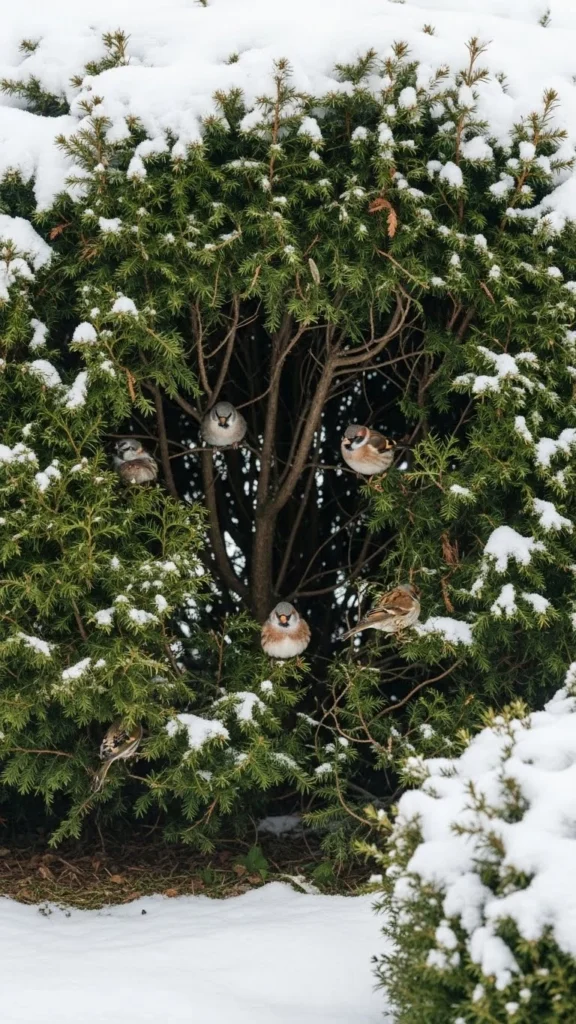
Evergreens create natural hideaways. Birds use them as windbreaks and quick escape zones. You can group three to five shrubs together to form a thick pocket of calm space. Choose varieties that hold their shape during cold months. Plant them near a fence or wall to reduce wind pressure. Fill the ground with fallen needles or mulch to keep moisture steady. Add a simple DIY brush pile beside the shrubs for extra coverage. This setup helps birds feel safer while staying close to food and resting areas. You won’t spend much, and the layout works even in small yards.
2. Winter Berry Rows That Feed Birds Naturally
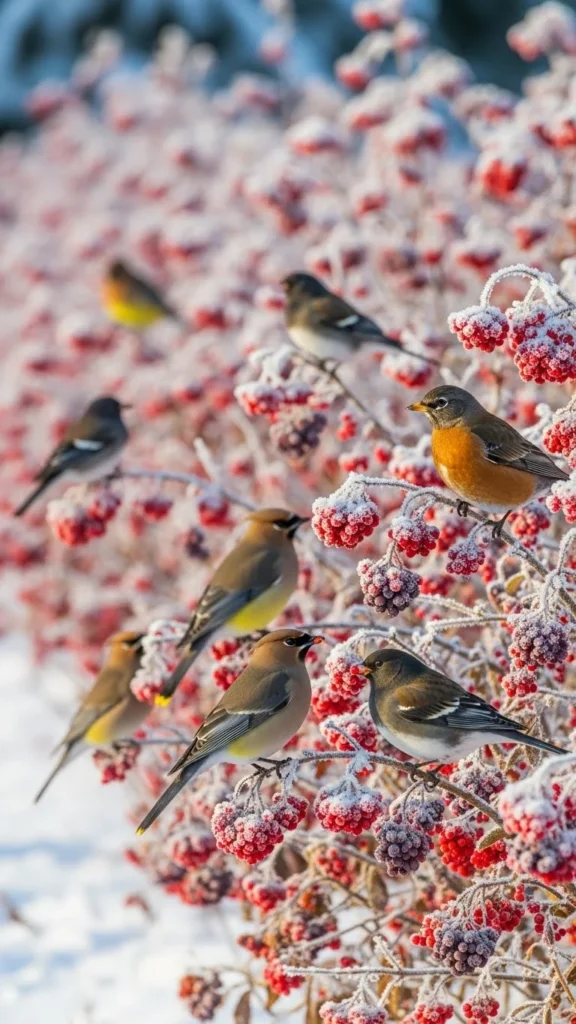
Berry shrubs act like a pantry for birds. They offer color and nutrition when other food disappears. Pick varieties that hold berries during winter, and plant them in loose rows. Space them far enough apart so you can walk between them but close enough for birds to hop easily. Keep the ground simple with mulch or pebbles. Prune lightly so berry stems stay exposed. For extra reach, hang a few DIY suet-free seed cakes between branches. This little row becomes a dependable feeding lane and looks beautiful against the snow.
3. DIY Brush Piles for Instant Shelter
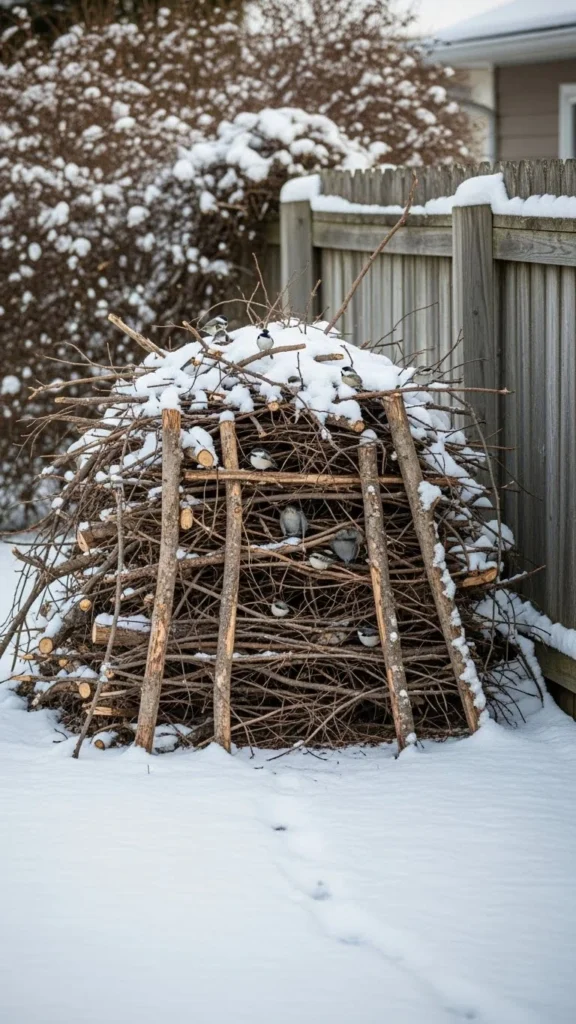
A brush pile invites birds to hide, rest, and warm up. It costs nothing if you gather branches already in your yard. Keep thicker logs at the bottom and lighter twigs on top. Make gaps so birds can dart inside quickly. Position the pile near shrubs or a shed to block wind. You can even tuck dried grasses into spaces to soften the interior. Add a few seed pods or pinecones on top to attract curious birds. This simple structure feels cozy and blends naturally with winter scenery.
4. Heated Birdbath Stations
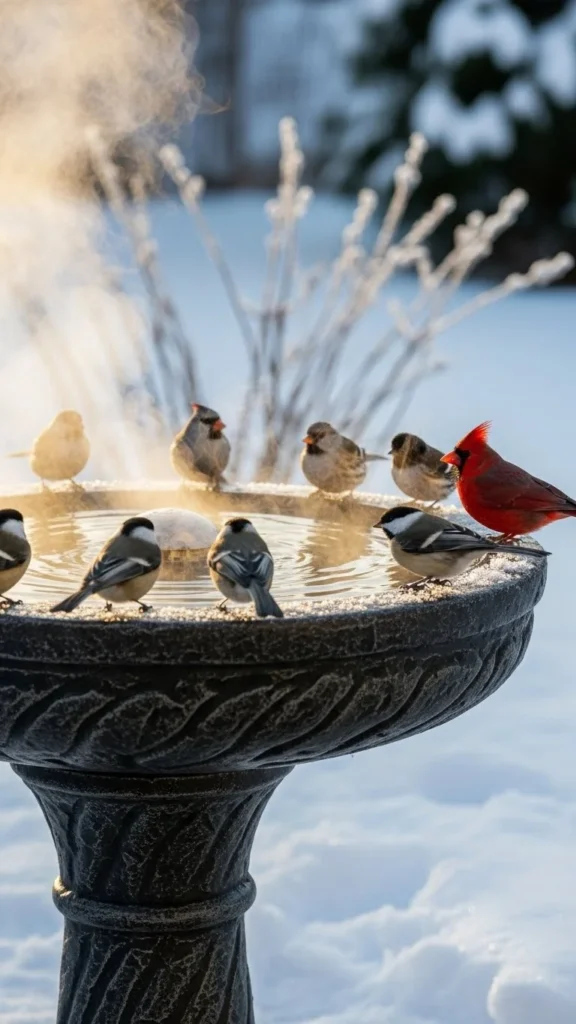
Open water is rare during winter. A heated birdbath gives birds a place to drink safely. Choose a shallow design so birds can stand without slipping. Place the bath on a sturdy base and shield it from strong wind. If you want to save money, use a plug-in warming disk instead of a full heated basin. Add stones inside the bowl for grip. Clean the surface every few days so ice never builds up. With this one shift, you’ll see far more visitors gathering throughout the day.
5. Seed-Rich Container Gardens
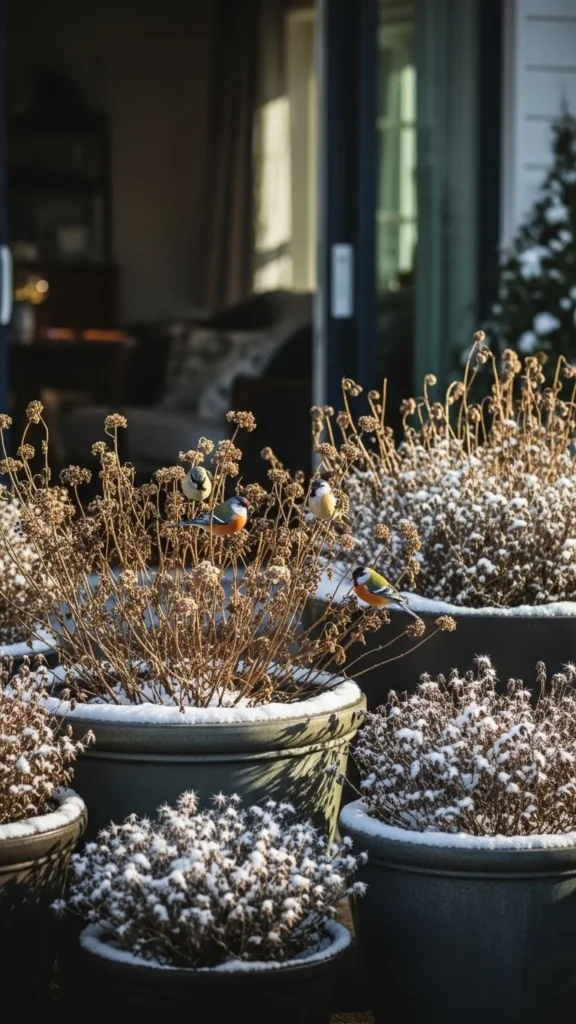
Containers let you shape a bird-friendly space even on small decks. Pick plants that hold seeds through winter. Mix sizes so birds have varied perches. Keep the soil level slightly below the rim so snow doesn’t overflow. Add dried stems rather than cutting everything back; birds love them. Use a layer of gravel at the bottom for drainage in freezing weather. Place containers close enough so birds can hop between them but not so close that snow covers everything. This setup turns a simple patio into a lively feeding spot.
6. Perch-Friendly Twig Arrangements
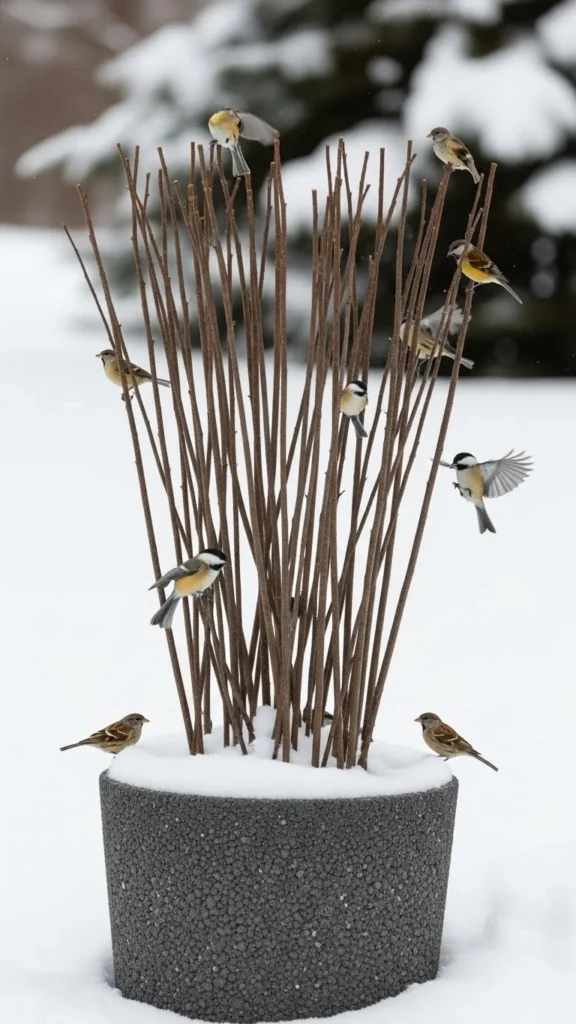
Twigs make fun resting spots. You can gather fallen sticks from your yard, trim them to similar heights, and arrange them tightly in a pot filled with sand or soil. Birds love the slim perches because they feel natural. This trick costs almost nothing and fills empty winter corners. Add pinecones or seed heads at the base to create extra interest. Set the pot near shrubs for quicker access. These twig clusters also help redirect wind and make the garden feel layered.
7. Evergreen Arches for Cozy Pathways
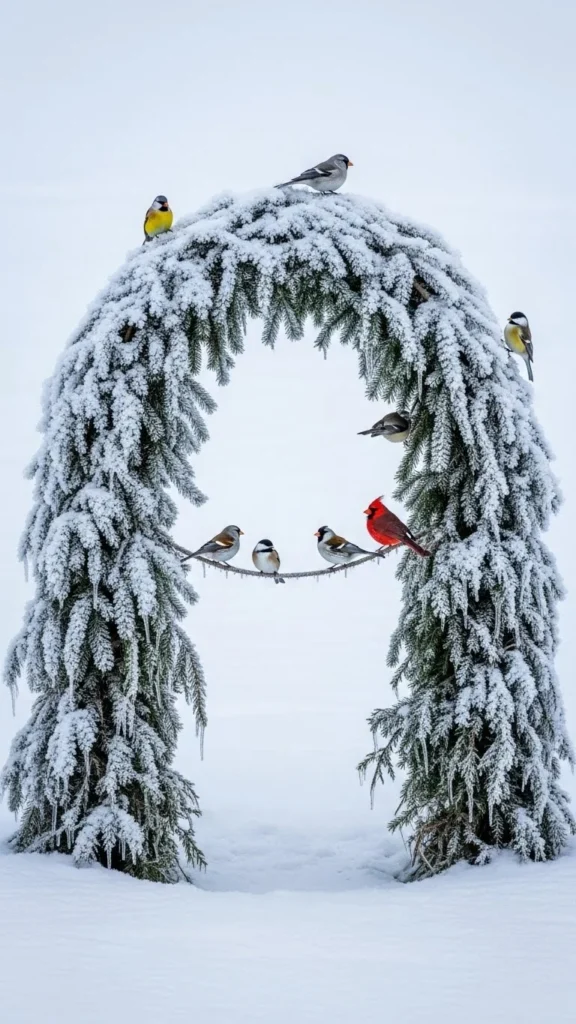
An evergreen arch helps frame your winter garden and gives birds landing spots along the top and sides. You can build one using flexible evergreen branches tied to a simple metal frame. Keep ties loose so branches stay natural-looking. Birds use the arch to scan the area before feeding. Place the structure along a walkway or near berry shrubs. Add mulch under the arch for warmth and better footing. Even a small arch creates gentle structure and draws movement into your space.
8. Warm Perches With Wrapped Rope
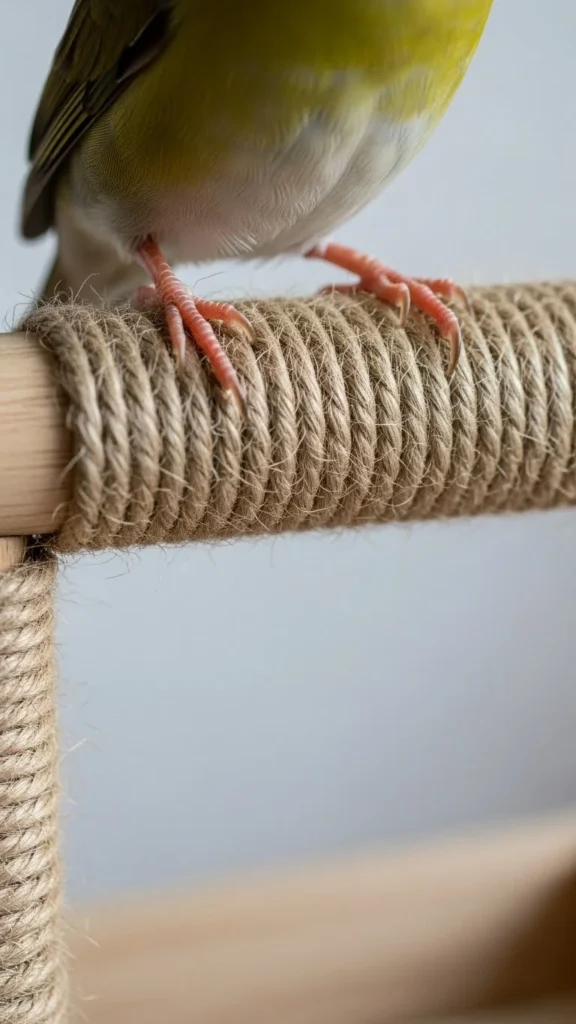
Wood can get slippery during winter. Wrapping a perch in thick jute rope gives birds a warmer, softer grip. Use untreated rope and wind it tightly. You can attach it to a branch, fence rail, or feeding pole. Replace sections when they wear out. The texture helps birds rest longer between flights. Try placing two or three wrapped perches at different heights so birds feel comfortable moving around. It’s a small touch that makes your garden more welcoming.
9. Mini Conifer Borders
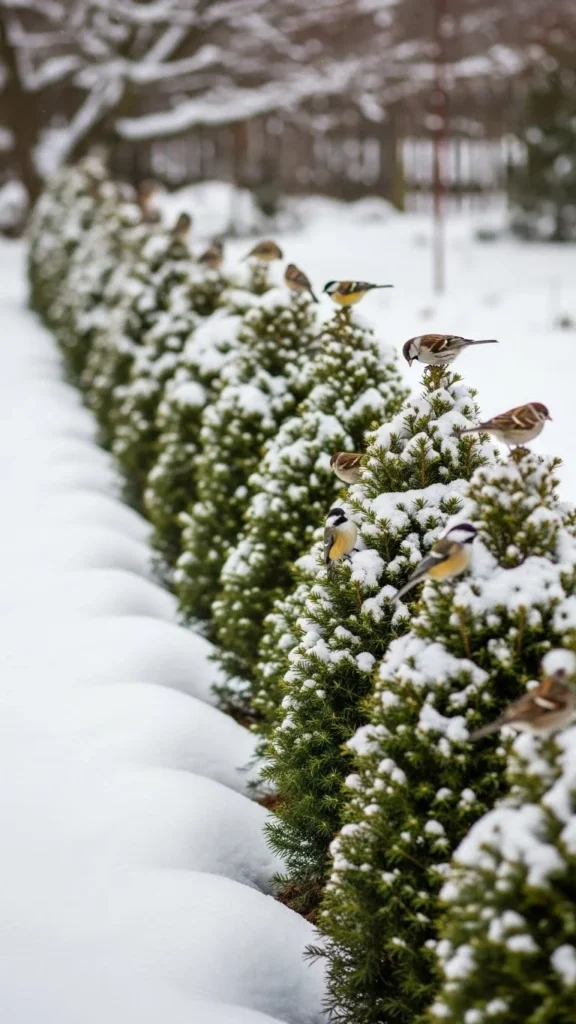
Mini conifers create a tidy border while offering shelter. Plant them close enough to overlap as they grow. Keep their base covered with mulch to trap warmth. Birds use the border as a safe travel route along the edge of the yard. You can mix heights for a natural look. Add simple solar lights nearby to help you enjoy the view during early evenings. This border brings structure, color, and movement without much upkeep.
10. Winter Seed Heads Left Standing
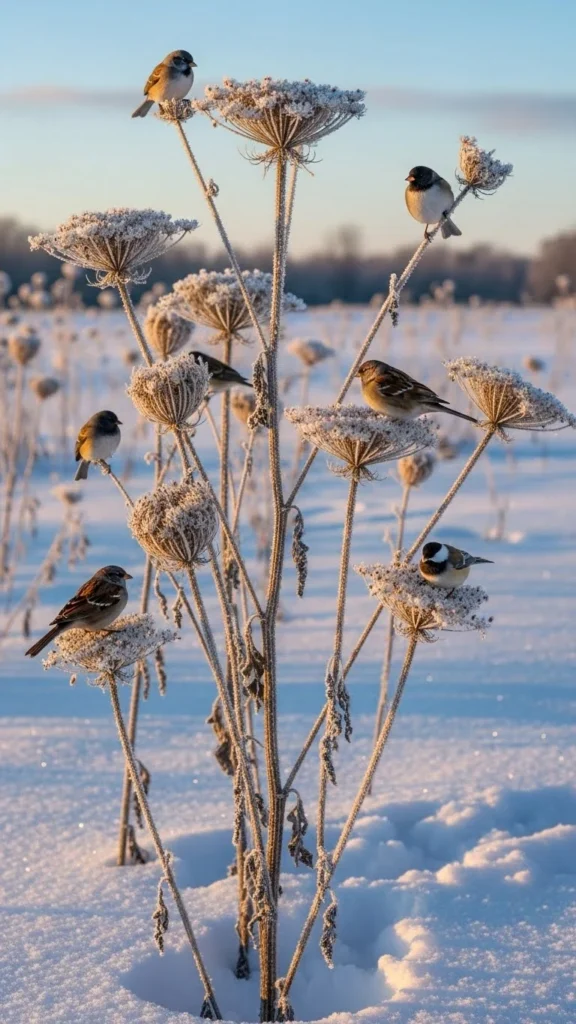
Leaving seed heads uncut turns your garden into a winter buffet. Plants like coneflowers and rudbeckia hold seeds that birds love. Keep stems upright by tying them loosely before snow arrives. Spread mulch around the base to protect roots. Birds land on the tall stems and eat directly from the tops. It keeps your yard full of texture and activity. This method also saves you time since you avoid cutting everything back too early.
11. DIY Log Shelters
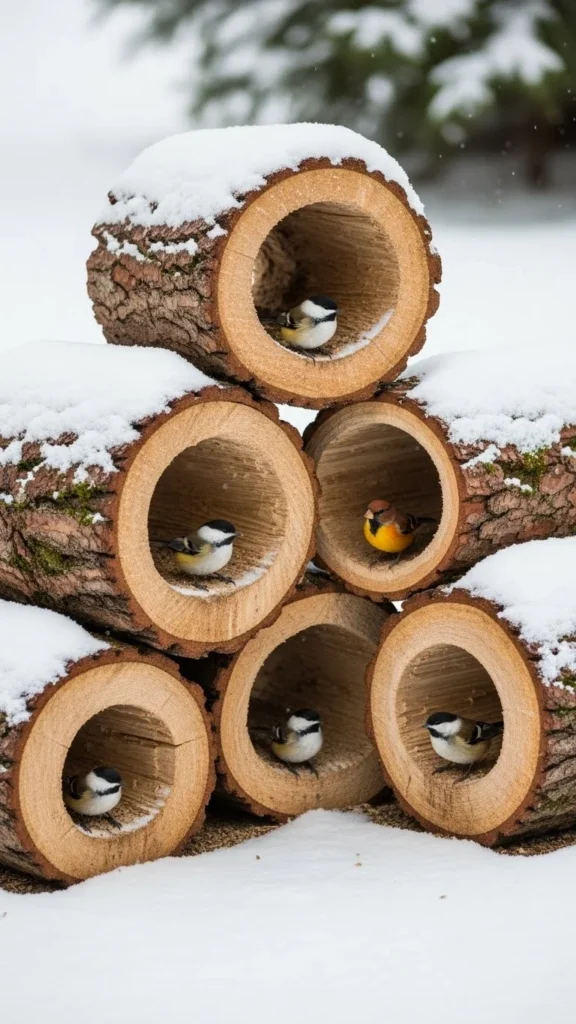
Logs create natural shelter spots. Find thick pieces and hollow out the center with simple tools or choose pieces that already have openings. Stack them neatly and angle them slightly forward so snow doesn’t pile inside. Birds enjoy the warmth and protection these logs offer. You can tuck seed clusters between layers for added interest. This rustic detail blends beautifully into winter scenes and draws wildlife without any complicated setup.
12. Ground-Level Feeding Trays
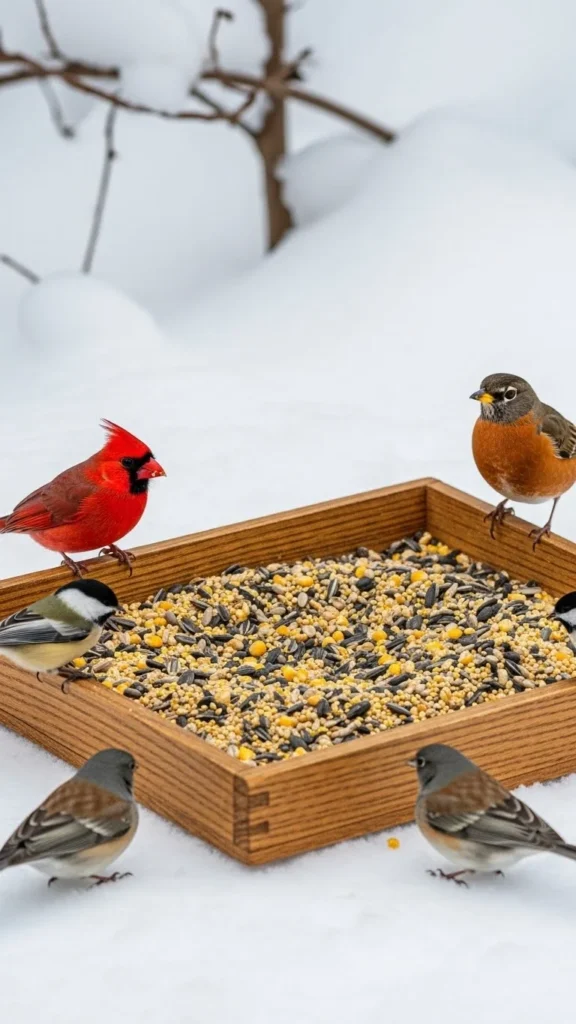
Ground feeders appreciate low trays. Use a shallow wooden or metal dish and add drainage holes. Keep it close to shrubs so birds can retreat quickly. Refill small amounts often instead of filling it to the top. Sprinkle dried leaves around the tray to make the area feel natural. Clean it regularly to prevent buildup. This style of feeding invites different species than traditional hanging feeders, giving your garden more variety.
13. Hanging Pinecone Feeders
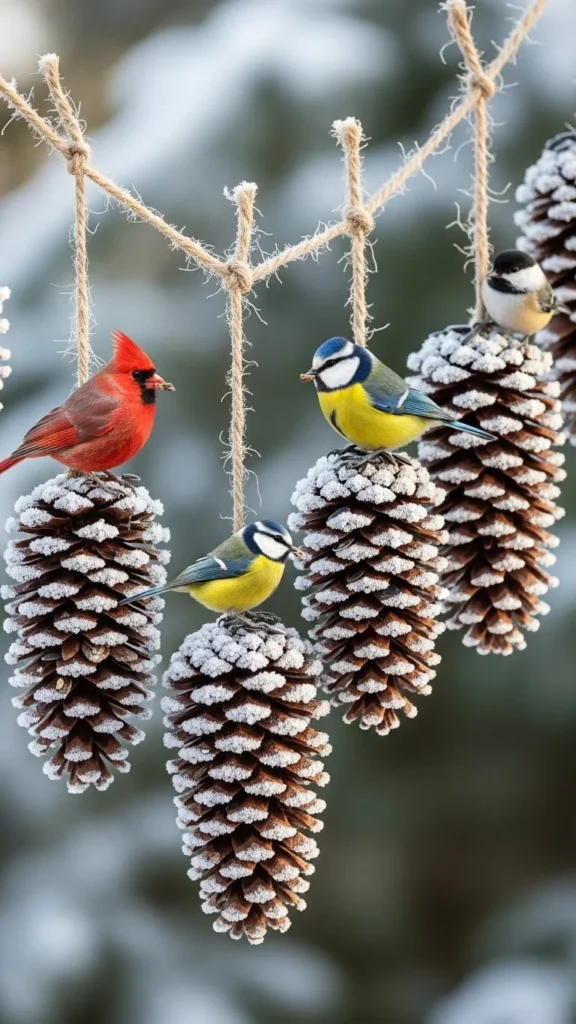
Hanging pinecone feeders are simple and charming. Fill the scales with seeds and hang the cones from sturdy branches. Vary heights so birds feel comfortable. Add several cones in a cluster to reduce competition. Replace them once empty. This style brings movement and texture to your winter space. It also works well in smaller gardens since it doesn’t take up ground room.
14. Evergreen Wreath Perches
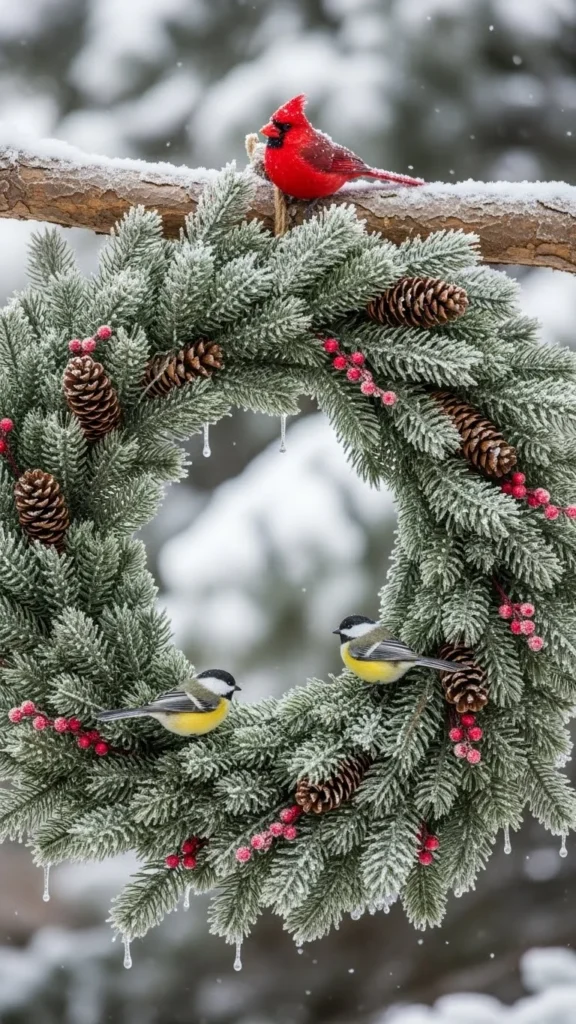
Winter wreaths can serve as perches. Use an evergreen wreath with firm branches. Hang it from a tree or pergola. Birds enjoy the circular shape because it gives them multiple landing points. Add berries or dried seed stems to the wreath for natural feeding. Secure it well so wind doesn’t swing it too much. This decoration works outdoors all season long and stays beautiful even in snow.
15. Snow-Protected Feeding Shelves
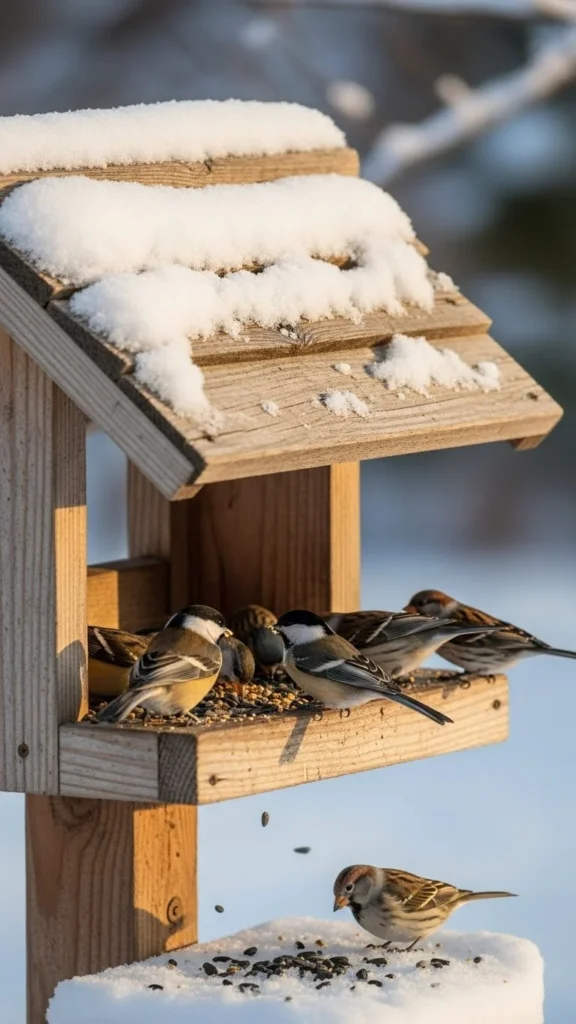
A feeding shelf with a roof keeps food dry. Build one from simple scrap wood or buy an inexpensive one. Keep the roof wide enough to block falling snow. Add thin perches on the sides for easy landing. Position it near shrubs but not inside them so predators can’t sneak up. Refill with small portions daily. This cozy space keeps birds returning even during heavy weather.
16. Shrub Tunnels for Safe Travel
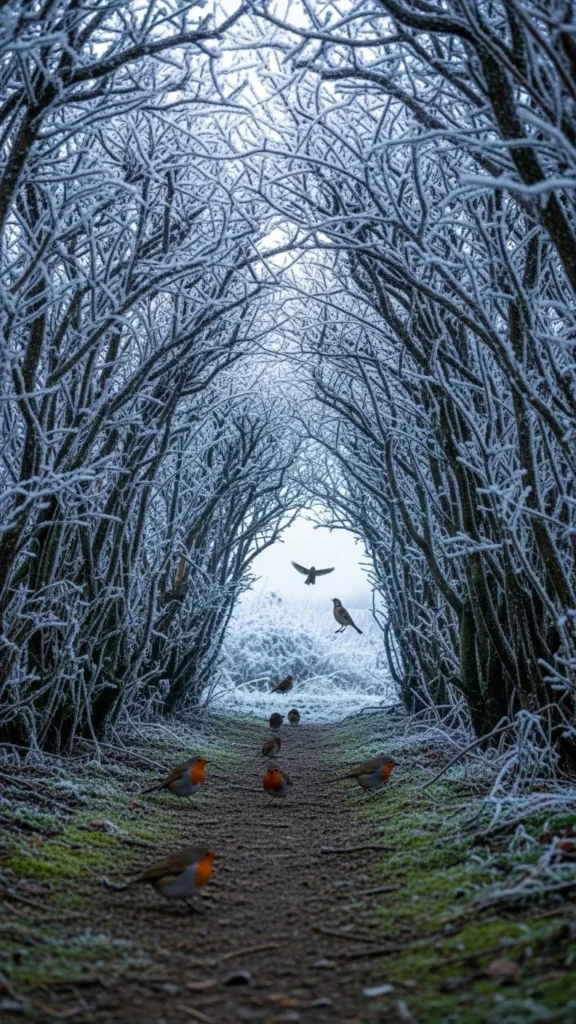
Shrub tunnels act like covered walkways for birds. Choose flexible branches or plants that bend slightly under snow. Trim the center lightly to create a clear lane. Birds enjoy moving through these tunnels because they feel protected from wind and predators. Add a few stepping stones or mulch inside to make the space look tidy. This layout adds personality to your yard while supporting wildlife.
17. DIY Seed Scatter Zones
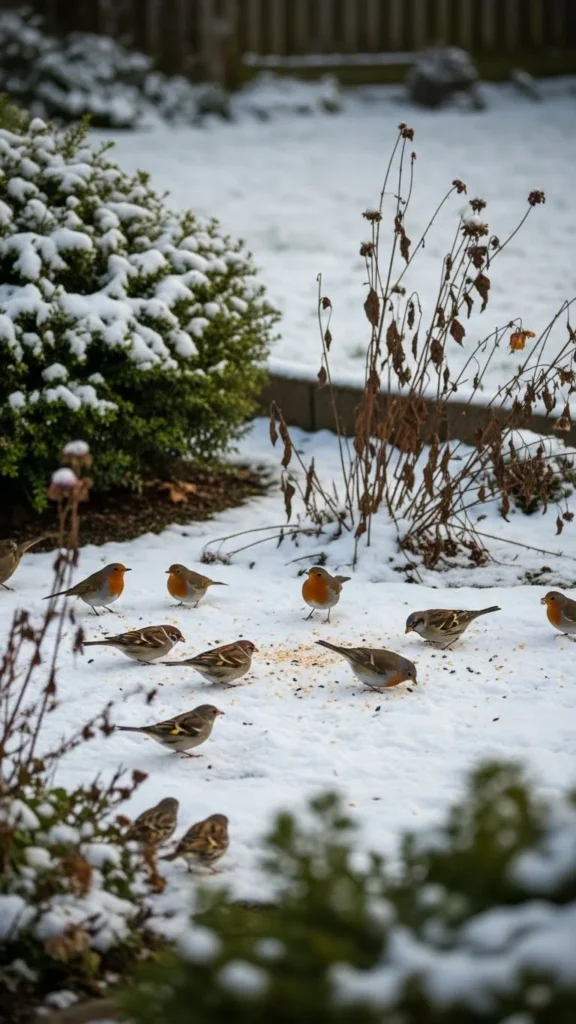
Some birds prefer open ground. Create a scatter zone by clearing a small patch of snow daily and sprinkling a thin layer of seeds. Keep the area near shrubs so birds can move quickly if startled. Rotate locations so nothing becomes messy. This method attracts shy species that avoid feeders. It’s simple and works even if you have limited space.
18. Small Conifer Islands
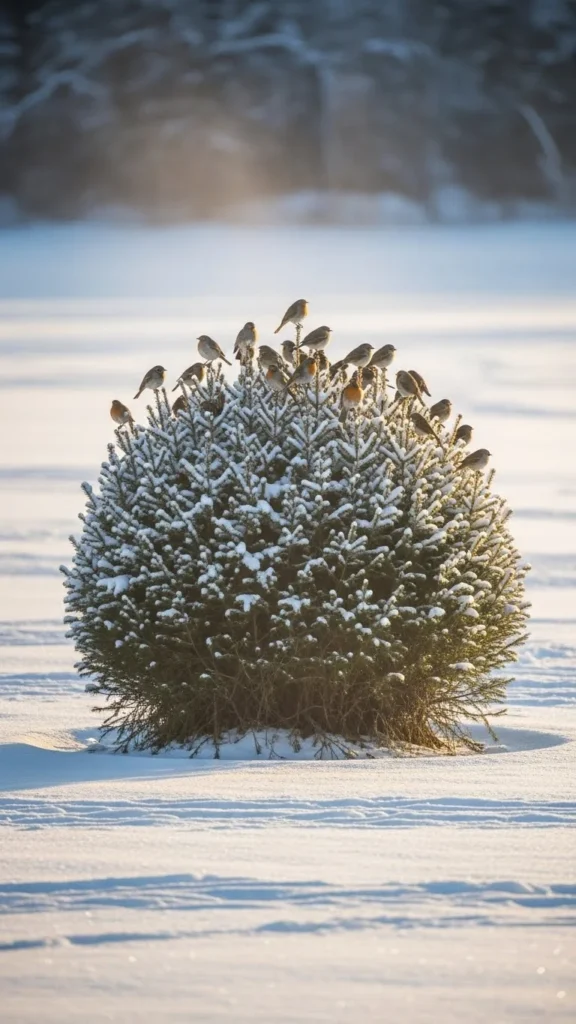
Conifer islands create pockets of shelter. You can group three or four mini trees in a round formation. Add mulch in the center to hold warmth. Birds use these islands as lookout points before heading to feeders. This setup fits nicely into large and small yards. Keep the area clean so snow doesn’t weigh down branches. The island becomes a cozy anchor point in the winter garden.
19. DIY Platform Feeders
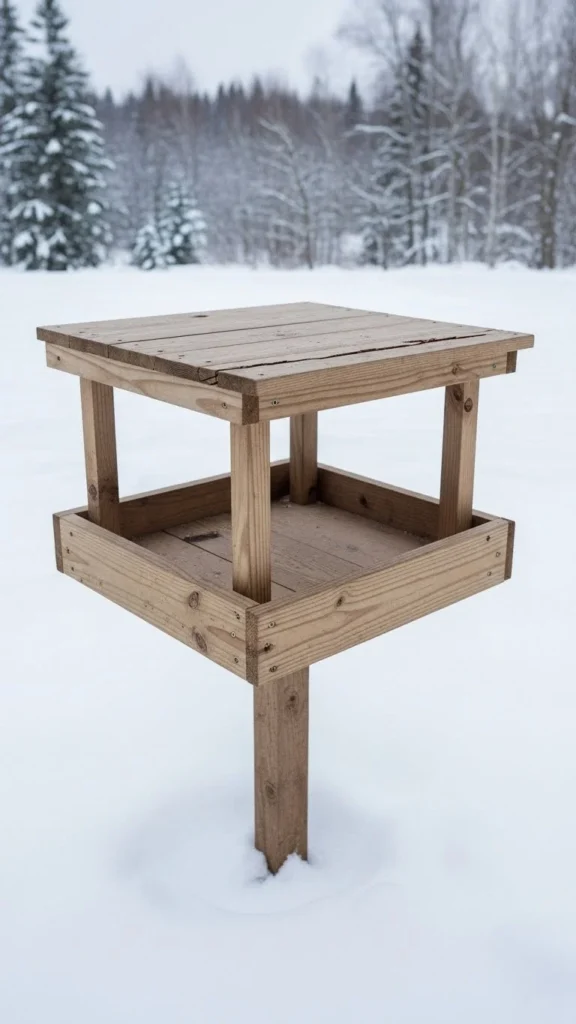
Platform feeders are easy to build and fill. Use a wide wooden square with short railings to hold seed in place. Lift it on a single post or stack of bricks. Place it away from heavy wind. Birds appreciate the flat, open space. Add a few smooth stones for grip. Clean it often so snow doesn’t gather. This feeder attracts species that like roomy surfaces.
20. Dried Flower Corners
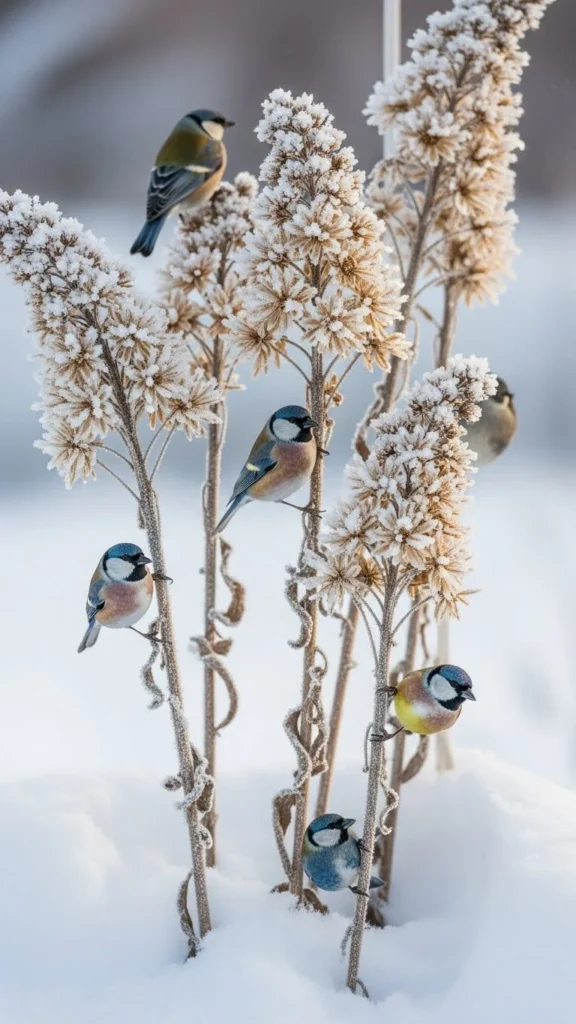
Dried flowers bring shape and gentle height to winter gardens. Keep stems tall and sturdy by tying them loosely before snow arrives. Birds love to perch on the tops and peck at any leftover seeds. Combine different heights for a layered effect. Add mulch to protect roots so plants return next year. This corner looks soft, warm, and full of life even during cold months.
21. Tiered Feeding Zones
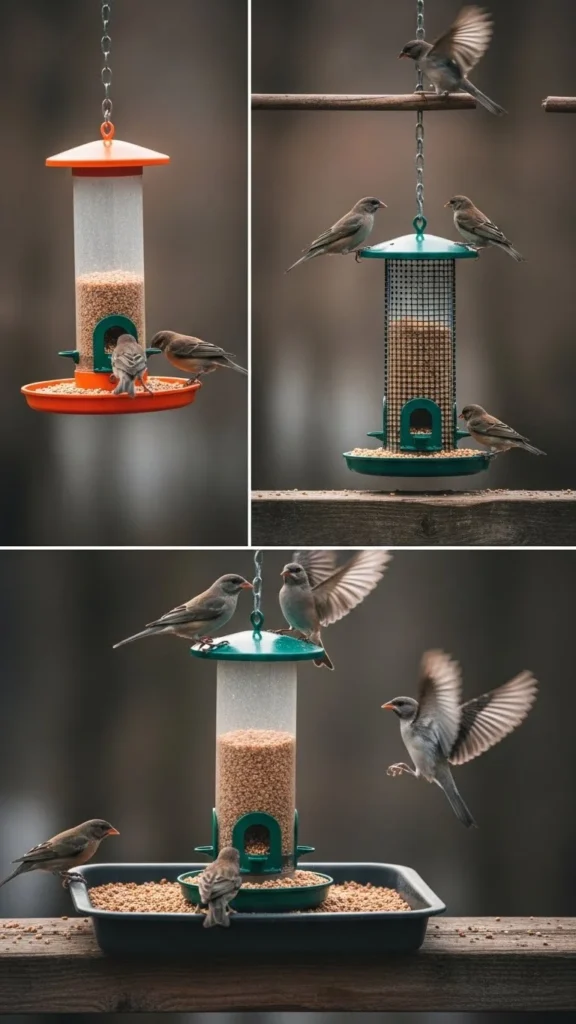
Tiered feeding helps separate bird traffic. Use ground trays, mid-level shelves, and a hanging feeder above. Space them carefully so food doesn’t drop into other zones. This layout prevents crowding and invites more species. Add natural perches between levels so birds can rest during movement. Keep food types varied. This small adjustment makes your garden feel organized while supporting a wider range of visitors.
22. Clustered Pine Shrub Nests
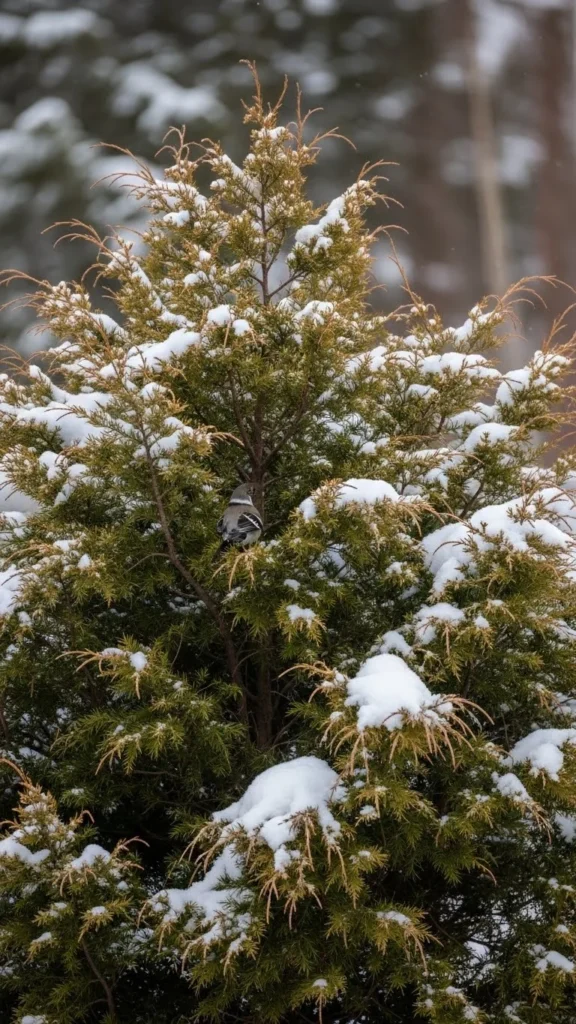
Pine shrubs create warm pockets inside their branches. Plant them closer together so the inner area becomes more insulated. Birds love slipping between needles where wind can’t reach. Keep pruning minimal so the cluster stays thick. Add a mulch layer for better moisture. Even a small group of shrubs can support many birds. This layout is tidy, practical, and easy to maintain.
23. DIY Rope-and-Branch Perch Rails
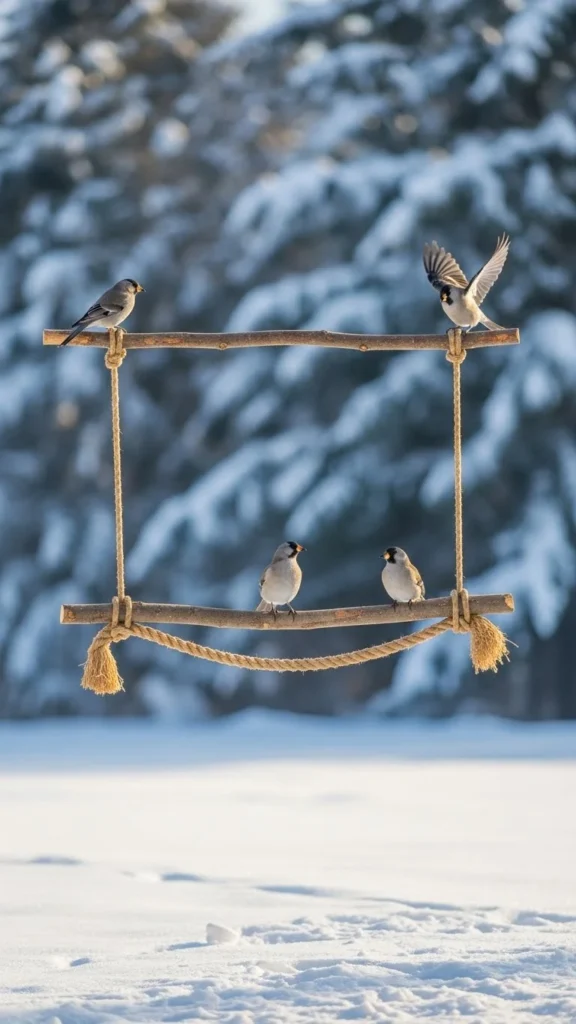
This handmade perch rail adds charm to your winter garden. Tie a thick rope between two sturdy branches. Let it sag slightly to create a natural curve. Birds grip the rope easily and rest between feedings. You can add a second rope below to make a double perch. Keep it sheltered from heavy wind. This DIY detail works well near feeders or berry rows.
24. Winter Bird Snack Garland
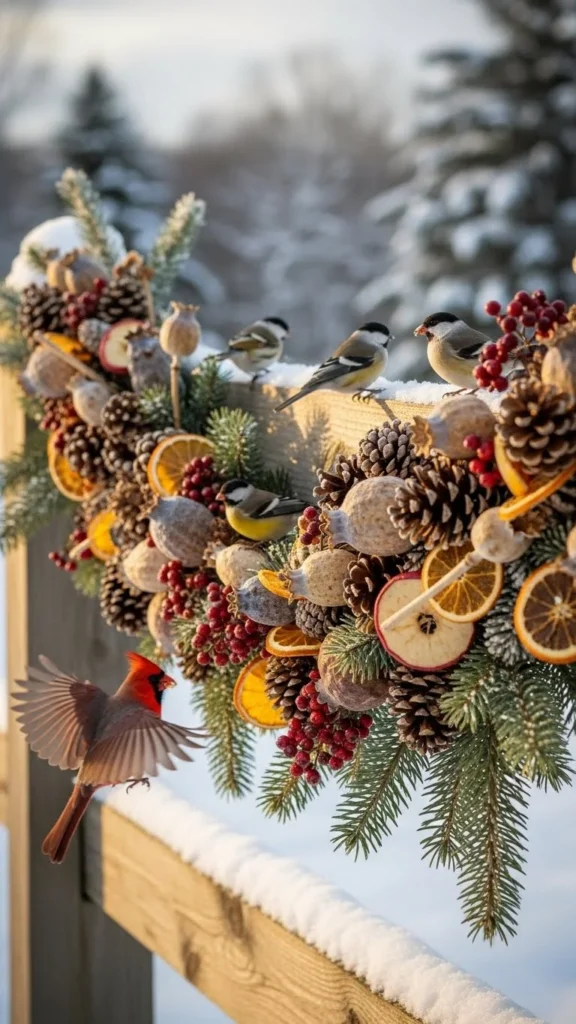
A winter snack garland is simple to make. Thread natural items such as fruit slices, pinecones, and seed clusters onto twine. Hang it along a fence or between branches. Keep it low enough for birds to reach but high enough to prevent disturbance. Replace dried items weekly. This garland brings color, texture, and movement to your garden.
25. Layered Evergreen Screens
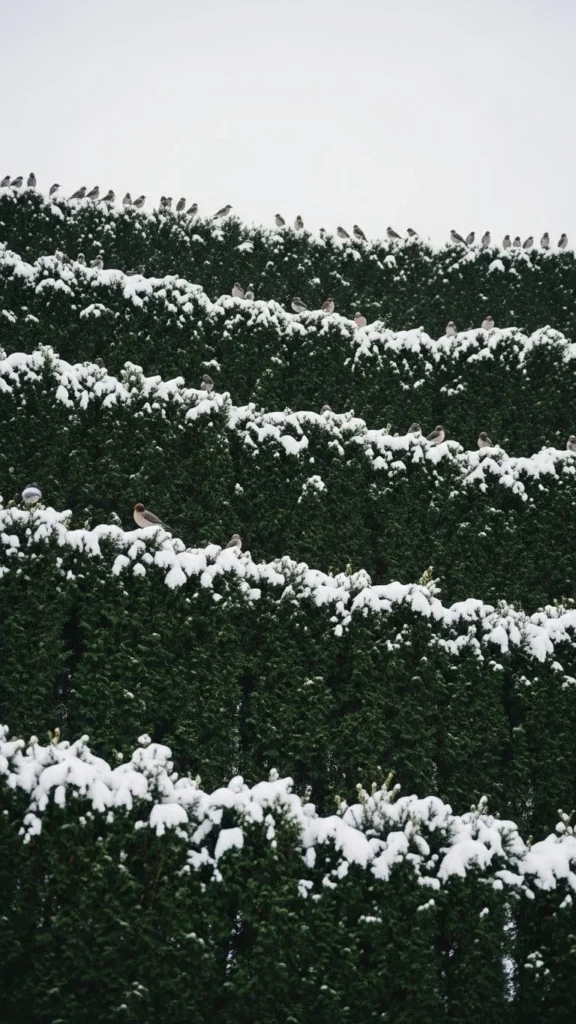
Layered evergreens act like a screen and create temperature pockets birds love. Arrange taller shrubs in the back and shorter ones in the front. Leave small gaps for birds to slip through. Add mulch to hold warmth and reduce frost damage. This structure softens wind and makes your garden feel fuller. Birds use the space as both shelter and pathways.
26. Open Meadow Patch With Tall Stems
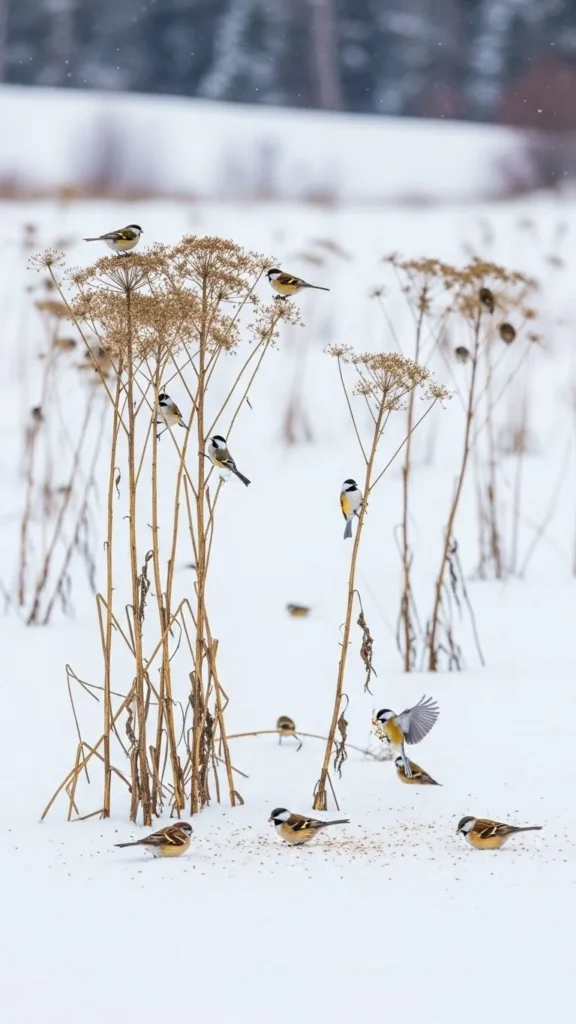
Leaving one area a little wild can help birds feel at home. Let tall stems remain standing. Keep the ground simple with light mulch. Birds hop along stems to find seeds and shelter. This area takes almost no work and thrives with natural charm. You can edge it with small stones for a clean look.
27. Frost-Friendly Hedge Rows
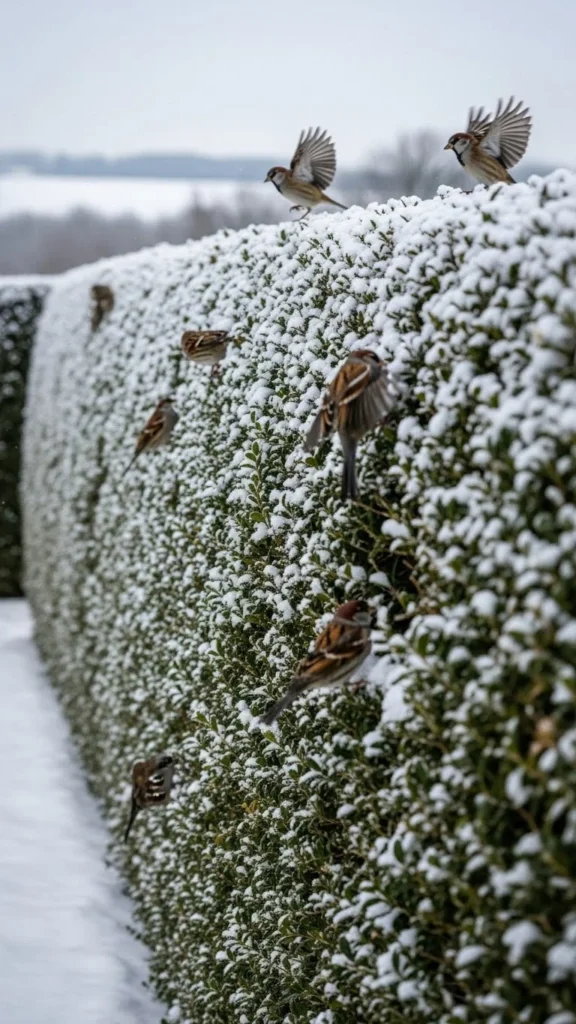
Hedge rows give structure while offering excellent cover. Choose hardy shrubs that stay firm during winter. Plant them close enough to make a continuous line but not so close that airflow is blocked. Birds slip between branches to warm up. Keep pruning gentle so the structure stays soft. Add dried stems or pinecones at the base for interest.
28. Mini Bird Haven Corner
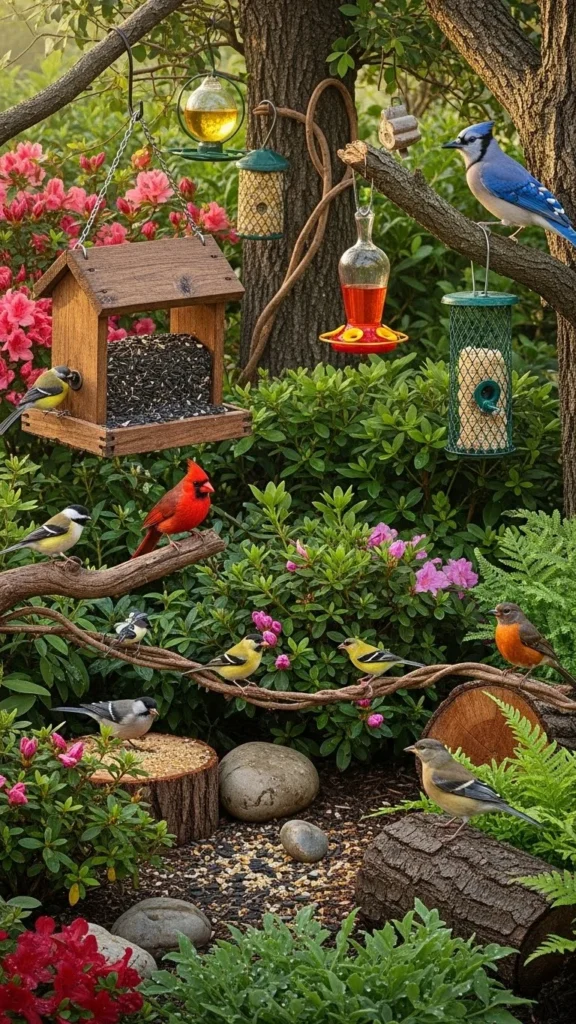
This corner acts as a micro-habitat. Combine evergreens, a low feeder, a perch rail, and a brush pile. Keep everything close so birds feel safe. Add a shallow water dish on warmer days. This setup works in any yard size and stays active all season. It’s a simple, balanced layout that supports frequent visitors.
29. Winter-Friendly Vertical Garden Wall
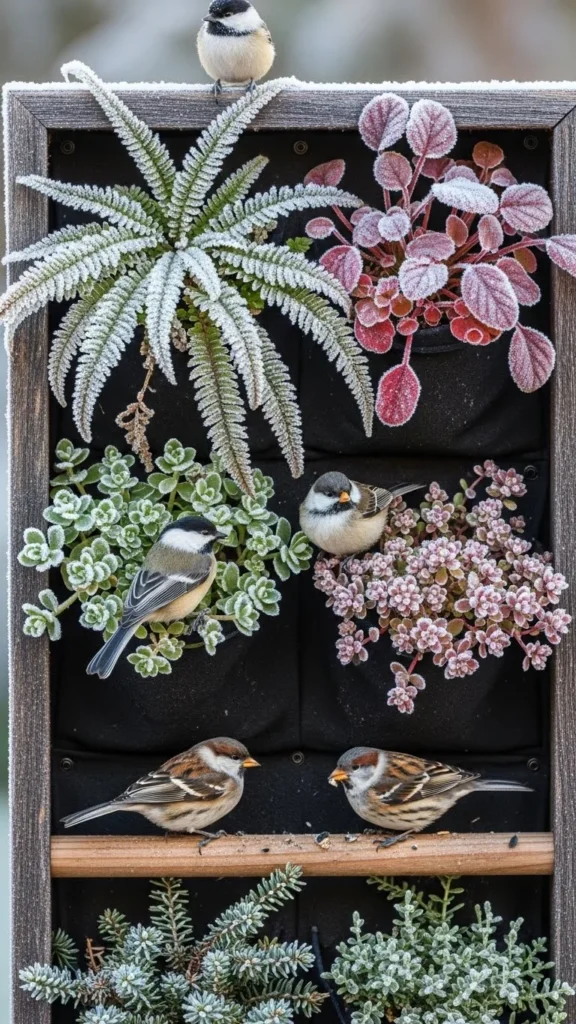
Vertical walls save space while offering birds shelter. Choose hardy pockets of greenery and dried stems. Keep the structure close to a fence for stability. Birds use the pockets as landing spots and hideaways. Add a few seed clusters on hooks to attract more traffic. This wall turns an empty fence into a lively winter feature.
Conclusion
A bird-friendly winter garden adds movement, warmth, and gentle color to cold days. These ideas make it easy to shape a space filled with shelter, food, and simple landing spots. Start with one or two options, expand slowly, and watch your yard turn into a lively haven that supports wildlife all season long.

Leave a Reply