

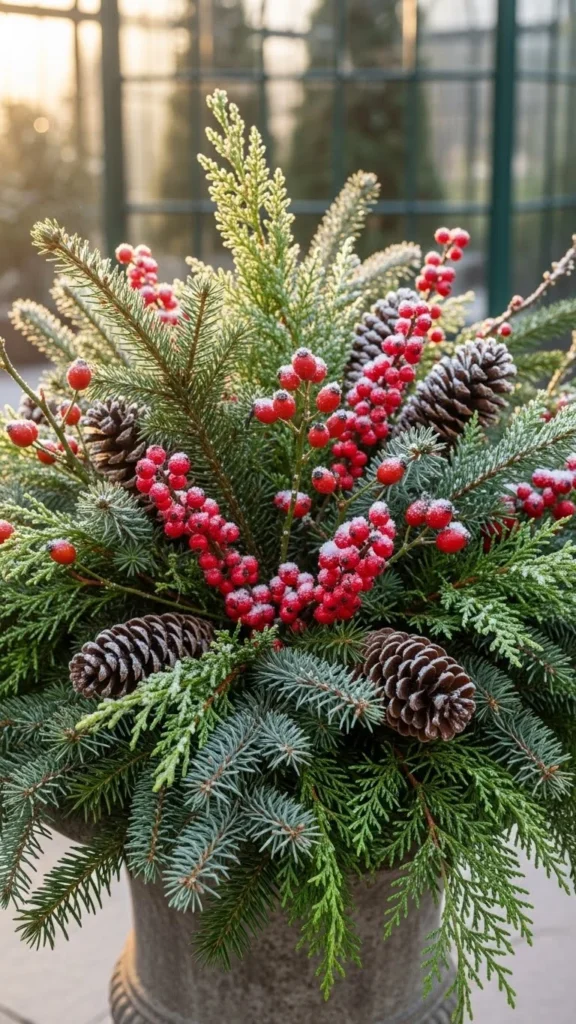
Winter containers can add color and charm when the rest of the garden feels quiet. These ideas help you create displays that look cheerful even on the coldest days. Each arrangement uses simple materials, low-cost fillers, and easy styling tricks you can copy at home. Whether you like rustic greens, icy tones, or bold color accents, you’ll find actionable container ideas you can build in a single afternoon.
1. Evergreen & Pinecone Porch Pot
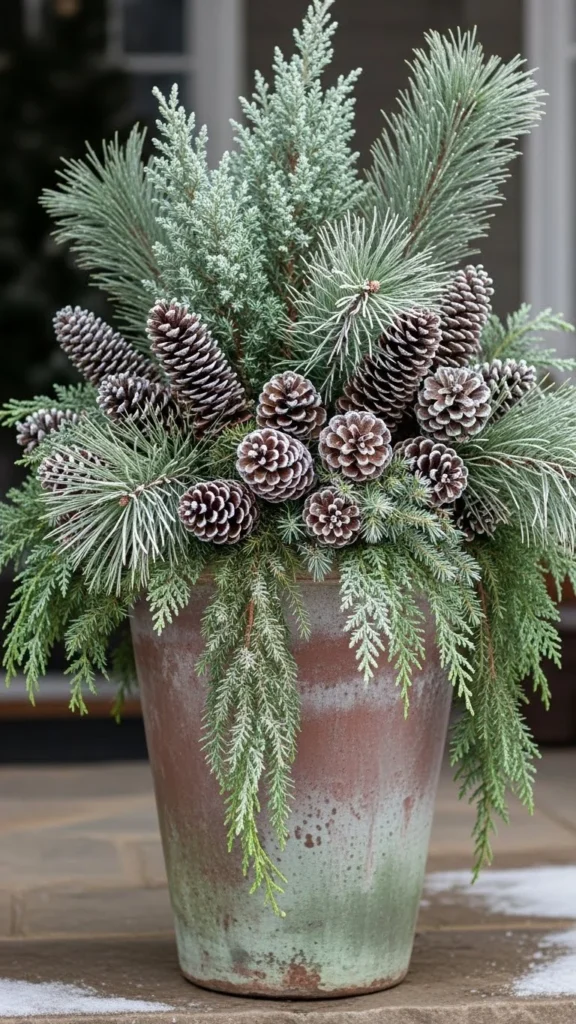
This classic porch pot works for almost any style. Use any evergreen clippings you already have. Cedar, fir, or pine all sit well together. Start by pushing the largest branches into the back. Add medium stems toward the center. Then fill gaps with small sprigs. Pinecones help bring texture without any extra effort. You can gather them outdoors to keep costs low. A few small stones or leftover soil help secure everything in place. If your winter winds are strong, add a few small stakes to keep the branches steady. You can also tuck in dried seed heads from your yard for extra height. This design suits entryways because it stays green even during long cold spells. Mist it lightly before freezing weather to help the needles last longer. If you want a fuller shape, layer branches outward instead of upright. The more you overlap, the richer it looks.
2. Red Twig Dogwood & Juniper Mix
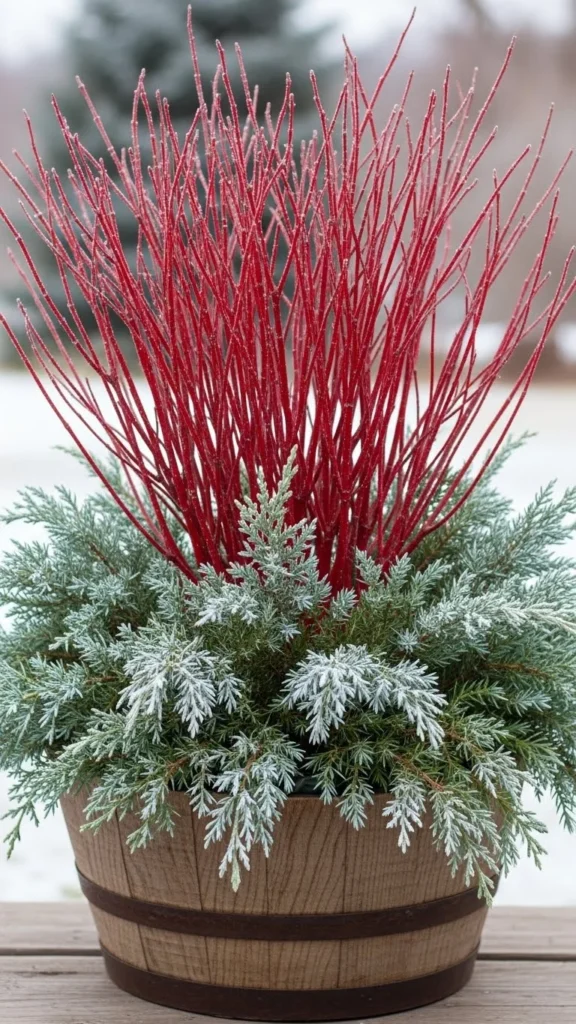
Red twig dogwood brings strong color to winter containers. Its vivid stems stand out even on cloudy days. Pairing it with juniper creates a nice contrast of cool tones and warm hues. Insert the tallest stems in the back. Cut them at an angle for easy placement. Add juniper around the base so the stems feel anchored. This setup is simple but eye-catching. It works well near walkways or patios where people see it often. You can trim dogwood stems from your yard or find bundles at garden centers. To keep it budget-friendly, pick up a few branches instead of a full bundle. Add a handful of pinecones to hide soil and create a grounded look. If you want height, include two or three taller dogwood stems in the middle. The shape stays balanced without much fuss. Keep the arrangement outdoors so the branches stay crisp.
3. Winter White Cedar Bowl
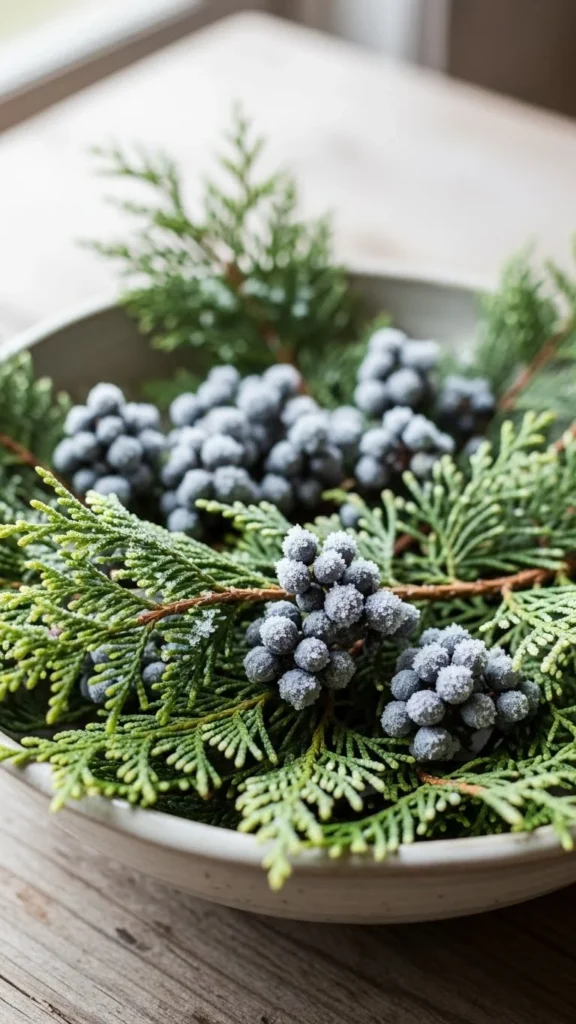
White cedar has a naturally lacy look that works beautifully in winter containers. It drapes over the edges and softens any hard line. Choose a shallow bowl for this one. Start by adding the longest branches around the rim so they spill outward. Place shorter sprigs upright through the center. Add gray berries or seed pods for subtle color. You can forage these from shrubs or buy inexpensive faux clusters. This arrangement looks lovely on outdoor tables or wide railings. If you want more volume, layer two types of cedar—one deeper green and one lighter. The contrast creates depth without much work. To secure the stems, pack soil tightly or use leftover floral foam. If you want a hint of shine, tuck in a few dried stems sprayed lightly with a matte silver tone. The bowl stays pretty all season without extra watering.
4. Frosted Magnolia Leaf Planter
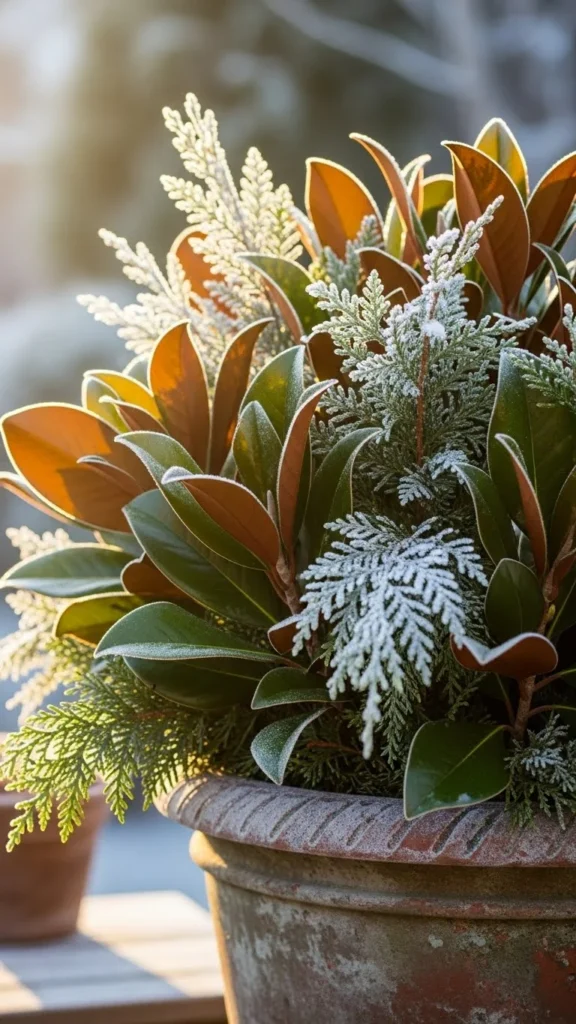
Magnolia leaves bring rich color with their green tops and bronze backs. They give winter arrangements a warm, polished feel. Begin by placing a ring of magnolia leaves around the outer edge of your planter. Angle them slightly upward. Add fir or pine sprigs behind them for height. The mix of glossy and matte textures creates interest even from a distance. If some leaves curl, let them—they add natural movement. To keep the layout affordable, use fewer magnolia leaves and mix in more evergreen cuttings. For a longer-lasting setup, pick leaves that feel firm. Tuck in a few seed pods or dried hydrangea heads for gentle contrast. This planter stands out near front doors or patios where the bronze tones can shine. The arrangement will hold up through cold spells without much care.
5. Birch Branch Trio Arrangement
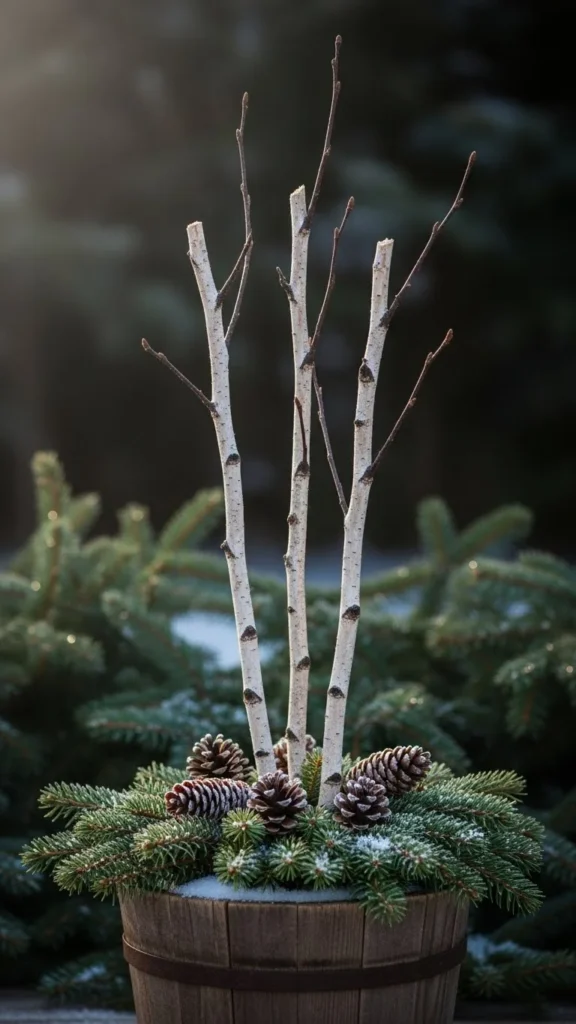
Birch branches instantly add structure and height. Use three branches to form a simple focal point. Push them deep into the container so they stay stable. Add a thick layer of mixed evergreens at the base. Pine, spruce, and fir all work. Pinecones fill gaps easily and help keep the branches upright. This design balances tall and low elements without much planning. You can often find birch bundles at craft stores or garden centers. If not, use any light-colored branches you have at home. Grouping them makes the container feel cohesive. Add a few dried grasses for extra vertical movement. If the container is large, add more evergreens toward the back so the height feels natural. Mist with water before a freeze for a frosted look.
6. Rustic Garden Trug Display
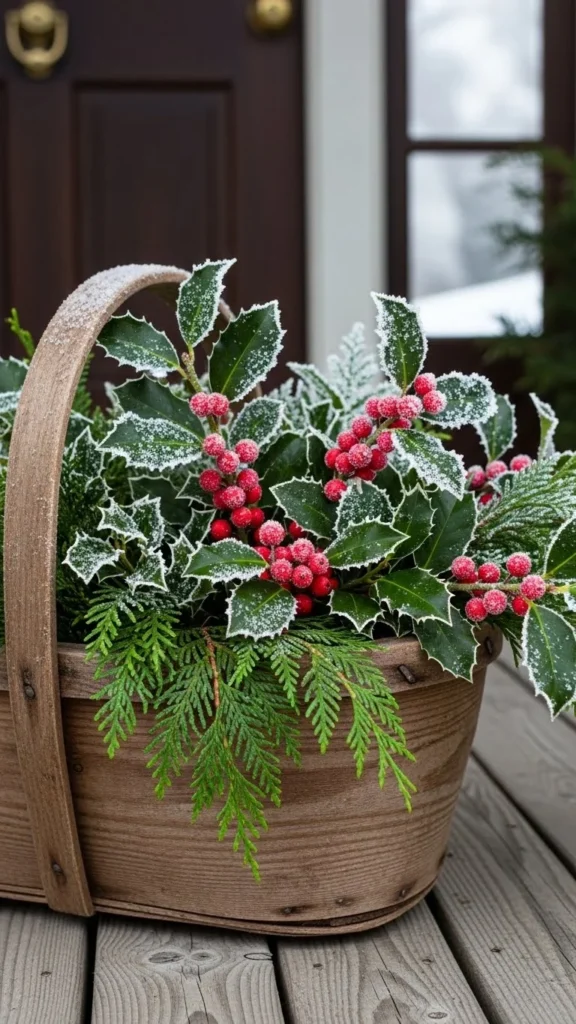
A trug works well as a low outdoor display. It’s easy to move and looks charming on porches. Start by lining the inside with soil or sand. Add cedar branches first. Their soft draping lines make a perfect base. Then tuck in holly or berry stems toward one side. The asymmetry keeps the display interesting. Add a few pinecones to hold things down. You can finish with small dried branches to give height. This idea uses very little material yet still looks full. If your trug is weathered, even better—it adds character. Replace berry stems as they fade to keep the display fresh. Try mixing in spent garden herbs like sage or rosemary for extra scent.
7. Oversized Metal Bucket Arrangement
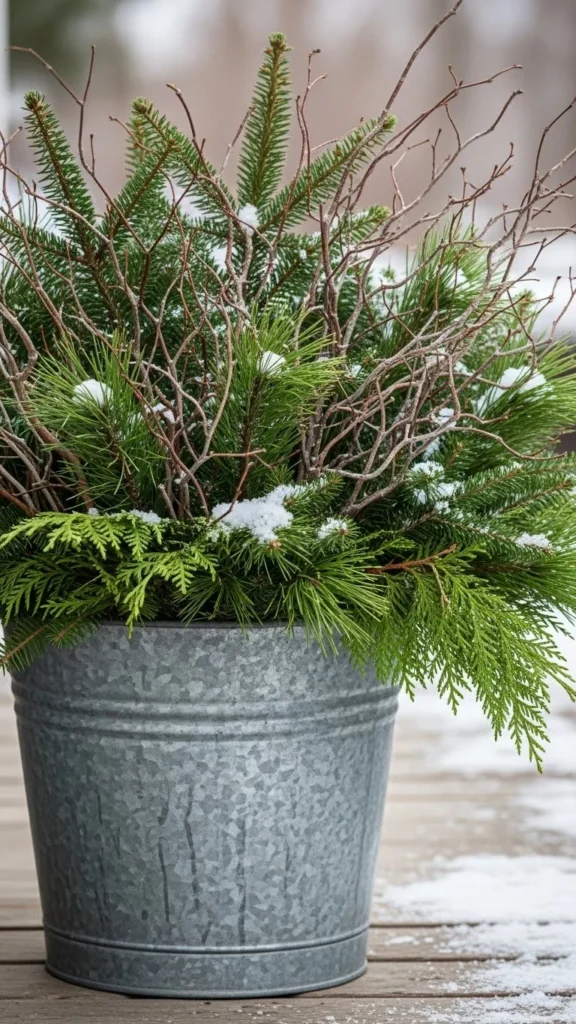
Metal buckets make fantastic winter containers. They’re durable and look great with green textures. Fill the bottom with heavy stones for weight. Add long spruce branches toward the back. Layer shorter pine stems toward the front. Insert a cluster of tall branches or dried seed pods in the center for height. This shape suits wide entryways or garden pathways. If you want more color, add berry stems or dried oranges for a rustic accent. Keep it budget-friendly by using leftover branches from holiday trimming. The bucket handles give it a farmhouse feel. If the bucket is shiny, let it sit outside for a week—it develops a natural patina that fits winter settings well.
8. Lantern & Greenery Duo
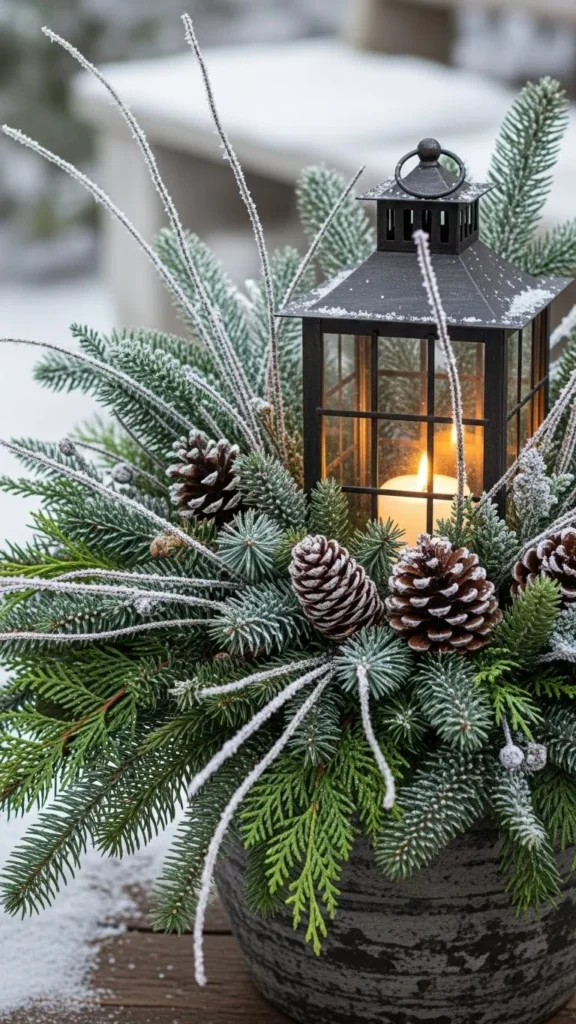
A lantern adds charm and structure to winter containers. Choose one with glass panels so the greens show through. Place the lantern in the center or slightly off to one side. Build evergreens around it until the base is covered. Add pinecones or berry clusters to bring warmth. This arrangement works near porches or along steps. You can add a battery-operated candle inside for soft evening light. Keep it simple so the lantern remains the star. This project requires only a few cuttings, making it cost-effective. Stick to greens with different textures for contrast—cedar, spruce, and fir all bring something unique. If you want height, add slim branches near the back.
9. Cedar & Eucalyptus Mix
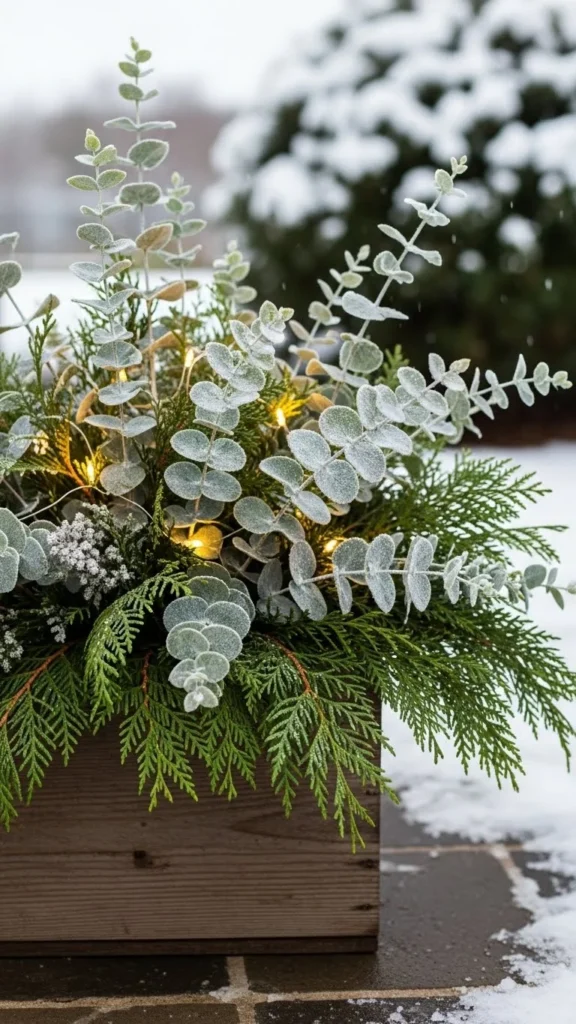
Cedar and eucalyptus make a calming combination. Their shapes complement each other easily. Add cedar first, creating a full base. Then insert eucalyptus stems throughout. The mix of green tones looks elegant without much work. If real eucalyptus is pricey, use preserved stems—they last longer outdoors. Add a few pinecones to ground the texture. This container works well by doors or windows where the soft colors show clearly. If you want more dimension, add two or three taller branches at the back. You can also tuck in small twigs for added movement. Keep the layout loose so the stems feel natural rather than structured.
10. Blue Spruce & Berry Pot
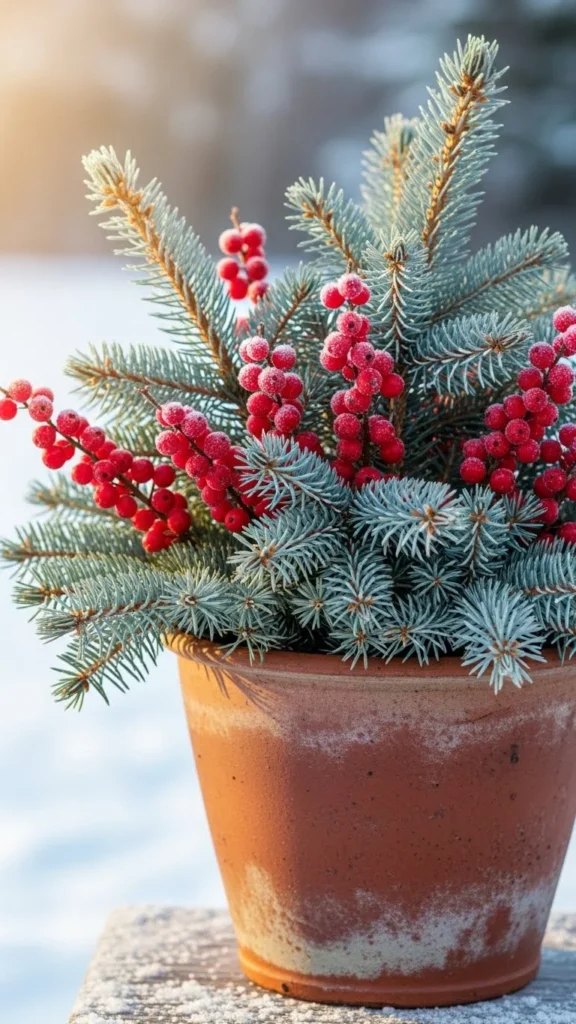
Blue spruce offers cool tones that pop in winter light. Fill your container with spruce branches first. Their stiff texture makes shaping easy. Add red berries for contrast. You can choose real or faux stems depending on availability. This combo looks bright even on dim days. To keep costs down, use fewer berry stems and focus on spacing them evenly. Add a few pinecones or dried oranges near the base for warmth. This planter stands out on patios or near walkways. If you prefer a softer look, add a few cedar sprigs to lighten the texture. Blue spruce holds its shape well all season, making this arrangement very simple to maintain.
11. Snowy Garden Urn
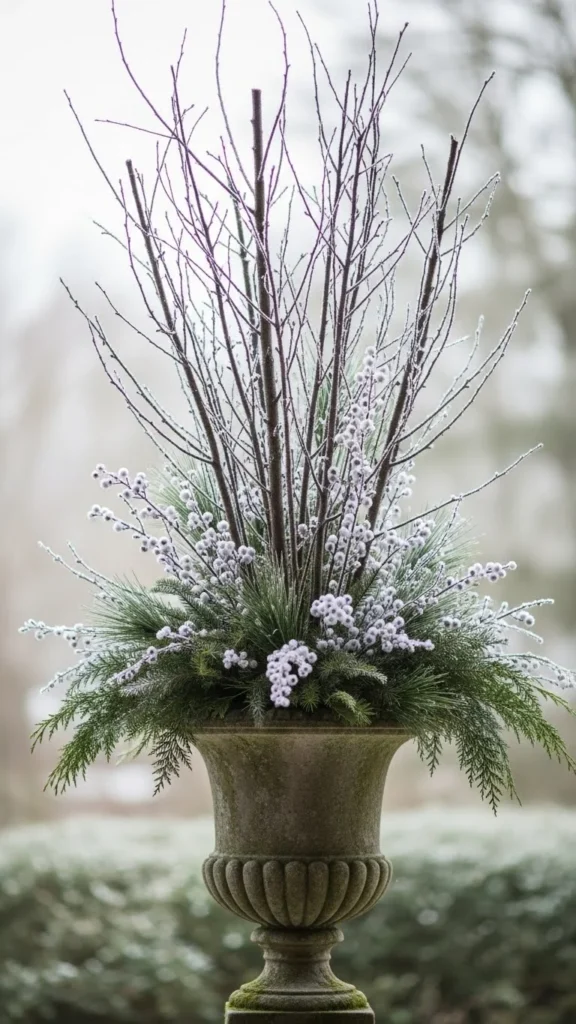
Garden urns give winter containers a timeless look. Start with tall upright branches in the center. Add fir and cedar around them to build a rounded shape. Use light-colored berries or dried hydrangea heads to add gentle highlights. The height creates a strong presence near entryways. If you want more color, add a few deep green stems behind the lighter pieces. Keep materials inexpensive by using branches trimmed from your yard. For bigger urns, pack soil tightly so branches stay secure. Mist everything lightly before a cold night for a natural frosted finish.
12. Mini Tabletop Winter Pot
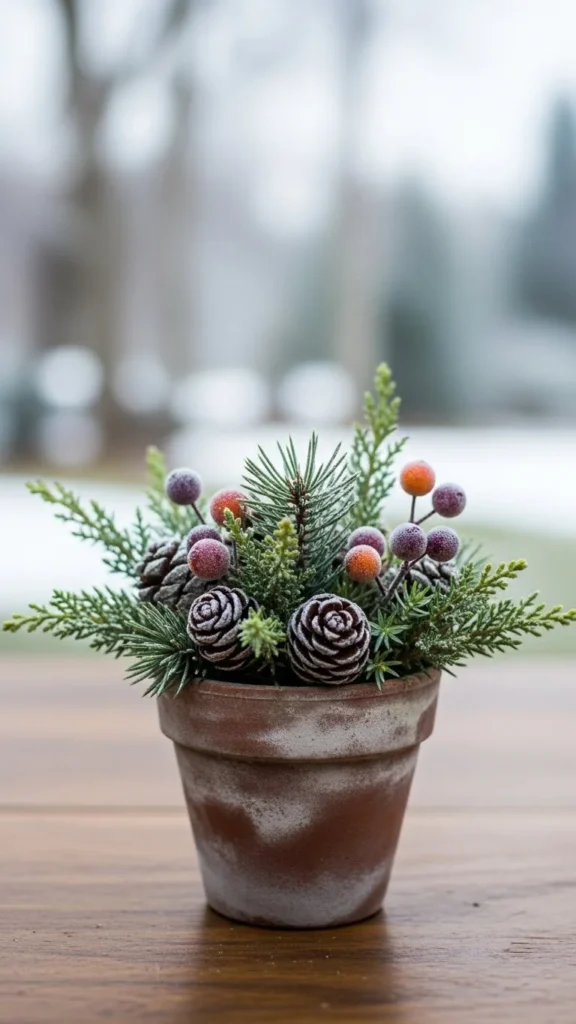
A small pot works well for balconies or outdoor tables. Add a few cedar sprigs as a base. Insert short pine stems in the center. Then place tiny pinecones throughout. This compact design looks charming without needing many supplies. It’s perfect for leftover cuttings from larger projects. If you want some height, add one or two slim branches. Keep everything proportional to the pot so it stays balanced. You can place several of these on steps or windowsills for a unified look. Mix in dried berries or seed pods for a soft pop of color. This project takes only minutes but adds warmth to outdoor spaces.
13. Evergreen Ball Topper
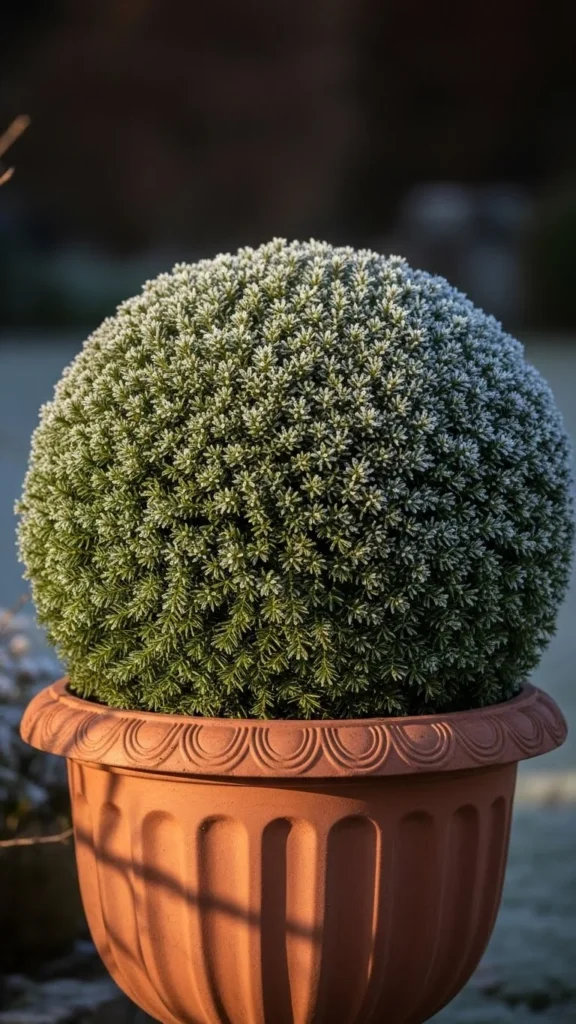
For a playful arrangement, create a rounded evergreen topper. Use fir or pine because they bend easily. Bundle stems together with wire to shape the ball. Place the ball on top of a container filled with soil or sand. Add small sprigs around the base to hide the join line. This design draws attention because of its shape. It also works well near entryways where symmetry looks clean. Keep it low-cost by using clippings you already have. Mist lightly before freezing weather to help the needles stay firm. If you want a fuller look, layer two smaller balls on each side of a walkway.
14. Holly & Cedar Color Pop
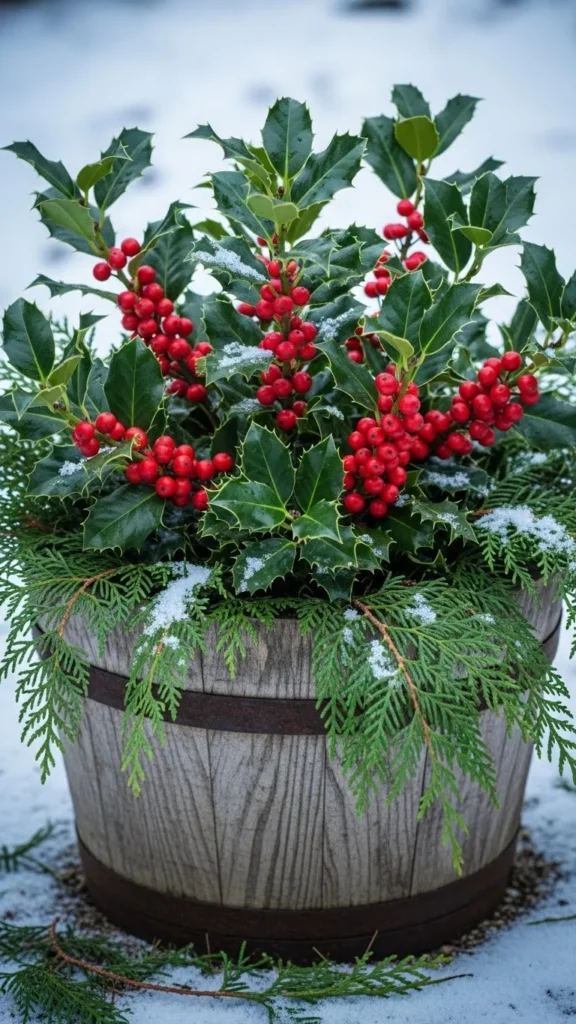
Holly brings color and shine to winter containers. Combine it with cedar for softness. Start with cedar as your base. Add holly stems throughout, spacing them evenly. The glossy leaves reflect winter light and make the planter look lively. You don’t need many stems to make an impact. This arrangement works well in shaded spots where other greens may blend in. If you want a richer look, add a few pine sprigs for structure. Use inexpensive holly cuttings from your yard if available. Avoid placing this container on windy corners—the holly leaves move easily.
15. Mixed Green Cascade
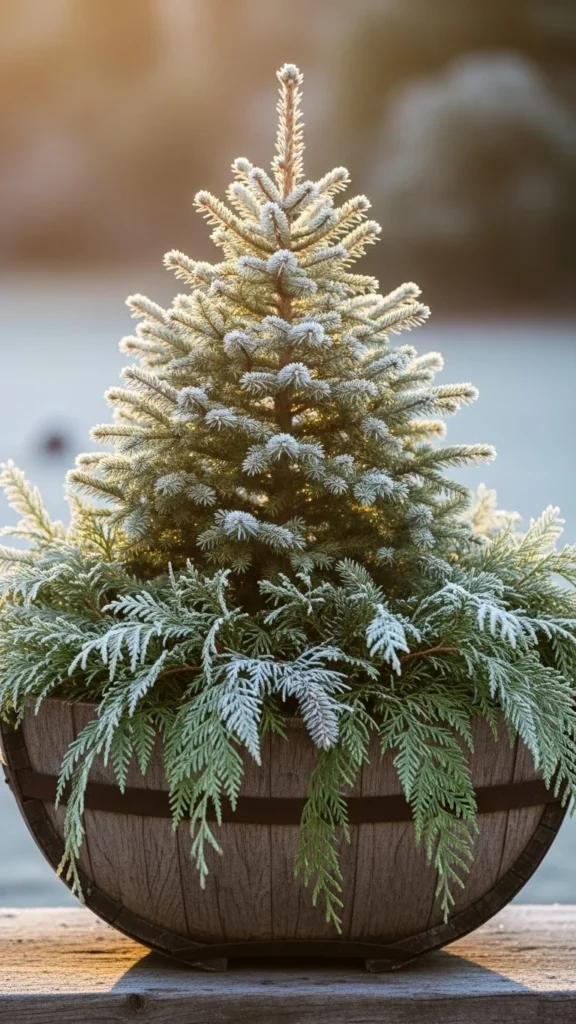
A cascading planter creates movement even in still winter air. Use long cedar branches to spill over the edges first. Then add upright spruce behind them. The mix of shapes creates a full and flowing look. You can add pinecones for texture and berries for a color accent. The arrangement works well in tall containers where the draping effect stands out. Keep it budget-friendly by using mostly cedar. Its natural shape makes containers look full with very little material. Add salt-tolerant greens if the planter sits near sidewalks where winter salt is used.
16. Birch Log & Moss Planter
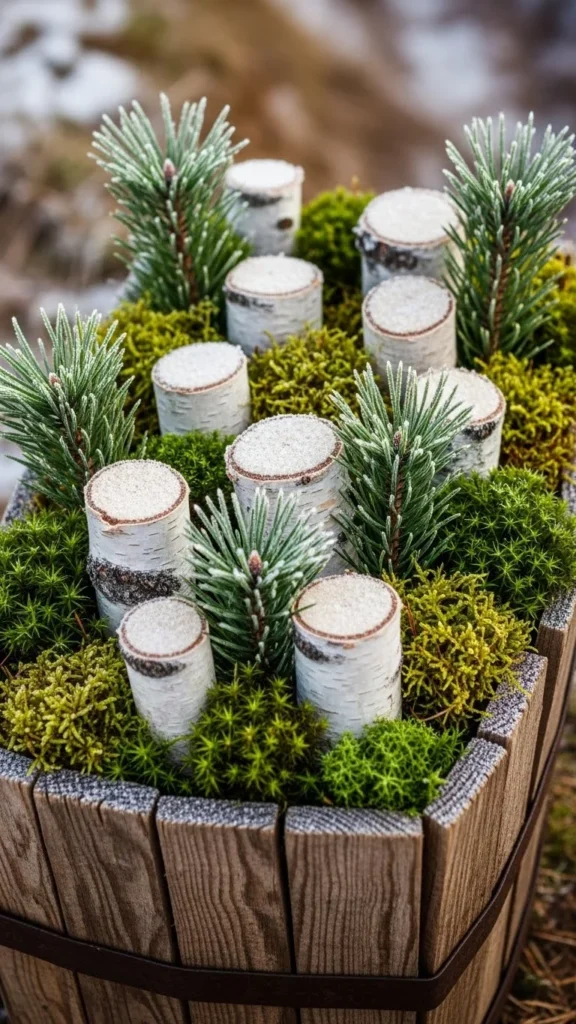
Short birch logs bring a cozy woodland feel. Place three or four logs upright in the center. Surround them with pine sprigs for softness. Add moss around the base to create a natural forest-floor look. Moss holds moisture well and stays green even in cold weather. You can collect small clumps from your yard or buy preserved moss. This arrangement looks lovely on patios or near firewood storage areas. If you want more height, include a few slim branches behind the logs. Add pinecones or dried seed pods to bring texture. Keep everything snug by packing soil or sand tightly around the pieces.
17. White-Accented Winter Pot
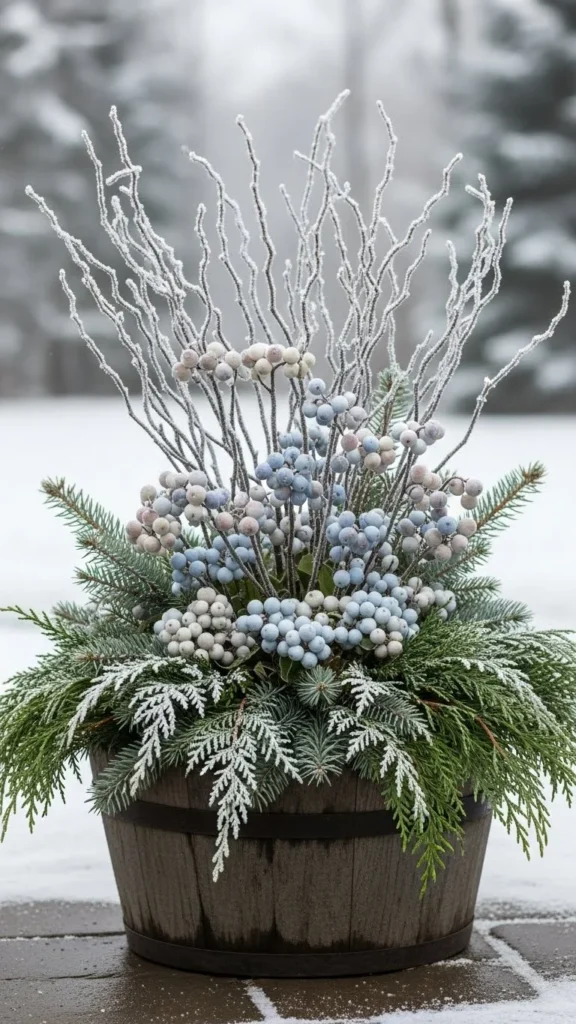
White accents brighten winter containers instantly. Use bleached branches or painted twigs to create contrast. Add them behind a base of cedar or spruce. Place pale berries throughout for extra lightness. This arrangement stands out against dark siding or brick. To keep costs low, paint a few branches you already have using a matte finish. Add small seed heads for subtle texture. This planter works well near front doors where soft colors help lighten the overall look. Keep the setup simple so the white features remain the focus.
18. Cone-Shaped Evergreen Build
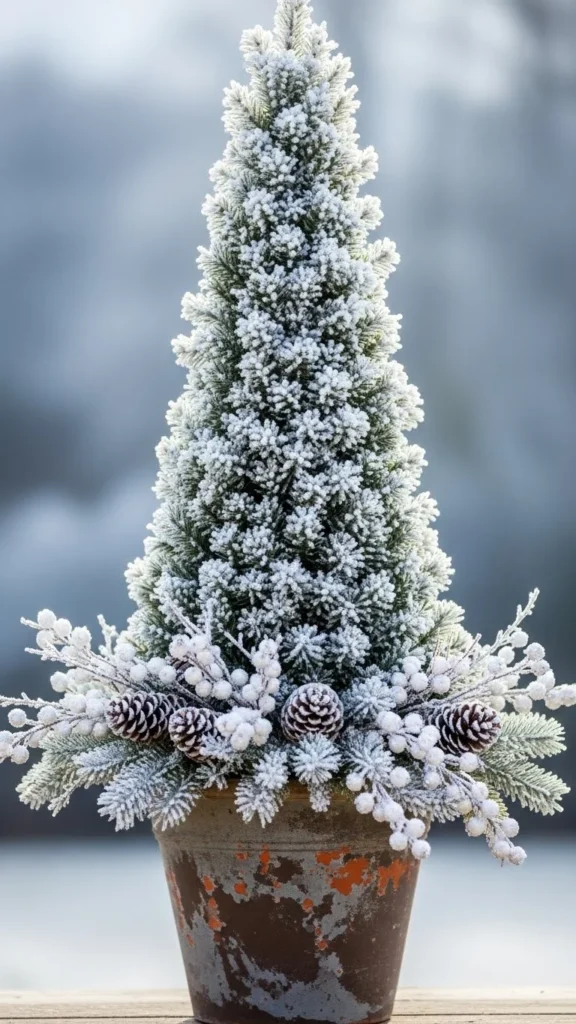
A cone-shaped arrangement looks neat and polished. Use fir or spruce because they stack well. Start with the longest branches at the bottom. Add shorter branches as you move upward. Keep the shape tight by overlapping stems. Add a few pinecones or dried twigs for detail. This style works well in both large and small containers. You can use leftover cuttings from holiday greenery to keep the cost down. If you want a soft finish, tuck in a few cedar sprigs around the middle. This arrangement stays intact even during windy spells.
19. Winter Patio Box
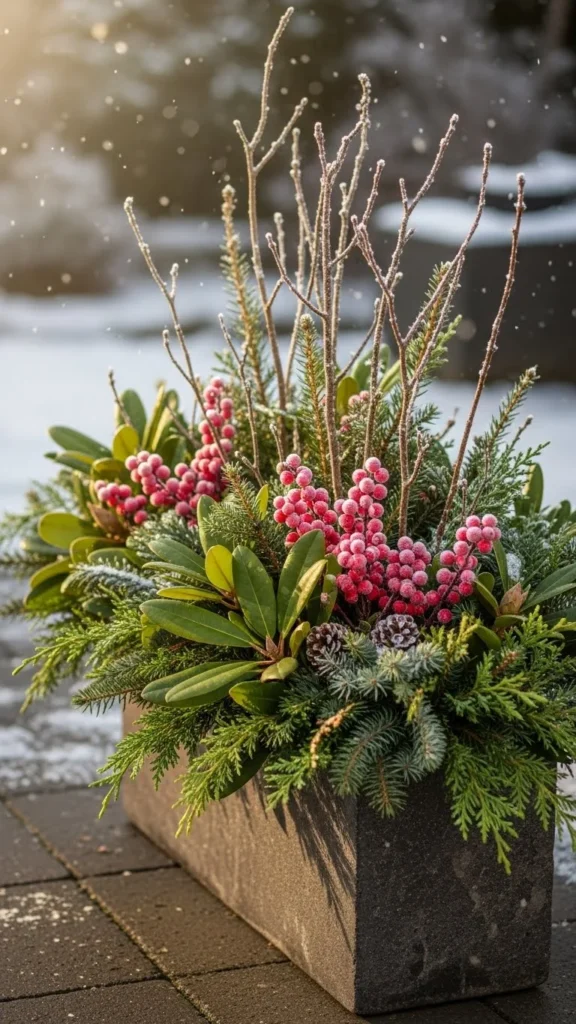
Patio boxes offer space to create layered designs. Start by placing tall branches along the back. Add cedar and fir toward the front. Use berries or dried grasses to add interest to the middle. This shape works along railings or fences. If you want a fuller look, mix long draping greens with upright stems. This gives the box lots of texture. Keep it affordable by using materials from your yard. Replace berries as they fade. The arrangement looks lovely when snow gathers softly on top.
20. Flower Pot of Fir Rounds
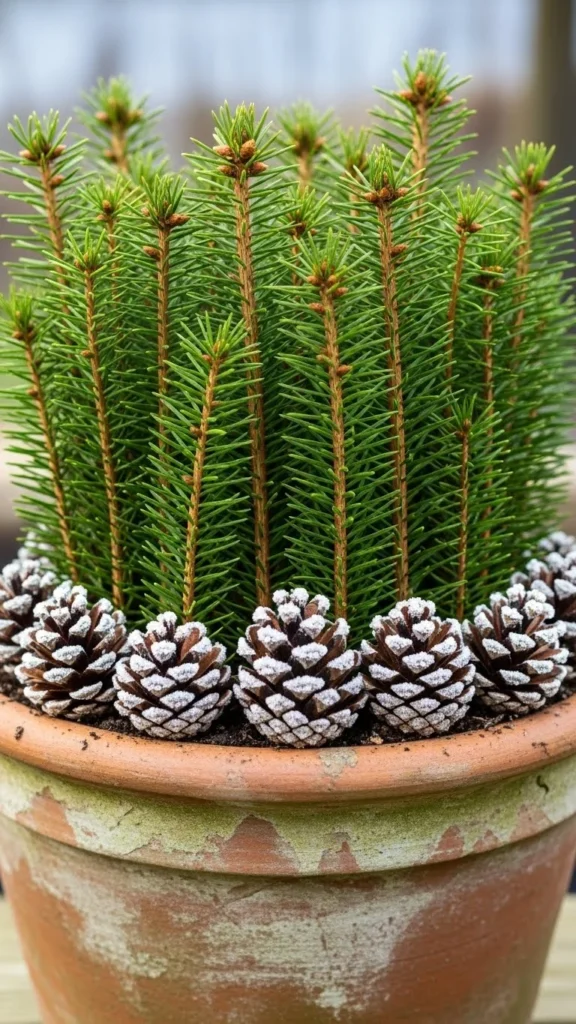
Fir rounds make winter containers look tidy and bright. Add firm branches upright so they create a rounded shape. Fill gaps with smaller pieces. Add pinecones at the base to create a natural finish. This setup works well for narrow entryways or stair landings. You don’t need many materials to make the pot look complete. Fir stays green through long winters, so maintenance is easy. If you want color, add a few berry stems lightly through the top. Keep the container weighted with stones if you live in a windy area.
21. Nature-Inspired Basket Pot
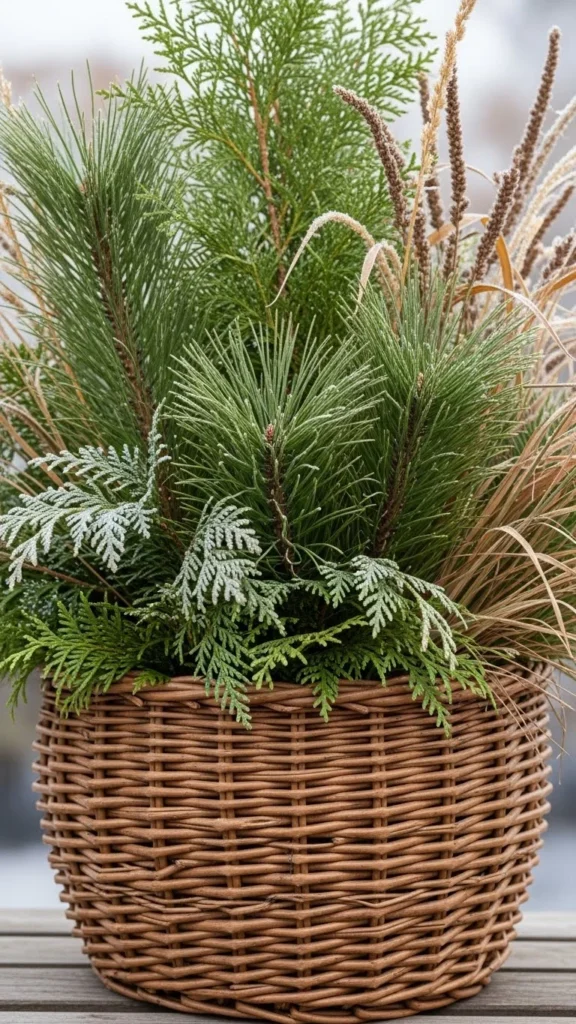
A basket planter adds warmth outdoors. Use a plastic pot inside to protect the basket from moisture. Fill the pot with soil. Add cedar first to soften the edges. Insert pine stems behind them. Then add dried grasses for height. This mix feels natural and relaxed. You can use grasses from your fall cleanup to save money. Pinecones tucked at the base help steady the stems. This arrangement works near seating areas or patios where the basket texture stands out.
22. Blue Juniper & Silver Pod Mix
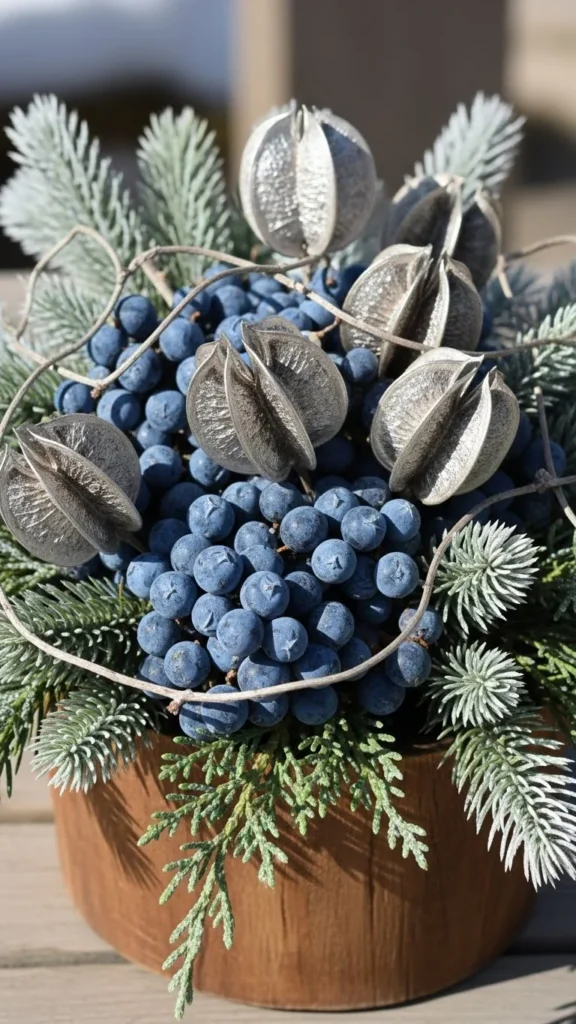
Blue juniper pairs beautifully with silver-toned accents. Add juniper first to create a full base. Insert silver seed pods throughout. The mix feels cool and wintery without needing many materials. Add pine sprigs for softness. This container looks lovely near stone walls or driveways where cool tones show clearly. Keep costs low by using dried pods you already have. For more height, add two or three upright branches at the back.
23. Rustic Log Box Arrangement
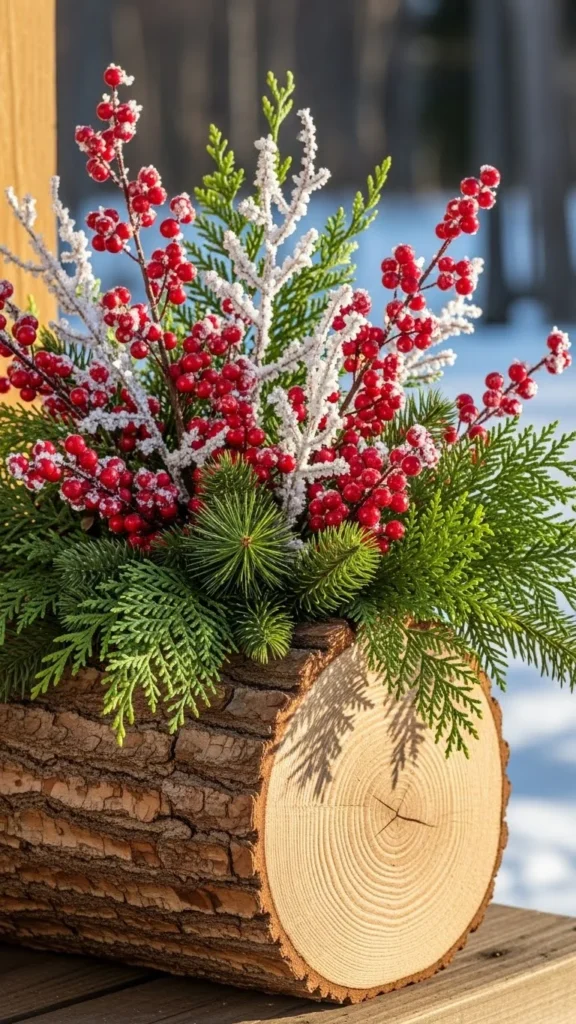
A log-style planter makes winter displays feel cozy. Fill it with cedar as your base. Add pine stems for structure. Then place berry clusters along the top edge. The low shape works well on railings or tabletops. If you want more texture, add dried grasses or small branches across the back. This is a great way to use leftover greenery. Keep berries spaced evenly so the display feels balanced. Replace berries as they fade to keep things bright.
24. Tall Spruce Entry Pot
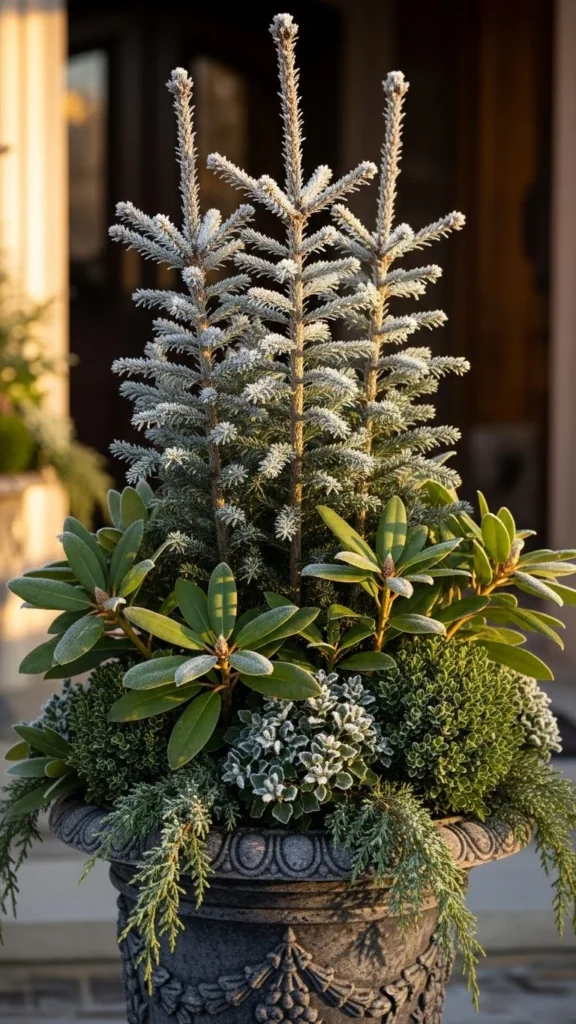
Spruce branches create tall, striking entry pots. Insert the tallest branches first. Build shorter ones around them. Add cedar along the edges to soften the pot’s shape. This creates a layered look with minimal effort. Add a few pinecones near the base for detail. This arrangement works well on either side of a doorway. If you want more structure, include three upright branches behind the spruce. Keep the container weighted with stones if exposed to wind.
25. Mossy Winter Bowl
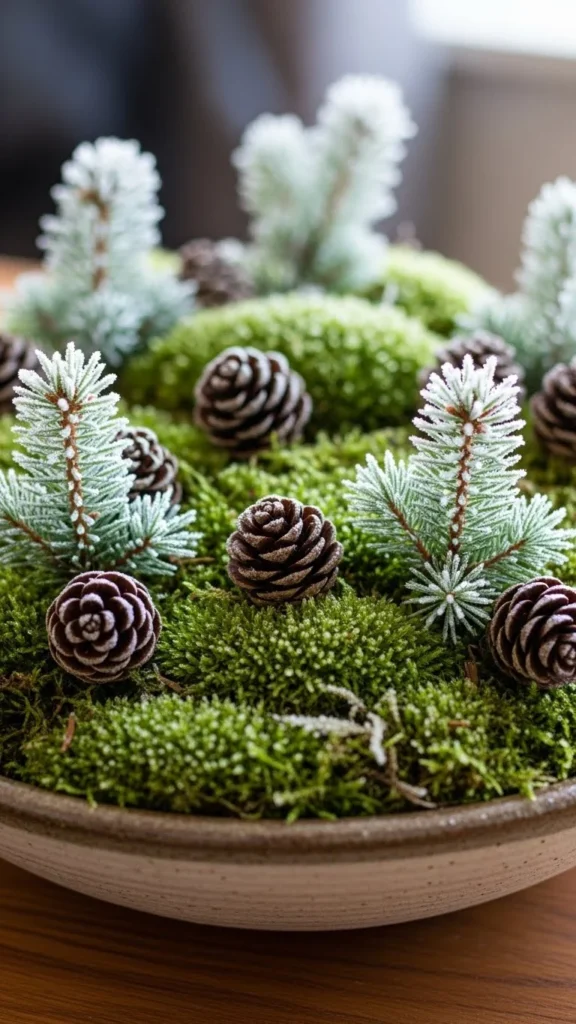
A mossy bowl adds gentle texture during winter. Place thick moss across the entire surface. Add small evergreen sprigs sparingly. The simplicity gives it a calm, natural feel. Pinecones offer a soft contrast. This bowl works well on outdoor tables or patio corners. Moss stays green even in cold weather, making it easy to maintain. If you want height, add one or two slim branches emerging from the center. Keep everything snug with packed soil under the moss.
26. Snow-Dusted Twig & Green Mix
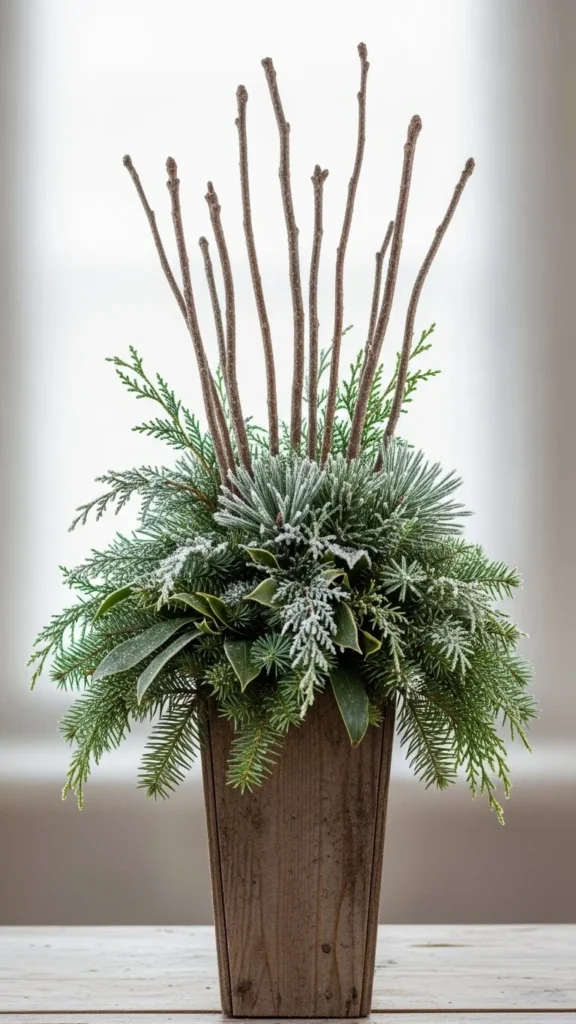
Twigs add height and movement to winter containers. Insert them first so they form a clear focal point. Add layered evergreens around the base. Use cedar for softness and pine for structure. The mix feels natural and easy. This container works on porches or garden paths. To keep it affordable, gather twigs from your yard. Add pinecones or dried pods for texture. If you live where snow falls often, this arrangement looks beautiful as snow settles on the twigs and greens.
Conclusion
Winter containers bring life to quiet outdoor spaces. With a few simple materials and clear layering, you can create arrangements that stay bright through cold months. Try mixing textures, shapes, and small accents to match your style. Most of these designs use low-cost clippings, making them easy to recreate anytime. Pick one idea and start building your own winter display today.
Leave a Reply