

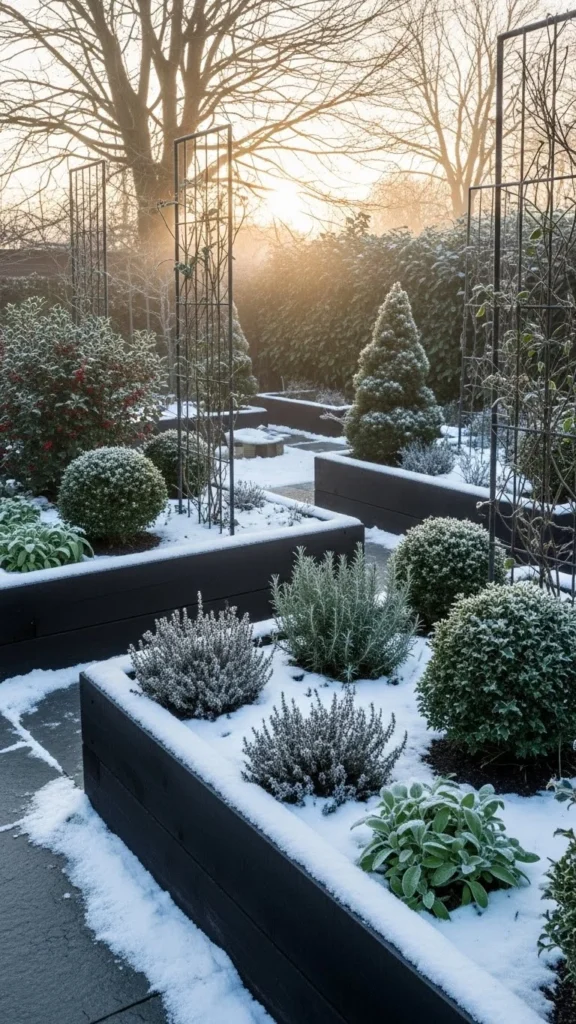
Winter gardening in a small space can feel limiting, but the right layout turns even the tiniest corner into something productive and calm. With smart structure and simple design choices, you can grow hardy greens, cold-tolerant herbs, root vegetables, and decorative plants all season long. Whether you’re working with a balcony, patio, courtyard, or modest backyard, these ideas make winter gardening simple, practical, and enjoyable. Each layout below focuses on easy setup, smart spacing, and affordable ways to shape your outdoor area for the colder months.
1. Compact Raised-Bed Grid
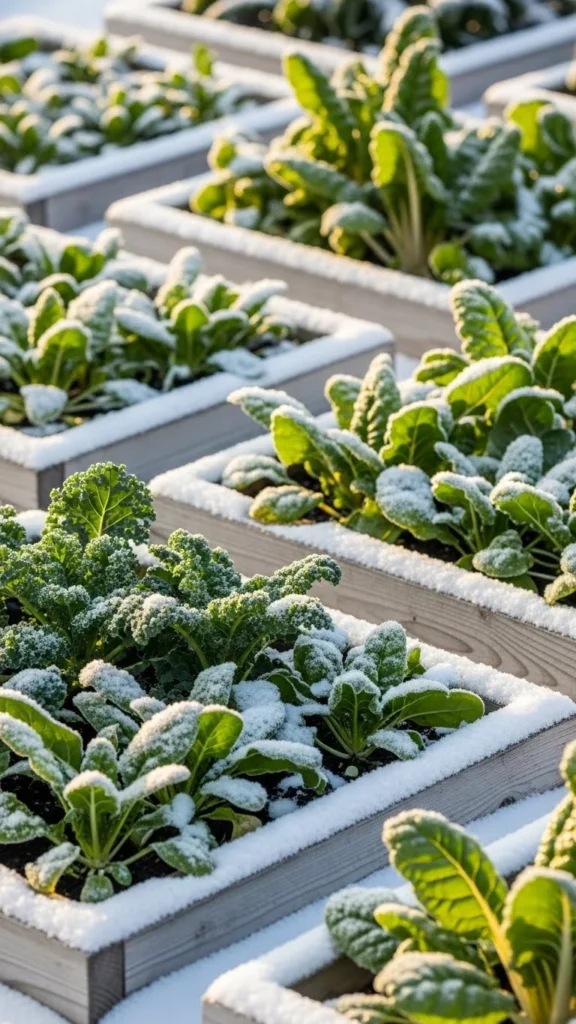
A compact raised-bed grid works beautifully when you’re trying to fit a lot into a tight space. The squared layout keeps everything clean and easy to reach. You can use simple lumber or affordable cedar offcuts to build your beds. Keep them shallow if your space is small. Shallow beds warm faster in winter sun and help your plants stay comfortable. Try planting cold-friendly greens like kale, spinach, and hardy herbs in repeating blocks. This gives your setup a tidy rhythm. Use gravel or leftover pavers between beds for quick drainage and traction on icy days. If you’re on a budget, repurpose crates or old planters and arrange them in a grid to mimic the same structure. Add a low hoop cover for warmth when temperatures drop. This layout is easy to expand, shrink, or rearrange if your space changes later. It’s simple, tidy, and perfect for quick winter maintenance.
2. Vertical Wall Planter Line
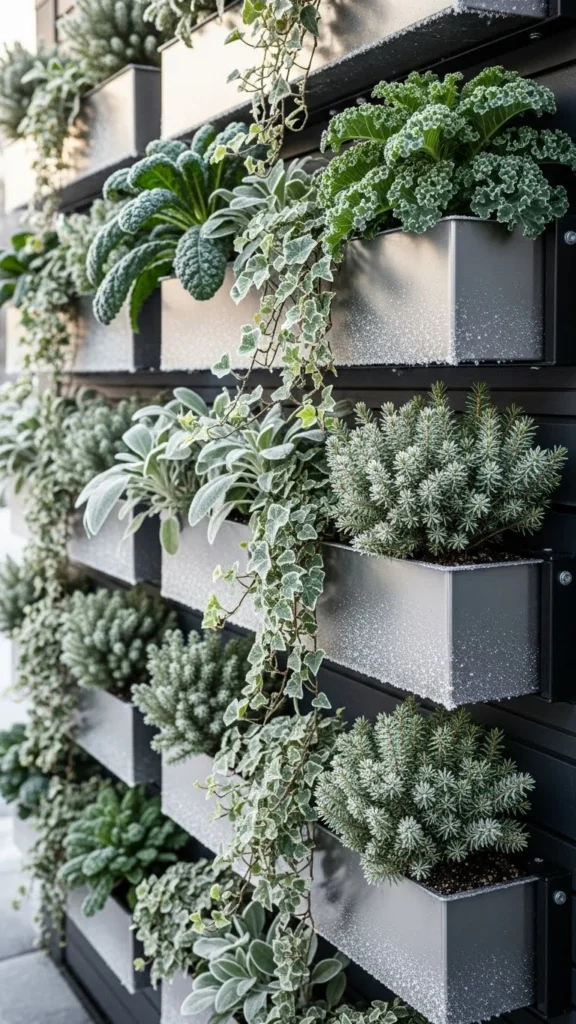
A vertical wall planter line saves floor space while giving you room to plant more. Mount lightweight planters on a sunny wall or fence. Choose cold-friendly herbs like thyme, chives, and sage for this layout. They stay compact and handle winter well. Keep the planters shallow to prevent soggy soil. Add a strip of gravel or bark mulch below the wall to catch runoff. If you’re renting, use command hooks and removable planter rails to avoid drilling. Mix terracotta, metal, or recycled plastic for a fun look without spending much. For warmth, place reflective panels or simple aluminum sheets behind the planters. This bounces light back onto your plants. Water with a small squeeze bottle to avoid splash freezing on the ground. This layout adds height and structure without crowding your walkway or patio.
3. Corner Evergreen Triangle
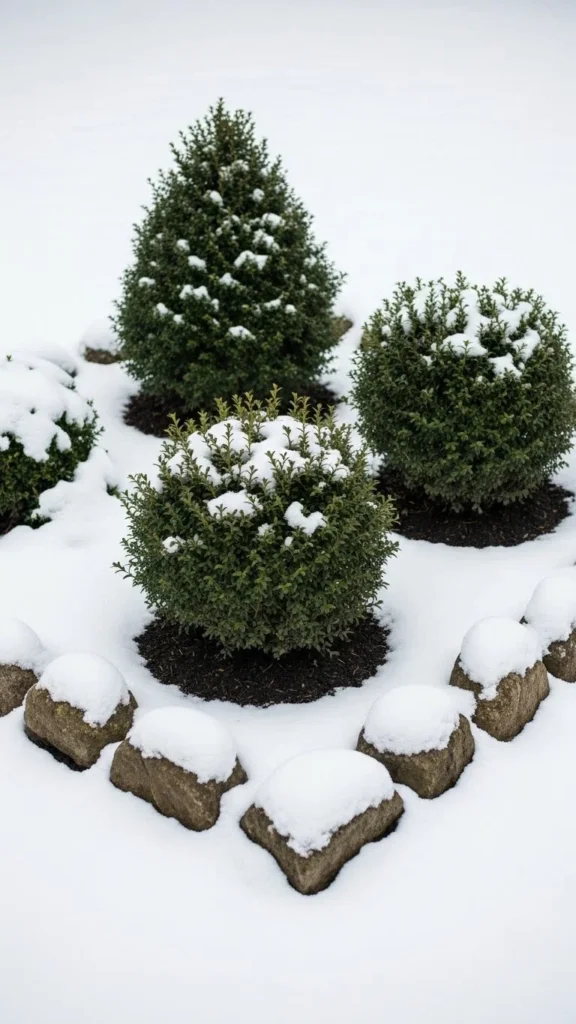
The corner evergreen triangle is perfect for unused edges of patios or balconies. Evergreens create steady color in winter when everything looks dull. Arrange three shrubs in a triangle shape to give the area structure without taking much room. Choose dwarf varieties if your space is tight. Add cold-ready herbs or small winter pansies along the base of each plant. If you’re keeping things affordable, use lightweight plastic pots disguised in woven baskets. Place a layer of gravel under each container for drainage. Keep the center of the triangle open for a small lantern, garden stool, or watering station. This simple setup adds charm and fills awkward corners while leaving space for your walkway.
4. Balcony Rail Trough Setup
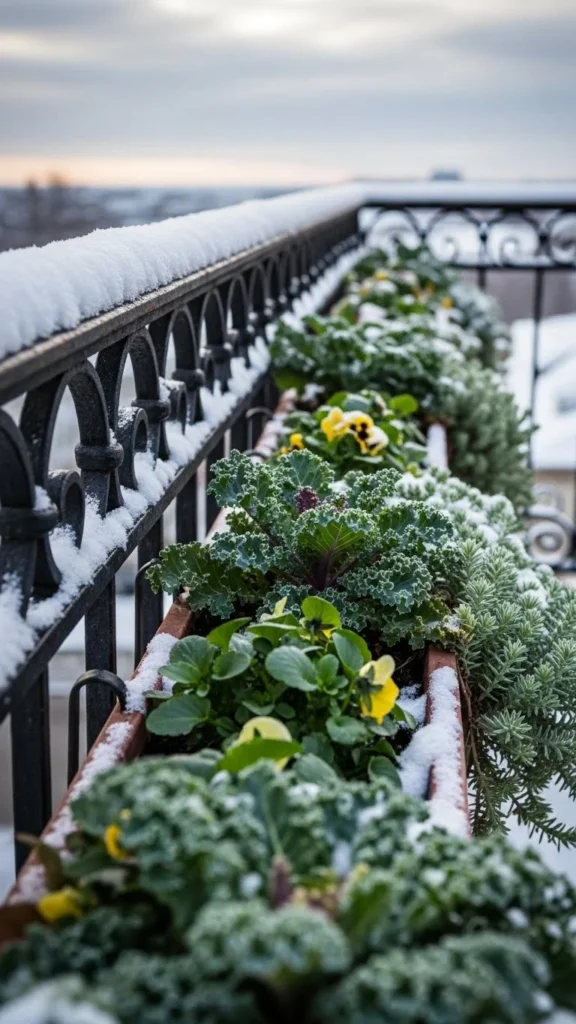
Balcony rail troughs are great when floor space is scarce. Long, narrow trough planters add growing room without clutter. Choose ones with strong brackets that grip tightly. Plant cold-ready greens and low herbs like parsley, lettuce mixes, or mizuna. Since troughs dry out quickly in winter wind, add a thin layer of mulch or straw on top. If you’re keeping costs low, repurpose guttering into lightweight planters. Drill drainage holes and attach with affordable metal straps. Add reflective clips or simple mirror strips to catch more light on cloudy days. Keep a small watering can inside to avoid frequent outdoor trips. This setup offers steady growth with barely any footprint.
5. Tiered Pot Ladder
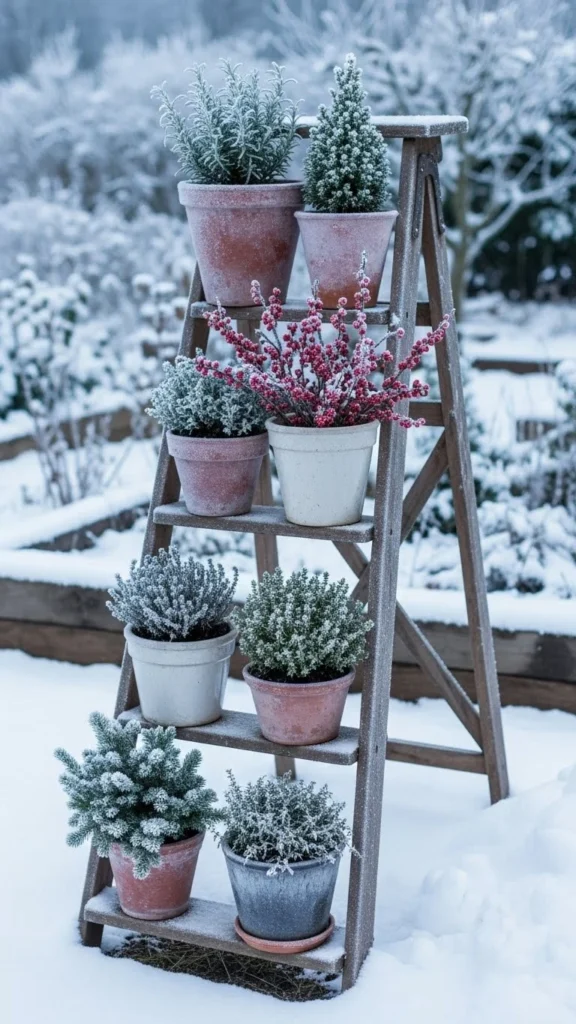
A pot ladder gives you multiple planting levels without taking up much ground. Set one against a wall or fence. Fill the top row with small herbs and the bottom with sturdier shrubs or root vegetables. This layout creates depth and saves space. Look for secondhand ladders or build one using scrap wood. Keep pots lightweight so the ladder stays stable. Add gravel trays under each tier for drainage and to prevent icy spots. Mix greens, purple cabbages, and evergreen sedums for winter interest. This makes your small corner look full without feeling crowded. It’s easy to move the ladder if you want it closer to sunlight or shelter during storms.
6. Narrow Path L-Shape Layout
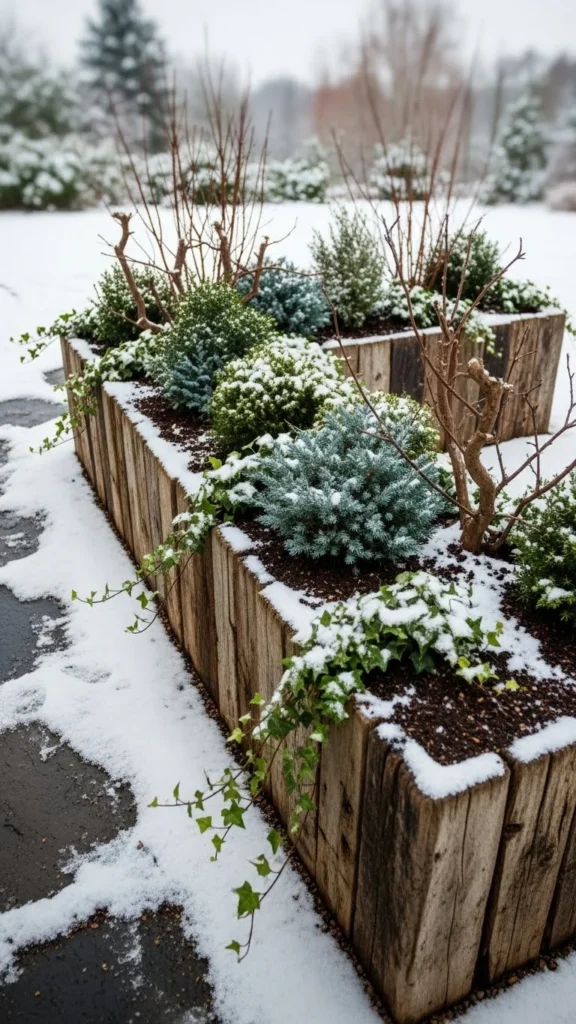
An L-shape layout works well along narrow walkways or small patios. Place containers along two connecting edges to create a natural border. This opens the center for movement. Use long planters instead of round ones to keep things neat. Fill them with winter-friendly root vegetables or low herbs. Add a simple trellis in the corner to grow climbing peas or sweet winter vines. For budget options, use cinder blocks as planter bases. They’re sturdy and affordable. Keep the layout low so it doesn’t block precious winter light. Add mulch between planters to prevent icy patches. It’s a simple, tidy way to make a small space feel organized.
7. Mini Greenhouse Cluster
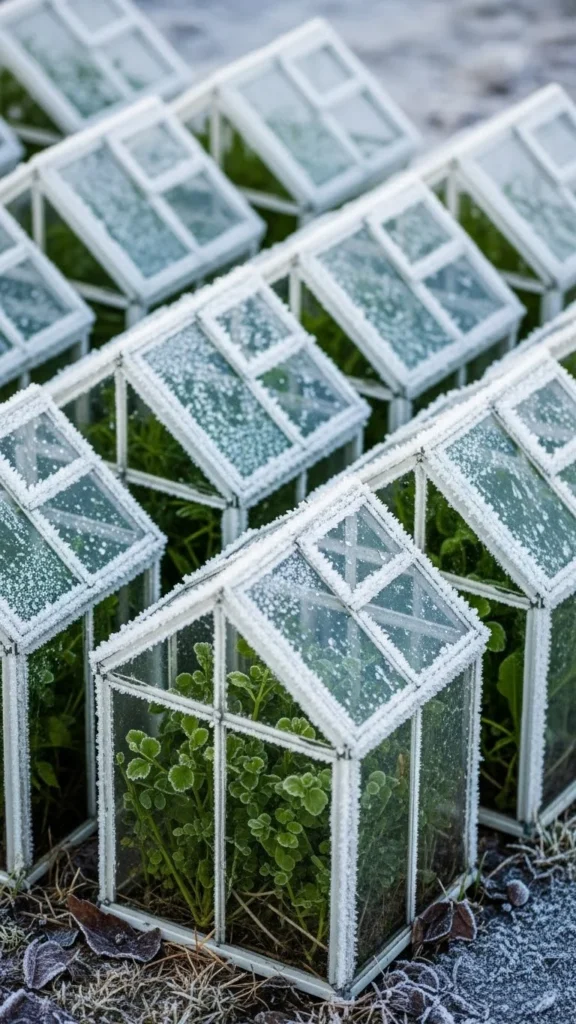
Mini greenhouses are perfect for winter gardening in tight areas. Group two or three together for warmth. Place them in the sunniest part of your yard or balcony. Inside, grow salad greens, seedlings, or small herbs. Use recycled shelves to lift them off the cold ground. Add bricks around the base for insulation. Keep inexpensive thermometers inside so you can monitor cold snaps. On warm days, crack the lids slightly to prevent moisture buildup. This cluster warms up quickly and protects plants from wind. It’s a reasonable way to grow more in winter without a full greenhouse.
8. Raised Barrel Trio
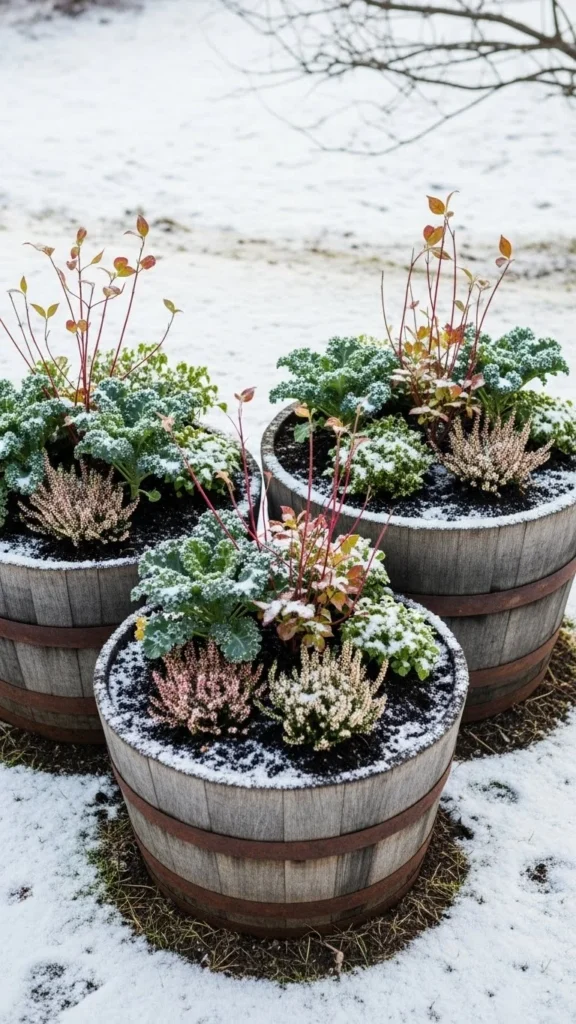
A raised barrel trio boosts your planting height and reduces bending. Arrange three barrels in a triangle for easy access. Use them for root vegetables like carrots or beets, or hardy greens like kale. Drill extra drainage holes if using recycled barrels. Add casters underneath if you want the option to move them toward winter sun. Surround the base with gravel or bark to keep the area dry. If you want color, paint the barrels using outdoor-safe paint. This setup gives you a small but productive winter growing zone.
9. Sleek Windowbox Row
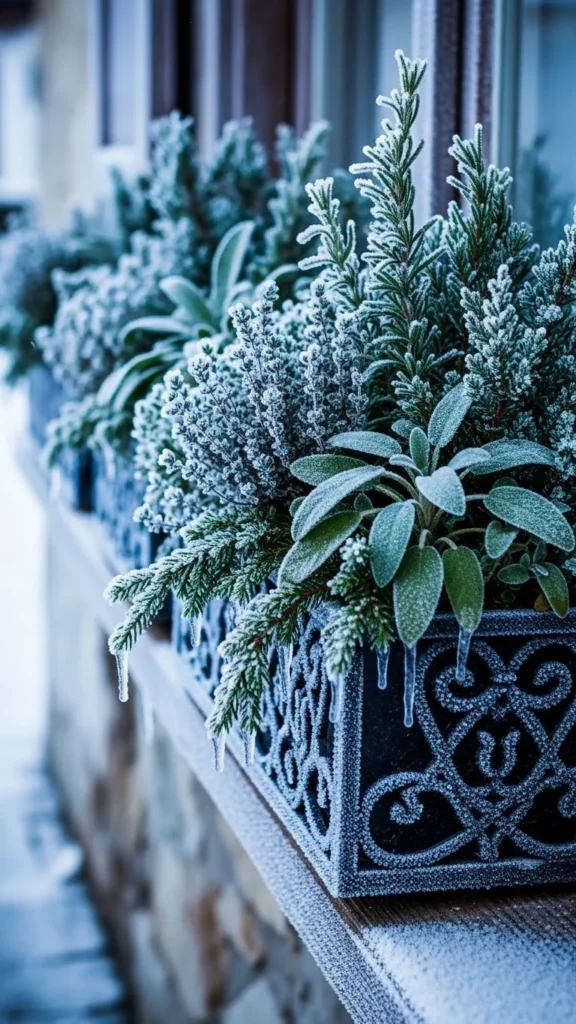
Windowboxes work beautifully for small winter gardens, especially if your patio is tiny. Mount them under sunny windows to add greenery right where light hits. Plant hardy herbs, dwarf kale, or compact cabbages for structure. Choose boxes with drainage holes so water doesn’t freeze inside. Add coconut fiber liners to help keep soil comfortable. If you’re saving money, reuse wooden crates and attach brackets. Water from the inside using a small bottle to avoid slippery decks. This layout keeps plants off the floor and close to winter sunshine.
10. Hanging Basket Winter Cluster
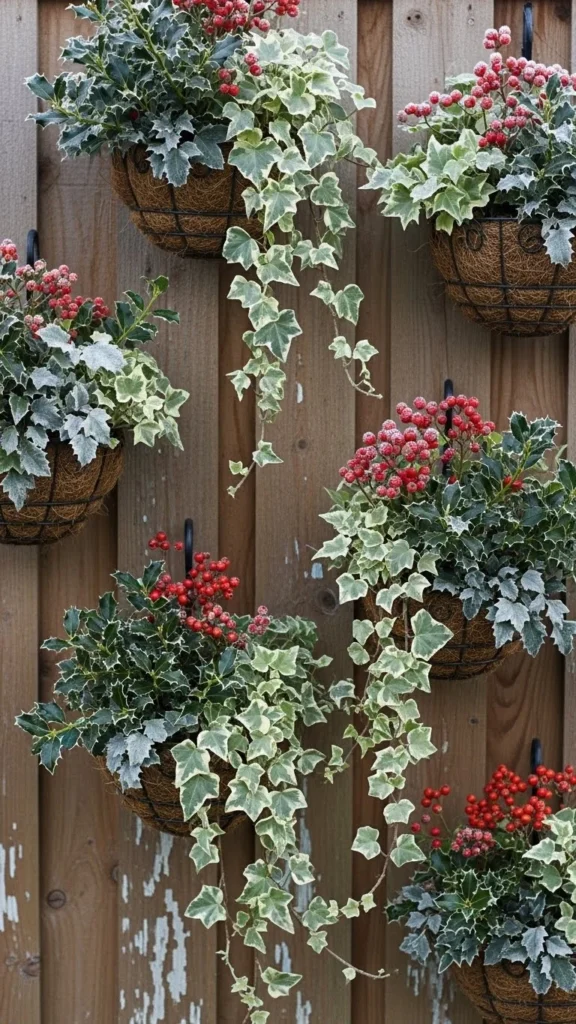
Hanging baskets make great winter spots for hardy greens if you choose the right plants. Use baskets lined with thick coco fiber to keep roots comfortable. Plant trailing ivy, dwarf cabbage, small pansies, or winter herbs. Hang multiple baskets at staggered heights so they don’t block each other’s light. This keeps your patio floor clear and easy to walk. Add a drip tray under each basket to prevent icy drips. Use lightweight plastic hooks if your structure is fragile. Water in the morning so soil has time to absorb moisture before temperatures drop.
11. Small Circular Bed Centerpiece
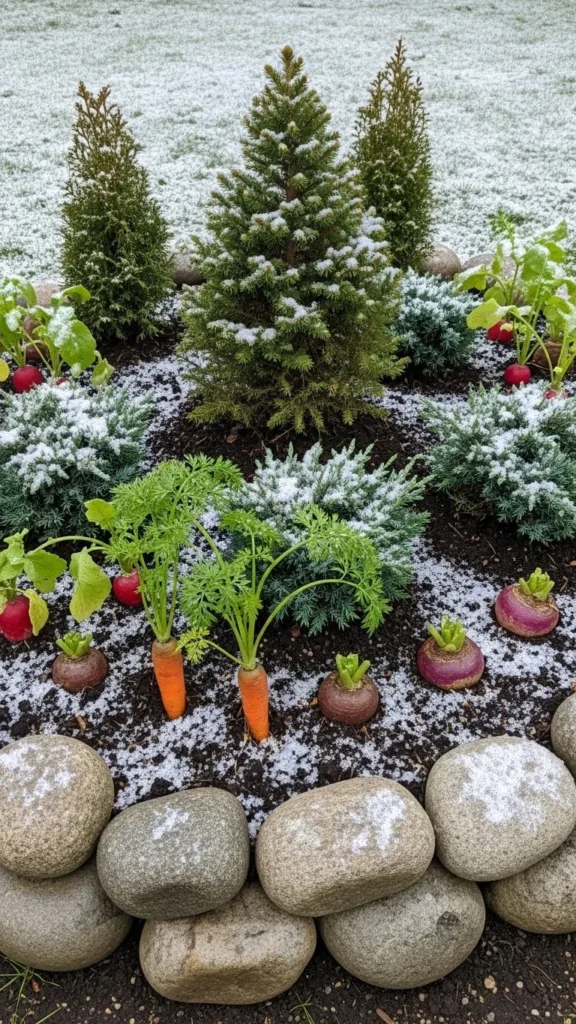
A circular bed creates a focal point without taking up much space. Use stones, bricks, or leftover pavers to form the border. Fill the center with evergreen shrubs and plant root vegetables around the edges. This creates a layered look. Keep the height low so it doesn’t block winter light. Add a small path segment for quick access. This layout works well for patios, courtyards, or even cramped yards. It’s also easy to maintain since everything is reachable from all sides.
12. Compact Cold-Frame Strip
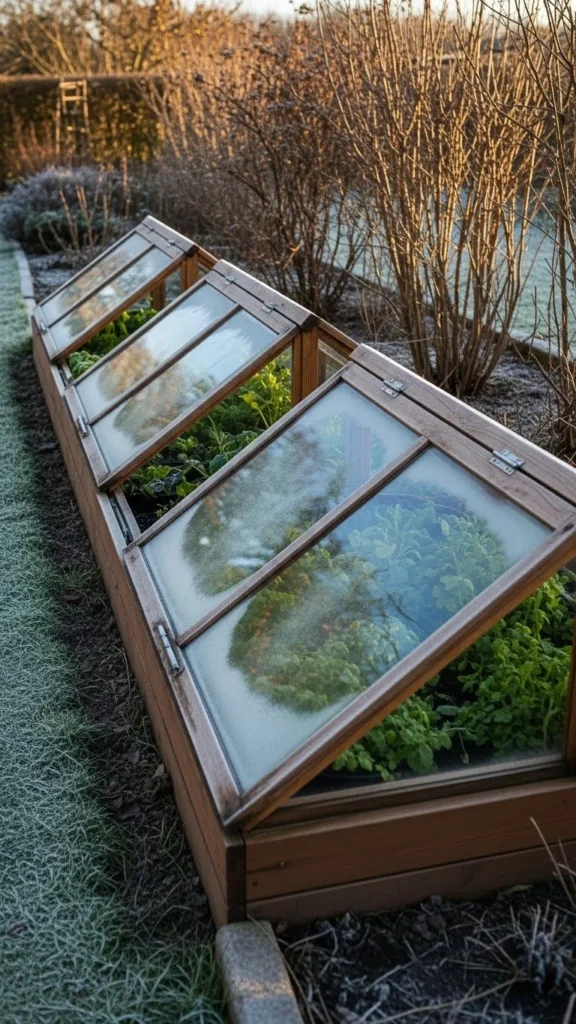
Cold-frames help you grow more during winter. A narrow cold-frame strip sits neatly against a sunny wall. Build one using scrap wood and an old window. Plant salad greens, carrots, or herbs inside. Use bricks or logs to lift the back edge slightly and catch more sunlight. Add straw along the outer edge for warmth. Open the top on mild days to prevent mold. This layout is simple, space-saving, and helpful for cold months.
13. Patio Planter Island
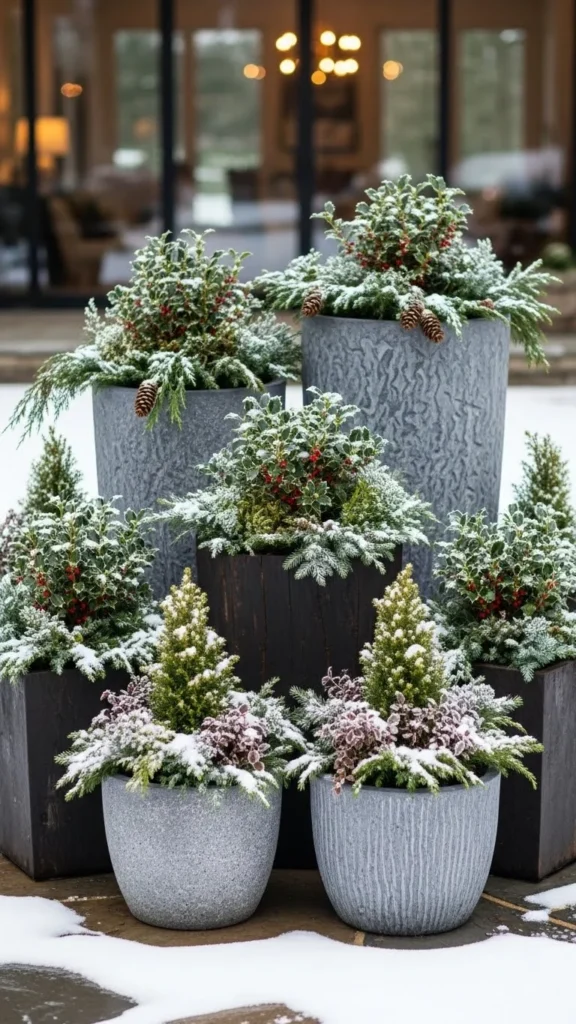
A planter island fills an open patio without blocking movement. Group containers in the middle and leave walking paths around them. Use tall pots in the center and shorter ones around the edges. Plant hardy shrubs, winter lettuce, and herbs. If you’re spending carefully, use recycled buckets wrapped in burlap. Add a lantern or solar light in the middle for a warm glow at night. This island setup draws attention and uses vertical layers to fit more plants in a tight spot.
14. Stacked Crate Garden
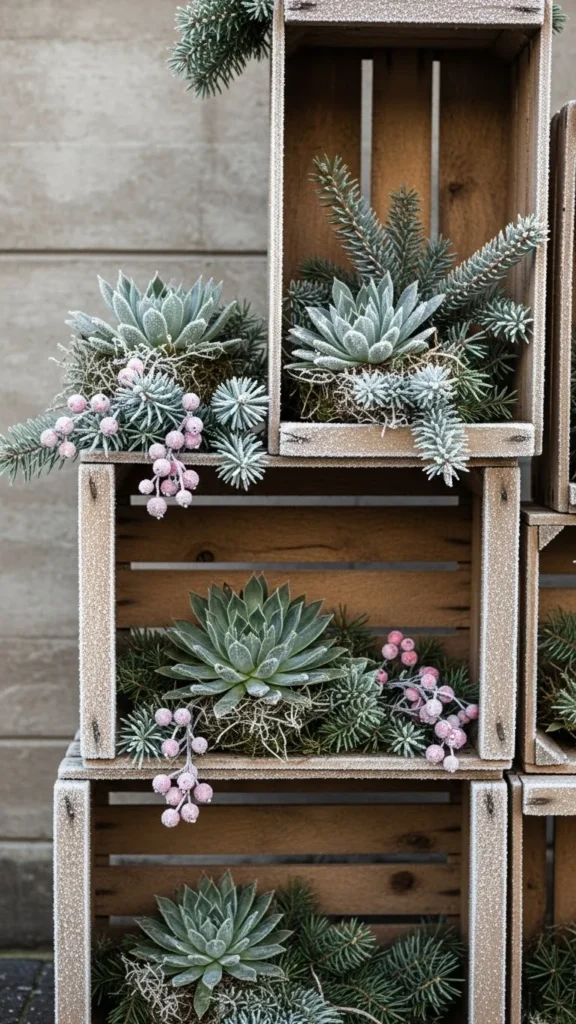
Stacking crates gives you a fun, flexible layout that fits anywhere. Use wooden produce crates or storage boxes. Stack them in a staggered pattern to create shelves. Place sturdier plants on the bottom and delicate ones higher. Fill each crate with lightweight containers so the wood doesn’t rot. Add a waterproof liner inside if needed. Secure the stack with screws or brackets. Paint the crates if you want color, or leave the natural look for a rustic feel. This layout is easy to change and great for renters.
15. Linear Herb Strip
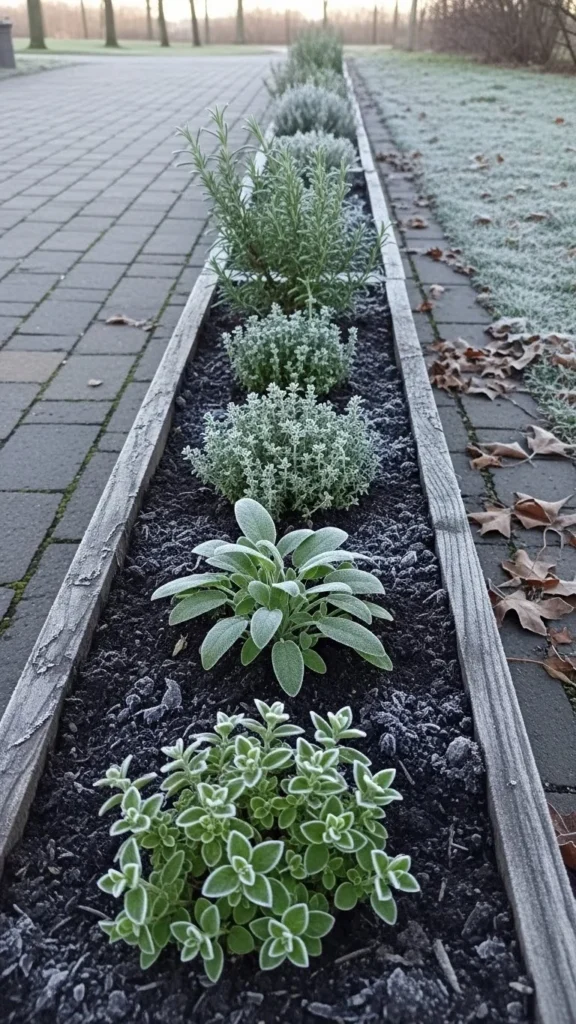
A linear herb strip keeps your plants organized without taking space from the center of your garden. Use long, shallow planters placed along a walkway or fence. Plant hardy herbs such as rosemary, thyme, and chives. Keep everything trimmed low so light reaches your space. Add gravel underneath the planters for drainage. If you’re looking to save money, reuse old guttering for a sleek look. This simple strip keeps herbs close to the house and easy to access on chilly days.
16. Multi-Level Shelf Garden
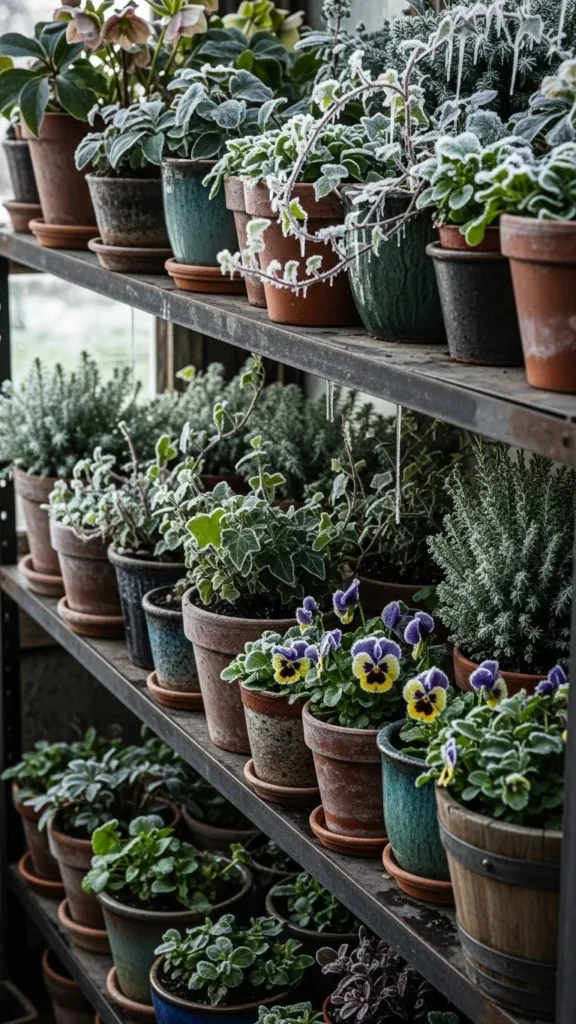
A shelf garden adds practical height when floor space is tight. Use a narrow shelving unit against a sunny wall. Place cold-friendly plants on each level. Put taller plants on top where they get more sun. Use trays under pots to catch water. For warmth, cover the back of the shelf with a reflective panel made from inexpensive foil board. Keep your watering can on the bottom shelf to stay organized. This layout fits a lot of plants in a small footprint.
17. Narrow Trough & Trellis Combo
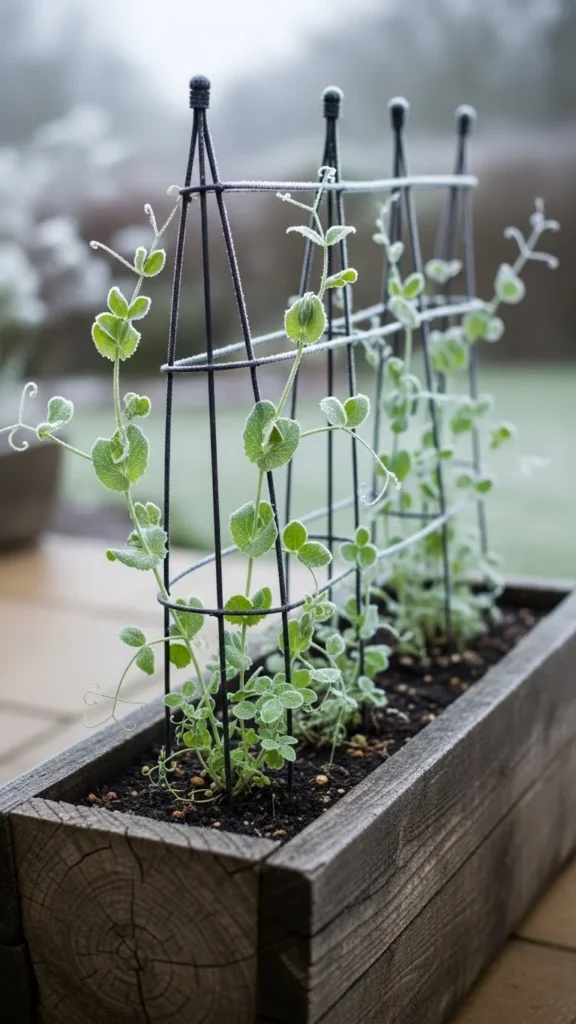
A trough paired with a small trellis creates vertical interest without taking much space. Plant winter peas or hardy vines in the trough. Position the trellis so it catches sunlight without shading your other plants. Add straw mulch on top for warmth. If you’re saving money, make your trellis from sticks or leftover trim wood. Keep the trough on bricks so it stays dry and drains well. This layout adds greenery and height without clutter.
18. Tiny Stone-Edged Triangle
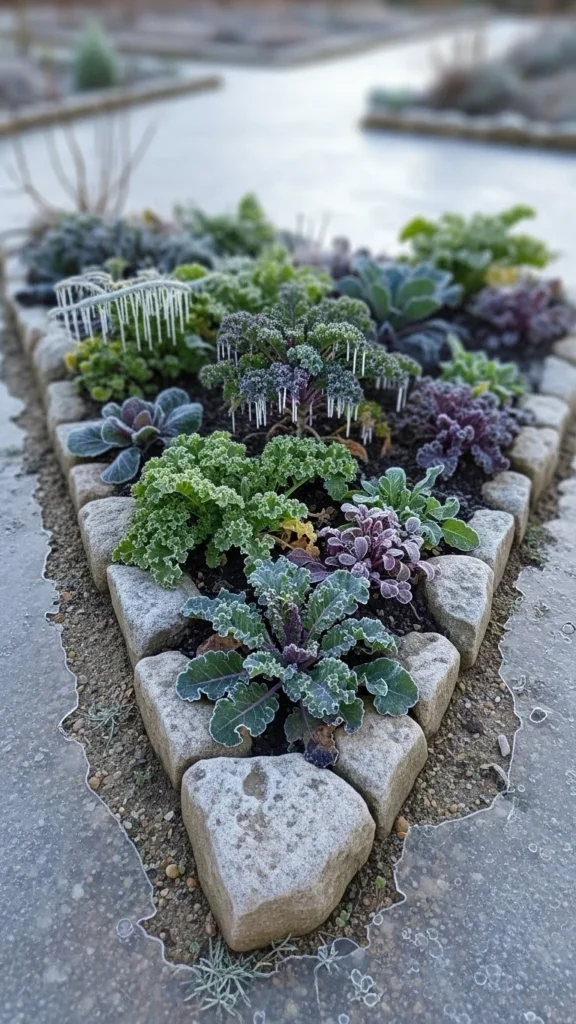
Use a triangular layout if your space has odd angles or narrow corners. Build a small stone border and fill it with hardy greens or dwarf shrubs. This shape fits well between pathways, fences, or gate entrances. Add a light layer of mulch to protect roots. Use small solar stakes around the edges to prevent tripping at night. This design is tidy, low-cost, and easy to maintain.
19. Rustic Bucket Cluster
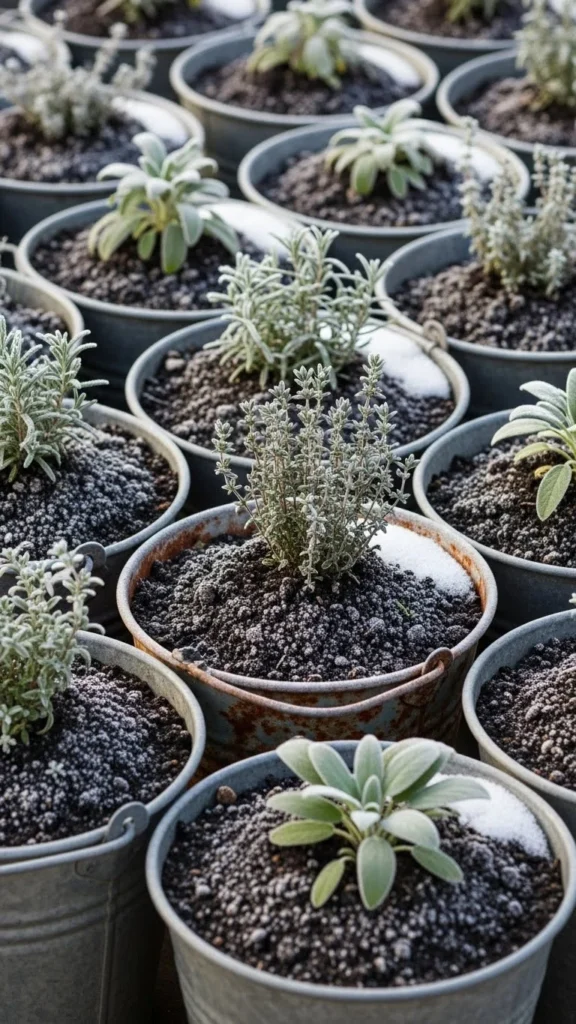
Buckets are inexpensive and perfect for winter planting. Group several together to create a small cluster. Drill drainage holes if needed. Fill with hardy greens, root vegetables, or herbs. Wrap the buckets in burlap for warmth and style. Add stones under each bucket to keep them off cold ground. This cluster fits nicely beside entryways, on patios, or along fences.
20. Slim Fence-Line Layout
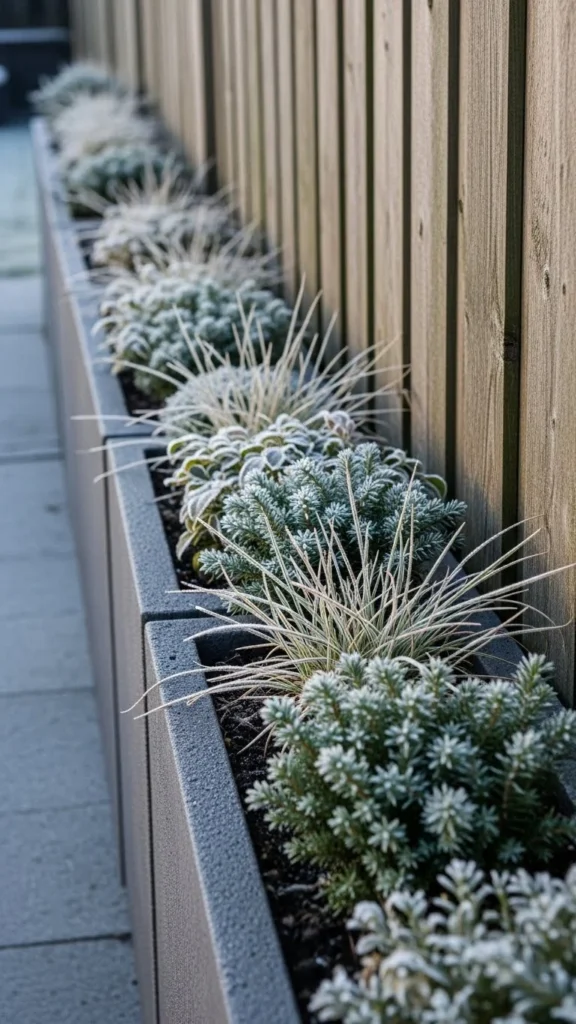
A fence-line layout uses the narrowest part of your yard effectively. Place long planters or pots directly against the fence. Grow tall, cold-friendly plants like garlic, onions, or rosemary. Add a simple wire trellis if needed. Keep pots slightly away from the fence to allow airflow. Mulch around the base for warmth. This layout keeps your main space open while still offering solid planting room.
21. Paver-Pocket Garden
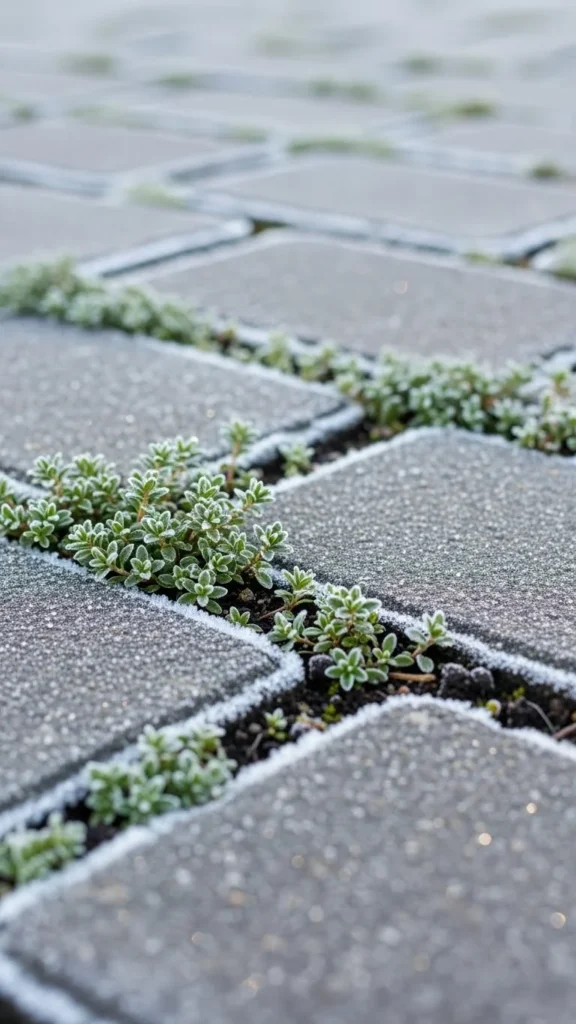
This layout works well if you have a paved patio with gaps. Plant cold-ready herbs or creeping plants in the openings. Add a handful of compost before planting. These small pockets warm faster than full beds. Keep watering light to avoid runoff freezing on pavers. This setup is charming, simple, and great for tight spaces.
22. Window-Facing Shelf Row
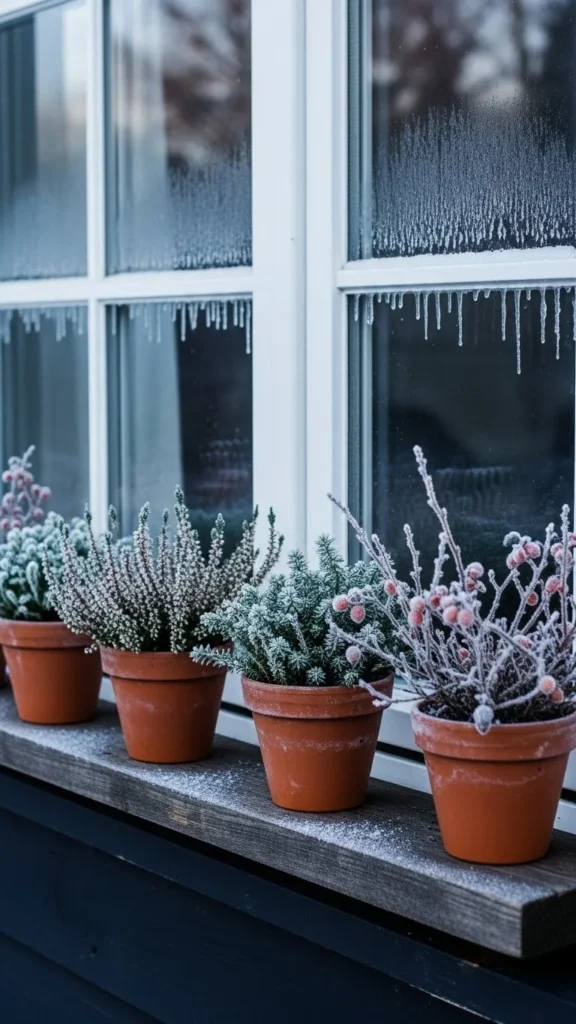
Place a shelf directly beneath a sunny window to catch extra warmth. Use lightweight pots to avoid stress on the shelf. Plant hardy herbs, dwarf shrubs, or pansies. Water carefully using a small bottle so you don’t spill on ledges. Add felt pads under pots to prevent slipping. This spot offers steady light and stays a bit warmer due to indoor heat coming through the window.
23. Micro Square-Foot Bed
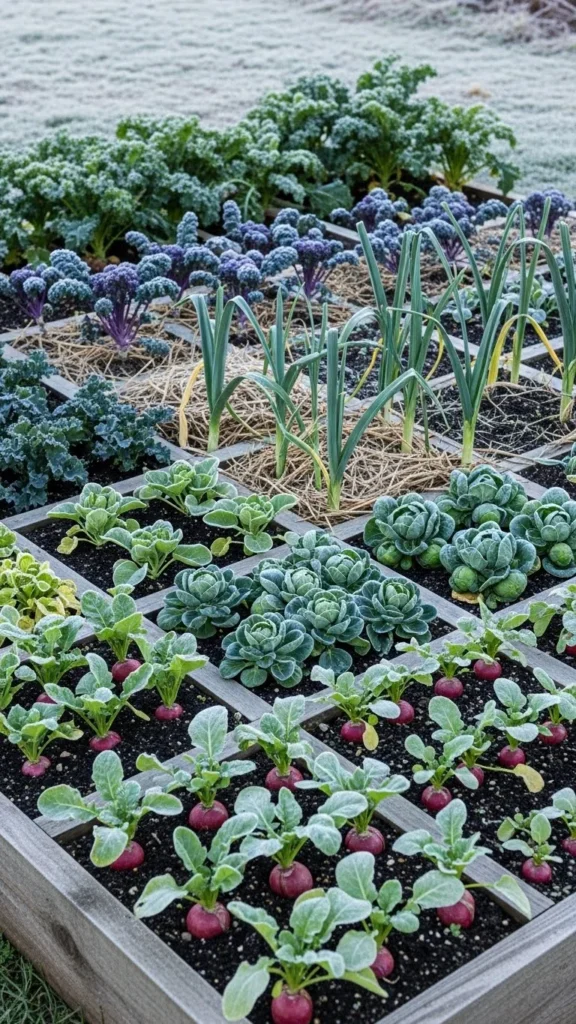
A tiny square-foot bed organizes your plants without confusion. Divide a small raised bed into grids using twine or wooden slats. Plant a different winter crop in each square. This structure helps you grow more in a small area. Use straw or leaves between grids for warmth. Add a simple cover if you expect a cold snap. It’s clean, structured, and easy for beginners.
24. Round Pot Ring
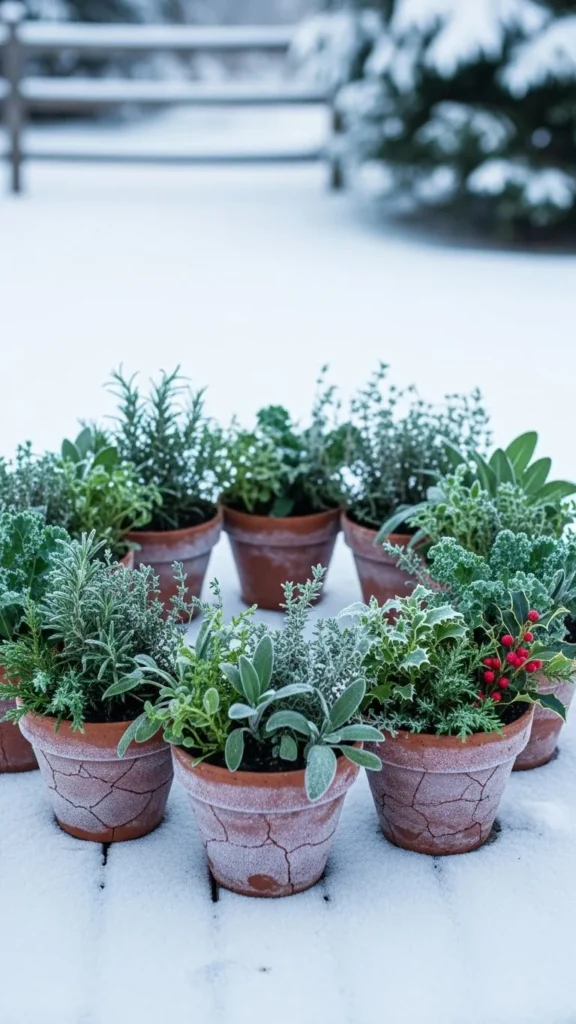
A ring of pots creates a simple winter layout that looks full without crowding the center. Use medium-sized pots and place evergreens in a repeating pattern. Add herbs or hardy greens between them. Leave the center open for a lantern, statue, or small birdbath. Use gravel in the middle to prevent mud. This layout works well in courtyards or patios.
25. Step-Up Stair Garden
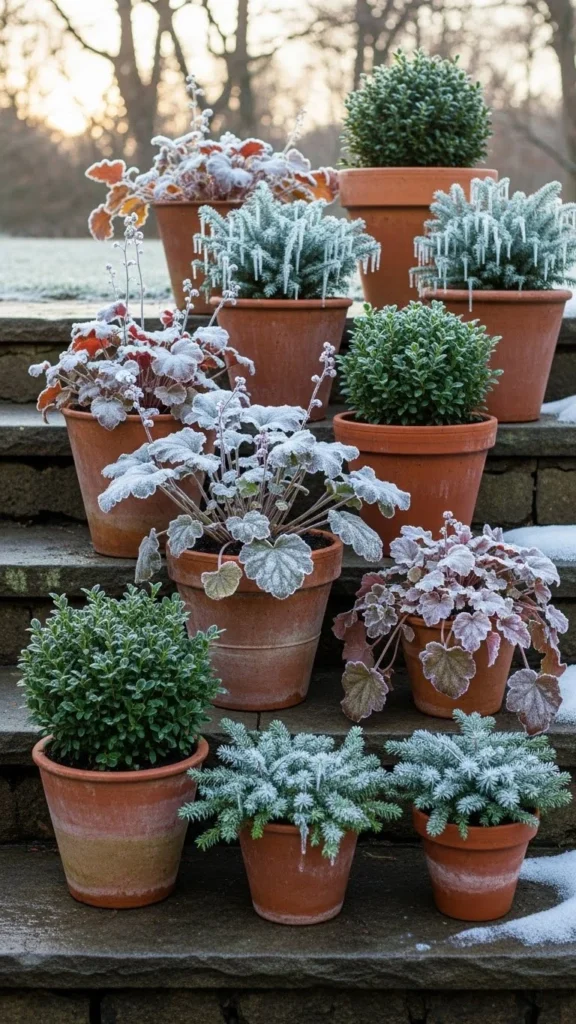
If you have entryway steps, turn them into a mini garden. Place pots on each step, keeping the largest at the bottom. Plant herbs, small shrubs, or winter flowers. Add felt pads under pots to avoid scratches. Keep your railing clear for safety. This layout uses vertical room without taking any extra ground space. It also adds a warm, welcoming look on cold days.
Conclusion
Winter gardening in small spaces works best when the layout is simple, tidy, and easy to maintain. Each idea above helps you grow more while keeping your space clear and comfortable. Try one layout or combine several to build a setup that fits your style and climate. With the right structure and a few hardy plants, even the smallest balcony or patio can stay green all winter.

Leave a Reply