

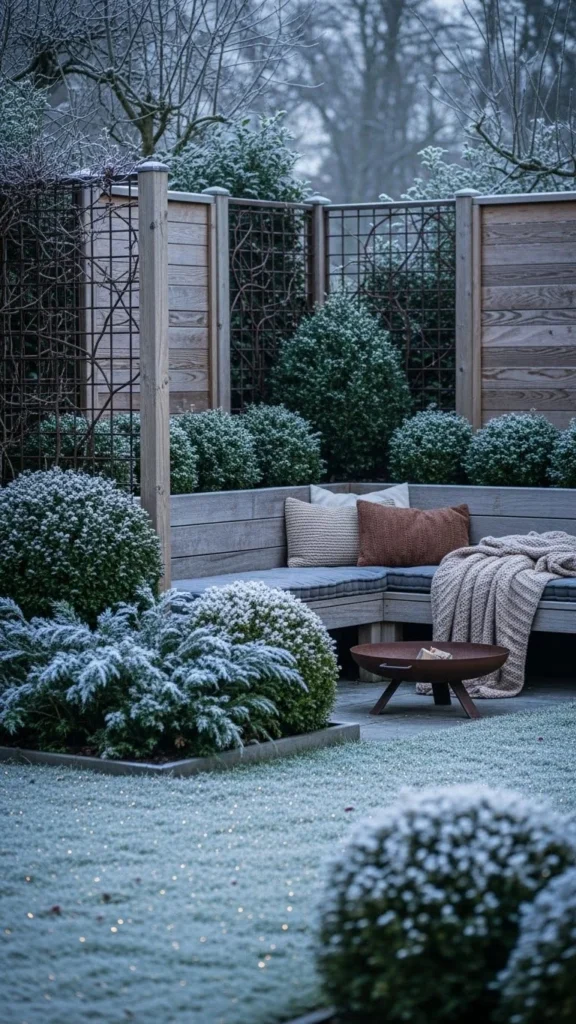
Winter gardens still deserve comfort and charm, even when plants slow down and outdoor time shortens. Garden screens help shape quiet corners, block unwanted views, and add structure when flowers fade. The right screen can turn an open yard into a calm retreat while keeping costs manageable. From simple DIY panels to plant-based solutions, these winter-ready screen ideas focus on privacy, warmth, and visual balance without complicated setups.
1. Wooden Slat Screens with Winter Stain
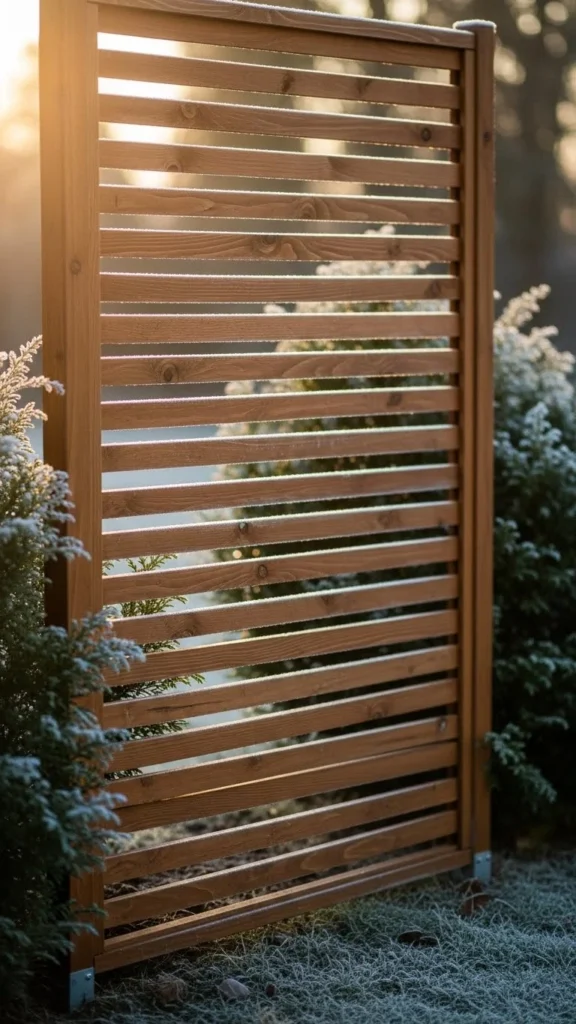
Wooden slat screens work well all year and feel especially grounding in winter. Vertical or horizontal slats block sightlines while letting light pass through. A darker winter stain pairs well with bare branches and evergreen plants. This style fits both modern and rustic gardens.
For a budget setup, use pressure-treated fence boards or reclaimed pallets. Cut boards evenly and space them slightly apart. Attach them to simple posts or an existing fence. You can build one panel at a time, spreading out the cost.
Wood also pairs well with winter greenery. Place planters with boxwood or pine near the base to soften the lines. If your garden feels exposed in colder months, angle the screen to block wind as well as views. This makes seating areas feel calmer without heavy construction.
Maintenance stays simple. A weather-sealing coat once a year helps the wood hold its tone. Even as plants rest, the screen adds shape and warmth to the space.
2. Evergreen Hedge Panels
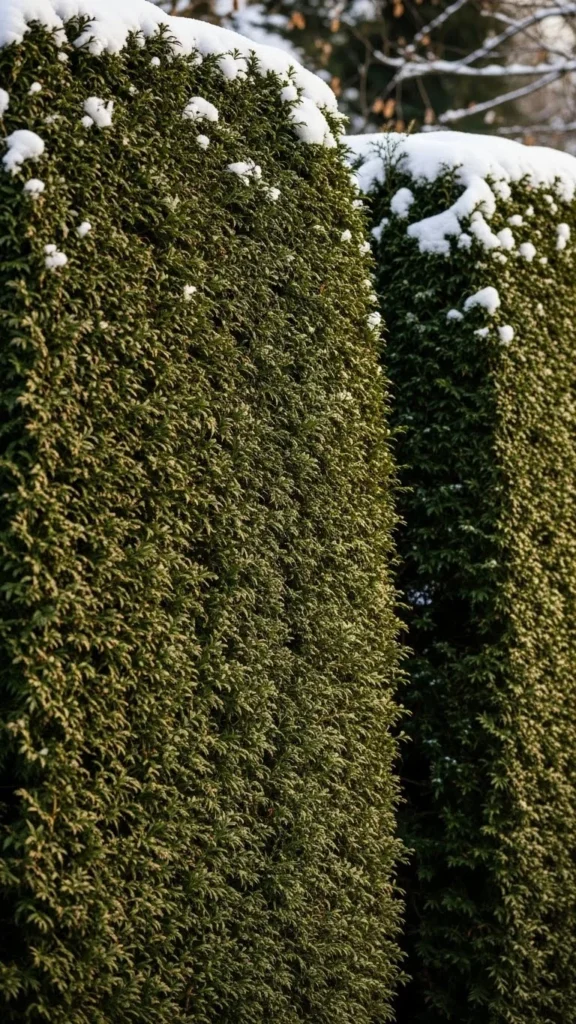
Evergreen hedge panels give privacy without hard materials. They stay green when other plants fade, making them a winter favorite. Options like arborvitae or boxwood work well in many climates and grow into solid screens.
For smaller budgets, start with young plants and space them carefully. It takes time, but patience pays off. Temporary mesh fencing can guide growth and give partial coverage while plants mature. Container-grown evergreens also work for patios and small yards.
Trim lightly before winter to keep clean lines. Mulch around the base to protect roots from cold snaps. Once established, these screens block wind and noise while keeping a natural look.
This option suits gardeners who enjoy slow, steady progress. Over time, the hedge becomes a living wall that feels calm and grounded, even in the coldest months.
3. Bamboo Screens with Frost-Resistant Finish
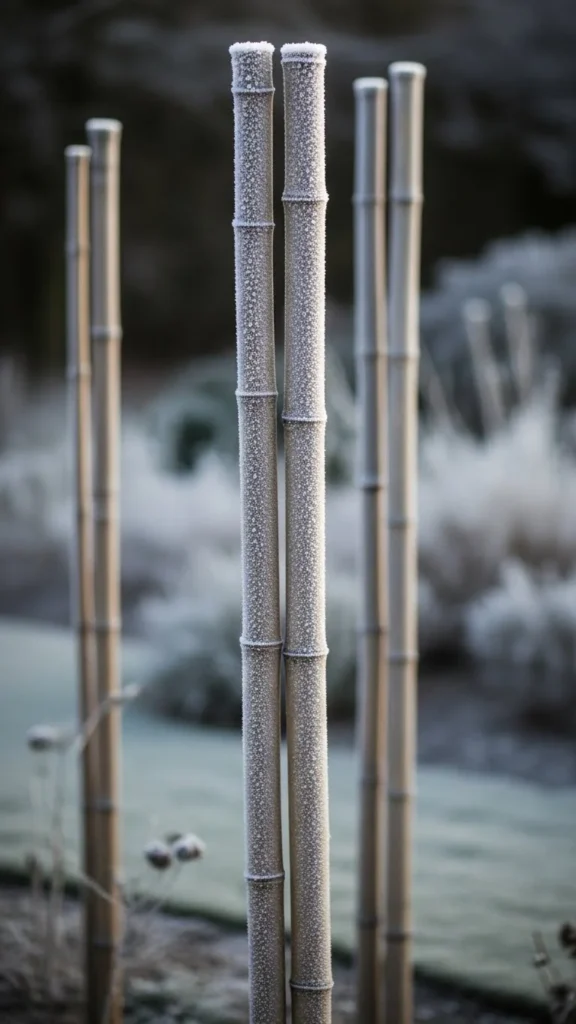
Bamboo screens offer quick privacy and a relaxed look. In winter, treated bamboo holds up well and keeps its warm tone. The vertical lines add height and make small gardens feel taller.
Roll-up bamboo panels are affordable and easy to install. Attach them to an existing fence or frame using outdoor ties or screws. For better durability, apply a frost-resistant sealant before the cold sets in.
Bamboo pairs well with stone paths and gravel beds. Add simple planters at the base for balance. Even without leaves, the texture keeps the space visually active.
This option works well for renters or anyone wanting fast results without permanent changes. It blocks views while staying light and flexible, which helps winter gardens feel less closed in.
4. Metal Lattice Screens with Climbing Evergreens
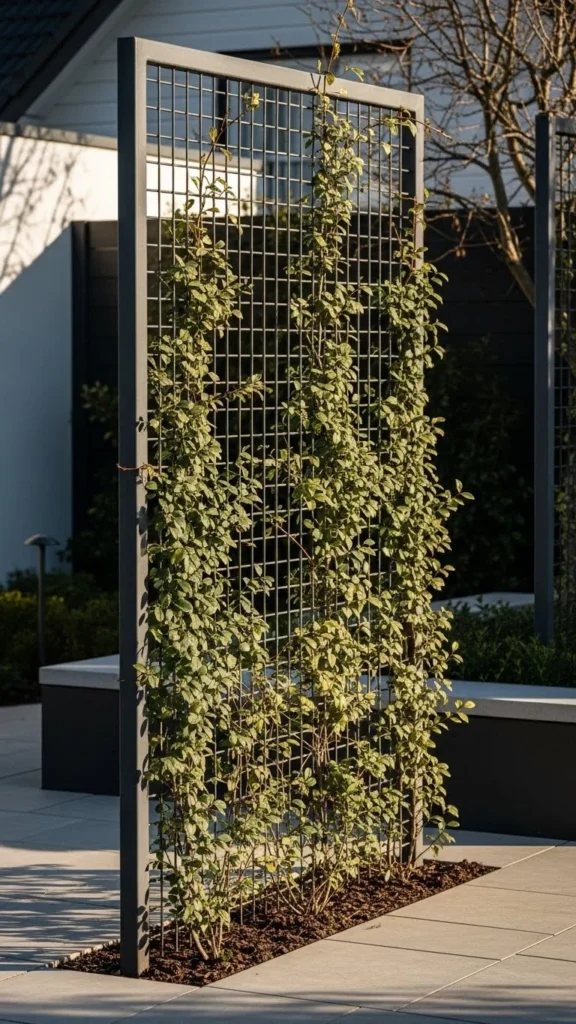
Metal lattice screens add structure without feeling heavy. In winter, they shine when paired with climbing evergreens like ivy. The metal frame stays strong while plants fill gaps over time.
For a lower-cost approach, use prefabricated metal panels. Secure them to posts or walls. Train plants early using garden ties. Even partial coverage helps with privacy.
Metal holds up well against snow and moisture. Choose powder-coated finishes to prevent rust. Dark tones work well against winter skies and pale ground cover.
This screen style fits small yards and patios. It divides space gently and gives climbing plants a clear path. The result feels tidy and intentional all season long.
5. Frosted Glass Garden Panels
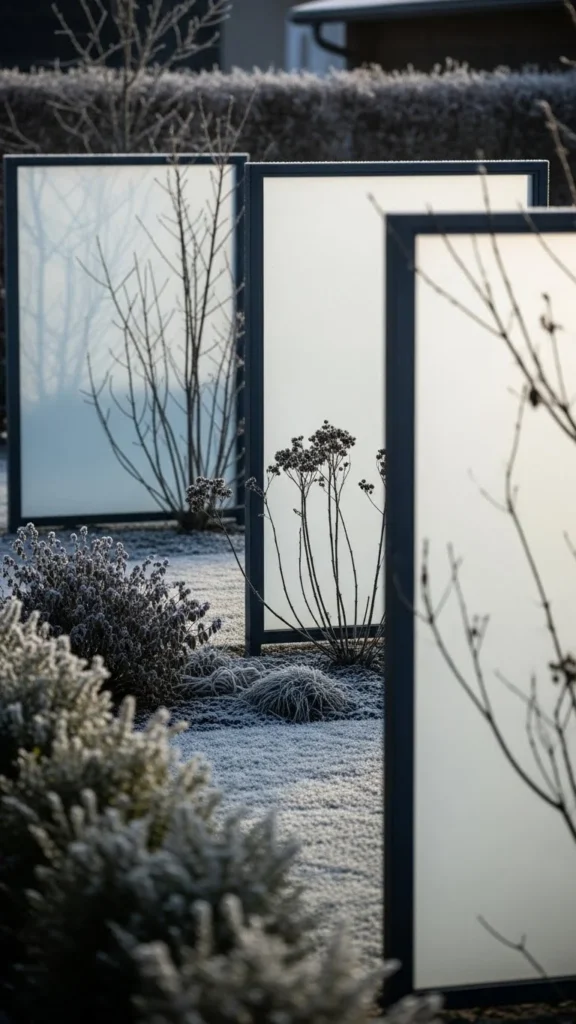
Frosted glass screens give privacy while letting light through. In winter, they brighten dark corners and keep spaces open. The soft blur blocks views without feeling closed off.
Tempered glass panels cost more, but smaller sections keep spending in check. Use them in key areas like seating zones or along walkways. Mount panels in sturdy metal or wood frames for stability.
Glass works well with modern gardens. Pair it with stone, concrete, or simple plantings. Even on cloudy days, it reflects light and keeps the area from feeling dull.
Cleaning stays simple. A quick wipe keeps panels clear of dirt or frost marks. This option suits those who want privacy without adding visual weight.
6. Reclaimed Door Screens
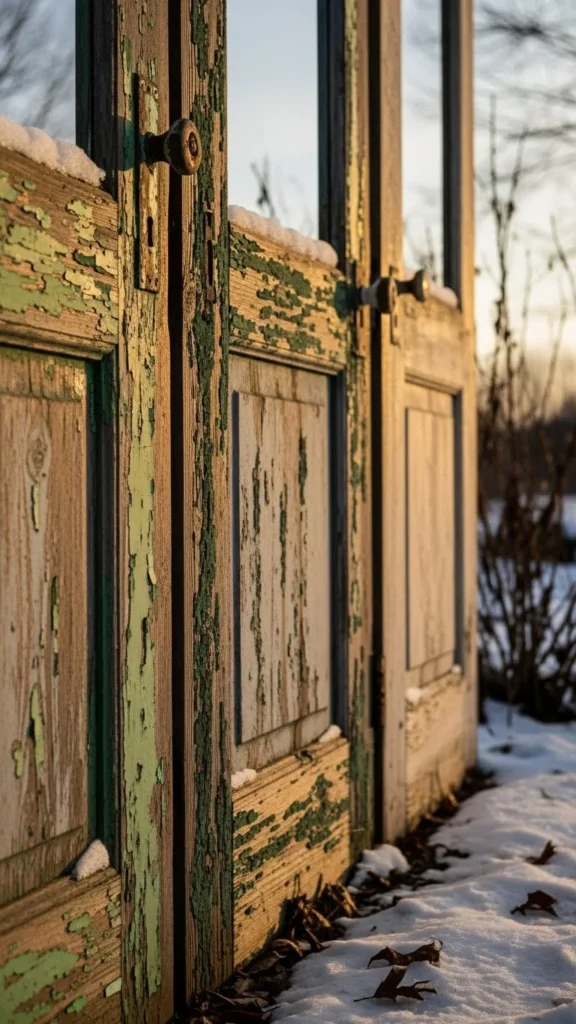
Old doors make striking garden screens. Their worn texture adds charm when plants rest. Solid panels block views fully and give strong winter shelter.
Look for doors at salvage yards or reuse ones from renovations. Mount them side by side on posts or hinges. Leave gaps for airflow if needed.
Paint or seal them to handle moisture. Neutral or muted colors suit winter light best. Add hooks or lanterns to give function and interest.
This idea suits rustic or cottage-style gardens. It gives full privacy with minimal cost and turns unused items into something practical.
7. Woven Willow Panels
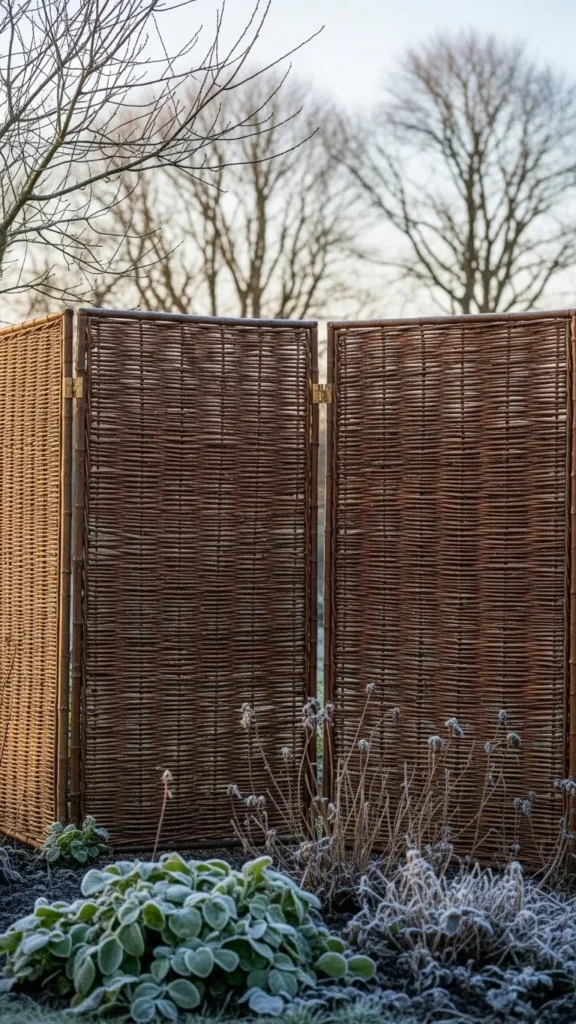
Willow panels bring warmth through texture. Even without leaves, the woven pattern adds movement. They block views while keeping a handmade feel.
These panels are often affordable and lightweight. Attach them to simple wooden frames or fences. They work well for small gardens or balconies.
Willow holds up well in cold weather when sealed properly. Keep panels slightly raised from the ground to avoid moisture damage.
This option fits natural garden styles and pairs well with gravel, clay pots, and winter grasses. It adds privacy without harsh lines.
8. Vertical Planter Screens
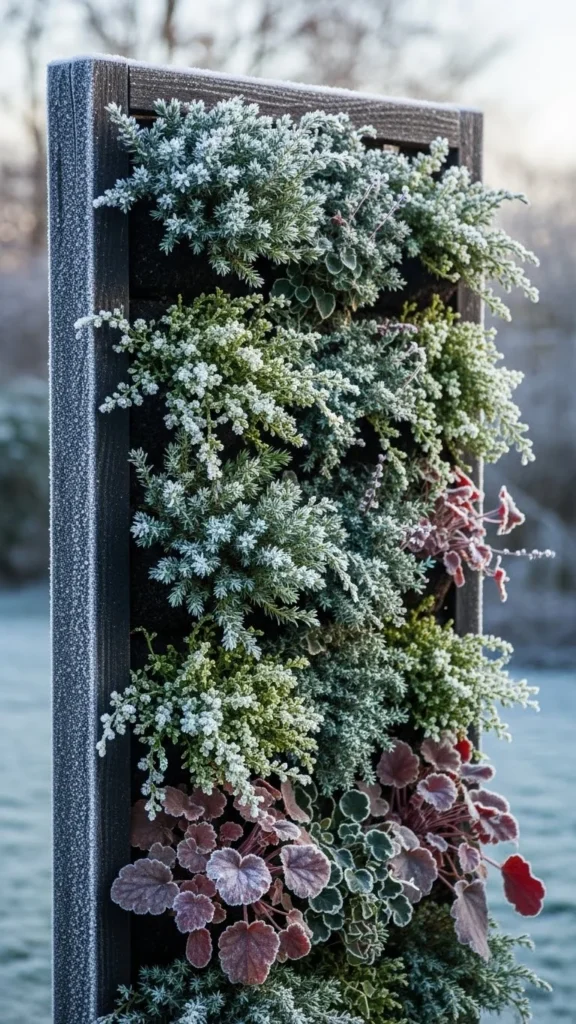
Vertical planters serve two purposes. They block views and hold winter-friendly plants. Even simple greenery adds life during colder months.
Build a frame from wood or metal and attach planter boxes. Use hardy plants like ivy or small shrubs. Budget tip: reuse wall planters or crates.
Place the screen near seating areas. It creates a calm boundary without taking up much space. Water sparingly during winter to avoid root damage.
This setup suits patios and narrow yards. It adds structure and greenery when the garden feels bare.
9. Corrugated Metal Screens
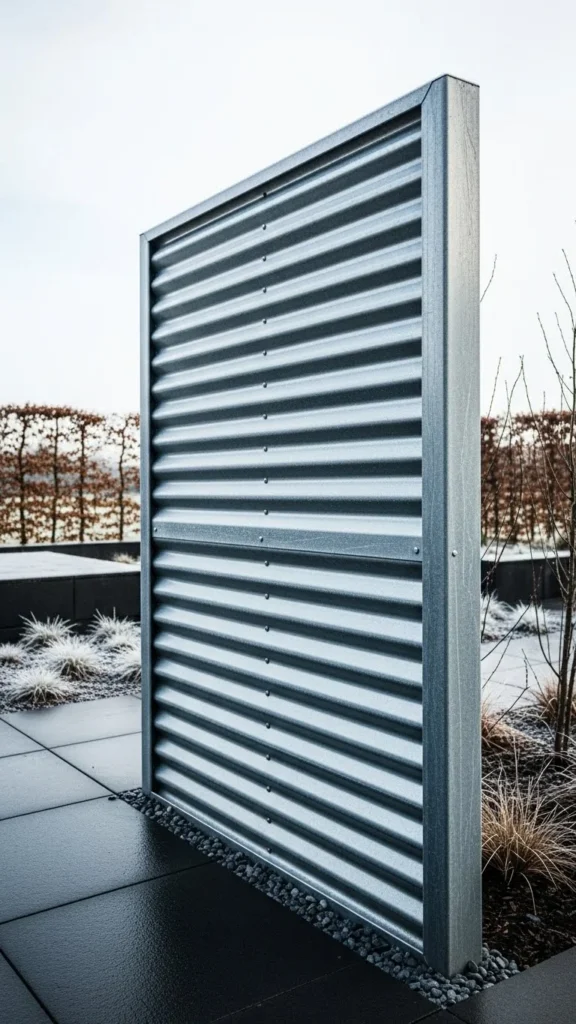
Corrugated metal screens feel bold and practical. They block views fully and handle winter weather well. The texture adds interest even without plants.
Use smaller panels to keep costs down. Mount them to wooden frames or posts. Pair with wood to soften the industrial look.
Metal reflects light, which helps brighten shaded areas. It also blocks wind, making outdoor corners more usable.
This option suits modern or urban gardens. It offers strong privacy with minimal upkeep.
10. Outdoor Fabric Screens
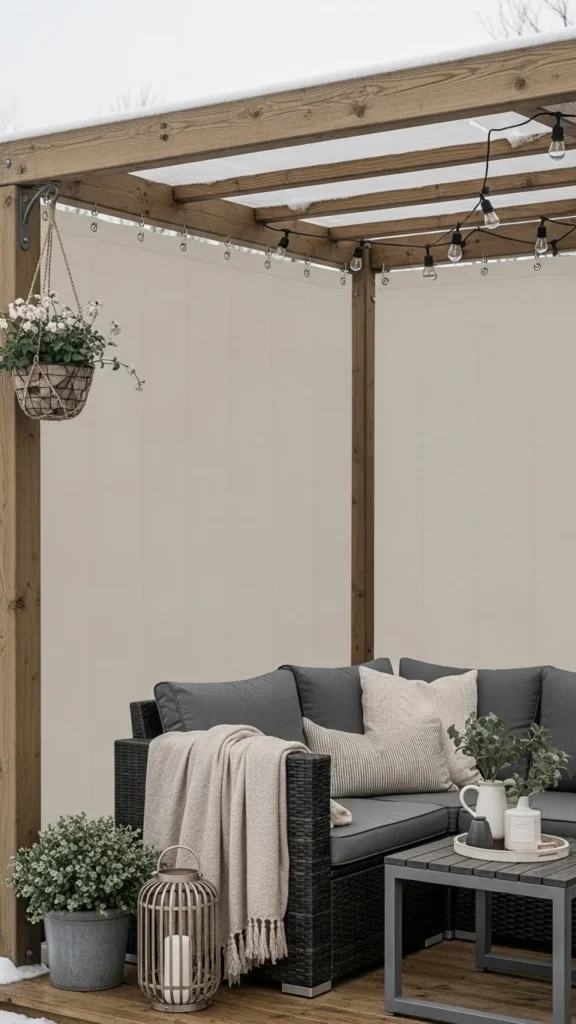
Outdoor fabric screens add softness to winter gardens. Heavy-duty fabric blocks views while moving gently in the breeze. Neutral shades work best in cold light.
Install curtain rods or wire systems. Use weather-rated fabric to handle moisture. Remove during severe weather if needed.
This is a low-cost way to change the look quickly. Swap fabrics seasonally without major work.
Fabric screens suit patios and pergolas. They create cozy zones without permanent changes.
11. Stone Wall Screens
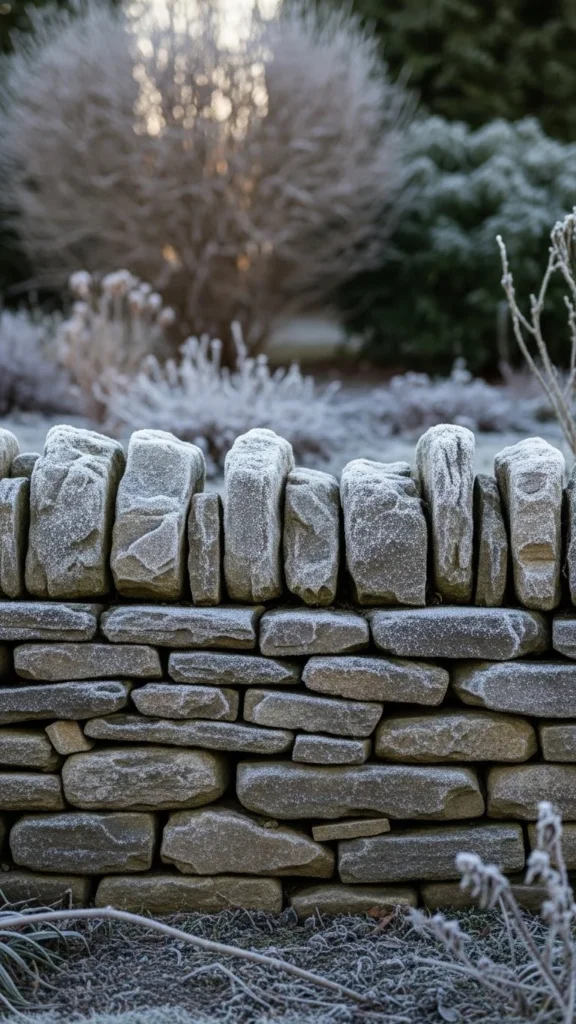
Stone walls bring strength and warmth. Even low walls block sightlines when placed thoughtfully. In winter, stone textures stand out.
Dry-stacked stone keeps costs lower than mortared walls. Use local stone for a natural look.
Pair walls with tall planters or shrubs for added height. This builds privacy without tall structures.
Stone screens suit classic gardens and last for years with little care.
12. Slatted Metal Screens
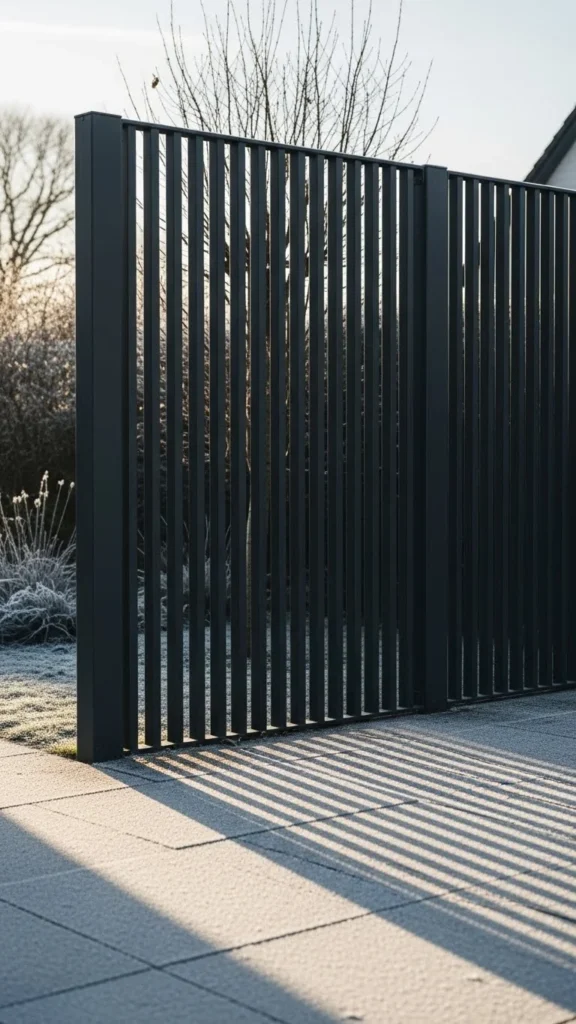
Slatted metal screens mirror wood designs with extra durability. The gaps let light through while blocking views.
Prefabricated panels save time and money. Dark finishes work well in winter light.
These screens suit modern layouts and small spaces. They divide areas without closing them off.
Maintenance stays minimal, making them a practical choice.
13. Living Moss Walls
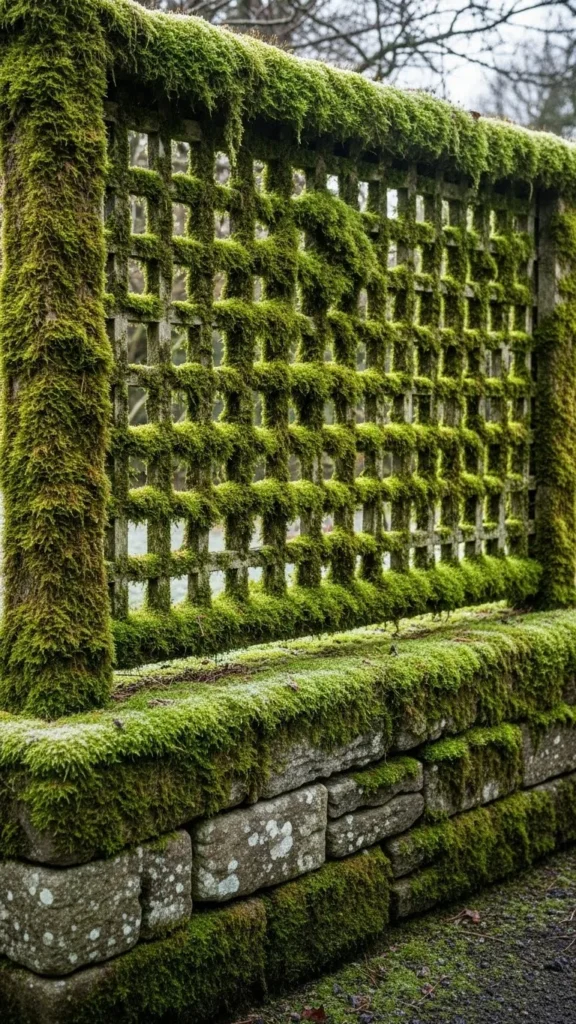
Moss walls add quiet beauty. In mild winters, moss stays green and soft. It covers surfaces without bulk.
Use shaded areas where moisture stays consistent. Start small with panels rather than full walls.
This option works best in sheltered gardens. It adds texture and calm without height.
14. Painted Plywood Panels
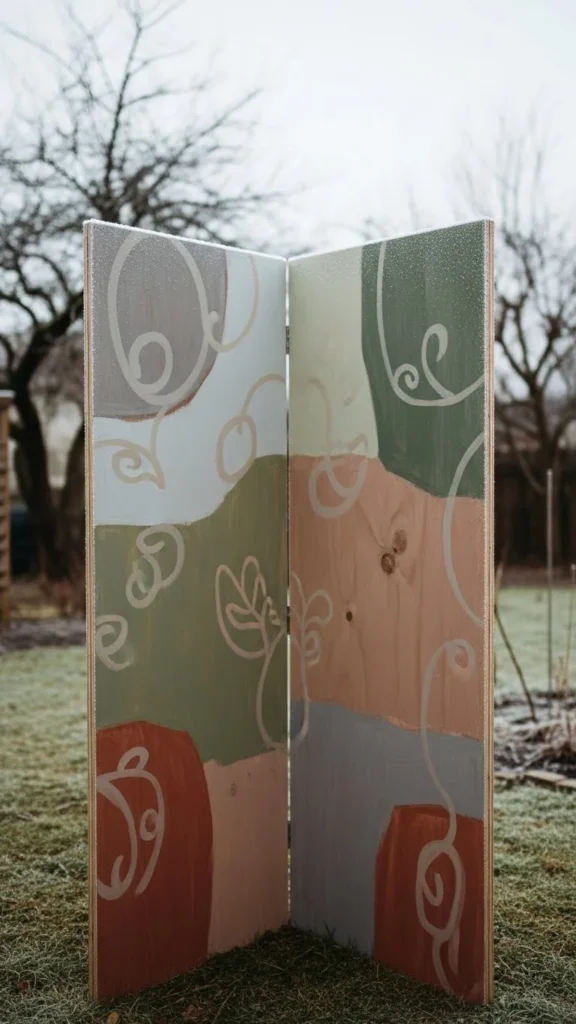
Plywood panels offer quick privacy on a budget. Paint them in tones that suit winter light, like gray or sage.
Seal edges well to handle moisture. Mount panels to posts or fences.
This solution works for temporary setups or rental spaces. It blocks views fully and installs fast.
15. Trellis Screens with Winter Vines
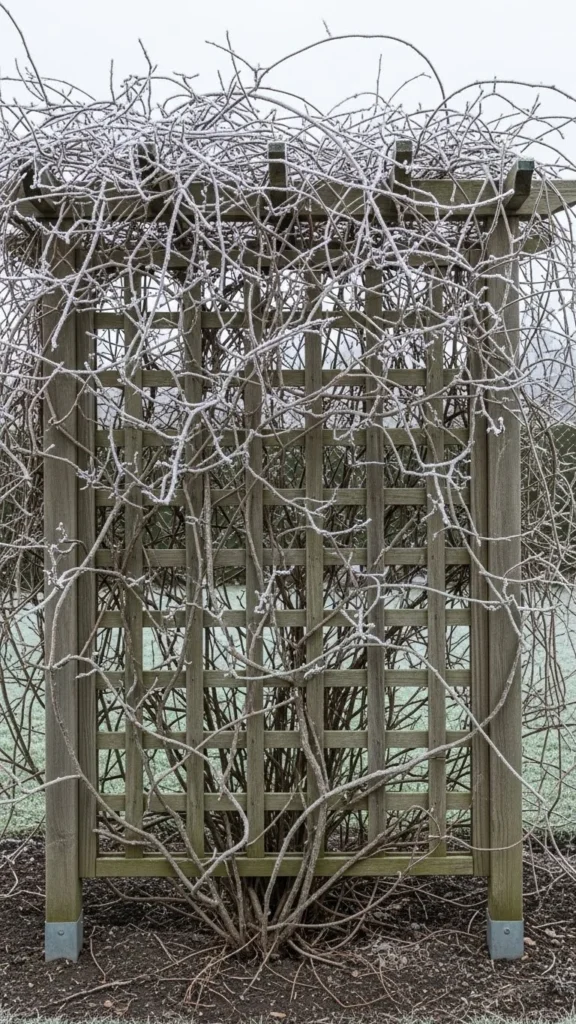
Trellis screens stay useful even when vines lose leaves. The structure alone adds privacy.
Use affordable wooden trellises and space them side by side. Train vines over time.
This option suits gardeners who plan ahead. It grows better each season.
16. Rope and Post Screens
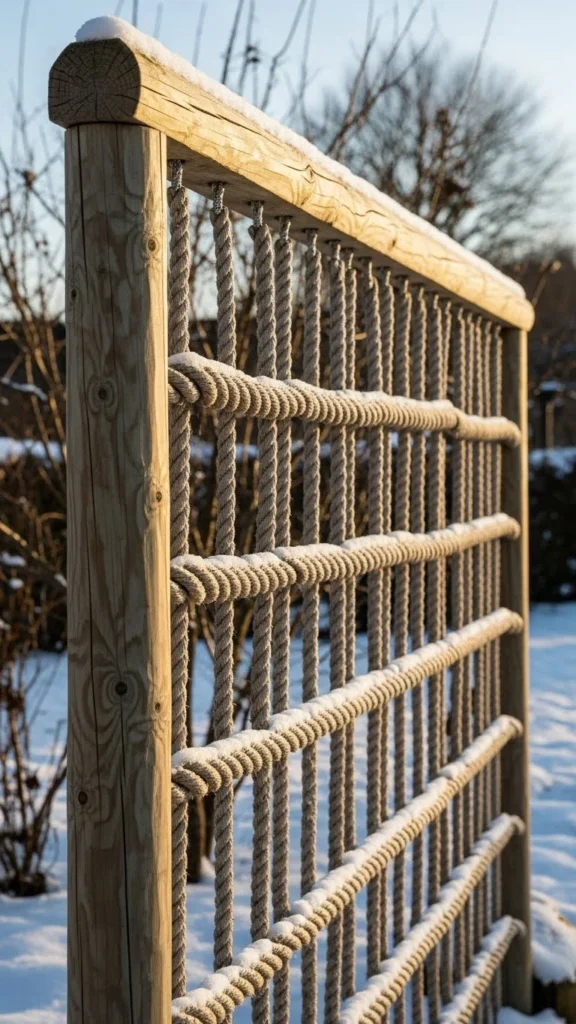
Rope screens feel light and casual. They block sightlines when layered and spaced well.
Use thick outdoor rope and sturdy posts. This setup costs little and installs fast.
It suits coastal or relaxed garden styles and works well with gravel or decking.
17. Pallet Wood Screens
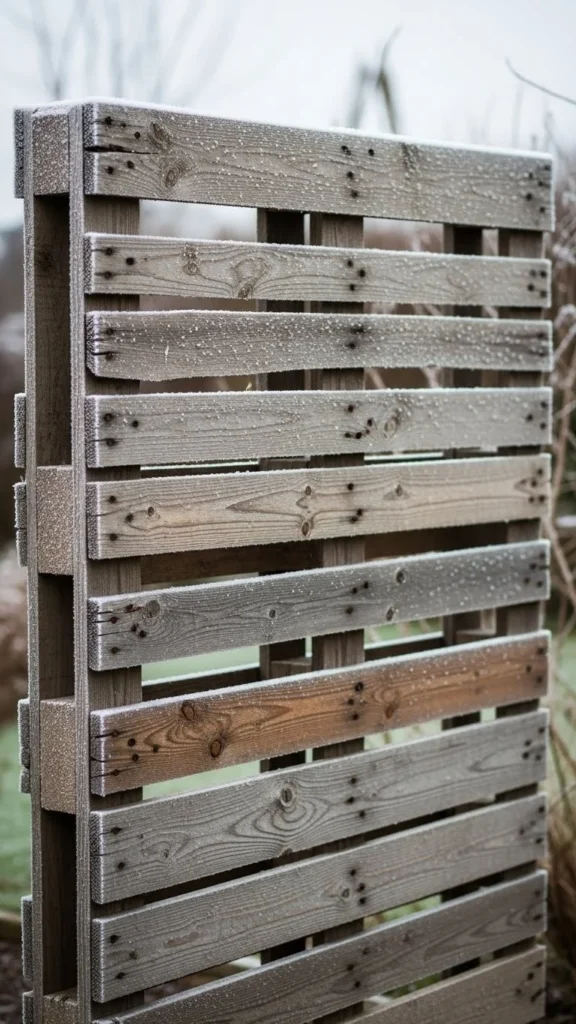
Pallet screens cost very little and offer full coverage. Sand and seal them for safety.
Stack pallets vertically or horizontally. Add planters at the base for balance.
This idea fits DIY lovers who want privacy fast.
18. Frost-Resistant Resin Panels
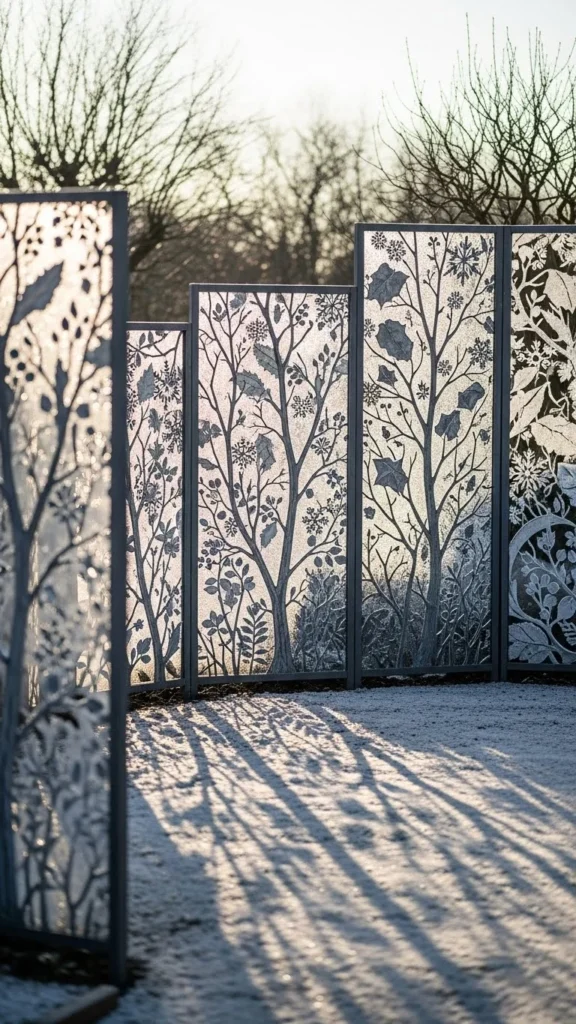
Resin panels handle cold well and come in many patterns. They block views while adding style.
Use them as accent screens rather than full walls to manage cost.
They suit modern gardens and require little care.
19. Reed Fence Screens
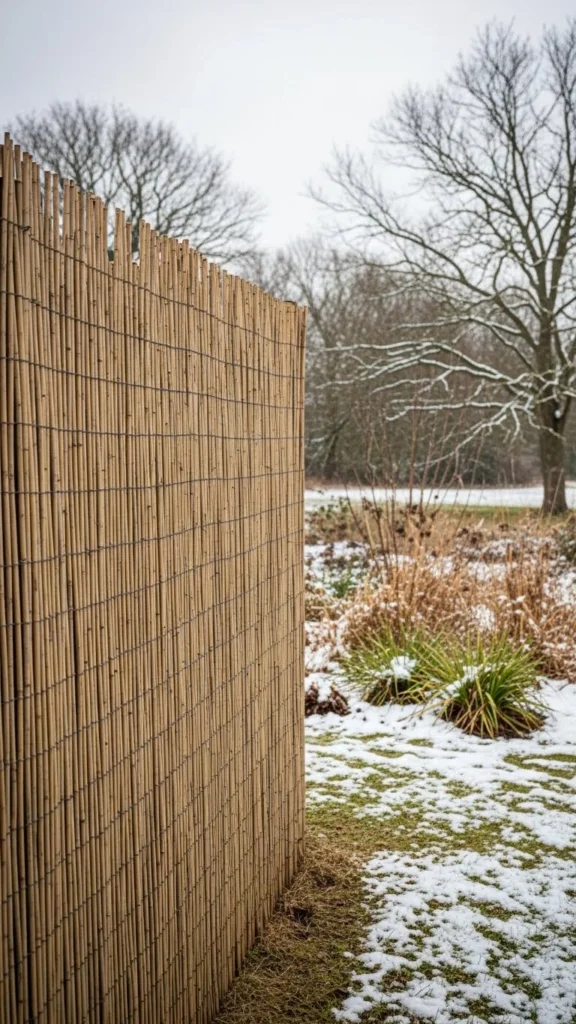
Reed fencing offers quick coverage and warmth. It blocks views while staying light.
Attach rolls to fences or frames. Replace sections as needed.
This option suits temporary setups or seasonal use.
20. Concrete Block Screens
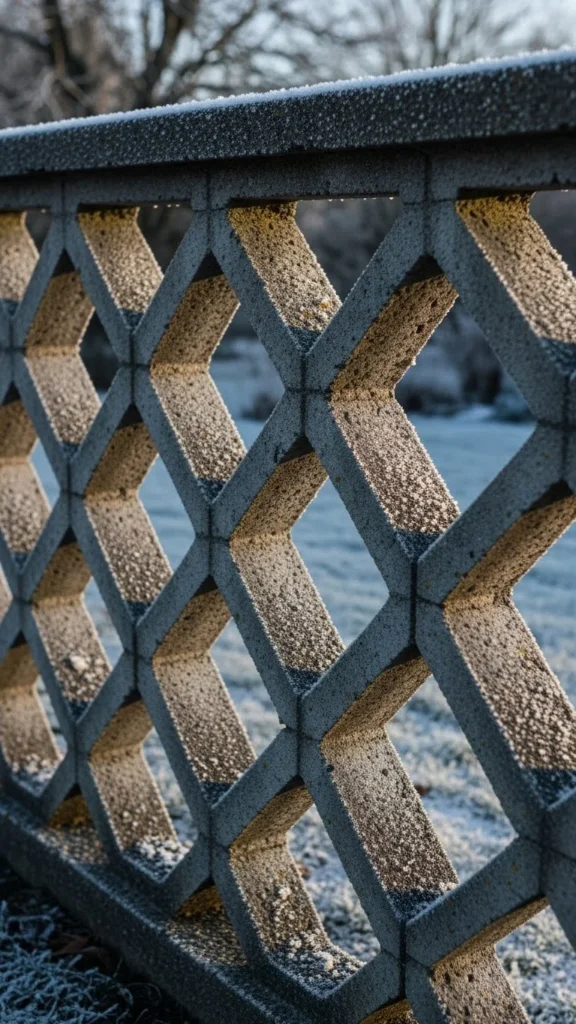
Concrete blocks stacked with gaps form strong screens. They block views while letting light through.
Use blocks with patterns for interest. This suits modern gardens.
It also blocks wind, making outdoor areas calmer.
21. Shutter-Style Screens
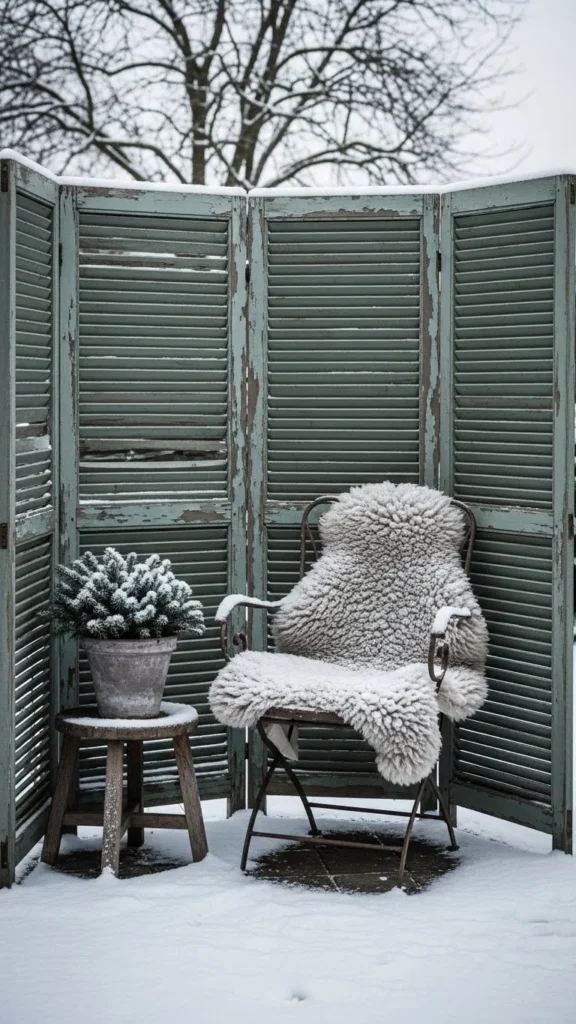
Shutters give adjustable privacy. Open or close them as needed.
Reuse old shutters to save money. Seal them well for winter use.
This style fits cottage and classic gardens.
22. Canvas Panel Screens
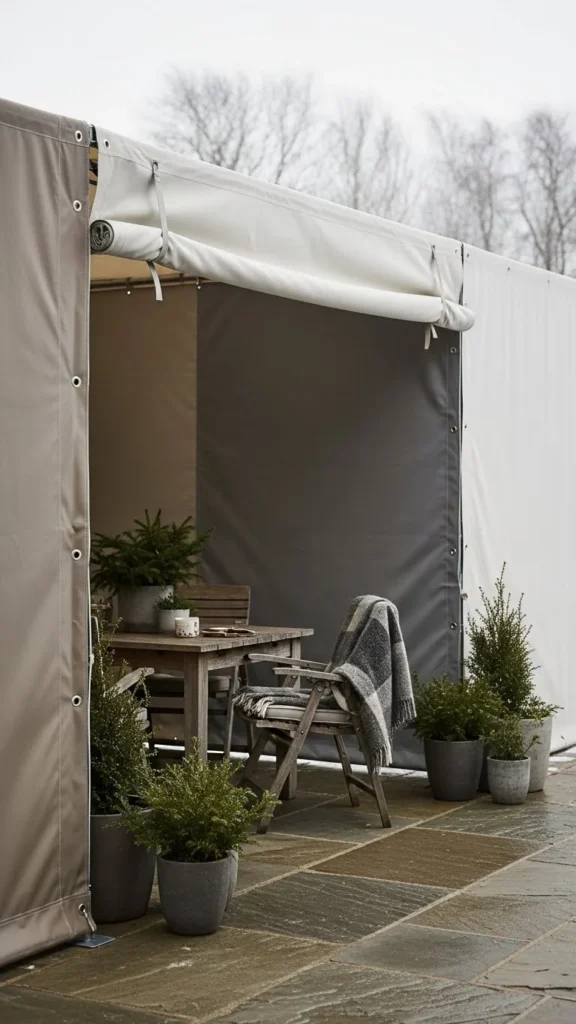
Canvas panels offer soft privacy. They work well in sheltered spaces.
Hang panels from frames or pergolas. Remove during harsh weather.
This option feels cozy and flexible.
23. Mixed Material Screens
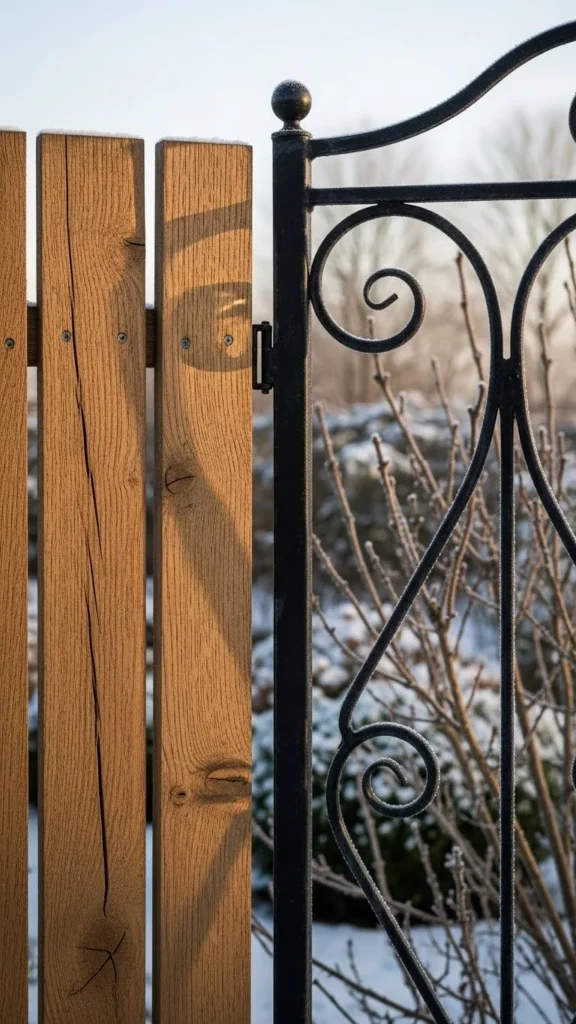
Mixing materials adds interest. Combine wood frames with metal inserts.
Use leftovers from other projects to save money.
This approach suits custom layouts.
24. Tall Planter Box Screens
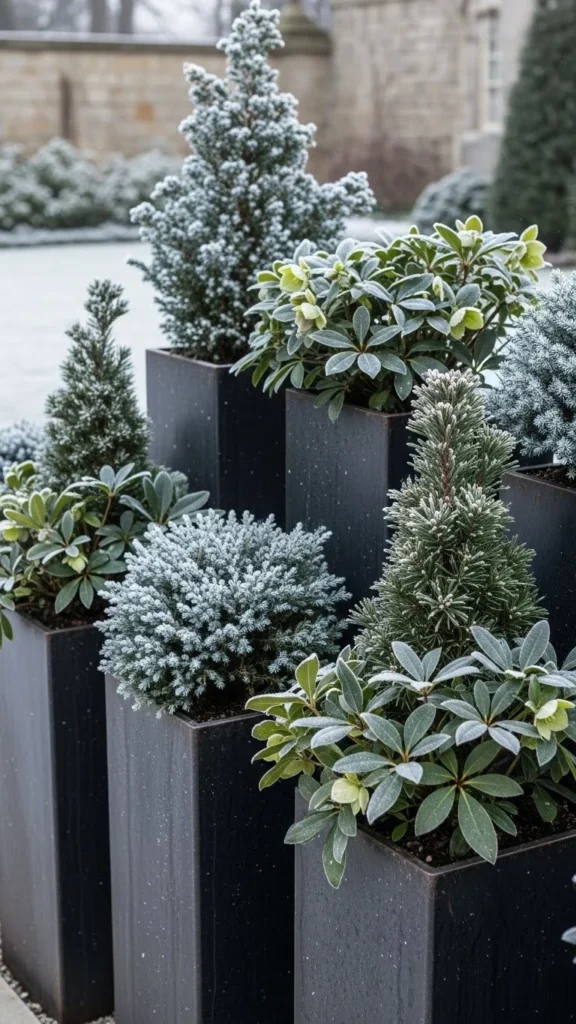
Tall planters block views while holding greenery. Choose hardy plants.
Build boxes from wood or buy ready-made ones.
They work well for patios and decks.
25. Simple Fence Extensions
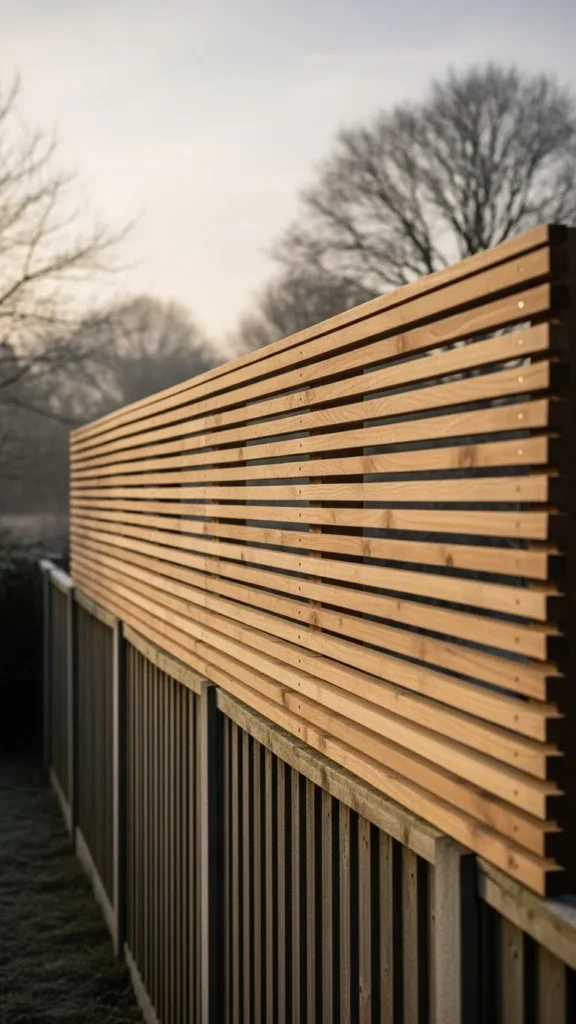
Fence extensions add height where privacy falls short. Match materials to existing fences.
This is a quick fix that avoids full replacement.
It works well for side yards and boundaries.
Conclusion
Winter gardens can feel calm, sheltered, and inviting with the right screen choices. Whether you prefer natural materials, simple DIY builds, or clean modern panels, each idea here focuses on practical privacy without heavy cost or effort. Start small, work in stages, and choose options that fit your space and style. Even in colder months, thoughtful screens can shape a garden that feels personal and comfortable.

Leave a Reply