

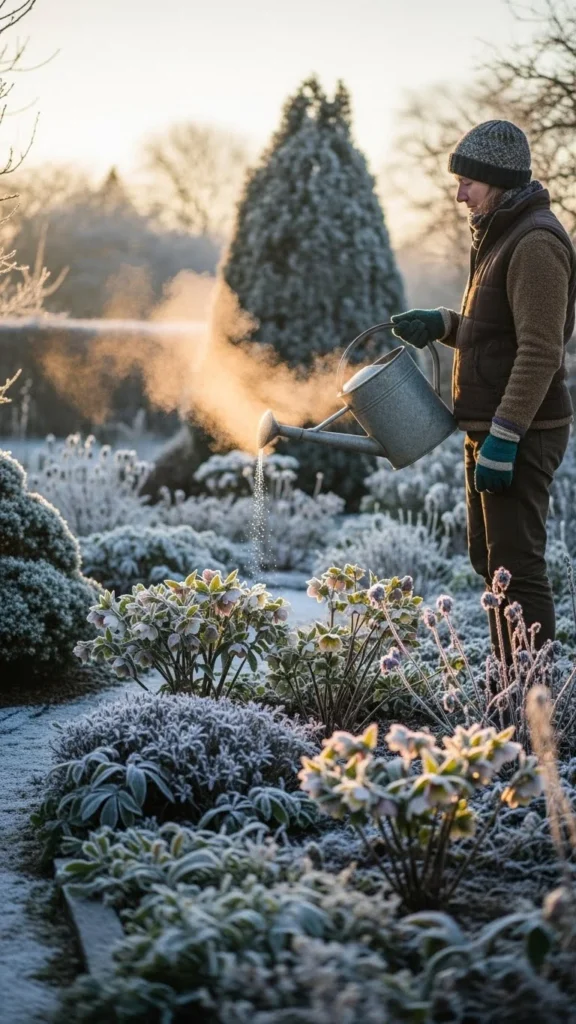
Winter watering can feel tricky when temperatures swing, soil freezes, and plants rest. Still, a steady routine makes a huge difference in how well your garden wakes up in spring. This guide shares simple winter watering schedules that real gardeners rely on—easy patterns, weather-aware timing, and practical steps anyone can follow. Each idea is designed to help you protect roots, avoid overwatering, and use small, consistent habits that fit your climate and yard.
1. Weekly Deep Soak for Evergreen Shrubs
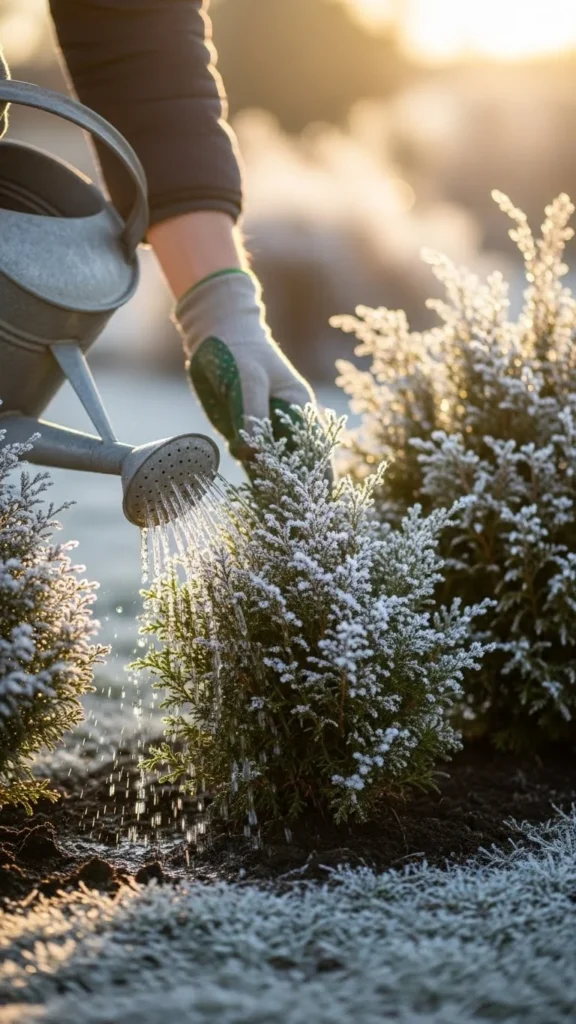
Evergreen shrubs stay active in winter, so they benefit from a weekly deep soak. Water slowly around the root zone to help moisture reach deeper layers. Keep the stream low and steady. Avoid spraying foliage when temperatures drop below freezing.
A helpful trick is to place a small plastic cup in the soil nearby. Water until the cup fills halfway. This gives you a clear sign that the soil got enough moisture without overdoing it.
If you’re watching your budget, use collected rainwater from late fall storms. Store it in lidded buckets so it doesn’t freeze quickly. It’s an easy way to stretch water use while helping your plants stay hydrated.
2. Twice-Monthly Hydration for Dormant Trees
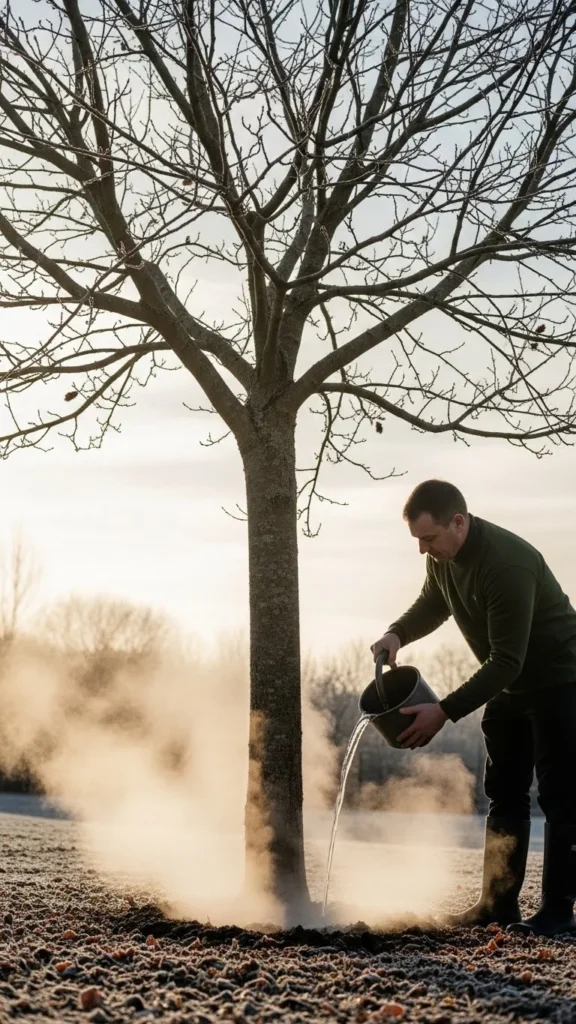
Dormant trees still benefit from moisture even though growth slows. A twice-monthly watering schedule helps prevent dry root pockets. Focus on the drip line rather than the trunk. This encourages roots to spread outward.
Use a 5-gallon bucket and poke a tiny hole near the bottom. Let water drip slowly for an hour. It’s a simple DIY tool that hydrates without wasting water.
If the ground freezes often in your area, water on days when temperatures rise above freezing. This helps absorption and reduces ice buildup. Keep the soil lightly moist rather than soaked.
3. Light Weekly Watering for Young Fruit Trees
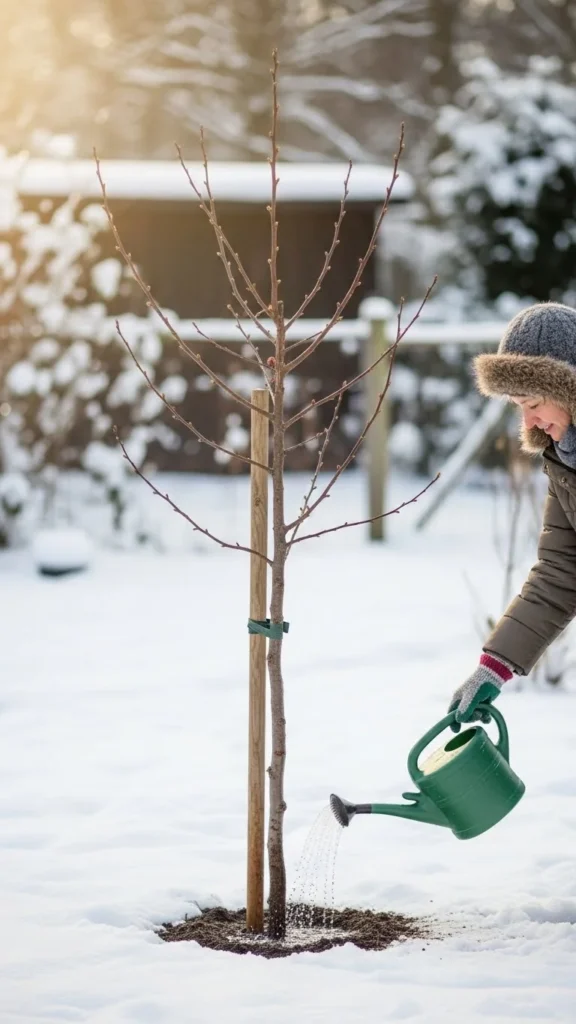
New fruit trees have shallow roots that dry faster. A light weekly watering keeps them stable through winter. Use a gentle spray that doesn’t disturb the soil.
If you want a budget-friendly hack, place mulch around the base in a thin ring. This slows moisture loss but still lets the soil breathe.
Avoid watering when frost is forming overnight. Early afternoon is usually best in winter because the ground has warmed slightly. Consistency helps the tree settle and gain strength for spring.
4. Every-10-Days Watering for Perennial Beds
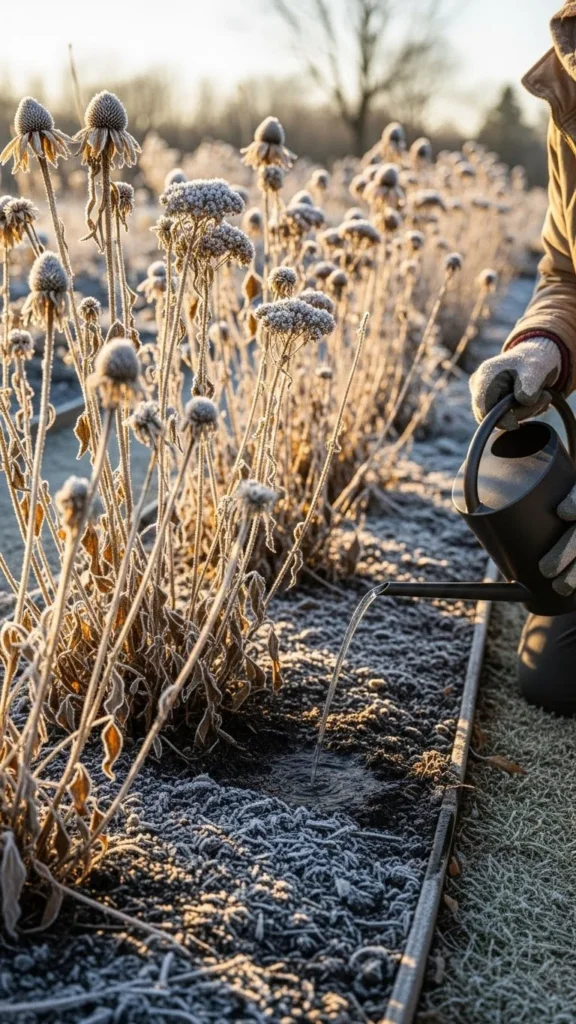
Perennials appreciate steady moisture even while resting. Every ten days works well for most beds. Water slowly around the crown without soaking the center.
If your plants sit in clay soil, give just enough water to moisten the top few inches. For sandy soil, apply a bit more.
To keep things simple, mark watering days on your phone. Using reminders saves time and prevents guessing. It’s an easy habit that makes your garden healthier.
5. Weekly Moisture Check for Container Plants
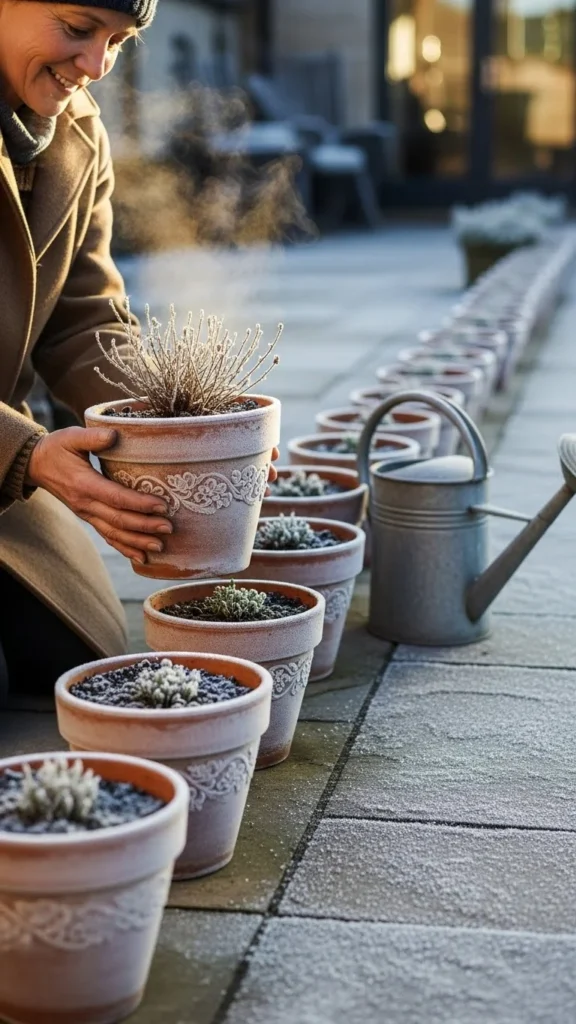
Containers dry out faster than ground soil. Instead of strict timing, do a weekly moisture check. Lift the pot. If it feels light, it’s time to water.
Pour water slowly until you see a bit of drainage. This avoids soggy roots.
Use bubble wrap around the pot to help with insulation. It’s a cheap solution that helps soil retain warmth and moisture.
6. Biweekly Watering for Established Roses
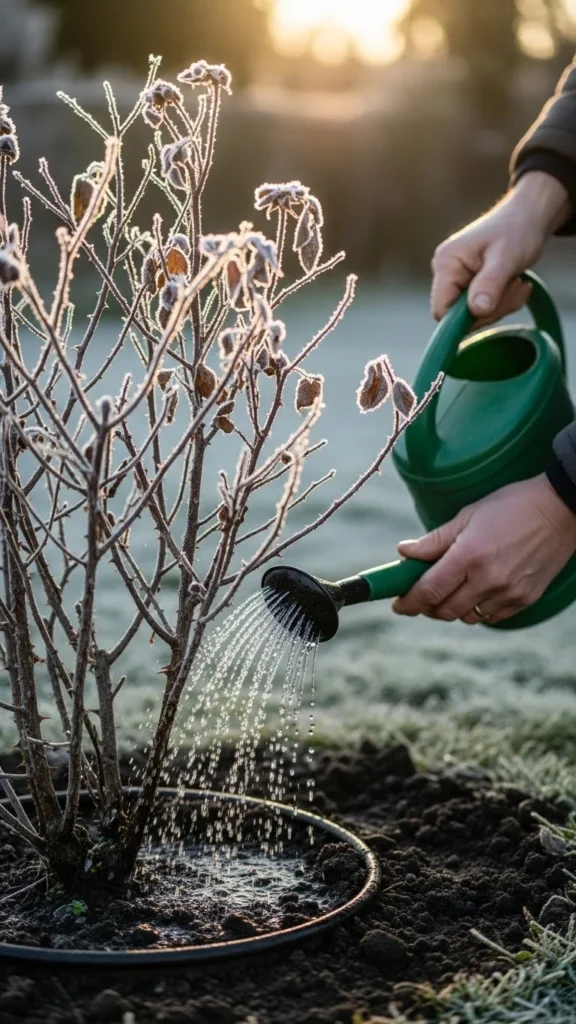
Roses can handle winter well, but dry soil stresses them. A biweekly drink keeps roots flexible. Water at the outer drip circle rather than the base.
If you’re on a budget, reuse leftover dehumidifier water. It’s clean and safe for garden use.
Aim for midday watering to reduce freezing. Keep soil evenly moist without puddles.
7. Monthly Watering for Mature Shade Trees
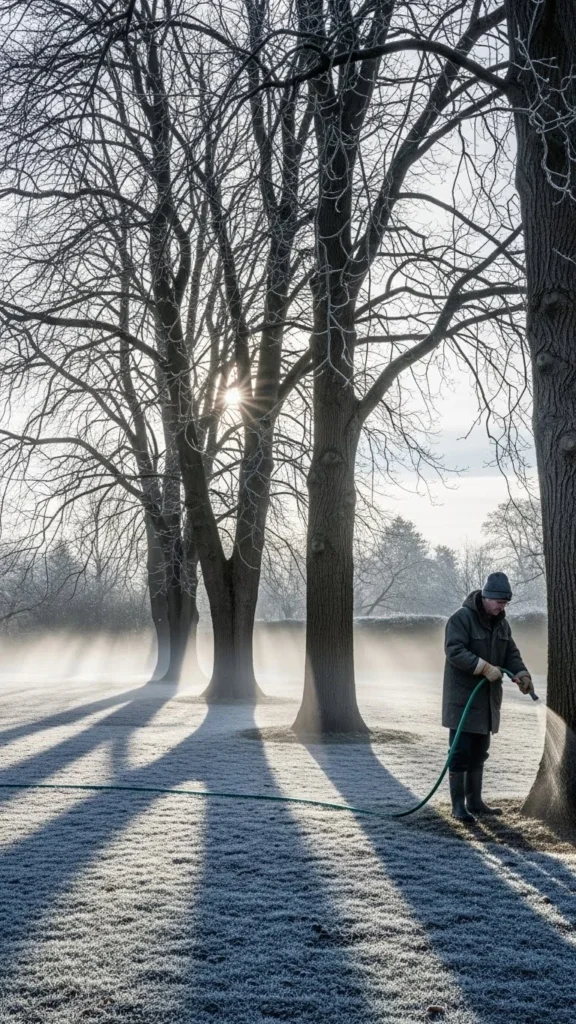
Large shade trees usually need only one watering per month during winter. Use a slow trickle at the drip line.
Place a soaker hose in a ring shape and let it run for 45 minutes. This gives roots steady hydration.
Mulch lightly to keep moisture from evaporating too quickly.
8. Every-12-Days Watering for Hydrangeas
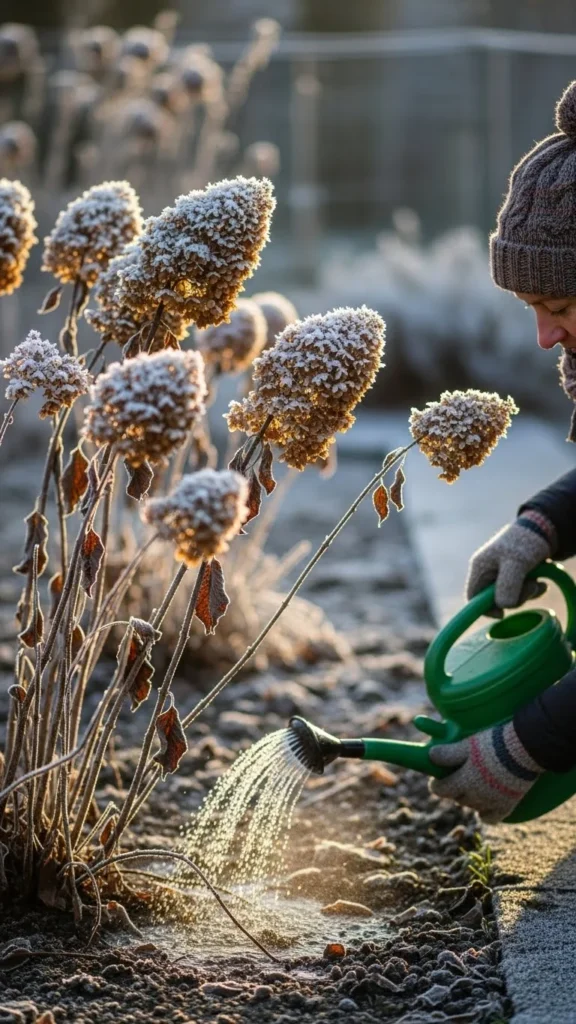
Hydrangeas enjoy steady moisture, even in cold months. Every 12 days works well in most climates.
Pour water slowly to avoid washing away soil.
Use fallen leaves to create a simple mulch blanket. It helps keep moisture stable and costs nothing.
9. Weekly Hydration for Winter Vegetables
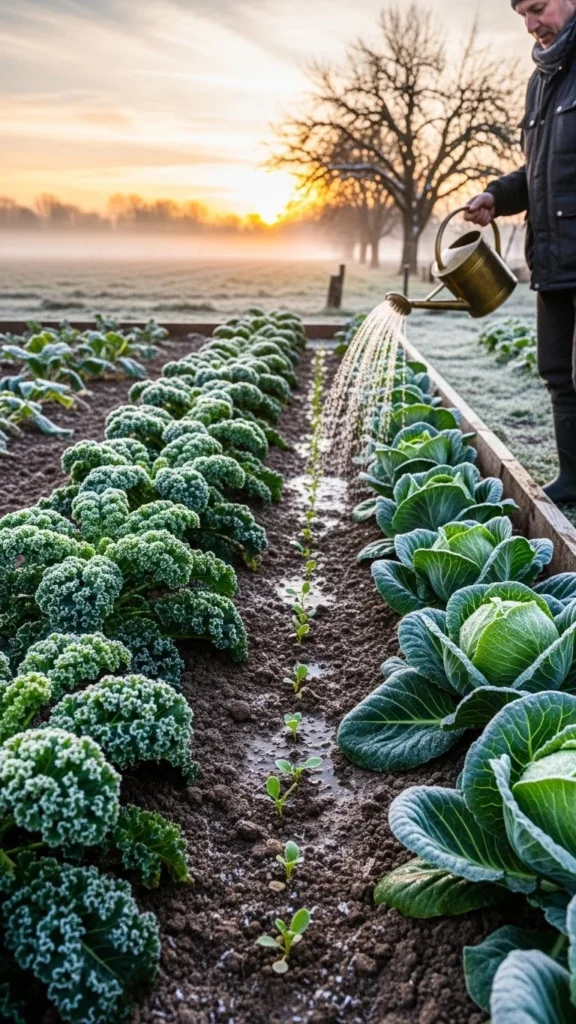
Winter veggies like kale and carrots need weekly watering. Keep soil just damp enough to support steady growth.
Use a watering can with a fine rose head for gentle flow.
If nights drop very cold, water in early afternoon. Cover beds with fabric afterward to hold warmth.
10. Twice-Monthly Watering for Berries
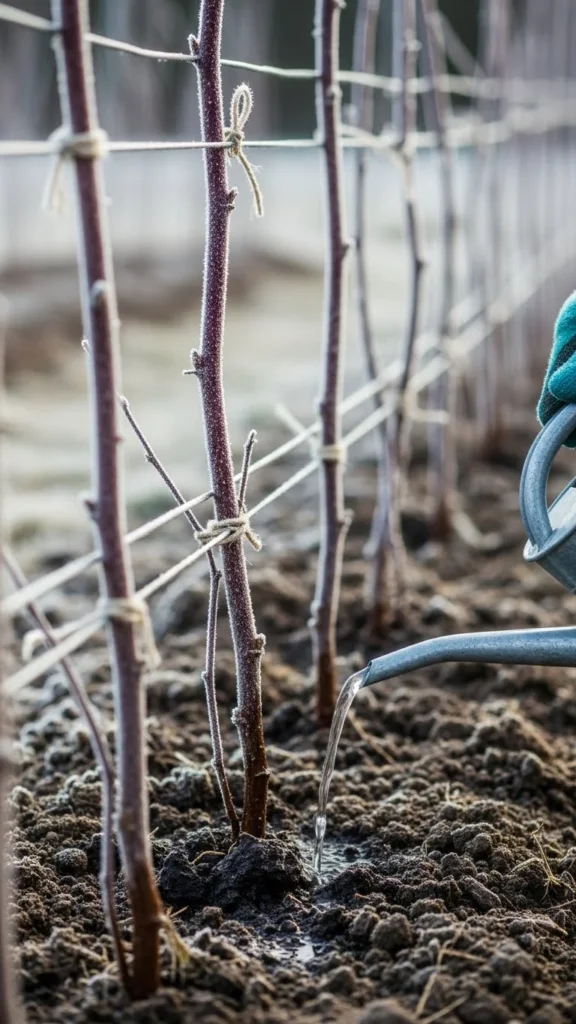
Berry bushes benefit from twice-monthly hydration to prevent root dryness.
Water slowly and avoid soaking canes.
To save money, line trenches with leaves before watering. This helps direct moisture downward.
11. Weekly Watering for Newly Planted Shrubs
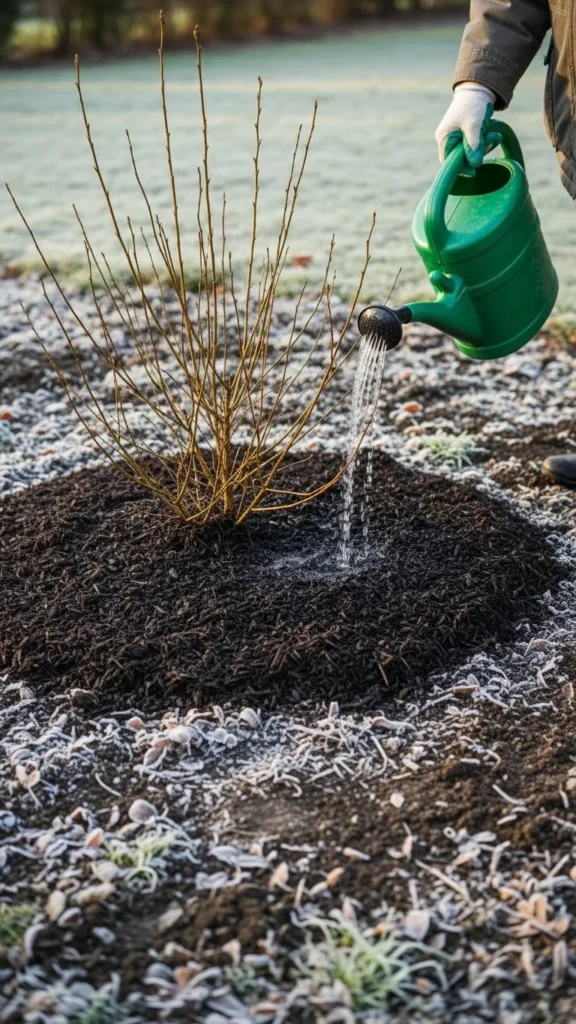
New shrubs are sensitive in winter. Give them a weekly watering routine until established.
Use warmish (not hot) water during freezing spells.
Create a small soil ring to keep water from drifting away.
12. Light Watering Every 14 Days for Groundcovers
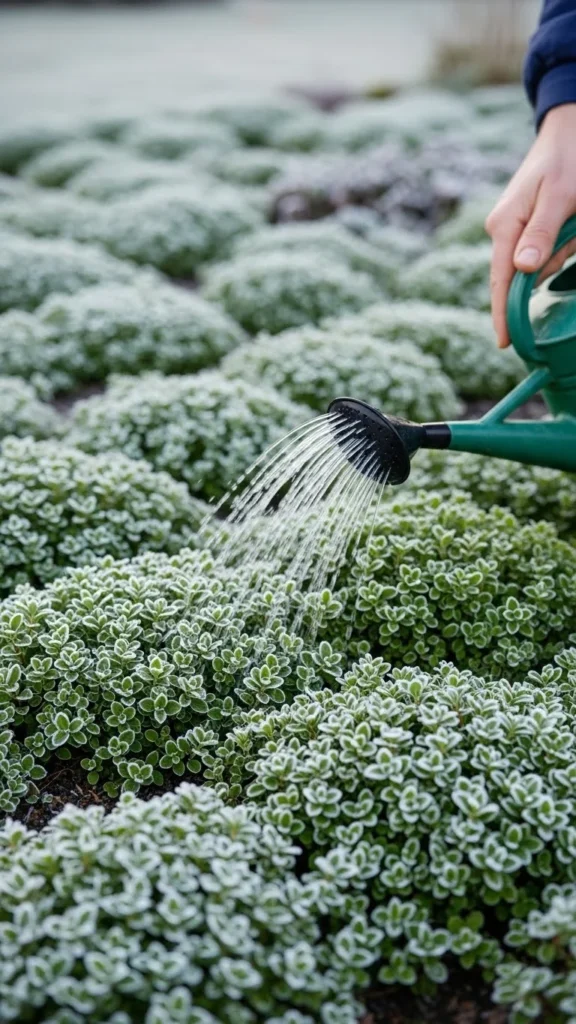
Groundcovers can dry out in winter winds. Water every 14 days to keep them stable.
A simple hand sprayer works well for thin mats.
Add pine needles as mulch for a free insulating layer.
13. Weekly Watering for Lawns in Mild-Winter Areas
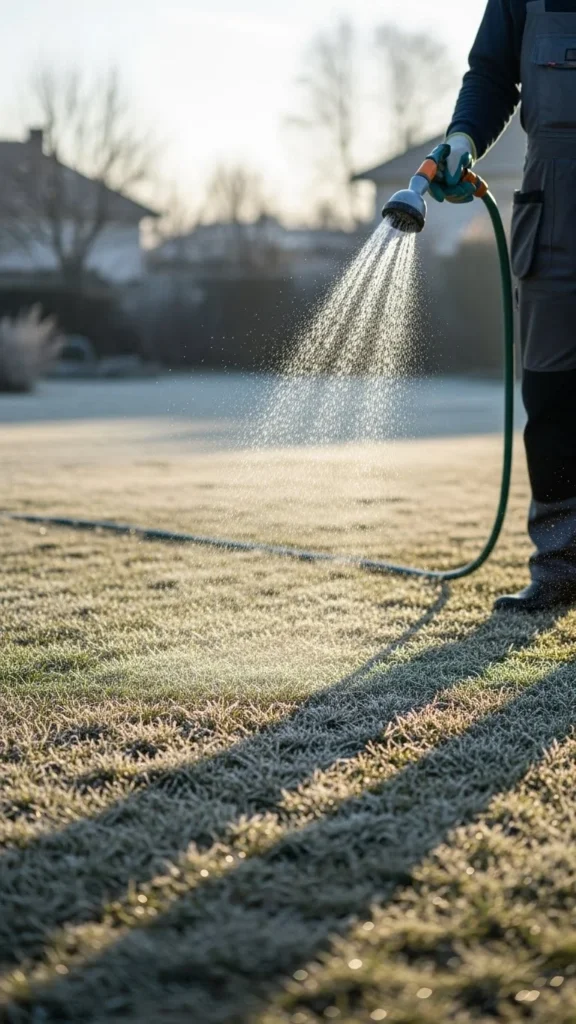
If winters are mild, lawns need weekly watering.
Use a soft spray to avoid runoff.
Monitor soil by pressing your hand into it. If it feels dusty, add water.
14. Every-9-Days Watering for Winter Annual Flowers
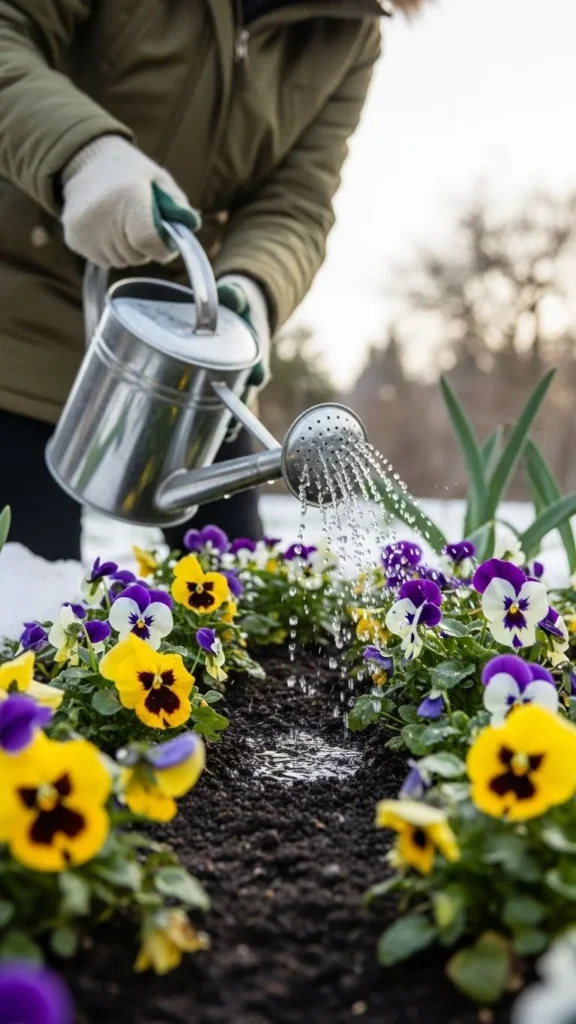
Winter annuals grow through the cold months. Water every nine days to keep flowers steady.
Use a narrow-spout can to target soil, not petals.
Collect leftover kettle water after cooling for an easy way to hydrate plants.
15. Biweekly Watering for Ornamental Grasses
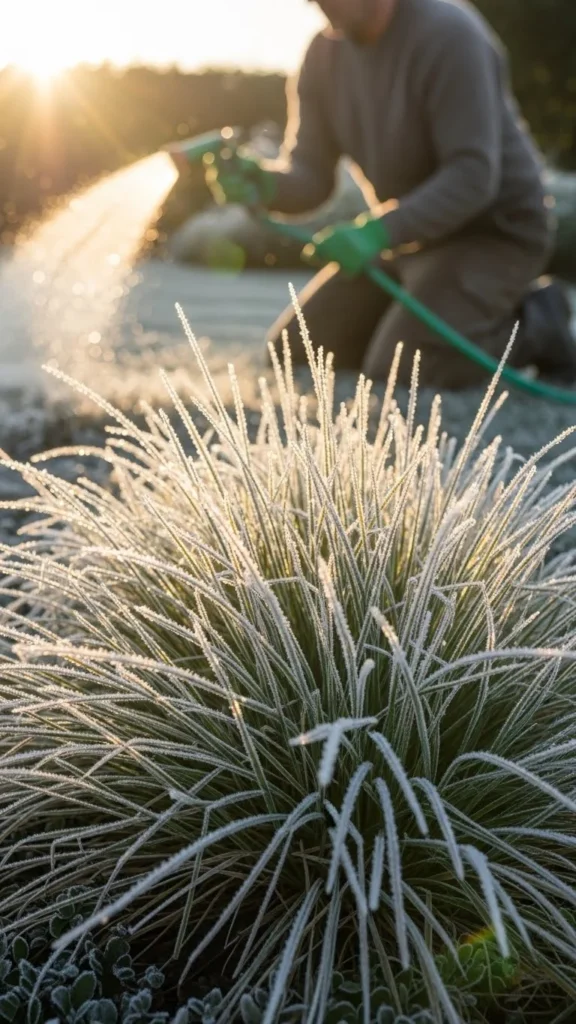
Ornamental grasses appreciate a biweekly drink in winter.
Pour water slowly to avoid soil shifting.
Use compost as a thin top layer to help retain moisture.
16. Weekly Hydration for Raised Beds
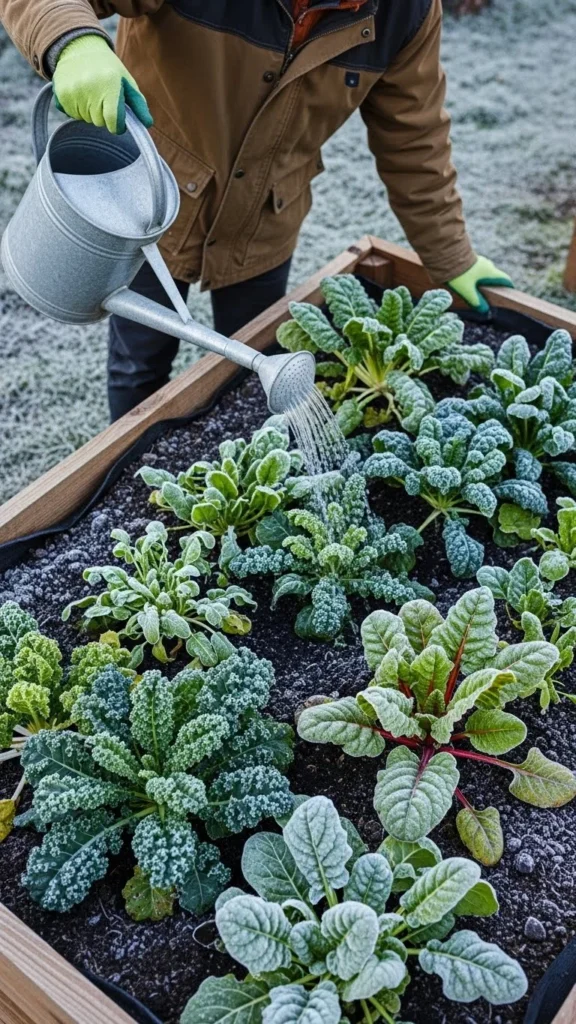
Raised beds dry faster than ground soil. A weekly routine works best.
Water gently along rows to avoid disturbing roots.
Cover beds with burlap on cold nights to help moisture stay steady.
17. Every-6-Days Watering for Indoor Overwintering Plants
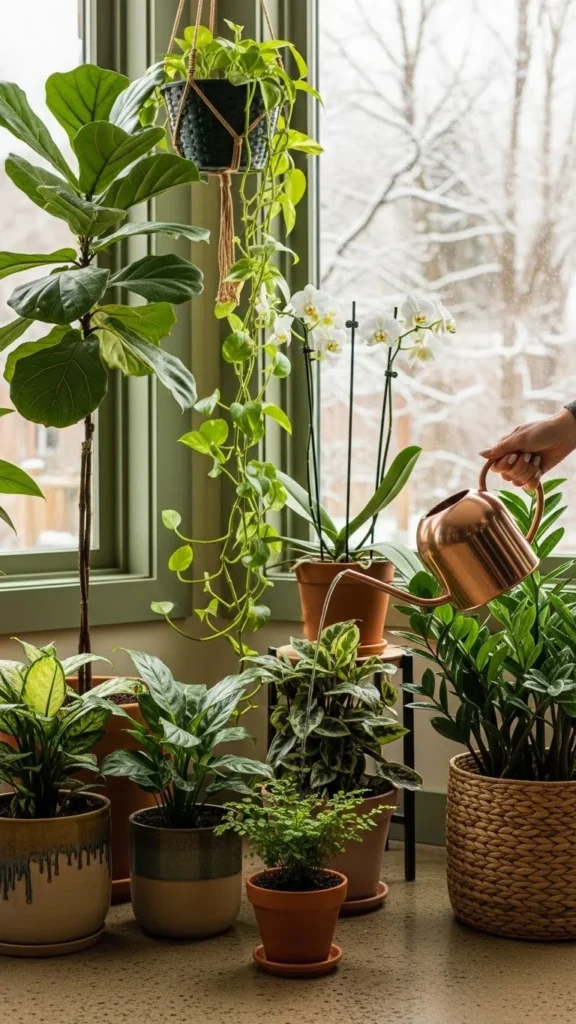
Indoor overwintering plants dry out quickly in heated homes. Water every six days.
Lift pots to check weight. Heavy pots don’t need water yet.
Use a small tray under the pot to catch excess water and prevent mess.
18. Monthly Deep Watering for Hardy Succulents
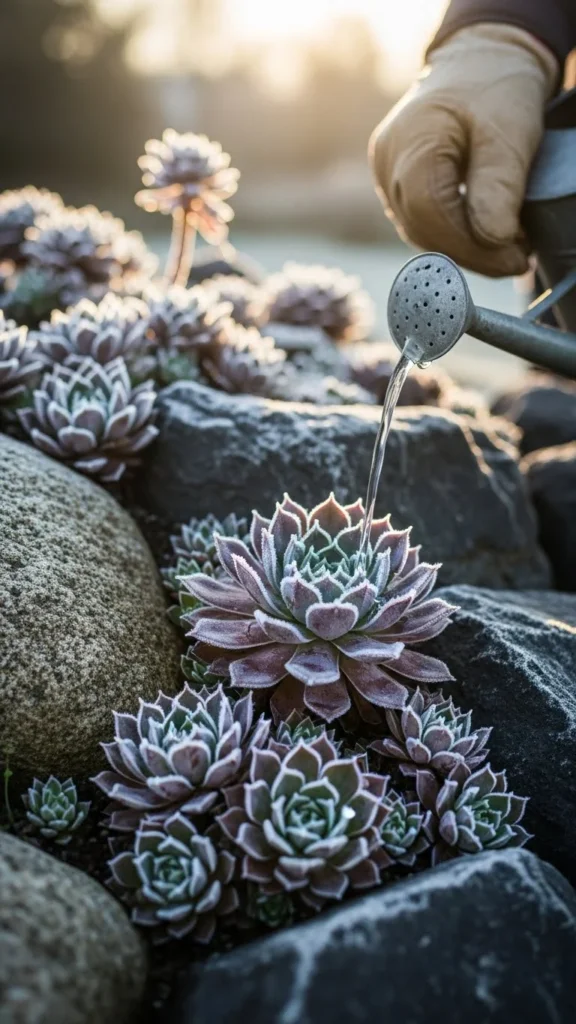
Succulents handle winter dryness well. A deep monthly watering is enough.
Pour water slowly and avoid splashing leaves.
Add small gravel around the base to help direct water to roots.
19. Every-7-to-10-Days for Herb Beds
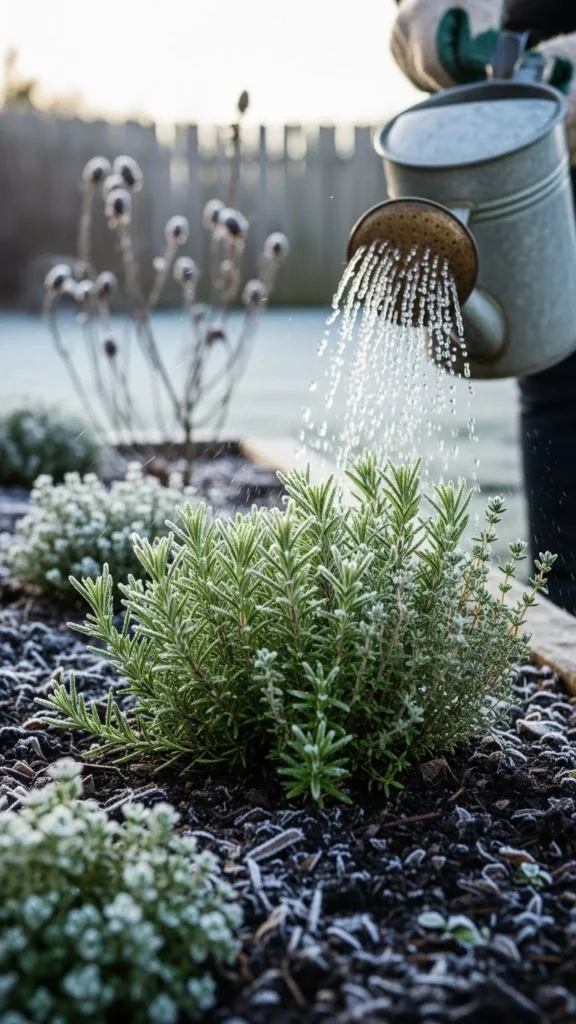
Herb beds benefit from steady moisture. A schedule of every 7–10 days works nicely.
Aim at the soil, not the foliage.
Reuse cooled pasta water (plain) to add moisture without waste.
20. Weekly Watering for Newly Seeded Winter Greens
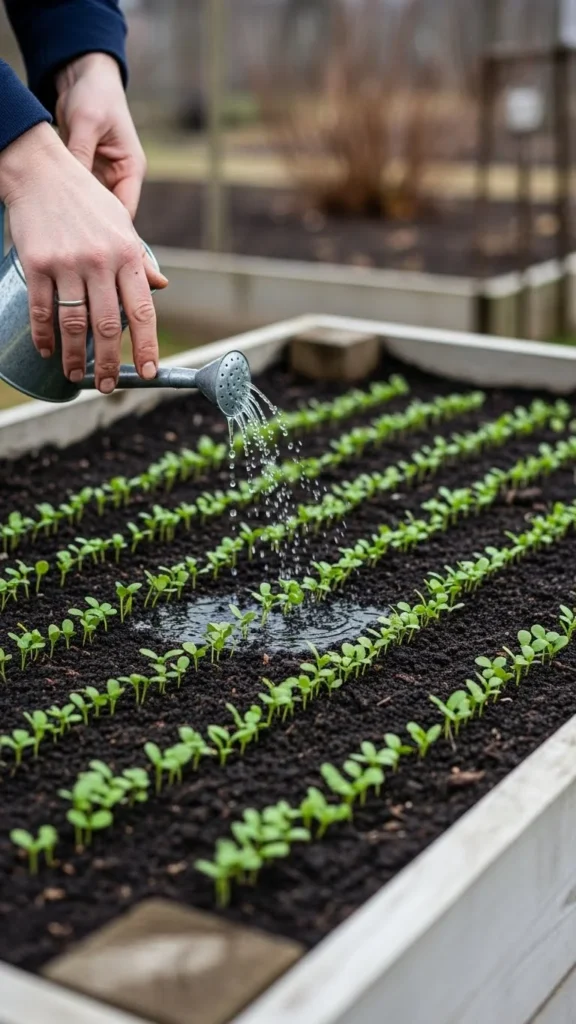
Young seedlings need gentle weekly hydration.
Use the mist function on a spray bottle.
If soil crusts over, break it lightly with your fingers before watering.
21. Biweekly Watering for Evergreen Ground Trees
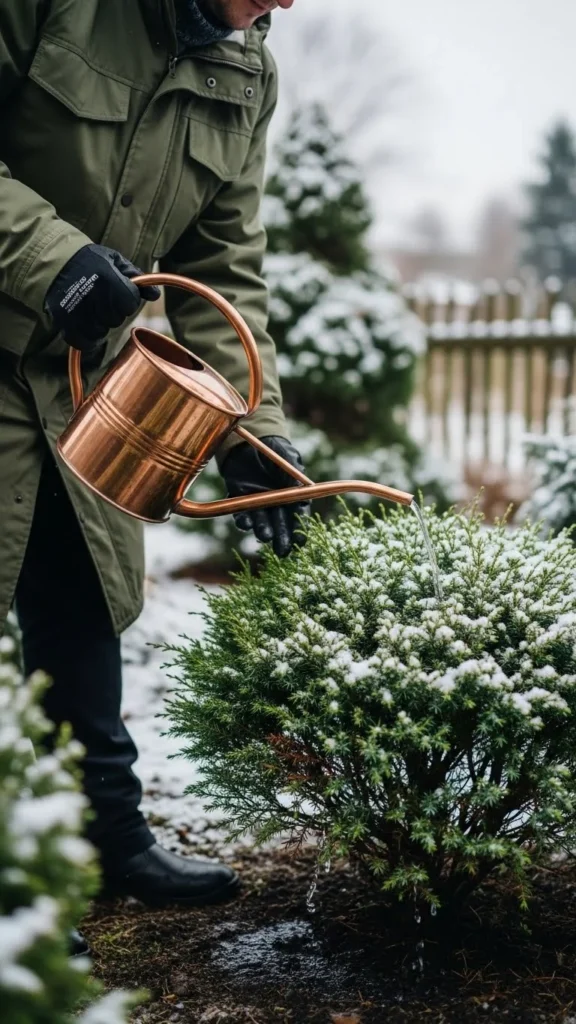
Evergreen ground trees stay active during winter. A biweekly schedule works well.
Water directly at the root zone without soaking needles.
Mulch lightly to keep moisture steady during wind or temperature swings.
Conclusion
Winter watering doesn’t have to feel complicated. These simple schedules help you keep soil stable, roots protected, and plants ready for spring. Pick the routines that match your climate and plant types. Small, steady habits go a long way toward healthier growth when warm weather returns.

Leave a Reply