

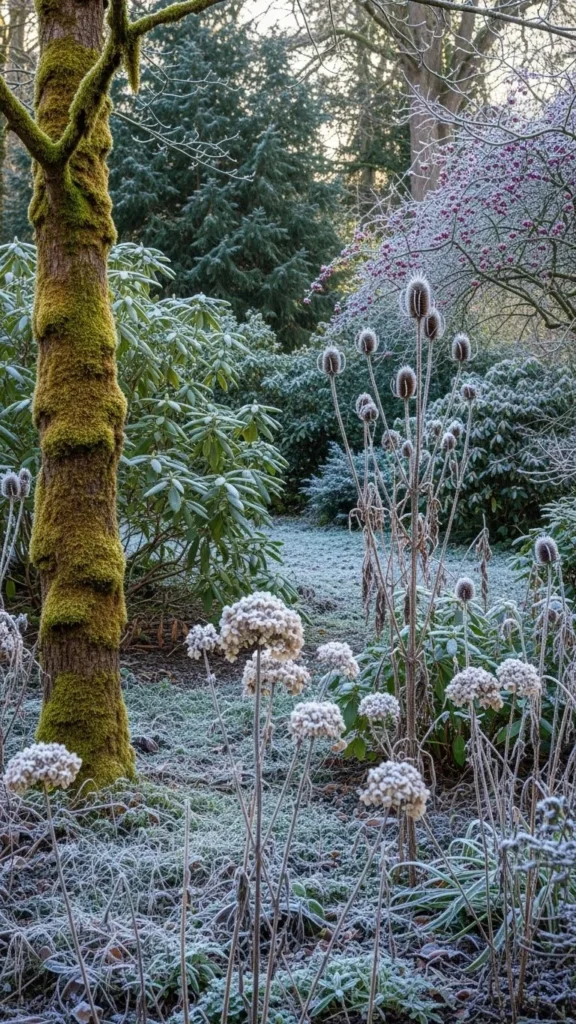
Winter landscapes don’t have to look empty or flat. Many woodland-friendly plants keep their structure, color, and charm through the cold months. These underrated choices bring texture, movement, and interest when most yards feel dull. Whether you want gentle groundcovers, showy stems, or evergreen accents, these plants fit beautifully into shaded or partially wooded spaces. They’re affordable, easy to grow, and perfect for anyone wanting a yard that still feels alive in winter.
1. Christmas Fern
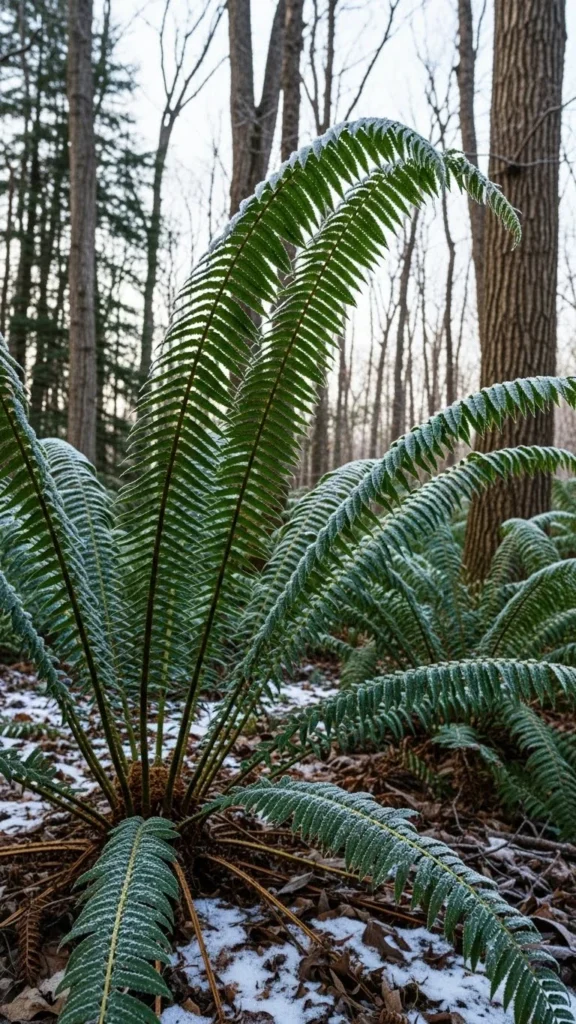
Christmas fern is one of the easiest ways to add winter color to a woodland space. Its fronds stay green all year, so your yard never feels too dull. The plant has a tidy shape that works well along pathways, under trees, or in shaded corners. If you want a low-hassle option, this one fits almost anywhere.
Keep the soil slightly moist during planting, but don’t overwater. Once it settles in, it handles dry shade like a champ. To stretch your budget, divide a mature fern every few years. This gives you multiple plants without buying more. Add a thin layer of leaf mulch in late fall for healthier fronds.
2. Witch Hazel
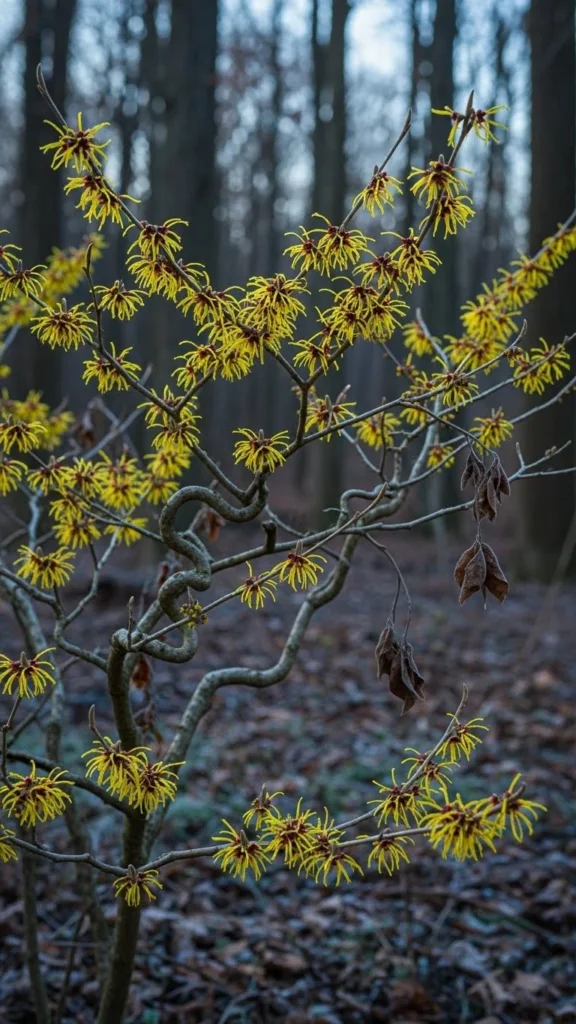
Witch hazel adds a surprising pop of winter color with its ribbon-like flowers. The blooms appear when most shrubs are bare, bringing life to a cold yard. It’s a great fit around the edges of wooded areas where it gets gentle light.
You can plant it near a seating area or along a walkway for a cheerful mid-winter view. It grows slowly, so it won’t overwhelm small yards. Keep the soil damp during the first season. After that, it’s fairly simple to maintain. If you want more plants later, try taking softwood cuttings in early summer. It’s an affordable way to expand your yard’s winter color.
3. Siberian Iris
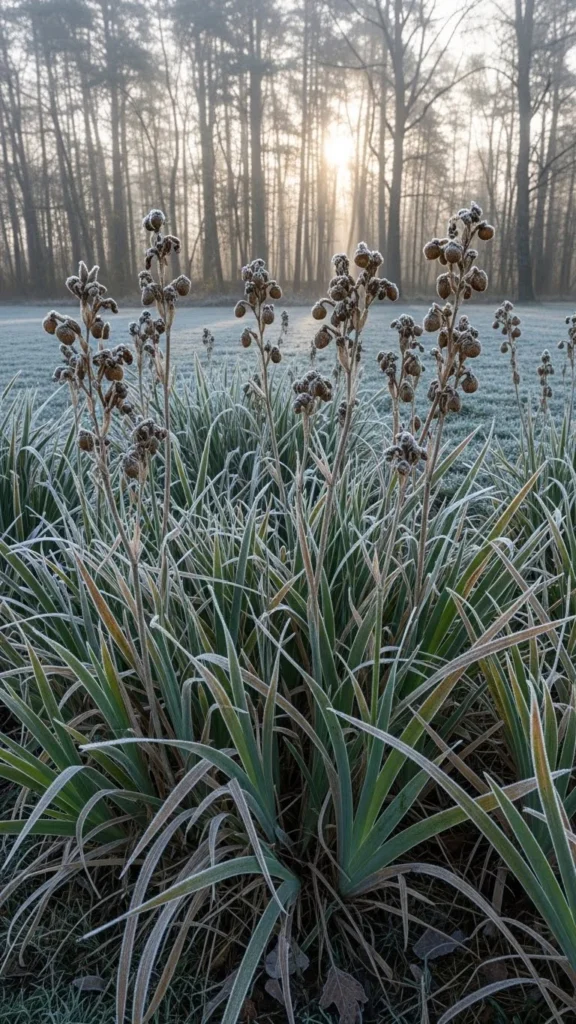
Siberian iris adds vertical lines and graceful structure during the cold season. Even after their blooms fade, the dried stems and seed pods look lovely. They catch frost in a way that makes your yard feel almost magical.
These plants love moist soil, but once established, they stay hardy through harsh winters. For a budget-friendly project, collect dried seed pods and scatter them in a new area in late fall. They often sprout in spring with almost no effort. You can also trim old foliage to keep beds neat. Leave a few stalks standing for winter interest.
4. Evergreen Hellebore
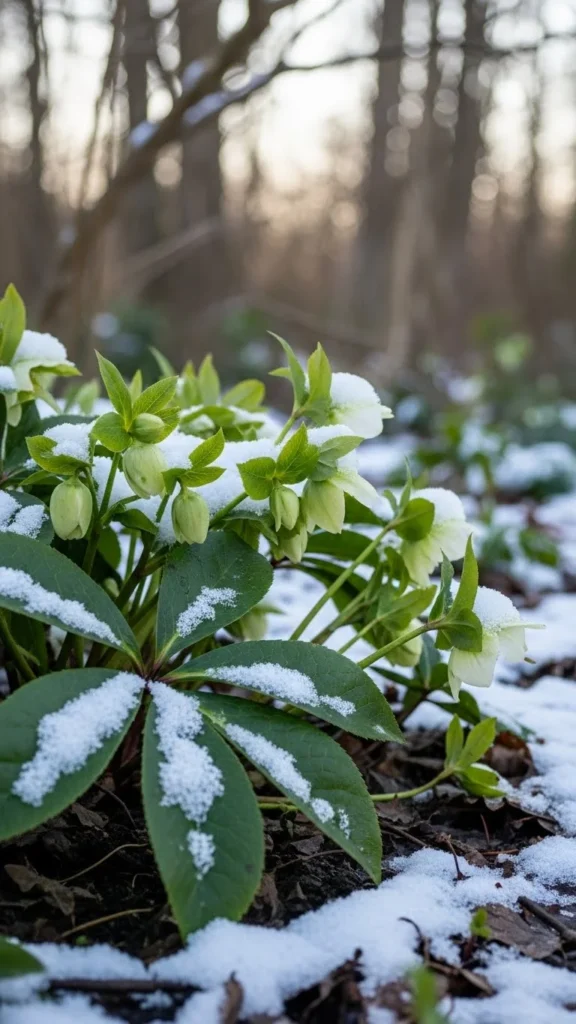
Evergreen hellebores shine in winter when most plants fade. Their leathery leaves and early buds make shady corners look more alive. They grow well under deciduous trees where the soil stays cool and rich.
For simple care, add compost each fall. This keeps the blooms strong. If you want more plants without a big spend, divide clumps every few years. They spread slowly, so you won’t need constant upkeep. Use them around pathways or near your porch so you can enjoy their late-winter flowers up close.
5. Dogwood Shrubs
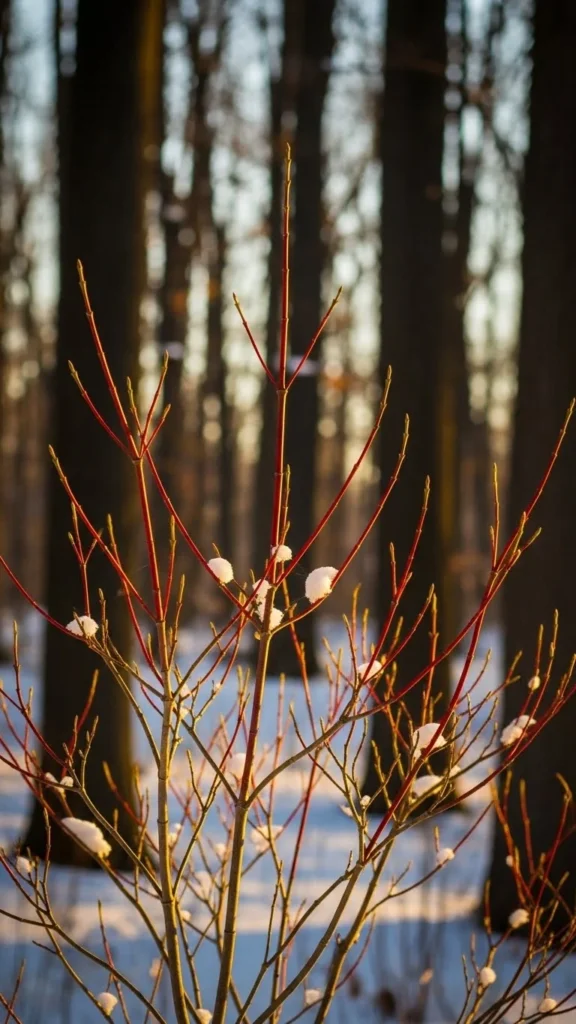
Dogwood shrubs bring bright stems to winter landscapes. Red, yellow, and coral varieties stand out beautifully against snow or dark bark. They add height and structure where evergreen plants might feel too dense.
Place them at the back of a woodland bed for a layered look. They enjoy moist soil but adapt to many conditions. To keep colors vibrant, prune older stems in early spring. This encourages fresh growth. For a budget idea, root cuttings in a simple tray of damp soil. They root quickly and give you extras for free.
6. Wild Ginger
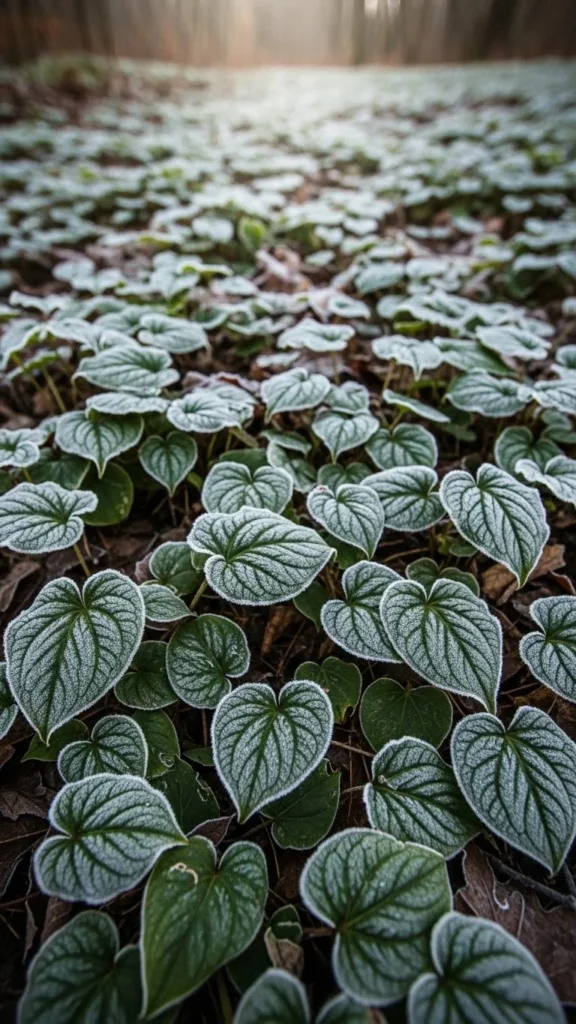
Wild ginger is a great groundcover for shaded woodlands. It keeps its shape in winter and looks neat even when temperatures drop. The broad leaves help fill in empty patches beneath trees.
It spreads slowly, so you can plant small starter pieces and let them expand. This makes it very budget-friendly. Keep the soil rich with leaf mulch to mimic forest conditions. Use it along natural pathways or under shrubs where grass won’t grow. You can grab divisions from a single plant and fill a whole bed without spending more money.
7. Snowdrops
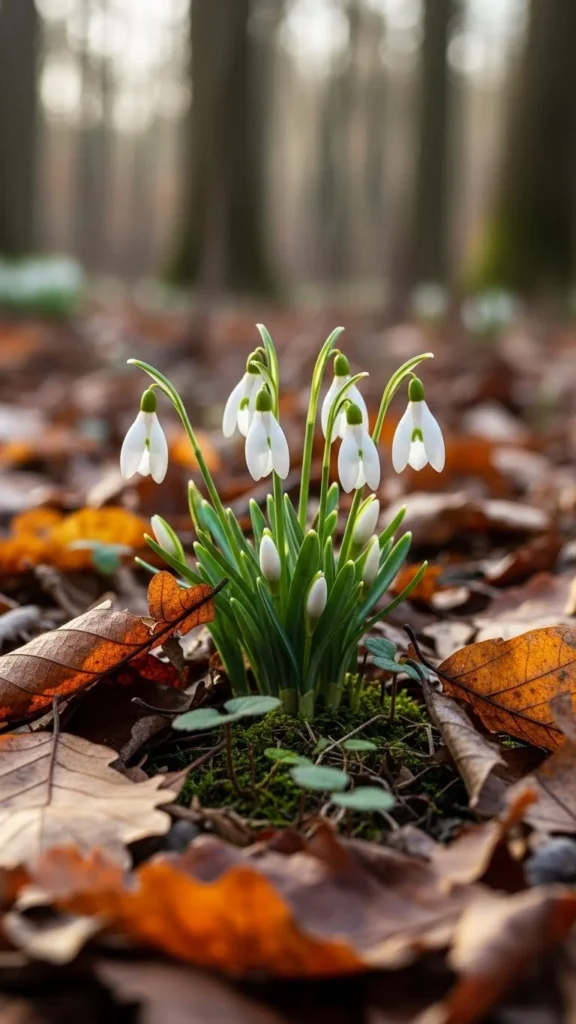
Snowdrops are some of the earliest signs of life in winter. Their delicate white flowers push through cold soil without hesitation. They look beautiful when mass-planted beneath trees or along edges.
Plant bulbs in fall for the best display. They return every year with little effort. For an affordable project, dig up clumps “in the green” during spring and spread them out. This helps you expand your winter display without buying new bulbs. Keep soil slightly moist, but they don’t ask for much beyond that.
8. Coral Bells
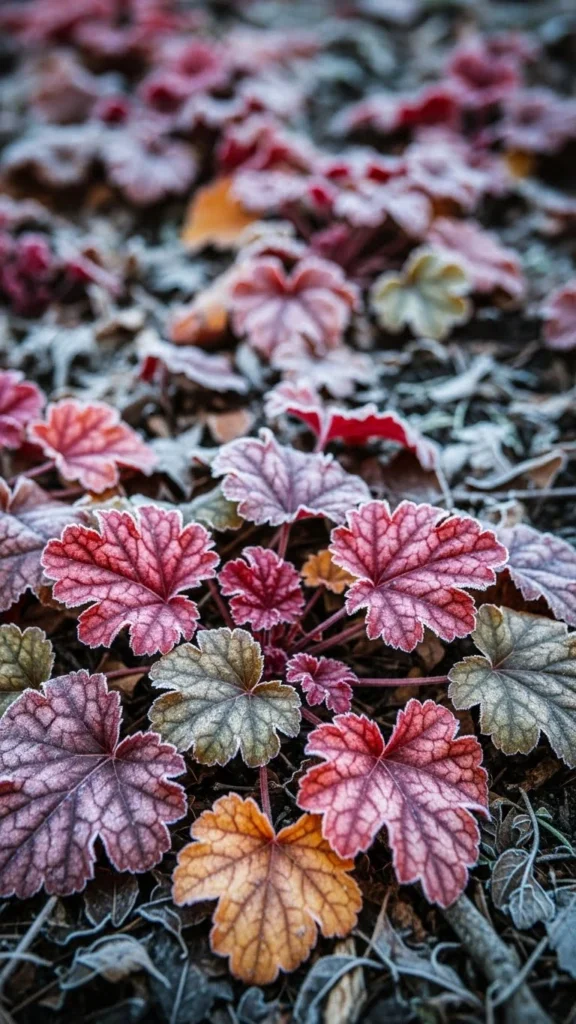
Coral bells offer fantastic leaf color all year. Even in winter, the foliage stays bold. You can find deep purple, amber, or silver tones depending on the variety. They brighten shaded spots where color is usually lacking.
They thrive in rich soil with good drainage. For easy care, add compost in fall and remove old leaves in early spring. To multiply your plants, divide them every few years. They look lovely around tree bases, near rocks, or along stepping stones. Their compact size makes them perfect for smaller yards, too.
9. Wintergreen
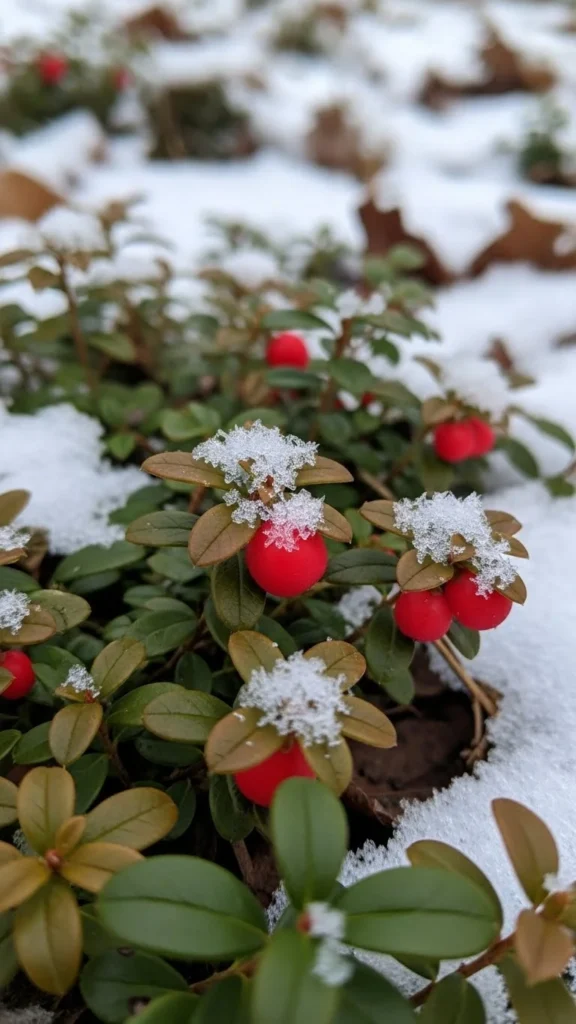
Wintergreen stays colorful even in deep shade. Its glossy leaves and bright berries stand out against winter soil. It’s a slow spreader, so you can tuck it into smaller spaces without worrying about competition.
Plant it near paths or under shrubs for a soft, natural look. It likes cool, acidic soil. Use pine needles as mulch to keep conditions right. If you want more plants, gently layer a stem by pinning it to the soil. It often roots within a season, giving you a free new plant.
10. Japanese Forest Grass
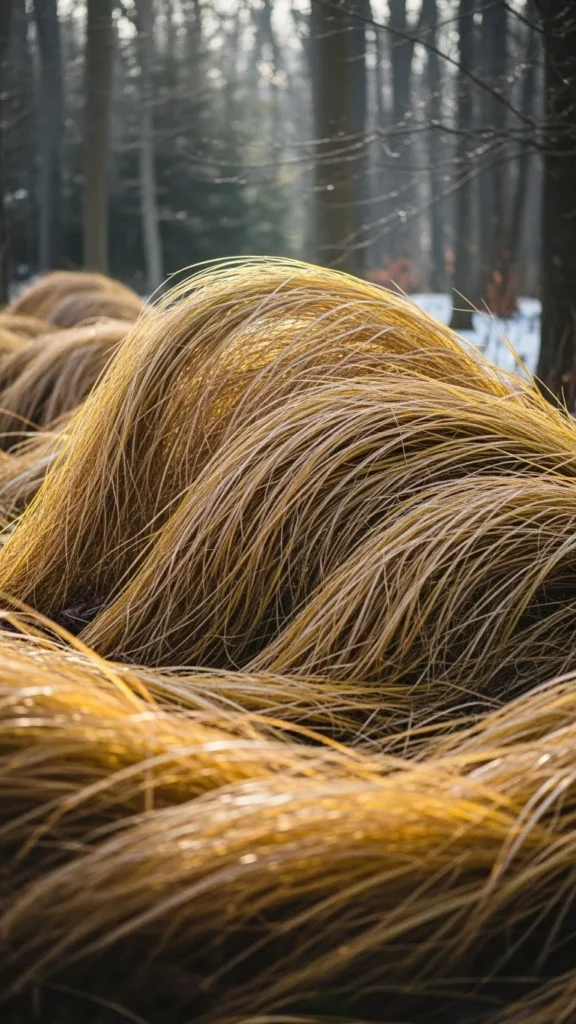
Japanese forest grass adds movement and color even after frost. Its golden or lime-green blades bring warmth to shaded spaces. The plant forms gentle mounds that look great next to rocks or logs.
It grows slowly, so small starter plants work well. For low-cost care, divide mature clumps in early spring. This gives you more plants for free. Keep the soil lightly moist during the first year. After that, it handles winter with little attention. Leave dried blades for winter interest and trim them in March.
11. Lungwort
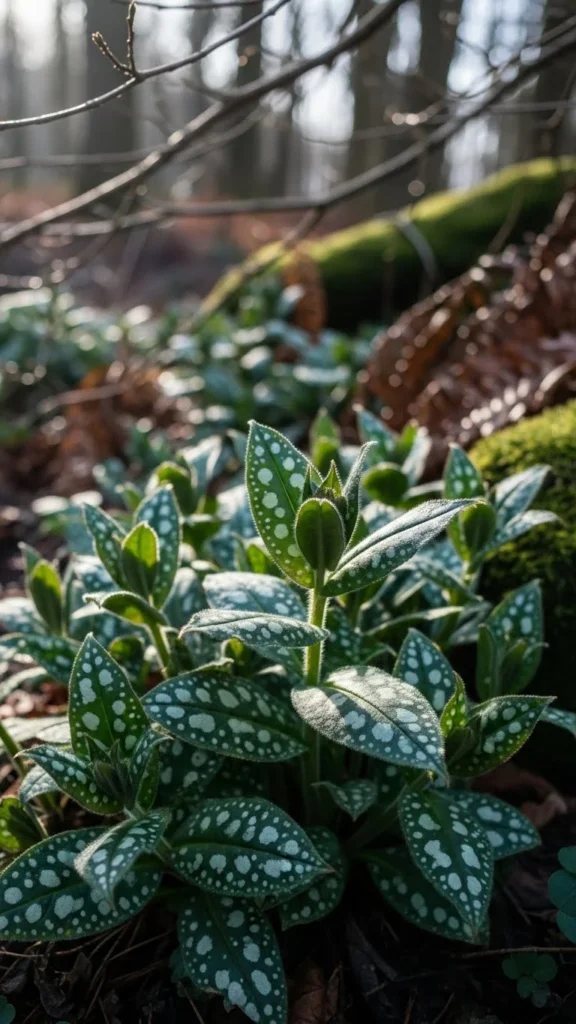
Lungwort keeps its patterned leaves through much of winter. The spotted foliage adds brightness to deep shade. It grows well under trees, where many plants struggle.
Water it during dry spells in its first season. After that, it’s simple to maintain. Divide clumps in fall or spring for budget-friendly expansion. Use it near seating areas or under shrubs for a layered look. Its texture adds charm even without flowers.
12. Mountain Laurel
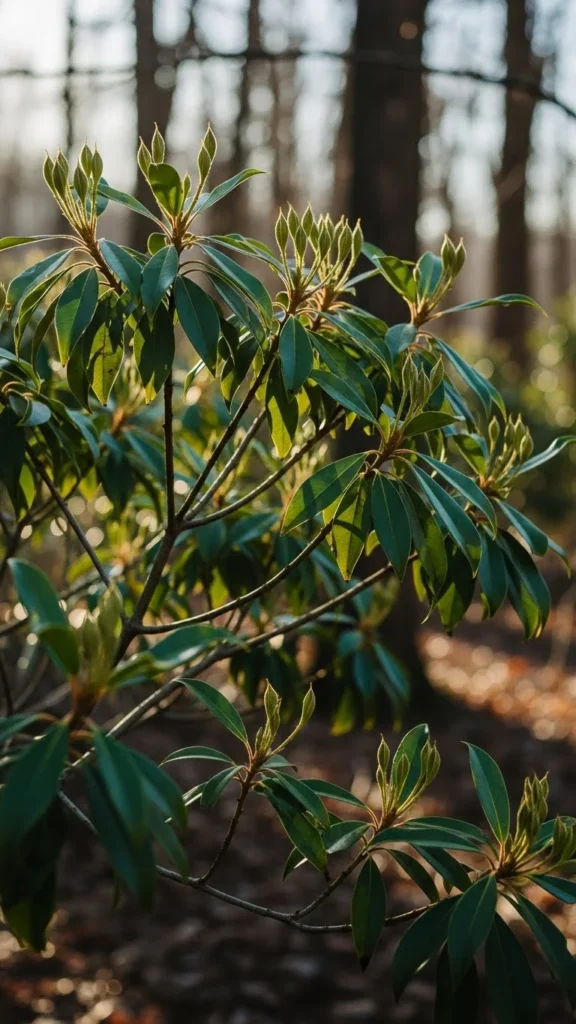
Mountain laurel stays green all year and handles cold weather well. Its glossy leaves bring structure and color to winter yards. It works nicely along woodland edges or near paths.
It prefers acidic soil, so add pine needle mulch when planting. Water during the first year to help roots settle. After that, it’s very dependable. For a simple DIY idea, place a few smooth stones around the base to keep moisture steady. You can also trim lightly to maintain shape without much effort.
13. Red Twig Rhamnus
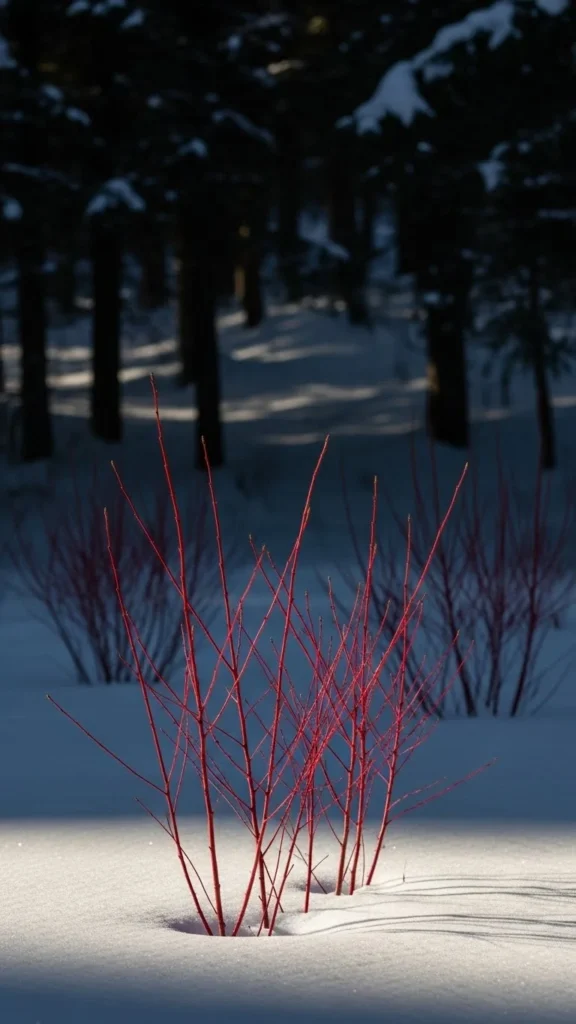
Red twig rhamnus is an underrated shrub with bright stems that stand out in winter. It adds height and color to woodland spaces, especially when planted in groups.
It grows well in many soils and doesn’t need much care. Trim older stems in late winter to encourage colorful new ones. For a budget tip, root trimmed branches in damp potting soil. With patience, they develop into new shrubs. Use them at the back of beds or along property lines for visual impact.
14. Foamflower
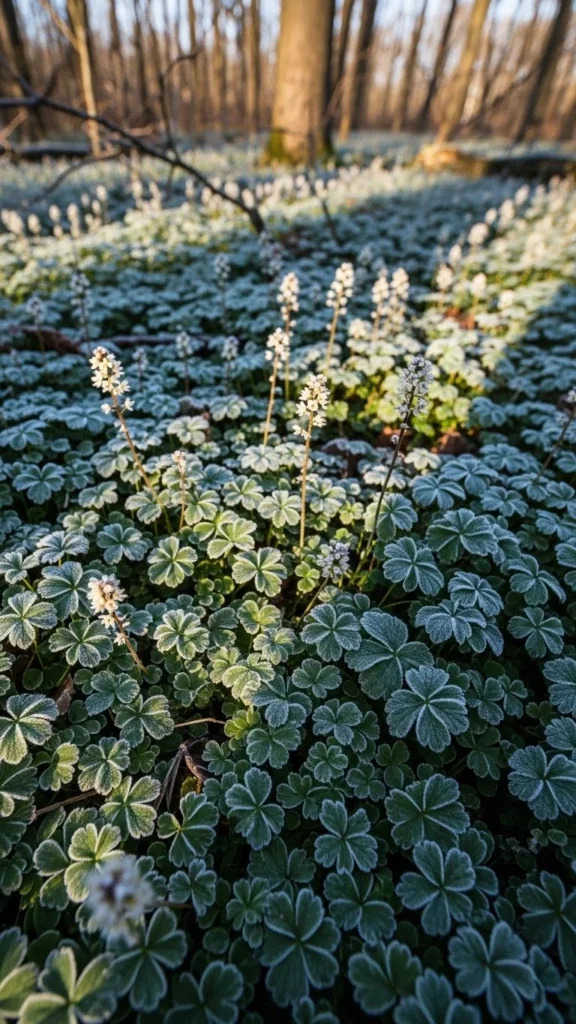
Foamflower creates a lush groundcover that looks lovely even in winter. Its patterned leaves and mounding habit make dull corners more interesting. It spreads gently and works well under trees.
Keep the soil rich with seasonal leaf mulch. This keeps it healthy without extra spend. For a quick project, divide a mature patch into smaller sections and replant them. Foamflower pairs well with ferns and hostas for a layered woodland look that stays attractive all year.
15. Oregon Grape
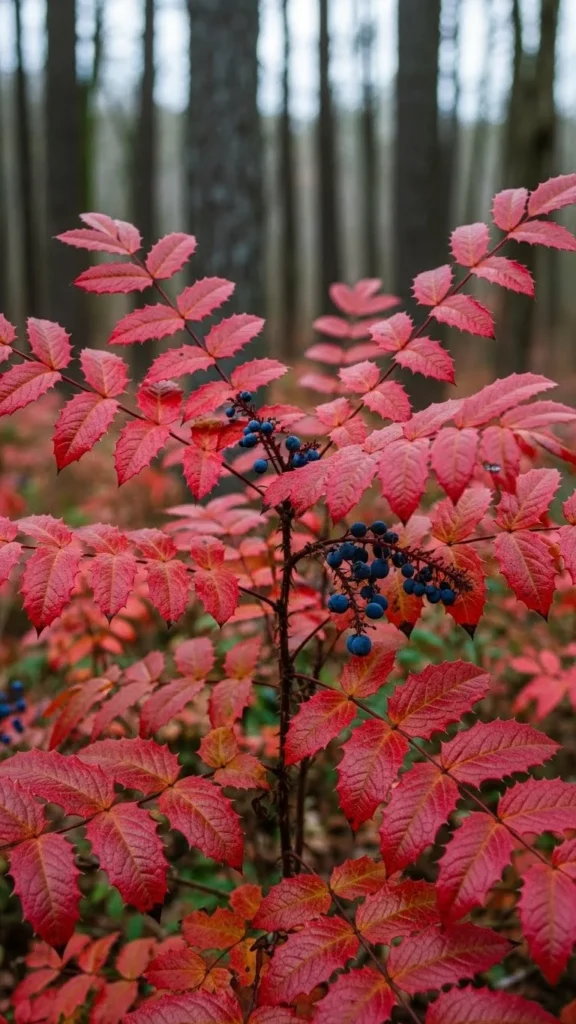
Oregon grape brings strong structure and bold color to winter gardens. Its leaves turn deep red or bronze in cold weather. It’s an easy shrub for shaded areas or woodland edges.
It tolerates many soils but thrives best with compost added in fall. Water new plants during dry periods. Once established, it handles winter without fuss. For an affordable way to expand your shrubs, collect seeds from spent flowers and start them in pots. This adds more winter interest to your yard over time.
16. Leopard Plant
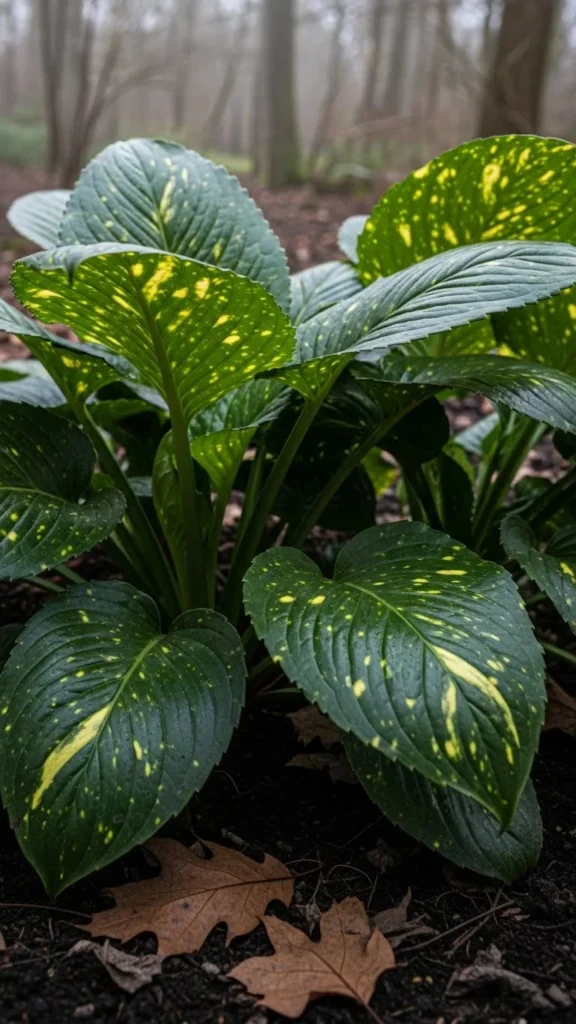
Leopard plants offer large, dramatic leaves that stand out in winter. The glossy foliage brightens shaded beds and looks good even after light frost.
Keep the soil damp but not soggy. Add compost yearly to keep growth strong. For a small DIY project, group them with stones or small logs to create a natural woodland vignette. Divide clumps every few years to increase your supply without buying more. They’re perfect for filling in areas where smaller plants feel too delicate.
17. Solomon’s Seal
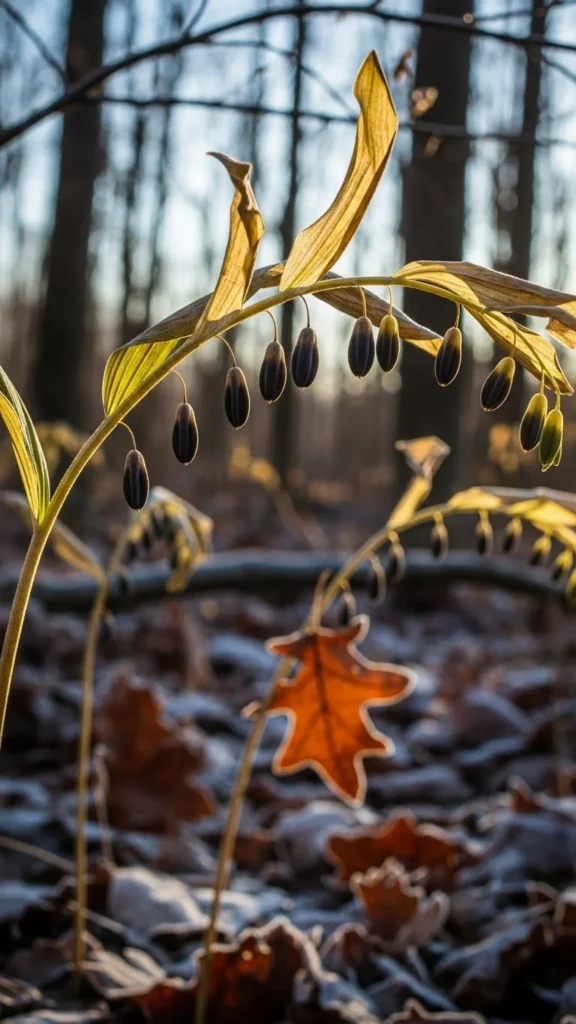
Solomon’s seal offers graceful shapes even after frost kills back the leaves. The stems arch beautifully and stand out against winter soil.
Leave dried stalks through winter for structure. Trim them in early spring when new shoots appear. These plants spread slowly underground, so one purchase can fill a whole bed over time. For instant impact, plant them beside rocks or logs where their shape really stands out. They thrive in woodland soil with minimal upkeep.
18. Bunchberry
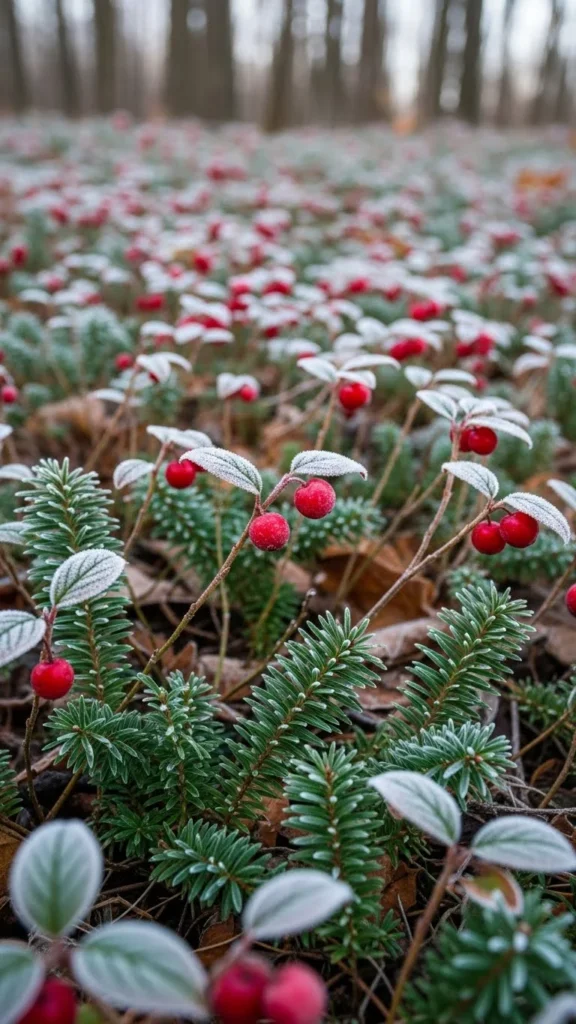
Bunchberry forms a low, tidy groundcover that stays attractive in winter. Its evergreen leaves add color to bare spots, and leftover berries offer extra charm.
It prefers cool, moist soil. Add leaf mulch for a natural woodland environment. For a budget approach, plant small starter plugs and let them slowly expand. You can also dig and split established patches to create more plants. Use them in shady pathways or under shrubs for a clean, polished look.
19. Bearberry
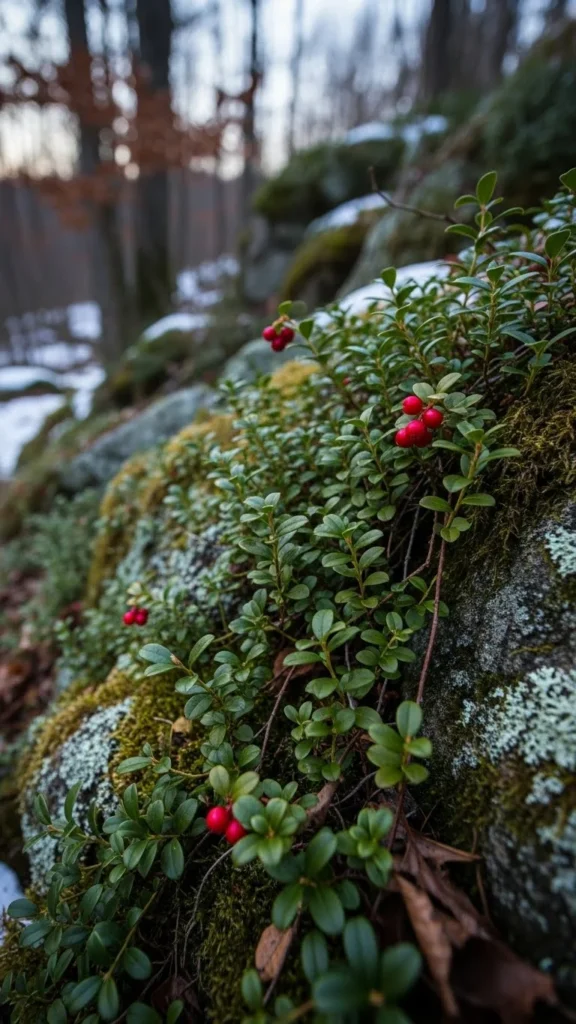
Bearberry spreads low and wide, making it great for groundcover on slopes or rocky areas. Its small evergreen leaves stay attractive all winter.
It likes sandy or well-drained soil. Once planted, it needs little attention. For a no-cost project, use spare stones to build a small border around your patch. This keeps the soil cooler and helps the plant settle. Bearberry spreads slowly, so it fills in gaps without becoming overwhelming.
20. Winterberry Shrub
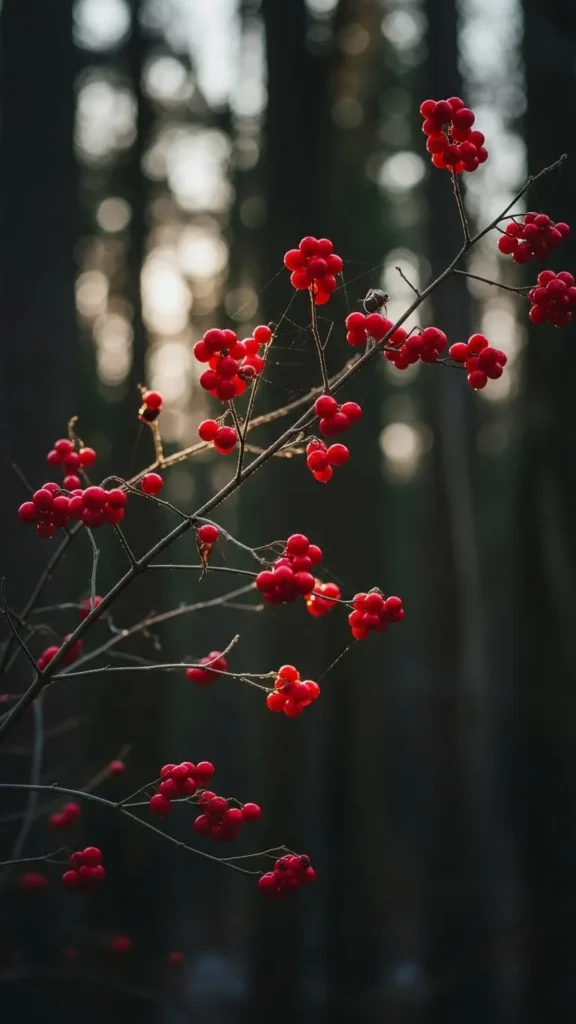
Winterberry shrubs brighten woodland spaces with long-lasting berries. They look incredible when planted in groups where the berries can shine.
Plant them in moist soil along woodland edges. For berry display, pair a male and female variety. This gives you a full crop each winter. To save money, buy smaller shrubs—they grow quickly. Use leftover branches in winter arrangements as a simple DIY project.
21. Sweetbox
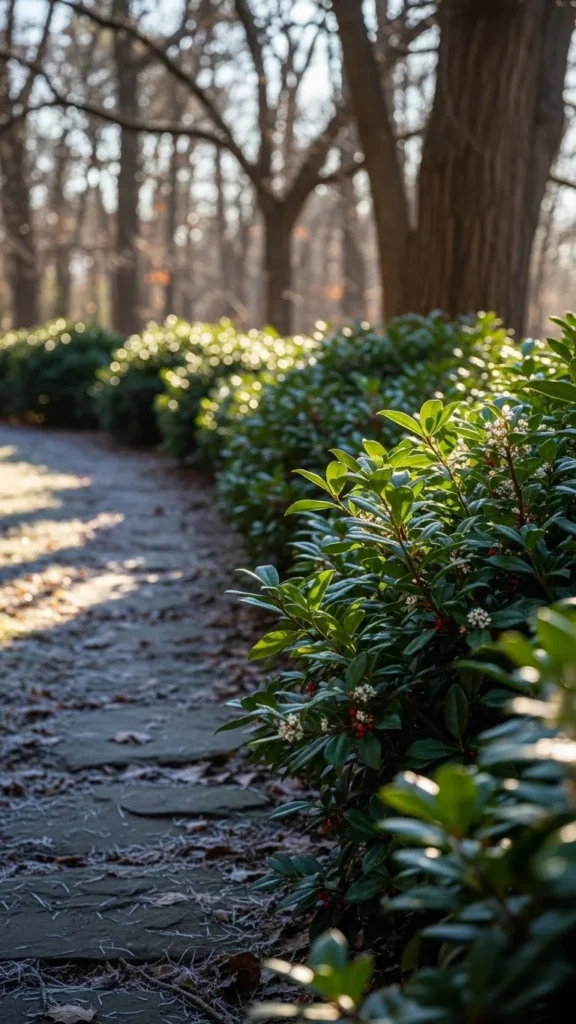
Sweetbox is a reliable evergreen for shaded areas. It stays glossy all winter and forms neat shapes that work well in small yards.
Plant it along pathways or near entry points for winter greenery. Add compost during planting to help it settle. For a low-cost idea, take cuttings in early summer and root them in simple soil mix. Once established, it needs minimal care and offers structure even in the cold season.
22. Hardy Cyclamen
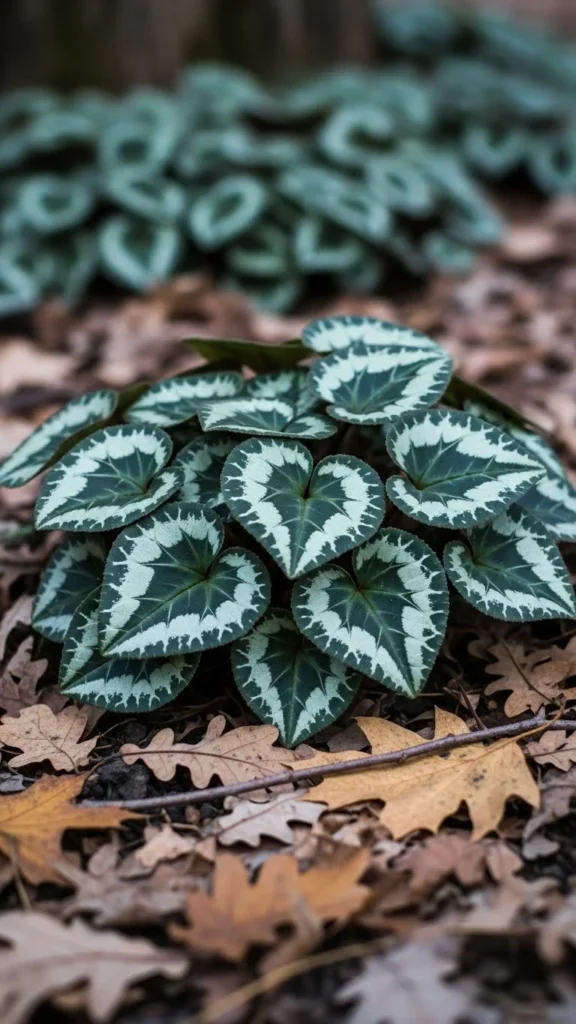
Hardy cyclamen brings patterned leaves that brighten woodland floors through winter. Their heart-shaped foliage looks painted and stands out in dim light.
Plant tubers in well-drained soil under trees. They return reliably each year. For a small DIY project, plant them among rocks or moss for a natural scene. They multiply slowly, giving you more winter beauty over time. Water lightly during extremely dry months, but otherwise they’re easygoing.
23. Moss Patches
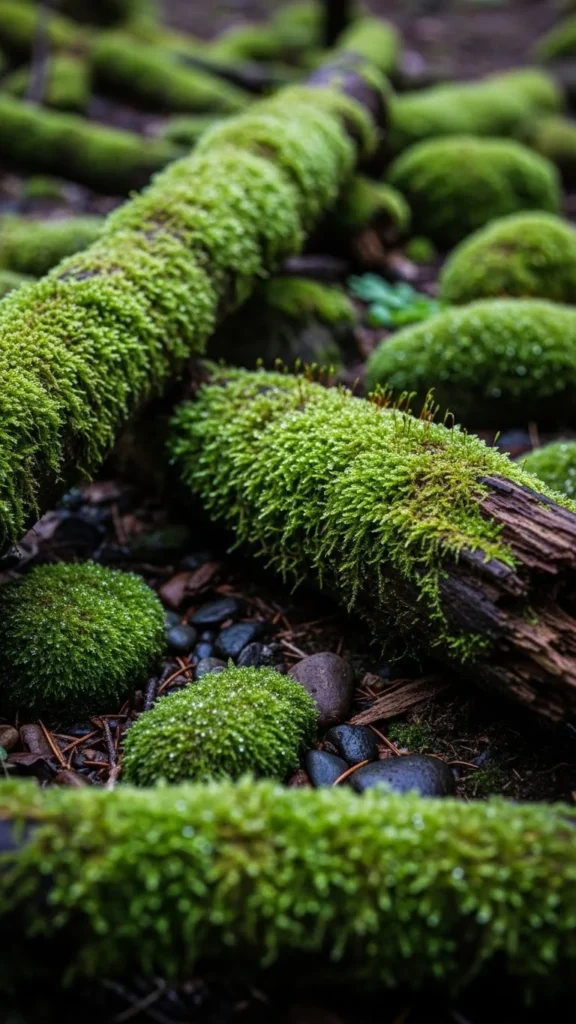
Moss is one of the simplest ways to bring winter life to a woodland yard. It stays green even in cold weather and loves shady, moist spots.
Encourage moss naturally by clearing leaves and keeping soil gently damp. For a free DIY idea, relocate small patches from your own yard to shaded stones or logs. They spread slowly and turn dull areas into soft, green scenes. Moss pairs beautifully with ferns, forest grass, and hellebores.
24. Mahonia
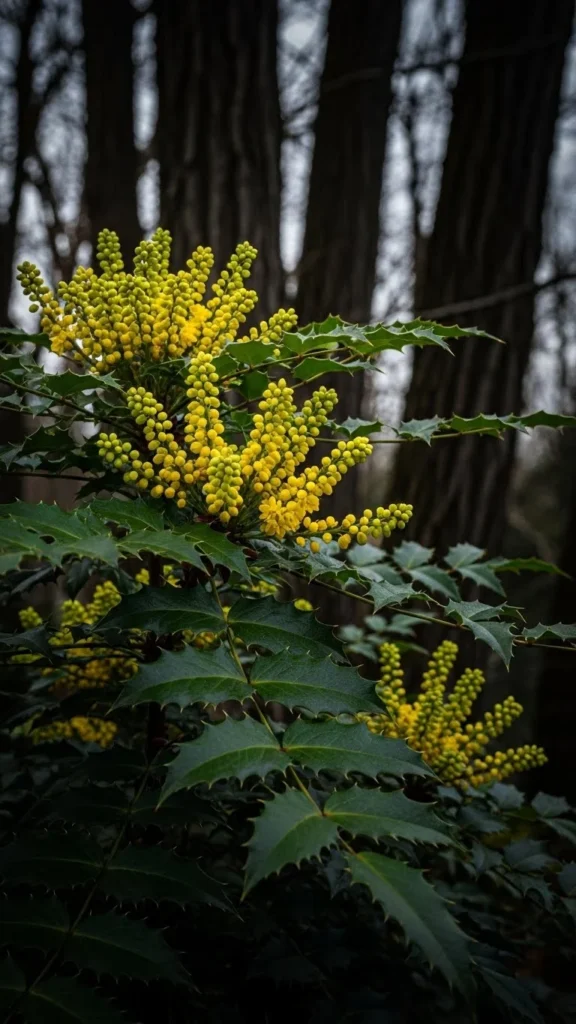
Mahonia is a bold shrub that brings strong texture to winter landscapes. Its evergreen leaves and yellow buds appear when little else is active. It thrives in partial shade and handles cold gracefully.
Plant it along woodland edges where it gets dappled light. Add compost yearly to keep growth steady. For an affordable project, root cuttings in a sheltered place during warmer months. Mahonia offers height, structure, and winter charm without demanding much in return.
Conclusion
Woodland winter gardens don’t have to feel flat or colorless. These plants keep their shape, texture, and charm even in the cold months, giving your yard a lively, natural look. By mixing groundcovers, shrubs, and evergreen accents, you create a layered space that feels calming and full of quiet character. Start with a few favorites, plant them in simple groupings, and enjoy a yard that looks interesting all year.

Leave a Reply